To require the Secretary of the Treasury to develop a plan for issuance of Clean Energy Victory Bonds.
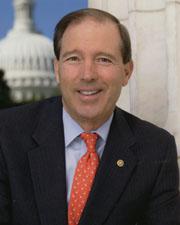 Sen. Tom Udall (D-NM)
Legislative Activity
Stay on top of the latest movement without scrolling through every action
Senate amendment proposed (on the floor): Amendment SA 3312 proposed by Senator Udall to Amendment SA 2953.(consideration: CR S2163-2164, S2190; text: CR S2163-2164)
April 19, 2016
View full timeline
Senate amendment proposed (on the floor): Amendment SA 3312 proposed by Senator Udall to Amendment SA 2953.(consideration: CR S2163-2164, S2190; text: CR S2163-2164)
April 19, 2016
Roll call votes on amendments in Senate: Amendment SA 3312, under the order of 4/13/16, not having achieved 60 votes in the affirmative, was not agreed to in Senate by Yea-Nay Vote. 50 - 47. Record Vote Number: 52.
April 19, 2016
Senate amendment not agreed to: Amendment SA 3312, under the order of 4/13/16, not having achieved 60 votes in the affirmative, was not agreed to in Senate by Yea-Nay Vote. 50 - 47. Record Vote Number: 52.
April 19, 2016
Amendment SA 3312 proposed by Senator Udall to Amendment SA 2953. (consideration: CR S2163-2164, S2190; text: CR S2163-2164) To require the Secretary of the Treasury to develop a plan for issuance of Clean Energy Victory Bonds.
April 19, 2016
Amendment SA 3312, under the order of 4/13/16, not having achieved 60 votes in the affirmative, was not agreed to in Senate by Yea-Nay Vote. 50 - 47. Record Vote Number: 52.
April 19, 2016
Senate amendment submitted
February 24, 2016
Senate amendment submitted
February 24, 2016
Votes
1 roll call on this amendment
Text
Submitted
SA 3312. Mr. UDALL submitted an amendment intended to be proposed to
amendment SA 2953 proposed by Ms.

[[Page S1004]]

Murkowski to the bill S. 2012, to provide for the modernization of the
energy policy of the United States, and for other purposes; which was
ordered to lie on the table; as follows:

At the appropriate place, insert the following:

SEC. ___. CLEAN ENERGY VICTORY BONDS.

(a) In General.--Not later than July 1, 2016, the Secretary
of the Treasury, in coordination with the Secretary of Energy
and the Secretary of Defense, shall submit a report to
Congress that provides recommendations for the establishment,
issuance, and promotion of Clean Energy Victory Bonds by the
Department of the Treasury (referred to in this section as
the ``Clean Energy Victory Bonds Program'').
(b) Requirements.--For purposes of subsection (a), the
Clean Energy Victory Bonds Program shall be designed to--
(1) ensure that any available proceeds from the issuance of
Clean Energy Victory Bonds are used to finance clean energy
projects (as defined in subsection (c)) at the Federal,
State, and local level, which may include--
(A) providing additional support to existing Federal
financing programs available to States for energy efficiency
upgrades and clean energy deployment, and
(B) providing funding for clean energy investments by the
Department of Defense and other Federal agencies,
(2) provide for payment of interest to persons holding
Clean Energy Victory Bonds through such methods as are
determined appropriate by the Secretary of the Treasury,
including amounts--
(A) recaptured from savings achieved through reduced energy
spending by entities receiving any funding or financial
assistance described in paragraph (1), and
(B) collected as interest on loans financed or guaranteed
under the Clean Energy Victory Bonds Program,
(3) issue bonds in denominations of not less than $25 or
such amount as is determined appropriate by the Secretary of
the Treasury to make them generally accessible to the public,
and
(4) collect not more than $50,000,000,000 in revenue from
the issuance of Clean Energy Victory Bonds for purposes of
financing clean energy projects described in paragraph (1).
(c) Clean Energy Project.--The term ``clean energy
project'' means a project which provides--
(1) performance-based energy efficiency improvements, or
(2) clean energy improvements, including--
(A) electricity generated from solar, wind, geothermal,
hydropower, and hydrokinetic energy sources,
(B) fuel cells using non-fossil fuel sources,
(C) advanced batteries,
(D) next generation biofuels from non-food feedstocks, and
(E) electric vehicle infrastructure.
______