S.Amdt. 3428Senate114th Congress (2015-2017)
S.Amdt. 3428
Sponsored by 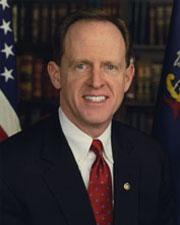 Sen. Patrick J. Toomey (R-PA)
Sen. Patrick J. Toomey (R-PA)Submitted March 7, 2016
Legislative Activity
Stay on top of the latest movement without scrolling through every action
Floor
Latest Action
Senate amendment submitted
March 7, 2016
View full timeline
Floor
Senate amendment submitted
March 7, 2016
Floor
Senate amendment submitted
March 7, 2016
Text
Submitted
SA 3428. Mr. CORNYN (for Mr. Toomey) submitted an amendment intended
to be proposed by Mr. Cornyn to the bill S. 524, to authorize the
Attorney General to award grants to address the national epidemics of
prescription opioid abuse and heroin use; which was ordered to lie on
the table; as follows:

At the end, add the following:

TITLE VIII--IMPROVEMENTS TO OPIOID ADDICTION TREATMENT

SEC. 801. REGISTRATION REQUIREMENTS.

(a) In General.--Section 303(g)(2)(B) of the Controlled
Substances Act (21 U.S.C. 823(g)(2)(B)) is amended--
(1) by striking clause (ii), and inserting the following:
``(ii) With respect to patients to whom the practitioner
will provide such drugs or combinations of drugs, the
practitioner complies with the following requirements:
``(I) The practitioner provides, either directly or through
referral, biopsychosocial counseling services for their
patients' opioid addiction on a regular basis. The
practitioner shall not prescribe medications listed in this
subparagraph to any patient who does not receive
biopsychosocial counseling services regularly. For the
purposes of this subclause, `regularly' means weekly for the
first 2 months of the treatment of the patient and monthly
for each month thereafter during the treatment, unless
otherwise established by the State in which the physician is
licensed for the purposes of programs established under
paragraph (1). The practitioner shall regularly consult with
the practitioner providing the counseling, which shall be
provided by a program counselor, qualified by education,
training, or experience to assess the psychosocial and
sociological background of patients, to contribute to the
appropriate treatment plan for the patient and to monitor
patient progress.
``(II) The practitioner conducts toxicology tests to
determine presence of illicit drugs, to ensure patient is
taking prescribed medication and to guide clinical decision
making including not fewer than 8 random drug abuse tests per
year, per patient in maintenance treatment, in accordance
with generally accepted clinical practice. For patients in
short-term detoxification treatment, the practitioner shall
perform not less than 1 initial drug abuse test. For patients
receiving long-term detoxification treatment, the
practitioner shall perform initial and monthly random tests
on each patient.
``(III) The practitioner fully participates in and consults
the prescription drug monitoring program of the State in
which the qualifying practitioner is licensed, pursuant to
applicable State guidelines, to ensure patient is not being
prescribed opiates elsewhere.
``(IV) The practitioner evaluates the patient in the office
setting not less frequently than once per month to determine
patient's individual needs to address the patient's opioid
addiction.
``(V) The practitioner uses the American Society of
Addiction Medicine Patient Placement Criteria to guide
patient assessment, service planning and level of care
decisions.
``(VI) The practitioner follows the Treatment Improvement
Protocols of the Substance Abuse and Mental Health Services
Administration for best practice guidelines, which shall be
updated, not later than 1 year after the date of enactment of
this clause, to fully incorporate all opioid addiction
treatment medications approved by the Food and Drug
Administration.
``(VII) The practitioner has completed--

``(aa) not less than 24 hours of training (through
classroom situations, seminars at professional society
meetings, electronic communications, or similar mediums) with
respect to the treatment and management of opiate-dependent
patients for substance use disorders provided by the American
Society of Addiction Medicine, the American Academy of
Addiction Psychiatry, the American

[[Page S1317]]

Medical Association, the American Osteopathic Association,
the American Psychiatric Association, or any other
organization that the Secretary determines is appropriate for
purposes of this subclause; and
``(bb) not less than 8 hours of continuing medical
education training in addiction medicine on an annual basis.

``(VIII)(aa) The practitioner--

``(AA) educates patients about the full range of opioid
addiction treatment medications that are approved by the Food
and Drug Administration; and
``(BB) based on the medical judgement of the practitioner,
patient preference, and clinical assessment using validated,
evidenced-based assessment tools, provides all opioid
addiction treatment medications approved by the Food and Drug
Administration, except schedule II substances, directly or by
referral, as permitted and available.

``(bb) Nothing in this subclause shall be construed to
allow a practitioner registered under this subsection to
prescribe or dispense schedule II substances to treat opioid
addiction.''; and
(2) by striking clause (iii) and inserting the following:
``(iii) The total number of patients of the practitioner at
any one time will not exceed the applicable number. For the
purposes of this clause, the applicable number is 45, unless
not sooner than 1 year after the date on which the
practitioner submitted the initial notification, the
practitioner submits a second notification to the Secretary
of the need and intent of the practitioner to treat up to 150
patients. A second notification under this clause shall
contain the certifications required by clauses (i) and
(ii).''.
(b) Rulemaking.--Not later than 1 year after the date of
enactment of this Act, the Attorney General and the Secretary
of Health and Human Services, as the case may be, shall
promulgate rules to carry out the amendments made by
subsection (a).

SEC. 802. DATA COLLECTION.

The Secretary of Health and Human Services, acting through
the Administrator of the Substance Abuse and Mental Health
Services Administration, shall establish procedures to
require that a physician who have received a waiver under
section 303(g) of the Controlled Substances Act (21 U.S.C.
823(g)) submit to the Administration the following
information on a quarterly basis:
(1) The number of patients the physician is treating
relative to the licensed maximum capacity of the physician.
(2) With respect to the health facility in which the
physician is providing services, the percentage of physicians
providing counseling services on-site and the percentage of
patients in counseling and how frequently patients are
utilizing such services.
(3) With respect to the health facility in which the
physician is providing services, the percentage of physicians
referring patients for counseling services off-site and the
percentage of these patients in counseling and how frequently
the patients are utilizing such services.
(4) The frequency with which the physician utilizes
toxicology testing to guide therapeutic dosing and treatment
decision making.
(5) The median patient length of time in treatment.
(6) The rate of patient dropout against medical advice.
(7) The rate and type of illicit drug use (opiate and non-
opiate) by patients of the physician in the past 30 days.
(8) With respect to the health facility in which the
physician is providing services, the percentage of physicians
employing medication diversion control strategies.
(9) The median duration per buprenorphine prescription
written by the physician.
(10) Patient demographics including age, gender, and payer
source (such as Medicaid, private insurance, or other types
of payment).
(11) Other information that the Secretary determines to be
relevant to determine the quality of care being provided to
opioid-addicted patients.

SEC. 803. GAO REPORT ON OPIOID ADDICTION TREATMENT IN THE
PHYSICIAN OFFICE SETTING.

(a) Report.--Not later than 2 years after the date of
enactment of this Act, the Comptroller General of the United
States shall submit to the Committee on Health, Education,
Labor and Pensions of the Senate and the Committee on Energy
and Commerce of the House of Representatives a report on the
impact the amendments made by section 801 have had on the
quality of care being delivered by physicians who have
received a waiver under section 303(g) of the Controlled
Substances Act (21 U.S.C. 823(g)) and the impact such
amendments have had on access to care.
(b) Recommendations.--The report required under subsection
(a) shall include recommendations to improve opioid addiction
treatment outcomes in the physician office setting.
(c) Required Consultation.--In developing the methodology
of and considering recommendations to be included in the
report required under subsection (a), the Comptroller General
of the United States shall consult with interested parties
who specialize in addiction treatment, such as--
(1) the American Academy of Addiction Psychiatry;
(2) the American Association for the Treatment of Opioid
Dependence;
(3) the American Osteopathic;
(4) the Academy of Addiction Medicine;
(5) the American Psychiatric Association;
(6) the American Society of Addiction Medicine;
(7) the National Association of State Alcohol and Drug
Abuse Directors; and
(8) the National Council for Behavioral Health.

SEC. 804. OFFSET.

If the Secretary of Health and Human Services determines
that the amendments made by section 801 will result in an
increase in Federal spending, the Secretary shall reduce the
funds available under section 4002 of the Patient Protection
and Affordable Care Act (42 U.S.C. 300u-11) by such sums
necessary to fully offset the cost associated with the
amendments made by section 801.
______