S.Amdt. 3721Senate114th Congress (2015-2017)2nd degree
S.Amdt. 3721
Sponsored by 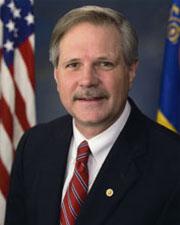 Sen. John Hoeven (R-ND)
Sen. John Hoeven (R-ND)Submitted April 13, 2016
Legislative Activity
Stay on top of the latest movement without scrolling through every action
Floor
Latest Action
Senate amendment submitted
April 13, 2016
View full timeline
Floor
Senate amendment submitted
April 13, 2016
Floor
Senate amendment submitted
April 13, 2016
Text
Submitted
SA 3721. Mr. HOEVEN submitted an amendment intended to be proposed to
amendment SA 3679 proposed by Mr. McConnell (for Mr. Thune (for himself
and Mr. Nelson)) to the bill H.R. 636, to amend the Internal Revenue
Code of 1986 to permanently extend increased expensing limitations, and
for other purposes; which was ordered to lie on the table; as follows:

Strike section 2138 and insert the following:

SEC. 2138. UNMANNED AIRCRAFT SYSTEMS TRAFFIC MANAGEMENT.

(a) Research Plan for Utm Development.--
(1) In general.--The Administrator of the Federal Aviation
Administration, in coordination with the Administrator of the
National Aeronautics and Space Administration, shall develop
a research plan for unmanned aircraft systems traffic
management (referred to in this section as ``UTM'')
development.
(2) Requirements.--In developing the research plan under
paragraph (1), the Administrator shall--
(A) identify research goals related to--
(i) operational parameters related to altitude, geographic
coverage, classes of airspace, and critical infrastructure;
(ii) avionics capability requirements or standards;
(iii) operator identification and authentication
requirements and capabilities;
(iv) communication protocols with air traffic control
facilities that will not interfere with existing
responsibility to deconflict manned aircraft in the national
airspace system;
(v) collision avoidance requirements;
(vi) separation standards for manned and unmanned aircraft;
(vii) spectrum needs; and
(viii) provision of traffic position information and
weather through a traffic information service to operators of
unmanned aircraft systems;
(B) evaluate options for the administration and management
structure for the traffic management of low altitude
operations of small unmanned aircraft systems;

[[Page S2041]]

(C) ensure the plan is consistent with the broader Federal
Aviation Administration regulatory and operational framework
encompassing all unmanned aircraft systems operations
expected to be authorized in the national airspace system;
and
(D) ensure the plan utilizes existing surveillance networks
and services provided under the surveillance and broadcast
services program, augmented as necessary with additional
surveillance assets to provide additional low altitude
coverage.
(3) Assessment.--The research plan under paragraph (1)
shall include an assessment of--
(A) the ability to allow near-term small unmanned aircraft
system operations without need of an automated UTM system;
(B) the full range of operational capability any automated
UTM system should possess;
(C) the operational characteristics and metrics that would
drive incremental adoption of automated capability and
procedures consistent with a rising aggregate community
demand for service for low altitude operations of small
unmanned aircraft systems;
(D) the integration points for small unmanned aircraft
system traffic management with the existing national airspace
system planning and traffic management systems; and
(E) the ability of a common air traffic surveillance
platform to provide situational awareness for beyond-line-of-
sight operations.
(4) Deadlines.--The Administrator shall--
(A) initiate development of the research plan not later
than 90 days after the date of enactment of this Act; and
(B) not later than 180 days after the date of enactment of
this Act--
(i) complete the research plan;
(ii) submit the research plan to the appropriate committees
of Congress; and
(iii) publish the research plan on the Federal Aviation
Administration's Web site.
(b) Pilot Program.--
(1) In general.--Not later than 120 days after the date the
research plan under subsection (a) is submitted under
paragraph (4)(B) of that subsection, the Administrator of the
Federal Aviation Administration shall coordinate with the
Administrator of the National Aeronautics and Space
Administration and the small unmanned aircraft systems
industry to develop operational concepts and top-level system
requirements for a UTM system pilot program, consistent with
subsection (a).
(2) Use of center of excellence and test sites.--In
developing and carrying out the pilot program under this
subsection, the Administrator shall, to the maximum extent
practicable, leverage the capabilities of and utilize the
Center of Excellence for Unmanned Aircraft Systems and the
test sites (as defined by section 44801 of title 49, United
States Code, as added by section 2121).
(3) Solicitation.--The Administrator shall issue a
solicitation for operational prototype systems that meet the
necessary objectives for use in a pilot program to
demonstrate, validate, or modify, as appropriate, the
requirements developed under paragraph (1).
(c) Comprehensive Plan.--
(1) In general.--Not later than 270 days after the date the
pilot program under subsection (b) is complete, the
Administrator of the Federal Aviation Administration, in
coordination with the Administrator of the National
Aeronautics and Space Administration, and in consultation
with the head of each relevant Federal agency, shall develop
a comprehensive plan for the deployment of UTM systems in the
national airspace.
(2) System requirements.--The comprehensive plan under
paragraph (1) shall include requirements or standards
consistent with established or planned rulemaking for, at a
minimum--
(A) the flight of small unmanned aircraft systems in
controlled and uncontrolled airspace;
(B) communications, as applicable--
(i) among small unmanned aircraft systems;
(ii) between small unmanned aircraft systems and manned
aircraft operating in the same airspace; and
(iii) between small unmanned aircraft systems and air
traffic control as considered necessary;
(C) air traffic management for small unmanned aircraft
systems operations; and
(D) networked air traffic surveillance.
(d) System Implementation.--Based on the comprehensive plan
under subsection (c), including the requirements under
paragraph (2) of that subsection, and the pilot program under
subsection (b), the Administrator shall determine the
operational need and implementation schedule for evolutionary
use of automation support systems to separate and deconflict
manned and unmanned aircraft systems.
______