To continue cleaning up fields and streams while protecting neighborhoods, generating affordable energy, and creating jobs.
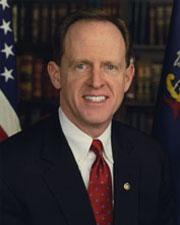 Sen. Patrick J. Toomey (R-PA)
Legislative Activity
Stay on top of the latest movement without scrolling through every action
Senate amendment not agreed to: Amendment SA 41, under the order of 1/21/15, not having achieved 60 votes in the affirmative, was not agreed to in Senate by Yea-Nay Vote. 54 - 45. Record Vote Number: 9.
January 21, 2015
View full timeline
Senate amendment not agreed to: Amendment SA 41, under the order of 1/21/15, not having achieved 60 votes in the affirmative, was not agreed to in Senate by Yea-Nay Vote. 54 - 45. Record Vote Number: 9.
January 21, 2015
Roll call votes on amendments in Senate: Amendment SA 41, under the order of 1/21/15, not having achieved 60 votes in the affirmative, was not agreed to in Senate by Yea-Nay Vote. 54 - 45. Record Vote Number: 9.
January 21, 2015
Considered by Senate. (consideration: CR S311, S329-330)
January 21, 2015
Amendment SA 41, under the order of 1/21/15, not having achieved 60 votes in the affirmative, was not agreed to in Senate by Yea-Nay Vote. 54 - 45. Record Vote Number: 9.
January 21, 2015
Senate amendment proposed (on the floor): Amendment SA 41 proposed by Senator Murkowski for Senator Toomey to Amendment SA 2.(consideration: CR S270; text: CR S270)
January 20, 2015
Amendment SA 41 proposed by Senator Murkowski for Senator Toomey to Amendment SA 2. (consideration: CR S270; text: CR S270) To continue cleaning up fields and streams while protecting neighborhoods, generating affordable energy, and creating jobs.
January 20, 2015
Senate amendment submitted
January 16, 2015
Senate amendment submitted
January 16, 2015
Votes
1 roll call on this amendment
Text
Submitted
SA 41. Mr. TOOMEY (for himself, Mr. Casey, and Mr. Hatch) submitted
an amendment intended to be proposed by him to the bill S. 1, to
approve the Keystone XL Pipeline; which was ordered to lie on the
table; as follows:

At the appropriate place, insert the following:

SEC. __. STANDARDS FOR COAL REFUSE POWER PLANTS.

(a) Findings.--Congress finds that--
(1) 19th-century mining operations left behind more than
2,000,000,000 tons of coal refuse on surface land in various
coal mining regions of the United States;
(2) coal refuse piles--
(A) pose significant environmental risks;
(B) have contaminated more than 180,000 acres of land and
streams; and
(C) are susceptible to fires that endanger public health
and emit an estimated 9,000,000 tons of carbon dioxide each
year, in addition to other uncontrolled pollutants;
(3) the Environmental Protection Agency, the Office of
Surface Mining Reclamation and Enforcement, and the
Department of Environmental Protection of the State of
Pennsylvania recognize the significant public

[[Page S242]]

health benefits of power plants that use coal refuse as fuel;
(4) since the inception of coal refuse power plants, the
plants have removed 210,000,000 tons of coal refuse and
restored 8,200 acres of contaminated land; and
(5) due to the unique nature of coal refuse and the power
plants that use coal refuse as a fuel, those plants face
distinct economic and technical obstacles to achieving
compliance with regulatory standards established for
traditional coal-fired power plants.
(b) Definition of Coal Refuse.--In this section, the term
``coal refuse'' means any byproduct of coal mining, physical
coal cleaning, or coal preparation operations that contains
coal, matrix material, clay, and other organic and inorganic
material.
(c) Emission Limitations for Certain Electric Utility Steam
Generating Units.--
(1) In general.--The general emission limitations
established by the Environmental Protection Agency in the
final rule entitled ``Federal Implementation Plans:
Interstate Transport of Fine Particulate Matter and Ozone and
Correction of SIP Approvals'' (76 Fed. Reg. 48208 (August 8,
2011)) (or a successor regulation) shall not apply to an
electric utility steam generating unit described in paragraph
(3).
(2) Hydrogen chloride and sulfur dioxide.--The emission
limitations for hydrogen chloride and sulfur dioxide
contained in table 2 of subpart UUUUU of part 63 of title 40,
Code of Federal Regulations (or successor regulations),
entitled ``Emission Limits for Existing EGUs'' shall not
apply to an electric utility steam generating unit described
in paragraph (3).
(3) Description of electric utility steam generating
units.--An electric utility steam generating unit referred to
in paragraphs (1) and (2) is an electric utility steam
generating unit that--
(A) is in operation as of the date of enactment of this
Act;
(B) uses fluidized bed combustion technology to convert
coal refuse into energy; and
(C) uses coal refuse as at least 50 percent of the annual
fuel consumed, by weight, of the unit.
(d) Effective Date.--Notwithstanding any other provision of
this Act, this section takes effect on the date of enactment
of this Act.
______