S.Amdt. 4581Senate114th Congress (2015-2017)
S.Amdt. 4581
Sponsored by 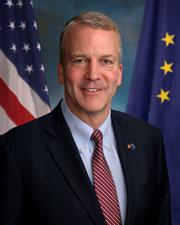 Sen. Dan Sullivan (R-AK)
Sen. Dan Sullivan (R-AK)Submitted June 8, 2016
Legislative Activity
Stay on top of the latest movement without scrolling through every action
Floor
Latest Action
Senate amendment submitted
June 8, 2016
View full timeline
Floor
Senate amendment submitted
June 8, 2016
Floor
Senate amendment submitted
June 8, 2016
Text
Submitted
SA 4581. Mr. SULLIVAN submitted an amendment intended to be proposed
by him to the bill S. 2943, to authorize appropriations for fiscal year
2017 for military activities of the Department of Defense, for military
construction, and for defense activities of the Department of Energy,
to prescribe military personnel strengths for such fiscal year, and for
other purposes; which was ordered to lie on the table; as follows:

On page 1049, strike lines 14 through 16 and insert the
following:

through the program, and the specific military operations
conducted.
(4) Each partner country or ally, if any, included in the
military operations.
(c) Form.--Each report under this section shall be
submitted in unclassified form.

SEC. 1241A. UNITED STATES POLICY WITH RESPECT TO FREEDOM OF
NAVIGATION OPERATIONS AND OVERFLIGHT BEYOND THE
TERRITORIAL SEA.

(a) Findings.--Congress makes the following findings:
(1) Since the Declaration of Independence in 1776, which
was inspired in part as a response to a ``tyrant'' who
``plundered our seas, ravaged our Coasts'' and who wrote laws
``for cutting off our Trade with all parts of the world'',
freedom of seas and promotion of international commerce have
been core security interests of the United States.
(2) Article I, section 8 of the Constitution of the United
States establishes enumerated powers for Congress which
include regulating commerce with foreign nations, punishing
piracies and felonies committed on the high seas and offenses
against the law of nations, and providing and maintaining a
Navy.
(3) For centuries, the United States has maintained a
bedrock commitment to ensuring the right to freedom of
navigation for all law-abiding parties in every region of the
world.
(4) In support of international law, the longstanding
United States commitment to freedom of navigation and
ensuring the free access to sea lanes to promote global
commerce remains a core security interest of the United
States.
(5) This is particularly true in areas of the world that
are critical transportation corridors and key routes for
global commerce, such as the South China Sea and the East
China Sea, through which a significant portion of global
commerce transits.
(6) The consistent exercise of freedom of navigation
operations and overflights by United States naval and air
forces throughout the world plays a critical role in
safeguarding the freedom of the seas for all lawful nations,
supporting international law, and ensuring the continued safe
passage and promotion of global commerce and trade.
(b) Declaration of Policy.--It is the policy of the United
States to fly, sail, and operate throughout the oceans, seas,
and airspace of the world wherever international law allows.
(c) Implementation of Policy.--In furtherance of the policy
set forth in subsection (b), the Secretary of Defense shall--
(1) plan and execute a robust series of routine and regular
naval presence missions and freedom of navigation operations
(FONOPs) throughout the world, with a particular emphasis on
critical transportation corridors and key routes for global
commerce (such as the South China Sea and the East China
Sea);
(2) execute, in such critical transportation corridors,
routine and regular naval presence missions and maritime
freedom of navigation operations throughout the year;
(3) give preference in freedom of navigation operations to
unlawful or excessive maritime coastal state claims that have
not been challenged within the past three years;
(4) in addition to the operations executed pursuant to
paragraph (2), execute routine and regular maritime freedom
of navigation operations throughout the year, in accordance
with international law, including the use of expanded
military options and maneuvers beyond innocent passage
(including operating under normal military conditions inside
12 nautical miles of features determined to be low-tide
elevations); and
(5) to the maximum extent practicable, execute freedom of
navigation operations pursuant to this subsection with
regional partner countries and allies of the United States.
______