S.Amdt. 5050Senate114th Congress (2015-2017)2nd degree
S.Amdt. 5050
Sponsored by 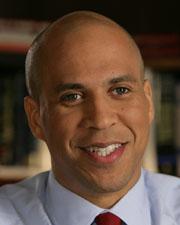 Sen. Cory A. Booker (D-NJ)
Sen. Cory A. Booker (D-NJ)Submitted September 12, 2016
Legislative Activity
Stay on top of the latest movement without scrolling through every action
Floor
Latest Action
Senate amendment submitted
September 12, 2016
View full timeline
Floor
Senate amendment submitted
September 12, 2016
Floor
Senate amendment submitted
September 12, 2016
Text
Submitted
SA 5050. Mr. BOOKER submitted an amendment intended to be proposed to
amendment SA 4979 proposed by Mr. McConnell (for Mr. Inhofe (for
himself and Mrs. Boxer)) to the bill S. 2848, to provide for the
conservation and development of water and related resources, to
authorize the Secretary of the Army to construct various projects for
improvements to rivers and harbors of the United States, and for other
purposes; which was ordered to lie on the table; as follows:

At the end of title VIII, add the following:

SEC. 8___. WATER INFRASTRUCTURE AND WORKFORCE INVESTMENT.

(a) Findings.--Congress finds that--
(1) utilities and local governments invest significant
resources in planning, designing, constructing, operating,
and maintaining water, wastewater, and stormwater systems--
(A) to ensure a safe and reliable water supply for
customers; and
(B) to maintain public health, safety, and environmental
quality;
(2) during the 10-year period beginning on the date of
enactment of this Act, 30 of the largest water and wastewater
utilities in the United States will--
(A) invest $233,000,000,000 in operating and capital
spending; and
(B) support 290,000 jobs annually;
(3) every $1,000,000,000 in Federal investment in water and
wastewater infrastructure creates an estimated 26,000 jobs;
(4) jobs in the water and wastewater sector, including
apprenticeship positions, typically pay more than 3 times the
minimum wage;
(5) the median age of water sector workers is 48 years old,
which is 6 years older than the national median age of
workers;
(6) water and wastewater utilities anticipate unprecedented
workforce replacement needs over the 10-year period described
in paragraph (2) because 37 percent of water utility workers
and 31 percent of wastewater utility workers will retire
during that period;
(7) during the period described in paragraph (6), workforce
replacement needs in the water sector will exceed the 23-
percent nationwide replacement need of the total workforce;
and
(8) water infrastructure projects and permanent water
utility jobs can offer access to stable, high-quality jobs
with competitive wages and benefits.
(b) Sense of Congress.--It is the sense of Congress that--
(1) water and wastewater utilities provide a unique
opportunity for access to stable, high-quality careers;
(2) as water and wastewater utilities make critical
investments in infrastructure, water and wastewater utilities
can invest in the development of local workers and local
small businesses to strengthen communities and ensure a
strong pipeline of skilled and diverse workers for today and
tomorrow; and
(3) to further the goal of ensuring a strong pipeline of
skilled and diverse workers in the water and wastewater
utilities sector, Congress urges--
(A) increased collaboration among Federal, State, and local
governments; and
(B) institutions of higher education, apprentice programs,
high schools, and other community-based organizations to
align workforce training programs and community resources
with water and wastewater utilities to accelerate career
pipelines and provide access to workforce opportunities.
(c) Innovative Water Infrastructure Workforce Development
Program.--
(1) Grants authorized.--The Administrator of the
Environmental Protection Agency and the Secretary shall
establish a competitive grant program to assist the
development of innovative activities relating to workforce
development in the water utility sector.
(2) Selection of grant recipients.--In awarding grants
under paragraph (1), the Administrator or the Secretary, as
applicable, shall, to the maximum extent practicable, select
water utilities that--
(A) are geographically diverse;
(B) address the workforce and human resources needs of
large and small public water and wastewater utilities;
(C) address the workforce and human resources needs of
urban and rural public water and wastewater utilities;
(D) advance training relating to construction, utility
operations, treatment and distribution, green infrastructure,
customer service, maintenance, and engineering; and
(E)(i) have a high retiring workforce rate; or
(ii) are located in areas with a high unemployment rate.
(3) Use of funds.--Grants awarded under paragraph (1) may
be used for activities such as--
(A) targeted internship, apprenticeship, preapprenticeship,
and post-secondary bridge programs for mission-critical
skilled trades, in collaboration with labor organizations,
community colleges, and other training and education
institutions that provide--
(i) on-the-job training;
(ii) soft and hard skills development;
(iii) test preparation for skilled trade apprenticeships;
or
(iv) other support services to facilitate post-secondary
success;
(B) kindergarten through 12th grade and young adult
education programs that--
(i) educate young people about the role of water and
wastewater utilities in the communities of the young people;
(ii) increase the career awareness and exposure of the
young people to water utility careers through various work-
based learning opportunities inside and outside the
classroom; and
(iii) connect young people to post-secondary career
pathways related to water utilities;
(C) regional industry and workforce development
collaborations to identify water utility employment needs,
map existing career pathways, support the development of
curricula, facilitate the sharing of resources, and
coordinate candidate development, staff preparedness efforts,
and activities that engage and support--
(i) water utilities employers;
(ii) educational and training institutions;
(iii) local community-based organizations;
(iv) public workforce agencies; and
(v) other related stakeholders;
(D) integrated learning laboratories embedded in high
schools or other secondary

[[Page S5581]]

educational institutions that provide students with--
(i) hands-on, contextualized learning opportunities;
(ii) dual enrollment credit for post-secondary education
and training programs; and
(iii) direct connection to industry employers; and
(E) leadership development, occupational training,
mentoring, or cross-training programs that ensure that
incumbent water and wastewater utilities workers are prepared
for higher-level supervisory or management-level positions.
______