To establish a spending-neutral reserve fund relating to prohibiting the designation of critical habitat.
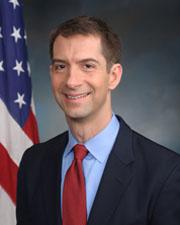 Sen. Tom Cotton (R-AR)
Legislative Activity
Stay on top of the latest movement without scrolling through every action
Senate amendment agreed to: Amendment SA 659 agreed to in Senate by Yea-Nay Vote. 52 - 42. Record Vote Number: 128.
March 27, 2015
View full timeline
Senate amendment agreed to: Amendment SA 659 agreed to in Senate by Yea-Nay Vote. 52 - 42. Record Vote Number: 128.
March 27, 2015
Roll call votes on amendments in Senate: Amendment SA 659 agreed to in Senate by Yea-Nay Vote. 52 - 42. Record Vote Number: 128.
March 27, 2015
Amendment SA 659 agreed to in Senate by Yea-Nay Vote. 52 - 42. Record Vote Number: 128.
March 27, 2015
Senate amendment proposed (on the floor): Amendment SA 659 proposed by Senator Enzi for Senator Cotton.(consideration: CR S1995-1997, S2009-2010; text: CR S1996)
March 26, 2015
Amendment SA 659 proposed by Senator Enzi for Senator Cotton. (consideration: CR S1995-1997, S2009-2010; text: CR S1996) To establish a spending-neutral reserve fund relating to prohibiting the designation of critical habitat.
March 26, 2015
Senate amendment submitted
March 25, 2015
Senate amendment submitted
March 25, 2015
Votes
1 roll call on this amendment
Text
Submitted
SA 659. Mr. COTTON submitted an amendment intended to be proposed by
him to the concurrent resolution S. Con. Res. 11, setting forth the
congressional budget for the United States Government for fiscal year
2016 and setting forth the appropriate budgetary levels for fiscal
years 2017 through 2025; which was ordered to lie on the table; as
follows:

At the appropriate place, insert the following:

SEC. ___. SPENDING-NEUTRAL RESERVE FUND RELATING TO ENSURING
PROPER ECONOMIC CONSIDERATION IN DESIGNATION OF
CRITICAL HABITAT.

The Chairman of the Committee on the Budget of the Senate
may revise the allocations of a committee or committees,
aggregates, and other appropriate levels in this resolution
for one or more bills, joint resolutions, amendments,
amendments between the Houses, motions, or conference reports
relating to critical habitat designations, which may include
requirements that the United States Fish and Wildlife Service
examine the cumulative economic effects of the designation,
such as on land or property uses or values, regional
employment, or revenue impacts on States and units of local
government, by the amounts provided in such legislation for
those purposes, provided that such legislation would not
raise new revenue and would not increase the deficit over
either the period of the total of fiscal years 2016 through
2020 or the period of the total of fiscal years 2016 through
2025.
______