S.Amdt. 2013Senate115th Congress (2017-2019)
S.Amdt. 2013
Sponsored by 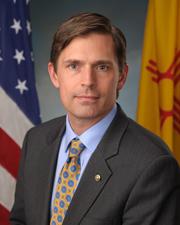 Sen. Martin Heinrich (D-NM)
Sen. Martin Heinrich (D-NM)Submitted February 14, 2018
Legislative Activity
Stay on top of the latest movement without scrolling through every action
Floor
Latest Action
Senate amendment submitted
February 14, 2018
Text
Submitted
SA 2013. Mr. HEINRICH (for himself and Mr. Udall) submitted an
amendment intended to be proposed by him to the bill H.R. 2579, to
amend the Internal Revenue Code of 1986 to allow the premium tax credit
with respect to unsubsidized COBRA continuation coverage; which was
ordered to lie on the table; as follows:

At the appropriate place, insert the following:

SEC. __. STANDARDS FOR SHORT-TERM CUSTODY BY U.S. CUSTOMS AND
BORDER PROTECTION.

(a) Report.--
(1) In general.--Not later than 180 days after the date of
the enactment of this Act, the Secretary of Homeland Security
shall submit to Congress a report on the status of the
Transport, Escort, Detention and Search (TEDS) policy for
short-term custody of individuals by U.S. Customs and Border
Protection.
(2) Elements.--The report required under paragraph (1)
shall include the following elements.
(A) An assessment of whether Border Patrol and the Office
of Field Operations have adopted and are implementing more
detailed, component-specific standards to supplement the TEDS
policy in accordance with subsection (b) and the status of
implementation of the TEDS policy among the various
components of U.S. Customs and Border Protection.
(B) A description of the frequency and findings of U.S.
Customs and Border Protection audits and investigations into
compliance with the TEDS policy and supplemental policies.
(b) Standards of Care.--
(1) In general.--The TEDS policy and additional standards
created by Border Patrol and the Office of Field Operations
must ensure basic minimum levels of care at all facilities of
U.S. Customs and Border Protection that hold individuals in
custody, including Border Patrol stations, ports of entry,
checkpoints, forward operating bases, secondary inspection
areas, and short-term custody facilities. Such care shall
include standards with respect to--
(A) limits on detention space capacity by facility and also
by holding room or individual cell;
(B) the availability of potable water and nutritionally and
culturally appropriate food;
(C) access to bathroom facilities and hygiene items,
including soap, feminine hygiene products, toothpaste,
toothbrushes and towels, and showers for those held for 24
hours or longer;
(D) adequate climate control and provision of adequate
clothing;
(E) reasonable sleeping arrangements for all detainees held
for longer than 12 hours, including access to beds and
adequate bedding;
(F) access to telephones;
(G) access to lawyers, consular officials, family members,
and nongovernmental organizations;
(H) language-appropriate forms and materials that include
information regarding legal rights, including contact
information for the United Nations Refugee Agency and the
National Trafficking Hotline, as well as the consequences of
signing such forms, in a language the detainee is known to
understand;
(I) protocols for communicating the information on those
forms and materials orally to detainees in a language they
are known to understand;
(J) appropriate care for pregnant women and individuals
with medical needs, including a prohibition on shackling or
restraint of pregnant women absent truly extraordinary
circumstances (and never during active labor or delivery);
(K) appropriate medical screening and care for all
detainees, overseen by a trained medical professional,
including access to emergency medical care and prescribed
medications whenever medically appropriate;
(L) reasonable accommodations in accordance with the
Americans with Disabilities Act of 1990 (42 U.S.C. 12101 et
seq.);
(M) reasonable access to facilities and visitation policies
for nongovernmental organizations;
(N) a transparent, independent, and responsive grievance
system widely publicized within facilities in multiple
languages, including access to the Office for Civil Rights
and Civil Liberties' toll-free number and the complaints
number described in the above section;
(O) protocols for identifying asylum-seekers who require
credible fear screenings and for video recording of those
screenings;
(P) safely transferring detainees to facilities of U.S.
Immigration and Customs Enforcement with attention paid to
ensuring regular meals, medication doses, and rest for
detainees;
(Q) returning all money and nonperishable personal property
(other than prohibited contraband) to former detainees prior
to transfer, repatriation, or release, in coordination with
other State and Federal agencies as necessary;
(R) compliance with the Prison Rape Elimination Act of 2003
(34 U.S.C. 30301 et seq.), including by requiring regular
independent PREA audits, ensuring that all detainees are able
to make prompt, confidential sexual abuse complaints to a
staffed telephone hotline in multiple languages, and
requiring formal, comprehensive PREA compliance training of
all U.S. Customs and Border Protection staff with detention-
related responsibilities; and
(S) compliance with the Victims of Child Abuse Act (42
U.S.C. 1303) and implementing regulations, to ensure that
officials are aware of their obligations to report all
allegations of child abuse and of the criminal penalties for
failure to do so in accordance with section 2258 of title 18,
United States Code.
(c) Monitoring and Oversight.--
(1) Interim oversight.--Until the TEDS policy and
supplemental policies have been implemented and are being
adhered to in accordance with subsection (b), the Secretary
of Homeland Security shall direct oversight

[[Page S1126]]

of the U.S. Customs and Border Protection facilities that
provide short-term custody to ensure that humane standards of
care addressing all of the requirements set forth in such
subsection are made publicly available and are being
implemented throughout the agency.
(2) Access for lop providers and counsel.--Not later than
90 days after the date of the enactment of this Act, the
Secretary of Homeland Security shall direct U.S. Customs and
Border Protection to allow Legal Orientation Program (LOP)
providers and counsel access to migrants held in U.S. Customs
and Border Protection short-term custody facilities.
(3) Site visits.--The Department of Homeland Security
Office of the Inspector General shall conduct site visits to
all short-term detention facilities at least every six months
and issue annual inspection reports assessing each facility's
compliance with the requirements set forth in subsection (b),
along with recommendations for improvement as needed, and
promptly make those reports publicly available.
______