S.Amdt. 2166Senate115th Congress (2017-2019)
S.Amdt. 2166
Sponsored by 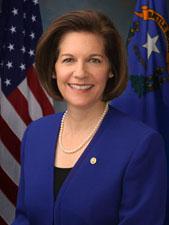 Sen. Catherine Cortez Masto (D-NV)
Sen. Catherine Cortez Masto (D-NV)Submitted March 8, 2018
Legislative Activity
Stay on top of the latest movement without scrolling through every action
Floor
Latest Action
Senate amendment submitted
March 8, 2018
Text
Submitted
SA 2166. Ms. CORTEZ MASTO submitted an amendment intended to be
proposed by her to the bill S. 2155, to promote economic growth,
provide tailored regulatory relief, and enhance consumer protections,
and for other purposes; which was ordered to lie on the table; as
follows:

At the appropriate place, insert the following:

SEC. __. FINDINGS.

Congress finds the following:
(1) Findings on the costs of the financial crisis.--
(A) The 2007-2008 financial crisis, which led to the near-
total collapse of the global financial system had both
measurable and immeasurable costs to the economy of the
United States and virtually every working family, throwing
the United States into the longest and deepest recession in
generations. The costs of that crisis are staggering and
long-lasting by every measure.
(B) The crisis ravaged our economy, costing more than
$16,000,000,000,000 or about $120,000 for every United States
household.
(C) Tens of millions of Americans lost their jobs as the
number of unemployed climbed to 14,700,000 over the course of
the recession, and the number of underemployed and
discouraged job seekers who gave up work rose to 12,000,000,
a 94 percent increase.
(D) The unemployment rate also shot up to a high of 10
percent, up from 6.6 percent in October 2008. Research shows
that many young people who entered into a terrible job market
will suffer permanently lower income prospects over the
course of their careers.
(E) During the 2007-2008 financial crisis, known as the
``Great Recession'', long-term unemployment was significantly
higher and persisted longer than in any previous period in
data that go back to the late 1940s.
(F) At the outset of the recovery from the Great Recession
there were 7 people looking for jobs for every one opening.
(G) The consequences of the crisis were particularly severe
for minority populations. In late 2009, white Americans
jobless rate peaked at 9.2 percent. For African-Americans,
however, the jobless rate climbed as high as a staggering
16.8 percent in March 2010. Additionally, the jobless rate
for Hispanics hit a peak of 13 percent in August 2009.
(H) Facing mounting unemployment and in many cases harsh
and deceptive mortgage servicing practices, foreclosures
displaced more than 11,000,000 Americans, which pushed down
home prices, contributing to an average decline in home
values of more than 30 percent.
(I) As many lost their jobs, they also lost their health
insurance, driving nearly 4,000,000 Americans into the
Medicaid program in 2009 alone.
(J) Median family income fell to $45,800 in 2010 from
$49,600 in 2007, with low-income and middle-class families
sustaining the largest percentage losses in both wealth and
income during the crisis.
(K) Once again, the Great Recession had the most profound
impact on African-Americans whose wealth declined by
approximately 52 percent, and Latino households

[[Page S1587]]

whose wealth declined by 66 percent, compared to a 16 percent
decrease in wealth for White households.
(L) The Great Recession also reduced the value of homes
disproportionately for minorities, as the average real home
values for Latino homeowners decreased nearly $100,000 or 35
percent and nearly $69,000 or 31 percent for African-American
homeowners, while the average home values for White
homeowners fell 15 percent over this same period.
(M) Equity investments also dramatically declined, with the
stock market falling by more than 50 percent in just 18
months, from October 2007 to March 2009.
(N) Declining stock market values also hit assets in
retirement accounts such as 401(k)s that lost
$2,800,000,000,000, or about one third of their value between
September 2007 and December 2008.
(O) Home prices across the nation fell about 30 percent
from their peak in April 2006 until the end of the recession
in June 2009.
(P) The poverty rate steadily rose 2.5 percentage points
from 2007 to 2012, with 46,500,000 people living in poverty
in 2012.
(Q) Real Gross Domestic Product in the United States in the
fourth quarter of 2008, and the first and second quarters of
2009, decreased by an annual rate of about 5.4 percent, 6.4
percent, and 0.7 percent, respectively.
(R) Just as so many Americans had lost their jobs, their
homes, and their retirement savings through no fault of their
own, making it harder and harder for Americans to draw on
credit to make ends meet. Faced with financial difficulty,
more than 1,400,000 households declared bankruptcy in 2009,
on top of the 1,100,000 who did so in 2008.
(S) From 2008 to 2014, more than 500 financial institutions
failed.
(T) In addition to households, businesses (particularly
small businesses) felt the effects of the crisis. Unlike
larger firms which rely more on capital markets for funding,
small businesses, which are more dependent on capital from
traditional banks, other financial institutions, or the
personal borrowing by owners, were hit hard by the credit
crunch which made credit more scarce and expensive. With
nearly 40 percent of the country's private-sector workforce
employed by small businesses, the economic impact was
substantial.
(U) The United States Government created various emergency
programs and provided more than $12,000,000,000,000 in direct
support to the United States financial institutions, not
including pre-crisis provisions such as deposit insurance
limits by the Federal Deposit Insurance Corporation and the
traditional monetary policy operations and lender-of-last-
resort functions of the Board of Governors of the Federal
Reserve System.
(V) After the worst of the crisis subsided, it became clear
that a massive reform of the financial system of the United
States was necessary to reset the economy and prevent a
future crisis.
(W) The Dodd-Frank Wall Street Reform and Consumer
Protection Act accomplished that goal, providing
accountability, transparency and creating a stable financial
system essential to grow the economy and create jobs.
(X) U.S. authorities collected more than $150,000,000,000
in fines from financial institutions for deceptive practices
involving subprime mortgages since the beginning of the
credit crisis in 2007, including for systemic failures in
record retention, mortgage servicing errors or abuses,
misleading investors with fraudulent underwriting, inflated
appraisals, and misstating capital levels.
(2) Findings of the financial crisis inquiry commission.--
(A) Established as part of the of the Fraud Enforcement and
Recovery Act (Public Law 111-21) passed by Congress and
signed by the President in May 2009, the Financial Crisis
Inquiry Commission was created to ``examine the causes,
domestic and global, of the current financial and economic
crisis in the United States.''.
(B) The majority report issued by the Commission found that
the crisis was primarily caused by the collapse of a housing
bubble that was fueled by deteriorating mortgage lending
standards and mortgage securitization. The majority report
specifically concluded that--
(i) the crisis was avoidable because it was the product of
human action and inaction, both by regulators and in the
private sector, in the face of numerous clear warning signs;
(ii) widespread failures in financial regulation and
supervision were devastating; for example, the Board of
Governors of the Federal Reserve System failed to write
mortgage rules, the Office of the Comptroller of the Currency
and the Office of Thrift Supervision preempted State
regulators from reining in mortgage abuses, the Securities
and Exchange Commission failed to regulate investment banks,
and the Federal Reserve Bank of New York and other regulators
failed to stem excesses at large companies and did not
identify problems and take corrective action towards troubled
companies until it was too late;
(iii) there were dramatic failures of corporate governance
and risk management at many systemically important firms, as
companies recklessly took on risk, including enormous
exposures to subprime mortgages and mortgage-related
securities, because mathematical models were over-relied
upon, compensation structures rewarded short-term risk
without regard for longer-term consequences, and management
often was ignorant of significant risk-taking, which enabled
a combination of excessive borrowing, risky investments, and
lack of transparency that put the financial system on a
collision course with crisis;
(iv) companies took on excessive amounts of leverage, often
through non-transparent off-balance-sheet vehicles or over-
the-counter (OTC) derivatives, and relied excessively on
short-term borrowing; borrowed funds were often used to
acquire risky assets;
(v) the Government was ill-prepared for the crisis, largely
because of lack of transparency in key markets, and
inconsistent Government decisions about whether to save
failing firms increased uncertainty and panic;
(vi) regulators did not foresee the broad systemic effects
caused by the bursting of the housing bubble and did not
fully appreciate the dire condition of Fannie Mae and Freddie
Mac until just before taking it over;
(vii) there was a systemic breakdown in accountability and
ethics, in which borrowers took out loans they had no
ability, sometimes even no intention, to repay and lenders
knowingly made such loans, while securitizers packaged loans
without regard to quality and regulators failed to say
``no'';
(viii) collapsing mortgage lending standards and the
mortgage securitization pipeline lit and spread the flame of
contagion and crisis;
(ix) lenders offloaded risks associated with bad loans by
selling them into a secondary market in which investors were
eager to buy mortgage-related securities, which transformed
toxic mortgages into toxic securities that were spread to
investors around the globe;
(x) OTC derivatives contributed significantly to the
crisis;
(xi) credit default swaps fueled mortgage securitization
and enabled creation of synthetic collateralized debt
obligations, which amplified losses by allowing multiple bets
on the same securities which were spread throughout the
system; and
(xii) failures of the credit rating agencies were essential
cogs in the wheel of financial destruction because they gave
seals of approval, which investors blindly relied upon, to
poor-quality mortgages and mortgage-backed securities based
on inadequate analytical models.
(3) Findings on the economy since the enactment of the
dodd-frank act.--
(A) Since enactment of the Dodd-Frank Wall Street Reform
and Consumer Protection Act in the third quarter of 2010, the
United States economy has grown by 16.1 percent, more than
twice as fast as other advanced economies such as the Euro
Area and Japan.
(B) Since passage of the Act, the economy has added a total
of 17,607,000 private sector jobs, and the unemployment rate
has fallen to 4.1 percent in January 2018 from the crisis
high of 10 percent.
(C) Average hourly earnings for private employees increased
nearly 3 percent in 2016, the fastest 12-month pace since the
financial crisis. Average hourly earnings for private
employees increased nearly 2.5 percent in 2017. From January
2017 to January 2018, average hourly earnings for private
employees increased by .8 percent.
(D) According to the most recent data, community banks,
which represent 92 percent of all insured institutions, are
posting record profits since the crisis. In the third quarter
of 2017, community banks posted a net income of
$6,000,000,000, a 9.4 percent increase from the same quarter
in 2016.
(E) In the first quarter of 2011, just before the Bureau of
Consumer Financial Protection opened its doors, banks
collectively posted profits of $29,000,000,000. In 2016, the
industry set an all-time record of $171,300,000,000 in
profits. In the most recent quarter, banks posted profits of
$47,900,000,000, a 5.2 percent increase from the same quarter
in 2016.
(F) Since 2009, corporate profits in the financial sector
have steadily increased. From 2010 to the third quarter of
2017, total profits after tax have increased by 26.4 percent.
(G) In 2017, the percentage of unprofitable banks decreased
to 3.9 percent of all institutions insured by the Federal
Deposit Insurance Corporation in the third quarter of 2017
from 4.6 percent of all institutions insured by the Federal
Deposit Insurance Corporation in the third quarter of 2016.
Only 21 banks failed between 2015 and 2018.
(H) Community banks showed strong growth in residential,
commercial, and industrial loans, and in small business
lending. In fact, overall loan growth at community banks has
been faster than at bigger banks. In the fourth quarter of
2016, lending was up 7.3 percent for community banks, and 3.5
percent for all institutions insured by the Federal Deposit
Insurance Corporation.
(I) Federally insured credit unions have substantially
increased membership, assets, net income, and loans since the
Bureau of Consumer Financial Protection opened its doors in
2011. Credit union membership has expanded by 20,400,000
since 2010, which now stands at more than 111,900,000 members
nationwide.
(J) Risk-weighted capital in the United States banking
sector has increased by 41 percent since 2009, meaning that
banks are significantly safer today than prior to the
financial crisis.
(K) United States taxpayers gave $187,000.000,000 to Fannie
Mae and Freddie Mac. As the enterprises have stabilized, they

[[Page S1588]]

have paid back $271,000,000,000 to the Department of the
Treasury. In total, the Department of the Treasury spent
$626,400,000,000 in funds, and taxpayers have received
$713,400,000,000 in refunds, dividends, interest, warrants,
and other proceeds.
______