S.Amdt. 2367Senate115th Congress (2017-2019)2nd degree
S.Amdt. 2367
Sponsored by 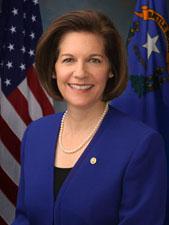 Sen. Catherine Cortez Masto (D-NV)
Sen. Catherine Cortez Masto (D-NV)Submitted June 6, 2018
Legislative Activity
Stay on top of the latest movement without scrolling through every action
Floor
Latest Action
Senate amendment submitted
June 6, 2018
Text
Submitted
SA 2367. Ms. CORTEZ MASTO (for herself, Mr. Moran, and Mr. Hatch)
submitted an amendment intended to be proposed to amendment SA 2282
submitted by Mr. Inhofe (for himself and Mr. McCain) and intended to be
proposed to the bill H.R. 5515, to authorize appropriations for fiscal
year 2019 for military activities of the Department of Defense, for
military construction, and for defense activities of the Department of
Energy, to prescribe military personnel strengths for such fiscal year,
and for other purposes; which was ordered to lie on the table; as
follows:

At the end of subtitle C of title III, add the following:

SEC. 322. REPORT ON AIR FORCE TRAINING RANGE REQUIREMENTS TO
ADDRESS FIFTH GENERATION THREATS.

(a) Findings.--Congress makes the following findings:
(1) The Department of Defense needs to ensure that air
training ranges are properly equipped to prepare pilots for
operating in any battlespace where they may have to operate.
(2) The ongoing development of anti-aircraft technology
among near-peer competitors of the United States, and the
proliferation of that technology to a widening array of
potential battlefields, necessitates maximum preparedness
among United States fighter and bomber pilots.
(3) Years of focusing on low intensity stability operations
and multiple budget cycles under spending caps have resulted
in an under capitalization of fifth generation training
resources.
(b) Report.--Not later than 90 days after the date of the
enactment of this Act, the Secretary of the Air Force shall
submit to the congressional defense committees a report on
the needs of the Air Force to ensure pilots can train against
the full range of fifth generation threats at training
ranges, including--
(1) the appropriate mix of live and virtual threats that
should be available on the training ranges;
(2) the need to have threat representative simulators at
those training ranges;
(3) the plan to meet those needs;
(4) the resources required to meet those needs; and
(5) the timeline for meeting those needs.
______