S.Amdt. 2377Senate115th Congress (2017-2019)2nd degree
S.Amdt. 2377
Sponsored by 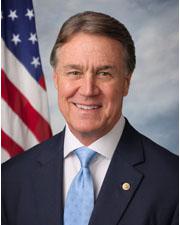 Sen. David Perdue (R-GA)
Sen. David Perdue (R-GA)Submitted June 7, 2018
Legislative Activity
Stay on top of the latest movement without scrolling through every action
Floor
Latest Action
Senate amendment submitted
June 7, 2018
Text
Submitted
SA 2377. Mr. PERDUE submitted an amendment intended to be proposed to
amendment SA 2282 submitted by Mr. Inhofe (for himself and Mr. McCain)
and intended to be proposed to the bill H.R. 5515, to authorize
appropriations for fiscal year 2019 for military activities of the
Department of Defense, for military construction, and for defense
activities of the Department of Energy, to prescribe military personnel
strengths for such fiscal year, and for other purposes; which was
ordered to lie on the table; as follows:

At the end of subtitle G of title XII, add the following:

SEC. 12__. SENSE OF CONGRESS ON INCREASES IN DEFENSE
CAPABILITIES OF UNITED STATES ALLIES.

Congress makes the following findings:
(1) For over six decades, the North Atlantic Treaty
Organization (NATO) has been a successful intergovernmental,
political, and military alliance.
(2) The collective defense of the North Atlantic Treaty
Organization acts as a deterrent to aggression in which the
alliance defends member countries (referred to in this
section as ``NATO allies'') against external security
threats.
(3) The North Atlantic Treaty Organization strengthens the
security of the United States by using an integrated military
coalition.
(4) While the Federation of Russia has continued to
threaten the sovereignty of countries in Europe and exhibit
threatening behavior toward the military assets of the United
States, the North Atlantic Treaty Organization sends a clear
collective message that the alliance will not tolerate
provocation by Russia.
(5) Article 3 of the North Atlantic Treaty states that ``in
order more effectively to achieve the objectives of this
Treaty, the Parties, separately and jointly, by means of
continuous and effective self-help and mutual aid, will
maintain and develop their individual and collective capacity
to resist armed attack''.
(6) The first defense-spending target of the North Atlantic
Treaty Organization was issued over 40 years ago in the 1977
NATO Ministerial Guidance, which set a 3 percent target for
growth in defense expenditures to answer the nearly three
times larger defense resource allocations of the Soviet
Union.
(7) At the 2002 NATO Prague Summit, NATO allies entered
into a nonbinding agreement to raise defense spending to 2
percent of the gross domestic product of the member states to
meet the goals set forth in the Prague Capabilities
Commitment.
(8) One month before the 2006 NATO Riga Summit, United
States ambassador to the North Atlantic Treaty Organization,
Victoria Nuland, called the 2 percent metric the ``unofficial
floor'' on defense spending in the North Atlantic Treaty
Organization.
(9) At the 2006 NATO Riga Summit, NATO allies declared ``we
encourage nations whose defense spending is declining to halt
that decline and to aim to increase defense spending in real
terms''.
(10) In 2008, at the NATO Bucharest Summit, NATO allies
reaffirmed their defense spending agreement.
(11) In 2014, at the NATO Wales Summit, NATO allies
officially declared to increase their defense spending to 2
percent of their gross domestic product by 2024.
(12) The Wales Summit Declaration stated, ``Allies
currently meeting the NATO guideline to spend a minimum of 2
percent of their Gross Domestic Product (GDP) on defense will
aim to continue to do so. Likewise, Allies spending more than
20 percent of their defense budgets on major equipment,
including related Research & Development, will continue to do
so. Allies whose current proportion of GDP spent on defense
is below this level will: halt any decline in defense
expenditure; aim to increase defense expenditure in real
terms as GDP grows; aim to move towards the 2 percent
guideline within a decade with a view to meeting their NATO
Capability Targets and filling NATO's capability
shortfalls.''.
(13) The 2016 Warsaw Summit Communique stated, ``Today,
five Allies meet the NATO guideline to spend a minimum of 2
percent of their Gross Domestic Product on defense. Ten
Allies meet the NATO guideline to spend more than 20 percent
of their defense budgets on major equipment, including
related Research & Development.''.
(14) As of June 2018, 15 of the 29 NATO allies are expected
to reach the goal of spending two percent of gross domestic
product on defense by 2024.
(15) It is the sense of Congress that the President, in
furtherance of increased unity, equitable sharing of the
common defense burden, and international stability, should--
(A) encourage all NATO allies to fulfill their commitments
to levels and composition of defense expenditures as agreed
at the NATO 2014 Wales Summit and NATO 2016 Warsaw Summit;
(B) call on NATO allies to finance, equip, and train their
armed forces to fulfill their national and regional security
interests; and
(C) recognize NATO allies that are meeting their defense
spending commitments or otherwise providing adequately for
their national and regional security interests.
______