S.Amdt. 2407Senate115th Congress (2017-2019)2nd degree
S.Amdt. 2407
Sponsored by 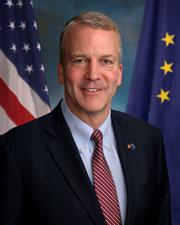 Sen. Dan Sullivan (R-AK)
Sen. Dan Sullivan (R-AK)Submitted June 7, 2018
Legislative Activity
Stay on top of the latest movement without scrolling through every action
Floor
Latest Action
Senate amendment submitted
June 7, 2018
Text
Submitted
SA 2407. Mr. SULLIVAN submitted an amendment intended to be proposed
to amendment SA 2282 submitted by Mr. Inhofe (for himself and Mr.
McCain) and intended to be proposed to the bill H.R. 5515, to authorize
appropriations for fiscal year 2019 for military activities of the
Department of Defense, for military construction, and for defense
activities of the Department of Energy, to prescribe military personnel
strengths for such fiscal year, and for other purposes; which was
ordered to lie on the table; as follows:

At the end of subtitle E of title XII, add the following:

SEC. ____. QUADRILATERAL DIALOGUE AND TRILATERAL FRAMEWORK.

(a) Findings.--Congress makes the following findings:
(1) The 2017 National Security Strategy of the United
States declares the following:
(A) ``We welcome India's emergence as a leading global
power and stronger strategic and defense partner.''.
(B) ``We will seek to increase quadrilateral cooperation
with Japan, Australia, and India.''.
(C) ``We will expand our defense and security cooperation
with India, a Major Defense Partner of the United States, and
support India's growing relationships throughout the
region.''.
(2) At an October 2017 hearing of the Committee on Armed
Services of the Senate, with respect to the political and
security situation in Afghanistan, Secretary of Defense James
Mattis discussed the role of India and stated the following:
(A) ``It's a strategic convergence, a generational
opportunity between the two largest democracies in the world
to work together, based on those shared interests of peace,
of prosperity, of stability in the region, and India is
coming into its own.''.
(B) ``[India's] going to be a global player, as Prime
Minister Modi takes them forward economically to a much
higher level of living for his people, to a bigger role in
the world, and that role, from our perspective, is a wholly
positive one right now.''.
(C) ``And I think we are natural partners, India and the
United States, and we recognize each other's sovereignty. We
have respect for each other. But we also see the opportunity
we're presented with right now.''.
(3) In September 2017, General Joseph Dunford, Chairman of
the Joint Chiefs of Staff stated the following:
(A) ``With regard to India, the President called on India
to invest more in development projects in Afghanistan, and
India appears eager to do more beyond the roughly
$3,000,000,000 in development assistance it has provided
since 2001.''.
(B) ``From the military dimension, I believe India has the
capacity to provide additional training and equipment to
build capacity of the Afghan National Defense and Security
Forces.''.
(C) ``The U.S.-India military relationship is strong and
getting stronger, and our two countries cooperate through
complex exercises such as MALABAR in the Bay of Bengal as
well as robust engagement through defense trade and
technology cooperation.''.
(D) ``A long term strategic security relationship with
India is critical to ensuring freedom of navigation in the
Indian Ocean, and the United States and India should continue
to expand cooperation in areas of mutual interest like
maritime security.''.
(E) ``We should also continue to strengthen our defense
relationship by pursuing opportunities to co-develop and co-
produce defense technology under the U.S.-India Defense
Technology and Trade Initiative.''.
(4) In March 2018, Admiral Harry Harris, Commander of
United States Pacific Command (USPACOM), stated the
following:
(A) ``The U.S.-India strategic partnership continues to
advance at a historic pace and has the potential to be the
most consequential bilateral relationship of the 21st
century.''.
(B) ``The United States and India maintain a broad-based
strategic partnership that is underpinned by shared
democratic values, interests, and strong people-to-people
ties, and I expect 2018 to be a significant and eventful year
in United States-India relations.''.
(C) ``The United States and India are natural partners on a
range of political, economic, and security issues, and with a
mutual desire for global stability and support for the rules-
based international order, the United States and India have
an increasing

[[Page S3323]]

convergence of interests, including maritime security and
domain awareness, counter-piracy, counterterrorism,
humanitarian assistance, and coordinated responses to natural
disasters and transnational threats.''.
(D) ``India will be among the United States's most
significant partners in the years to come due to its growing
influence and expanding military.''.
(E) ``As a new generation of political leaders emerge,
India has shown that it is more open to strengthening
security ties with the United States and adjusting its
historic policy of non-alignment to address common strategic
interests.''.
(F) ``The United States seeks an enduring, regular,
routine, and institutionalized strategic partnership with
India, and USPACOM identifies a security relationship with
India as a major command line-of-effort.''.
(G) ``Over the past year, United States and Indian
militaries participated together in three major exercises,
executed more than 50 other military exchanges, and
operationalized the 2016 Logistics Exchange Memorandum of
Agreement (LEMOA).''.
(5) In February 2017, General John Nicholson, Commander of
the United States Forces in Afghanistan, stated, ``With over
$2,000,000,000 development aid executed since 2002, and
another $1,000,000,000 pledged in 2016, India's significant
investments in Afghan infrastructure, engineering, training,
and humanitarian issues will help develop Afghan human
capital and long-term stability.''.
(b) Quadrilateral Dialogue.--
(1) In general.--To enhance defense cooperation among the
United States, Australia, India, and Japan, the Secretary of
Defense, as part of a larger whole-of-government effort, may
initiate a quadrilateral dialogue among representatives of
the Governments of the United States, Australia, India, and
Japan to develop a mission statement that reflects areas of
common security interests including--
(A) a values-based and rules-based regional order;
(B) the importance of freedom of navigation and maritime
security; and
(C) the acceptance of internationally recognized borders.
(2) Designation of official.--To enhance defense
cooperation among the United States, Australia, India, and
Japan, the Secretary may designate an official of the
executive branch--
(A) to formulate a regional framework to address potential
areas of military collaboration including--
(i) maritime security and domain awareness;
(ii) combined logistics;
(iii) multilateral training and exercise opportunities;
(iv) enhances interoperability of capabilities;
(v) combating terrorism and the proliferation of weapons of
mass destruction;
(vi) cyber defense;
(vii) cooperative weapons development and production; and
(viii) developing a strategy to pool or share capabilities;
(B) to identify opportunities to conduct bilateral,
trilateral, or quadrilateral joint maritime patrols;
(C) to bolster maritime presence and military capacity
building among the United States, Australia, India, and Japan
(commonly referred to as ``Quad-centered'') in the Indian
Ocean for greater maritime domain awareness;
(D) to identify opportunities for--
(i) joint intelligence, surveillance, and reconnaissance
operations; and
(ii) intelligence sharing;
(E) to seek additional opportunities for major military
exercises and military exchanges;
(F) to establish a combined joint task force for low-
intensity operations in the Indo-Pacific region, such as
counter piracy and humanitarian and disaster relief, that--
(i) is inclusive of the navy of the each of the United
States, Australia, India, and Japan;
(ii) establishes clear norms; and
(iii) improve lines of communication; and
(G) to engage with other allies and partners, international
frameworks, and other countries as the Secretary considers
appropriate.
(c) Trilateral Framework.--
(1) Designation of official.--To enhance defense
cooperation among the United States, Afghanistan, and India
and to promote mutual priorities for security assistance in
Afghanistan, the Secretary may, subject to paragraph (2),
designate an official of the executive branch--
(A) to initiate a trilateral framework among
representatives of the Governments of the United States,
Afghanistan, and India--
(i) to identify means of improving the coordination and
delivery of humanitarian assistance and disaster relief
capabilities to Afghanistan by the militaries of the United
States, Afghanistan, and India to improve joint military
response to current and anticipated humanitarian needs in
Afghanistan; and
(ii) to identify gaps in the capabilities of the
Afghanistan security forces and determine means of addressing
such gaps; and
(B) to advocate for necessary capabilities, especially
capabilities for meeting critical, short-term needs
identified by the commander of United States Armed Forces
participating in Operation Resolute Support in Afghanistan.
(2) Position of designated official.--The official
designated under paragraph (1) shall be an official in a
position with responsibility for security assistance and
defense cooperation.
______