S.Amdt. 2656Senate115th Congress (2017-2019)2nd degree
S.Amdt. 2656
Sponsored by 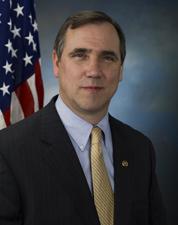 Sen. Jeff Merkley (D-OR)
Sen. Jeff Merkley (D-OR)Submitted June 11, 2018
Legislative Activity
Stay on top of the latest movement without scrolling through every action
Floor
Latest Action
Senate amendment submitted
June 11, 2018
Text
Submitted
SA 2656. Mr. MERKLEY submitted an amendment intended to be proposed
to amendment SA 2282 submitted by Mr. Inhofe (for himself and Mr.
McCain) and intended to be proposed to the bill H.R. 5515, to authorize
appropriations for fiscal year 2019 for military activities of the
Department of Defense, for military construction, and for defense
activities of the Department of Energy, to prescribe military personnel
strengths for such fiscal year, and for other purposes; which was
ordered to lie on the table; as follows:

At the end of subtitle F of title XII, add the following:

SEC. __. REPORT ON EFFORTS IN AFGHANISTAN.

(a) Findings.--The Senate makes the following findings:
(1) After more than 16 years, the conflict in Afghanistan
continues to present a whole-of-government challenge to the
United States.
(2) More than $800,000,000,000, or by some estimates,
trillions of taxpayer dollars have been spent on the conflict
in Afghanistan.
(3) More than 2,200 United States lives have been lost, and
more than 20,000 Americans have been wounded in operations in
Afghanistan.
(4) The efforts and investment of the United States in
Afghanistan have been undermined by endemic corruption, which
is a strategic threat to United States interests that has
cost United States taxpayers billions of dollars. Systemic
corruption in Afghanistan continues to compromise the
effectiveness of United States programs and has a negative
impact on the ability of the United States to build trust and
credibility with communities in Afghanistan.
(5) The May 2018 Special Investigation General for
Afghanistan Reconstruction report on the United States
stabilization strategy and associated programs in Afghanistan
made the following findings:
(A) The United States Government greatly overestimated its
ability to build and reform government institutions in
Afghanistan as part of its stabilization strategy.
(B) The stabilization strategy and the programs used to
achieve such strategy were not properly tailored to the
Afghan context.
(C) The large sums of stabilization dollars the United
States devoted to Afghanistan in search of quick gains often
exacerbated conflicts, enabled corruption, and bolstered
support for insurgents.
(D) Since the coalition prioritized the most dangerous
districts first, the coalition continuously struggled to
clear the districts of insurgents, and as a result, the
coalition did not make sufficient progress to convince
Afghans in such districts that the government could protect
them if they openly turned against the insurgents;

[[Page S3637]]

(E) Efforts by United States agencies to monitor and
evaluate stabilization programs were generally poor.
(F) Successes in stabilizing Afghan districts rarely lasted
longer than the physical presence of coalition troops and
civilians.
(G) Stabilization was most successful in areas that were
clearly under the physical control of government security
forces, had a modicum of local governance in place prior to
programming, were supported by coalition forces and civilians
who recognized the value of close cooperation, and were
continuously engaged by their government as programming
ramped up.
(b) Sense of Senate.--It is the sense of the Senate that
United States strategy on engagement in Afghanistan should
approach the challenges described in subsection (a) with
coordinated diplomatic, security, and development efforts
that include--
(1) a view toward assisting the Afghan government and
people, at every level, in transitioning towards sustainable
independence and stability;
(2) accountability for adherence to the rule of law and
support for human rights; and
(3) the goal of ending United States military presence in
Afghanistan.
(c) Report.--
(1) In general.--Not later than 180 days after the date of
enactment of this Act, the Secretary of Defense, in
coordination with the heads of each Federal agency involved,
shall submit to the appropriate committees of Congress a
report detailing the United States whole-of-government
efforts in Afghanistan.
(2) Elements.--The report required by paragraph (1) shall
include the following:
(A) The United States diplomatic strategy on Afghanistan,
including--
(i) efforts to support and assist effective governance at
the Federal level and foster cooperation and mutual
accountability between the Government of Afghanistan and
provincial and local leadership in Afghanistan;
(ii) efforts to ensure that Afghan partners at all levels
demonstrate accountability for--

(I) adhering to the rule of law; and
(II) ensuring that women, children, and marginalized groups
are protected and crimes or abuses against such groups are
fully investigated and prosecuted;

(iii) efforts to promote cooperation among the various
ethnic communities of Afghanistan;
(iv) efforts to support and encourage reconciliation
between the Government of Afghanistan and insurgent groups
such as the Taliban, while continuing to counter the
destabilizing actions of terrorist groups;
(v) efforts to support institutional reforms, especially
those relating to anti-corruption, inclusive governance,
electoral reforms, and financial transparency;
(vi) efforts to encourage the neighbors of Afghanistan to
cooperate in support of Afghan security and economic
stability and promote regional investment in development and
political solutions; and
(vii) efforts to ensure that partner governments and
organizations are actively working to support access by women
to education, political representation, employment, medical
care, housing, and other economic opportunities.
(B) The United States defense and security strategy on
Afghanistan, including--
(i) United States force levels in Afghanistan and the
missions to which such forces are dedicated;
(ii) prospects and a timeframe for completely transitioning
responsibility for security to the Afghan National Defense
and Security Forces; and
(iii) assessments of law enforcement training efforts and
measurable impact.
(C) The United States development strategy in Afghanistan,
including-
(i) the ability of the Department of State and the United
States Agency for International Development to deliver,
monitor, and evaluate development assistance;
(ii) the ability of the World Bank to deliver, monitor, and
evaluate on-budget development assistance;
(iii) estimates of the cost to United States and World Bank
programs due to corruption, fraud, waste, and abuse in
implementation and other stages of development projects, and
including an assessment of preventative and punitive efforts
taken by the Government of Afghanistan and others to
consistently confront corruption, fraud, waste, and abuse;
(iv) an assessment of the measurable impacts of United
States-taxpayer funded development efforts since 2002;
(v) the ability of the Government of Afghanistan and non-
governmental institutions in Afghanistan to absorb
development assistance at a pace that builds towards
incremental independent sustainability;
(vi) the social and political impacts of corruption in the
Government of Afghanistan, and at local government levels, on
the sustainability of planned or implemented development
efforts, and an assessment of the means and prospects for
preventing, investigating, and ensuring accountability for
incidents of corruption; and
(vii) the limitation on development efforts as a result of
the unstable security conditions in Afghanistan.
(3) Form.--The report required by paragraph (1) shall be
submitted in unclassified form, but may include a classified
annex.
(d) Appropriate Committees of Congress.--In this section,
the term ``appropriate committees of Congress'' means--
(1) the Committee on Armed Services, the Committee on
Foreign Relations, the Committee on the Judiciary, and the
Select Committee on Intelligence of the Senate; and
(2) the Committee on Armed Services, the Committee on
Foreign Affairs, the Committee on the Judiciary, and the
Permanent Select Committee on Intelligence of the House of
Representatives.
______