S.Amdt. 2762Senate115th Congress (2017-2019)2nd degree
S.Amdt. 2762
Sponsored by 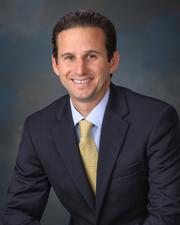 Sen. Brian Schatz (D-HI)
Sen. Brian Schatz (D-HI)Submitted June 11, 2018
Legislative Activity
Stay on top of the latest movement without scrolling through every action
Floor
Latest Action
Senate amendment submitted
June 11, 2018
Text
Submitted
SA 2762. Mr. SCHATZ submitted an amendment intended to be proposed to
amendment SA 2282 proposed by Mr. Inhofe (for himself and Mr. McCain)
to the bill H.R. 5515, to authorize appropriations for fiscal year 2019
for military activities of the Department of Defense, for military
construction, and for defense activities of the Department of Energy,
to prescribe military personnel strengths for such fiscal year, and for
other purposes; which was ordered to lie on the table; as follows:

At the appropriate place in title V, insert the following:

SEC. ___. INITIATIVE ON IMPROVING THE CAPACITY OF MILITARY
LAW ENFORCEMENT TO PREVENT CHILD SEXUAL
EXPLOITATION.

(a) In General.--Not later than 180 days after the date of
the enactment of this Act, the Under Secretary of Defense for
Personnel and Readiness shall establish an initiative on
improving the capacity of military law enforcement to prevent
child sexual exploitation. Under the initiative, the Under
Secretary shall assess the feasibility and advisability of
working with an external partner to train military law
enforcement officials at Department of Defense installations,
from all military departments, regarding online investigative
technology, tools, and techniques, computer forensics,
complex evidentiary issues, child victim identification,
child victim referral for treatment and services, and related
instruction.
(b) Partnerships and Agreements.--Under the initiative, the
Under Secretary shall develop partnerships and establish
collaborative agreements with the following:
(1) A highly qualified national child protection
organization or law enforcement training center with
demonstrated expertise in the delivery of law enforcement
training to detect, identify, investigate, and prosecute
individuals engaged in the trading or production of child
pornography and the online solicitation of children.
(2) A highly qualified national child protection
organization with demonstrated expertise in the delivery of
intervention services for victims of child sexual
exploitation to partner with military installations in the
delivery of trainings on trauma-informed mental health
therapies, such as Trauma-Focused Cognitive Behavioral
Therapy, Child and Family Traumatic Stress Intervention, and
other trauma-focused modalities that can be used to
compliment and maximize the effectiveness of the
multidisciplinary team approach.
(3) A national network of civilian providers located in
same communities as military installations that deliver the
children's advocacy center model of a multidisciplinary team
response and child-friendly approach to identifying,
investigating, prosecuting, and intervening in child sexual
exploitation cases that can partner with military
installations on law enforcement, child protection,
prosecution, mental health, medical and victim advocacy to
investigate sexual exploitation, help children heal from
sexual exploitation, and hold offenders accountable.
(4) State and local authorities to address law enforcement
capacity in communities where military installations are
located, and to prevent lapses in jurisdiction that would
undercut the Department's efforts to prevent child sexual
exploitation.
(5) The National Association to Protect Children and the
United States Special Operations Command Care Coalition to
replicate successful outcomes of the Human Exploitation
Rescue Operative (HERO) Child Rescue Corps program within
military criminal investigative organizations and other
Department components to combat child sexual exploitation.
(c) Locations.--
(1) In general.--The Under Secretary shall carry out the
initiative--
(A) in at least two States where there is a high density of
Department network users in comparison to the overall
population of the States;
(B) in at least two States where there is a high population
of Department network users;
(C) in at least two States where there is a large
percentage of Indian children, including children who are
Alaska Natives or Native Hawaiians;
(D) in at least one State with a population with fewer than
2,000,000 people;
(E) in at least one State with a population with fewer than
5,000,000 people, but not fewer than 2,000,000 people;
(F) in at least one State with a population with fewer than
10,000,000 people, but not fewer than 5,000,000; and
(G) in at least one State with a population with 10,000,000
or more people.
(2) Geographic distribution.--The Under Secretary shall
ensure that the locations at which the initiative is carried
out are distributed across different regions.
(d) Additional Requirements.--In carrying out the
initiative, the Under Secretary shall--
(1) participate in multi-jurisdictional task forces;
(2) establish cooperative agreements to facilitate co-
training and collaboration with Federal, State, and local law
enforcement; and
(3) develop a streamlined process to refer child sexual
abuse cases to other jurisdictions.
______