S.Amdt. 2796Senate115th Congress (2017-2019)2nd degree
S.Amdt. 2796
Sponsored by 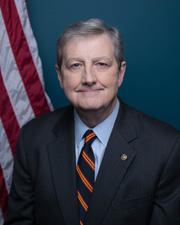 Sen. John Kennedy (R-LA)
Sen. John Kennedy (R-LA)Submitted June 12, 2018
Legislative Activity
Stay on top of the latest movement without scrolling through every action
Floor
Latest Action
Senate amendment submitted
June 12, 2018
Text
Submitted
SA 2796. Mr. KENNEDY submitted an amendment intended to be proposed
to amendment SA 2282 proposed by Mr. Inhofe (for himself and Mr.
McCain) to the bill H.R. 5515, to authorize appropriations for fiscal
year 2019 for military activities of the Department of Defense, for
military construction, and for defense activities of the Department of
Energy, to prescribe military personnel strengths for such fiscal year,
and for other purposes; which was ordered to lie on the table; as
follows:

At the end of subtitle I of title VIII, add the following:

SEC. 896. COMMERCIALIZATION ASSISTANCE PILOT PROGRAM.

Section 9 of the Small Business Act (15 U.S.C. 638) is
amended by adding at the end the following:
``(tt) Commercialization Assistance Pilot Programs.--
``(1) Pilot programs implemented.--
``(A) In general.--Except as provided in subparagraph (B),
not later than 1 year after the date of enactment of this
subsection, a covered agency shall implement a
commercialization assistance pilot program under which an
eligible entity may receive a subsequent Phase II SBIR award.
``(B) Exception.--If the Administrator determines that a
covered agency has a program that is sufficiently similar to
the commercialization assistance pilot program established
under this subsection, the covered agency shall not be
required to implement a commercialization assistance pilot
program under this subsection.
``(2) Percent of agency funds.--The head of each covered
agency may allocate not more than 5 percent of the funds
allocated to the SBIR program of the covered agency for the
purpose of making a subsequent Phase II SBIR award under the
commercialization assistance pilot program.
``(3) Termination.--A commercialization assistance pilot
program established under this subsection shall terminate on
September 30, 2022.
``(4) Application.--To be selected to receive a subsequent
Phase II SBIR award under a commercialization assistance
pilot program, an eligible entity shall submit to the covered
agency implementing the pilot program an application at such
time, in such manner, and containing such information as the
covered agency may require, including--
``(A) an updated Phase II commercialization plan; and
``(B) the source and amount of the matching funding
required under paragraph (5).
``(5) Matching funding.--
``(A) In general.--The Administrator shall require, as a
condition of any subsequent Phase II SBIR award made to an
eligible entity under this subsection, that a matching amount
(excluding any fees collected by the eligible entity
receiving the award) equal to the amount of the award be
provided from an eligible third party investor.
``(B) Ineligible sources.--An eligible entity may not use
funding from ineligible sources to meet the matching
requirement of subparagraph (A).
``(C) Exception.--The Administrator shall not require, as a
condition of any subsequent Phase II SBIR award made to an
eligible entity under this subsection, a matching amount if
the eligible entity is located in an underperforming State.
``(6) Award.--A subsequent Phase II SBIR award made to an
eligible entity under this subsection--
``(A) may not exceed the limitation described under
subsection (aa)(1); and
``(B) shall be disbursed during Phase II.
``(7) Use of funds.--The funds awarded to an eligible
entity under this subsection may only be used for research
and development activities that build on Phase II program of
the eligible entity's and ensure the research funded under
that Phase II is rapidly progressing towards
commercialization.
``(8) Selection.--In selecting eligible entities to
participate in a commercialization assistance pilot program
under this subsection, the head of a covered agency shall
consider--
``(A) the extent to which the award could aid the eligible
entity in commercializing the research funded under the Phase
II program of the eligible entity;
``(B) whether the updated Phase II commercialization plan
submitted under paragraph (4) provides a sound approach for
establishing technical feasibility that could lead to
commercialization of the research;
``(C) whether the proposed activities to be conducted under
the updated Phase II commercialization plan further improve
the likelihood that the research will provide societal
benefits;
``(D) whether the small business concern has progressed
satisfactorily in Phase II to justify receipt of a subsequent
Phase II SBIR award;
``(E) the expectations of the eligible third party investor
that provides matching funding under paragraph (5); and
``(F) the likelihood that the proposed activities to be
conducted under the updated Phase II commercialization plan
using matching funding provided by the eligible third party
investor will lead to commercial and societal benefit.
``(9) Evaluation report.--Not later than 3 years after the
date of enactment of this subsection, the Comptroller General
of the United States shall submit to the Committee on Small
Business and Entrepreneurship of the Senate and the Committee
on Science, Space, and Technology and the Committee on Small
Business of the House of Representatives a report including--
``(A) a summary of the activities of commercialization
assistance pilot programs carried out under this subsection;
``(B) a detailed compilation of results achieved by those
commercialization assistance pilot programs, including the
number of eligible entities that received awards under those
programs;
``(C) the rate at which each eligible entity that received
a subsequent Phase II SBIR award under this subsection
commercialized research of the recipient;
``(D) the growth in employment and revenue of eligible
entities that is attributable to participation in a
commercialization assistance pilot program;
``(E) a comparison of commercialization success of eligible
entities participating in a commercialization assistance
pilot program with recipients of an additional Phase II SBIR
award under subsection (ff);
``(F) demographic information, such as ethnicity and
geographic location, of eligible entities participating in a
commercialization assistance pilot program;
``(G) an accounting of the funds used at each covered
agency that implements a commercialization assistance pilot
program under this subsection;
``(H) the amount of matching funding provided by eligible
third party investors, set forth separately by source of
funding;
``(I) an analysis of the effectiveness of the
commercialization assistance pilot program implemented by
each covered agency; and
``(J) recommendations for improvements to the
commercialization assistance pilot program.
``(10) Definitions.--For purposes of this subsection:
``(A) Covered agency.--The term `covered agency' means a
Federal agency required to have an SBIR program.
``(B) Eligible entity.--The term `eligible entity' means a
small business concern that has received a Phase II award
under an SBIR program and an additional Phase II SBIR award
under subsection (ff) from the covered agency to which the
small business concern is applying for a subsequent Phase II
SBIR award.
``(C) Eligible third party investor.--The term `eligible
third party investor' means a small business concern other
than an eligible entity, a venture capital firm, an
individual investor, a non-SBIR Federal, State or local
government, or any combination thereof.
``(D) Ineligible sources.--The term `ineligible sources'
means the following:
``(i) The internal research and development funds of the
eligible entity.
``(ii) Funding in forms other than cash, such as in-kind or
other intangible assets.
``(iii) Funding from the owners of the eligible entity, or
the family members or affiliates of those owners.
``(iv) Funding attained through loans or other forms of
debt obligations.
``(E) Subsequent phase ii sbir award.--The term `subsequent
Phase II SBIR award' means an award granted to an eligible
entity under this subsection to carry out further
commercialization activities for research conducted pursuant
to an SBIR program.
``(F) Underperforming state.--The term `underperforming
State' means any State

[[Page S3776]]

participating in the SBIR program that is in the bottom 50
percent of all States historically receiving SBIR program
funding.''.
______