S.Amdt. 2882Senate115th Congress (2017-2019)2nd degree
S.Amdt. 2882
Sponsored by 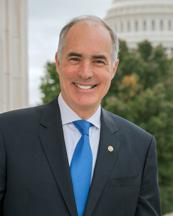 Sen. Robert P. Casey Jr. (D-PA)
Sen. Robert P. Casey Jr. (D-PA)Submitted June 13, 2018
Legislative Activity
Stay on top of the latest movement without scrolling through every action
Floor
Latest Action
Senate amendment submitted
June 13, 2018
Text
Submitted
SA 2882. Mr. CASEY submitted an amendment intended to be proposed to
amendment SA 2282 proposed by Mr. Inhofe (for himself and Mr. McCain)
to the bill H.R. 5515, to authorize appropriations for fiscal year 2019
for military activities of the Department of Defense, for military
construction, and for defense activities of the Department of Energy,
to prescribe military personnel strengths for such fiscal year, and for
other purposes; which was ordered to lie on the table; as follows:

At the end of part II of subtitle A of title V, add the
following:

SEC. 520A. PILOT PROGRAM ON ACCESSION AS AIR FORCE OFFICERS
OF CANDIDATES WHO ARE DEAF OR HAVE OTHER
AUDITORY IMPAIRMENTS.

(a) Pilot Program Required.--Beginning not later than 180
days after the date of the enactment of this Act, the
Secretary of the Air Force shall carry out a pilot program to
assess the feasibility and advisability of enrolling
individuals who are deaf or have other auditory impairments
to access as officers of the Air Force.
(b) Candidates.--
(1) Number of candidates.--The total number of individuals
who are deaf or have other auditory impairments who may
participate in the pilot program shall be not fewer than 20
and not more than 24 individuals.
(2) Mix and range of deafness and auditory impairments.--
The individuals who participate in the pilot program shall
include individuals who are deaf and individuals who have
other auditory impairments, including those with cochlear
implants.
(3) Qualifications for accession.--Any individual who is
chosen to participate in the pilot program shall meet all
essential qualifications for accession as an officer in the
Air Force, other than those related to being deaf or having
an auditory impairment.
(c) Selection of Participants.--
(1) In general.--The Secretary of the Air Force shall--
(A) publicize the pilot program nationally, including to
individuals who are deaf or have other auditory impairments
and would be otherwise qualified for officer training;
(B) create a process whereby interested individuals can
apply for the pilot program; and
(C) select the participants for the pilot program, from
among a pool of applicants, based on the criteria in
subsection (b).
(2) No prior service as air force officers.--Participants
selected for the pilot n program shall be individuals who
have not previously served as officers in the Air Force.
(d) Basic Officer Training.--
(1) In general.--The participants in the pilot n program
shall undergo, at the election of the Secretary of the Air
Force, the Basic Officer Training Course or the Commissioned
Officer Training course at Maxwell Air Force Base, Alabama.

[[Page S3916]]

(2) Number of participants.--Once individuals begin
participating in the pilot program, each Basic Officer
Training course or commissioned Officer Training course at
Maxwell Air Force Base, Alabama, shall include not fewer than
4 or more than 6, participants in the pilot program until all
participants have completed such training.
(3) Auxiliary aids and services.--The Secretary of Defense
shall ensure that participants in the pilot program have the
necessary auxiliary aids and services, as defined by the
Americans with Disabilities Act, in order to fully
participate in the pilot program.
(e) Coordination.--
(1) Special advisor.--The Secretary of the Air Force shall
designate a special advisor to the pilot program to act as a
resource for participants in the pilot program, as well as a
liaison between participants in the pilot program and those
providing the office training.
(2) Qualifications.--The special advisor shall be a member
of the Armed Forces on active duty--
(A) who--
(i) if a commissioned officer, shall be grade 0-3 or
higher; or
(ii) if an enlisted member, shall be in grade E-5 or
higher; and
(B) who is knowledgeable about issues involving, and
accommodations for, individuals who are deaf or have other
auditory impairments.
(3) Responsibilities.--The special advisor shall be
responsible for facilitating the officer training for
participants in the pilot program, intervening and resolving
issues and accommodations during the training, and such
duties as the Secretary of the Air Force may assign to
facilitate the success of the pilot program and participants.
(f) Report.--Not later than two years after the date of the
enactment of this Act, the Secretary of the Air Force shall
submit to the appropriate committees of Congress a report on
the pilot program. The report shall include the following:
(1) A description of the pilot program and the participants
in the pilot program.
(2) The outcomes of the pilot program, including--
(A) the number of participants in the pilot program that
successfully completed the Basic Officer Training Course or
the Commissioned Officer Training course;
(B) the number of participants in the pilot program that
were recommended for continued military service;
(C) the number of participants in the pilot program that
did not successfully complete the Basic Officer Training
Course or the Commissioned Officer Training course, and
reasons participants did not successfully complete their
training;
(D) accommodations and adaptations used to promote
successful completion of the training;
(E) the issues that were encountered during the pilot
program; and
(F) such recommendations for modifications to the pilot n
program as the Secretary considers appropriate to increase
further inclusion of individuals who are deaf or have other
auditory disabilities serving as officers in the Air Force or
other Armed Forces.
(3) Such recommendations for legislative or administrative
action as the Secretary considers appropriate in light of the
pilot program.
(g) Appropriate Committees of Congress Defined.--In this
section, the term ``appropriate committees of Congress''
means--
(1) The Committee on Armed Services, the Committee on
Health, Education, Labor, and Pensions, and the Committee on
Appropriations of the Senate; and
(2) The Committee on Armed Services, the Committee on
Education and Workforce, and the Committee on Appropriations
of the House of Representatives.
______