S.Amdt. 2935Senate115th Congress (2017-2019)2nd degree
S.Amdt. 2935
Sponsored by 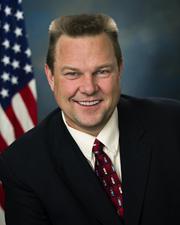 Sen. Jon Tester (D-MT)
Sen. Jon Tester (D-MT)Submitted June 19, 2018
Legislative Activity
Stay on top of the latest movement without scrolling through every action
Floor
Latest Action
Senate amendment submitted
June 19, 2018
Text
Submitted
SA 2935. Mr. TESTER submitted an amendment intended to be proposed to
amendment SA 2910 proposed by Mr. Shelby to the bill H.R. 5895, making
appropriations for energy and water development and related agencies
for the fiscal year ending September 30, 2019, and for other purposes;
which was ordered to lie on the table; as follows:

At the appropriate place in title II, insert the following:

SEC. ___. PILOT PROGRAM ON COMMUNITY CARE COORDINATION AND
SUPPORTIVE SERVICES FOR FAMILIES OF VETERANS
AND MEMBERS OF RESERVE COMPONENTS OF THE ARMED
FORCES WHO LACK ADEQUATE ACCESS TO SERVICES.

(a) Pilot Program Required.--Commencing not later than one
year after the date of the enactment of this Act, the
Secretary of Veterans Affairs shall, after consultation with
the Secretary of Defense, carry out a pilot program with
community partners to assess the feasibility and advisability
of providing intensive community care coordination and
supportive services to covered families who lack adequate
access to services furnished by the Department of Veterans
Affairs or other entities of Federal, State, and local
governments.
(b) Community Care Coordination and Supportive Services
Described.--For purposes of the pilot program, intensive
community care coordination and supportive services are
services provided by a community partner to improve the well-
being and address the needs of covered families who live in
rural or underserved areas or who otherwise lack access to
adequate services furnished by the Department of Veterans
Affairs, the Federal Government, or State and local
governments. Intensive community care coordination and
supportive services may include the following:
(1) Care coordination and case management services.
(2) Outreach services.
(3) Assistance in obtaining any benefits from the
Department which the veteran (or member of a reserve
component of the Armed Forces) may be eligible to receive,
including the following:
(A) Vocational and rehabilitation counseling.
(B) Employment and training services.
(C) Educational assistance.
(D) Health care services.
(4) Assistance in obtaining and coordinating the provision
of other public benefits or available services provided by
the Federal Government, State or local governments, or other
community partners, including the following:
(A) Marriage counseling.
(B) Services for children.
(C) Suicide prevention.
(D) Substance abuse awareness and treatment.
(E) Mental health awareness and treatment.
(F) Financial counseling.
(G) Employment assistance.
(H) Transportation services.
(I) Child care.
(J) Housing counseling.
(K) Preparing and updating family care plans.
(L) Development of strategies for living with a veteran
with post traumatic stress disorder or traumatic brain
injury.
(M) Accessing emergency financial assistance through
philanthropic efforts.
(N) Such other services as may be appropriate to improve
the well-being and address the unique needs of veterans
families who live in rural or underserved areas or otherwise
lack access to adequate services furnished by the Department
of Veterans Affairs, the Federal Government, or State and
local governments.
(5) Providing direct services, described in paragraph (4),
that are necessary to address the needs of the covered
families but are otherwise unavailable through existing
public or private programs.
(c) Agreements and Grants.--
(1) Agreements.--The Secretary of Veterans Affairs shall
carry out the pilot program by entering into partnership
agreements with community partners to provide intensive
community care coordination and supportive services.
(2) Grants.--
(A) In general.--The Secretary shall, using a competitive
and merit-based process, award grants to community partners
with whom the Secretary has entered into agreements under
paragraph (1).
(B) Use of funds.--The amounts of grants awarded under
subparagraph (A) shall be used to provide intensive community
care

[[Page S4044]]

coordination and supportive services under the pilot program
and to assess service delivery efficiencies.
(C) Locations.--The Secretary may award grants under
subparagraph (A) on an individual location basis and may
award grants for the provision of certain services at
locations that also provide other services.
(d) Authorization of Appropriations.--There is authorized
to be appropriated to the Department of Veterans Affairs to
carry out the pilot program $5,000,000 for each of fiscal
years 2019, 2020, and 2021.
(e) Report.--
(1) In general.--Not later than 340 days before the
completion of the pilot program, the Secretary shall submit
to the Committee on Veterans' Affairs of the Senate and the
Committee on Veterans' Affairs of the House of
Representatives a report on the results of the pilot program.
(2) Contents.--The report required by paragraph (1) shall
include the following:
(A) The number of covered families served under the pilot
program.
(B) The number of covered families who received service
linkages or referrals under the pilot program.
(C) A description and assessment of the effectiveness and
achievements of the pilot program with respect to services
and treatments and mitigation of risks, including risks
relating to homelessness, unemployment, and suicide.
(f) Definitions.--In this section:
(1) Community partner.--The term ``community partner''
means a private nonprofit organization.
(2) Covered family.--The term ``covered family'' means a
family with respect to which the head of the household or the
spouse of the head of the household is a veteran or a member
of a reserve component of the Armed Forces. A family that
consists of a single individual who is a veteran or a member
of a reserve component of the Armed Forces shall be
considered a covered family.
______