S.Amdt. 4081Senate115th Congress (2017-2019)
S.Amdt. 4081
Sponsored by 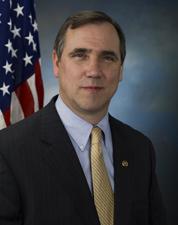 Sen. Jeff Merkley (D-OR)
Sen. Jeff Merkley (D-OR)Submitted December 12, 2018
Legislative Activity
Stay on top of the latest movement without scrolling through every action
Floor
Latest Action
Senate amendment submitted
December 12, 2018
Text
Submitted
SA 4081. Mr. MERKLEY submitted an amendment intended to be proposed
by him to the joint resolution S.J. Res. 54, to direct the removal of
United States Armed Forces from hostilities in the Republic of Yemen
that have not been authorized by Congress; which was ordered to lie on
the table; as follows:

At the end, add the following:

SEC. 2. ADDRESSING THE ROHINGYA REFUGEE CRISIS.

(a) Findings.--Congress makes the following findings:
(1) On August 25, 2017, attacks on security posts in Burma
by the military group Arakan Rohingya Salvation Army resulted
in a brutal, systematic, and disproportionate reprisal by the
Burmese military and security forces on Rohingya villages in
Rakhine State.
(2) More than 680,000 Rohingya refugees have fled to
Bangladesh since the Burmese military commenced its scorched-
earth campaign, with the burning of villages and local
monuments, and reports of widespread gang rape, starvation,
killing, and forcible deportation.
(3) The Government of Burma has consistently denied access
to the United Nations Fact-Finding Mission on Myanmar
established to investigate human rights violations around the
country.
(4) Bangladesh Prime Minister Sheikh Hasina proposed that
``safe zones'' be created inside Burma to protect all
civilians irrespective of religion and ethnicity under United
Nations (UN) supervision.
(5) The United Nations High Commissioner for Refugees
(UNHCR)'s mandate is to provide, in collaboration with other
actors, international protection to refugees and to assist
them in finding durable solutions through voluntary
repatriation, local integration, or resettlement.
(6) The UN General Assembly has repeatedly affirmed UNHCR's
function of facilitating the voluntary repatriation of
refugees and, in recognition of the importance of sustainable
return, has widened its mandate to include providing
assistance for their rehabilitation and dealing with the
consequences of their return.
(7) The fundamental operational principles of voluntary
repatriation are safety, to include legal and physical
safety, and dignity, to include treatment with respect and
full acceptance by their national authorities, including the
full restoration of refugees' rights.
(8) On November 23, 2017, the Government of Burma and the
Government of Bangladesh

[[Page S7512]]

signed an agreement, known as the ``Arrangement'', on the
return of displaced persons from Rakhine State, which is
modeled after the 1992 repatriation agreement between Burma
and Bangladesh.
(9) The Arrangement includes references to restoring
normalcy and human rights in Rakhine State, for refugee
returns to comply with international standards of safety,
dignity, and voluntariness, and to commencing a process to
address root causes in line with the Rakhine Advisory
Commission recommendations.
(10) Approximately 236,000 Rohingya refugees returned to
Burma under the terms of the 1992 agreement, only to continue
to be denied citizenship, face prejudice, violence, and
persecution, and in many instances be forced to live in
internally displaced persons (IDP) camps with their freedom
of movement restricted.
(11) Burma's 1982 citizenship law stripped Rohingya of
their Burmese citizenship, rendering them stateless.
(12) The Government of Burma continues to systematically
discriminate against the Rohingya people, including by
continuing to restrict registration of Rohingya births and to
deny them freedom of movement, access to healthcare, land,
education, marriage, voting rights, and political
participation.
(13) The Government of Burma has repeatedly abused land use
laws to unjustly seize land from Rohingya refugees.
(14) UNHCR is working closely with the Government of
Bangladesh and partners to provide protection and assistance
to the Rohingya refugees and to support the host populations
affected by the influx.
(15) The Government of Burma has not reached an agreement
with UNHCR on its role in the safe, dignified, and voluntary
return of Rakhine State refugees.
(16) Myanmar Minister of Social Welfare, Relief and
Resettlement Dr. Win Myat Aye, on December 28, 2017,
announced that the repatriation process will begin on January
22, 2018, but this process has not yet begun.
(17) There is concern that up to 100,000 Rohingya could be
at risk of forced return into two ``model villages'' or into
1,200 tents provided by the Government of Burma, without
assurances of their safety or details regarding long term
solutions to address root causes of Rohingya
disenfranchisement.
(18) ``Model villages'' and similar tactics in Burma dating
back to colonial rule have been used to strategically shift
population groups and deepen religious and cultural divides.
(19) On December 12, 2017, Wa Lone and Kyaw Soe Oo, two
journalists reporting and documenting atrocities against the
Rohingya, were arrested and on January 10, 2018, formally
prosecuted with violating the ``Official Secrets Act,''
further risking Burma's democratic transition.
(20) UNHCR, as of December 17, 2017, reports that
conditions in Burma's Rakhine State are not yet conducive to
enable safe and sustainable return, as refugees continue to
flee Rakhine State into neighboring Bangladesh.
(21) UNHCR reports that those who arrive have suffered
immense violence and trauma in Burma, with some having
witnessed the deaths of family members and friends and most
having little or nothing to return to, with their homes and
villages destroyed.
(22) There is concern that deep divisions between
communities remain unaddressed and humanitarian access is
inadequate.
(b) In General.--Congress--
(1) condemns the violence and displacement inflicted on
Burma's Rohingya and other ethnic minorities;
(2) calls for an immediate halt to all hostilities by
Burmese authorities;
(3) condemns the attacks by the Arakan Rohingya Salvation
Army militant group;
(4) calls on the Government of Burma to allow full access
to Rakhine State and ensure the full participation of UNHCR,
the internationally endorsed organization tasked with
ensuring that refugee returns are voluntary, safe, dignified,
and respect fundamental human rights, and that the voices of
refugees are represented in order to ensure the
sustainability of such returns and to prevent further waves
of displacement;
(5) calls on the Government of Burma to allow the United
Nations-backed Independent International Fact-Finding Mission
on Myanmar immediate and unfettered access to Burma,
including northern Rahkine State, to establish the facts and
circumstances of the alleged recent human rights violations
by Burmese military and security forces against the Rohingya
and other ethnic minorities;
(6) commends the positive role of the Government of
Bangladesh in receiving Rohingya refugees to date and urges
the Government of Bangladesh to continue allowing the full
participation of UNHCR and human rights organizations in
accessing refugee camps;
(7) calls on UNHCR and international nongovernmental
organizations to play a role in monitoring repatriation
efforts by the Governments of Bangladesh and Burma to ensure
a process that meets international norms for voluntary, safe,
and dignified repatriation;
(8) agrees that any return of Rohingya should include
guarantees that any returns of refugees will be voluntary and
dignified, that there will be no threats to protection or
security upon return, that refugees will be able to return to
their places of origin or other locations as desired, and be
able to enjoy equal rights with others in Burma, including
the restoration or granting of full citizenship, freedom of
movement, and access to basic services;
(9) recognizes that any forced relocation of Rohingya
refugees into temporary settlements, IDP camps, ``model
villages,'' or other areas not of refugees' choosing is
unacceptable;
(10) calls on the Government of Burma to allow for a
flexible and practical approach to dealing with evidence of
Rohingya residence in Burma, recognizing that the Rohingya
refugees in Bangladesh possess a wide range of documents and
that some refugees have no documents and will need to
establish their residence by other means;
(11) calls on the Government of Burma to address root
causes consistent with the Rakhine Advisory Commission
recommendations and fully implement all of the
recommendations of the Commission, including providing equal
access to full restoration or granting of full citizenship
for the Rohingya population;
(12) calls on the Government of Burma to acknowledge and
address the issue of statelessness for the Rohingya, the
deprivation of rights, and institutionalized and pervasive
discrimination of the Rohingya population in order to bring
about any sustainable solutions;
(13) commends the Government and the people of Bangladesh
for their extraordinary generosity and efforts to provide
shelter and relief for nearly 1,000,000 Rohingya refugees
forced to flee their homes in Burma;
(14) calls on the Government of Bangladesh to ensure all
refugees have freedom of movement and under no circumstances
are subject to unsafe, involuntary, precipitous, or
uninformed returns to Burma; and
(15) calls on the Government of Burma to immediately
release journalists Wa Lone and Kyaw Soe Oo.
______