S.Amdt. 551Senate115th Congress (2017-2019)2nd degree
S.Amdt. 551
Sponsored by 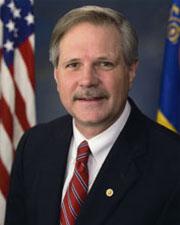 Sen. John Hoeven (R-ND)
Sen. John Hoeven (R-ND)Submitted July 27, 2017
Legislative Activity
Stay on top of the latest movement without scrolling through every action
Floor
Latest Action
Senate amendment submitted
July 27, 2017
Text
Submitted
SA 551. Mr. HOEVEN (for himself and Mr. Daines) submitted an
amendment intended to be proposed to amendment SA 267 proposed by Mr.
McConnell to the bill H.R. 1628, to provide for reconciliation pursuant
to title II of the concurrent resolution on the budget for fiscal year
2017; which was ordered to lie on the table; as follows:

Strike section 202 and insert the following:

SEC. 202. SUPPORT FOR STATE AND INDIAN HEALTH PROGRAM
RESPONSE TO SUBSTANCE ABUSE PUBLIC HEALTH
CRISIS AND URGENT MENTAL HEALTH NEEDS.

(a) In General.--There are authorized to be appropriated,
and are appropriated, out of monies in the Treasury not
otherwise obligated, $750,000,000 for each of fiscal years
2018 and 2019, to the Secretary of Health and Human Services
(referred to in this section as the ``Secretary'') to award
grants to States and Indian health programs to address the
substance abuse public health crisis or to respond to urgent
mental health needs within the State or community served by
the Indian health program. In awarding grants under this
section, the Secretary may give preference to States, and
Indian health programs that serve Indian tribes, with an
incidence or prevalence of substance use disorders that is
substantial relative to other States or to States and Indian
health programs that identify mental health needs within
their communities that are urgent relative to such needs of
other States. Funds appropriated under this subsection shall
remain available until expended.
(b) Use of Funds.--Grants awarded to a State or Indian
health program under subsection (a) shall be used for one or
more of the following public health-related activities:
(1) Improving State prescription drug monitoring programs.
(2) Implementing prevention activities, and evaluating such
activities to identify effective strategies to prevent
substance abuse.
(3) Training for health care practitioners, such as best
practices for prescribing opioids, pain management,
recognizing potential cases of substance abuse, referral of
patients to treatment programs, and overdose prevention.
(4) Supporting access to health care services provided by
Federally certified opioid treatment programs or other
appropriate health care providers to treat substance use
disorders or mental health needs.
(5) Other public health-related activities, as the State or
Indian health program determines appropriate, related to
addressing the substance abuse public health crisis or
responding to urgent mental health needs within the State or
community served by the Indian health program.
(c) Definitions.--In this section, the terms ``Indian
health program'' and ``Indian tribe'' have the meanings given
the terms in section 4 of the Indian Health Care Improvement
Act (25 U.S.C. 1603).
______