S.Amdt. 1391
What it does: Adds SEC. 1__. BATTERY AND CRITICAL MINERAL RECYCLING at the appropriate place in title I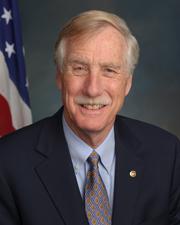 Sen. Angus S. King Jr. (I-ME)
What it changes
1 change to S. 2657
Adds SEC. 1__. BATTERY AND CRITICAL MINERAL RECYCLING at the appropriate place in title I
Adds a sectionInserted: SEC. 1__. BATTERY AND CRITICAL MINERAL RECYCLING.
Inserted: (a) Definition of Battery.--In this section, the term "battery" means a battery that is--
Inserted: (1) rechargeable; and
Inserted: (2) electrochemical, including lithium ion and other chemistries.
Inserted: (b) Grants.--
Inserted: (1) Battery recycling research, development, and demonstration grants.--
Inserted: (A) In general.--The Secretary shall award multiyear grants to eligible entities for research, development, and demonstration projects to create innovative and practical approaches to increase the reuse and recycling of batteries, including by addressing--
Inserted: (i) recycling processes;
Inserted: (ii) the development of methods to promote the design and production of batteries that take into full account and facilitate the dismantling, reuse, recovery, and recycling of battery components and materials;
Inserted: (iii) strategies to increase consumer acceptance of, and participation in, the recycling of batteries; and
Inserted: (iv) the integration of increased quantities of recycled critical minerals in batteries and other products to develop markets for recycled battery materials and critical minerals.
Inserted: (B) Eligible entities.--The Secretary may award a grant under subparagraph (A) to--
Show 55 more inserted paragraphsShow less
Inserted: (i) an institution of higher education;
Inserted: (ii) a National Laboratory;
Inserted: (iii) a Federal research agency;
Inserted: (iv) a State research agency;
Inserted: (v) a nonprofit organization;
Inserted: (vi) an industrial entity;
Inserted: (vii) a manufacturing entity;
Inserted: (viii) a private battery-collection entity;
Inserted: (ix) a State or municipal government entity;
Inserted: (x) a battery retailer; or
Inserted: (xi) a consortium of 2 or more entities described in clauses (i) through (x).
Inserted: (C) Applications.--
Inserted: (i) In general.--To be eligible to receive a grant under subparagraph (A), an eligible entity described in subparagraph (B) shall submit to the Secretary an application at such time, in such manner, and containing such information as the Secretary may require.
Inserted: (ii) Contents.--An application submitted under clause (i) shall describe how the project will promote collaboration among--
Inserted: (I) vehicle battery manufacturers;
Inserted: (II) other battery manufacturers;
Inserted: (III) battery material and equipment manufacturers;
Inserted: (IV) battery recyclers, collectors, and refiners; and
Inserted: (V) retailers.
Inserted: (2) State and local programs.--
Inserted: (A) In general.--The Secretary shall establish a program under which the Secretary shall award grants, on a competitive basis, to States and units of local government to assist in the establishment or enhancement of State battery collection, recycling, and reprocessing programs.
Inserted: (B) Non-federal cost share.--The non-Federal share of the cost of a project carried out using a grant under this paragraph shall be 50 percent of the cost of the project.
Inserted: (C) Report.--Not later than 2 years after the date of enactment of this Act, and annually thereafter, the Secretary shall submit to Congress a report that describes the number of battery collection points established or enhanced, an estimate of jobs created, and the quantity of material collected as a result of the grants awarded under subparagraph (A).
Inserted: (3) Retailers as collection points.--
Inserted: (A) In general.--The Secretary shall award grants, on a competitive basis, to retailers that sell batteries to establish and implement a system for the acceptance and collection of used batteries for reuse, recycling, or proper disposal.
Inserted: (B) Collection system.--The system described in subparagraph (A) shall include take-back of used batteries at no cost to the consumer.
Inserted: (c) Lithium-ion Battery Recycling Prize Competition.--
Inserted: (1) In general.--The Secretary shall continue to carry out the existing Lithium-Ion Battery Recycling Prize competition of the Department established under section 24 of the Stevenson-Wydler Technology Innovation Act of 1980 (15 U.S.C. 3719).
Inserted: (2) Additional funding for pilot projects.--In addition to any other funds made available to the Secretary to carry out the competition described in paragraph (1), there is authorized to be appropriated to the Secretary to carry out Phase III of that competition $10,000,000 for fiscal year 2021, to remain available until expended, which the Secretary may use--
Inserted: (A) to increase the number of winners of Phase III of that competition;
Inserted: (B) to increase the amount awarded to the winners of Phase III of that competition; or
Inserted: (C) to carry out any other activity that is consistent with the goals of Phase III of that competition, as determined by the Secretary.
Inserted: (d) Best Practices for Collection of Batteries.--
Inserted: (1) In general.--The Administrator of the Environmental Protection Agency (referred to in this subsection as the "Administrator") shall develop best practices for the collection of batteries that may be cost-effectively implemented by States and units of local government.
Inserted: (2) Coordination.--The Administrator shall develop best practices under paragraph (1) in coordination with State and local leaders and entities in relevant private sectors.
Inserted: (3) Report.--Not later than 1 year after the date of enactment of this Act, the Administrator shall submit to Congress a report describing the best practices developed under this subsection.
Inserted: (e) Voluntary Labeling Program.--
Inserted: (1) In general.--There is established within the Department and the Environmental Protection Agency a voluntary program to promote battery recycling and identify collection points in order to reduce battery waste, improve collection, and reduce safety concerns through--
Inserted: (A) voluntary labeling of batteries; or
Inserted: (B) other forms of communication about the reuse and recycling of critical materials from batteries.
Inserted: (2) Division of responsibilities.--Responsibilities under the program established by paragraph (1) shall be divided between the Secretary and the Administrator of the Environmental Protection Agency (referred to in this subsection as the "Administrator") in accordance with the terms of applicable agreements between the Secretary and the Administrator.
Inserted: (f) Task Force on Producer Requirements.--
Inserted: (1) In general.--The Secretary shall convene a task force to develop an extended battery producer responsibility framework that--
Inserted: (A) addresses battery recycling goals, cost structures for mandatory recycling, reporting requirements, product design, collection models, and transportation of collected materials;
Inserted: (B) provides sufficient flexibility to allow battery producers to determine cost-effective strategies for compliance with the framework; and
Inserted: (C) outlines regulatory pathways for effective recycling.
Inserted: (2) Task force participants.--The task force convened under paragraph (1) shall include--
Inserted: (A) battery producers, retailers, recyclers, collectors, and refiners;
Inserted: (B) States and municipalities; and
Inserted: (C) other relevant stakeholders, as determined by the Secretary.
Inserted: (3) Report.--Not later than 1 year after the date on which the Secretary convenes the task force under paragraph (1), the Secretary shall submit to Congress a report that--
Inserted: (A) describes the extended producer responsibility framework developed by the task force;
Inserted: (B) includes the recommendations of the task force on how best to implement a mandatory pay-in or other enforcement mechanism to ensure battery producers and sellers are contributing to the recycling of batteries; and
Inserted: (C) suggests regulatory pathways for effective recycling.
Inserted: (g) Authorization of Appropriations.--There is authorized to be appropriated to carry out this section $30,000,000 for each of fiscal years 2021 through 2025.
The amendment doesn't say where this goes; the clerk decides.
Original wording
At the appropriate place in title I, insert the following:
Read automatically from the Congressional Record. Check the original before relying on it.
As printed
SA 1391. Mr. KING (for himself, Mr. Burr, and Mr. Carper) submitted an amendment intended to be proposed by him to the bill S. 2657, to support innovation in advanced geothermal research and development, and for other purposes; which was ordered to lie on the table; as follows:
At the appropriate place in title I, insert the following:
SEC. 1__. BATTERY AND CRITICAL MINERAL RECYCLING.
(a) Definition of Battery.--In this section, the term “battery” means a battery that is--
(1) rechargeable; and
(2) electrochemical, including lithium ion and other chemistries.
(b) Grants.--
(1) Battery recycling research, development, and demonstration grants.--
(A) In general.--The Secretary shall award multiyear grants to eligible entities for research, development, and demonstration projects to create innovative and practical approaches to increase the reuse and recycling of batteries, including by addressing--
(i) recycling processes;
(ii) the development of methods to promote the design and production of batteries that take into full account and facilitate the dismantling, reuse, recovery, and recycling of battery components and materials;
(iii) strategies to increase consumer acceptance of, and participation in, the recycling of batteries; and
(iv) the integration of increased quantities of recycled critical minerals in batteries and other products to develop markets for recycled battery materials and critical minerals.
(B) Eligible entities.--The Secretary may award a grant under subparagraph (A) to--
(i) an institution of higher education;
(ii) a National Laboratory;
(iii) a Federal research agency;
(iv) a State research agency;
(v) a nonprofit organization;
(vi) an industrial entity;
(vii) a manufacturing entity;
(viii) a private battery-collection entity;
(ix) a State or municipal government entity;
(x) a battery retailer; or
(xi) a consortium of 2 or more entities described in clauses (i) through (x).
(C) Applications.--
(i) In general.--To be eligible to receive a grant under subparagraph (A), an eligible entity described in subparagraph (B) shall submit to the Secretary an application at such time, in such manner, and containing such information as the Secretary may require.
(ii) Contents.--An application submitted under clause (i) shall describe how the project will promote collaboration among--
(I) vehicle battery manufacturers;
(II) other battery manufacturers;
(III) battery material and equipment manufacturers;
(IV) battery recyclers, collectors, and refiners; and
(V) retailers.
(2) State and local programs.--
(A) In general.--The Secretary shall establish a program under which the Secretary shall award grants, on a competitive basis, to States and units of local government to assist in the establishment or enhancement of State battery collection, recycling, and reprocessing programs.
(B) Non-federal cost share.--The non-Federal share of the cost of a project carried out using a grant under this paragraph shall be 50 percent of the cost of the project.
(C) Report.--Not later than 2 years after the date of enactment of this Act, and annually thereafter, the Secretary shall submit to Congress a report that describes the number of battery collection points established or enhanced, an estimate of jobs created, and the quantity of material collected as a result of the grants awarded under subparagraph (A).
(3) Retailers as collection points.--
(A) In general.--The Secretary shall award grants, on a competitive basis, to retailers that sell batteries to establish and implement a system for the acceptance and collection of used batteries for reuse, recycling, or proper disposal.
(B) Collection system.--The system described in subparagraph (A) shall include take-back of used batteries at no cost to the consumer.
(c) Lithium-ion Battery Recycling Prize Competition.--
(1) In general.--The Secretary shall continue to carry out the existing Lithium-Ion Battery Recycling Prize competition of the Department established under section 24 of the Stevenson-Wydler Technology Innovation Act of 1980 (15 U.S.C. 3719).
(2) Additional funding for pilot projects.--In addition to any other funds made available to the Secretary to carry out the competition described in paragraph (1), there is authorized to be appropriated to the Secretary to carry out Phase III of that competition $10,000,000 for fiscal year 2021, to remain available until expended, which the Secretary may use--
(A) to increase the number of winners of Phase III of that competition;
(B) to increase the amount awarded to the winners of Phase III of that competition; or
(C) to carry out any other activity that is consistent with the goals of Phase III of that competition, as determined by the Secretary.
(d) Best Practices for Collection of Batteries.--
(1) In general.--The Administrator of the Environmental Protection Agency (referred to in this subsection as the “Administrator”) shall develop best practices for the collection of batteries that may be cost-effectively implemented by States and units of local government.
(2) Coordination.--The Administrator shall develop best practices under paragraph (1) in coordination with State and local leaders and entities in relevant private sectors.
(3) Report.--Not later than 1 year after the date of enactment of this Act, the Administrator shall submit to Congress a report describing the best practices developed under this subsection.
(e) Voluntary Labeling Program.--
(1) In general.--There is established within the Department and the Environmental Protection Agency a voluntary program to promote battery recycling and identify collection points in order to reduce battery waste, improve collection, and reduce safety concerns through--
(A) voluntary labeling of batteries; or
(B) other forms of communication about the reuse and recycling of critical materials from batteries.
(2) Division of responsibilities.--Responsibilities under the program established by paragraph (1) shall be divided between the Secretary and the Administrator of the Environmental Protection Agency (referred to in this subsection as the “Administrator”) in accordance with the terms of applicable agreements between the Secretary and the Administrator.
(f) Task Force on Producer Requirements.--
(1) In general.--The Secretary shall convene a task force to develop an extended battery producer responsibility framework that--
(A) addresses battery recycling goals, cost structures for mandatory recycling, reporting requirements, product design, collection models, and transportation of collected materials;
(B) provides sufficient flexibility to allow battery producers to determine cost-effective strategies for compliance with the framework; and
(C) outlines regulatory pathways for effective recycling.
(2) Task force participants.--The task force convened under paragraph (1) shall include--
(A) battery producers, retailers, recyclers, collectors, and refiners;
(B) States and municipalities; and
(C) other relevant stakeholders, as determined by the Secretary.
(3) Report.--Not later than 1 year after the date on which the Secretary convenes the task force under paragraph (1), the Secretary shall submit to Congress a report that--
(A) describes the extended producer responsibility framework developed by the task force;
(B) includes the recommendations of the task force on how best to implement a mandatory pay-in or other enforcement mechanism to ensure battery producers and sellers are contributing to the recycling of batteries; and
(C) suggests regulatory pathways for effective recycling.
(g) Authorization of Appropriations.--There is authorized to be appropriated to carry out this section $30,000,000 for each of fiscal years 2021 through 2025.
Legislative Activity
Stay on top of the latest movement without scrolling through every action
Senate amendment submitted
March 3, 2020