S.Amdt. 1495Senate116th Congress (2019-2021)2nd degree
S.Amdt. 1495
Sponsored by 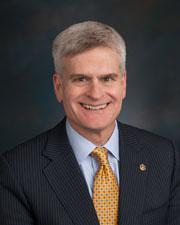 Sen. Bill Cassidy (R-LA)
Sen. Bill Cassidy (R-LA)Submitted March 4, 2020
Legislative Activity
Stay on top of the latest movement without scrolling through every action
Floor
Latest Action
Senate amendment submitted
March 4, 2020
Text
Submitted
SA 1495. Mr. CASSIDY (for himself, Mr. Cornyn, Mr. Inhofe, Mr.
Lankford, Mrs. Hyde-Smith, Mr. Sullivan, Mr. Barrasso, Mrs. Capito, Mr.
Risch, Mr. Cramer, Mr. Tillis, Mr. Crapo, Mr. Braun, Mr. Cruz, Mr.
Hoeven, and Mr. Toomey) submitted an amendment intended to be proposed
to amendment SA 1407 proposed by Ms. Murkowski to the bill S. 2657, to
support innovation in advanced geothermal research and development, and
for other purposes; which was ordered to lie on the table; as follows:

Strike sections 1701 through 1705 and insert the following:

SEC. 1701. OBJECTIVES.

The objectives of this subtitle are--
(1) to establish a consistent and consolidated authority
for the vehicle technology program at the Department;
(2) to develop United States technologies and practices
that improve the fuel efficiency and emissions of all
vehicles produced in the United States;
(3) to support domestic research, development, engineering,
demonstration, and commercial application and manufacturing
of advanced vehicles, engines, and components;
(4) to enable vehicles to move larger volumes of goods and
more passengers with less energy and emissions;
(5) to develop cost-effective advanced technologies for
wide-scale utilization throughout the passenger, commercial,
government, and transit vehicle sectors;
(6) to allow for greater consumer choice of vehicle
technologies and fuels;
(7) shorten technology development and integration cycles
in the vehicle industry;
(8) to ensure a proper balance and diversity of Federal
investment in vehicle technologies; and
(9) to strengthen partnerships between Federal and State
governmental agencies and the private and academic sectors.

SEC. 1702. COORDINATION AND NONDUPLICATION.

The Secretary shall ensure, to the maximum extent
practicable, that the activities authorized by this subtitle
do not duplicate those of other programs within the
Department or other relevant research agencies.

SEC. 1703. AUTHORIZATION OF APPROPRIATIONS.

There are authorized to be appropriated to the Secretary
for research, development, engineering, demonstration, and
commercial application of vehicles and related technologies
in the United States, including activities authorized under
this subtitle--
(1) for fiscal year 2021, $313,567,000;
(2) for fiscal year 2022, $326,109,000;
(3) for fiscal year 2023, $339,154,000;
(4) for fiscal year 2024, $352,720,000; and
(5) for fiscal year 2025, $366,829,000.

SEC. 1704. REPORTING.

(a) Technologies Developed.--Not later than 18 months after
the date of enactment of this Act and annually thereafter
through 2025, the Secretary shall submit to Congress a report
regarding the technologies developed as a result of the
activities authorized by this subtitle, with a particular
emphasis on whether the technologies were successfully
adopted for commercial applications, and if so, whether
products relying on those technologies are manufactured in
the United States.
(b) Additional Matters.--At the end of each fiscal year
through 2025, the Secretary shall submit to the relevant
Congressional committees of jurisdiction an annual report
describing activities undertaken in the previous year under
this subtitle, active industry participants, the status of
public-private partnerships, progress of the program in
meeting goals and timelines, and a strategic plan for funding
of activities across agencies.

SEC. 1705. VEHICLE RESEARCH AND DEVELOPMENT.

(a) Program.--
(1) Activities.--The Secretary shall conduct a program of
basic and applied research, development, engineering,
demonstration, and commercial application activities on
materials, technologies, and processes with the potential to
substantially reduce emissions of the passenger and
commercial vehicles of the United States, including
activities in the areas of--
(A) electrification of vehicle systems;
(B) batteries, ultracapacitors, and other energy storage
devices;
(C) power electronics;
(D) vehicle, component, and subsystem manufacturing
technologies and processes;
(E) engine efficiency and combustion optimization;
(F) waste heat recovery;
(G) transmission and drivetrains;
(H) hydrogen vehicle technologies, including fuel cells and
internal combustion engines, and hydrogen infrastructure,
including hydrogen energy storage to enable renewables and
provide hydrogen for fuel and power;
(I) natural gas vehicle technologies;
(J) aerodynamics, rolling resistance (including tires and
wheel assemblies), and accessory power loads of vehicles and
associated equipment;
(K) vehicle weight reduction, including lightweighting
materials and the development of manufacturing processes to
fabricate, assemble, and use dissimilar materials;
(L) friction and wear reduction;
(M) engine and component durability;
(N) innovative propulsion systems;
(O) advanced boosting systems;
(P) hydraulic hybrid technologies;
(Q) engine compatibility with and optimization for a
variety of transportation fuels including natural gas and
other liquid and gaseous fuels;
(R) predictive engineering, modeling, and simulation of
vehicle and transportation systems;
(S) refueling and charging infrastructure for alternative
fueled and electric or plug-in electric hybrid vehicles,
including the unique challenges facing rural areas;
(T) gaseous fuels storage systems and system integration
and optimization;
(U) sensing, communications, and actuation technologies for
vehicle, electrical grid, and infrastructure;
(V) efficient use, substitution, and recycling of
potentially critical materials in vehicles, including rare
earth elements and precious metals, at risk of supply
disruption;
(W) aftertreatment technologies;
(X) thermal management of battery systems;
(Y) retrofitting advanced vehicle technologies to existing
vehicles;
(Z) development of common standards, specifications, and
architectures for both transportation and stationary battery
applications;
(AA) advanced internal combustion engines;
(BB) mild hybrid;
(CC) engine down speeding;
(DD) vehicle-to-vehicle, vehicle-to-pedestrian, and
vehicle-to-infrastructure technologies; and
(EE) other research areas as determined by the Secretary.
(2) Transformational technology.--The Secretary shall
ensure that the Department continues to support research,
development, engineering, demonstration, and commercial
application activities and maintains competency in mid- to
long-term transformational vehicle technologies with
potential to achieve reductions in emissions, including
activities in the areas of--
(A) hydrogen vehicle technologies, including fuel cells,
hydrogen storage, infrastructure, and activities in hydrogen
technology validation and safety codes and standards;
(B) multiple battery chemistries and novel energy storage
devices, including nonchemical batteries and
electromechanical storage technologies such as hydraulics,
flywheels, and compressed air storage;
(C) communication and connectivity among vehicles,
infrastructure, and the electrical grid; and
(D) other innovative technologies research and development,
as determined by the Secretary.
(3) Industry participation.--
(A) In general.--To the maximum extent practicable,
activities under this subtitle shall be carried out in
partnership or collaboration with automotive manufacturers,
heavy commercial, vocational, and transit vehicle
manufacturers, qualified plug-in electric vehicle
manufacturers, compressed natural gas vehicle manufacturers,
vehicle and engine equipment and component manufacturers,
manufacturing equipment manufacturers, advanced vehicle
service providers, fuel producers and energy suppliers,
electric utilities, universities, National Laboratories, and
independent research laboratories.
(B) Requirements.--In carrying out this subtitle, the
Secretary shall--
(i) determine whether a wide range of companies that
manufacture or assemble vehicles or components in the United
States are represented in ongoing public-private partnership
activities, including firms that have not traditionally
participated in federally sponsored research and development
activities, and where possible, partner with such firms that
conduct significant and relevant research and development
activities in the United States;
(ii) leverage the capabilities and resources of, and
formalize partnerships with, industry-led stakeholder
organizations, nonprofit organizations, industry consortia,
and trade

[[Page S1490]]

associations with expertise in the research and development
of, and education and outreach activities in, advanced
automotive and commercial vehicle technologies;
(iii) develop more effective processes for transferring
research findings and technologies to industry;
(iv) support public-private partnerships, dedicated to
overcoming barriers in commercial application of
transformational vehicle technologies, that use such
industry-led technology development facilities of entities
with demonstrated expertise in successfully designing and
engineering pre-commercial generations of such
transformational technology; and
(v) promote efforts to ensure that technology research,
development, engineering, and commercial application
activities funded under this subtitle are carried out in the
United States.
(4) Interagency and intraagency coordination.--To the
maximum extent practicable, the Secretary shall coordinate
research, development, demonstration, and commercial
application activities among--
(A) relevant programs within the Department, including--
(i) the Office of Energy Efficiency and Renewable Energy;
(ii) the Office of Science;
(iii) the Office of Electricity Delivery and Energy
Reliability;
(iv) the Office of Fossil Energy;
(v) the Advanced Research Projects Agency--Energy; and
(vi) other offices as determined by the Secretary; and
(B) relevant technology research and development programs
within other Federal agencies, as determined by the
Secretary.
(5) Federal demonstration of technologies.--The Secretary
shall make information available to procurement programs of
Federal agencies regarding the potential to demonstrate
technologies resulting from activities funded through
programs under this subtitle.
(6) Intergovernmental coordination.--The Secretary shall
seek opportunities to leverage resources and support
initiatives of State and local governments in developing and
promoting advanced vehicle technologies, manufacturing, and
infrastructure.
(7) Criteria.--In awarding grants under the program under
this subsection, the Secretary shall give priority to those
technologies (either individually or as part of a system)
that--
(A) provide the greatest aggregate fuel savings based on
the reasonable projected sales volumes of the technology; and
(B) provide the greatest increase in United States
employment.
(8) Secondary use applications.--
(A) In general.--The Secretary shall carry out a research,
development, and demonstration program that--
(i) builds on any work carried out under section 915 of the
Energy Policy Act of 2005 (42 U.S.C. 16195);
(ii) identifies possible uses of a vehicle battery after
the useful life of the battery in a vehicle has been
exhausted;
(iii) conducts long-term testing to verify performance and
degradation predictions and lifetime valuations for secondary
uses;
(iv) evaluates innovative approaches to recycling materials
from plug-in electric drive vehicles and the batteries used
in plug-in electric drive vehicles;
(v)(I) assesses the potential for markets for uses
described in clause (ii) to develop; and
(II) identifies any barriers to the development of those
markets; and
(vi) identifies the potential uses of a vehicle battery--

(I) with the most promise for market development; and
(II) for which market development would be aided by a
demonstration project.

(B) Report.--Not later than 1 year after the date of
enactment of this Act, the Secretary shall submit to the
appropriate committees of Congress an initial report on the
findings of the program described in subparagraph (A),
including recommendations for stationary energy storage and
other potential applications for batteries used in plug-in
electric drive vehicles.
(C) Secondary use demonstration.--
(i) In general.--Based on the results of the program
described in subparagraph (A), the Secretary shall develop
guidelines for projects that demonstrate the secondary uses
and innovative recycling of vehicle batteries.
(ii) Publication of guidelines.--Not later than 18 months
after the date of enactment of this Act, the Secretary
shall--

(I) publish the guidelines described in clause (i); and
(II) solicit applications for funding for demonstration
projects.

(iii) Pilot demonstration program.--Not later than 21
months after the date of enactment of this Act, the Secretary
shall select proposals for grant funding under this
subsection, based on an assessment of which proposals are
mostly likely to contribute to the development of a secondary
market for batteries.
(b) Manufacturing.--The Secretary shall carry out a
research, development, engineering, demonstration, and
commercial application program of advanced vehicle
manufacturing technologies and practices, including
innovative processes--
(1) to increase the production rate and decrease the cost
of advanced battery and fuel cell manufacturing;
(2) to vary the capability of individual manufacturing
facilities to accommodate different battery chemistries and
configurations;
(3) to reduce waste streams, emissions, and energy
intensity of vehicle, engine, advanced battery, and component
manufacturing processes;
(4) to recycle and remanufacture used batteries and other
vehicle components for reuse in vehicles or stationary
applications;
(5) to develop manufacturing processes to effectively
fabricate, assemble, and produce cost-effective lightweight
materials such as advanced aluminum and other metal alloys,
polymeric composites, and carbon fiber for use in vehicles;
(6) to produce lightweight high pressure storage systems
for gaseous fuels;
(7) to design and manufacture purpose-built hydrogen fuel
cell vehicles and components;
(8) to improve the calendar life and cycle life of advanced
batteries; and
(9) to produce permanent magnets for advanced vehicles.
______