S.Amdt. 1500Senate116th Congress (2019-2021)2nd degree
S.Amdt. 1500
Sponsored by 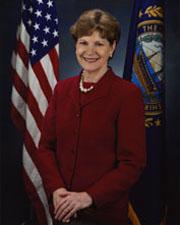 Sen. Jeanne Shaheen (D-NH)
Sen. Jeanne Shaheen (D-NH)Submitted March 4, 2020
Legislative Activity
Stay on top of the latest movement without scrolling through every action
Floor
Latest Action
Senate amendment submitted
March 4, 2020
Text
Submitted
SA 1500. Mrs. SHAHEEN submitted an amendment intended to be proposed
to amendment SA 1407 proposed by Ms. Murkowski to the bill S. 2657, to
support innovation in advanced geothermal research and development, and
for other purposes; which was ordered to lie on the table; as follows:

At the appropriate place, insert the following:

SEC. __. SMALL BUSINESS ENERGY EFFICIENCY.

(a) Findings.--Congress finds the following:
(1) According to the Small Business Administration, small
businesses account for 99.7 percent of United States employer
firms and employ approximately half of all private-sector
employees in the United States.

[[Page S1493]]

(2) A 2012 report from the National Federation of
Independent Businesses found that energy costs are--
(A) the third most serious problem for small business
owners; and
(B) one of the top 3 business expenses in 35 percent of
small businesses;
(3) Investments in energy efficiency enhance energy savings
and improve the competitiveness, profitability, production,
product quality, and environmental sustainability of United
States businesses and manufacturers;
(4) According to the Department of Energy, small
buildings--
(A) are predominantly occupied by small business entities;
(B) consume 44 percent of the overall energy use in
buildings in the United States; and
(C) present an estimated potential energy savings equal to
1,070,000,000,000,000 Btu of energy savings or
$30,000,000,000 in cost savings per year.
(5) Market barriers exist to the widespread adoption of
energy efficiency technologies and practices among small
businesses, including a lack of--
(A) expertise about energy and the opportunities to reduce
costs through energy efficiency measures;
(B) internal capacity to develop and implement energy
efficiency projects; and
(C) capital or access to incentives and affordable
financing for energy retrofits.
(6) Addressing the barriers described in paragraph (5) is
in the interest of the United States.
(7) The United States would benefit from a concerted and
focused effort to advance the adoption of energy efficiency
technologies and practices among small businesses, which will
facilitate greater economic growth in this sector.
(b) Definitions.--In this section--
(1) the terms ``Administration'' and ``Administrator'' mean
the Small Business Administration and the Administrator
thereof;
(2) the term ``covered lender'' means--
(A) a development company (as defined in section 103 of the
Small Business Investment Act of 1958 (15 U.S.C. 662)) that
is eligible to participate in the program established under
title V of such Act (15 U.S.C. 695 et seq.); and
(B) a lender under section 7(a) of the Small Business Act
(15 U.S.C. 636(a));
(3) the term ``energy efficiency'' means a decrease in
consumption of energy (including electricity and thermal
energy) that produces significant energy savings and is
achieved without reducing the quality of energy services
through--
(A) a measure or program that targets customer behavior;
(B) appliances, equipment, or energy systems;
(C) fixtures; or
(D) other devices;
(4) the term ``energy efficiency improvement'' means any
project or activity the primary purpose of which is
increasing energy efficiency;
(5) the term ``energy savings'' means a reduction in net
energy costs (including electricity and thermal energy), fuel
costs, water costs, other utility costs, or related net
operating costs from or as compared to an established
baseline of those costs;
(6) the term ``on-bill financing'' means a financial
product that is serviced by, or in partnership with, a
utility company for energy efficiency improvements in a
building, and repaid by the building owner or tenant on his
or her monthly utility bill; and
(7) the term ``small business concern'' has the meaning
given the term in section 3 of the Small Business Act (15
U.S.C. 632).
(c) Certified Development Company and Loan Underwriting
Reform.--
(1) Increased loan amounts under the 504/cdc program.--
Section 502(2) of the Small Business Investment Act of 1958
(15 U.S.C. 696(2)) is amended by adding at the end the
following:
``(C) Loans for energy efficiency savings.--
``(i) In general.--The Administration may make loans under
this section to a borrower in an amount greater than the
maximum amount under subparagraph (A)(i) if the loan proceeds
are directed toward a project that results in energy savings
for a small business concern as a result of the installation
or implementation of energy efficiency improvements.
``(ii) Amount.--The Administration may increase the maximum
amount under subparagraph (A)(i) for a small business concern
by not more than the amount equal to the anticipated
increased income or resources due to energy savings from the
project.''.
(2) Guidance for loan underwriting.--Not later than 180
days after the date of enactment of this Act, the
Administrator shall issue guidance requiring covered lenders
to incorporate energy efficiency considerations and life-
cycle cost savings into the underwriting process for loans
provided under title V of the Small Business Investment Act
of 1958 (15 U.S.C. 695 et seq.) and section 7(a) of the Small
Business Act (15 U.S.C. 636(a)).
(3) Existing federal programs.--Nothing in this subsection
or the amendments made by this subsection shall be construed
to restrict or otherwise affect efforts of the Federal
Government in existence on the day before the date of
enactment of this Act that would expand financing
opportunities for small business concerns.
(d) Working Group and Utility-lender Financing Incentive
Pilot Program.--
(1) Findings.--Congress finds the following:
(A) Small businesses account for more than 90 percent of
utility commercial customers and nearly half of all
commercial electricity usage.
(B) According to the National Small Business Association,
small businesses, particularly those with fewer than 35
employees in the manufacturing sector, pay 35 percent more
per unit for their electricity than comparable larger firms.
(C) Utility-administered energy efficiency programs,
including on-bill financing--
(i) reduce or eliminate the first costs for energy
efficiency improvements;
(ii) leverage existing billing relationships between
consumers and utilities;
(iii) can be tied to a property so that energy savings are
transferred to multiple owners or tenants;
(iv) incur low default rates ranging from 0 to 3 percent;
and
(v) have been implemented in 23 States.
(D) Utilities have encountered challenges to the widespread
adoption of on-bill financing programs among small
businesses, including--
(i) modification of utility billing systems in order to
provide on-bill financing options to customers;
(ii) desire among utilities to act as a financial
institution;
(iii) insufficient human resources to navigate or comply
with Federal and State regulatory reporting requirements
involved with the implementation of on-bill financing
programs; and
(iv) risk of non-payment and challenges associated with
non-payment penalties for customers.
(E) Because of the challenges for utilities described in
subparagraph (D), participation rates for on-bill financing
programs among small businesses are generally low.
(F) Federal agency action can encourage on-bill financing
programs and maximize their impact on the small business
sector.
(2) Requirement.--The Administrator shall carry out efforts
to advance the availability and utilization of utility-based
financing programs for energy efficiency improvements among
small business entities.
(3) Creation of a stakeholder working group.--
(A) In general.--In carrying out the efforts under
paragraph (2), and not later than 180 days after the date of
enactment of this Act, the Administrator shall convene a
working group (in this paragraph referred to as the
``Group'') to address barriers that limit energy efficiency
improvements among small business concerns.
(B) Purpose.--The purpose of the Group is to provide
guidance on how to--
(i) address the market barriers for small business concerns
described in subsection (a)(5) and the challenges to
utilities listed in paragraph (1)(D) that limit widespread
adoption of on-bill financing programs;
(ii) develop Federal incentives or other mechanisms that
encourage utility-based financing programs that target small
business concerns; and
(iii) encourage coordination between lenders and utilities
regarding existing incentive programs for small business
concerns and potential sources of energy efficiency
financing.
(C) Membership.--
(i) In general.--The Group shall be composed of
representatives of all groups determined by the Administrator
to have a material interest in the development and
implementation of on-bill financing programs that target
small business concerns.
(ii) Criteria.--The Administrator shall select members of
the Group--

(I) from among representatives that apply as a result of a
public announcement from the Administrator; and
(II) based on qualifications and balance of interests
represented by the selected individuals.

(D) Duties.--The Group shall provide recommendations to the
Administrator for actions that should be taken to carry out
the efforts under paragraph (2).
(E) Report.--Not later than 2 years after the date of
enactment of this Act, the Administrator shall prepare and
submit to Congress a publicly available report based on the
recommendations of the Group under subparagraph (D).
(F) Authorization of appropriations.--There are authorized
to be appropriated such sums as may be necessary to carry out
this subsection, but not more than $2,000,000 in any 1 fiscal
year.
(4) Pilot program.--
(A) In general.--Based on the findings in the report
submitted under paragraph (3)(E) and not later than 3 years
after the date of enactment of this Act, the Administrator
shall establish a pilot program to encourage the availability
and utilization of on-bill financing for small business
concerns.
(B) Eligible entities.--Any individual entity or group of
entities may submit to the Administrator proposals for
demonstration projects to be carried out under the pilot
program established under subparagraph (A), including--
(i) State and local agencies;
(ii) electric and gas utilities;
(iii) electric cooperatives;
(iv) municipal utilities; or
(v) covered lenders.
(C) Application.--
(i) In general.--An eligible entity described in
subparagraph (B) that desires to participate in the pilot
program established under subparagraph (A) shall submit to
the

[[Page S1494]]

Administrator an application at such time, in such manner,
and containing such information as the Administrator may
require.
(ii) Criteria.--The Administrator shall evaluate an
application submitted under clause (i) on the basis of merit
using criteria identified by the Administrator, including--

(I) demonstrated support from lenders that offer financing
to small business concerns in the State or region;
(II) demonstrated support from utilities, electric
cooperatives, or municipal utilities in the State or region;
and
(III) availability of existing financing programs for small
business concerns and utility incentive programs in the State
or region.

(D) Best practices.--In carrying out the pilot program
established under subparagraph (A), the Administrator shall
establish best practices for the establishment and
maintenance of relationships between lenders and utility
companies to expand access to financing for energy efficiency
measures.
(E) Report.--Not later than 1 year after the date on which
the pilot program is established under subparagraph (A), and
each year thereafter for 4 years, the Administrator shall
submit to Congress a report on the efficacy of the pilot
program in establishing connections between utility companies
that offer energy efficiency incentives to small business
concerns and lenders that offer financing to small business
concerns.
(F) Termination.--The pilot program established under
subparagraph (A) shall terminate on the date that is 5 years
after the date on which the Administrator establishes the
pilot program.
(G) Authorization of appropriations.--There are authorized
to be appropriated such sums as may be necessary to carry out
this subsection, but not more than $5,000,000 in any 1 fiscal
year.
(5) Coordination with state programs.--In establishing and
implementing this subsection, the Administrator shall, to the
maximum extent practicable, preserve the integrity and
incorporate best practices of State on-bill financing
programs in existence on the day before the date of enactment
of this Act.
(e) Mentoring and Best Practice Programs.--
(1) Energy management mentoring program.--Section 8 of the
Small Business Act (15 U.S.C. 637) is amended by striking
subsection (c) and inserting the following:
``(c) Energy Efficiency Management and Financing in SCORE
Program.--
``(1) Definition.--In this subsection, the term `SCORE
program' means the Service Corps of Retired Executives
authorized under subsection (b)(1)(B).
``(2) Volunteers.--Under the SCORE program, the
Administrator shall recruit volunteers with expertise in
energy management, to be known as `energy coaches', who shall
work on-site directly with small business concerns to provide
assistance relating to energy efficiency and energy
management for a specified period of time.
``(3) Clearinghouses of energy efficiency incentives and
financing resources.--The Administrator shall--
``(A) compile clearinghouses of grant, rebate, and
financing programs, with an emphasis on programs that use
utility on-bill financing and recovery and other energy
efficiency incentives, offered by States, quasi-State
entities, local governments, and utility companies; and
``(B) train energy coaches described in paragraph (2) to
match small business concerns with the programs described in
subparagraph (A) and provide advice in applying for
assistance from those programs.''.
(2) Small business energy best practices program.--The
Administrator shall require each regional office of the
Administration to--
(A) compile comprehensive clearinghouses of energy
efficiency resources for small business concerns; and
(B) disseminate those clearinghouses, in the applicable
geographic region, to--
(i) mentors and coaches of the Service Corps of Retired
Executives authorized under section 8(b)(1)(B) of the Small
Business Act (15 U.S.C. 637(b)(1)(B));
(ii) small business concerns; and
(iii) covered lenders.
(3) Loan performance data to encourage energy efficiency
opportunities.--Not later than 1 year after the date of
enactment of this Act, the Administrator shall submit to
Congress a report on establishing a framework for
standardizing and aggregating for securitization and data
collection loan performance information that may be used by
lenders to increase or expand energy efficiency financing
opportunities from small business concerns.
(f) Energy Efficiency Awards.--
(1) Energy efficiency leadership award.--The Administrator
shall establish an award entitled the ``Small Business Award
for Energy Efficiency Leadership'', which shall be awarded
annually to a small business concern that makes extraordinary
efforts or significant investments in energy efficiency.
(2) Cross-endorsement of energy efficiency awards.--The
Administrator, in consultation with the Secretary of Energy
and the Administrator of the Environmental Protection Agency,
shall establish a small business-focused version of existing
recognition programs at the Department of Energy and the
Environmental Protection Agency, to identify, acknowledge,
and better encourage energy efficiency among small business
concerns.
______