S.Amdt. 1850Senate116th Congress (2019-2021)
S.Amdt. 1850
Sponsored by 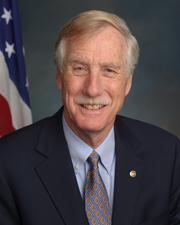 Sen. Angus S. King Jr. (I-ME)
Sen. Angus S. King Jr. (I-ME)Submitted June 25, 2020
Legislative Activity
Stay on top of the latest movement without scrolling through every action
Floor
Latest Action
Senate amendment submitted
June 25, 2020
Text
Submitted
SA 1850. Mr. KING (for himself and Mr. Menendez) submitted an
amendment intended to be proposed by him to the bill S. 4049, to
authorize appropriations for fiscal year 2021 for military activities
of the Department of Defense, for military construction, and for
defense activities of the Department of Energy, to prescribe military
personnel strengths for such fiscal year, and for other purposes; which
was ordered to lie on the table; as follows:

At the end of title XII of division A, add the following:

Subtitle H--Global Health Security

SEC. 1291. SHORT TITLE.

This subtitle may be cited as the ``Global Health Security
Act of 2020''.

SEC. 1292. DEFINED TERM.

In this subtitle, the term ``global health security'' means
the activities required to minimize the danger and impact of
acute public health events that endanger the collective
health of populations living across geographical regions and
international boundaries.

SEC. 1293. POLICY OBJECTIVES.

It is the policy of the United States--
(1) to advance global health security through engagement in
a multi-faceted, multi-country, multi-sectoral framework to
accelerate targeted partner countries' measurable
capabilities to achieve specific targets to prevent, detect,
and respond to infectious disease threats, whether naturally
occurring, deliberate, or accidental;
(2) to encourage governments and multilateral institutions,
including development banks, nongovernmental organizations,
and private sector stakeholders throughout the world to make
fortifying health security a national priority and a key
commitment; and
(3) to emphasize improving coordination and collaboration
across governmental and societal sectors to help strengthen
health systems and pandemic preparedness.

SEC. 1294. GLOBAL HEALTH SECURITY SPECIAL ADVISOR.

(a) In General.--There is established, within the Executive
Office of the President, the position of Special Advisor for
Global Health Security (referred to in this subtitle as the
``Advisor''), who shall be appointed by the President, at a
level not lower than that of a Deputy Assistant to the
President. In selecting the Advisor, the President should
consider appointing a staff member of the National Security
Council.
(b) General Duties.--The Advisor shall--
(1) serve as the President's principal advisor on global
health security and global health emergencies;
(2) coordinate the United States Government's efforts to
carry out global health security activities, including
participation in the Global Health Security Agenda;
(3) convene and chair the Global Health Security
Interagency Review Council described in section 1295; and
(4) submit a report to Congress not less frequently than
twice per year that describes the activities and
accomplishments of the Advisor during the reporting period.
(c) Specific Duties.--The duties of the Advisor shall also
include--
(1) ensuring program and policy coordination among the
relevant executive branch agencies and nongovernmental
organizations, including auditing, monitoring, and evaluation
of all such programs;
(2) ensuring that each relevant executive branch agency
undertakes programs primarily in areas in which the agency
has the greatest expertise, technical capabilities, and
potential for success;
(3) avoiding duplication of effort;
(4) ensuring, through interagency and international
coordination, that global health security programs of the
United States are coordinated with, and complementary to, the
delivery of related global health, food security,
development, and education programs;
(5) establishing due diligence criteria for all recipients
of funds appropriated by the Federal Government for global
health security assistance;

[[Page S3379]]

(6) developing policy that will prioritize global health
security, especially the role of building low- and middle-
income country capacity to contain pandemic threats, in all
relevant future global and national health, research and
development, and biodefense strategies, including the
National Health Security Strategy, the National Security
Strategy, and the National Biodefense Strategy; and
(7) articulating assessment standards that--
(A) measure countries' individual status and progress in
building the necessary capacities to prevent, detect, and
respond to infectious disease threats, in accordance with
agreed bilateral or multilateral targets and in support of
full implementation of the International Health Regulations,
adopted at Geneva May 23, 2005;
(B) are based on a peer-to-peer model in which external
experts are invited to work with the country to evaluate
capacity;
(C) ensure an objective approach and facilitate cross-
sectoral learning; and
(D) are part of the capacity building cycle designed to
inform national priority setting, target resources, and track
progress.
(d) Coordination.--In carrying out the duties set forth in
subsection (b), the Advisor shall ensure--
(1) coordination of United States Government efforts
referred to in subsection (b)(2) with relevant international
stakeholders and organizations; and
(2) coordination with the Administrator of the United
States Agency for International Development, who is
responsible for the coordination of the provision of
international humanitarian assistance by the United States
Government.
(e) Monitoring.--To ensure that adequate measures are
established and implemented, the Centers for Disease Control
and Prevention should--
(1) advise the Advisor on monitoring, surveillance, and
evaluation activities; and
(2) be a key implementer of such activities under this
section.
(f) Form.--The reports required under subsection (b)(4)
shall be submitted in unclassified form, but may contain a
classified annex.

SEC. 1295. INTERAGENCY REVIEW COUNCIL.

(a) Establishment.--The Global Health Security Interagency
Review Council (referred to in this section as the
``Council'') shall be composed of representatives of--
(1) the Department of Defense, including the Assistant
Secretary of Defense for Health Affairs;
(2) the Department of State;
(3) the Centers for Disease Control and Prevention;
(4) the United States Agency for International Development;
(5) the Department of Agriculture, including the Animal
Plant Health Inspection Service and the Food Safety and
Inspection Service;
(6) the Department of Health and Human Services, including
the National Institutes of Health;
(7) the Department of Homeland Security;
(8) the Department of Justice, including the Federal Bureau
of Investigation;
(9) the Environmental Protection Agency;
(10) the Office of Management and Budget;
(11) the Office of Science and Technology Policy; and
(12) any other agency that the representatives of the
agencies set forth in paragraphs (1) through (11) determine,
by consensus, to be appropriate.
(b) Meetings.--The Council shall meet at least 4 times per
year to advance its mission and fulfill its responsibilities
under this section.
(c) Functions.--The Council shall--
(1) provide policy-level guidance to participating agencies
on global health security goals, objectives, and
implementation;
(2) facilitate interagency, multi-sectoral engagement to
carry out global health security activities, including the
Global Health Security Agenda;
(3) provide a forum for raising and working to resolve
interagency disagreements concerning the global health
security goals, objectives, and benchmarks;
(4) develop and set benchmarks for--
(A) assessing, measuring, and improving global health
security outcomes; and
(B) identifying criteria for designating priority partner
countries;
(5) review the progress toward, and work to resolve
challenges to, achieving United States Government commitments
to global health security activities, agreements, and
organizations, including the Global Health Security Agenda
and other commitments to assist other countries in achieving
agreed-upon global health security targets; and
(6) consider, among other issues--
(A) the status of United States financial commitments to
global health security in the context of commitments by other
donors, and the contributions of partner countries to achieve
global health security targets, including the Global Health
Security Agenda;
(B) progress toward the milestones outlined in global
health security national plans for those countries where the
United States Government has committed to assist in global
health security activities and in annual work plans outlining
agency priorities for implementing global health security
strategies, including the Global Health Security Agenda; and
(C) external evaluations of the capabilities of the United
States and partner countries to address infectious disease
threats, including--
(i) the ability to achieve the targets outlined in the
Joint External Evaluation process; and
(ii) gaps identified by such external evaluations.
(d) Specific Roles and Responsibilities.--
(1) In general.--The heads of the agencies referred to in
subsection (a) shall--
(A) make the implementation of the Global Health Security
Agenda (referred to in this subsection as ``GHSA'') and
successor activities a high priority within their respective
agencies, and include GHSA-related activities within their
respective agencies' strategic planning and budget processes;
(B) designate a senior level official to be responsible for
the implementation of this section;
(C) designate an appropriate representative, at the
Assistant Secretary level or higher, to represent the agency
on the Council;
(D) keep the Council apprised of global health security-
related activities, including the Global Health Security
Agenda, undertaken within their respective agencies;
(E) maintain responsibility for agency-related programmatic
functions, in coordination with host governments, country
teams, and global health security in country teams, and in
conjunction with other relevant agencies;
(F) coordinate with other agencies referred to in
subsection (a) to satisfy programmatic goals, and further
facilitate coordination of country teams, implementers, and
donors in host countries; and
(G) coordinate across GHSA national plans and with GHSA
partners to which the United States is providing assistance.
(2) Additional roles and responsibilities.--In addition to
the roles and responsibilities described in paragraph (1),
the heads of agencies referred to in subsection (a) shall
carry out their respective roles and responsibilities
described in subsections (b) through (i) of section 3 of
Executive Order 13747 (81 Fed. Reg. 78701; relating to
Advancing the Global Health Security Agenda to Achieve a
World Safe and Secure from Infectious Disease Threats), as in
effect on the day before the date of the enactment of this
Act.
(e) Limitations.--The Council may not perform any
activities or functions that interfere with the foreign
affairs responsibilities of the Secretary of State, including
the responsibility to oversee the implementation of programs
and policies that advance the global health security
activities within foreign countries.

SEC. 1296. STRATEGY AND REPORTS.

(a) Strategy.--The Special Advisor for Global Health
Security appointed under section 1294 shall coordinate the
development and implementation of a strategy to implement the
policy objectives described in section 1293, which shall--
(1) set specific and measurable goals, benchmarks,
timetables, performance metrics, and monitoring and
evaluation plans that reflect international best practices
relating to transparency, accountability, and global health
security;
(2) support and be aligned with country-owned global health
security policy and investment plans developed with input
from key stakeholders, as appropriate;
(3) facilitate communication and collaboration, as
appropriate, among local stakeholders in support of a multi-
sectoral approach to global health security;
(4) support the long-term success of programs by building
the capacity of local organizations and institutions in
target countries and communities;
(5) develop community resilience to infectious disease
threats and emergencies;
(6) leverage resources and expertise through partnerships
with the private sector, health organizations, civil society,
nongovernmental organizations, and health research and
academic institutions; and
(7) support collaboration, as appropriate, between United
States universities, and public and private institutions in
target countries and communities to promote health security
and innovation.
(b) Coordination.--The President, acting through the
Special Advisor for Global Health Security, shall coordinate,
through a whole-of-government approach, the efforts of
relevant Federal departments and agencies in the
implementation of the strategy required under subsection (a)
by establishing--
(1) monitoring and evaluation systems, coherence, and
coordination across relevant Federal departments and
agencies; and
(2) platforms for regular consultation and collaboration
with key stakeholders and the appropriate congressional
committees.
(c) Strategy Submission.--
(1) In general.--Not later than 6 months after the date of
the enactment of this Act, the President, in consultation
with the head of each relevant Federal department and agency,
shall submit, to the appropriate congressional committees--
(A) the strategy required under subsection (a); and
(B) a detailed description of how the United States intends
to advance the policy objectives described in section 1293
and the agency-specific plans described in paragraph (2).
(2) Agency-specific plans.--The strategy required under
subsection (a) shall include specific implementation plans
from each relevant Federal department and agency that
describes--

[[Page S3380]]

(A) the anticipated contributions of the department or
agency, including technical, financial, and in-kind
contributions, to implement the strategy; and
(B) the efforts of the department or agency to ensure that
the activities and programs carried out pursuant to the
strategy are designed to achieve maximum impact and long-term
sustainability.
(d) Report.--
(1) In general.--Not later than 1 year after the date on
which the strategy required under subsection (a) is submitted
to the appropriate congressional committees under subsection
(c), and not later than October 1 of each year thereafter,
the President shall submit a report to the appropriate
congressional committees that describes the status of the
implementation of the strategy.
(2) Content.--The report required under paragraph (1)
shall--
(A) contain a summary of the strategy as an appendix;
(B) identify any substantial changes made in the strategy
during the preceding calendar year;
(C) describe the progress made in implementing the
strategy;
(D) identify the indicators used to establish benchmarks
and measure results over time, and the mechanisms for
reporting such results in an open and transparent manner;
(E) contain a transparent, open, and detailed accounting of
expenditures by relevant Federal departments and agencies to
implement the strategy, including, for each Federal
department and agency, the statutory source of expenditures,
amounts expended, implementing partners, targeted
beneficiaries, and activities supported;
(F) describe how the strategy leverages other United States
global health and development assistance programs;
(G) assess efforts to coordinate United States global
health security programs, activities, and initiatives with
key stakeholders; and
(H) incorporate a plan for regularly reviewing and updating
strategies, partnerships, and programs and sharing lessons
learned with a wide range of stakeholders, including key
stakeholders, in an open, transparent manner.
(e) Form.--The strategy required under subsection (a) and
the report required under subsection (d) shall be submitted
in unclassified form, but may contain a classified annex.

SEC. 1297. ANNUAL NATIONAL INTELLIGENCE ESTIMATE AND BRIEFING
ON NOVEL DISEASES AND PANDEMIC THREATS.

(a) In General.--The National Security Act of 1947 (50
U.S.C. 3001 et seq.) is amended by adding at the end the
following:

``SEC. 1109. ANNUAL NATIONAL INTELLIGENCE ESTIMATE AND
BRIEFING ON NOVEL DISEASES AND PANDEMIC
THREATS.

``(a) Defined Term.--In this section, the term `appropriate
committees of Congress' means--
``(1) the Committee on Foreign Relations of the Senate;
``(2) the Select Committee on Intelligence of the Senate;
``(3) the Committee on Health, Education, Labor, and
Pensions of the Senate
``(4) the Committee on Foreign Affairs of the House of
Representatives;
``(5) the Permanent Select Committee on Intelligence of the
House of Representatives; and
``(6) the Committee on Energy and Commerce of the House of
Representatives.
``(b) National Intelligence Estimates Required.--
``(1) In general.--Not later than 90 days after the date of
the enactment of this section, and annually thereafter, the
National Intelligence Council shall produce a National
Intelligence Estimate regarding the risk of pandemics from
highly infectious and novel diseases.
``(2) Elements.--Each National Intelligence Estimate
produced under paragraph (1) shall include the following:
``(A) An identification of the countries most likely to be
the origin of a disease with pandemic potential.
``(B) An assessment of the likelihood of a spread of a
disease described in subparagraph (A) to the United States,
the Armed Forces or diplomatic or development personnel of
the United States abroad, or citizens of the United States
abroad in a manner that could lead to an epidemic in the
United States that affects the national security or economic
prosperity of the United States.
``(C) An assessment of the preparedness of countries around
the world to detect, prevent, and respond to pandemic
threats.
``(D) An identification of any gaps in the preparedness of
countries described in subparagraph (C).
``(c) Submission to Congress.--On the December 1 following
the date on which a National Intelligence Estimate is
produced under subsection (b)(1), the National Intelligence
Council shall submit the Estimate to the appropriate
committees of Congress.
``(d) Congressional Briefings.--The National Intelligence
Council shall annually brief the appropriate committees of
Congress regarding--
``(1) the most recent National Intelligence Estimate
submitted under subsection (c); and
``(2) outbreaks of disease with pandemic potential that
could lead to an epidemic described in subsection (b)(2)(B).
``(e) Public Availability.--The Director of National
Intelligence shall make publicly available an unclassified
version of each National Intelligence Estimate produced under
subsection (b)(1).''.
(b) Clerical Amendment.--The table of contents in the
matter preceding section 2 of such Act (50 U.S.C. 3002) is
amended by adding at the end the following:

``1109. Annual National Intelligence Estimate and briefing on novel
diseases and pandemic threats.''.
______