To state the policy of the United States on cooperation in the Indo-Pacific region.
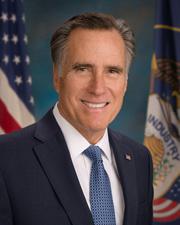 Sen. Mitt Romney (R-UT)
Legislative Activity
Stay on top of the latest movement without scrolling through every action
Senate amendment proposed (on the floor): Amendment SA 1883 proposed by Senator Inhofe for Senator Romney to Amendment SA 2301.
July 2, 2020
View full timeline
Senate amendment proposed (on the floor): Amendment SA 1883 proposed by Senator Inhofe for Senator Romney to Amendment SA 2301.
July 2, 2020
Senate amendment agreed to: Amendment SA 1883 agreed to in Senate by Voice Vote.
July 2, 2020
Amendment SA 1883 proposed by Senator Inhofe for Senator Romney to Amendment SA 2301. (consideration: CR S4184; text: CR S4185) To state the policy of the United States on cooperation in the Indo-Pacific region.
July 2, 2020
Amendment SA 1883 agreed to in Senate by Voice Vote.
July 2, 2020
Senate amendment submitted
June 25, 2020
Text
Submitted
SA 1883. Mr. ROMNEY (for himself, Mr. Coons, Ms. Hassan, and Ms.
Cortez Masto) submitted an amendment intended to be proposed by him to
the bill S. 4049, to authorize appropriations for fiscal year 2021 for
military activities of the Department of Defense, for military
construction, and for defense activities of the Department of Energy,
to prescribe military personnel strengths for such fiscal year, and for
other purposes; which was ordered to lie on the table; as follows:

At the end of subtitle E of title XII, add the following:

SEC. 1262. STATEMENT OF POLICY ON COOPERATION IN THE INDO-
PACIFIC REGION.

It is the policy of the United States--
(1) to strengthen alliances and partnerships in the Indo-
Pacific region and Europe and with like-minded countries
around the globe to effectively compete with the People's
Republic of China; and
(2) to work in collaboration with such allies and
partners--
(A) to address significant diplomatic, economic, and
military challenges posed by the People's Republic of China;
(B) to deter the People's Republic of China from pursuing
military aggression;
(C) to promote the peaceful resolution of territorial
disputes in accordance with international law;
(D) to promote private sector-led long-term economic
development while countering efforts by the Government of the
People's Republic of China to leverage predatory economic
practices as a means of political and economic coercion in
the Indo-Pacific region and beyond;
(E) to promote the values of democracy and human rights,
including through efforts to end the repression by the
Chinese Communist Party of political dissidents and Uyghurs
and other ethnic Muslim minorities, Tibetan Buddhists,
Christians, and other minorities;
(F) to respond to the crackdown by the Chinese Communist
Party, in contravention of the commitments made under the
Sino-British Joint Declaration of 1984 and the Basic Law of
Hong Kong, on the legitimate aspirations of the people of
Hong Kong; and
(G) to counter the Chinese Communist Party's efforts to
spread disinformation in the People's Republic of China and
beyond with respect to the response of the Chinese Communist
Party to COVID-19.

[[Page S3397]]

______