To require the Secretary of Homeland Security to publish an annual report on the use of deepfake technology, and for other purposes.
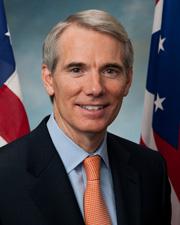 Sen. Rob Portman (R-OH)
Legislative Activity
Stay on top of the latest movement without scrolling through every action
Senate amendment agreed to: Amendment SA 1891 agreed to in Senate by Voice Vote.
July 2, 2020
View full timeline
Senate amendment agreed to: Amendment SA 1891 agreed to in Senate by Voice Vote.
July 2, 2020
Senate amendment proposed (on the floor): Amendment SA 1891 proposed by Senator Inhofe for Senator Portman to Amendment SA 2301.
July 2, 2020
Amendment SA 1891 proposed by Senator Inhofe for Senator Portman to Amendment SA 2301. (consideration: CR S4184; text: CR S4186) To require the Secretary of Homeland Security to publish an annual report on the use of deepfake technology, and for other purposes.
July 2, 2020
Amendment SA 1891 agreed to in Senate by Voice Vote.
July 2, 2020
Senate amendment submitted
June 25, 2020
Text
Submitted
SA 1891. Mr. PORTMAN (for himself, Mr. Schatz, Ms. Ernst, and Mr.
Peters) submitted an amendment intended to be proposed by him to the
bill S. 4049, to authorize appropriations for fiscal year 2021 for
military activities of the Department of Defense, for military
construction, and for defense activities of the Department of Energy,
to prescribe military personnel strengths for such fiscal year, and for
other purposes; which was ordered to lie on the table; as follows:

At the appropriate place, insert the following:

SEC. __. DEEPFAKE REPORT.

(a) Definitions.--In this section:
(1) Digital content forgery.--The term ``digital content
forgery'' means the use of emerging technologies, including
artificial intelligence and machine learning techniques, to
fabricate or manipulate audio, visual, or text content with
the intent to mislead.
(2) Secretary.--The term ``Secretary'' means the Secretary
of Homeland Security.
(b) Reports on Digital Content Forgery Technology.--
(1) In general.--Not later than 1 year after the date of
enactment of this Act, and annually thereafter for 5 years,
the Secretary, acting through the Under Secretary for Science
and Technology, shall produce a report on the state of
digital content forgery technology.
(2) Contents.--Each report produced under paragraph (1)
shall include--
(A) an assessment of the underlying technologies used to
create or propagate digital content forgeries, including the
evolution of such technologies;
(B) a description of the types of digital content
forgeries, including those used to commit fraud, cause harm,
or violate civil rights recognized under Federal law;
(C) an assessment of how foreign governments, and the
proxies and networks thereof, use, or could use, digital
content forgeries to harm national security;
(D) an assessment of how non-governmental entities in the
United States use, or could use, digital content forgeries;
(E) an assessment of the uses, applications, dangers, and
benefits of deep learning technologies used to generate high
fidelity artificial content of events that did not occur,
including the impact on individuals;
(F) an analysis of the methods used to determine whether
content is genuinely created by a human or through digital
content forgery technology and an assessment of any effective
heuristics used to make such a determination, as well as
recommendations on how to identify and address suspect
content and elements to provide warnings to users of the
content;
(G) a description of the technological counter-measures
that are, or could be, used to address concerns with digital
content forgery technology; and
(H) any additional information the Secretary determines
appropriate.
(3) Consultation and public hearings.--In producing each
report required under paragraph (1), the Secretary may--
(A) consult with any other agency of the Federal Government
that the Secretary considers necessary; and
(B) conduct public hearings to gather, or otherwise allow
interested parties an opportunity to present, information and
advice relevant to the production of the report.
(4) Form of report.--Each report required under paragraph
(1) shall be produced in unclassified form, but may contain a
classified annex.
(5) Applicability of foia.--Nothing in this section, or in
a report produced under this

[[Page S3399]]

section, shall be construed to allow the disclosure of
information or a record that is exempt from public disclosure
under section 552 of title 5, United States Code (commonly
known as the ``Freedom of Information Act'').
(6) Applicability of the paperwork reduction act.--
Subchapter I of chapter 35 of title 44, United States Code
(commonly known as the ``Paperwork Reduction Act''), shall
not apply to this section.
______