S.Amdt. 2095Senate116th Congress (2019-2021)
S.Amdt. 2095
Sponsored by 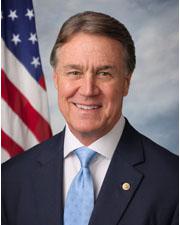 Sen. David Perdue (R-GA)
Sen. David Perdue (R-GA)Submitted June 25, 2020
Legislative Activity
Stay on top of the latest movement without scrolling through every action
Floor
Latest Action
Senate amendment submitted
June 25, 2020
Text
Submitted
SA 2095. Mr. PERDUE (for himself, Mrs. Loeffler, and Mr. Johnson)
submitted an amendment intended to be proposed by him to the bill S.
4049, to authorize appropriations for fiscal year 2021 for military
activities of the Department of Defense, for military construction, and
for defense activities of the Department of Energy, to prescribe
military personnel strengths for such fiscal year, and for other
purposes; which was ordered to lie on the table; as follows:

At the appropriate place, insert the following:

SEC. ___. REMOVING LEGAL BARRIERS RELATING TO COOPERATING
WITH THE FEDERAL GOVERNMENT DURING TIMES OF
EMERGENCY OR TO PROMOTE NATIONAL SECURITY.

(a) Definitions.--In this section:
(1) Authorized official.--The term ``authorized official''
means--
(A) the President;
(B) the head of a responsible Federal department or agency
(including the Secretary of Energy, the Secretary of Homeland
Security, the Secretary of Defense, the Attorney General, and
the Director of National Intelligence); or
(C) a designee of an officer described in subparagraph (A)
or (B).
(2) Covered activity.--The term ``covered activity'' means
any action taken, or refrained from being taking, by a
covered entity pursuant to a covered order.
(3) Covered entity.--
(A) In general.--The term ``covered entity'' means a
Federal, State, local, Tribal, or territorial entity or any
entity (including a parent, subsidiary, owner, operator, or
member of the entity) that owns or operates critical
infrastructure, including an entity in one of the following
sectors, as identified in Presidential Policy Directive-21,
or any successor thereto:
(i) Communications.
(ii) Energy.
(iii) Transportation Systems.
(iv) Water and Wastewater Systems.
(B) Exclusions.--The term ``covered entity'' does not
include--
(i) a foreign person a transaction of which--

(I) is under review or investigation by the Committee on
Foreign Investment in the United States under section 721 of
the Defense Production Act of 1950 (50 U.S.C. 4565); or
(II) has been suspended or prohibited by the President
following such a review or investigation; or

[[Page S3528]]

(ii) an entity subject to an exclusion or removal order
under subchapter III of chapter 14 of title 41, United States
Code.
(4) Covered order.--The term ``covered order'' means an
order to a covered entity made in writing by an authorized
official in order to respond to--
(A) an emergency or threat relating to cybersecurity or
physical security; or
(B) any other incident impacting national security.
(5) Critical infrastructure.--The term ``critical
infrastructure'' has the meaning given that term in the
Critical Infrastructures Protection Act of 2001 (42 U.S.C.
5195c).
(6) Sector-specific agency.--The term ``Sector-Specific
Agency'' has the meaning given that term in section 2201 of
the Homeland Security Act of 2002 (6 U.S.C. 651).
(b) Liability Protection for Covered Entities.--
(1) In general.--A covered entity shall not be liable in
any action in any Federal, State, local, or Tribal court or
before any Federal, State, local, or Tribal department or
agency for harm caused by a covered activity if--
(A) the covered entity was acting pursuant to and within
the scope of the applicable covered order;
(B) if appropriate or required, the covered entity was
properly licensed, certified, or authorized by the
appropriate authorities for the activities or practice in the
State in which the harm occurred, where the covered
activities were or practice was undertaken within the scope
of the applicable covered order;
(C) the harm was not caused by willful or criminal
misconduct, gross negligence, reckless misconduct, or a
conscious, flagrant indifference to the rights or safety of
the individual harmed by the covered entity; and
(D) the harm was not caused by the covered entity while
operating a motor vehicle, vessel, aircraft, or other vehicle
for which the State requires the operator or the owner of the
vehicle, craft, or vessel to--
(i) possess an operator's license; or
(ii) maintain insurance.
(2) Cause of action barred.--A cause of action alleging a
harm for which a covered entity is protected from liability
under paragraph (1) shall not lie or be maintained in any
Federal, State, local, or Tribal court or before any Federal,
State, local, or Tribal department or agency.
(c) Burden of Proof.--In an action against a covered entity
for harm alleged to have been caused by a covered activity of
the covered entity, the plaintiff or agency or other entity
bringing the action shall have the burden of proving by clear
and convincing evidence that--
(1) the covered entity is not entitled to protection from
liability for the covered activity under subsection (b); and
(2) the action or refraining from taking action by the
covered entity caused the alleged harm.
(d) Coordination or Notification.--
(1) In general.--If time permits, an authorized official
issuing a covered order that is likely to result in covered
activity shall issue the covered order in coordination with
the appropriate Sector-Specific Agency and the Director of
the Cybersecurity and Infrastructure Security Agency.
(2) Notification.--If time does not permit the coordination
described in paragraph (1), an authorized official issuing a
covered order described in paragraph (1) shall notify the
Sector-Specific Agency and the Director of the Cybersecurity
and Infrastructure Security Agency regarding the order at the
time the covered order is issued.
(e) Reporting Requirements.--
(1) Substantial limitations and restrictions.--Not later
than 24 hours after receiving a covered order, a covered
entity shall submit to the authorized official issuing the
covered order written notice if the covered entity determines
that there exists a substantial limitation or restriction on
the ability of the covered entity to comply with the covered
order, which shall describe the nature of the limitation or
restriction and, as applicable, any proposed changes to the
covered order necessary to enable the covered entity to
implement the covered activity.
(2) Implementation.--
(A) In general.--Not later than 90 days after implementing
a covered activity pursuant to a covered order, a covered
entity shall submit to the authorized official issuing the
covered order and the Secretary of Homeland Security a
written report that outlines--
(i) the implementation of the covered order by the covered
entity;
(ii) the impact of any covered activity implemented under
the covered order in meeting the intent or stated objectives
of the covered order;
(iii) any risks or hazards identified in implementing the
covered activity; and
(iv) steps taken to address identified risks and hazards
and protect individual rights and public safety.
(B) Failure to submit.--If a covered entity fails to submit
a report required under subparagraph (A) with respect to a
covered order, the covered entity shall not receive
protection from liability under subsection (b) for any
covered activity implemented under the cover order.
(f) Availability of Information.--Upon receiving notice or
a report under subsection (e), the Federal department or
agency that issued the covered order shall determine whether
such information should be withheld from public disclosure
due to national security reasons or in order to comply with
an exemption to section 552(b)(3) of title 5, United States
Code.
(g) Limit on Use of Information.--Information provided to a
Federal department or agency under subsection (e) shall not
be directly used by any Federal, State, Tribal, or local
government to regulate the lawful activities of any entity.
(h) Savings Clauses.--
(1) Applicable law.--Nothing in this section affects a
public liability action covered by section 170 of the Atomic
Energy Act of 1954 (42 U.S.C. 2210) (commonly known as the
``Price-Anderson Act'').
(2) Available defenses.--Nothing in this section undermines
or limits the availability of any applicable common law or
statutory defense available to a covered entity.
(i) No New Authority.--Nothing in this section creates any
new authorities for any Federal department or agency.
______