S.Amdt. 2242Senate116th Congress (2019-2021)
S.Amdt. 2242
Sponsored by 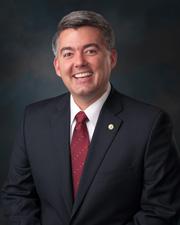 Sen. Cory Gardner (R-CO)
Sen. Cory Gardner (R-CO)Submitted June 29, 2020
Legislative Activity
Stay on top of the latest movement without scrolling through every action
Floor
Latest Action
Senate amendment submitted
June 29, 2020
Text
Submitted
SA 2242. Mr. GARDNER (for himself and Mr. Peters) submitted an
amendment intended to be proposed by him to the bill S. 4049, to
authorize appropriations for fiscal year 2021 for military activities
of the Department of Defense, for military construction, and for
defense activities of the Department of Energy, to prescribe military
personnel strengths for such fiscal year, and for other purposes; which
was ordered to lie on the table; as follows:

At the appropriate place in title X, insert the following:

Subtitle __--Artificial Intelligence

SEC. __1. STANDARD DEVELOPMENT FOR ARTIFICIAL INTELLIGENCE AT
THE NATIONAL INSTITUTE OF STANDARDS AND
TECHNOLOGY.

The National Institute of Standards and Technology Act (15
U.S.C. 271 et seq.) is amended by inserting after section 22
the following:

``SEC. 22A. STANDARDS FOR ARTIFICIAL INTELLIGENCE.

``(a) Mission.--The Institute shall--
``(1) have the mission of advancing frameworks, standards,
guidelines, and associated methods and techniques for
artificial intelligence;
``(2) support the development of a risk-mitigation
framework for deploying artificial intelligence;
``(3) support the development of technical standards and
guidelines that promote reliable, robust, and trustworthy
artificial intelligence; and
``(4) support the development of technical standards and
guidelines by which to test for bias in artificial
intelligence training data and applications.
``(b) Participation in Standard Setting Organizations.--
``(1) Requirement.--The Institute shall participate in the
development of standards and specifications for artificial
intelligence.
``(2) Purpose.--The purpose of participation of the
Institute under paragraph (1) shall be to ensure--
``(A) that standards promote artificial intelligence that
is reliable, robust, and trustworthy;
``(B) that standards relating to artificial intelligence
reflect the state of technology and are fit-for-purpose and
developed in the transparent and consensus-based processes
that are open to all stakeholders.''.

SEC. __2. ESTABLISHMENT OF NATIONAL PROGRAM TO ADVANCE
ARTIFICIAL INTELLIGENCE RESEARCH.

The National Institute of Standards and Technology Act (15
U.S.C. 271 et seq.), as amended by section __1, is further
amended by inserting after section 22A the following:

``SEC. 22B. NATIONAL PROGRAM TO ADVANCE ARTIFICIAL
INTELLIGENCE RESEARCH.

``(a) Establishment.--
``(1) In general.--The Director shall establish a research
program with a national scope to advance use-inspired
artificial intelligence research and its use in a manner that
serves the needs of the United States, the Institute,
industry, the academic community, and such other entities as
the Director considers appropriate.
``(2) Designation.--The research program established under
paragraph (1) shall be known as the `National Program to
Advance Artificial Intelligence Research' (in this section
referred to as the `Program').
``(b) Activities.--The activities of the Program shall
include the following:

[[Page S3694]]

``(1) Supporting research necessary to operationalize the
goals of reliable, robust, and trustworthy artificial
intelligence.
``(2) Supporting research necessary to develop and
operationalize technical standards and guidelines that
promote reliable, robust, and trustworthy artificial
intelligence.
``(3) Fostering development of artificial intelligence
applications that would enhance the public good.
``(4) Supporting research necessary to advance human-
centered artificial intelligence and examining societal,
ethical, safety, security, and privacy effects of artificial
intelligence development and deployment.
``(5) Creating and developing processes for the purpose of
advancing use-inspired artificial intelligence research and
its use.
``(6) Promoting exchange of personnel among industry,
academic, and the government entities.
``(7) Establishing and operating at least one test bed to
support the outside entities testing the degree to which
artificial intelligence applications and training data are
reliable, robust, and trustworthy.
``(c) Geographic Distribution.--In establishing the
Program, the Director may establish multiple physical
campuses and a national network of participants to avoid
undue geographic concentration of the activities of the
Program.
``(d) Authorization of Appropriations.--There is authorized
to be appropriated to carry out this section $250,000,000 for
each of fiscal years 2021 through 2025.''.

SEC. __3. ESTABLISHMENT OF NATIONAL ARTIFICIAL INTELLIGENCE
RESEARCH INSTITUTES.

(a) Establishment.--
(1) In general.--The Director of the National Science
Foundation shall establish at least 6 research institutes to
serve the needs of the United States, industry, the academic
community, and such other entities as the Director considers
appropriate by--
(A) conducting research on longer-time-horizon challenges
in artificial intelligence research; and
(B) creating and developing processes for the purpose of
advancing use-inspired artificial intelligence research and
its deployment.
(2) Designation.--Each research institute established under
paragraph (1) shall be known as a ``National Artificial
Intelligence Research Institute''.
(b) Grants.--
(1) In general.--The Director shall establish the research
institutes under subsection (a) through the award of grants
to eligible entities using a competitive, merit-reviewed
process.
(2) Eligible entities.--For purposes of this section, an
eligible entity is--
(A) an institution of higher education;
(B) a nonprofit research center;
(C) such other type of entity as the Director considers
appropriate; or
(D) a collaboration of any combination of entities
described in subparagraphs (A) through (C).
(3) Duration.--
(A) In general.--Each grant awarded under paragraph (1)
shall be for a period of 5 years.
(B) Reapplication.--The Director may approve or disapprove
reapplications from grant recipients for additional grants.
(C) Termination.--The Director may terminate a grant
awarded under paragraph (1) for an underperforming research
institute, for cause, during the performance period of the
grant.
(c) Applications.--An eligible entity seeking a grant under
paragraph (1) to establish a research institute under this
section shall submit to the Director an application therefor
at such time, in such manner, and containing such information
as the Director determines appropriate.
(d) Community Facility.--The Director shall ensure that at
least 1 research institute established under this section
operates an artificial-intelligence community computing
facility that is available for use by entities other than
research institutes established under this section.
(e) Funding.--
(1) In general.--Subject to the availability of
appropriations, the Director may, in each of fiscal years
2021 through 2025, obligate to carry out this section an
amount that is less than or equal to $50,000,000 multiplied
by the number of research institutes established under this
section.
(2) Derivation of funds.--Amounts obligated to carry out
this section shall be derived from amounts appropriated to
the Foundation.

SEC. __4. NATIONAL SCIENCE FOUNDATION TRAINEESHIP PROGRAM
GRANTS.

(a) Program Required.--
(1) In general.--The Director of the National Science
Foundation shall carry out a program to award grants to
eligible entities to establish traineeship programs and
support trainees in topics selected by the Director under
subsection (c).
(2) Purpose.--The purpose of the program established by the
Director under paragraph (1) shall be to increase the number
of individuals with advanced degrees through both direct
support and programmatic support.
(b) Eligible Entities.--For purposes of this section, an
eligible entity is--
(1) an institution of higher education; or
(2) a consortia of institutions of higher education or
nonprofit organizations.
(c) Topics of National Importance.--
(1) In general.--Subject to paragraph (2), the Director
shall select a topic for the award of grants under subsection
(a) based on--
(A) the potential of a traineeship program in the topic or
support of trainees in the topic to affect society
positively;
(B) the importance of the topic to the economy and security
of the United States;
(C) the career opportunities for the graduates; and
(D) the need for workers in the topic with advanced
degrees.
(2) Initial topic selection.--The Director shall select
artificial intelligence as the initial topic for the award of
grants under subsection (a).
(d) Components.--A grant awarded under this section may
include support for--
(1) the recipient of the grant to develop and distribute
model curriculum that may be used by other graduate programs
to educate students in the topic selected under subsection
(c);
(2) mentors to provide guidance for students within the
topic area; and
(3) tuition and stipend for students pursuing a masters or
doctoral degree.

SEC. __5. NATIONAL SCIENCE FOUNDATION PILOT PROGRAM ON GRANTS
FOR RESEARCH IN RAPIDLY EVOLVING, HIGH PRIORITY
TOPICS.

(a) Pilot Program Required.--The Director of the National
Science Foundation shall establish a pilot program to assess
the feasibility and advisability of awarding grants for the
conduct of research in rapidly evolving, high priority
topics.
(b) Duration.--
(1) In general.--The Director shall carry out the pilot
program required by subsection (a) during the 5-year period
beginning on the date of the enactment of this Act.
(2) Assessment and continuation authority.--After the
period set forth in paragraph (1)--
(A) the Director shall assess the pilot program; and
(B) if the Director determines that it is both feasible and
advisable to do so, the Director may continue the pilot
program.
(c) Grants.--In carrying out the pilot program, the
Director shall award grants for the conduct of research in
topics selected by the Director in accordance with subsection
(d).
(d) Topic Selection.--The Director shall select topics for
research under the pilot program in accordance with the
following:
(1) The Director shall select artificial intelligence as
the initial topic for the pilot program.
(2) The Director may select additional topics that the
Director determines are--
(A) rapidly evolving; or
(B) of high importance to the economy and security of the
United States.
(e) Applications.--
(1) In general.--Subject to paragraph (2), a person seeking
a grant under the pilot program shall submit to the Director
an application therefor at such time, in such manner, and
containing such information as the Director may specify.
(2) Contents.--Each application submitted under paragraph
(1) shall include the following:
(A) A brief description of the research the applicant
proposes to carry out with a grant awarded under the pilot
program.
(B) A brief description of how the research is of an urgent
nature.
(C) The general goals of the research.
(D) Such other information as the Director may specify.
(f) Use of Funds.--A recipient of a grant under the pilot
program shall use the amount of the grant to conduct the
research for which the grant was awarded.
(g) Summaries of Research Findings.--A recipient of a grant
under the pilot program shall submit to the Director, at such
intervals as the Director determines appropriate, a summary
of the findings of the recipient with respect to the research
conducted with the grant amount.

SEC. __6. FEDERAL ARTIFICIAL INTELLIGENCE SCHOLARSHIP-FOR-
SERVICE PROGRAM.

(a) Definitions.--In this section:
(1) Artificial intelligence.--The term ``artificial
intelligence'' or ``AI'' has the meaning given the term
``artificial intelligence'' in section 238(g) of the John S.
McCain National Defense Authorization Act for Fiscal Year
2019 (10 U.S.C. 2358 note).
(2) Executive agency.--The term ``executive agency'' has
the meaning given the term ``Executive agency'' in section
105 of title 5, United States Code.
(3) Registered internship.--The term ``registered
internship'' means a Federal Registered Internship Program
coordinated through the Department of Labor.
(b) In General.--The Director of the National Science
Foundation, in coordination with the Director of the Office
of Personnel Management, the Director of the National
Institute of Standards and Technology, and the heads of other
agencies with appropriate scientific knowledge, shall
establish a Federal artificial intelligence scholarship-for-
service program (referred to in this section as the ``Federal
AI Scholarship-for-Service Program'') to recruit and train
artificial intelligence professionals to lead and support the
application of artificial intelligence to the missions of
Federal, State, local, and Tribal governments.
(c) Qualified Institution of Higher Education.--The
Director of the National Science Foundation, in coordination
with the heads of other agencies with appropriate scientific
knowledge, shall establish criteria to designate qualified
institutions of higher

[[Page S3695]]

education that shall be eligible to participate in the
Federal AI Scholarship-for-Service program. Such criteria
shall include--
(1) measures of the institution's demonstrated excellence
in the education of students in the field of artificial
intelligence; and
(2) measures of the institution's ability to attract and
retain a diverse and non-traditional student population in
the fields of science, technology, engineering, and
mathematics, which may include the ability to attract women,
minorities, and individuals with disabilities.
(d) Program Description and Components.--The Federal AI
Scholarship-for-Service Program shall--
(1) provide scholarships through qualified institutions of
higher education to students who are enrolled in programs of
study at institutions of higher education leading to degrees
or concentrations in or related to the artificial
intelligence field;
(2) provide the scholarship recipients with summer
internship opportunities, registered internships, or other
meaningful temporary appointments in the Federal information
technology workforce focusing on artificial intelligence
(referred to in this section as ``AI'') projects or research;
(3) prioritize the employment placement of scholarship
recipients in executive agencies;
(4) identify opportunities to promote multi-disciplinary
programs of study that integrate basic or advanced AI
training with other fields of study, including those that
address the social, economic, legal, and ethical implications
of human interaction with AI systems; and
(5) support capacity-building education research programs
that will enable postsecondary educational institutions to
expand their ability to train the next-generation AI
workforce, including AI researchers and practitioners.
(e) Scholarship Amounts.--Each scholarship under subsection
(d) shall be in an amount that covers the student's tuition
and fees at the institution for not more than 3 years and
provides the student with an additional stipend.
(f) Post-award Employment Obligations.--Each scholarship
recipient, as a condition of receiving a scholarship under
the program, shall enter into an agreement under which the
recipient agrees to work for a period equal to the length of
the scholarship, following receipt of the student's degree,
in the AI mission of--
(1) an executive agency;
(2) Congress, including any agency, entity, office, or
commission established in the legislative branch;
(3) an interstate agency;
(4) a State, local, or Tribal government, which may include
instruction in AI-related skill sets in a public school
system; or
(5) a State, local, or Tribal government-affiliated
nonprofit that is considered to be critical infrastructure
(as defined in section 1016(e) of the USA Patriot Act (42
U.S.C. 5195c(e))).
(g) Hiring Authority.--
(1) Appointment in excepted service.--Notwithstanding any
provision of chapter 33 of title 5 governing appointments in
the competitive service, an executive agency shall appoint in
the excepted service an individual who has completed the
eligible degree program for which a scholarship was awarded.
(2) Noncompetitive conversion.--Except as provided in
paragraph (4), upon fulfillment of the service term, an
employee appointed under paragraph (1) may be converted
noncompetitively to term, career-conditional or career
appointment.
(3) Timing of conversion.--An executive agency may
noncompetitively convert a term employee appointed under
paragraph (2) to a career-conditional or career appointment
before the term appointment expires.
(4) Authority to decline conversion.--An executive agency
may decline to make the noncompetitive conversion or
appointment under paragraph (2) for cause.
(h) Eligibility.--To be eligible to receive a scholarship
under this section, an individual shall--
(1) be a citizen or lawful permanent resident of the United
States;
(2) demonstrate a commitment to a career in advancing the
field of AI;
(3) be--
(A) a full-time student in an eligible degree program at a
qualified institution of higher education, as determined by
the Director of the National Science Foundation;
(B) a student pursuing a degree on a less than full-time
basis, but not less than half-time basis; or
(C) an AI faculty member on sabbatical to advance knowledge
in the field; and
(4) accept the terms of a scholarship under this section.
(i) Conditions of Support.--
(1) In general.--As a condition of receiving a scholarship
under this section, a recipient shall agree to provide the
qualified institution of higher education with annual
verifiable documentation of post-award employment and up-to-
date contact information.
(2) Terms.--A scholarship recipient under this section
shall be liable to the United States as provided in
subsection (k) if the individual--
(A) fails to maintain an acceptable level of academic
standing at the applicable institution of higher education,
as determined by the Director of the National Science
Foundation;
(B) is dismissed from the applicable institution of higher
education for disciplinary reasons;
(C) withdraws from the eligible degree program before
completing the program;
(D) declares that the individual does not intend to fulfill
the post-award employment obligation under this section; or
(E) fails to fulfill the post-award employment obligation
of the individual under this section.
(j) Monitoring Compliance.--As a condition of participating
in the program, a qualified institution of higher education
shall--
(1) enter into an agreement with the Director of the
National Science Foundation, to monitor the compliance of
scholarship recipients with respect to their post-award
employment obligations; and
(2) provide to the Director of the National Science
Foundation, on an annual basis, the post-award employment
documentation required under subsection (i)(1) for
scholarship recipients through the completion of their post-
award employment obligations.
(k) Amount of Repayment.--
(1) Less than 1 year of service.--If a circumstance
described in subsection (i)(2) occurs before the completion
of 1 year of a post-award employment obligation under this
section, the total amount of scholarship awards received by
the individual under this section shall--
(A) be repaid; or
(B) be treated as a loan to be repaid in accordance with
subsection (l).
(2) 1 or more years of service.--If a circumstance
described in subparagraph (D) or (E) of subsection (i)(2)
occurs after the completion of 1 or more years of a post-
award employment obligation under this section, the total
amount of scholarship awards received by the individual under
this section, reduced by the ratio of the number of years of
service completed divided by the number of years of service
required, shall--
(A) be repaid; or
(B) be treated as a loan to be repaid in accordance with
subsection (l).
(l) Repayments.--A loan described in subsection (k) shall--
(1) be treated as a Federal Direct Unsubsidized Stafford
Loan under part D of title IV of the Higher Education Act of
1965 (20 U.S.C. 1087a et seq.); and
(2) be subject to repayment, together with interest thereon
accruing from the date of the scholarship award, in
accordance with terms and conditions specified by the
Director of the National Science Foundation (in consultation
with the Secretary of Education) in regulations promulgated
to carry out this subsection.
(m) Collection of Repayment.--
(1) In general.--In the event that a scholarship recipient
is required to repay the scholarship award under this
section, the qualified institution of higher education
providing the scholarship shall--
(A) determine the repayment amounts and notify the
recipient and the Director of the National Science Foundation
of the amounts owed; and
(B) collect the repayment amounts within a period of time
as determined by the Director of the National Science
Foundation, or the repayment amounts shall be treated as a
loan in accordance with subsection (l).
(2) Returned to treasury.--Except as provided in paragraph
(3), any repayment under this subsection shall be returned to
the Treasury of the United States.
(3) Retain percentage.--A qualified institution of higher
education may retain a percentage of any repayment the
institution collects under this subsection to defray
administrative costs associated with the collection. The
Director of the National Science Foundation shall establish a
single, fixed percentage that will apply to all eligible
entities.
(n) Exceptions.--The Director of the National Science
Foundation may provide for the partial or total waiver or
suspension of any service or payment obligation by an
individual under this section whenever compliance by the
individual with the obligation is impossible or would involve
extreme hardship to the individual, or if enforcement of such
obligation with respect to the individual would be
unconscionable.
(o) Public Information.--
(1) Evaluation.--The Director of the National Science
Foundation, in coordination with the Director of the Office
of Personnel Management, shall annually evaluate and make
public, in a manner that protects the personally identifiable
information of scholarship recipients, information on the
success of recruiting individuals for scholarships under this
section and on hiring and retaining those individuals in the
public sector AI workforce, including information on--
(A) placement rates;
(B) where students are placed, including job titles and
descriptions;
(C) salary ranges for students not released from
obligations under this section;
(D) how long after graduation students are placed;
(E) how long students stay in the positions they enter upon
graduation;
(F) how many students are released from obligations; and
(G) what, if any, remedial training is required.
(2) Reports.--The Director of the National Science
Foundation, in coordination with the Office of Personnel
Management, shall submit, not less frequently than once every

[[Page S3696]]

3 years, to the Homeland Security and Governmental Affairs
Committee of the Senate, the Committee on Commerce, Science,
and Transportation of the Senate, the Committee on Science,
Space, and Technology of the House of Representatives, and
the Committee on Oversight and Reform of the House of
Representatives a report, including the results of the
evaluation under paragraph (1) and any recent statistics
regarding the size, composition, and educational requirements
of the Federal AI workforce.
(3) Resources.--The Director of the National Science
Foundation, in coordination with the Director of the Office
of Personnel Management, shall provide consolidated and user-
friendly online resources for prospective scholarship
recipients, including, to the extent practicable--
(A) searchable, up-to-date, and accurate information about
participating institutions of higher education and job
opportunities related to the AI field; and
(B) a modernized description of AI careers.
(p) Refresh.--Not less than once every 2 years, the
Director of the National Science Foundation, in coordination
with the Director of the Office of Personnel Management,
shall review and update the Federal AI Scholarship-for-
Service Program to reflect advances in technology.
(q) Authorization of Appropriations.--There are authorized
to be appropriated to carry out this section such sums as may
be necessary.
______