S.Amdt. 2308Senate116th Congress (2019-2021)2nd degree
S.Amdt. 2308
Sponsored by 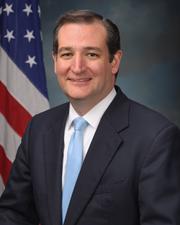 Sen. Ted Cruz (R-TX)
Sen. Ted Cruz (R-TX)Submitted June 29, 2020
Legislative Activity
Stay on top of the latest movement without scrolling through every action
Floor
Latest Action
Senate amendment submitted
June 29, 2020
Text
Submitted
SA 2308. Mr. CRUZ (for himself, Ms. Sinema, Mr. Wicker, Ms. Cantwell,
Mr. Kaine, Mr. Cornyn, and Mr. Rubio) submitted an amendment intended
to be proposed to amendment SA 2301 proposed by Mr. Inhofe to the bill
S. 4049, to authorize appropriations for fiscal year 2021 for military
activities of the Department of Defense, for military construction, and
for defense activities of the Department of Energy, to prescribe
military personnel strengths for such fiscal year, and for other
purposes; which was ordered to lie on the table; as follows:

At the end of subtitle A of title XVI, add the following:

SEC. 1610. CONTINUATION OF THE INTERNATIONAL SPACE STATION.

(a) Presence in Low-Earth Orbit.--
(1) Sense of congress.--It is the sense of Congress that--
(A) it is in the national and economic security interests
of the United States to maintain a continuous human presence
in low-Earth orbit;
(B) the International Space Station is a strategic national
security asset vital to the continued space exploration and
scientific advancements of the United States; and
(C) low-Earth orbit should be utilized as a testbed to
advance human space exploration, scientific discoveries, and
United States economic competitiveness and commercial
participation.
(2) Human presence requirement.--The United States shall
continuously maintain the capability for a continuous human
presence in low-Earth orbit through and beyond the useful
life of the International Space Station.
(b) Maintaining a National Laboratory in Space.--
(1) Sense of congress.--It is the sense of Congress that--
(A) the United States national laboratory in space, which
currently consists of the United States segment of the
International Space Station (designated as a national
laboratory under section 70905 of title 51, United States
Code)--
(i) benefits the scientific community and promotes commerce
in space;
(ii) fosters stronger relationships among the National
Aeronautics and Space Administration (referred to in this
section as ``NASA'') and other Federal agencies, the private
sector, and research groups and universities;
(iii) advances science, technology, engineering, and
mathematics education through utilization of the unique
microgravity environment; and
(iv) advances human knowledge and international
cooperation;
(B) after the International Space Station is
decommissioned, the United States should maintain a national
microgravity laboratory in space;
(C) in maintaining a national microgravity laboratory
described in subparagraph (B), the United States should make
appropriate accommodations for different types of ownership
and operational structures for the International Space
Station and future space stations;
(D) the national microgravity laboratory described in
subparagraph (B) should be maintained beyond the date on
which the International Space Station is decommissioned and,
if possible, in cooperation with international space partners
to the extent practicable; and
(E) NASA should continue to support fundamental science
research on future platforms in low-Earth orbit and cis-lunar
space, short duration suborbital flights, drop towers, and
other microgravity testing environments.
(2) Report.--The Administrator of NASA shall produce, in
coordination with the National Space Council and other
Federal agencies as the Administrator considers relevant, a
report detailing the feasibility of establishing a
microgravity national laboratory Federally Funded Research
and Development Center to undertake the work related to the
study and utilization of in-space conditions.
(c) Continuation of Authority.--
(1) In general.--Section 501(a) of the National Aeronautics
and Space Administration Authorization Act of 2010 (42 U.S.C.
18351(a)) is amended by striking ``2024'' and inserting
``2030''.
(2) Maintenance of the united states segment and assurance
of continued operations of the international space station.--
Section 503(a) of the National Aeronautics and Space
Administration Authorization Act of 2010 (42 U.S.C. 18353(a))
is amended by striking ``2024'' and inserting ``2030''.
(3) Research capacity allocation and integration of
research payloads.--Section 504(d) of the National
Aeronautics and Space Administration Authorization Act of
2010 (42 U.S.C. 18354(d)) is amended by striking ``2024''
each place it appears and inserting ``2030''.
(4) Maintaining use through at least 2030.--Section 70907
of title 51, United States Code, is amended--
(A) in the section heading, by striking ``2024'' and
inserting ``2030''; and
(B) by striking ``2024'' each place it appears and
inserting ``2030''.
(d) Transition Plan Reports.--Section 50111(c)(2) of title
51, United States Code, is amended--
(1) in the matter preceding subparagraph (A), by striking
``2023'' and inserting ``2028''; and
(2) in subparagraph (J), by striking ``2028'' and inserting
``2030''.
(e) Exemption From the Iran, North Korea, and Syria
Nonproliferation Act.--Section 7(1) of the Iran, North Korea,
and Syria Nonproliferation Act (Public Law 106-178; 50 U.S.C.
1701 note) is amended, in the undesignated matter following
subparagraph (B), by striking ``December 31, 2025'' and
inserting ``December 31, 2030''.
(f) Department of Defense Activities on International Space
Station.--
(1) In general.--Not later than 90 days after the date of
the enactment of this Act, the Secretary of Defense shall--
(A) identify and review each activity, program, and project
of the Department of Defense completed, being carried out, or
planned to be carried out on the International Space Station
as of the date of the review; and
(B) provide to the appropriate committees of Congress a
briefing that describes the results of the review.
(2) Appropriate committees of congress defined.--In this
subsection, the term ``appropriate committees of Congress''
means--
(A) the Committee on Armed Services, the Committee on
Commerce, Science, and Transportation, and the Committee on
Appropriations of the Senate; and
(B) the Committee on Armed Services, the Committee on
Science, Space, and Technology, and the Committee on
Appropriations of the House of Representatives.
______