S.Amdt. 242Senate116th Congress (2019-2021)2nd degree
S.Amdt. 242
Sponsored by 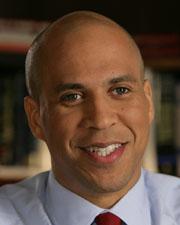 Sen. Cory A. Booker (D-NJ)
Sen. Cory A. Booker (D-NJ)Submitted April 1, 2019
Legislative Activity
Stay on top of the latest movement without scrolling through every action
Floor
Latest Action
Senate amendment submitted
April 1, 2019
Text
Submitted
SA 242. Mr. BOOKER submitted an amendment intended to be proposed to
amendment SA 201 proposed by Mr. Shelby to the bill H.R. 268, making
supplemental appropriations for the fiscal year ending September 30,
2019, and for other purposes; which was ordered to lie on the table; as
follows:

At the appropriate place in title VI of division A, insert
the following:

SEC. 6__. STATE REVOLVING FUND TRANSFER AUTHORITY.

(a) Definitions.--In this section:
(1) Clean water revolving fund.--The term ``clean water
revolving fund'' means a State water pollution control
revolving fund established under title VI of the Federal
Water Pollution Control Act (33 U.S.C. 1381 et seq.).
(2) Drinking water revolving fund.--The term ``drinking
water revolving fund'' means a State drinking water treatment
revolving loan fund established under section 1452 of the
Safe Drinking Water Act (42 U.S.C. 300j-12).
(b) Authority.--
(1) In general.--In addition to the transfer authority
provided under section 302(a) of the Safe Drinking Water Act
Amendments of 1996 (42 U.S.C. 300j-12 note; Public Law 104-
182), during fiscal year 2019, if a State, in consultation
with the Administrator of the Environmental Protection
Agency, determines that available funds in the clean water
revolving fund of the State could be used to address a threat
to public health as a result of heightened exposure to lead
in drinking water, the State may transfer an amount equal to
not more than 35 percent of the unobligated funds in the
clean water revolving fund of the State to the drinking water
revolving fund of the State for the purpose described in
paragraph (2).
(2) Purposes described.--The purpose referred to in
paragraph (1) is to provide additional subsidies to eligible
recipients to address the threat to public health described
in that paragraph in the form of--
(A) forgiveness of principal;
(B) negative interest loans;
(C) grants; or
(D) any combination of the subsidies described in
subparagraphs (A) through (C).
______