S.Amdt. 2524Senate116th Congress (2019-2021)2nd degree
S.Amdt. 2524
Sponsored by 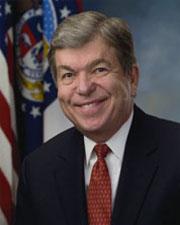 Sen. Roy Blunt (R-MO)
Sen. Roy Blunt (R-MO)Submitted August 4, 2020
Legislative Activity
Stay on top of the latest movement without scrolling through every action
Floor
Latest Action
Senate amendment submitted
August 4, 2020
Text
Submitted
SA 2524. Mr. BLUNT (for himself and Mr. Alexander) submitted an
amendment intended to be proposed to amendment SA 2499 proposed by Mr.
McConnell to the bill S. 178, to condemn gross human rights violations
of ethnic Turkic Muslims in Xinjiang, and calling for an end to
arbitrary detention, torture, and harassment of these communities
inside and outside China; which was ordered to lie on the table; as
follows:

At the appropriate place, insert the following:

TITLE __--

DEPARTMENT OF EDUCATION

education stabilization fund

For an additional amount for ``Education Stabilization
Fund'', $105,000,000,000, to remain available through
September 30, 2021,

[[Page S4791]]

to prevent, prepare for, and respond to coronavirus,
domestically or internationally:  Provided, That such amount
is designated by the Congress as being for an emergency
requirement pursuant to section 251(b)(2)(A)(i) of the
Balanced Budget and Emergency Deficit Control Act of 1985.

General Provisions

education stabilization fund

Sec. __11. (a) Allocations.-- From the amount made
available under this heading in this Act to carry out the
Education Stabilization Fund, the Secretary shall first
allocate--
(1) not more than one half of 1 percent to the outlying
areas on the basis of the terms and conditions for funding
provided under this heading in the Coronavirus Aid, Relief,
and Economic Security (CARES) Act (Public Law 116-136); and
(2) one-half of 1 percent for the Secretary of the Interior
for programs operated or funded by the Bureau of Indian
Education, under the terms and conditions established for
funding provided under this heading in the CARES Act (Public
Law 116-136).
(b) Reservations.--After carrying out subsection (a), the
Secretary shall reserve the remaining funds made available as
follows:
(1) 5 percent to carry out section __12 of this title.
(2) 67 percent to carry out section __13 of this title.
(3) 28 percent to carry out section __14 of this title.

governor's emergency education relief fund

Sec. __12. (a) Grants.--From funds reserved under section
__11(b)(1) of this title, the Secretary shall make
supplemental Emergency Education Relief grants to the
Governor of each State with an approved application under
section 18002 of division B of the CARES Act (Public Law 116-
136). The Secretary shall award funds under this section to
the Governor of each State with an approved application
within 30 calendar days of enactment of this Act.
(b) Allocations.--The amount of each grant under subsection
(a) shall be allocated by the Secretary to each State as
follows:
(1) 60 percent on the basis of their relative population of
individuals aged 5 through 24.
(2) 40 percent on the basis of their relative number of
children counted under section 1124(c) of the Elementary and
Secondary Education Act of 1965 (referred to under this
heading as ``ESEA'').
(c) Uses of Funds.--Grant funds awarded under subsection
(b) may be used to--
(1) provide emergency support through grants to local
educational agencies that the State educational agency deems
have been most significantly impacted by coronavirus to
support the ability of such local educational agencies to
continue to provide educational services to their students
and to support the on-going functionality of the local
educational agency;
(2) provide emergency support through grants to
institutions of higher education serving students within the
State that the Governor determines have been most
significantly impacted by coronavirus to support the ability
of such institutions to continue to provide educational
services and support the on-going functionality of the
institution; and
(3) provide support to any other institution of higher
education, local educational agency, or education related
entity within the State that the Governor deems essential for
carrying out emergency educational services to students for
authorized activities described in section __13(e) of this
title, the ESEA of 1965, the Higher Education Act of 1965,
the provision of child care and early childhood education,
social and emotional support, career and technical education,
adult education, and the protection of education-related
jobs.
(d) Reallocation.--Each Governor shall return to the
Secretary any funds received under this section that the
Governor does not award within 6 months of receiving such
funds and the Secretary shall reallocate such funds to the
remaining States in accordance with subsection (b).
(e) Report.--A Governor receiving funds under this section
shall submit a report to the Secretary, not later than 6
months after receiving funding provided in this title, in
such manner and with such subsequent frequency as the
Secretary may require, that provides a detailed accounting of
the use of funds provided under this section.

elementary and secondary school emergency relief fund

Sec. __13. (a) Grants.--From funds reserved under section
__11(b)(2) of this title, the Secretary shall make
supplemental elementary and secondary school emergency relief
grants to each State educational agency with an approved
application under section 18003 of division B of the CARES
Act (Public Law 116-136). The Secretary shall award funds
under this section to each State educational agency with an
approved application within 15 calendar days of enactment of
this Act.
(b) Allocations to States.--The amount of each grant under
subsection (a) shall be allocated by the Secretary to each
State in the same proportion as each State received under
part A of title I of the ESEA of 1965 in the most recent
fiscal year.
(c) Subgrants.--From the payment provided by the Secretary
under subsection (b), the State educational agency shall
provide services and assistance to local educational agencies
and non-public schools, consistent with the provisions of
this title relating to the Department of Education. After
carrying out the reservation of funds in section __15 of this
title, each State shall allocate not less than 90 percent of
the remaining grant funds awarded to the State under this
section as subgrants to local educational agencies (including
charter schools that are local educational agencies) in the
State in proportion to the amount of funds such local
educational agencies and charter schools that are local
educational agencies received under part A of title I of the
ESEA of 1965 in the most recent fiscal year. The state
educational agency shall make such subgrants to local
educational agencies as follows--
(1) one-third of funds shall be awarded not less than 15
calendar days after receiving an award from the Secretary
under this section; and
(2) the remaining two-thirds of funds shall be awarded only
after the local educational agency submits to the Governor
and the Governor approves a comprehensive school reopening
plan for the 2020-2021 school-year, based on criteria
determined by the Governor in consultation with the state
educational agency (including criteria for the Governor to
carry out subparagraph (A) through (C)), that describes how
the local educational agency will safely reopen schools with
the physical presence of students, consistent with
maintaining safe and continuous operations aligned with
challenging state academic standards. The Governor shall
approve such plans within 30 days after the plan is
submitted, subject to the requirements in subparagraphs (A)
through (C).
(A) A local educational agency that provides in-person
instruction for at least 50 percent of its students where the
students physically attend school no less than 50 percent of
each school-week, as it was defined by the local educational
agency prior to the coronavirus emergency, shall have its
plan automatically approved.
(B) A local educational agency that does not provide in-
person instruction to any students where the students
physically attend school in-person shall not be eligible to
receive a subgrant under paragraph (2).
(C) A local educational agency that provides in-person
instruction to at least some students where the students
physically attend school in-person but does not satisfy the
requirements in subparagraph (A) shall have its allocation
reduced on a pro rata basis as determined by the Governor.
(d) Plan Contents.--A school reopening plan submitted to a
Governor under subsection (c)(2) shall include, in addition
to any other information necessary to meet the criteria
determined by the Governor--
(1) A detailed timeline for when the local educational
agency will provide in-person instruction, including the
goals and criteria used for providing full-time in-person
instruction to all students;
(2) A description of how many days of in-person instruction
per calendar week the local educational agency plans to offer
to students during the 2020-2021 school year; and
(3) An assurance that the local educational agency will
offer students as much in-person instruction as is safe and
practicable, consistent with maintaining safe and continuous
operations aligned with challenging state academic standards.
(e) Uses of Funds.--
(1) A local educational agency or non-public school that
receives funds under subsection (c)(1) or section __15 may
use funds for any of the following:
(A) Activities to support returning to in-person
instruction, including purchasing personal protective
equipment, implementing flexible schedules to keep children
in isolated groups, purchasing box lunches so that children
can eat in their classroom, purchasing physical barriers,
providing additional transportation services, repurposing
existing school rooms and space, and improving ventilation
systems.
(B) Developing and implementing procedures and systems to
improve the preparedness and response efforts of local
educational agencies or non-public schools including
coordination with State, local, Tribal, and territorial
public health departments, and other relevant agencies, to
improve coordinated responses among such entities to prevent,
prepare for, and respond to coronavirus.
(C) Providing principals and other school leaders with the
resources necessary to address the needs of their individual
schools directly related to coronavirus.
(D) Providing additional services to address the unique
needs of low-income children or students, children with
disabilities, English learners, racial and ethnic minorities,
students experiencing homelessness, and foster care youth,
including how outreach and service delivery will meet the
needs of each population.
(E) Training and professional development for staff of the
local educational agency or non-public school on sanitation
and minimizing the spread of infectious diseases.
(F) Purchasing supplies to sanitize, clean, and disinfect
the facilities of a local educational agency or non-public
school, including buildings operated by such agency.
(G) Planning for and coordinating during long-term
closures, including for how to provide meals to eligible
students, how to provide technology for online learning to
all students, how to provide guidance for carrying out
requirements under the Individuals

[[Page S4792]]

with Disabilities Education Act (20 U.S.C. 1401 et seq.) and
how to ensure other educational services can continue to be
provided consistent with all Federal, State, and local
requirements.
(H) Purchasing educational technology (including hardware,
software, and connectivity) for students who are served by
the local educational agency or non-public school that aids
in regular and substantive educational interaction between
students and their classroom instructors, including low-
income students and students with disabilities, which may
include assistive technology or adaptive equipment.
(I) Expanding healthcare and other health services
(including mental health services and supports), including
for children at risk of abuse or neglect.
(J) Planning and implementing activities related to summer
learning and supplemental afterschool programs, including
providing classroom instruction or online learning during the
summer months and addressing the needs of low-income
students, students with disabilities, English learners,
migrant students, students experiencing homelessness, and
children in foster care.
(2) A local educational agency that receives funds under
subsection (c)(2) may use the funds for activities to carry
out a comprehensive school reopening plan as described in
this section, including:
(A) Purchasing personal protective equipment, implementing
flexible schedules to keep children in isolated groups,
purchasing box lunches so that children can eat in their
classroom, purchasing physical barriers, providing additional
transportation services, repurposing existing school rooms
and space, and improving ventilation systems.
(B) Developing and implementation of procedures and systems
to improve the preparedness and response efforts of local
educational agencies or non-public schools, including
coordination with State, local, Tribal, and territorial
public health departments, and other relevant agencies, to
improve coordinated responses among such entities to prevent,
prepare for, and respond to coronavirus.
(C) Providing principals and others school leaders with the
resources necessary to address the needs of their individual
schools.
(D) Providing additional services to address the unique
needs of low-income children or students, children with
disabilities, English learners, racial and ethnic minorities,
students experiencing homelessness, and foster care youth,
including how outreach and service delivery will meet the
needs of each population.
(E) Training and professional development for staff of the
local educational agency or non-public school on sanitation
and minimizing the spread of infectious diseases.
(F) Purchasing supplies to sanitize, clean, and disinfect
the facilities of a local educational agency or non-public
school, including buildings operated by such agency.
(G) Purchasing educational technology (including hardware,
software, and connectivity) for students who are served by
the local educational agency or non-public school that aids
in regular and substantive educational interaction between
students and their classroom instructors, including low-
income students and students with disabilities, which may
include assistive technology or adaptive equipment.
(H) Expanding healthcare and other health services
(including mental health services and supports), including
for children at risk of abuse or neglect.
(I) Planning and implementing activities related to summer
learning and supplemental afterschool programs, including
providing classroom instruction during the summer months and
addressing the needs of low-income students, students with
disabilities, English learners, migrant students, students
experiencing homelessness, and children in foster care.
(f) State Funding.--A State may reserve not more than 5
percent of the funds not otherwise allocated under subsection
(c) and section __15 for administrative costs and the
remainder for emergency needs as determined by the state
educational agency to address issues responding to
coronavirus, which may be addressed through the use of grants
or contracts.
(g) Assurances.--A State, state educational agency, or
local educational agency receiving funding under this section
shall provide assurances, as applicable, that:
(1) A State, State educational agency, or local educational
agency will maintain and expand access to high-quality
schools, including high-quality public charter schools, and
will not--
(A) enact policies to close or prevent the expansion of
such schools to address revenue shortfalls that result in the
disproportionate closure or denial of expansion of public
charter schools that are otherwise meeting the terms of their
charter for academic achievement; or
(B) disproportionally reduce funding to charter schools or
otherwise increase funding gaps between charter schools and
other public schools in the local educational agency.
(2) Allocations of funding and services provided from funds
provided in this section to public charter schools are made
on the same basis as is used for all public schools,
consistent with state law and in consultation with charter
school leaders.
(h) Report.--A State receiving funds under this section
shall submit a report to the Secretary, not later than 6
months after receiving funding provided in this title, in
such manner and with such subsequent frequency as the
Secretary may require, that provides a detailed accounting of
the use of funds provided under this section.
(i) Reallocation.--A State shall return to the Secretary
any funds received under this section that the State does not
award within 4 months of receiving such funds and the
Secretary shall deposit such funds into the general fund of
the Treasury.
(j) Rule of Construction.--
(1) The receipt of any funds authorized or appropriated
under this section, including pursuant to section __15 of
this Act, by a nonprofit entity, or by any individual who has
been admitted or applied for admission to such entity (or any
parent or guardian of such individual), shall not be
construed to render such entity or person a recipient of
Federal financial assistance for any purpose, nor shall any
such person or entity be required to make any alteration to
its existing programs, facilities, or employment practices
except as required under this section.
(2) No State participating in any program under this
section, including pursuant to section __15 of this Act,
shall impose any penalty or additional requirement upon, or
otherwise disadvantage, such entity or person as a
consequence or condition of its receipt of such funds.
(3) No State participating in any program under this
section shall authorize any person or entity to use any funds
authorized or appropriated under this section, including
pursuant to section __15 of this Act, except as provided by
subsection (e), nor shall any such State impose any limits
upon the use of any such funds except as provided by
subsection (e).

higher education emergency relief fund

Sec. __14. (a) In General.--From funds reserved under
section __11(b)(3) of this title the Secretary shall allocate
amounts as follows:
(1) 85 percent to each institution of higher education
described in section 101 or section 102(c) of the Higher
Education Act of 1965 to prevent, prepare for, and respond to
coronavirus, by apportioning it--
(A) 90 percent according to the relative share of full-time
equivalent enrollment of Federal Pell Grant recipients who
were not exclusively enrolled in distance education courses
prior to the coronavirus emergency; and
(B) 10 percent according to the relative share of full-time
equivalent enrollment of students who were not Federal Pell
Grant recipients who were not exclusively enrolled in
distance education courses prior to the coronavirus
emergency.
(2) 10 percent for additional awards under parts A and B of
title III, parts A and B of title V, and subpart 4 of part A
of title VII of the Higher Education Act to address needs
directly related to coronavirus, that shall be in addition to
awards made in section __14(a)(1) of this title, and
allocated by the Secretary proportionally to such programs
based on the relative share of funding appropriated to such
programs in the Further Consolidated Appropriations Act, 2020
(Public Law 116-94) and distributed to eligible institutions
of higher education, except as otherwise provided in
subparagraphs (A)-(D), on the basis of the formula described
in section __14(a)(1) of this title:
(A) Except as otherwise provided in subparagraph (B), for
eligible institutions under part B of title III and subpart 4
of part A of title VII of the Higher Education Act, the
Secretary shall allot to each eligible institution an amount
using the following formula:
(i) 70 percent according to a ratio equivalent to the
number of Pell Grant recipients in attendance at such
institution at the end of the school year preceding the
beginning of the most recent fiscal year and the total number
of Pell Grant recipients at all such institutions;
(ii) 20 percent according to a ratio equivalent to the
total number of students enrolled at such institution at the
end of the school year preceding the beginning of that fiscal
year and the number of students enrolled at all such
institutions; and
(iii) 10 percent according to a ratio equivalent to the
total endowment size at all eligible institutions at the end
of the school year preceding the beginning of that fiscal
year and the total endowment size at such institutions;
(B) For eligible institutions under section 326 of the
Higher Education Act, the Secretary shall allot to each
eligible institution an amount in proportion to the award
received from funding for such institutions in the Further
Consolidated Appropriations Act, 2020 (Public Law 116-94);
(C) For eligible institutions under section 316 of the
Higher Education Act, the Secretary shall allot funding
according to the formula in section 316(d)(3) of the Higher
Education Act; and
(D) Notwithstanding section 318(f) of the Higher Education
Act, for eligible institutions under section 318 of the
Higher Education Act, the Secretary shall allot funding
according to the formula in section 318(e) of the Higher
Education Act.
(3) 5 percent for grants to institutions of higher
education that the Secretary determines, through an
application process and after allocating funds under
paragraphs __14(a)(1) and (2) of this Act, have the greatest
unmet needs related to coronavirus. In awarding funds to
institutions of higher education under this paragraph the
Secretary shall prioritize institutions of higher education--

[[Page S4793]]

(A) described under title I of the Higher Education Act of
1965 that were not eligible to receive an award under section
__14(a)(1) of this title, including institutions described in
section 102(b) of the Higher Education Act of 1965; and
(B) that otherwise demonstrate significant needs related to
coronavirus that were not addressed by funding allocated
under subsections (a)(1) or (a)(2) of this section.
(b) Distribution.--The funds made available to each
institution under subsection (a)(1) shall be distributed by
the Secretary using the same systems as the Secretary
otherwise distributes funding to each institution under title
IV of the Higher Education Act of 1965 (20 U.S.C. 1001 et
seq.).
(c) Uses of Funds.--An institution of higher education
receiving funds under this section may use the funds received
to:
(1) defray expenses associated with coronavirus (including
lost revenue, reimbursement for expenses already incurred,
technology costs associated with a transition to distance
education, faculty and staff trainings, and payroll); and
(2) provide financial aid grants to students (including
students exclusively enrolled in distance education), which
may be used for any component of the student's cost of
attendance or for emergency costs that arise due to
coronavirus.
(d) Special Provisions.--
(1) A Historically Black College and University or a
Minority Serving Institution may use prior awards provided
under titles III, V, and VII of the Higher Education Act to
prevent, prepare for, and respond to coronavirus.
(2) An institution of higher education receiving funds
under section 18004 of division B of the CARES Act (Public
Law 116-136) may use those funds under the terms and
conditions of section __14(c) of this Act. Amounts repurposed
pursuant to this paragraph that were previously designated by
the Congress as an emergency requirement pursuant to the
Balanced Budget and Emergency Deficit Control Act of 1985 are
designated by the Congress as an emergency requirement
pursuant to section 251(b)(2)(A)(i) of the Balanced Budget
and Emergency Deficit Control Act of 1985.
(3) No funds received by an institution of higher education
under this section shall be used to fund contractors for the
provision of pre-enrollment recruitment activities;
endowments; or capital outlays associated with facilities
related to athletics, sectarian instruction, or religious
worship.
(4) An institution of higher education that was required to
remit payment to the Internal Revenue Service for the excise
tax based on investment income of private colleges and
universities under section 4968 of the Internal Revenue Code
of 1986 for tax year 2019 shall have their allocation under
this section reduced by 50 percent and may only use funds for
activities described in paragraph (c)(2). This paragraph
shall not apply to an institution of higher education
designated by the Secretary as an eligible institution under
section 448 of the Higher Education Act of 1965.
(e) Report.--An institution receiving funds under this
section shall submit a report to the Secretary, not later
than 6 months after receiving funding provided in this title,
in such manner and with such subsequent frequency as the
Secretary may require, that provides a detailed accounting of
the use of funds provided under this section.
(f) Reallocation.--Any funds allocated to an institution of
higher education under this section on the basis of a formula
described in subsection (a)(1) or (a)(2) but for which an
institution does not apply for funding within 60 days of the
publication of the notice inviting applications, shall be
reallocated to eligible institutions that had submitted an
application by such date.

assistance to non-public schools

Sec. __15. (a) Funds Availability.--From the payment
provided by the Secretary under section __13 of this title to
a State educational agency, the State educational agency
shall reserve an amount of funds equal to the percentage of
students enrolled in non-public elementary and secondary
schools in the State prior to the coronavirus emergency. Upon
reserving funds under this section, the Governor of the State
shall award such funds equally to each non-public school
accredited or otherwise located in and licensed to operate in
the State based on the number of low-income students enrolled
in the non-public school as a share of all low-income
students enrolled in non-public elementary and secondary
schools in the State prior to the coronavirus emergency,
subject to the requirements in subsection (b).
(b)(1) A non-public school that provides in-person
instruction for at least 50 percent of its students where the
students physically attend school no less than 50 percent of
each school-week, as determined by the non-public school
prior to the coronavirus emergency, shall be eligible for the
full amount of assistance per student as prescribed under
this section.
(2) A non-public school that does not provide in-person
instruction to any students where the students physically
attend school in-person shall only be eligible for one-third
of the amount of assistance per student as prescribed under
this section.
(3) A non-public school that provides in-person instruction
to at least some students where the students physically
attend school in-person but does not satisfy the requirements
in paragraph (1) shall have its amount of assistance as
prescribed under this section reduced on a pro rata basis,
which shall be calculated using the same methodology as is
used under section __13(c)(2)(C) of this title.
(4) A Governor shall allocate not less than 50 percent of
the funds reserved in this section to non-public schools
within 30 days of receiving an award from the Secretary and
the remaining 50 percent not less than 4 months after
receiving an award from the Secretary.

continued payment to employees

Sec. __16.  A local educational agency, State, institution
of higher education, or other entity that receives funds
under ``Education Stabilization Fund'', shall to the greatest
extent practicable, continue to pay its employees and
contractors during the period of any disruptions or closures
related to coronavirus.

definitions

Sec. __17.  Except as otherwise provided in sections __11-
__16 of this title, as used in such sections--
(1) the terms ``elementary education'' and ``secondary
education'' have the meaning given such terms under State
law;
(2) the term ``institution of higher education'' has the
meaning given such term in title I of the Higher Education
Act of 1965 (20 U.S.C. 1001 et seq.);
(3) the term ``Secretary'' means the Secretary of
Education;
(4) the term ``State'' means each of the 50 States, the
District of Columbia, and the Commonwealth of Puerto Rico;
(5) the term ``cost of attendance'' has the meaning given
such term in section 472 of the Higher Education Act of 1965.
(6) the term ``Non-public school'' means a non-public
elementary and secondary school that (A) is accredited,
licensed, or otherwise operates in accordance with State law;
and (B) was in existence prior to the date of the qualifying
emergency for which grants are awarded under this section;
(7) the term ``public school'' means a public elementary or
secondary school; and
(8) any other term used that is defined in section 8101 of
the Elementary and Secondary Education Act of 1965 (20 U.S.C.
7801) shall have the meaning given the term in such section.

maintenance of effort

Sec. __18.  A State's application for funds to carry out
sections __12 or __13 of this title shall include assurances
that the State will maintain support for elementary and
secondary education, and State support for higher education
(which shall include State funding to institutions of higher
education and state need-based financial aid, and shall not
include support for capital projects or for research and
development or tuition and fees paid by students) in fiscal
years 2020 and 2021 at least at the proportional levels of
such State's support for elementary and secondary education
and for higher education relative to such States overall
spending in fiscal year 2019.

Student Aid Administration

For an additional amount for ``Student Aid
Administration'', $40,000,000, to remain available through
September 30, 2021, to prevent, prepare for, and respond to
coronavirus, domestically or internationally, for carrying
out part D of title I, and subparts 1, 3, 9 and 10 of part A,
and parts B, C, D, and E of title IV of the HEA, and subpart
1 of part A of title VII of the Public Health Service Act:
Provided, That such amount is designated by the Congress as
being for an emergency requirement pursuant to section
251(b)(2)(A)(i) of the Balanced Budget and Emergency Deficit
Control Act of 1985.

Institute of Education Sciences

For an additional amount for ``Institute of Education
Sciences'', $65,000,000, to remain available through
September 30, 2021, to prevent, prepare for, and respond to
coronavirus, domestically or internationally, for carrying
out the National Assessment of Educational Progress
Authorization Act (title III of Public Law 107-279):
Provided, That such amount is designated by the Congress as
being for an emergency requirement pursuant to section
251(b)(2)(A)(i) of the Balanced Budget and Emergency Deficit
Control Act of 1985.

Departmental Management

program administration

For an additional amount for ``Program Administration'',
$8,000,000, to remain available through September 30, 2021,
to prevent, prepare for, and respond to coronavirus,
domestically or internationally:  Provided, That such amount
is designated by the Congress as being for an emergency
requirement pursuant to section 251(b)(2)(A)(i) of the
Balanced Budget and Emergency Deficit Control Act of 1985.

office of inspector general

For an additional amount for ``Office of Inspector
General'', $7,000,000, to remain available through September
30, 2022, to prevent, prepare for, and respond to
coronavirus, domestically or internationally, including for
salaries and expenses necessary for oversight and audit of
programs, grants, and projects funded in this title to
respond to coronavirus:  Provided, That such amount is
designated by the Congress as being for an emergency
requirement pursuant to section 251(b)(2)(A)(i) of the
Balanced Budget and Emergency Deficit Control Act of 1985.

General Provisions

Sec. __19.  Funds made available in Public Law 115-245
under the heading ``National

[[Page S4794]]

Technical Institute for the Deaf'' that were available for
obligation through fiscal year 2019, and where a valid
obligation was incurred in such fiscal year, are to remain
available for obligation and expenditure by educational
agencies or institutions through fiscal year 2021,
notwithstanding section 412(b) of the General Education
Provisions Act (20 U.S.C. 1225):  Provided, That such amount
is designated by the Congress as being for an emergency
requirement pursuant to section 251(b)(2)(A)(i) of the
Balanced Budget and Emergency Deficit Control Act of 1985.
Sec. __20.  Funds made available in Public Law 115-245
under the heading ``Gallaudet University'' that were
available for obligation through fiscal year 2019, and where
a valid obligation was incurred in such fiscal year, are to
remain available for obligation and expenditure by
educational agencies or institutions through fiscal year
2021, notwithstanding section 412(b) of the General Education
Provisions Act (20 U.S.C. 1225):  Provided, That such amount
is designated by the Congress as being for an emergency
requirement pursuant to section 251(b)(2)(A)(i) of the
Balanced Budget and Emergency Deficit Control Act of 1985.
Sec. __21.  Funds made available in Public Law 113-76 under
the heading ``Innovation and Improvement'' that were
available for obligation through December 31, 2014 for the
Investing in Innovation program pursuant to the eighth and
ninth provisos under that heading in that Act are to remain
available through fiscal year 2021 for the liquidation of
valid obligations incurred in fiscal years 2014 or 2015:
Provided, That such amount is designated by the Congress as
being for an emergency requirement pursuant to section
251(b)(2)(A)(i) of the Balanced Budget and Emergency Deficit
Control Act of 1985.
Sec. __22.  Funds made available in Public Law 113-76 under
the heading ``Rehabilitation Services and Disability
Research'' that were available for obligation through fiscal
year 2015 for the Automated Personalization Computing Project
pursuant to the first four provisos under that heading in
that Act are to remain available through fiscal year 2021 for
the liquidation of valid obligations incurred in fiscal years
2014 or 2015:  Provided, That such amount is designated by
the Congress as being for an emergency requirement pursuant
to section 251(b)(2)(A)(i) of the Balanced Budget and
Emergency Deficit Control Act of 1985.
______