S.Amdt. 2537Senate116th Congress (2019-2021)2nd degree
S.Amdt. 2537
Sponsored by 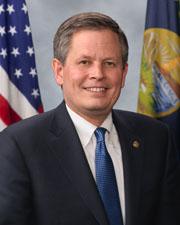 Sen. Steve Daines (R-MT)
Sen. Steve Daines (R-MT)Submitted August 4, 2020
Legislative Activity
Stay on top of the latest movement without scrolling through every action
Floor
Latest Action
Senate amendment submitted
August 4, 2020
Text
Submitted
SA 2537. Mr. DAINES submitted an amendment intended to be proposed to
amendment SA 2499 proposed by Mr. McConnell to the bill S. 178, to
condemn gross human rights violations of ethnic Turkic Muslims in
Xinjiang, and calling for an end to arbitrary detention, torture, and
harassment of these communities inside and outside China; which was
ordered to lie on the table; as follows:

At the appropriate place, insert the following:

SEC. ___. SMALL BUSINESS LOCAL RELIEF PROGRAM.

(a) Definitions.--In this section:
(1) Administrator.--The term ``Administrator'' means the
Administrator of the Small Business Administration.
(2) Eligible entity.--
(A) In general.--The term ``eligible entity''--
(i) means a privately-held business entity or nonprofit
organization that, taking into consideration the principles
under section 121.301(f) of title 13, Code of Federal
Regulations, or any successor regulation--

(I) employs--

(aa) not more than 20 full-time equivalent employees; or
(bb) if the entity or organization is located in a low-
income community, not more than 50 full-time equivalent
employees;

(II) has experienced a loss of revenue as a result of the
COVID-19 pandemic, according to criteria established by the
Secretary; and
(III) with respect to such an entity or organization that
receives assistance from a small business emergency fund,
satisfies additional requirements, as determined by the
State, unit of general local government, Indian Tribe, or
other entity that has established the small business
emergency fund;

(ii) includes an individual who operates under a sole
proprietorship, an individual who operates as an independent
contractor, and an eligible self-employed individual if such
an individual has experienced a loss of revenue as a result
of the COVID-19 pandemic, according to criteria established
by the Secretary; and
(iii) does not include an issuer, the securities of which
are listed on a national securities exchange.
(B) Treatment of certain criminal violations.--
(i) Arrests or convictions.--Except as provided in clause
(ii), the term ``eligible entity'' includes--

(I) a privately-held business entity or nonprofit
organization that meets the requirements under subparagraph
(A)(i) notwithstanding any arrest or conviction under
Federal, State, or Tribal law of an owner of not less than 20
percent of the equity of the entity or organization, unless
the owner is incarcerated on the date on which the entity or
organization applies for assistance made available under this
section; and
(II) an individual who meets the requirements under
subparagraph (A)(ii) notwithstanding an arrest or conviction
under Federal, State, or Tribal law of the individual, unless
the individual is incarcerated on the date on which the
individual applies for assistance made available under this
section.

(ii) Financial fraud or deception.--Notwithstanding clause
(i), the term ``eligible entity'' does not include--

(I) a privately-held business entity or nonprofit
organization if, during the 5-year period preceding the date
on which the business or organization applies for assistance
made available under this section, an owner of not less than
20 percent of the equity of the entity or organization was
convicted of an offense involving financial fraud or
deception under Federal, State, or Tribal law that is
punishable by imprisonment for a term of more than 1 year; or
(II) an individual if, during the 5-year period preceding
the date on which the individual applies for assistance made
available under this section, the individual was convicted of
an offense involving financial fraud or deception under
Federal, State, or Tribal law that is punishable by
imprisonment for a term of more than 1 year.

(3) Eligible self-employed individual.--The term ``eligible
self-employed individual'' has the meaning given the term in
section 7(a)(36)(A) of the Small Business Act (15 U.S.C.
636(a)(36)(A)).
(4) Entitlement community.--The term ``entitlement
community'' means a metropolitan city or urban county, as
those terms are defined in section 102 of the Housing and
Community Development Act of 1974 (42 U.S.C. 5302).
(5) Exchange; issuer; security.--The terms ``exchange'',
``issuer'', and ``security'' have the meanings given the
terms in section 3(a) of the Securities Exchange Act of 1934
(15 U.S.C. 78c(a)).
(6) Full-time equivalent employees.--
(A) In general.--The term ``full-time equivalent
employees'' means a number of employees equal to the number
determined by dividing--
(i) the total number of hours of service for which wages
were paid by the employer to employees during the taxable
year; by
(ii) 2,080.
(B) Rounding.--The number determined under subparagraph (A)
shall be rounded to the next lowest whole number if not
otherwise a whole number.
(C) Excess hours not counted.--If an employee works in
excess of 2,080 hours of service during any taxable year,
such excess shall not be taken into account under
subparagraph (A).
(D) Hours of service.--The Secretary, in consultation with
the Secretary of Labor, shall prescribe such regulations,
rules, and guidance as may be necessary to determine the
hours of service of an employee, including rules for the
application of this paragraph to employees who are not
compensated on an hourly basis.
(7) Indian tribe.--The term ``Indian Tribe'' has the
meaning given the term ``Indian tribe'' in section 102 of the
Housing and Community Development Act of 1974 (42 U.S.C.
5302).
(8) Low-income community.--The term ``low-income
community'' has the meaning given the term in section 45D(e)
of the Internal Revenue Code of 1986.

[[Page S4839]]

(9) Minority.--The term ``minority'' has the meaning given
the term in section 1204(c)(3) of the Financial Institutions
Reform, Recovery, and Enforcement Act of 1989 (12 U.S.C. 1811
note).
(10) Minority-owned entity.--The term ``minority-owned
entity'' means an entity--
(A) more than 50 percent of the ownership or control of
which is held by not less than 1 minority; and
(B) more than 50 percent of the net profit or loss of which
accrues to not less than 1 minority.
(11) National securities exchange.--The term ``national
securities exchange'' means an exchange that is registered
under section 6 of the Securities Exchange Act of 1934 (15
U.S.C. 78f).
(12) Nonentitlement area; state; unit of general local
government.--
(A) In general.--Except as provided in subparagraph (B),
the terms ``nonentitlement area'', ``State'', and ``unit of
general local government'' have the meanings given those
terms in section 102 of the Housing and Community Development
Act of 1974 (42 U.S.C. 5302).
(B) State.--For purposes of subparagraphs (A)(ii) and
(B)(ii) of subsection (c)(1), the term ``State'' means any
State of the United States.
(13) Program.--The term ``Program'' means the Small
Business Local Relief Program established under this section.
(14) Secretary.--The term ``Secretary'' means the Secretary
of the Treasury.
(15) Small business emergency fund.--The term ``small
business emergency fund'' means a fund or program--
(A) established by a State, a unit of general local
government, an Indian Tribe, or an entity designated by a
State, unit of general local government, or Indian Tribe; and
(B) that provides or administers financing to eligible
entities (including any particular class or category of
eligible entities determined appropriate by the entity
establishing the fund or program) in the form of grants, low-
interest loans, or other means in accordance with the needs
of eligible entities and the capacity of the fund or program.
(16) Women-owned entity.--The term ``women-owned entity''
means an entity--
(A) more than 50 percent of the ownership or control of
which is held by not less than 1 woman; and
(B) more than 50 percent of the net profit or loss of which
accrues to not less than 1 woman.
(b) Establishment.--There is established in the Department
of the Treasury the Small Business Local Relief Program, the
purpose of which is to allocate resources to States, units of
general local government, and Indian Tribes to provide
assistance to eligible entities and organizations that assist
eligible entities.
(c) Funding.--
(1) Funding to states, localities, and indian tribes.--
(A) In general.--Of the amounts made available to carry out
the Program under subsection (i), the Secretary shall
allocate--
(i) $35,000,000,000 to States and units of general local
government in accordance with subparagraph (B)(i);
(ii) $15,000,000,000 to States in accordance with
subparagraph (B)(ii); and
(iii) $500,000,000 to the Secretary of Housing and Urban
Development for allocations to Indian Tribes in accordance
with subparagraph (B)(iii).
(B) Allocations.--
(i) Formula for states and units of general local
government.--Of the amount allocated under subparagraph
(A)(i)--

(I) 70 percent shall be allocated to entitlement
communities in accordance with the formula under section
106(b) of the Housing and Community Development Act of 1974
(42 U.S.C. 5306(b)); and
(II) 30 percent shall be allocated to States, for use in
nonentitlement areas, in accordance with the formula under
section 106(d)(1) of the Housing and Community Development
Act of 1974 (42 U.S.C. 5306(d)(1)).

(ii) Rural bonus formula for states.--The Secretary shall
allocate the amount allocated under subparagraph (A)(ii) to
States, for use in nonentitlement areas, in accordance with
the formula under section 106(d)(1) of the Housing and
Community Development Act of 1974 (42 U.S.C. 5306(d)(1)).
(iii) Competitive awards to indian tribes.--

(I) In general.--The Secretary of Housing and Urban
Development shall allocate to Indian Tribes on a competitive
basis the amount allocated under subparagraph (A)(iii).
(II) Requirements.--In making allocations under subclause
(I), the Secretary of Housing and Urban Development shall, to
the greatest extent practicable, ensure that each Indian
Tribe that satisfies requirements established by the
Secretary of Housing and Urban Development receives such an
allocation.

(C) State allocations for nonentitlement areas.--
(i) Equitable allocation.--To the greatest extent
practicable, a State shall allocate amounts for
nonentitlement areas under clauses (i)(II) and (ii) of
subparagraph (B) on an equitable basis.
(ii) Distribution of amounts.--

(I) Discretion.--Not later than 14 days after the date on
which a State receives amounts for use in a nonentitlement
area under clause (i)(II) or (ii) of subparagraph (B), the
State shall--

(aa) distribute the amounts, or a portion thereof, to a
unit of general local government located in the
nonentitlement area, or an entity designated thereby, that
has established or will establish a small business emergency
fund, for use under paragraph (2); or
(bb) elect to reserve the amounts, or a portion thereof,
for use by the State under paragraph (2) for the benefit of
eligible entities located in the nonentitlement area.

(II) Units of general local government with small business
emergency funds.--In distributing amounts under subclause
(I), in the case of amounts allocated for a nonentitlement
area in which a unit of general local government or an entity
designated thereby has established a small business emergency
fund and has demonstrated an ability to administer that fund
efficiently and effectively, a State shall, as quickly as is
practicable, distribute an equitable amount to that unit of
general local government or entity, respectively, as
described in item (aa) of that subclause.

(iii) Treatment of states not acting as pass-through agents
under cdbg.--The Secretary shall allocate amounts to a State
under this paragraph without regard to whether the State has
elected to distribute amounts allocated under section
106(d)(1) of the Housing and Community Development Act of
1974 (42 U.S.C. 5306(d)(1)).
(2) Use of funds.--
(A) In general.--A State, unit of general local government,
entity designated by a unit of general local government, or
Indian Tribe that receives an allocation under paragraph (1),
whether directly or indirectly, may use that allocation--
(i) to provide funding to a small business emergency fund
established by that State (or entity designated thereby),
that unit of general local government (or entity designated
thereby), that entity designated by a unit of general local
government, or that Indian Tribe (or entity designated
thereby), respectively;
(ii) to provide funding to support organizations that
provide technical assistance to eligible entities; or
(iii) subject to subparagraph (B), to pay for
administrative costs incurred by that State (or entity
designated thereby), that unit of general local government
(or entity designated thereby), that entity designated by a
unit of general local government, or that Indian Tribe (or
entity designated thereby), respectively, in establishing and
administering a small business emergency fund.
(B) Limitation.--A State, unit of general local government,
entity designated by a unit of general local government, or
Indian Tribe may not use more than 3 percent of an allocation
received under paragraph (1) for a purpose described in
subparagraph (A)(iii) of this paragraph.
(C) Obligation deadlines.--
(i) States.--Of the amounts that a State elects under
paragraph (1)(C)(ii)(I)(bb) to reserve for use by the State
under this paragraph--

(I) any amounts that the State provides to a small business
emergency fund under subparagraph (A)(i) of this paragraph
shall be obligated by the small business emergency fund for
expenditure not later than 90 days after the date on which
the State received the amounts from the Secretary under
clause (i) or (ii) of paragraph (1)(A); and
(II) any amounts that the State chooses to provide to an
organization under subparagraph (A)(ii) of this paragraph, or
to use to pay for administrative costs under subparagraph
(A)(iii) of this paragraph, shall be obligated by the State
for expenditure not later than 90 days after the date on
which the State received the amounts from the Secretary under
clause (i) or (ii) of paragraph (1)(A).

(ii) Entitlement communities.--Of the amounts that an
entitlement community receives from the Secretary under
paragraph (1)(B)(i)(I)--

(I) any amounts that the entitlement community provides to
a small business emergency fund under subparagraph (A)(i) of
this paragraph shall be obligated by the small business
emergency fund for expenditure not later than 90 days after
the date on which the entitlement community received the
amounts; and
(II) any amounts that the entitlement community chooses to
provide to an organization under subparagraph (A)(ii) of this
paragraph, or to use to pay for administrative costs under
subparagraph (A)(iii) of this paragraph, shall be obligated
by the entitlement community for expenditure not later than
90 days after the date on which the entitlement community
received the amounts.

(iii) Nonentitlement communities.--Of the amounts that a
unit of general local government, or an entity designated
thereby, located in a nonentitlement area receives from a
State under paragraph (1)(C)(ii)(I)(aa)--

(I) any amounts that the unit of general local government
or entity provides to a small business emergency fund under
subparagraph (A)(i) of this paragraph shall be obligated by
the small business emergency fund for expenditure not later
than 90 days after the date on which the State received the
amounts from the Secretary under clause (i) or (ii) of
paragraph (1)(A); and
(II) any amounts that the unit of general local government
or entity chooses to provide to a support organization under
subparagraph (A)(ii) of this paragraph or to use to pay for
administrative costs under subparagraph (A)(iii) of this
paragraph shall be obligated by the unit of general local
government or entity for expenditure not later

[[Page S4840]]

than 90 days after the date on which the State received the
amounts from the Secretary under clause (i) or (ii) of
paragraph (1)(A).

(D) Recovery of unobligated funds.--If a State, entitlement
community, other unit of general local government, entity
designated by a unit of general local government, or small
business emergency fund fails to obligate amounts by the
applicable deadline under subparagraph (C), the Secretary
shall recover the amount of those amounts that remain
unobligated, as of that deadline.
(E) Collaboration.--It is the sense of Congress that--
(i) an entitlement community that receives amounts
allocated under paragraph (1)(B)(i)(I) should collaborate
with the applicable local entity responsible for economic
development and small business development in establishing
and administering a small business emergency fund; and
(ii) States, units of general local government (including
units of general local government located inside and outside
nonentitlement areas), and Indian Tribes that receive amounts
under paragraph (1) and are located in the same region should
collaborate in establishing and administering small business
emergency funds.
(d) Small Business Emergency Funds.--With respect to a
small business emergency fund that receives funds from an
allocation made under subsection (c)--
(1) the small business emergency fund shall establish, and
make publicly available, guidelines with respect to the
receipt of assistance from the fund, including--
(A) eligibility to receive that assistance; and
(B) financing terms and document retention requirements
with respect to a recipient of that assistance;
(2) if the small business emergency fund makes a loan to an
eligible entity with those funds, the small business
emergency fund may use amounts returned to the small business
emergency fund from the repayment of the loan to provide
further assistance to eligible entities, without regard to
the termination date described in subsection (j); and
(3) the small business emergency fund--
(A) shall conduct outreach to eligible entities that are
less likely to participate in programs established under the
CARES Act (Public Law 116-136; 134 Stat. 281) and the
amendments made by that Act, including minority-owned
entities, businesses in low-income communities, businesses in
rural and Tribal areas, and other businesses that are
underserved by the traditional banking system;
(B) in providing financing to eligible entities with those
funds, shall, to the maximum extent practicable, give
preference to eligible entities that have not received a loan
under section 7(a)(36) of the Small Business Act (15 U.S.C.
636(a)(36)), which shall have no effect on the ability of the
eligible entity to receive a loan under such section 7(a)(36)
if the eligible entity is otherwise eligible to receive such
a loan; and
(C) shall adopt standards that--
(i) encourage participation by the greatest number of
eligible entities possible; and
(ii) establish a reasonable expectation of payment with
respect to financing provided to eligible entities with those
funds.
(e) Information Gathering.--
(1) In general.--When providing assistance to an eligible
entity with funds received from an allocation made under
subsection (c), the entity providing assistance shall--
(A) inquire whether the eligible entity is--
(i) in the case of an eligible entity that is a business
entity or a nonprofit organization, a women-owned entity or a
minority-owned entity; and
(ii) in the case of an eligible entity who is an
individual, a woman or a minority; and
(B) maintain a record of the responses to each inquiry
conducted under subparagraph (A), which the entity shall
promptly submit to the applicable State, unit of general
local government, or Indian Tribe.
(2) Right to refuse.--An eligible entity may refuse to
provide any information requested under paragraph (1)(A).
(f) Reporting.--
(1) In general.--Not later than 30 days after the date on
which a State, unit of general local government, or Indian
Tribe initially receives an allocation made under subsection
(c), and not later than 14 days after the date on which that
State, unit of local government, or Indian Tribe completes
the full expenditure of that allocation, that State, unit of
general local government, or Indian Tribe shall submit to the
Secretary a report that includes--
(A) the number of recipients of assistance made available
from the allocation;
(B) the total amount, and type, of assistance made
available from the allocation;
(C) to the extent applicable, with respect to each
recipient described in subparagraph (A), information
regarding the industry of the recipient, the amount of
assistance received by the recipient, the annual sales of the
recipient, and the number of employees of the recipient;
(D) to the extent available from information collected
under subsection (e), information regarding the number of
recipients described in subparagraph (A) that are minority-
owned entities, minorities, women, and women-owned entities;
(E) the zip code of each recipient described in
subparagraph (A); and
(F) any other information that the Secretary, in the sole
discretion of the Secretary, determines to be necessary to
carry out the Program.
(2) Public availability.--As soon as is practicable after
receiving each report submitted under paragraph (1), the
Secretary shall make the information contained in the report,
including all of the information described in subparagraphs
(A) through (F) of that paragraph, publicly available.
(g) Rules and Guidance.--The Secretary, in consultation
with the Administrator, shall issue any rules and guidance
that are necessary to carry out the Program, including by--
(1) establishing appropriate compliance and reporting
requirements, in addition to the reporting requirements under
subsection (f);
(2) as soon as practicable after the date of enactment of
this Act, issuing guidance with respect to the collection,
maintenance, and reporting of information under subsections
(e) and (f) (and any requirements established under paragraph
(1)), including--
(A) the means by which an entity to which those subsections
and other requirements apply shall collect and maintain that
information; and
(B) with respect to a report required under subsection (f),
or under a requirement established under paragraph (1), the
format that an entity to which any such requirement applies
shall use to submit such a report; and
(3) defining terms, other than those terms that are defined
in subsection (a).
(h) Oversight.--
(1) Inspector general.--
(A) In general.--The Inspector General of the Department of
the Treasury shall conduct monitoring and oversight of the
receipt, disbursement, and use of funds under the Program.
(B) Recoupment.--If the Inspector General of the Department
of the Treasury determines that an entity that receives
amounts made available under the Program has failed to comply
with a requirement of this section, the amount equal to the
amount of funds used in violation of this section shall be
booked as a debt of that entity owed to the Federal
Government and, when recouped, shall be deposited in the
General Fund of the Treasury.
(2) GAO.--Not later than 1 year after the date on which the
Program terminates under subsection (j), the Comptroller
General of the United States shall conduct a review of the
Program and submit to the appropriate committees of Congress
a report that contains the results of that review.
(i) Appropriation.--
(1) In general.--There are appropriated to the Secretary
for fiscal year 2020, out of amounts in the Treasury not
otherwise appropriated, $50,500,000,000 to carry out the
Program, which shall remain available until the termination
date described in subsection (j).
(2) Application of provisions.--Amounts appropriated under
paragraph (1) shall be subject to the requirements contained
in the Further Consolidated Appropriations Act, 2020 (Public
Law 116-94) for funds for programs authorized under sections
330 through 340 of the Public Health Service Act (42 U.S.C.
254b through 256).
(j) Termination.--The Program, and any rules and guidance
issued under subsection (g) with respect to the Program,
shall terminate on the date that is 1 year after the date of
enactment of this Act.
______