S.Amdt. 2547Senate116th Congress (2019-2021)2nd degree
S.Amdt. 2547
Sponsored by 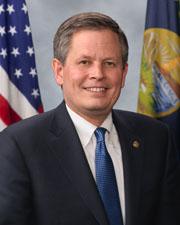 Sen. Steve Daines (R-MT)
Sen. Steve Daines (R-MT)Submitted August 4, 2020
Legislative Activity
Stay on top of the latest movement without scrolling through every action
Floor
Latest Action
Senate amendment submitted
August 4, 2020
Text
Submitted
SA 2547. Mr. DAINES (for himself and Mr. Alexander) submitted an
amendment intended to be proposed to amendment SA 2499 proposed by Mr.
McConnell to the bill S. 178, to condemn gross human rights violations
of ethnic Turkic Muslims in Xinjiang, and calling for an end to
arbitrary detention, torture, and harassment of these communities
inside and outside China; which was ordered to lie on the table; as
follows:

At the appropriate place, insert the following:

SEC. __. WORKFORCE RECOVERY AND TRAINING SERVICES.

(a) Definitions.--In this section:
(1) Qualifying emergency.--The term ``qualifying
emergency'' means--
(A) a public health emergency related to the coronavirus
declared by the Secretary of Health and Human Services
pursuant to section 319 of the Public Health Service Act (42
U.S.C. 247d);
(B) an event related to the coronavirus for which the
President declared a major disaster or an emergency under
section 401 or 501, respectively, of the Robert T. Stafford
Disaster Relief and Emergency Assistance Act (42 U.S.C. 5170,
5191); or
(C) a national emergency related to the coronavirus
declared by the President under the National Emergencies Act
(50 U.S.C. 1601 et seq.).
(2) Secretary.--The term ``Secretary'' means the Secretary
of Labor.
(3) Workforce innovation and opportunity act terms.--Except
as otherwise provided in this section, the terms in this
section have the meanings given the terms in section 3 of the
Workforce Innovation and Opportunity Act (29 U.S.C. 3102).
(b) Distribution of Funds.--
(1) Allotment to states.--From funds appropriated to carry
out this section and not reserved under subsection (e)(4),
not later than 30 days after receiving the appropriated
funds, the Secretary shall make allotments to States in
accordance with the formula described in section 132(b)(2)(B)
of the Workforce Innovation and Opportunity Act (29 U.S.C.
3172(b)(2)(B)) and make the reservation for and provide
assistance to outlying areas in accordance with section
132(b)(2)(A) of such Act (29 U.S.C. 3172(b)(2)(A)).
(2) Allocation to local areas.--Not later than 30 days
after a State receives an allotment under paragraph (1), the
Governor shall--
(A) reserve 40 percent of the allotment funds to carry out
activities under subsection (c)(1); and
(B) allocate the remainder of the funds to local areas in
accordance with section 133(b)(2)(B) of the Workforce
Innovation and Opportunity Act (29 U.S.C. 3173(b)(2)(B)) to
enable the local areas to carry out activities under
subsection (c)(2).
(c) Uses of Funds.--
(1) State use of funds.--
(A) In general.--From the funds reserved under subsection
(b)(2)(A), the Governor--
(i) shall allocate not less than 50 percent of the funds to
the local areas most significantly impacted by a qualifying
emergency, as determined by the Governor, to enable the local
areas to carry out activities under paragraph (2); and
(ii) with the funds that are not allocated under clause (i)
or reserved under subparagraph (B), may--

(I) carry out rapid response activities described in
section 134(a)(2)(A) of the Workforce Innovation and
Opportunity Act (29 U.S.C. 3174(a)(2)(A));
(II) carry out activities to facilitate remote access to
employment and training activities, including career
services, through a one-stop center;
(III) in coordination with local areas, carry out
activities necessary to expand online learning opportunities
and make available resources to support or allow for online
service delivery, including online delivery of training
services, by providers identified as eligible providers of
training services under subsection (d) or (h) of section 122
of the Workforce Innovation and Opportunity Act (29 U.S.C.
3152);
(IV) assist local boards through the purchase of
technology, supplies, and online training materials for
distribution or use by local areas; and
(V) expand the list of eligible providers of training
services established under section 122(d) of the Workforce
Innovation and Opportunity Act (29 U.S.C. 3152(d)).

(B) Limitation.--Not more than 5 percent of the funds
reserved under subsection (b)(2)(A) shall be used by the
State for administrative activities related to carrying out
this section.
(2) Local uses of funds.--Funds allocated to a local area
under subsection (b)(2)(B) or paragraph (1)(A)(i)--
(A) shall be used for--
(i) the provision of in-person and virtual training
services, aligned with industry needs, that shall include--

(I) on-the-job training, for which the local board may take
into account the impact of a qualifying emergency as a factor
in determining whether to increase the amount of a
reimbursement to an amount of up to 75 percent of the wage
rate of a participant in accordance with section 134(c)(3)(H)
of the Workforce Innovation and Opportunity Act (29 U.S.C.
3174(c)(3)(H));
(II) customized training, for which the local board may
take into account the impact of a qualifying emergency as a
factor in determining the portion of the cost of training an
employer shall provide;
(III) transitional jobs as described in section 134(d)(5)
of the Workforce Innovation and Opportunity Act (29 U.S.C.
3174(d)(5)) (but for adults or dislocated workers determined
eligible by a one-stop operator or one-stop partner),
including positions in contact tracing, public health, or
infrastructure, if provision of the jobs does not displace
any currently employed employee (as of the date of the
participation in the transitional job); and
(IV) incumbent worker training described in section
134(d)(4) of the Workforce Innovation and Opportunity Act (29
U.S.C. 3174(d)(4)) to support worker retention;

(ii) training services provided through individual training
accounts, which, notwithstanding section 122 of the Workforce
Innovation and Opportunity Act (29 U.S.C. 3152), eligible
individuals may obtain from providers identified as eligible
providers of training services under subsection (d) or (h) of
that section 122 or from another provider that is identified
by the State board or local board involved;
(iii) short-term training--

[[Page S4859]]

(I) in which a current employee (as of the date of the
participation), including an employee participating in a
transitional job described in clause (i)(III), may
participate;
(II) for which the participant may receive an employer-
sponsored individual training account;
(III) for which the employer agrees to pay--

(aa) not less than 10 percent of the costs of such training
in the case of an employer that is a small business concern,
as defined in section 3(a) of the Small Business Act (15
U.S.C. 632(a)); and
(bb) not less than 20 percent of such costs in the case of
any other employer; and

(IV) for which the participant is provided the opportunity
to choose a provider from among the providers identified as
eligible providers of training services under subsection (d)
or (h) of section 122 of the Workforce Innovation and
Opportunity Act or a provider identified by the employer as
having the ability to provide the skills necessary for the
individual to be hired permanently or to advance the
individual's career; and

(iv) short-term training in fields in which the local area
needs workers to meet the demands for health care, direct
care, and frontline workers responding to a qualifying
emergency; and
(B) may be used for--
(i) the establishment and expansion of partnerships with
public and private entities to support online programs of
training services--

(I) which programs are identified under section 122 of the
Workforce Innovation and Opportunity Act and lead to an
industry-recognized credential in high-skill, high-wage, or
in-demand industry sectors or occupations, in areas such as
technology, health care, direct care, and manufacturing; and
(II) through which the partnerships may provide for the
cost of an assessment related to obtaining such credential;

(ii) providing training services that are aligned with the
needs of local industry and recognized by employers;
(iii) expanding access to individualized career services,
which include--

(I) in-person and virtual employment and reemployment
services to help individuals find employment; and
(II) career navigation supports to enable workers to find
new pathways to high-skill, high-wage, or in-demand industry
sectors and occupations and the necessary training to support
those pathways; and

(iv) providing access to technology, including broadband
service and devices to enable individuals served under this
section to receive online career and training services.
(3) Minimum amount for training.--Not less than 50 percent
of the funds made available under subsection (b)(2)(B) and
paragraph (1)(A)(i) shall be used to provide training
services described in paragraph (2)(A).
(d) Reallocation.--
(1) Local funds.--Each local board shall return to the
Governor any funds received under this section that the local
board does not obligate within 1 year after receiving such
funds. The Governor shall reallocate such returned funds, to
the local areas that are not required to return funds under
this paragraph, in accordance with subsection (c)(1)(A).
(2) State funds.--Each Governor shall return to the
Secretary any funds received under this section that the
Governor does not obligate within 2 years after receiving
such funds. The Secretary shall reallot such returned funds
to the States that are not required to return funds under
this paragraph, in accordance with subsection (b)(1).
(e) General Provisions.--
(1) Eligible individuals.--
(A) In general.--Except as otherwise specified in this
section, to be eligible to receive services authorized under
this section, an individual shall be an adult or dislocated
worker.
(B) Individuals eligible to receive services through
individual training accounts.--To be eligible to receive
training services through an individual training account or
employer-sponsored individual training account described in
subsection (c)(2)(A)(iii), an eligible individual shall be an
adult or dislocated worker--
(i) who, after an in-person or virtual interview,
evaluation, or assessment, and career planning, has been
determined by a one-stop operator or one-stop partner, as
appropriate, to--

(I) be unlikely to obtain or retain employment with wages
comparable to or higher than wages from previous employment,
solely through the career services available through the one-
stop center; and
(II) have the skills and qualifications to successfully
participate in the selected program of training services; and

(ii) who selects a program of training services that is
directly linked to the employment opportunities in the local
area, or in another area to which the adult or dislocated
worker is willing to commute or relocate.
(2) Special rules.--
(A) Administration.--Except as otherwise provided in this
section, the provisions of subtitle E of title I of the
Workforce Innovation and Opportunity Act (29 U.S.C. 3241 et
seq.) shall apply to funds provided under this section.
(B) Single state local area.--In any case in which a State
is designated as a local area pursuant to section 106(d) of
the Workforce Innovation and Opportunity Act (29 U.S.C.
3121(d)), the State board shall carry out the functions of a
local board as specified in this section.
(3) Program oversight.--The Governor, in partnership with
local boards and the chief elected officials for local areas,
shall--
(A) conduct oversight for the activities authorized under
this section; and
(B) ensure the appropriate use and management of the funds
provided under this section.
(4) Program administration.--The Secretary shall reserve
not more than $15,000,000 of the funds appropriated to carry
out this section, as necessary, for program administration
and management through the Department of Labor to support the
administration of funds provided under this section and
evaluation of activities authorized under this section.
(f) Reports.--
(1) State report.--Each State shall prepare and submit to
the Secretary a report that includes information specifying--
(A) the number and percentage of participants in activities
under this section who received funds for training services;
(B) the types of training programs provided under this
section;
(C) the number and percentage of participants in training
programs provided under this section who entered employment
upon completion of such a program;
(D) the number and percentage of participants in such
training programs who obtained a recognized postsecondary
credential; and
(E) the earnings of participants who completed a training
program under this section.
(2) Secretary's report.--Upon receipt of a report under
paragraph (1), the Secretary shall transmit such report to
the Committee on Health, Education, Labor, and Pensions of
the Senate and the Committee on Education and Labor of the
House of Representatives.
(g) Authorization of Appropriations.--There is authorized
to be appropriated to carry out this section $3,500,000,000
for the period of fiscal years 2020 through 2022.
______