S.Amdt. 271Senate116th Congress (2019-2021)
S.Amdt. 271
Sponsored by 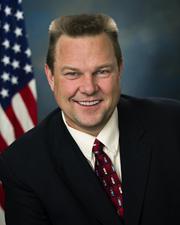 Sen. Jon Tester (D-MT)
Sen. Jon Tester (D-MT)Submitted June 12, 2019
Legislative Activity
Stay on top of the latest movement without scrolling through every action
Floor
Latest Action
Senate amendment submitted
June 12, 2019
Text
Submitted
SA 271. Mr. TESTER (for himself and Mr. Moran) submitted an amendment
intended to be proposed by him to the bill S. 1790, to authorize
appropriations for fiscal year 2020 for military activities of the
Department of Defense, for military construction, and for defense
activities of the Department of Energy, to prescribe military personnel
strengths for such fiscal year, and for other purposes; which was
ordered to lie on the table; as follows:

At the appropriate place in title VII, insert the
following:

Subtitle __--Mental Health Care From Department of Defense and
Department of Veterans Affairs

SEC. ___. ESTABLISHMENT BY DEPARTMENT OF VETERANS AFFAIRS AND
DEPARTMENT OF DEFENSE OF CLINICAL PRACTICE
GUIDELINES FOR COMORBID MENTAL HEALTH
CONDITIONS.

(a) In General.--Not later than two years after the date of
the enactment of this Act, the Secretary of Veterans Affairs,
in consultation with the Secretary of Defense and the
Secretary of Health and Human Services, shall complete the
development of clinical practice guidelines for the treatment
of post-traumatic stress disorder, military sexual trauma,
and traumatic brain injury that is comorbid with substance
use disorder or chronic pain.
(b) Work Group.--
(1) Establishment.--In carrying out subsection (a), the
Secretary of Veterans Affairs, the Secretary of Defense, and
the Secretary of Health and Human Services shall create a
Trauma and Comorbid Substance Use Disorder or Chronic Pain
Work Group (in this section referred to as the ``Work
Group'').
(2) Membership.--The Work Group shall be comprised of
individuals that represent Federal Government entities and
non-Federal Government entities with expertise in the areas
covered by the Work Group, including the following:
(A) Academic institutions that specialize in research for
the treatment of conditions described in subsection (a).
(B) The National Center for Posttraumatic Stress Disorder
of the Department of Veterans Affairs.
(C) The Office of the Assistant Secretary for Mental Health
and Substance Use of the Department of Health and Human
Services.
(3) Relation to other work groups.--The Work Group shall be
created and conducted in the same manner as other work groups
for the development of clinical practice guidelines for the
Department of Veterans Affairs and the Department of Defense.
(c) Matters Included.--In developing the clinical practice
guidelines under subsection (a), the Work Group, in
consultation with the Post Traumatic Stress Disorder Work
Group, Concussion-mTBI Work Group, Opioid Therapy for Chronic
Pain Work Group, and Substance Use Work Group, shall ensure
that the clinical practice guidelines include the following:
(1) Guidance with respect to the following:
(A) The treatment of patients with post-traumatic stress
disorder who are also experiencing a substance use disorder
or chronic pain.
(B) The treatment of patients experiencing a mental health
condition, including anxiety, depression, or post-traumatic
stress

[[Page S3378]]

disorder as a result of military sexual trauma who are also
experiencing a substance use disorder or chronic pain.
(C) The treatment of patients with traumatic brain injury
who are also experiencing a substance use disorder or chronic
pain.
(2) Guidance with respect to the following:
(A) Appropriate case management for patients experiencing
post-traumatic stress disorder that is comorbid with
substance use disorder or chronic pain who transition from
receiving care while on active duty in the Armed Forces to
care from health care networks outside of the Department of
Defense.
(B) Appropriate case management for patients experiencing a
mental health condition, including anxiety, depression, or
post-traumatic stress disorder as a result of military sexual
trauma that is comorbid with substance use disorder or
chronic pain who transition from receiving care while on
active duty in the Armed Forces to care from health care
networks outside of the Department of Defense.
(C) Appropriate case management for patients experiencing
traumatic brain injury that is comorbid with substance use
disorder or chronic pain who transition from receiving care
while on active duty in the Armed Forces to care from health
care networks outside of the Department of Defense.
(3) Guidance with respect to the treatment of patients who
are still members of the Armed Forces and are experiencing a
mental health condition, including anxiety, depression, or
post-traumatic stress disorder as a result of military sexual
trauma that is comorbid with substance use disorder or
chronic pain.
(4) Guidance with respect to the assessment by the National
Academies of Sciences, Engineering, and Medicine of the
potential overmedication of veterans, as required pursuant to
the Senate report accompanying S. 1557, 115th Congress
(Senate Report 115-130), under the heading ``Overprescription
Prevention Report'' under the heading ``committee
recommendation''.
(d) Rule of Construction.--Nothing in this section shall be
construed to prevent the Secretary of Veterans Affairs and
the Secretary of Defense from considering all relevant
evidence, as appropriate, in creating the clinical practice
guidelines required under subsection (a) or from ensuring
that the final clinical practice guidelines developed under
such subsection and subsequently updated, as appropriate,
remain applicable to the patient populations of the
Department of Veterans Affairs and the Department of Defense.

SEC. ___. UPDATE OF CLINICAL PRACTICE GUIDELINES FOR
ASSESSMENT AND MANAGEMENT OF PATIENTS AT RISK
FOR SUICIDE.

(a) In General.--Not later than two years after the date of
the enactment of this Act, the Secretary of Veterans Affairs
and the Secretary of Defense, through the Assessment and
Management of Patients at Risk for Suicide Work Group (in
this section referred to as the ``Work Group''), shall issue
an update to the VA/DOD Clinical Practice Guideline for
Assessment and Management of Patients at Risk for Suicide.
(b) Matters Included.--In carrying out the update under
subsection (a), the Work Group shall ensure that the clinical
practice guidelines updated under such subsection includes
the following:
(1) Enhanced guidance with respect to the following:
(A) Gender-specific risk factors for suicide and suicidal
ideation.
(B) Gender-specific treatment efficacy for depression and
suicide prevention.
(C) Gender-specific pharmacotherapy efficacy.
(D) Gender-specific psychotherapy efficacy.
(2) Guidance with respect to the following:
(A) The efficacy of alternative therapies, other than
psychotherapy and pharmacotherapy, including the following:
(i) Yoga therapy.
(ii) Meditation therapy.
(iii) Equine therapy.
(iv) Other animal therapy.
(v) Training and caring for service dogs.
(vi) Agri-therapy.
(vii) Art therapy.
(viii) Outdoor sports therapy.
(ix) Music therapy.
(x) Any other alternative therapy that the Work Group
considers appropriate.
(3) Guidance with respect to the findings of the Creating
Options for Veterans' Expedited Recovery Commission (commonly
referred to as the ``COVER Commission'') established under
section 931 of the Jason Simcakoski Memorial and Promise Act
(title IX of Public Law 114-198; 38 U.S.C. 1701 note).
(c) Rule of Construction.--Nothing in this section shall be
construed to prevent the Secretary of Veterans Affairs and
the Secretary of Defense from considering all relevant
evidence, as appropriate, in updating the VA/DOD Clinical
Practice Guideline for Assessment and Management of Patients
at Risk for Suicide, as required under subsection (a), or
from ensuring that the final clinical practice guidelines
updated under such subsection remain applicable to the
patient populations of the Department of Veterans Affairs and
the Department of Defense.

SEC. ___. JOINT MENTAL HEALTH PROGRAMS BY DEPARTMENT OF
VETERANS AFFAIRS AND DEPARTMENT OF DEFENSE.

(a) Report on Mental Health Programs.--
(1) In general.--Not later than 180 days after the date of
the enactment of this Act, and annually thereafter, the
Secretary of Veterans Affairs and the Secretary of Defense
shall submit to the Committee on Armed Services and the
Committee on Veterans' Affairs of the Senate and the
Committee on Armed Services and the Committee on Veterans'
Affairs of the House of Representatives a report on mental
health programs of the Department of Veterans Affairs and the
Department of Defense and joint programs of the Departments.
(2) Elements.--Each report required by paragraph (1) shall
include the following:
(A) A description of mental health programs operated by the
Department of Veterans Affairs, including the following:
(i) Transition assistance programs.
(ii) Clinical mental health initiatives, including--

(I) the Million Veterans Program; and
(II) centers of excellence of the Department of Veterans
Affairs for traumatic brain injury and post-traumatic stress
disorder.

(iii) Programs that may secondarily improve mental health,
including employment, housing assistance, and financial
literacy programs.
(iv) Research into mental health issues and conditions.
(B) A description of mental health programs operated by the
Department of Defense, including the following:
(i) Transition assistance programs.
(ii) Clinical mental health initiatives, including the
National Intrepid Center of Excellence.
(iii) Programs that may secondarily improve mental health,
including employment, housing assistance, and financial
literacy programs.
(iv) Research into mental health issues and conditions.
(C) A description of mental health programs jointly
operated by the Department of Veterans Affairs and the
Department of Defense, including the following:
(i) Transition assistance programs.
(ii) Clinical mental health initiatives.
(iii) Programs that may secondarily improve mental health,
including employment, housing assistance, and financial
literacy programs.
(iv) Research into mental health issues and conditions.
(D) Recommendations for coordinating mental health programs
of the Department of Veterans Affairs and the Department of
Defense to improve the effectiveness of those programs.
(E) Recommendations for novel joint programming of the
Department of Veterans Affairs and the Department of Defense
to improve the mental health of members of the Armed Forces
and veterans.
(b) Establishment of Joint Center of Excellence.--
(1) In general.--Not later than two years after the date of
the enactment of this Act, the Secretary of Defense, in
consultation with the Secretary of Veterans Affairs, shall
establish a center of excellence to be known as the ``Joint
DOD/VA National Intrepid Center of Excellence Intrepid Spirit
Center'' (in this subsection referred to as the ``Center'').
(2) Duties.--The Center shall conduct joint mental health
programs of the Department of Veterans Affairs and the
Department of Defense.
(3) Location.--The Center shall be established in a
location that--
(A) is geographically distant from already existing and
planned Intrepid Spirit Centers of the Department of Defense;
and
(B) is in a rural or highly rural area (as determined
through the use of the Rural-Urban Commuting Areas coding
system of the Department of Agriculture).
______