S.Amdt. 275Senate116th Congress (2019-2021)
S.Amdt. 275
Sponsored by 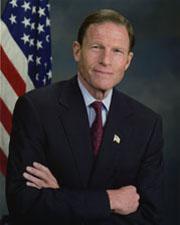 Sen. Richard Blumenthal (D-CT)
Sen. Richard Blumenthal (D-CT)Submitted June 12, 2019
Legislative Activity
Stay on top of the latest movement without scrolling through every action
Floor
Latest Action
Senate amendment submitted
June 12, 2019
Text
Submitted
SA 275. Mr. BLUMENTHAL submitted an amendment intended to be proposed
by him to the bill S. 1790, to authorize appropriations for fiscal year
2020 for military activities of the Department of Defense, for military
construction, and for defense activities of the Department of Energy,
to prescribe military personnel strengths for such fiscal year, and for
other purposes; which was ordered to lie on the table; as follows:

At the appropriate place, insert the following:

SEC. ___. FREE CALL-BLOCKING TECHNOLOGY FOR SERVICEMEMBERS
AND THEIR PARENTS AND DEPENDENTS.

(a) Definitions.--In this section:
(1) Commission.--The term ``Commission'' means the Federal
Communications Commission.
(2) Covered subscriber.--The term ``covered subscriber''
means a subscriber who is--
(A) a servicemember; or
(B) a parent or dependent of a servicemember.
(3) Dependent.--The term ``dependent'' has the meaning
given the term in subparagraphs (A) and (B) of section 101(4)
of the Servicemembers Civil Relief Act (50 U.S.C. 3911(4)).
(4) Originating provider.--The term ``originating
provider'' means a provider of a voice service or text
messaging service that permits a subscriber to originate a
call or text message that may be transmitted on the public
switched telephone network.
(5) Parent.--The term ``parent''--
(A) has the meaning given the term in section 101(5) of
title 38, United States Code; and
(B) includes a legal guardian.
(6) Receiving provider.--The term ``receiving provider''
means a provider of a voice service or text messaging service
that permits a subscriber to receive a call or text message
originating, or that may be transmitted, on the public
switched telephone network.
(7) Servicemember.--The term ``servicemember'' has the
meaning given the term in section 101(1) of the
Servicemembers Civil Relief Act (50 U.S.C. 3911(1)).
(8) Text message; text messaging service; voice service.--
The terms ``text message'', ``text messaging service'', and
``voice service'' have the meanings given those terms in
section 227(e)(8) of the Communications Act of 1934 (47
U.S.C. 227(e)(8)), except that such section 227(e)(8) shall
be applied as if the amendments made by section 503(a)(2) of
division P of the Consolidated Appropriations Act, 2018
(Public Law 115-141) had taken effect on the date of
enactment of this Act.
(b) Requirement to Offer Technology to Covered
Subscribers.--The Commission, in consultation with the
Secretary of Defense, shall by regulation establish technical
and procedural standards to require a receiving provider to,
not later than 72 hours after receiving notice from a
subscriber that the subscriber is a covered subscriber--
(1) offer to the subscriber, for no additional charge, the
option to enable technology that--
(A) identifies an incoming call or text message as
originating or probably originating from an automatic
telephone dialing system; and
(B) prevents the subscriber from receiving a call or text
message identified as described in subparagraph (A) unless--
(i) the call or text message is made or sent by a public
safety entity, including a public safety answering point (as
defined in section 222(h) of the Communications Act of 1934
(47 U.S.C. 222(h))), emergency operations center, or law
enforcement agency; or
(ii) the subscriber has provided prior express consent to
receive the call or text message and has not revoked that
consent; and
(2) offer to the subscriber, for no additional charge, the
ability to request that the receiving provider prevent the
subscriber from receiving calls and text messages originating
from a particular number.
(c) Commission Appeals Process Relating to Alleged
Autodialers.--The standards established under paragraph (1)
of subsection (b) shall provide for an appeals process under
which--
(1) a subscriber of an originating provider (referred to in
this subsection as the ``originating subscriber'') may notify
the Commission that the technology offered under that
paragraph by a receiving provider is--
(A) incorrectly identifying the calls or text messages of
the originating subscriber as originating or probably
originating from an automatic telephone dialing system; or
(B) preventing other subscribers from receiving calls or
text messages originated by the originating subscriber that
are permitted under subparagraph (B) of that paragraph;
(2) if the Commission finds that the circumstance about
which the originating subscriber notified the Commission
exists, the Commission shall--
(A) notify the receiving provider of the finding; and
(B) take such action as is reasonably necessary to correct
the circumstance; and
(3) if the receiving provider is preventing a subscriber of
the receiving provider (referred to in this paragraph as the
``receiving subscriber'') from receiving calls or text
messages originated by the originating subscriber because the
receiving subscriber has requested that prevention under
subsection (b)(1), the Commission--
(A) may not require the receiving provider to stop
preventing the calls or text messages unless the receiving
subscriber provides affirmative consent; and
(B) shall require the receiving provider to notify the
receiving subscriber of the existence of the circumstance
described in paragraph (2) of this subsection.
(d) Private Right of Action.--
(1) In general.--A person aggrieved by a violation of the
regulations prescribed under subsection (b) may bring an
action in an appropriate district court of the United States,
or, if otherwise permitted by the laws or rules of court of a
State, in an appropriate court of that State, to--
(A) enjoin the violation; or
(B) recover the greater of--
(i) actual damages; or
(ii) $500 per violation.
(2) Enhanced awards.--If the court finds in an action
brought under paragraph (1) that the defendant willfully or
knowingly violated the regulations described in that
paragraph, the court may increase the amount of the award to
an amount equal to not more than 3 times the amount available
under subparagraph (B) of that paragraph.
(e) Rules of Construction.--
(1) Prevention of calls or text messages.--For purposes of
a regulation prescribed under subsection (b), a call made or
text message sent to a covered subscriber shall be considered
to be prevented if, in accordance with the express consent of
the subscriber, the call or text message is recorded or
redirected in a manner that allows the subscriber to--
(A) be notified of the attempt to make the call or send the
text message; or
(B) have access to--
(i) a message left by the calling party; or
(ii) the text message.
(2) Blocking caller identification information.--Nothing in
this section may be construed to require an originating
provider to prevent or restrict any person from blocking the
capability of any caller identification service to transmit
caller identification information.
(f) Regulations.--The Commission, in consultation with the
Secretary of Defense, shall--
(1) prescribe the regulations required under subsection (b)
not later than 1 year after the date of enactment of this
Act; and
(2) require a provider of a voice service or text messaging
service to comply with the regulations prescribed under
paragraph (1) not later than 180 days after the date on which
they are prescribed.
______