S.Amdt. 407Senate116th Congress (2019-2021)
S.Amdt. 407
Sponsored by 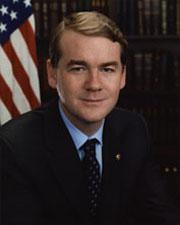 Sen. Michael F. Bennet (D-CO)
Sen. Michael F. Bennet (D-CO)Submitted June 13, 2019
Legislative Activity
Stay on top of the latest movement without scrolling through every action
Floor
Latest Action
Senate amendment submitted
June 13, 2019
Text
Submitted
SA 407. Mr. BENNET (for himself and Mr. Portman) submitted an
amendment intended to be proposed by him to the bill S. 1790, to
authorize appropriations for fiscal year 2020 for military activities
of the Department of Defense, for military construction, and for
defense activities of the Department of Energy, to prescribe military
personnel strengths for such fiscal year, and for other purposes; which
was ordered to lie on the table; as follows:

At the end of subtitle C of title II, add the following:

SEC. ___. COMPARATIVE CAPABILITIES OF ADVERSARIES IN
ARTIFICIAL INTELLIGENCE.

(a) Expansion of Duties of Official With Principal
Responsibility for Coordination of Activities Relating to
Development and Demonstration of Artificial Intelligence.--
Section 238(c)(2)(I) of the John S. McCain National Defense
Authorization Act for Fiscal Year 2019 (Public Law 115-232)
is amended--
(1) in clause (i), by striking ``; and'' and inserting a
semicolon;
(2) in clause (ii), by striking the period at the end and
inserting ``; and''; and
(3) by adding at the end the following new clause:
``(iii) that appropriate entities in the Department are
reviewing all open sources publications from both the United
States and outside the United States that contribute, impact,
or advance artificial intelligence research and
development.''.
(b) Analysis of Comparative Capabilities of Adversaries in
Key Technology Areas.--In carrying out analysis required to
carry out section 247 of the John S. McCain National Defense
Authorization Act for Fiscal Year 2019 (Public Law 115-232),
the Secretary of Defense shall ensure that the analysis
includes the following:
(1) A comprehensive and national-level--
(A) comparison of public and private investment
differentiated by sector and industry;
(B) review of current trends in ability to set and
determine global standards and norms for artificial
intelligence technology in national security, including
efforts in international standard setting bodies;
(C) assessment of access to artificial intelligence
technology in national security; and
(D) assessment of areas and activities in which the Unites
States should invest in order to provide the United States
with technical superiority over China in relevant areas of
artificial intelligence.
(2) A comprehensive assessment of relative technical
quality of activities in the United States and China.
(3) A comprehensive assessment of the likelihood that
developments in artificial intelligence will successfully
transition into military systems of China.
(4) Predicted effects on United States national security if
current trends in China and the United States continue.
(5) Predicted effects of current trends on digital and
technology export relationships of both countries with
existing and new trading partners.
(c) Briefing on National Security Vulnerabilities and
Opportunities in Artificial Intelligence and Actions Being
Undertake to Address Such Vulnerabilities and
Opportunities.--
(1) In general.--Not later than one year after the date of
the enactment of this Act, the Secretary of Defense shall
provide the congressional defense committees a briefing on--
(A) national security vulnerabilities and opportunities in
artificial intelligence; and
(B) actions being undertaken to address the vulnerabilities
and opportunities identified under subparagraph (A).
(2) Consultation with experts.--In preparing the briefing
required by paragraph (1) and in developing the actions
referred to in subparagraph (B) of such paragraph, the
Secretary may consult with experts within the Department,
other Federal agencies, academia, advisory committees, and
the commercial sector, as the Secretary considers
appropriate.
(3) Elements.--The briefing required by paragraph (1) shall
include information on the following:
(A) Supply chain vulnerabilities for current artificial
intelligence applications in national security.
(B) Long-term global trends of state and non-state actor
development and use of artificial intelligence technologies
in national security.
(C) Such other matters as the Secretary considers
appropriate.
(4) Actions.--The actions referred to in paragraph (1)(B)
may include the following:
(A) Partnering and engaging with the private sector and
encouraging public-private partnerships and investment in
artificial intelligence in national security.
(B) Improving Federal and privates sector workforce
capabilities and identifying necessary requirements and
resulting challenges.
(C) Working with the international community to establish
international standards for the use of artificial
intelligence technologies.
(D) Identifying areas for Federal investment in research
and development.
(E) Such other actions as the Secretary considers
appropriate.
______