S.Amdt. 655Senate116th Congress (2019-2021)
S.Amdt. 655
Sponsored by 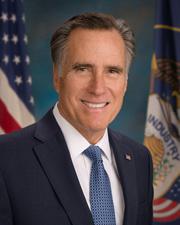 Sen. Mitt Romney (R-UT)
Sen. Mitt Romney (R-UT)Submitted June 18, 2019
Legislative Activity
Stay on top of the latest movement without scrolling through every action
Floor
Latest Action
Senate amendment submitted
June 18, 2019
Text
Submitted
SA 655. Mr. ROMNEY submitted an amendment intended to be proposed by
him to the bill S. 1790, to authorize appropriations for fiscal year
2020 for military activities of the Department of Defense, for military
construction, and for defense activities of the Department of Energy,
to prescribe military personnel strengths for such fiscal year, and for
other purposes; which was ordered to lie on the table; as follows:

At the end of subtitle E of title XII, add the following:

SEC. 1262. POLICY WITH RESPECT TO EXPANSION OF COOPERATION
WITH ALLIES IN THE INDO-PACIFIC REGION AND
EUROPE TO COUNTER THE RISE OF THE PEOPLE'S
REPUBLIC OF CHINA.

(a) Findings.--Congress makes the following findings:
(1) The People's Republic of China is leveraging military
modernization, influence operations, and predatory economics
to coerce neighboring countries to reorder the Indo-Pacific
region to the advantage of the People's Republic of China.
(2) As the People's Republic of China continues its
economic and military ascendance, asserting power through a
whole of government long-term strategy, the People's Republic
of China will continue to pursue a military modernization
program that seeks Indo-Pacific regional hegemony in the
near-term and displacement of the United States to achieve
global preeminence in the future.
(3) The most important long-term objective of the defense
strategy of the United States is to set the military
relationship between the United States and the People's
Republic of China on a path toward transparency and
nonaggression.
(b) Statement of Policy.--It is the policy of the United
States--
(1) to expand military, diplomatic, and economic alliances
in the Indo-Pacific region and with Europe and like-minded
countries around the globe that are critical to addressing
the rise of the People's Republic of China; and
(2) to develop, in collaboration with such allies, a
unified approach to address the rise of the People's Republic
of China.
______