H.Amdt. 282House117th Congress (2021-2023)
An amendment numbered 451 printed in Part A of House Report 117-405 to require the Secretary of State to review actions by Brazilian armed forces related to that country's October 2022 presidential elections and to consider such actions under statutory guardrails on US assistance.
Sponsored by 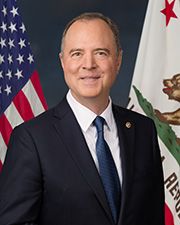 Rep. Adam B. Schiff (D-CA)
Submitted July 14, 2022
Text
Offered
This amendment's own text couldn't be picked out of its Congressional Record passage, so the passage is shown in full.
Frank Pallone, Jr.,
Chairman.
____
House of Representatives,
Committee on Armed Services,
Washington, DC, June 30, 2022.
Hon. Frank Pallone. Jr.,
Chairman, Committee on Energy and Commerce, House of
Representatives, Washington, DC.
Dear Chairman Pallone: Thank you for your letter regarding
H.R. 7900, the National Defense Authorization Act for Fiscal
Year 2023. I agree that the Committee on Energy and Commerce
has valid jurisdictional claims to certain provisions in this
important legislation, and I am most appreciative of your
decision not to request a referral in the interest of
expediting consideration of the bill. I agree that by
foregoing a sequential referral, the Committee on Energy and
Commerce is not waiving its jurisdiction. Further, this
exchange of letters will be included in the committee report
on the bill.
Sincerely,
Adam Smith,
Chairman.
____
House of Representatives,
Committee on Financial Services,
Washington, DC, June 29, 2022.
Hon. Adam Smith,
Chairman, Committee on Armed Services,
House of Representatives, Washington, DC.
Dear Chairman Smith: I am writing to you concerning H.R.
7900, the National Defense Authorization Act for Fiscal Year
2023. There are certain provisions in the legislation that
fall within the Rule X jurisdiction of the Committee on
Financial Services.
In the interest of permitting your Committee to proceed
expeditiously to floor consideration of this important bill,
I am willing to waive the Financial Services Committee's
right to sequential referral. I do so with the understanding
that by waiving consideration of the bill, the Committee on
Financial
[[Page H6220]]
Services does not waive any future jurisdictional claim over
the subject matters contained in the bill which fall within
its Rule X jurisdiction. I request that you urge the Speaker
to name Members of this committee to any conference committee
which is named to consider such provisions.
Please place this letter into the committee report on H.R.
7900 and into the Congressional Record during consideration
of the measure on the House floor. Thank you for the
cooperative spirit in which you have worked regarding this
matter and others between our respective committees.
Sincerely,
Maxine Waters,
Chairwoman.
____
Committee on Armed Services,
House of Representatives,
Washington, DC, June 30, 2022.
Hon. Maxine Waters,
Chairwoman, Committee on Financial Services,
House of Representatives, Washington, DC.
Dear Chairwoman Waters: Thank you for your letter regarding
H.R. 7900, the National Defense Authorization Act for Fiscal
Year 2023. I agree that the Committee on Financial Services
has valid jurisdictional claims to certain provisions in this
important legislation, and I am most appreciative of your
decision not to request a referral in the interest of
expediting consideration of the bill. I agree that by
foregoing a sequential referral, the Committee on Financial
Services is not waiving its jurisdiction. Further, this
exchange of letters will be included in the committee report
on the bill.
Sincerely,
Adam Smith,
Chairman.
____
June 27, 2022.
Hon. Adam Smith,
Chair, Committee on Armed Services,
House of Representatives, Washington, DC.
Dear Chair Smith: I am writing to you concerning H.R. 7900,
the National Defense Authorization Act for Fiscal Year 2023.
There are certain provisions in the legislation that fall
within the Rule X jurisdiction of the House Committee on
Foreign Affairs.
In the interest of permitting expeditious consideration of
this legislation, I am willing to waive this committee's
right to sequential referral. I do so with the understanding
that by waiving consideration of the bill, the Committee on
Foreign Affairs does not waive any future jurisdictional
claim over the subject matters contained in the bill which
fall within its Rule X jurisdiction. I request that you urge
the Speaker to name members of this committee to any
conference committee which is named to consider such
provisions.
Please place this letter into the committee report on H.R.
7900 and into the Congressional Record during consideration
of the measure on the House floor. Thank you for the
cooperative spirit in which you have worked regarding this
matter, and the House Foreign Affairs Committee looks forward
to continue working with the House Armed Services Committee
on the FY 2023 National Defense Authorization Act.
Sincerely,
Gregory W. Meeks,
Chair.
____
Committee on Armed Services,
House of Representatives,
Washington, DC, June 30, 2022.
Hon. Gregory W. Meeks,
Chair, Committee on Foreign Affairs,
House of Representatives, Washington, DC.
Dear Chair Meeks: Thank you for your letter regarding H.R.
7900, the National Defense Authorization Act for Fiscal Year
2023. I agree that the Committee on Foreign Affairs has valid
jurisdictional claims to certain provisions in this important
legislation, and I am most appreciative of your decision not
to request a referral in the interest of expediting
consideration of the bill. I agree that by foregoing a
sequential referral, the Committee on Foreign Affairs is not
waiving its jurisdiction. Further, this exchange of letters
will be included in the committee report on the bill.
Sincerely,
Adam Smith,
Chairman.
____
Committee on Homeland Security,
House of Representatives,
Washington, DC, June 24, 2022.
Hon. Adam Smith,
Chairman, Committee on Armed Services,
House of Representatives, Washington, DC.
Dear Chairman Smith: I am writing to you concerning H.R.
7900, the National Defense Authorization Act for Fiscal Year
2023. There are certain provisions in the legislation that
fall within the Rule X jurisdiction of the Committee on
Homeland Security.
In the interest of permitting your committee to proceed
expeditiously to floor consideration of this important bill,
I am willing to waive this committee's right to sequential
referral. I do so with the understanding that by waiving
consideration of the bill, the Committee on Homeland Security
does not waive any future jurisdictional claim over the
subject matters contained in the bill which fall within its
rule X jurisdiction. I request that you urge the Speaker to
name members of this committee to any conference committee
which is named to consider such provisions.
Please place this letter in the committee report on H.R.
7900 and in the Congressional Record during consideration of
the measure on the House floor. Thank you for the cooperative
spirit in which you have worked regarding this matter and
others between our respective committees.
Sincerely,
Bennie G. Thompson,
Chairman.
____
Committee on Armed Services,
House of Representatives,
Washington, DC, June 30, 2022.
Hon. Bennie G. Thompson,
Chairman, Committee on Homeland Security,
House of Representatives, Washington, DC.
Dear Chairman Thompson: Thank you for your letter regarding
H.R. 7900, the National Defense Authorization Act for Fiscal
Year 2023. I agree that the Committee on Homeland Security
has valid jurisdictional claims to certain provisions in this
important legislation, and I am most appreciative of your
decision not to request a referral in the interest of
expediting consideration of the bill. I agree that by
foregoing a sequential referral, the Committee on Homeland
Security is not waiving its jurisdiction. Further, this
exchange of letters will be included in the committee report
on the bill.
Sincerely,
Adam Smith,
Chairman.
____
House of Representatives, Permanent Select Committee on
Intelligence,
June 28, 2022.
Hon. Adam Smith,
Chairman, Committee on Armed Services,
House of Representatives, Washington, DC.
Dear Chairman Smith: I write in response to your
committee's request concerning H.R. 7900, the National
Defense Authorization Act for Fiscal Year 2023. Certain
provisions in the legislation fall within the jurisdiction of
the Permanent Select Committee on Intelligence (the
``Committee''), as established by Rule X of the Rules of the
House of Representatives for the 117th Congress.
In the interest of expediting floor consideration of this
important bill, I am willing to waive the Committee's right
to request a sequential referral. By doing so, the Committee
does not waive any future claim over subjects addressed in
the bill which fall within the Committee's jurisdiction. I
also request that you urge the Speaker to name members of the
Committee to any conference committee on the bill.
Please place this letter into the committee report on H.R.
7900 and into the Congressional Record during consideration
of the measure on the House floor. Thank you for the
cooperative spirit in which you have worked regarding this
matter and others between our respective committees.
Sincerely,
Adam B. Schiff,
Chairman.
____
House of Representatives,
Committee on Armed Services,
Washington, DC, June 30, 2022.
Hon. Adam B. Schiff,
Chairman, Permanent Select Committee on Intelligence, House
of Representatives, Washington, DC.
Dear Chairman Schiff: Thank you for your letter regarding
H.R. 7900, the National Defense Authorization Act for Fiscal
Year 2023. I agree that the Permanent Select Committee on
Intelligence has valid jurisdictional claims to certain
provisions in this important legislation, and I am most
appreciative of your decision not to request a referral in
the interest of expediting consideration of the bill. I agree
that by foregoing a sequential referral, the Permanent Select
Committee on Intelligence is not waiving its jurisdiction.
Further, this exchange of letters will be included in the
committee report on the bill.
Sincerely,
Adam Smith,
Chairman.
____
House of Representatives,
Committee on the Judiciary,
Washington, DC, June 28, 2022.
Hon. Adam Smith,
Chair, Committee on Armed Services,
House of Representatives, Washington, DC.
Dear Chair Smith: I am writing to you concerning H.R. 7900,
the National Defense Authorization Act for Fiscal Year 2023.
There are certain provisions in the legislation that fall
within the Rule X jurisdiction of the Committee on the
Judiciary.
In the interest of permitting your committee to proceed
expeditiously to floor consideration of this important bill,
I am willing to waive this committee's right to sequential
referral. I do so with the understanding that by waiving
consideration of the bill, the Committee on the Judiciary
does not waive any future jurisdictional claim over the
subject matters contained in the bill that fall within its
Rule X jurisdiction. I request that you urge the Speaker to
name members of this committee to any conference committee
that is named to consider such provisions.
Please place this letter into the committee report on H.R.
7900 and into the Congressional Record during consideration
of the measure on the House floor. Thank you for the
cooperative spirit in which you have worked regarding this
matter and others between our respective committees.
Sincerely,
Jerrold Nadler,
Chairman.
[[Page H6221]]
____
House of Representatives,
Committee on Armed Services,
Washington, DC, June 30, 2022.
Hon. Jerrold Nadler,
Chairman, Committee on the Judiciary,
House of Representatives, Washington, DC.
Dear Chairman Nadler: Thank you for your letter regarding
H.R. 7900, the National Defense Authorization Act for Fiscal
Year 2023. I agree that the Committee on the Judiciary has
valid jurisdictional claims to certain provisions in this
important legislation, and I am most appreciative of your
decision not to request a referral in the interest of
expediting consideration of the bill. I agree that by
foregoing a sequential referral, the Committee on the
Judiciary is not waiving its jurisdiction. Further, this
exchange of letters will be included in the committee report
on the bill.
Sincerely,
Adam Smith,
Chairman.
____
House of Representatives,
Committee on Natural Resources,
Washington, DC, June 24, 2022.
Hon. Adam Smith,
Chair, Committee on Armed Services,
House of Representatives, Washington, DC.
Dear Chair Smith: I am writing to you concerning H.R. 7900,
the National Defense Authorization Act for Fiscal Year 2023.
There are certain provisions in the legislation that fall
within the Rule X jurisdiction of the Committee on Natural
Resources.
In the interest of permitting your committee to proceed
expeditiously to floor consideration of this important bill,
I am willing to waive this committee's right to sequential
referral. I do so with the understanding that by waiving
consideration of the bill, the Committee on Natural Resources
does not waive any future jurisdictional claim over the
subject matters contained in the bill that fall within its
Rule X jurisdiction. I request that you urge the Speaker to
name members of this committee to any conference committee
that is named to consider such provisions.
Please place this letter into the committee report on H.R.
7900 and into the Congressional Record during consideration
of the measure on the House floor. Thank you for the
cooperative spirit in which you have worked regarding this
matter and others between our respective committees.
Sincerely,
Raul M. Grijalva,
Chair, Committee on Natural Resources.
____
House of Representatives,
Committee on Armed Services,
Washington, DC, June 30, 2022.
Hon. Raul M. Grijalva,
Chair, Committee on Natural Resources,
House of Representatives Washington, DC.
Dear Chair Grijalva, Thank you for your letter regarding
H.R. 7900, the National Defense Authorization Act for Fiscal
Year 2023. I agree that the Committee on Natural Resources
has valid jurisdictional claims to certain provisions in this
important legislation, and I am most appreciative of your
decision not to request a referral in the interest of
expediting consideration of the bill. I agree that by
foregoing a sequential referral, the Committee on Natural
Resources is not waiving its jurisdiction. Further, this
exchange of letters will be included in the committee report
on the bill.
Sincerely,
Adam Smith,
Chairman.
____
House of Representatives,
Committee on Oversight and Reform,
Washington, DC, June 27, 2022.
Hon. Adam Smith,
Chairman, Committee on Armed Services,
Washington, DC.
Dear Chair Smith: I am writing to you concerning H.R. 7900,
the National Defense Authorization Act for Fiscal Year 2023.
There are certain provisions in the legislation that fall
within the Rule X jurisdiction of the Committee on Oversight
and Reform.
In the interest of permitting your committee to proceed
expeditiously to floor consideration of this important bill,
I am willing to waive this committee's right to sequential
referral. I do so with the understanding that by waiving
consideration of the bill, Committee on Oversight and Reform
does not waive any future jurisdictional claim over the
subject matters contained in the bill which fall within its
Rule X jurisdiction. I request that you urge the Speaker to
name members of this committee to any conference committee
which is named to consider such provisions.
Please place this letter into the committee report on H.R.
7900 and into the Congressional Record during consideration
of the measure on the House floor. Thank you for the
cooperative spirit in which you have worked regarding this
matter and others between our respective committees.
Sincerely,
Carolyn B. Maloney,
Chairwoman.
____
House of Representatives,
Committee on Armed Services,
Washington, DC, June 30, 2022.
Hon. Carolyn B. Maloney,
Chairwoman, Committee on Oversight and Reform, House of
Representatives, Washington, DC.
Dear Chairwoman Maloney: Thank you for your letter
regarding H.R. 7900, the National Defense Authorization Act
for Fiscal Year 2023. I agree that the Committee on Oversight
and Reform has valid jurisdictional claims to certain
provisions in this important legislation, and I am most
appreciative of your decision not to request a referral in
the interest of expediting consideration of the bill. I agree
that by foregoing a sequential referral, the Committee on
Oversight and Reform is not waiving its jurisdiction.
Further, this exchange of letters will be included in the
committee report on the bill.
Sincerely,
Adam Smith,
Chairman.
____
House of Representatives, Committee on Science, Space,
and Technology,
Washington, DC, June 27, 2022.
Hon. Adam Smith,
Chairman, Committee on Armed Services,
House of Representatives, Washington, DC.
Dear Chairman Smith: I am writing to you concerning H.R.
7900, the National Defense Authorization Act for Fiscal Year
2023. There are certain provisions in the legislation that
fall within the Rule X jurisdiction of the Committee on
Science, Space, and Technology.
In the interest of permitting your committee to proceed
expeditiously to floor consideration of this important bill,
I am willing to waive this committee's right to sequential
referral. I do so with the understanding that by waiving
consideration of the bill, the Committee on Science, Space,
and Technology does not waive any future jurisdictional claim
over the subject matters contained in the bill which fall
within its Rule X jurisdiction. I request that you urge the
Speaker to name members of this committee to any conference
committee which is named to consider such provisions.
Please place this letter into the committee report on H.R.
7900 and into the Congressional Record during consideration
of the measure on the House floor. Thank you for the
cooperative spirit in which you have worked regarding this
matter and others between our respective committees.
Sincerely,
Eddie Bernice Johnson,
Chairwoman.
____
House of Representatives,
Committee on Armed Services,
Washington, DC, June 30, 2022.
Hon. Eddie Bernice Johnson,
Chairwoman, Committee on Science, Space, and Technology,
House of Representatives, Washington, DC.
Dear Chairwoman Johnson: Thank you for your letter
regarding H.R. 7900, the National Defense Authorization Act
for Fiscal Year 2023. I agree that the Committee on Science,
Space, and Technology has valid jurisdictional claims to
certain provisions in this important legislation, and I am
most appreciative of your decision not to request a referral
in the interest of expediting consideration of the bill. I
agree that by foregoing a sequential referral, the Committee
on Science, Space, and Technology is not waiving its
jurisdiction. Further, this exchange of letters will be
included in the committee report on the bill.
Sincerely,
Adam Smith,
Chairman.
____
House of Representatives,
Committee on Small Business,
Washington, DC, June 27, 2022.
Hon. Adam Smith,
Chair, Committee on Armed Services,
House of Representatives, Washington, DC.
Dear Chair Smith: I am writing to you concerning H.R. 7900,
the National Defense Authorization Act for Fiscal Year 2023.
There are certain provisions in the legislation that fall
within the Rule X jurisdiction of the Committee on Small
Business.
In the interest of permitting your committee to proceed
expeditiously to floor consideration of this important bill,
I am willing to waive this committee's right to sequential
referral. I do so with the understanding that by waiving
consideration of the bill, the Committee on Small Business
does not waive any future jurisdictional claim over the
subject matters contained in the bill which fall within its
Rule X jurisdiction. I request that you urge the Speaker to
name members of this committee to any conference committee
which is named to consider such provisions.
Please place this letter into the committee report on H.R.
7900 and into the Congressional Record during consideration
of the measure on the House floor. Thank you for the
cooperative spirit in which you have worked regarding this
matter and others between our respective committees.
Sincerely,
Nydia M. Velazquez,
Chairwoman.
____
House of Representatives,
Committee on Armed Services,
Washington, DC, June 30, 2022.
Hon. Nydia M. Velazquez,
Chairwoman, Committee on Small Business,
House of Representatives, Washington, DC.
Dear Chairwoman Velazquez: Thank you for your letter
regarding H.R. 7900, the National Defense Authorization Act
for Fiscal Year 2023. I agree that the Committee on Small
Business has valid jurisdictional claims to certain
provisions in this important legislation, and I am most
appreciative
[[Page H6222]]
of your decision not to request a referral in the interest of
expediting consideration of the bill. I agree that by
foregoing a sequential referral, the Committee on Small
Business is not waiving its jurisdiction. Further, this
exchange of letters will be included in the committee report
on the bill.
Sincerely,
Adam Smith,
Chairman.
____
Committee on Transportation and Infrastructure, House of
Representatives,
Washington, DC, June 24, 2022.
Hon. Adam Smith,
Chairman, Committee on Armed Services,
House of Representatives, Washington, DC
Dear Chairman Smith: I am writing to you concerning H.R.
7900, the National Defense Authorization Act for Fiscal Year
2023. There are certain provisions in the legislation that
fall within the Rule X jurisdiction of the Committee on
Transportation and Infrastructure.
In the interest of permitting your committee to proceed
expeditiously to floor consideration of this important bill,
I am willing to waive this committee's right to sequential
referral. I do so with the understanding that by waiving
consideration of the bill, the Committee on Transportation
and Infrastructure does not waive any future jurisdictional
claim over the subject matters contained in the bill which
fall within its Rule X jurisdiction. I request that you urge
the Speaker to name members of this committee to any
conference committee which is named to consider such
provisions.
Please place this letter into the committee report on H.R.
7900 and into the Congressional Record during consideration
of the measure on the House floor. Thank you for the
cooperative spirit in which you have worked regarding this
matter and others between our respective committees.
Sincerely,
Peter A. DeFazio,
Chair.
____
Committee on Armed Services,
House of Representatives,
Washington, DC, June 30, 2022.
Hon. Peter A. DeFazio,
Chair, Committee on Transportation and Infrastructure, House
of Representatives, Washington, D.C.
Dear Chair DeFazio: Thank you for your letter regarding
H.R. 7900, the National Defense Authorization Act for Fiscal
Year 2023. I agree that the Committee on Transportation and
Infrastructure has valid jurisdictional claims to certain
provisions in this important legislation, and I am most
appreciative of your decision not to request a referral in
the interest of expediting consideration of the bill. I agree
that by foregoing a sequential referral, the Committee on
Transportation and Infrastructure is not waiving its
jurisdiction. Further, this exchange of letters will be
included in the committee report on the bill.
Sincerely,
Adam Smith,
Chairman.
____
House of Representatives,
Committee on Veterans' Affairs,
Washington, DC, June 29, 2022.
Hon. Adam Smith,
Chair, Committee on Armed Services,
House of Representatives, Washington, DC.
Dear Chairman Smith: I am writing to you concerning H.R.
7900, the National Defense Authorization Act for Fiscal Year
2023. There are certain provisions in the legislation that
fall within the Rule X jurisdiction of the Committee on
Veterans' Affairs.
In the interest of permitting your committee to proceed
expeditiously to floor consideration of this important bill,
I am willing to waive this Committee's right to sequential
referral. I do so with the understanding that by waiving
consideration of the bill, the Committee on Veterans' Affairs
does not waive any future jurisdictional claim over the
subject matters contained in the bill that fall within its
Rule X jurisdiction. I request that you urge the Speaker to
name members of this Committee to any conference committee
that is named to consider such provisions.
Please place this letter into the committee report on H.R.
7900 and into the Congressional Record during consideration
of the measure on the House floor. Thank you for the
cooperative spirit in which you have worked regarding this
matter and others between our respective committees.
Sincerely,
Mark Takano,
Chairman.
____
Committee on Armed Services,
House of Representatives,
Washington, DC, June 30, 2022.
Hon. Mark Takano,
Chairman, Committee on Veterans' Affairs,
House of Representatives, Washington, DC.
Dear Chairman Takano: Thank you for your letter regarding
H.R. 7900, the National Defense Authorization Act for Fiscal
Year 2023. I agree that the Committee on Veterans' Affairs
has valid jurisdictional claims to certain provisions in this
important legislation, and I am most appreciative of your
decision not to request a referral in the interest of
expediting consideration of the bill. I agree that by
foregoing a sequential referral, the Committee on Veterans'
Affairs is not waiving its jurisdiction. Further, this
exchange of letters will be included in the committee report
on the bill.
Sincerely,
Adam Smith,
Chairman.
____
Mr. ROGERS of Alabama. Mr. Speaker, I yield myself such time as I may
consume.
Mr. Speaker, I rise in strong support of H.R. 7900, the National
Defense Authorization Act for Fiscal Year 2023.
H.R. 7900 represents a truly bipartisan bill. I thank Chairman Smith
for his tremendous leadership and cooperation in helping to fashion it.
Over the last year, we have seen the best of our soldiers, sailors,
marines, airmen, and guardians. They performed in the toughest
environments and have done so with the greatest level of skill and
professionalism. Without a doubt, these men and women are the greatest
force for good the world has ever seen.
Providing the authorities and resources our warfighters need to
defend our Nation is the greatest responsibility we have in Congress.
We fulfilled that responsibility with this NDAA.
We put our servicemembers first, providing a 4.6 percent pay increase
and expanding benefits for military spouses and families. To counteract
the effects of record inflation on our servicemembers and their
families, our bill provides an additional 2.4 percent bonus to enlisted
personnel.
It includes an additional $500 million for housing allowances to
offset the skyrocketing rents and an additional $750 million to reduce
the price of food and other necessities at our military commissaries.
The investments we make in this bill are focused on ensuring our
warfighters are the best equipped and trained in the world. We
increased funding for readiness, reversing cuts in our military
construction and housing projects; expanding training availabilities
for servicemembers; and improving the safety of the ships, aircraft,
combat vehicles, and facilities where our warfighters serve.
To ensure our warfighters prevail on future battlefields, we focused
on modernization. That means divesting less capable legacy systems and
investing in emerging technologies that will help us stay ahead of our
adversaries.
This bill saves the taxpayer over $6 billion by divesting hundreds of
older, less capable ships, aircraft, and other legacy systems. We use
those savings and more to invest in emerging technologies such as AI,
quantum computing, hypersonic weapons, and autonomous systems.
These investments are so critical because China and Russia are
rapidly modernizing their militaries.
China is outpacing us with advancements in emerging technologies and
weapons systems, and we know China isn't building these capabilities
purely for defense. In recent years, we have seen China use its
military to push out its borders, threaten our allies, and gain
footholds on new continents.
H.R. 7900 is laser-focused on preparing our military to prevail in a
conflict with China. It makes critical investments in new systems
capable of surviving in contested environments. It includes provisions
that will further harden our supply chain and industrial base against
infiltration from China. It reaffirms our support to allies in the
region, especially Taiwan.
It also strengthens our European alliance as these democracies face
grave threats from the unhinged crackpot currently leading Russia.
Threats from adversaries like China and Russia are not the only ones
we face. Terrorists continue to plot to destroy our way of life. We
must continue to take the fight to them anywhere at any time they
threaten us. With strong investments in new capabilities and readiness,
this bill enables our warfighters to do just that.
This bill passed out of our committee 57-1, with all Republicans
voting for it. It is the definition of a bipartisan bill. It will
enhance the congressional oversight of DOD, improve the quality of life
for our servicemembers and families, and ensure the military is
properly resourced and equipped to defend our Nation and its allies.
Mr. Speaker, I urge all Members to vote for this bill, and I reserve
the balance of my time.
Mr. SMITH of Washington. Mr. Speaker, I yield 2 minutes to the
gentleman from Tennessee (Mr. Cooper), the chairman of the Subcommittee
on Strategic Forces.
[[Page H6223]]
Mr. COOPER. Mr. Speaker, I thank the gentleman for yielding.
Mr. Speaker, I rise today in strong support of H.R. 7900, the
National Defense Authorization Act for Fiscal Year 2023. Chairman Smith
and Ranking Member Rogers have put together an outstanding piece of
legislation.
I also thank my ranking member, Mr. Lamborn, for his tremendous
cooperation throughout the year and all the members of the Subcommittee
on Strategic Forces for their valuable contributions to the bill.
This bill strengthens our national security at a time when our
country is facing new and evolving threats in almost every theater.
This bill takes care of our soldiers, sailors, airmen, marines, and
guardians, and it invests in the tools that we need to protect
ourselves, our allies, and our partners, as well as to deter our
strategic competitors.
The Subcommittee on Strategic Forces has within its jurisdiction some
of the most technical, complex, and consequential issues involved in
our national security. At the top of that list are nuclear weapons. It
is absolutely essential that American nuclear forces and their command
and control infrastructure remain safe, secure, and reliable.
This bill makes certain that the Departments of Defense and Energy
are well positioned for the immense task of sustaining our legacy
forces while also recapitalizing our nuclear enterprise for the next 70
years.
{time} 1515
This bill ensures that both Departments are pursuing balanced
approaches, emphasizing deterrence but also nonproliferation and arms
control. We must remain focused on the highest priority efforts and
realistic in our plans for future programs. Plutonium pit production is
a prime example of where greater realism is needed.
Regarding space, the subcommittee this year focused on the ability of
China and Russia to degrade and destroy our national security
satellites. This bill presses the Department to publicly release a
strategy on how they will defend our on-orbit assets. It also requires
the new Space Force to continue tactically responsive space efforts,
authorizes additional funds to do so, and encourages increased
competition within phase 3.
Please support H.R. 7900.
Mr. ROGERS of Alabama. Mr. Speaker, I yield 2 minutes to the
gentleman from Wisconsin (Mr. Gallagher), the ranking member of the
Military Personnel Subcommittee.
Mr. GALLAGHER. Mr. Speaker, I am proud to join my colleagues in
strong support of this bipartisan defense bill that we successfully
voted out of the committee just 3 weeks ago.
The chairman and the ranking member mentioned some of the most
important provisions in the bill, not only the overall top-line number,
which represents a $37 billion increase over President Biden's request,
but also a 4.6 percent pay raise, a 2.4 percent pay bonus for enlisted
personnel to counteract the effects of inflation on low-income military
families, the $500 million additional housing allowance to counteract
the skyrocketing cost of rent on military families, as well as an
additional $750 million to reduce the cost of food and other
necessities for our servicemembers.
I think it is worth understanding why this is important, not only
just in light of our overall duty to take care of our men and women in
uniform at a critical time, but we also have a looming recruiting
crisis on our hands.
I am very concerned about the inability of any of the services to
meet their recruiting goals, and we are going to have to spend a lot of
time thinking about that problem and how we fix it before we
proactively lower standards because, at the end of the day,
notwithstanding any advance in technology, it all comes down to the men
and women who volunteer and risk their lives to defend this country.
It is about the warfighter. That is where we need to stay focused. It
is also why I am proud that this bill includes many reforms to the
professional military education process, with the intent of regaining
our focus on warfighting so that our war colleges teach how to fight
and win our Nation's wars.
This is a critical time for U.S. national security. Our enemies are
on the march, and we are being asked to hold the line. It is absolutely
critical that Congress stays focused on the defense of this country and
does not allow the defense of this country to be politicized in the way
other issues have, which is why I so very much appreciate the work of
the chairman and the ranking member in setting that bipartisan tone,
and I am very proud to support this bill.
Mr. SMITH of Washington. Mr. Speaker, I yield 2 minutes to the
gentleman from Connecticut (Mr. Courtney), the chairman of the Seapower
and Projection Forces Subcommittee.
Mr. COURTNEY. Mr. Speaker, I rise in support of the 2023 National
Defense Authorization Act. This measure fulfills our duty to strengthen
our national security and to serve those who serve us.
That is particularly true of the efforts of the Seapower and
Projection Forces Subcommittee which, pursuant to Article I, Section 8
of the Constitution, has responsibility to provide and maintain the
Navy.
Our subcommittee has a record $32.6 billion for shipbuilding,
authorizes procurement of 13 battle force ships, and fully funds the
Navy's number one priority, the Columbia Submarine Program. It funds
high-end warfighting capabilities, including three destroyers, two
Virginia-class subs, and two fast frigates that will fill a critical
need to conduct antisubmarine warfare. This bill also blocks the early
termination of the LPD production line and sets a statutory floor on
amphibious warships.
The bill invests a record $750 million in our submarine industrial
base to grow its workforce and manufacturing supply chains across the
country, which is critical to maintain production cadence. It fully
funds the Maritime and Tanker Security Programs and designates the
Maritime Administration as the lead agency to design and construct up
to 10 sealift vessels, built by American workers, for use in the
National Defense Reserve Fleet.
It also takes an important step in furthering the Australia, U.K.,
and U.S., AUKUS, security agreement. It authorizes entry of Australian
submariners into our naval nuclear training programs to provide them
with the experience necessary to command their own nuclear-powered,
undersea fleet of the future.
For aviation projection forces, it authorizes procurement of five
additional tactical airlifters, two Osprey tiltrotors, and two early
warning aircraft. It also authorizes full funding for the B-21 Raider
and sets statutory floors for the C-130 and aerial refueling tanker
fleets.
Mr. Speaker, this bill, which passed out of our committee with strong
bipartisan support--and I particularly salute my ranking member, Rob
Wittman--provides our Nation with the capability to assure allies,
deter conflict, and defend our homeland.
Mr. Speaker, I urge support for this bill.
Mr. ROGERS of Alabama. Mr. Speaker, I yield 2 minutes to the
gentleman from Indiana (Mr. Banks), the ranking member of the Cyber,
Innovative Technologies, and Information Systems Subcommittee.
Mr. BANKS. Mr. Speaker, I thank the ranking member for yielding and
for his leadership, and I thank the chairman for his commitment to
bipartisanship as well. I believe this NDAA is a true testament to
that.
I rise today in support of H.R. 7900, the NDAA for Fiscal Year 2023
because our investments in modernization and innovation are more
important than ever.
Our adversaries are focused on our defeat, on and off the
battlefield. China is pouring money into research and development of
emerging technologies, recruiting top scientists, and stealing
intellectual property to gain a tactical edge.
This NDAA pushes the Department to accelerate innovation and
strengthen its cyber posture, both of which are critical to maintaining
superiority in this era of great power competition.
I am proud of the work that my subcommittee has accomplished, the
Cyber, Innovative Technologies, and Information Systems Subcommittee,
along with Chairman Langevin, throughout this bill. Our commitment to
work together, I believe, is shown in
[[Page H6224]]
the input that we have both worked across the aisle to include in this
year's NDAA.
We included provisions to improve opportunities for early-career
scientists to work with DARPA. This NDAA authorizes great work that the
Defense Innovation Unit is doing to field commercial technology by
doubling its funding, and it expands the critical work being done in
biotechnology and batteries.
We bolstered and strengthened the Department's information security
systems and gave Cyber Command the tools that it needs to succeed.
As the ranking member of the Cyber, Innovative Technologies, and
Information Systems Subcommittee, I support this bill fully and
encourage my colleagues to do the same.
Mr. SMITH of Washington. Mr. Speaker, I yield 2 minutes to the
gentleman from California (Mr. Garamendi), the chairman of the
Readiness Subcommittee.
Mr. GARAMENDI. Mr. Speaker, this bill provides the necessary support
and direction for our national security. It also provides the necessary
support for our servicemembers' families, and I am particularly pleased
with the work completed by the Subcommittee on Readiness.
A big thank you to Ranking Member Waltz and Lamborn for their
partnership in the subcommittee and also to the staff and all the
members of the subcommittee, and particularly to Jeanine Womble, who
was the staff director in this effort.
The Readiness Subcommittee's broad scope means that we cover
everything from sustainment of weapons systems and facilities,
including the safety of the men and women, military construction,
climate change, energy, and environmental policy. While the readiness-
related provisions are extensive, I would like to take a few minutes to
highlight just a few.
In line with the work over the last 2 years, we continue to address
vulnerabilities in installation and energy resiliency, both in response
to extreme weather events and to ensure the Department can continue to
accomplish its missions in the event of power disruptions. This bill
works also to mitigate the military's effect of climate change and
supports clean energy innovation, some of which you heard about just a
moment ago.
We also continue to focus on sustaining and modernizing the organic
industrial base. We cannot continue the readiness risk that neglect of
our ports, depots, shipyards, and arsenals create. This is essential to
ensuring that our state-of-the-art weapons systems can meet the
challenges of near-peer competitors, not only the first day they arrive
in the hands of the military, but in the days and years thereafter.
The health and safety of our military and civilian personnel will
continue to be a top priority. This means that we will continue to
address military housing, the PFAS contamination and mitigation issues,
and also safety.
I am proud to represent two of the key military bases, Travis and
Beale Air Force Bases and the men and women who work there.
Mr. ROGERS of Alabama. Mr. Speaker, I yield 1 minute to the gentleman
from Texas (Mr. Jackson), one of our outstanding freshman members of
the committee.
Mr. JACKSON. Mr. Speaker, I rise in support of one of the most
important bills that comes before Congress, the NDAA.
The NDAA includes important wins for all Americans, and for my
district included. It provides support for servicemembers and families
at Sheppard Air Force Base while continuing to modernize Sheppard's
fleet of fighter trainer aircraft. It supports work at Pantex in
Amarillo, including accelerated funding to improve critical
infrastructure at the plant.
This legislation also includes:
Resources needed to compete and win in any potential conflict.
Support for our allies, like Taiwan and Israel.
Investments in Future Vertical Lift.
Increased funding to improve our fleet of V-22s.
Critical oversight of the Military Health System.
The reinstatement of the Medical Officer of the Marine Corps, which
reinforces our commitment to the absolute best medical care for our
marines on the battlefield.
It also provides protections for any servicemember who has
reservations about taking the COVID-19 vaccine.
As we consider amendments, I hope this bill remains focused on
national security and can be passed in good faith, as we did almost
unanimously in committee.
Mr. Speaker, I thank Ranking Member Rogers for his leadership on this
year's NDAA.
Mr. SMITH of Washington. Mr. Speaker, I yield 2 minutes to the
gentleman from New Jersey (Mr. Norcross), the chair of the Tactical Air
and Land Forces Subcommittee.
Mr. NORCROSS. Mr. Speaker, this bill once again demonstrates the long
and proud tradition of bipartisan work by the Tactical Air and Land
Forces Subcommittee. Our members have shared the great responsibility
to keep America's land and air forces the best in the world.
I especially want to recognize our ranking member, Mrs. Hartzler, for
her contributions to this bipartisan bill. Many of us know that this
will be her final defense authorization bill in this Chamber, and I
thank her for her hard work. Her efforts have made America stronger.
Mr. Speaker, this bill supports the investment of resources necessary
to equip and modernize our military while continuing the necessary
oversight to ensure responsible execution and accountability for
Department of Defense programs.
The bill includes:
Aggressive oversight of strike fighter aircraft programs, including
the most expensive, the F-35.
Particular attention to and management of risk associated with the
Department's manned and unmanned ISR systems.
Continued oversight of the Army and Marine Corps modernization
strategies.
And of particular importance to me and Mrs. Hartzler is the bill's
support for the resources required to reduce risk to our defense
industrial base.
Mr. Speaker, I express my strong support for the pro-worker
provisions included in this bill that I championed that would boost
domestic manufacturing and guarantee Federal contractors a $15 an hour
minimum wage.
Finally, to the Tactical Air and Land Forces Subcommittee staff who
have done a great job, both majority and minority: Bill Sutey, Heath
Bope, Carla Zeppieri, Liz Griffin, Kelly Repair, and certainly our
clerk, Payson Ruhl.
I also thank my personal staff who have done a great job: Katie Lee,
Lucy Perkins, and Kevin Seger.
I also take a moment of privilege to thank the ranking member and
chairman for setting the tone for this great bill. I urge everybody to
support this.
Mr. ROGERS of Alabama. Mr. Speaker, I yield 1 minute to the gentleman
from Alabama (Mr. Carl), another of our outstanding freshman members.
Mr. CARL. Mr. Speaker, I rise today in support of H.R. 7900, the NDAA
2023.
We have worked across the aisle on this bill, and I take great pride
in it. We have successfully fought back against the President's cut in
our defense budget, obviously due to inflation.
For example, it gets the Navy back on track to build a large enough
fleet to counter threats like China, with 355 ships. This includes
much-needed ships that will be built by Austal USA in Mobile, Alabama,
and we are very proud of that.
It also takes care of our servicemen and their families by giving a
4.6 percent pay raise to counter Bidenflation. I encourage my
colleagues from both sides of the aisle to support the bill because it
is critical to the defense of this country.
{time} 1530
Mr. SMITH of Washington. Mr. Speaker, I yield 2 minutes to the
gentleman from Rhode Island (Mr. Langevin), who chairs the Subcommittee
on Cyber, Innovative Technologies, and Information Systems.
Mr. LANGEVIN. Mr. Speaker, I am very proud of the work the
Subcommittee on Cyber, Innovative Technologies, and Information Systems
has done on this legislation. It is our subcommittee's job to get
cutting-edge technologies into the hands of our warfighters as quickly
as possible so that they never enter a fair fight.
[[Page H6225]]
I am certain now, more than ever, that we are putting the Department
on the right track when it comes to confronting emerging challenges
with innovative solutions. This bill strengthens the R&D ecosystem and
more closely aligns the Pentagon with the successes happening
throughout private industry.
The bill also prioritizes research and development efforts in other
key technology areas, such as hypersonics, software, artificial
intelligence, electronic warfare, and directed energy, among others,
and it makes robust investments to accelerate quantum applications.
It also makes long-overdue investments in our laboratories and test
and evaluation infrastructure. We know that we simply cannot develop
21st century technologies and attract the Nation's top talent with
crumbling infrastructure.
We provide robust support for our teammates at innovation centers,
like DIU and DARPA, across the Department, who are taking risks in
pursuit of game-changing payoffs.
It provides the U.S. Cyber Command and the Cyber Mission Force the
resources they need to keep us safe in cyberspace and ensures that our
cyber operators have the training and career trajectories they need to
succeed.
This bill also includes a provision that I am very proud of, the
Joint Collaborative Environment, which would enable the sharing and
fusing of threat information and other relevant cybersecurity
indicators across the Federal Government and between the public and
private sectors, strengthening those public-private partnerships that
are so vital to protecting our country in cyberspace.
It is this subcommittee that has always looked ahead to a dynamic
future, seeking to fundamentally change the balance of power between
the United States and our adversaries. Our warfighters are depending on
our success here today.
In closing, I thank Chairman Smith, Ranking Member Rogers, and
Ranking Member Banks for their partnership and their leadership over
the years. Serving on this committee throughout my time in Congress has
been a true honor and a privilege.
I would also like to thank the subcommittee's professional staff, as
well as my personal staff, for their hard work on this legislation.
Mr. Speaker, I urge my colleagues to support the bill.
Mr. ROGERS of Alabama. Mr. Speaker, I yield 2\1/2\ minutes to the
gentleman from Mississippi (Mr. Kelly), the ranking member of the
Subcommittee on Intelligence and Special Operations.
Mr. KELLY of Mississippi. Mr. Speaker, today I rise in strong support
of the fiscal year 2023 National Defense Authorization Act. Our
military is facing unprecedented challenges in a volatile environment,
and this body is charged with the duty of raising and supporting our
military to ensure our safety both home and abroad.
As the ranking member of the Subcommittee on Intelligence and Special
Operations, I am incredibly proud of the items in this bill that enable
our intelligence and special operations communities to keep our
adversaries at bay. I thank Chairman Gallego and my ISO colleagues for
working in a bipartisan fashion to ensure ISO equities are represented
throughout the NDAA process.
In particular, the codification of the Special Operations Command's
1202 authority is significant. This authority authorizes SOCOM to
conduct irregular warfare operations. The expansion of this authority
is critical to our ability to compete and win in a great power
competition environment.
I remain concerned about our force posture and counterterrorism
capabilities in Afghanistan resulting from last year's withdrawal. The
administration has failed to provide the congressionally mandated
report from Section 1069 of last year's NDAA. We continue to ask for
greater detail on the so-called ``over the horizon'' capability the
administration has touted. It remains clear this strategy was
completely not thought out from the beginning.
That said, I do want to mention a few noteworthy provisions in this
bill. This bill includes an amendment to fund the priorities that our
Nation's top military leadership told us they needed but the White
House failed to support. The topline increase counters this
administration's dangerous ``divest to invest'' strategy, which would
leave us ill-equipped to deter or defeat China, our pacing threat, in
the next 5 to 10 years. It also provides an increase in military
personnel pay and benefits to combat the impacts of inflation so that
our servicemembers who dedicate their lives to our Nation do not
struggle to support themselves and their families.
I also cannot understate the importance this bill has in securing our
defense industrial base and ensuring millions of jobs for Americans.
The hardworking Mississippians who work for our defense industry
companies in my district and across the State to keep our Nation safe,
secure, and prosperous deserve our support in Congress.
Colleagues, the spirit of patriotism is not enough to support our
troops. We have an obligation to ensure our military is properly funded
to compete and win wars against China, Russia, and any other adversary
that threatens our way of life and democratic values. We have a
responsibility to take care of our servicemembers and their families in
this period of record-high inflation so that we retain the best talent,
and we have a commitment to enact policies that honor our values,
improve our national security, and empower our military leaders. We do
all this by voting ``yes'' on this bill.
Lastly, I would be remiss if I did not thank my teammates on this
committee and my staff for working tirelessly on this year's bill.
Special shout-out to my ISO battle buddies: Chairman Gallego;
professional staffer Patrick Nevins; my defense team, Rodney Hall and
Lauren Emmi.
Mr. Speaker, I ask support for this bill.
Mr. SMITH of Washington. Mr. Speaker, I yield 2 minutes to the
gentlewoman from Texas (Ms. Escobar), a member of the committee.
Ms. ESCOBAR. Mr. Speaker, as the vice chair of the House Armed
Services Subcommittee on Military Personnel, and representing Fort
Bliss in my home district of El Paso, Texas, I am proud to speak in
support of this bill, which passed out of our committee with
overwhelming bipartisan support.
The bill supports a military basic pay raise of 4.6 percent and
includes a targeted bonus to address the challenges of inflation. It
provides additional resources to decrease out-of-pocket costs for
housing and for our commissaries so they can keep their prices low.
It mitigates the tragedy of suicide by supporting an increase in the
number of behavioral health providers to ensure access to care for
those who need it most. And, given concerns about the increasing number
of vacancies of military and civilian providers across the Military
Health System, this bill prohibits the Department from realigning or
reducing military medical end strength until additional analysis on the
impacts is complete.
We also built on last year's historic reforms to the Uniform Code of
Military Justice, ensuring our criminal litigators are getting the best
training, resources, and experience possible to support our troops.
We are also taking care of our military children. In 2021, more than
20,000 children of servicemembers who had immediate need for childcare
were stuck on waitlists. In order to address the root causes, we are
requiring the Department of Defense to complete a study on adequate pay
for military childcare center employees.
To better support families with special needs, the bill establishes a
grant program to help them navigate school districts after every move
and ensures children with disabilities receive appropriate and high-
quality educational services.
Together, servicemembers and their families make countless sacrifices
for our Nation, which is why we must continue our commitment to them.
I am grateful to Chairwoman Jackie Speier for her leadership, and I
am grateful to the ranking member and proud of the contributions our
subcommittee made to this bill.
Mr. Speaker, this bill would make a tremendous difference in the
lives of our military families, and I urge my colleagues to support it.
Mr. ROGERS of Alabama. Mr. Speaker, I yield 2\1/2\ minutes to the
gentleman from Colorado (Mr. Lamborn), the ranking member of the
Subcommittee on Strategic Forces.
[[Page H6226]]
Mr. LAMBORN. Mr. Speaker, I rise today in support of the fiscal year
2023 National Defense Authorization Act.
As the ranking member of the Committee on Strategic Forces, I am
particularly proud of the work put forward by this subcommittee led by
Chairman Jim Cooper. I will miss working with my good friend from
Tennessee.
Among the many excellent provisions put forward by the Committee on
Strategic Forces is one I am very pleased with that directs the
establishment and funding of a National Hypersonic Initiative to bring
an all-of-government approach to catching up to China and Russia in
hypersonics.
The Subcommittee on Strategic Forces mark also directed an asymmetric
hypersonic defeat strategy and provides additional funds for directed
energy technologies to defeat these hypersonic threats. The bill also
provides funds to complete a 16th Patriot Battalion, accelerates the
Guam defense system, and seeks to reinvigorate an East Coast missile
defense site.
I am particularly proud that Chairman Cooper and I were able to find
compromise and fund the nuclear sea launched cruise missile. I
understand that our Senate counterparts, Senators King and Fischer, did
so as well, and I look forward to reconciling our provisions in
conference to continue research and development of this critical
capability. I think that the four of us are proving that funding a
safe, secure, reliable, and modern nuclear deterrent need not be a
partisan exercise.
We also have made valuable progress in the space domain, including
requiring the Department of Defense to make publicly available a
strategy to defend and protect our on-orbit satellites. I am also glad
to be directing the Space Force to establish requirements for defense
and resilience of space systems, as China and Russia become more
aggressive in space.
In a bill this size, Mr. Speaker, with more amendments offered than
any other single bill in the history of Congress, a person can always
find something to disagree with. But if you truly value and support our
Nation's defense, and if you truly understand the threats we face, you
will look at all the major advances this bill makes for our security
and you will support this bill.
Mr. SMITH of Washington. Mr. Speaker, I yield 2\1/2\ minutes to the
gentleman from Arizona (Mr. Gallego), who is the chair of the
Subcommittee on Intelligence and Special Operations.
Mr. GALLEGO. Mr. Speaker, I rise today in support of H.R. 7900, the
National Defense Authorization Act for fiscal year 2023.
I congratulate my colleagues on the House Armed Services Committee
for bringing forward a bipartisan National Defense Authorization Act
for the 62nd consecutive year.
I especially want to thank Ranking Member Trent Kelly of the
Subcommittee on Intelligence and Special Operations for his leadership
and contributions to this bill. I also thank the subcommittee staff--
Shannon, Craig, William, and Patrick--for their tireless efforts, as
well as my personal office staff members Michelle and Charlie.
This year's bill contains crucial investments in America's allies and
partners to address the threat the world faces from Vladimir Putin,
including $225 million for the Baltic Security Initiative, which I
started last year with my friend and cochair of the House Baltic
Caucus, Congressman Don Bacon.
This bill also takes historic strides to prevent and mitigate
civilian harm by creating mechanisms to increase transparency and
accountability at the Department.
As chairman of the Subcommittee on Intelligence and Special
Operations, I am proud of this bill's critical investments in
intelligence modernization and special operations forces. Specifically,
our bill invests in agility across the defense intelligence enterprise,
protects our warfighters, and builds pandemic preparedness by adding
$91 million to the Chemical and Biological Defense Program's top
priority of accelerating the Department's biodefense capabilities.
Our bill provides the resources to ensure Special Operations Command
has the hardware it needs to conduct our Nation's most sensitive
operations.
This year's bill strengthens oversight of intelligence collection,
information operations, and irregular warfare to ensure our
intelligence professionals and special operations forces are positioned
to prevail in the complex threat environment they face every day.
Colleagues, in addition to meeting the most pressing security
challenges we face today, this bill supports our servicemembers with a
4.6 percent pay raise, codifies the $15 minimum wage for all workers,
includes $111 million in research activities at HBCUs, and improves
women's healthcare.
This an important bill, and I urge my colleagues to support it.
Mr. ROGERS of Alabama. Mr. Speaker, I yield 2\1/2\ minutes to the
gentleman from Virginia (Mr. Wittman), the ranking member of the
Subcommittee on Seapower and Projection Forces.
Mr. WITTMAN. Mr. Speaker, I thank the ranking member for yielding.
Mr. Speaker, I will begin by saying that I do not agree with
everything in this bill, but the committee passed a bill worthy of
support.
I especially commend Chairman Smith and Ranking Member Rogers for
navigating a markup that was 16 hours and 12 minutes long, including
the debate of almost 900 amendments.
The House Armed Services Committee agreed on a bipartisan basis to
increase our national security topline by over $35 billion, accounting
for the damaging impacts of inflation or our military, and the rising
threats we face today. I am particularly proud of the decisive final
bipartisan vote of 57 to 1 that passed this bill out of committee.
Unfortunately, this bipartisan national security effort is in peril.
The Rules Committee has allowed a series of particularly harmful and
sometimes unrelated provisions that Speaker Pelosi would like to, once
again, tack to the backs of our servicemembers, endangering Congress'
support of their service and our national security. I specifically hope
during our floor debate we can move to exclude these harmful riders.
As to the committee mark, we started once again with an anemic budget
request from the Biden administration that in the Seapower portfolio
requested only 8 ships and proposed the retirement of 24 ships, many of
these ships well before the end of their expected service life.
Fortunately, with the additional topline funding provided, we
authorized 13 battle force ships and rebuffed the administration's
request to retire 12 ships early, committing ourselves to growing the
Navy instead of shrinking it. We also invested in our strategic
deterrence capabilities, providing funding for the Columbia-class
ballistic missile submarine and the B-21 bomber programs. In the end,
this is a strong Seapower statement.
Before I conclude, I specifically thank Chairman Joe Courtney, and
thank him for his leadership in the Seapower Subcommittee. He is a
navalist. He is a teammate and a dear friend who has the vision to see
our national security perils and the political fortitude to respond to
our most serious threats.
My friends, this is good legislation that, in its current form, is
worthy of support. We must remain focused on delivering a bill that
provides the resources our servicemembers need to advance the common
defense of our Nation.
{time} 1545
Mr. SMITH of Washington. Mr. Speaker, I yield 2 minutes to the
gentlewoman from Virginia (Mrs. Luria), the vice chair of the
committee.
Mrs. LURIA. Mr. Speaker, Congress must continue to supply the finest
fighting force in the world with the funding, equipment, resources, and
support they need, and I am proud to work with my colleagues on both
sides of the aisle to do just that.
The FY23 NDAA represents a bipartisan effort to support our Active-
Duty personnel with a 4.6 percent pay raise and invest in the critical
capabilities that our Armed Forces need to defend our Nation and our
interests abroad.
This year's NDAA also includes my request to increase defense
spending by $37 billion, including at least $7.4 billion to combat
inflation, more than $4 billion for ship procurement, over $1.6 billion
in research and development funding, and over $500 million for security
assistance to Ukraine.
At a time when we face growing threats from China, this bill provides
needed funding for 13 new battle force
[[Page H6227]]
ships, including two Virginia-class submarines, three guided-missile
destroyers, two guided-missile frigates, and one landing platform dock.
This sends a strong message to our allies and our enemies and ensures
that we have the resources to counter the threats we face from China,
Iran, and Russia.
Additionally, the NDAA includes several of my amendments to directly
address access to mental health care and suicide prevention and improve
the quality of life for sailors during complex refueling overhauls,
many of which were learned from lessons aboard the USS George
Washington.
While I am proud of the bipartisan effort we have made so far, there
is still more work that needs to be done. I hope that the final version
of the NDAA will include my bill, the Health Care Fairness for Military
Families Act, which will eliminate the disparity that TRICARE
dependents face when compared to those on private health insurance.
The bipartisan progress we have made in this year's NDAA will grow
our Navy, strengthen our military, and give a well-deserved pay raise
to our Armed Forces. I will continue to work with my colleagues on both
sides of the aisle to support our military, and I look forward to
negotiating with the Senate on the final top-line number.
I thank the chair and the ranking member for their support in these
efforts, especially in growing and strengthening our Navy and our
entire Armed Forces.
Mr. ROGERS of Alabama. Mr. Speaker, I yield 2\1/2\ minutes to the
gentleman from Florida (Mr. Waltz), the ranking member of the Readiness
Subcommittee.
Mr. WALTZ. Mr. Speaker, I thank Chairman Smith and Ranking Member
Rogers for their strong bipartisan product that is worthy of our
servicemembers. I also thank the chairman of the Readiness
Subcommittee, Representative Garamendi, for his thoughtful and
collaborative work on this bill.
Mr. Speaker, the threats are growing: Russia, Iran, North Korea, and,
most significantly, China's most rapid military buildup that we have
seen in modern history.
The bipartisan top-line increase above inflation is a positive step,
but our defense investments still fail to keep pace with the Chinese
Communist Party and their rapid military buildup.
Mr. Speaker, I don't want to keep pace. Our servicemembers deserve
better. We need to have overmatch over that military buildup. That is
how we then keep the peace and maintain deterrence.
As the ranking member of the Readiness Subcommittee, I know we cannot
continue to afford to use our operations and maintenance accounts to
pay for other priorities. Russia's invasion of Ukraine is a teachable
moment for all of us. The entire world is witnessing that logistics,
training, and maintenance win or lose wars.
China's own growing aggression in the vast Indo-Pacific requires more
operations and maintenance funding for our partners and allies. We have
to keep our forces forward, again, in order to maintain deterrence, and
I will oppose amendments that thoughtlessly take from those accounts.
We cannot, as a body, continue to rob Peter to pay Paul.
Overall, I believe this is a strong bill. It does hold our military
accountable but also makes significant steps toward deterrence.
Some key priorities: We authorize interoperable military exercises
with Taiwan. We permanently prohibit purchases of goods by the Defense
Department from the Xinjiang province. We require universities in China
that support the CCP and the military to be identified and listed. We
allocate funding for incredibly important new construction projects at
Florida's military bases. We set gender-neutral fitness standards for
our combat military occupational specialties in the U.S. Army. Perhaps
most importantly, we passed a wounded warrior bill of rights.
Finally, Mr. Speaker, as we continue to aid Ukraine, we must be
accountable for those taxpayer dollars, and this bill would appoint an
inspector general to oversee the aid that we are providing.
Mr. Speaker, the number one job of the Federal Government is to keep
the country safe. I urge my colleagues' support for this bill.
Mr. SMITH of Washington. Mr. Speaker, I yield myself the balance of
my time.
Substantively, I reiterate my initial remarks. I think this is a good
bill that was put together. You have heard a lot of comments from the
individual subcommittee chairs. Many other Members also contributed
significant and important policy to this piece of legislation that
gives us the opportunity to properly exercise oversight of the
Pentagon, which is our job. This bill does an excellent job of that,
and I think, as I mentioned, we have made some progress in recent
years.
The one big point I did not emphasize sufficiently at the start of my
remarks is how important innovation and new technologies are right now.
I don't think there has been a time in the history of warfare where
things have been changing as rapidly. We have certainly seen that play
out on the battlefield in Ukraine but also in other fights that have
happened in smaller conflicts in Armenia and Azerbaijan in the Middle
East.
You have to develop the new, best innovative technology, and as
anyone would recognize, the Pentagon is not typically good at moving
fast. It is a large bureaucracy. It takes them time to process ideas.
What we have done is we have put forth innovative legislation to move
that along faster so that we can develop the better technologies, take
advantage of drone technology, take advantage of AI, and make sure that
our systems are secure. That has really made a huge difference to make
sure that we get the most out of the money we spend and that we are in
the best position to have the technologies that we need. So, a number
of these policies have made a huge difference.
I will use the balance of my time to thank six members of our
committee on the Democratic side who are retiring at the end of this
Congress: Congress Members Langevin, Cooper, Speier, Brown, Murphy, and
Kahele. I thank them very much for their service. As you have heard
many times, the cornerstone of this committee is our bipartisan
approach and our commitment to regular order, to sending our bills
through the normal process in committee, having markups, debates, and
then doing the same on the floor in a bipartisan way, which makes an
enormous difference. These Members have contributed to that. I will
especially recognize a couple of Members because a number have served
for a long time on the committee.
Jim Langevin is the chairman of the subcommittee with the really
complicated name that I have to have written down to remember, but it
has to do with cyber and intelligence matters. Jim has dove into these
issues. When I talk, as I did, about innovative technologies, it is his
subcommittee that focuses on putting us in the best position to deal
with artificial intelligence, to figure out how to use directed-energy
weapons and drones, to do the innovation that is crucial. Jim's
knowledge level on this is above anybody in Congress. He has done an
outstanding job over, I guess it is, 22 years as a Member of Congress
and now a subcommittee chair. His leadership has been invaluable in
those crucial issues.
Jim Cooper, also retiring, is a subcommittee chair. He is very
responsible for getting us to properly focus on space. There is a lot
of talk about the Space Force. Certainly, that is part of it, but that
was never really the entire point. The point was that space has become
crucial in modern warfare. Literally, everything we do gets shut down
if we don't have robust access to our space assets. Recognize the
importance of that and how much that has changed, certainly in the last
50 years but even in the last 10. Chairman Cooper has worked with now-
Ranking Member Rogers, also a past chairman of that subcommittee, to
make this happen. Jim's intelligence and leadership have made a huge
difference in those issues.
Jackie Speier is retiring as the chair of the Military Personnel
Subcommittee. It is impossible to overstate the work she has done to
look after the men and women who serve in our forces, most notably, of
course, with her commitment to battling sexual assault and to getting
the major sexual assault reform passed, which we passed last year, to
set up a special prosecutor who will focus on sexual assault cases.
That was a 10-year effort.
A lot of people, when they get involved in politics, they get
frustrated
[[Page H6228]]
that things aren't happening. They don't happen quickly. They get
frustrated by the whole process. I have come up with the saying that,
in politics and public policy, you have to be patient and persistent.
Nobody personifies that better than Jackie Speier. She was absolutely
doggedly persistent in getting the changes necessary to help improve
the way we handle sexual assault and on a wide range of other issues
that have helped protect the personnel who serve in our military.
Lastly, I specifically thank Anthony Brown, a past vice chair of the
committee who has worked so hard on diversity issues. We were able, 2
years ago now, to finally get passed and put in place a commission to
change the names of the military bases in this country and facilities,
as well--not just base names, but those buildings, streets, and a whole
bunch of other things that had been named after white supremacist
Confederate traitors. He did the work to get that through the entire
process, all the way to the point of having to override the President's
veto to get that done.
Now we have a commission that is working on this issue. Certainly, it
is crucial that they change the names, but what the commission is doing
is they have held hearings all across the country in the communities
where these bases are named to talk about the history, about how we got
to this point, what is it that we are actually talking about, how these
bases weren't actually named immediately after the Civil War--they were
named at the turn of the 20th century when there was an effort to
reestablish white supremacy--to really educate and include the
community in the process and, ultimately, in the names that were
selected. That never would have happened without Anthony's hard work.
We have some outstanding members of the committee leading us this
year. I appreciate their service. Again, I thank Ranking Member Rogers
and the Republican staff. We have worked well together--not that we
don't disagree. We absolutely disagree frequently, but we do so in a
way that allows us to resolve those differences, which is the essence
of how a representative democracy is not just supposed to work but how
it must work if it is to survive. I appreciate the opportunity to be
part of that process.
Mr. Speaker, I urge Members to support this bill. It is an
outstanding product. Please vote ``yes.'' I yield back the balance of
my time.
Mr. ROGERS of Alabama. Mr. Speaker, I yield myself the balance of my
time.
This is truly a bipartisan product, and I thank Chairman Smith for
his leadership in that effort. I know there will be an effort later
today and tomorrow to add extraneous issues to this bill that have
nothing to do with the defense of our Nation. It happens every year.
But like previous years, we will work through those in conference. We
will weed out the ones that don't need to come back to the floor.
Before us today is a critical piece of legislation. It is a good
piece of legislation, and I urge its adoption.
Mr. Speaker, I yield back the balance of my time.
The SPEAKER pro tempore (Mr. Aguilar). All time for debate has
expired.
Each further amendment printed in part A of House Report 117-405 not
earlier considered as part of amendments en bloc pursuant to section 3
of House Resolution 1224, shall be considered only in the order printed
in the report, may be offered only by a Member designated in the
report, shall be considered as read, shall be debatable for the time
specified in the report equally divided and controlled by the proponent
and an opponent, may be withdrawn by the proponent at any time before
the question is put thereon, shall not be subject to amendment, and
shall not be subject to a demand for division of the question.
It shall be in order at any time for the chair of the Committee on
Armed Services or his designee to offer amendments en bloc consisting
of further amendments printed in part A of House Report 117-405, not
earlier disposed of. Amendments en bloc shall be considered as read,
shall be debatable for 30 minutes equally divided and controlled by the
chair and ranking minority member of the Committee on Armed Services or
their respective designees, shall not be subject to amendment, and
shall not be subject to a demand for division of the question.
Amendment No. 1 Offered by Mr. Schiff
The SPEAKER pro tempore. It is now in order to consider amendment No.
1 printed in part A of House Report 117-405.
Mr. SCHIFF. Mr. Speaker, I have an amendment at the desk.
The SPEAKER pro tempore. The Clerk will designate the amendment.
The text of the amendment is as follows:
At the end of subtitle D of title V, add the following new
section:
SEC. 5__. PUBLIC AVAILABILITY OF MILITARY COMMISSION
PROCEEDINGS.
Section 949d(c) of title 10, United States Code, is amended
by adding at the end the following new paragraph:
``(4) In the case of any proceeding of a military
commission under this chapter that is made open to the
public, the military judge may order arrangements for the
availability of the proceeding to be watched remotely by the
public through the internet.''.
The SPEAKER pro tempore. Pursuant to House Resolution 1224, the
gentleman from California (Mr. Schiff) and a Member opposed each will
control 5 minutes.
The Chair recognizes the gentleman from California.
Mr. SCHIFF. Mr. Speaker, I yield myself such time as I may consume.
Mr. Speaker, I rise in strong support of this amendment, which has
passed the House three times and which clarifies the authority of
military commission judges to order court proceedings at Guantanamo Bay
to be broadcast on the internet.
At its core, this amendment has a simple goal: transparency. By
passing this amendment, we will show the American people that we
believe they have the right to observe military commission proceedings,
including those against the individuals who planned the 9/11 attacks.
{time} 1600
We owe transparency to the loved ones and families of the victims. We
should also provide transparency for journalists, academics, NGOs, and
all concerned Americans who are understandably deeply interested in
these vital proceedings.
Importantly, this bill does not require particular proceedings to be
in open session--that will still be for the judges to decide. When they
are open to the public, they should be accessible, so victims do not
need to travel to Guantanamo to bear witness.
I will continue to work to permanently close the prison at Guantanamo
Bay, but in the meantime, Congress must act to ensure transparency for
the American people.
This bill is fully protective of classified information, I encourage
all Members to support our amendment, and I reserve the balance of my
time.
Mr. ROGERS of Alabama. Mr. Speaker, I rise in opposition to this
legislation.
The SPEAKER pro tempore (Mr. Cuellar). The gentleman is recognized
for 5 minutes.
Mr. ROGERS of Alabama. Mr. Speaker, I oppose the gentleman's
amendment.
It allows some of the most hardened terrorists in U.S. custody a
platform to publicly broadcast their message.
Our military commissions process at Guantanamo Bay has already been
substantially delayed. Letting hardened terrorists know there is a
public audience for their hate will do far more harm than good.
Federal courts have stuck to their guns against broadcasting major
terrorism cases, such as the trial of Zacarias Moussaoui, and I see no
reason to make an exception for terrorists at Guantanamo Bay.
Mr. Speaker, even the Biden administration has fought against prior
versions of this amendment. I urge my colleagues to oppose this
amendment, and I reserve the balance of my time.
Mr. SCHIFF. Mr. Speaker, is there time remaining in opposition or
should I close?
The SPEAKER pro tempore. The gentleman from Alabama has time
remaining.
Mr. SCHIFF. Mr. Speaker, I reserve the balance of my time.
Mr. ROGERS of Alabama. Mr. Speaker, I reserve the balance of my time.
Mr. SCHIFF. Mr. Speaker, I urge support for the bill. Again, this
bill does not require proceedings to be available
[[Page H6229]]
online, but it does ensure that judges have that authority.
I think that this is something that the victims would like because
the victims would like to be able to observe the proceedings without
having to travel all the way to Guantanamo. In the interest of those
victims, I would urge support for the passage of this amendment, and I
yield back the balance of my time.
Mr. ROGERS of Alabama. Mr. Speaker, again, this amendment undermines
the military commissions process and gives hardened terrorists a public
platform. The Biden administration has opposed this.
Mr. Speaker, I urge my colleagues to vote ``no,'' and I yield back
the balance of my time.
The SPEAKER pro tempore. Pursuant to House Resolution 1224, the
previous question is ordered on the amendment offered by the gentleman
from California (Mr. Schiff).
The question is on the amendment.
The question was taken; and the Speaker pro tempore announced that
the ayes appeared to have it.
Mr. POSEY. Mr. Speaker, on that I demand the yeas and nays.
The SPEAKER pro tempore. Pursuant to section 3(s) of House Resolution
8, the yeas and nays are ordered.
Pursuant to clause 8 of rule XX, further proceedings on this question
are postponed.
Amendment No. 2 Offered by Mr. Jones
The SPEAKER pro tempore. It is now in order to consider amendment No.
2 printed in part A of House Report 117-405.
Mr. JONES. Mr. Speaker, I have an amendment at the desk.
The SPEAKER pro tempore. The Clerk will designate the amendment.
The text of the amendment is as follows:
Add at the end of subtitle F of title VIII the following
new section:
SEC. 8__. PROHIBITION ON CONTRACTING WITH EMPLOYERS THAT
VIOLATED THE NATIONAL LABOR RELATIONS ACT.
(a) Prohibition.--Except as provided in subsection (b), the
Secretary of Defense may not enter into a contract with an
employer found to have violated section 8(a) of the National
Labor Relations Act (29 U.S.C. 158) during the three-year
period preceding the proposed date of award of the contract.
(b) Exceptions.--The Secretary of Defense may enter into a
contract with a employer described in subsection (a) if--
(1) before awarding a contract, such employer has settled
all violations described under subsection (a) in a manner
approved by the National Labor Relations Board and the
employer is in compliance with the requirements of any
settlement relating to any such violation; or
(2)(A) each employee of such employer is represented by a
labor organization for the purposes of collective bargaining;
and
(B) such labor organization certifies to the Secretary that
the employer--
(i) is in compliance with any relevant collective
bargaining agreement on the date on which such contract is
awarded and will continue to preserve the rights, privileges,
and benefits established under any such collective bargaining
agreement; or
(ii) before, on, and after the date on which such contract
is awarded, has bargained and will bargain in good faith to
reach a collective bargaining agreement.
(c) Definitions.--In this section, the terms ``employer'',
``employee'', and ``labor organization'' have the meanings
given such terms, respectively, in section 2 of the National
Labor Relations Act (29 U.S.C. 152).
(d) Applicability.--This section and the requirements of
this section shall apply to a contract entered into on or
after September 30, 2023.
The SPEAKER pro tempore. Pursuant to House Resolution 1224, the
gentleman from New York (Mr. Jones) and a Member opposed each will
control 5 minutes.
The Chair recognizes the gentleman from New York.
Mr. JONES. Mr. Speaker, I rise in support of my amendment, amendment
No. 2, which prohibits the Department of Defense from awarding
contracts to companies engaged in illegal anti-union activity.
Every worker in this country deserves a living wage, a safe
workplace, and the opportunity to join a union if they so choose. We
know that some companies spend millions of dollars illegally fighting
employee unionization efforts and get rewarded with government
contracts.
Companies that engage in unfair labor practices--including threats,
bribery, coercion, spying, and punishing workers for their attempts at
unionization--are not barred from receiving these lucrative government
deals.
This amendment would change that. It bars the Department of Defense
from awarding any of their more than $400 billion in annual contracts
to companies engaged in these illegal activities.
President Biden promised to ``be the most pro-union President leading
the most pro-union administration in American history.'' I hope that we
can make this goal a reality.
Mr. Speaker, I encourage all of my colleagues to vote ``yes'' on
amendment No. 2, and I reserve the balance of my time.
Mr. ROGERS of Alabama. Mr. Speaker, I rise in opposition to this
amendment.
The SPEAKER pro tempore. The gentleman is recognized for 5 minutes.
Mr. ROGERS of Alabama. Mr. Speaker, this amendment completely
undermines the existing contractor debarment processes at DOD. Federal
contractors and subcontractors are already required to comply with the
National Labor Relations Act.
There are already tools to bring contractors into compliance. This
amendment takes the decision out of the hands of the contracting
officer to determine whether or not a contractor is responsible.
Something as small as a single paperwork violation would prohibit DOD
from contracting with a company.
This is an unprecedented prohibition that exists nowhere else in the
Federal Government.
It is a departure from the processes we use to prevent contracting
with bad actors and would undermine our national security. If enacted,
this would severely limit the Department's ability to contract for
goods and services needed to support the warfighter and execute
critical mission sets around the globe.
Mr. Speaker, I urge Members to oppose the amendment, and I reserve
the balance of my time.
Mr. JONES. Mr. Speaker, I would just note that unfair labor practice
violations will only disqualify an employer from DOD contracts if an
employer refuses to settle a violation or remains out of compliance
with the terms of that settlement. When an employer settles a violation
with the NLRB and remains in compliance with the terms of their
settlement, they will regain eligibility for DOD contracts.
Respectfully, my colleague's concern on the other side of the aisle
is misplaced. There is also a broader issue at hand.
Why are we being asked to sacrifice the rights of working people to
support defense capabilities?
These are not mutually exclusive priorities.
Mr. Speaker, I reserve the balance of my time.
Mr. ROGERS of Alabama. Mr. Speaker, I yield 3 minutes to the
gentleman from Georgia (Mr. Allen).
Mr. ALLEN. Mr. Speaker, I rise in opposition to this amendment.
Prohibiting employers from Federal contracts for violations of the
National Labor Relations Act, NLRA, circumvents longstanding compliance
procedures and would have a significant impact on Federal contractors.
The prohibition duplicates existing safeguards in the Federal
contracting process that already has a system in place to deny Federal
contracts to companies that break the law. This flawed blacklisting
amendment will threaten Federal contractors' due process rights because
a Federal contractor could be prohibited from DOD contracts before a
charge has been fully adjudicated.
An employer can be found to have violated the NLRA by an
administrative law judge, but the employer has the right to appeal that
decision to the National Labor Relations Board. Employers also have the
right to appeal NLRB decisions to the U.S. Court of Appeals.
It is unfair and unjust to bar employers from Federal contracts
before they have exhausted all remedies of relief.
This amendment also provides unfair special treatment to employers
with employees who are represented by a union. The amendment
prohibitions can be waived if the employees of an employer are
represented by a union, giving unionized Federal contractors a
significant advantage over non-union firms in the Federal procurement
process.
These prohibitions will encourage frivolous NLRA complaints and
provide
[[Page H6230]]
labor unions leverage to organize non-Federal union contractors. The
Federal procurement process works best when the bidding process is open
and fair and not dependent on whether the Federal contractor is
unionized.
Mr. Speaker, this is in the best interest of taxpayers, and I urge my
colleagues to reject this amendment.
Mr. JONES. Mr. Speaker, I yield 1 minute to the gentleman from New
Jersey (Mr. Norcross).
Mr. NORCROSS. Mr. Speaker, the gentleman is correct. We all want an
open, competitive, and fair contracting process. The Department of
Defense, as we know, is the largest government contractor--over $400
billion a year in contracts--60 percent are by the Department of
Defense.
This amendment would ensure that the DOD contractors are not
violating labor law--things that we all agree on. They do not have the
privilege of receiving taxpayer dollars if they are violating this.
These taxpayer dollars should go to companies that are helping to build
and strengthen our country, not tear it down.
American workers are why we are the greatest country in the world. It
is their strength that makes us a reality.
Under this amendment, unfair labor practices are more than just an
accusation, they are to be found in violation of the NLRA. The idea of
having this, it has been proven you have violated--you still have an
option--you settle the problem and then you can get on the bid list.
Right now the Department of Defense does have that issue.
Mr. Speaker, I urge my colleagues to vote ``yes'' on this very
important amendment.
Mr. ROGERS of Alabama. Mr. Speaker, I reserve the balance of my time.
Mr. JONES. Mr. Speaker, how much time do I have remaining?
The SPEAKER pro tempore. The gentleman from New York has 2 minutes
remaining.
Mr. JONES. Mr. Speaker, I yield myself the balance of my time.
The freedom to join a union is essential--essential to the dignity of
workers to secure living wages and good benefits and building an
economy that works for everyone, not just the wealthy and the well-
connected.
Current law recognizes how essential this freedom is and how the deck
is too often stacked against workers. This is the very reason the
National Labor Relations Act exists and why unfair labor practices are
illegal.
When employers are rewarded for suppressing worker rights, we
undermine the very purpose of having labor laws at all.
I think we should be very clear about what is going on here.
The Democrats are fighting for middle-class jobs with good pay and
benefits and an economy where one job is enough, where 40 hours of work
is enough to live with dignity.
Republicans are not interested in protecting workers. They are
interested in protecting the corporations that exploit workers for
profit and corporations whose bottom line depends on keeping wages low
and suppressing worker power. My Republican colleagues want to protect
the government contracts of companies that violate labor law.
Mr. Speaker, I urge all of my colleagues to protect the rights of
working people by voting ``yes'' on amendment No. 2, and I yield back
the balance of my time.
Mr. ROGERS of Alabama. Mr. Speaker, I urge all Members to oppose this
effort. It could stop procurement of critical systems needed to counter
China. It could delay construction of military housing projects, and it
could stop work on vital programs to improve the safety of ships,
aircrafts, and combat vehicles.
Mr. Speaker, this is a bad amendment. I urge all Members to oppose
it, and I yield back the balance of my time.
The SPEAKER pro tempore. Pursuant to House Resolution 1224, the
previous question is ordered on the amendment offered by the gentleman
from New York (Mr. Jones).
The question is on the amendment.
The question was taken; and the Speaker pro tempore announced that
the ayes appeared to have it.
Mr. POSEY. Mr. Speaker, on that I demand the yeas and nays.
The SPEAKER pro tempore. Pursuant to section 3(s) of House Resolution
8, the yeas and nays are ordered.
Pursuant to clause 8 of rule XX, further proceedings on this question
are postponed.
Amendment No. 3 Offered by Ms. Schakowsky
The SPEAKER pro tempore. It is now in order to consider amendment No.
3 printed in part A of House Report 117-405.
Ms. SCHAKOWSKY. Mr. Speaker, I have an amendment at the desk.
The SPEAKER pro tempore. The Clerk will designate the amendment.
The text of the amendment is as follows:
Add at the end of subtitle A of title VIII the following:
SEC. 8__. PREFERENCE FOR OFFERORS THAT MEET CERTAIN
REQUIREMENTS.
(a) In General.--Chapter 241 of title 10, United States
Code, is amended by adding at the end the following new
section:
``SEC. 3310. PREFERENCE FOR OFFERORS THAT MEET CERTAIN
REQUIREMENTS.
``(a) In General.--In awarding contracts for the
procurement of goods or services, the Secretary of Defense
shall prioritize offerors that meet any of the following
qualifications:
``(1) The offeror has entered into an agreement--
``(A) with a labor organization;
``(B) that provides the manner in which the offeror will--
``(i) act with respect to lawful efforts by such labor
organization to organize the employees of such offeror,
including an agreement that the offeror will not assist,
deter, or promote such efforts; and
``(ii) engage in collective bargaining with such labor
organization; and
``(C) that is effective for the duration of the contract to
be awarded.
``(2) The offeror has entered into an agreement with a
majority of the employees of the offeror or a labor
organization, effective for the duration of the contract to
be awarded, not to hire individuals to replace any employee
of the offeror engaged in any strike, picketing, or other
concerted refusal to work or to close a business in response
to such a strike, picketing, or other refusal to work.
``(3) The offeror has a collective bargaining agreement
with a labor organization or a majority of the employees of
the offeror.
``(b) Prioritization Order.--The Secretary of Defense shall
further prioritize an offeror under subsection (a) for each
qualification described in such subsection that such offeror
meets.
``(c) Application.--The prioritization required under this
section shall--
``(1) be applied after any other preference or priority
applicable to the award of the contract;
``(2) be accorded weight that is not less than such other
preference or priority; and
``(3) not be construed as superseding or replacing any such
other preference or priority.
``(d) Rule of Construction.--Nothing in this section shall
be construed to preempt, displace, or supplant any provision
of the National Labor Relations Act (29 U.S.C. 151 et seq.).
``(e) Employee; Employer; Labor Organization Defined.--In
this section, the terms `employee', `employer', and `labor
organization' have the meanings given such terms in section 2
of the National Labor Relations Act (29 U.S.C. 152).''.
(b) Clerical Amendment.--The table of sections for Chapter
241 of title 10, United States Code, is amended by adding at
the end the following new item:
``3310. Preference for offerors that meet certain requirements.''.
(c) Applicability.--This section and the amendments made by
this section shall apply only with respect to contracts
entered into on or after the date of the enactment of this
Act.
The SPEAKER pro tempore. Pursuant to House Resolution 1224, the
gentlewoman from Illinois (Ms. Schakowsky) and a Member opposed each
will control 5 minutes.
The Chair recognizes the gentlewoman from Illinois.
{time} 1615
Ms. SCHAKOWSKY. Mr. Speaker, I yield myself such time as I may
consume.
Mr. Speaker, my amendment is very simple. It gives a preference to
defense contractors who will remain neutral in union organizing. I say
neutral--not pro and not con. Contractors who commit to remain neutral
in organizing campaigns commit to not breaking strikes, and it gives
preferences also to those who would have a union bargaining agreement.
These are not requirements. These are preferences, the kind of
preferences that we have for small businesses and that we have for
veterans and a number of other preferences that are given.
Now, let's understand that we are talking about $422 billion in
contracts that are given to businesses. By the way, small businesses
also have a preference out of a $778 billion defense act. So these are
big taxpayer expenditures that we are talking about.
[[Page H6231]]
It seems to me given that we want to make sure that workers are also
acknowledged that we say that it would be a good thing if we don't have
companies like Amazon, for example, that get a lot of money in defense
contracts and spend a lot of money trying to make sure that workers
cannot bargain collectively. So let's give preferences to those who
actually do acknowledge workers. That is the only idea of this
amendment.
Mr. Speaker, I yield 1 minute to the gentleman from California (Mr.
Garamendi) in support of this amendment.
Mr. GARAMENDI. Mr. Speaker, I thank Representative Schakowsky for
this amendment. It is very important. This is about fairness in the
workplace. This is about the opportunity for workers to have a say in
their work life. This is about an opportunity for major companies that
want a contract with the United States Government Department of Defense
to stay neutral in any unionizing opportunity that a union may be
putting forward.
The rights of workers who support our defense industry would be
protected by this amendment, and the Department of Defense would
continue to have the flexibility in the contracting programs that they
have.
With billions of dollars that we are going to be spending as a result
of this and previous bills, let's be fair to the workers. If they want
to organize, fine. For the companies, it is time for them to be neutral
and not do the kind of practices that we have seen from companies such
as Amazon and a few others.
Mr. ROGERS of Alabama. Mr. Speaker, I rise in strong opposition to
this amendment.
The SPEAKER pro tempore. The gentleman is recognized for 5 minutes.
Mr. ROGERS of Alabama. Mr. Speaker, this amendment completely
undermines the existing contractor debarment processes at the DOD.
Federal contractors and subcontractors are already required to comply
with the National Labor Relations Act. There are already tools to bring
contractors into compliance. But this amendment takes the decision out
of the hands of the contracting officer to determine whether a
contractor is responsible.
If enacted, this amendment would limit the Department's ability to
receive quality goods and services and drive up costs unnecessarily.
Federal contractors and subcontractors are already required to comply
with the National Labor Relations Act. Yet this amendment would go
further and seek to prefer contract awards based on compliance with
labor agreements in a new and unprecedented way regardless of its
negative impact on small businesses and national security.
I will note that this amendment is opposed by the National Federation
of Independent Businesses, as well as the Workplace Policy Institute
and the Associated Builders and Contractors.
Mr. Speaker, I urge all Members to oppose the amendment, and I
reserve the balance of my time.
Ms. SCHAKOWSKY. Mr. Speaker, I yield 2 minutes to the gentleman from
New Jersey (Mr. Norcross).
Mr. NORCROSS. Mr. Speaker, I thank the gentlewoman for yielding.
Once again, we are talking about our most valuable asset in this
country, its workers, and the ability to treat them with fairness and
giving them the ability to achieve the American Dream; that starts with
their ability to go after contracts through their company. However, if
their company is not playing by the rules, they are flooding their
ability to have a voice in the workplace, to vote for a union, this is
where the issue begins and where the amendment addresses.
Very simply, it says: Play by the rules, have a neutrality agreement,
and you should be given a preference, a preference for the American
worker.
That is just so incredibly important given the challenges of the
supply chain. At a time when we are challenged throughout the globe of
getting the parts and the supplies we need to build the greatest
defense in the world, we are being challenged because of something we
have control over--our workforce and treating them well and fairly
under the rules of the government are incredibly important.
That is why this amendment is just so important. It says that to be a
responsible contractor, treat your employees fairly, level the playing
field, and let them have the choice.
Mr. Speaker, I urge all my colleagues to vote ``yes'' on this
amendment.
Mr. ROGERS of Alabama. Mr. Speaker, I yield 3 minutes to the
gentleman from Georgia (Mr. Allen).
Mr. ALLEN. Mr. Speaker, I rise in opposition to this amendment.
Mr. Speaker, this amendment has one goal: to eliminate all nonunion
contractors from DOD contracts. It does not represent the modern
workforce. The modern workforce is not interested in jurisdictional
rules. They are interested in incentives to get the job done on time
and on budget. It achieves this goal by favoring employers who want to
do business with the DOD that sign neutrality agreements or already
have collective bargaining agreements with labor unions.
These so-called neutrality agreements are anything but neutral. They
stifle employee free choice and prohibit employers from communicating
with their employees about the downsides of union representation.
Mr. Speaker, can you imagine an employer not being able to talk with
their employees?
One common provision in a neutrality agreement takes away a worker's
right to a secret ballot in an election. That is guaranteed in our
elections and allows unions to organize under the radical card check
scheme that exposes workers to well-documented instances of harassment
and intimidation. Even the U.S. Supreme Court describes card check is
an admittedly inferior election process.
Another provision in neutrality agreements places gag orders on
employer speech that prohibits them from informing their employees
about the impact that unionization can have on the workplace and their
income.
This amendment could also put workers' private information at risk.
Many neutrality agreements require employers to provide union access to
employees' personal information including home address, phone numbers,
and email addresses for the purpose of pressuring employees to sign
U.N. authorization cards.
Workers should be able to freely choose for themselves whether they
want a union through a secret ballot election. Instead, this amendment
encourages employers to work with labor unions to impose union
representation on workers. It is not the American way.
Hardworking taxpayers deserve efficient and effective procurement
policies, not rules that provide preferential treatment to special
interest groups like labor unions.
Mr. Speaker, I urge my colleagues to reject this amendment.
Ms. SCHAKOWSKY. Mr. Speaker, may I inquire how much time is
remaining.
The SPEAKER pro tempore. The gentlewoman from Illinois has 30 seconds
remaining.
Ms. SCHAKOWSKY. Mr. Speaker, I just want to point out that this has
nothing to do with stifling the rights of companies to communicate. It
does prevent them from harassing workers and preventing them from doing
what they need to do. I just want to point out that there are companies
that include UPS, Levi Strauss, AT&T, Verizon, and, most recently,
Microsoft, that have these agreements.
Big companies do it. They can do it.
Let's protect workers and the rights of the companies as well. We can
do both.
Mr. ROGERS of Alabama. Mr. Speaker, I urge all Members to oppose this
amendment, and I yield back the balance of my time.
The SPEAKER pro tempore. Pursuant to House Resolution 1224, the
previous question is ordered on the amendment offered by the
gentlewoman from Illinois (Ms. Schakowsky).
The question is on the amendment.
The question was taken; and the Speaker pro tempore announced that
the ayes appeared to have it.
Mr. POSEY. Mr. Speaker, on that I demand the yeas and nays.
The SPEAKER pro tempore. Pursuant to section 3(s) of House Resolution
8, the yeas and nays are ordered.
Pursuant to clause 8 of rule XX, further proceedings on this question
are postponed.
Amendment No. 4 Offered by Mr. Kim of New Jersey
The SPEAKER pro tempore. It is now in order to consider amendment No.
4
[[Page H6232]]
printed in part A of House Report 117-405.
Mr. KIM of New Jersey. Mr. Speaker, I have an amendment at the desk.
The SPEAKER pro tempore. The Clerk will designate the amendment.
The text of the amendment is as follows:
Add at the end of subtitle A of title XXVIII the following
new section:
SEC. 28__. LOCAL HIRE REQUIREMENTS FOR MILITARY CONSTRUCTION
CONTRACTS.
(a) Local Hire Requirements.--
(1) In general.--To the extent practicable, in awarding a
covered contract, the Secretary concerned (as defined in
section 101 of title 10, United States Code) shall give a
preference to a person who certifies that at least 51 percent
of the total number of employees hired to perform the covered
contract (including any employees hired by a subcontractor
(at any tier) for such covered contract) shall reside in the
same State as, or within a 60-mile radius of, the location of
the work to be performed pursuant to the covered contract.
(2) Justification required.--The Secretary concerned shall
prepare a written justification, and make such justification
available on the Internet site required under section 2851(c)
of title 10, United States Code, for the award of any covered
contract to a person that is not described under paragraph
(1).
(b) Licensing.--A contractor and any subcontractors (at any
tier) performing a covered contract shall be licensed to
perform the work under such covered contract in the State in
which the work will be performed.
(c) Covered Contract Defined.--In this section, the term
``covered contract'' means a contract for a military
construction project, military family housing project, or
other project described in section 2851(c)(1) of title 10,
United States Code.
The SPEAKER pro tempore. Pursuant to House Resolution 1224, the
gentleman from New Jersey (Mr. Kim) and a Member opposed each will
control 5 minutes.
The Chair recognizes the gentleman from New Jersey.
Mr. KIM of New Jersey. Mr. Speaker, I rise to offer my amendment that
will help small businesses and highly skilled workers in the building
trades access new opportunities and unlock the local economic potential
of military bases across the country.
This amendment is not new. We passed it through the House before on a
bipartisan basis, and I hope we will do it again today.
My amendment would incentivize the use of local workers for military
construction projects by asking the Secretary of Defense to provide
preference for businesses that commit to hire qualified skilled workers
from within the same State or within a 60-mile radius of the project.
I represent Joint Base McGuire-Dix-Lakehurst, which for decades has
been an economic engine in my community with thousands of jobs tied to
operations on the base. However, too often construction contracts at
the base don't go to these local businesses and local workers and
instead go out of State.
I introduced the Put Our Neighbors to Work Act and offer it as an
amendment here for those skilled and qualified construction workers,
electricians, painters, and other local contractors in my district who
are looking for that next opportunity and who are ready and able to do
this work and build DOD infrastructure right in their own community; a
community they are proud to live in and work that they want to do for
our country.
I am proud that another key provision of my bill was adopted in the
Armed Services Committee markup which would require more transparency
to provide small businesses a fair chance to compete for subcontracting
opportunities under military construction contracts.
Mr. Speaker, I thank Congressman Pfluger, Congressman Norcross, and
Congressman Garamendi for cosponsoring this bipartisan bill. I urge my
colleagues on both sides of the aisle to stand up for local workers and
local economies by passing this amendment which has passed the House,
as I have said, on a bipartisan basis the past 2 years.
Mr. Speaker, I reserve the balance of my time.
Mr. WALTZ. Mr. Speaker, I rise in opposition to the amendment.
The SPEAKER pro tempore. The gentleman from Florida is recognized for
5 minutes.
Mr. WALTZ. Mr. Speaker, this amendment requires local preferences and
State construction licenses for all facility sustainment and military
construction projects.
Mr. Speaker, it is notable the opposition to this amendment includes
the Chamber of Commerce, the National Defense Industrial Association,
the Associated General Contractors of America, the Association of
Building Contractors, and the American Council of Engineering
Companies. All of them oppose this, and notably, this provision last
year was strongly opposed by the Biden Administration.
Mr. Speaker, this provision would increase time and money to an
already difficult, lengthy, and often slow military construction
process. These are facilities that our fighting men and women
desperately need.
Mr. Speaker, it also impacts the skilled workforce. The local hiring
preferences would significantly impact a military construction
contractor's workforce by creating scenarios where long-term, highly
skilled workers may have to be released and may have to be laid off in
order to meet the local hire mandate. Then in order to comply with the
requirements, employers would have to bring in unnecessary and
unskilled workers to fill these now vacant positions, creating
additional costs and creating additional safety concerns.
{time} 1630
Local preference requirements falsely assume--and here is the
fundamental issue. It is a false assumption that there is this
automatic pool of qualified military contractors and workers wherever
this military construction project may take place. Often, there is, in
some locations. But often, in our most rural locations, there is not.
There is an assumption that they are capable of performing this work.
Mr. Speaker, the bottom line is the provision would increase costs.
Again, it would expand an already bloated military construction
timeline, and it will reduce skilled employment and decrease the
quality of construction in these vital projects.
Mr. Speaker, I urge opposition to this amendment. I reserve the
balance of my time.
Mr. KIM of New Jersey. Mr. Speaker, I yield such time as he may
consume to the gentleman from New Jersey (Mr. Norcross).
Mr. NORCROSS. Mr. Speaker, this is something I know quite a bit about
because I was one of those young electricians in an area hoping to get
a job, and then I see somebody come from hundreds of miles away with
their company and undercut by literally cutting their wages and kicking
back to their employers.
Now, I am not suggesting that happens everywhere. But there is
nothing more frustrating than to have a job in your local community
that goes to outsiders who travel from very far distances to replace
the workers who live there.
Each of us understands how much we care about our districts. Each of
us understands that on a level that is proven every November. We love
our districts. We want to help those in our districts.
This is why I find it so surprising that we wouldn't want to fight
for a local hire agreement, a 60-mile radius. Take any point in this
country, in 60 miles, you will find qualified workers. If, God forbid,
that is not available, there are waivers allowed here for the
Department of Defense.
That is the important part to understand. There are qualified people
throughout this country who do construction work on an annual basis,
who do specialized work. They are the ones who live in that community.
They are the ones who pay the taxes in that community.
To have somebody come in from distances outside the State, who don't
pay the taxes, and take that money back to their area, God bless them.
Where we have the ability to fight for our constituents in our
districts through local hire, this is the smart thing to do. It is not
only smart for the local people, but they are good workers who have
been trained well.
Mr. Speaker, I urge all of my colleagues to vote for their districts
and vote for this amendment.
Mr. WALTZ. Mr. Speaker, I reserve the balance of my time.
Mr. KIM of New Jersey. Mr. Speaker, I yield myself the balance of my
time.
I just want to say on this front that I have had the great
opportunity to go around my State, to go around a lot of
[[Page H6233]]
other States, to visit different military installations. Every single
place I have been to, in every State, including mine, New Jersey, we
are so proud to host these military bases, these military
installations. It is a duty of ours and something that we consider very
sacred, to be able to support and contribute to our national security
in that kind of way.
Oftentimes, that requires our States and our communities to step up
in different ways, to take on different actions to be able to be
accommodating and to support these bases.
We are proud, though, to be able to host, and we hope that these
bases are proud of their relationship with us, of being able to be part
of our community. That is all we are asking about here.
This isn't about trying to have unskilled workers be able to take
jobs of skilled workers. It is exactly the opposite of that. This is
something that is only to require DOD to give preference to firms that
will hire locally, and it is to the extent practical. If that is not
practical, there are, as was said, waivers and other reasons why we can
push this forward. I don't want this to be something that pushes in
that direction.
Mr. Speaker, I urge my colleagues to vote ``yes,'' and I yield back
the balance of my time.
Mr. WALTZ. Mr. Speaker, I yield 1 minute to the gentleman from
Virginia (Mr. Wittman).
Mr. WITTMAN. Mr. Speaker, I rise in opposition to this amendment.
Again, this is really about making sure that there is the proper
workforce placed in the right areas where the work is to be done.
We have heard time and time again today that the unavailability of
skilled workforce in many areas is causing delays in construction jobs.
The last thing we need is delays in military construction jobs because
of this inconsistency in the availability of a skilled workforce.
It also undermines competition. Competition is a good thing. Why
wouldn't we want to open it up and make sure that everybody who has the
capability to do this work is able to compete? I think those things are
incredibly important.
When we don't have competition, we know that that increases the cost
to the United States Government. Why would we want to increase costs on
these projects so we do fewer projects?
There is already a backlog of these military construction projects.
This will only add to the backlog. It will only make it more difficult
to complete these projects. It will add to the costs. It will add to
delays. All of these things are counter to what we need to be doing.
With a backlog of these projects, we need to be assuring that there
is competition reducing costs and reducing timeframes.
Mr. WALTZ. Mr. Speaker, I yield myself the balance of my time.
Military construction and sustainment is bureaucratic; it is
cumbersome; it is slow; and it is not providing our servicemembers what
they need. That needs to be the focus, period.
This provision would represent a momentous shift, a sea change in the
way the Department of Defense and defense contractors perform work,
with unknown costs to both the government and the contractors,
especially small business contractors.
We have to get these projects done timely and on budget and get the
facilities that we need to our servicemembers.
Mr. Speaker, I urge opposition, and I yield back the balance of my
time.
The SPEAKER pro tempore. Pursuant to House Resolution 1224, the
previous question is ordered on the amendment offered by the gentleman
from New Jersey (Mr. Kim).
The question is on the amendment.
The question was taken; and the Speaker pro tempore announced that
the ayes appeared to have it.
Mr. WALTZ. Mr. Speaker, on that I demand the yeas and nays.
The SPEAKER pro tempore. Pursuant to section 3(s) of House Resolution
8, the yeas and nays are ordered.
Pursuant to clause 8 of rule XX, further proceedings on this question
are postponed.
The Chair understands that amendment No. 5 will not be offered.
Amendments En Bloc No. 1 Offered by Mr. Smith of Washington
Mr. SMITH of Washington. Mr. Speaker, pursuant to House Resolution
1224, I offer amendments en bloc.
The SPEAKER pro tempore. The Clerk will designate the amendments en
bloc.
Amendments en bloc No. 1 consisting of amendment Nos. 6, 7, 9, 10,
11, 17, 21, 22, 23, 24, 26, 27, 28, 30, 35, 36, 37, 38, 39, 41, 42, 43,
44, 45, 46, 50, 51, 52, 54, 55, 56, 57, 58, 59, 60, 61, 62, 63, 64, 66,
67, 68, 69, 71, 72, 73, 74, 76, 78, 80, 82, 83, 84, 85, 86, 87, 88, 89,
90, 91, 92, 93, 94, 95, 96, 97, 98, 99, 100, 101, 102, 103, 104, 105,
106, 107, 108, 109, 110, 111, 112, 114, 115, 116, 117, 118, 119, 120,
121, 122, 123, 124, 125, 126, 127, 128, 129, 130, 131, 132, 133, 134,
135, 136, 137, 138, 139, 140, 141, 142, 143, 144, 145, 146, 147, 148,
149, 150, 151, 152, 153, 154, 155, 156, 157, 158, 159, 160, 161, 162,
and 163, printed in part A of House Report 117-405, offered by Mr.
Smith of Washington:
amendment no. 6 offered by ms. escobar of texas
At the end of subtitle G of title X, insert the following:
SEC. 10__. AVAILABILITY OF INFORMATION REGARDING PROCUREMENT
OF EQUIPMENT BY STATE AND LOCAL GOVERNMENTS
THROUGH THE DEPARTMENT OF DEFENSE.
Section 281 of title 10, United States Code, is amended--
(1) by redesignating subsection (d) as subsection (e); and
(2) by inserting after subsection (f) the following new
subsection:
``(d) Availability of Information.--(1) The Secretary, in
coordination with the Administrator of General Services,
shall establish and maintain a publicly available internet
website that provides up-to-date and comprehensive
information, in a searchable format, on the purchase of
equipment under the procedures established under subsection
(a) and the recipients of such equipment.
``(2) The information required to be made publicly
available under paragraph (1) includes all unclassified
information pertaining to such purchases, including--
``(A) the catalog of equipment available for purchase under
subsection (c);
``(B) for each purchase of equipment under the procedures
established under subsection (a)--
``(i) the recipient State or unit of local government;
``(ii) the purpose of the purchase;
``(iii) the type of equipment;
``(iv) the cost of the equipment; and
``(v) the administrative costs under subsection (b); and
``(C) other information the Secretary determines is
necessary.
``(3) The Secretary shall update the information included
on the internet website required under paragraph (1) on a
quarterly basis.''.
amendment no. 7 offered by ms. brownley of california
At the end of subtitle J of title V, add the following:
SEC. 5__. SENSE OF CONGRESS REGARDING WOMEN INVOLUNTARILY
SEPARATED FROM THE ARMED FORCES DUE TO
PREGNANCY OR PARENTHOOD.
(a) Findings.--Congress finds the following:
(1) In June 1948, Congress enacted the Women's Armed
Services Integration Act of 1948, which formally authorized
the appointment and enlistment of women in the regular
components of the Armed Forces.
(2) With the expansion of the Armed Forces to include
women, the possibility arose for the first time that members
of the regular components of the Armed Forces could become
pregnant.
(3) The response to such possibilities and actualities was
Executive Order 10240, signed by President Harry S. Truman in
1951, which granted the Armed Forces the authority to
involuntarily separate or discharge a woman if she became
pregnant, gave birth to a child, or became a parent by
adoption or a stepparent.
(4) The Armed Forces responded to the Executive order by
systematically discharging any woman in the Armed Forces who
became pregnant, regardless of whether the pregnancy was
planned, unplanned, or the result of sexual abuse.
(5) Although the Armed Forces were required to offer women
who were involuntarily separated or discharged due to
pregnancy the opportunity to request retention in the
military, many such women were not offered such opportunity.
(6) The Armed Forces did not provide required separation
benefits, counseling, or assistance to the members of the
Armed Forces who were separated or discharged due to
pregnancy.
(7) Thousands of members of the Armed Forces were
involuntarily separated or discharged from the Armed Forces
as a result of pregnancy.
(8) There are reports that the practice of the Armed Forces
to systematically separate or discharge pregnant members
caused some such members to seek an unsafe or inaccessible
abortion, which was not legal at the time, or to put their
children up for adoption, and that, in some cases, some women
died by suicide following their involuntary
[[Page H6234]]
separation or discharge from the Armed Forces.
(9) Such involuntary separation or discharge from the Armed
Forces on the basis of pregnancy was challenged in Federal
district court by Stephanie Crawford in 1975, whose legal
argument stated that this practice violated her
constitutional right to due process of law.
(10) The Court of Appeals for the Second Circuit ruled in
Stephanie Crawford's favor in 1976 and found that Executive
Order 10240 and any regulations relating to the Armed Forces
that made separation or discharge mandatory due to pregnancy
were unconstitutional.
(11) By 1976, all regulations that permitted involuntary
separation or discharge of a member of the Armed Forces
because of pregnancy or any form of parenthood were
rescinded.
(12) Today, women comprise 17 percent of the Armed Forces,
and many are parents, including 12 percent of whom are single
parents.
(13) While military parents face many hardships, today's
Armed Forces provides various lengths of paid family leave
for mothers and fathers, for both birth and adoption of
children.
(b) Sense of Congress.--It is the sense of Congress that
women who served in the Armed Forces before February 23,
1976, should not have been involuntarily separated or
discharged due to pregnancy or parenthood.
(c) Expression of Remorse.--Congress hereby expresses deep
remorse for the women who patriotically served in the Armed
Forces, but were forced, by official United States policy, to
endure unnecessary and discriminatory actions, including the
violation of their constitutional right to due process of
law, simply because they became pregnant or became a parent
while a member of the Armed Forces.
amendment no. 9 offered by mr. levin of california
Page 398, after line 17, insert the following new section:
SEC. 599. ARMED FORCES WORKPLACE AND GENDER RELATIONS
SURVEYS.
Subsection (c) of section 481 of title 10, United States
Code, is amended--
(1) by redesignating paragraphs (3), (4), and (5) as
paragraphs (4), (5), and (6), respectively; and
(2) by inserting after paragraph (2) the following new
paragraph:
``(3) Indicators of the assault (including unwanted sexual
contact) that give reason to believe that the victim was
targeted, or discriminated against, or both, for a real or
perceived status in a minority group based on race, color,
national origin, religion, sex (including gender identity,
sexual orientation, or sex characteristics), and any other
factor considered appropriate by the Secretary.''.
amendment no. 10 offered by ms. omar of minnesota
Page 788, line 12, strike ``and''.
Page 788, line 16, strike the period and insert ``; and''.
Page 788, beginning line 17, insert the following:
(C) a description of efforts to prevent civilian harm and
human rights violations.
amendment no. 11 offered by mr. khanna of california
At the end of subtitle F of title X, insert the following:
SEC. 10__. REPORT ON DEPARTMENT OF DEFENSE PRACTICES
REGARDING DISTINCTION BETWEEN COMBATANTS AND
CIVILIANS IN UNITED STATES MILITARY OPERATIONS.
(a) Report.--The Secretary of Defense shall seek to enter
into an agreement with a federally funded research and
development center to conduct an independent report on
Department of Defense practices regarding distinguishing
between combatants and civilians in United States military
operations.
(b) Elements.--The report required under subsection (a)
shall include the following matters:
(1) A description of how the Department of Defense and
individual members of the Armed Forces have differentiated
between combatants and civilians in both ground and air
operations since 2001, including in Afghanistan, Iraq, Syria,
Somalia, Libya, and Yemen, including--
(A) relevant policy and legal standards and how these
standards were implemented in practice;
(B) target engagement criteria; and
(C) whether military-aged males were presumptively
targetable.
(2) A description of how the Department of Defense has
differentiated between combatants and civilians when
assessing allegations of civilian casualties since 2001,
including in Afghanistan, Iraq, Syria, Somalia, Libya, and
Yemen, including--
(A) relevant policy and legal standards and the factual
indicators these standards were applied to in assessing
claims of civilian casualties; and
(B) any other matters the Secretary of Defense determines
appropriate.
(c) Submission of Report.--Not later than one year after
the date of the enactment of this Act, the Secretary of
Defense shall submit to the congressional defense committees
a report setting forth an unaltered copy of the assessment
under this section, together with the views of the Secretary
on the assessment.
(d) Definition of United States Military Operation.--In
this section, the term ``United States military operations''
includes any mission, strike, engagement, raid, or incident
involving United States Armed Forces.
amendment no. 17 offered by mr. veasey of texas
At the end of subtitle B of title I, add the following new
section:
SEC. 1__. FUNDING FOR ADDITIONAL JOINT STRIKE FIGHTER
AIRCRAFT.
(a) Increase.--Notwithstanding the amounts set forth in the
funding tables in division D, the amount authorized to be
appropriated in section 101 for aircraft procurement, Navy,
as specified in the corresponding funding table in section
4101, for Joint Strike Fighter CV, line 002, is hereby
increased by $354,000,000 (with the amount of such increase
to used for the procurement of three additional Joint Strike
Fighter aircraft).
(b) Offsets.--
(1) Notwithstanding the amounts set forth in the funding
tables in division D, the amount authorized to be
appropriated in section 301 for operation and maintenance,
Army, as specified in the corresponding funding table in
section 4301, for operating forces, maneuver units, line 010,
is hereby reduced by $50,000,000.
(2) Notwithstanding the amounts set forth in the funding
tables in division D, the amount authorized to be
appropriated in section 301 for operation and maintenance,
Army, as specified in the corresponding funding table in
section 4301, for operating forces, aviation assets, line
060, is hereby reduced by $100,000,000.
(3) Notwithstanding the amounts set forth in the funding
tables in division D, the amount authorized to be
appropriated in section 301 for operation and maintenance,
Army, as specified in the corresponding funding table in
section 4301, for training and recruiting, training support,
line 340, is hereby reduced by $16,000,000.
(4) Notwithstanding the amounts set forth in the funding
tables in division D, the amount authorized to be
appropriated in section 301 for operation and maintenance,
Army, as specified in the corresponding funding table in
section 4301, for administration and service-wide activities,
other personnel support, line 480, is hereby reduced by
$23,000,000.
(5) Notwithstanding the amounts set forth in the funding
tables in division D, the amount authorized to be
appropriated in section 301 for operation and maintenance,
Navy, as specified in the corresponding funding table in
section 4301, for operating forces, weapons maintenance, line
250, is hereby reduced by $62,500,000.
(6) Notwithstanding the amounts set forth in the funding
tables in division D, the amount authorized to be
appropriated in section 301 for operation and maintenance,
Navy, as specified in the corresponding funding table in
section 4301, for administration and service-wide activities,
military manpower and personnel management, line 470, is
hereby reduced by $30,000,000.
(7) Notwithstanding the amounts set forth in the funding
tables in division D, the amount authorized to be
appropriated in section 301 for operation and maintenance,
Marine Corps, as specified in the corresponding funding table
in section 4301, for operating forces, operational forces,
line 010, is hereby reduced by $16,500,000.
(8) Notwithstanding the amounts set forth in the funding
tables in division D, the amount authorized to be
appropriated in section 301 for operation and maintenance,
Air Force, as specified in the corresponding funding table in
section 4301, for operating forces, base support, line 090,
is hereby reduced by $56,000,000.
amendment no. 21 offered by ms. tlaib of michigan
Page 299, line 25, strike ``and'' at the end.
Page 300, line 4, strike the period at the end and insert
``; and''.
Page 300, after line 4, insert the following:
(3) the historically discriminatory manner in which laws
related to marijuana offenses have been enforced, the
potential for the continued discriminatory application of the
law (whether intentional or unintentional), and
recommendations for actions that can be taken to minimize the
risk of such discrimination.
amendment no. 22 offered by ms. ocasio-cortez of new york
Page 502, line 2, strike ``medicinal cannabis'' and insert
``qualified alternative therapies''.
Page 502, line 6, strike ``medicinal cannabis as an
alternatives'' and insert ``qualified alternative therapies
as alternative therapies''.
Page 503, beginning on line 19, strike ``medicinal
cannabis'' and insert ``a qualified alternative therapy''.
Page 503, beginning on line 25, strike ``medicinal
cannabis'' and insert ``a qualified alternative therapy''.
Page 504, line 11, strike ``medicinal cannabis'' and insert
``qualified alternative therapies''.
Page 504, after line 22, add the following:
(3) The term ``qualified alternative therapy'' means--
(A) medicinal cannabis;
(B) methylenedioxymethamphetamine (commonly referred to as
MDMA); and
(C) psilocybin.
amendment no. 23 offered by mr. crenshaw of texas
Add at the end of subtitle D of title VII the following new
section:
[[Page H6235]]
SEC. 7__. GRANT PROGRAM TO STUDY TREATMENT OF POST-TRAUMATIC
STRESS DISORDER USING CERTAIN PSYCHEDELIC
SUBSTANCES.
(a) Grant Program.--The Secretary of Defense shall carry
out a program to award grants to eligible entities to conduct
research on the treatment of members of the Armed Forces
serving on active duty with post-traumatic stress disorder
using covered psychedelic substances.
(b) Criterion for Approval.--The Secretary may award a
grant under this section to an eligible entity to conduct
research if the Secretary determines that the research
involves a therapy that has the potential to demonstrate
significant medical evidence of a therapeutic advantage.
(c) Eligible Entities.--The Secretary may award a grant
under this section to any of the following:
(1) A department or agency of the Federal Government or a
State government.
(2) An academic institution.
(3) A nonprofit entity.
(d) Use of Grant Funds.--A recipient of a grant awarded
under this section may use the grant to--
(1) conduct one or more phase two clinical trials for the
treatment of post-traumatic stress disorder that--
(A) include members of the Armed Forces serving on active
duty as participants in the clinical trial; and
(B) use individual or group therapy assisted by covered
psychedelic substances; or
(2) train practitioners to provide treatment to members of
the Armed Forces serving on active duty for post-traumatic
stress disorder using covered psychedelic substances.
(e) Participation in Clinical Trials.--The Secretary may
authorize a member of the Armed Forces to participate in a
clinical trial that is conducted using a grant awarded under
this section or funds provided under subsection (f) and is
authorized pursuant to section 505 of the Federal Food, Drug,
and Cosmetic Act (21 U.S.C. 355), without regard to--
(1) whether the clinical trial involves a substance
included in the schedule under section 202 of the Controlled
Substances Act (21 U.S.C. 812); or
(2) section 912a of title 10, United States Code (article
112a of the Uniform Code of Military Justice).
(f) Additional Authority.--In addition to awarding grants
under this section, the Secretary may provide funds for a
clinical research trial using covered psychedelic substances
that is authorized pursuant to section 505 of the Federal
Food, Drug, and Cosmetic Act (21 U.S.C. 355) and includes
members of the Armed Forces as participants in the trial.
(g) Definitions.--In this section:
(1) The term ``covered psychedelic substances'' means any
of the following:
(A) 3,4-methylenedioxy-methamphetamine (commonly known as
``MDMA'').
(B) Psilocybin.
(C) Ibogaine.
(D) 5-Methoxy-N,N-dimethyltryptamine (commonly known as
``5-MeO-DMT'').
(2) The term ``State'' includes any State, district,
territory, or possession of the United States.
amendment no. 24 offered by ms. norton of the district of columbia
At the end of subtitle F of title V, add the following new
section:
SEC. 5__. INCREASE IN THE NUMBER OF INDIVIDUALS FROM THE
DISTRICT OF COLUMBIA WHO MAY BE APPOINTED TO
MILITARY SERVICE ACADEMIES.
(a) United States Military Academy.--Section 7442 of title
10, United States Code, is amended--
(1) in subsection (a)(5), by striking ``Five'' and
inserting ``Fifteen''; and
(2) in subsection (b)(5), by striking ``paragraphs (3) and
(4)'' and inserting ``paragraphs (3), (4), and (5)''.
(b) United States Naval Academy.--Section 8454 of title 10,
United States Code, is amended--
(1) in subsection (a)(5), by striking ``Five'' and
inserting ``Fifteen''; and
(2) in subsection (b)(5), by striking ``paragraphs (3) and
(4)'' and inserting ``paragraphs (3), (4), and (5)''.
(c) United States Air Force Academy.--Section 9442 of title
10, United States Code, is amended--
(1) in subsection (a)(5), by striking ``Five'' and
inserting ``Fifteen''; and
(2) in subsection (b)(5), by striking ``paragraphs (3) and
(4)'' and inserting ``paragraphs (3), (4), and (5)''.
amendment no. 26 offered by mr. kahele of hawaii
At the end of subtitle I of title V, insert the following:
SEC. 5__. RESCISSION OF MEDALS OF HONOR AWARDED FOR ACTS AT
WOUNDED KNEE CREEK ON DECEMBER 29, 1890.
(a) In General.--Each Medal of Honor awarded for acts at
Wounded Knee Creek, Lakota Pine Ridge Indian Reservation,
South Dakota, on December 29, 1890, is rescinded.
(b) Medal of Honor Roll.--The Secretary concerned shall
remove the name of each individual awarded a Medal of Honor
for acts described in subsection (a) from the Army, Navy, Air
Force, and Coast Guard Medal of Honor Roll maintained under
section 1134a of title 10, United States Code.
(c) Return of Medal Not Required.--No person may be
required to return to the Federal Government a Medal of Honor
rescinded under subsection (a).
(d) No Denial of Benefits.--This Act shall not be construed
to deny any individual any benefit from the Federal
Government.
amendment no. 27 offered by ms. slotkin of michigan
At the end of subtitle G of title V, insert the following:
SEC. 5__. TRAINING ON CONSEQUENCES OF COMMITTING A CRIME IN
PRESEPARATION COUNSELING OF THE TRANSITION
ASSISTANCE PROGRAM.
(a) Establishment.--Subsection (b) of section 1142 of title
10, United States Code, is amended by adding at the end the
following new paragraph:
``(20) Training regarding the consequences to such a member
who is convicted of a crime, specifically regarding the loss
of benefits from the Federal Government to such member.''.
(b) Implementation Date.--The Secretary concerned shall
carry out paragraph (20) of such subsection, as added by
subsection (a), not later than one year after the date of the
enactment of this Act.
(c) Development.--The Secretary of Defense shall develop
the training under such paragraph.
(d) Progress Briefing.--Not later than 180 days of the
enactment of this Act, the Secretary of Defense shall provide
a briefing to the Committees on Armed Services of the Senate
and House of Representatives regarding progress of the
Secretary in preparing the training under such paragraph.
amendment no. 28 offered by ms. jackson lee of texas
At the end of subtitle D of title X, add the following new
section:
SEC. 10__. REPORT ON THREAT POSED BY DOMESTIC TERRORISTS.
(a) Report Required.--Not later than 180 days after the
date of the enactment of this Act, the Secretary of Defense,
in consultation with the officials specified in subsection
(c), shall submit to the congressional defense committees a
report that includes an evaluation of the nature and extent
of the domestic terror threat and domestic terrorist groups.
(b) Elements.--The report under subsection (a) shall--
(1) describe the manner in which domestic terror activity
is tracked and reported;
(2) identify all known domestic terror groups, whether
formal in nature or loosely affiliated ideologies, including
groups motivated by a belief system of white supremacy such
as the Proud Boys and Boogaloo;
(3) include a breakdown of the ideology of each group; and
(4) describe the efforts of such groups, if any, to
infiltrate or target domestic constitutionally protected
activity by citizens for cooption or to carry out attacks,
and the number of individuals associated or affiliated with
each group that engages in such efforts.
(c) Officials Specified.--The officials specified in this
subsection are the following:
(1) The Director of the Federal Bureau of Investigation
(2) The Under Secretary of Homeland Security for
Intelligence and Analysis.
(3) The Director of National Intelligence.
amendment no. 30 offered by ms. manning of north carolina
At the appropriate place in subtitle B of title XIII,
insert the following:
SEC. __. ANNUAL REPORT ON ROLE OF ANTISEMITISIM IN VIOLENT
EXTREMIST MOVEMENTS.
(a) In General.--The Secretary of Defense, in coordination
with the Secretary of State and the Office of the Special
Envoy To Monitor and Combat Antisemitism, shall submit to the
appropriate congressional committees an annual report on--
(1) the rise in global antisemitism;
(2) the role of antisemitism in violent extremist
movements;
(3) the threat of global antisemitism to the United States
Armed Forces; and
(4) the threat of global antisemitism to United States
national security and interests.
(b) Form; Publication.--The report required by subsection
(a) shall be submitted in unclassified form, but may contain
a classified annex. The unclassified portion of such report
shall be published on a publicly available website of the
Department of Defense.
(c) Appropriate Congressional Committees.--In this section,
the term ``appropriate congressional committees'' means--
(1) the Committee on Armed Services and the Committee on
Foreign Affairs, of the House of Representatives; and
(2) the Committee on Armed Services and the Committee on
Foreign Relations of the Senate.
amendment no. 35 offered by ms. jacobs of california
At the end of subtitle G of title X, add the following:
SEC. 10__. REPORT ON PURCHASE AND USE BY DEPARTMENT OF
DEFENSE OF LOCATION DATA GENERATED BY
AMERICANS' PHONES AND THEIR INTERNET METADATA.
(a) Report Required.--Not later than 90 days after the date
of the enactment of this Act, the Secretary of Defense shall
submit to the congressional defense committees and make
available to the public on an internet website of the
Department of Defense a report that--
(1) identifies each covered entity that is currently, or
during the five year period ending on the date of the
enactment of this Act was, without a court order--
[[Page H6236]]
(A) obtaining in exchange for anything of value any covered
records; and
(B) intentionally retaining or intentionally using such
covered records; and
(2) for each covered entity identified pursuant to
paragraph (1), identifies--
(A) each category of covered record the covered entity,
without a court order, is obtaining or obtained, in exchange
for anything of value;
(B) whether the covered entity intentionally retained or is
intentionally retaining each category of covered records
pursuant to subparagraph (A);
(C) whether the covered entity intentionally uses or used
each category of covered records identified pursuant to
subparagraph (A); and
(D) whether such obtaining, retention, and use ceased
before the date of the enactment of this Act or is ongoing.
(b) Form.--The report submitted under subsection (a) shall
be submitted in unclassified form.
(c) Determination of Parties to a Communication.--In
determining under this section whether a party to a
communication is likely to be located inside or outside the
United States, the Secretary shall consider the Internet
Protocol (IP) address used by the party to the communication,
but may also consider other information known to the
Secretary.
(d) Definitions.--In this section:
(1) The term ``covered entities'' means the Defense
Agencies, Department of Defense activities, and components of
the Department that--
(A) are under the authority, direction, and control of the
Under Secretary of Defense for Intelligence and Security; or
(B) over which the Under Secretary exercises planning,
policy, funding, or strategic oversight authority.
(2) The term ``covered records'' includes the following:
(A) Location data generated by phones that are likely to be
located in the United States.
(B) Domestic phone call records.
(C) International phone call records.
(D) Domestic text message records.
(E) International text message records.
(F) Domestic netflow records.
(G) International netflow records.
(H) Domestic Domain Name System records.
(I) International Domain Name System records.
(J) Other types of domestic internet metadata.
(K) Other types of international internet metadata.
(3) The term ``domestic'' means a telephone or an internet
communication in which all parties to the communication are
likely to be located in the United States.
(4)(A) The term ``international'' means a telephone or an
internet communication in which one or more parties to the
communication are likely to be located in the United States
and one or more parties to the communication are likely to be
located outside the United States.
(B) The term ``international'' does not include a telephone
or an internet communication in which all parties to the
communication are likely to be located outside the United
States.
(5) The term ``obtain in exchange for anything of value''
means to obtain by purchasing, to receive in connection with
services being provided for consideration, or to otherwise
obtain in exchange for consideration, including an access
fee, service fee, maintenance fee, or licensing fee.
(6)(A) Except as provided in subparagraph (B), the term
``retain'' means the storage of a covered record.
(B) The term ``retain'' does not include the temporary
storage of a covered record that will be, but has not yet
been, subjected to a process in which the covered record,
which is part of a larger compilation containing records that
are not covered records, are identified and deleted.
(7)(A) Except as provided in subparagraph (B), the term
``use'', with respect to a covered record, includes
analyzing, processing, or sharing the covered record.
(B) The term ``use'' does not include subjecting the
covered record to a process in which the covered record,
which is part of a larger compilation containing records that
are not covered records, are identified and deleted.
amendment no. 36 offered by mr. lieu of california
At the end of subtitle B of title XIII, add the following:
SEC. 13_. USE OF UNITED STATES-ORIGIN DEFENSE ARTICLES IN
YEMEN.
(a) In General.--The Secretary of State, in consultation
with the Secretary of Defense, shall develop specific
guidance for investigating any indications that United
States-origin defense articles have been used in Yemen by the
Saudi-led coalition in substantial violation of relevant
agreements with countries participating in the coalition,
including for unauthorized purposes.
(b) Report.--
(1) In general.--Not later than 180 days after the date of
the enactment of this Act, the Secretary of State shall
submit to the appropriate congressional committees a report
on--
(A) the guidance developed pursuant to subsection (a); and
(B) all current information on each of the certification
elements required by section 1290 of the John S. McCain
National Defense Authorization Act for Fiscal Year 2019
(Public Law 115-232).
(2) Form.--The report required by this subsection shall be
submitted in unclassified form, but may include a classified
annex if necessary.
(3) Appropriate congressional committees defined.--In this
subsection, the term ``appropriate congressional committees''
means--
(A) the Committee on Foreign Affairs and the Committee on
Armed Services of the House of Representatives; and
(B) the Committee on Foreign Relations and the Committee on
Armed Services of the Senate.
amendment no. 37 offered by ms. jayapal of washington
At the end of subtitle C of title VII, insert the following
new section:
SEC. 7__. REPORT ON FEASABILITY OF CERTAIN LICENSING MODELS
FOR DEPARTMENT OF DEFENSE-OWNED VACCINES AND
OTHER MEDICAL INTERVENTIONS RELATING TO COVID-
19.
(a) Report.--The Secretary of Defense shall submit to the
congressional defense committees a report on the feasibility
of a licensing model under which, with respect to Department
of Defense-owned vaccines or other medical interventions
relating to COVID-19 that are approved, licensed, or
otherwise authorized for use in accordance with applicable
law, the Secretary would grant to Government-owned
contractor-operated manufacturers nonexclusive licenses to
manufacture such vaccines or other interventions.
(b) Matters.--The report under subsection (a) shall include
an evaluation of the estimated differences in the pricing of,
and equitable access to, the vaccines and other interventions
specified in such subsection, that may arise as a result of--
(1) the Secretary granting exclusive licenses to
manufacture such vaccines and other interventions, as
compared with nonexclusive licenses; and
(2) the Secretary granting either such license to
Government-owned contractor-operated manufacturers, as
compared with other manufacturers.
amendment no. 38 offered by mr. biggs of arizona
Add at the end of subtitle B of title XIII of division A
the following:
SEC. 13__. SENSE OF CONGRESS REGARDING ISRAEL.
It is the sense of Congress that--
(1) since 1948, Israel has been one of the strongest
friends and allies of the United States;
(2) Israel is a stable, democratic country in a region
often marred by turmoil;
(3) it is essential to the strategic interest of the United
States to continue to offer security assistance and related
support to Israel; and
(4) such assistance and support is especially vital as
Israel confronts a number of potential challenges at the
present time, including continuing threats from Iran.
amendment no. 39 offered by mr. kinzinger of illinois
At the appropriate place in subtitle D of title XII, insert
the following:
SEC. ___. EXPANSION OF COOPERATION AND TRAINING WITH UKRAINE.
(a) Authorization of Appropriations.--There is authorized
to be appropriated $100,000,000 to build the capacity of
foreign security forces pursuant to relevant authorities
under title 10, United States Code. Amounts so authorized
shall be made available to provide assistance to Ukrainian
military pilots and associated persons for the following
purposes:
(1) Training and familiarity building with United States
fixed-wing aircraft and other air platforms as appropriate
for air-to-air and air-to-ground combat.
(2) Training on the use of munitions sets determined
appropriate by the Secretary of Defense.
(3) Establishing a rapport between the Armed Forces of the
United States and the armed forces of Ukraine to build
partnerships for the future.
(4) Enhancement of capabilities for aerial combat
operations.
(5) Focusing on the ability of Ukraine to teach current and
future pilots on fixed-wing aircraft and other air platforms
in Ukraine and elsewhere, especially during the ongoing
Russian invasion of Ukraine.
(6) Fostering a better understanding of the air platforms,
tactics, and techniques of the United States and other member
countries of the North Atlantic Treaty Organization.
(b) Notice to Congress.--Not later than 15 days before
providing assistance or support using amounts made available
pursuant to the authorization under subsection (a), the
Secretary of Defense shall submit to the Committee on
Appropriations of the Senate and the Committee on
Appropriations of the House of Representatives a notification
containing the following elements:
(1) A detailed description of the assistance or support to
be provided, including--
(A) the objectives of such assistance or support.
(B) the budget for such assistance or support; and
(C) the expected or estimated timeline for delivery of such
assistance or support.
(2) A description of such other matters as the Secretary
considers appropriate.
[[Page H6237]]
(c) Offset.--Notwithstanding the amounts set forth in the
funding tables in division D, the amount authorized to be
appropriated in section 301 for operation and maintenance,
Air Force, Flying Hour Program, Line 080, as specified in the
corresponding funding table in section 4301, is hereby
reduced by $100,000,000.
amendment no. 41 offered by mrs. kim of california
At the appropriate place in title LVIII, insert the
following:
SEC. __. ARMS EXPORTS DELIVERY SOLUTIONS ACT.
(a) Sense of Congress.--It is the sense of Congress that--
(1) prioritizing the defense needs of United States allies
and partners globally is a national security priority; and
(2) sustained support to key partners for interoperable
defense systems is critical to preserve--
(A) the safety and security of American persons;
(B) the free flow of commerce through international trade
routes;
(C) the United States commitment to collective security
agreements, territorial integrity, and recognized maritime
boundaries; and
(D) Taiwan's defense capability both in quantitative and
qualitative terms.
(b) Report Required.--Not later than March 1, 2023, and
March 1, 2024, the Secretary of State and the Secretary of
Defense shall jointly transmit to the appropriate
congressional committees a report with respect to the
transfer of all defense articles or defense services, on or
after October 1, 2017, pursuant to the authorities provided
by--
(1) section 3, 21, or 36 of the Arms Export Control Act (22
U.S.C. 2753, 2761, or 2776); or
(2) section 516(c)(2) of the Foreign Assistance Act of 1961
(22 U.S.C. 2321j(c)(2)).
(c) Elements.--The report required by subsection (b) shall
also contain the following:
(1) A list of all approved transfers of defense articles
and services authorized by Congress pursuant to sections 25
and 36 of the Arms Export Control Act (22 U.S.C. 2765 and
2776) with a total value of $25,000,000 or more, to Taiwan,
Japan, South Korea, Australia, or New Zealand, that have not
been fully delivered by the start of the fiscal year in which
the report is being submitted.
(2) The estimated start and end dates of delivery for each
approved and incomplete transfer listed pursuant to paragraph
(1), including additional details and dates for any transfers
that involve multiple tranches of deliveries.
(3) With respect to each approved and incomplete transfer
listed pursuant to paragraph (1), a detailed description of--
(A) any changes in the delivery dates of defense articles
or services relative to the dates anticipated at the time of
congressional approval of the transfer, including specific
reasons for any delays related to the United States
Government, defense suppliers, or a foreign partner;
(B) the feasibility and advisability of providing the
partner subject to such delayed delivery with an interim
capability or solution, including drawing from United States
stocks, and any challenges to implementing such a capability
or solution; and
(C) authorities, appropriations, or waiver requests that
Congress could provide to improve delivery timelines or
authorize the provision of interim capabilities or solutions
identified pursuant to subparagraph (B).
(4) A description of ongoing interagency efforts to support
attainment of operational capability of the corresponding
defense articles and services once delivered, including
advance training with United States or allied forces on the
systems to be received. The description of any such training
shall also include an identification of the training
implementer.
(5) If a transfer listed pursuant to paragraph (1) has been
terminated prior to the date of the submission of the report
for any reason--
(A) the case information for such transfer;
(B) a description of the reasons for which the transfer is
no longer in effect; and
(C) the impact this termination will have on the intended
end-user and the consequent implications for regional
security.
(6) A separate description of the actions the United States
is taking to expedite deliveries of defense articles and
services to Taiwan, including in particular, whether the
United States intends to divert defense articles from United
States stocks to provide an interim capability or solution
with respect to any delayed deliveries to Taiwan and the
plan, if applicable, to replenish any such diverted stocks.
(7) A description of other potential actions undertaken by
the Department of State to improve delivery timelines for the
transfers listed pursuant to paragraph (1).
(d) Appropriate Congressional Committees Defined.--In this
section, the term ``appropriate congressional committees''
means--
(1) the Committee on Foreign Affairs and the Committee on
Armed Services of the House of Representatives; and
(2) the Committee on Foreign Relations and the Committee on
Armed Services of the Senate.
amendment no. 42 offered by mr. barr of kentucky
At the appropriate place in subtitle A of title XIII,
insert the following:
SEC. __. TAIWAN DEFENSE COOPERATION.
(a) Study.--Not later than April 1, 2023, the Secretary of
Defense, in consultation with the Joint Chiefs of Staff and
the heads of such other agencies as the Secretary determines
appropriate, shall complete a study on the feasibility of
additional Department of Defense resources necessary to
facilitate increased military cooperation between the United
States and Taiwan.
(b) Elements.--The study required by subsection (a) shall
assess the following:
(1) A description of the military cooperation handled by
the Department of Defense between the United States and
Taiwan during the preceding calendar year, including arm
sales, mutual visits, exercises, and training.
(2) The additional manpower required to facilitate the arms
sales process to Taiwan and other matters as specified in
subsection (a).
(3) The overall cost and anticipated efficiency of such
additional resources.
(4) Such other matters as may be determined relevant by the
Secretary.
(c) Briefing.--Not later than April 1, 2023, the Secretary
shall provide to the Committees on Armed Services of the
House of Representatives and the Senate a briefing on the
findings of the study under subsection (a), including with
respect to each element specified in subsection (b).
amendment no. 43 offered by mr. gallagher of wisconsin
At the end of subtitle G of title X, insert the following:
SEC. 10__. NATIONAL TABLETOP EXERCISE.
(a) Requirement.--Not later than 365 days of enactment of
this Act, the Secretary of Defense shall conduct a tabletop
exercise designed to test the resiliency of the United States
across all aspects of national power in the event of an
invasion of a covered defense partner. The Secretary may
conduct subsequent similar exercises on a biennial basis.
(b) Planning and Preparation.--A tabletop exercise under
this section shall be prepared by Department of Defense
personnel.
(c) Private Sector.--In accordance with applicable laws and
regulations regarding the protection of national security
information, the Secretary may invite non-Government
individuals or entities to participate in a tabletop exercise
under this section.
(d) International Partners.--The Secretary may invite
allies and partners of the United States to participate in a
tabletop exercise under this section.
(e) Observers.--The Secretary may invite representatives
from the executive and legislative branches of the Federal
Government to observe a tabletop exercise under this section.
(f) Consultation Requirement.--The Secretary shall plan and
execute a tabletop exercise under this section in
consultation with the heads of the Federal departments and
agencies who participate in the exercise, as determined by
the Secretary.
(g) Elements.--A tabletop exercise under this section shall
be designed to evaluate the following elements:
(1) The Federal Government response across all elements of
national power to an invasion of a covered defense partner.
(2) The ability of the United States covered Armed Forces,
alongside allied and partner militaries, to defeat an
invasion of a covered defense partner.
(3) The resilience of domestic critical infrastructure and
logistical chokepoints that may inhibit the mobility of the
United States covered Armed Forces in responding to an
invasion of a covered defense partner.
(4) The ability of the United States to coordinate an
effective international public and private sector response.
(h) Briefing.--
(1) In general.--Not later than 180 days after the date on
which at tabletop exercise is conducted under this section,
the Secretary shall provide to the appropriate congressional
committees a briefing on the exercise.
(2) Contents.--A briefing under paragraph (1) shall
include--
(A) an assessment of the decision-making, capability, and
response gaps observed in the tabletop exercise;
(B) recommendations to improve the response of the United
States across all elements of national power in the case of
an invasion of a covered defense partner;
(C) recommendations to improve the domestic resiliency and
vulnerability of critical infrastructure of the United States
in the case of an invasion of a covered defense partner; and
(D) appropriate strategies to address the recommendations
identified in subparagraphs (B) and (C).
(i) Definitions.--In this section:
(1) The term ``appropriate congressional committees''
means--
(A) the Committee on Armed Services and the Committee on
Oversight and Reform of the House of Representatives; and
(B) the Committee on Armed Services and the Committee on
Homeland Security and Government Affairs of the Senate.
(2) The term ``covered Armed Force'' means--
(A) The Army.
(B) The Navy.
(C) The Marine Corps.
(D) The Air Force.
(E) The Space Force.
(3) The term ``covered defense partner'' means a country
that is--
[[Page H6238]]
(A) identified as a partner in the document entitled
``Department of Defense Indo-Pacific Strategy Report'' issued
on June 1, 2019; and
(B) located within 100 miles of the coast of a strategic
competitor.
(4) The term ``tabletop exercise'' means an activity--
(A) in which key personnel assigned high-level roles and
responsibilities are gathered to deliberate various simulated
emergency or rapid response situations; and
(B) that is designed to be used to assess the adequacy of
plans, policies, procedures, training, resources, and
relationships or agreements that guide prevention of,
response to, and recovery from a defined event.
amendment no. 44 offered by mr. bera of california
At the end of division E, add the following:
TITLE LIX--TAIWAN PEACE AND STABILITY ACT
SEC. 5901. SHORT TITLE.
This title may be cited as the ``Taiwan Peace and Stability
Act''.
SEC. 5902. FINDINGS AND STATEMENT OF POLICY.
(a) Findings.--Congress makes the following findings:
(1) The United States has consistently sought to advance
peace and stability in East Asia as a central element of U.S.
foreign policy toward the region.
(2) The Government of the People's Republic of China (PRC),
especially since the election of Tsai Ing-Wen in 2016, has
conducted a coordinated campaign to weaken Taiwan
diplomatically, economically, and militarily in a manner that
threatens to erode U.S. policy and create a fait accompli on
questions surrounding Taiwan's future.
(3) In order to ensure the longevity of U.S. policy and
preserve the ability of the people of Taiwan to determine
their future independently, it is necessary to reinforce
Taiwan's diplomatic, economic, and physical space.
(b) Statement of Policy.--It is the policy of the United
States to--
(1) maintain the position that peace and stability in the
Western Pacific are in the political, security, and economic
interests of the United States, and are matters of
international concern; and
(2) work with allies and partners to promote peace and
stability in the Indo-Pacific and deter military acts or
other forms of coercive behavior that would undermine
regional stability.
SEC. 5903. DEFINITIONS.
In this title--
(1) the term ``appropriate congressional committees''
means--
(A) the Committee on Foreign Affairs of the House of
Representatives; and
(B) the Committee on Foreign Relations of the Senate;
(2) the term ``international organization'' includes United
Nations funds, programs, specialized agencies, entities, and
bodies, and other organizations outside of the United Nations
system, as the Secretary of State or the Secretary's designee
deems appropriate, and in consultation with other Federal
departments and agencies;
(3) the term `One-China Principle' means the PRC's policy
toward Taiwan;
(4) the term ``civil society organizations'' means
international civil society organizations that are critical
to maintaining Taiwan's international space and enabling
Taiwan to play a positive and constructive role in the global
community; and
(5) the term ``potential PLA campaigns'' means--
(A) a naval blockade of Taiwan;
(B) an amphibious assault and ground invasion of Taiwan,
especially such invasion designed to accomplish a fiat
accompli before intervention is possible; and
(C) a seizure of one or more of Taiwan's outlying islands.
Subtitle A--Supporting Taiwan's Meaningful Participation in the
International Community
SEC. 5911. FINDINGS.
Congress makes the following findings:
(1) Taiwan has provided monetary, humanitarian, and medical
assistance to combat diseases such as AIDS, tuberculosis,
Ebola, and dengue fever in countries around the world. During
the COVID-19 pandemic, Taiwan donated millions of pieces of
personal protective equipment and COVID-19 tests to countries
in need.
(2) Since 2016, the Gambia, Sao Tome and Principe, Panama,
the Dominican Republic, Burkina Faso, El Salvador, the
Solomon Islands, and Kiribati have severed diplomatic
relations with Taiwan in favor of diplomatic relations with
China.
(3) Taiwan was invited to participate in the World Health
Assembly, the decision-making body of the World Health
Organization (WHO), as an observer annually between 2009 and
2016. Since the 2016 election of President Tsai, the PRC has
increasingly resisted Taiwan's participation in the WHA.
Taiwan was not invited to attend the WHA in 2017, 2018, 2019,
2020, or 2021.
(4) The Taipei Flight Information Region reportedly served
1.75 million flights and 68.9 million passengers in 2018 and
is home to Taiwan Taoyuan International airport, the eleventh
busiest airport in the world. Taiwan has been excluded from
participating at the International Civil Aviation
Organization (ICAO) since 2013.
(5) United Nations (UN) General Assembly Resolution 2758
does not address the issue of representation of Taiwan and
its people at the United Nations, nor does it give the PRC
the right to represent the people of Taiwan.
SEC. 5912. SENSE OF CONGRESS ON TAIWAN'S MEANINGFUL
PARTICIPATION IN THE INTERNATIONAL COMMUNITY.
It is the sense of Congress that--
(1) Taiwan is free, democratic, and prosperous, and is home
to 23.5 million people. It is an important contributor to the
global community, as a model for democracy, and by providing
expertise in global health, international aviation security,
emerging technology development, and with forward looking
environmental policies;
(2) multiple United States Government administrations of
both political parties have taken important steps to advance
Taiwan's meaningful participation in international
organizations;
(3) existing efforts to enhance U.S. cooperation with
Taiwan to provide global public goods, including through
development assistance, humanitarian assistance, and disaster
relief in trilateral and multilateral fora is laudable and
should continue;
(4) nonetheless, significant structural, policy, and legal
barriers remain to advancing Taiwan's meaningful
participation in the international community; and
(5) efforts to share Taiwan's expertise with other parts of
the global community could be further enhanced through a
systematic approach, along with greater attention from
Congress and the American public to such efforts.
SEC. 5913. STRATEGY TO SUPPORT TAIWAN'S MEANINGFUL
PARTICIPATION IN INTERNATIONAL ORGANIZATIONS.
(a) In General.--Not later than 180 days after the date of
the enactment of this Act, the Secretary of State, in
consultation with other Federal departments and agencies as
appropriate, shall submit to the appropriate congressional
committees a strategy--
(1) to advance Taiwan's meaningful participation in a
prioritized set of international organizations (IOs); and
(2) that responds to growing pressure from the PRC on
foreign governments, IOs, commercial actors, and civil
society organizations to comply with its ``One-China
Principle'', with respect to Taiwan.
(b) Matters To Be Included.--
(1) In general.--The strategy required in paragraph (a)
shall include:
(A) An assessment of the methods the PRC uses to coerce
actors to into adhering to its ``One-China Principle.'' The
methods shall include those employed against governments,
IOs, and civil society organizations. The assessment shall
also include pressure on commercial actors, to the extent it
is relevant in the context of Taiwan's meaningful
participation in IOs.
(B) An assessment of the policies of foreign governments
toward the PRC and Taiwan, to identify likeminded allies and
partners who might become public or private partners in the
strategy.
(C) A systematic analysis of all IOs, as practicable, to
identify IOs that best lend themselves to advancing Taiwan's
participation. The analysis shall include, but is not limited
to the IOs'--
(i) policy on the requirements to obtain membership and
observer status, as well as the foundational documents
defining membership requirements and observer status within
the IO;
(ii) participation rules;
(iii) processes for developing membership requirements and
participation rules;
(iv) policies of current members regarding Taiwan's
political status; and
(v) relative reliance on contributions from the PRC and how
it may affect internal decision making.
(D) An evaluation of the feasibility and advisability of
expanding economic, security, and diplomatic engagement with
nations that have demonstrably strengthened, enhanced, or
upgraded relations with Taiwan, where it aligns with U.S.
interests.
(E) A survey of IOs that have allowed Taiwan's meaningful
participation, including an assessment of whether any erosion
in Taiwan's engagement has occurred within those
organizations and how Taiwan's participation has positively
strengthened the capacity and activity of these
organizations, thereby providing positive models for Taiwan's
inclusion in other similar forums.
(F) A list of no more than 20 IOs at which the U.S.
Government will prioritize for using its voice, vote, and
influence to advance Taiwan's meaningful participation over
the three-year period following the date of enactment of this
Act. The list shall be derived from the IOs identified in
paragraph (1)(C).
(G) A description of the diplomatic strategies and the
coalitions the U.S. Government plans to develop to implement
paragraph (b)(1)(F).
(c) Form of Report.--The strategy required in subsection
(a) shall be classified, but it may include an unclassified
summary, if the Secretary of State determines it appropriate.
(d) Consultation.--The Secretary of State or his or her
designee, shall consult with the appropriate congressional
committees--
(1) no later than 90 days after the date of enactment of
this Act, on the list of IOs identified in subsection
(b)(1)(C); and
(2) 180 days after submitting the strategy required in
subsection (a), and 180 days thereafter for two years,
regarding the development and implementation of the strategy.
[[Page H6239]]
SEC. 5914. EXPANDING UNITED STATES-TAIWAN DEVELOPMENT
COOPERATION.
(a) In General.--No later than 120 days following the date
of enactment of this Act, the Administrator of the United
States Agency for International Development (USAID), in
consultation with the U.S. International Development Finance
Corporation (DFC), shall submit to the appropriate
congressional committees a report on cooperation with Taiwan
on trilateral and multilateral development initiatives
through the American Institute in Taiwan as appropriate.
(b) Matters To Be Included.--The report required by
subsection (a) shall include:
(1) A comprehensive review of existing cooperation
mechanisms and initiatives between USAID or DFC, and relevant
departments and agencies in Taiwan, including, but not
limited to Taiwan's International Cooperation and Development
Fund (ICDF).
(2) An assessment of how USAID and DFC development
cooperation with relevant departments and agencies in Taiwan
compares to comparable cooperation with partners of similar
economic size and foreign assistance capacity.
(3) An analysis of the opportunities and challenges the
cooperation reviewed in paragraph (1) has offered to date.
The analysis shall include, but is not limited to--
(A) opportunities collaboration has offered to expand
USAID's and DFC's ability to deliver assistance into a wider
range communities;
(B) sectors where USAID, DFC, ICDF, other relevant agencies
and departments in Taiwan, or the organizations' implementing
partners have a comparative advantage in providing
assistance;
(C) opportunities to transition virtual capacity building
events with relevant departments and agencies in Taiwan,
through the Global Cooperation and Training Framework (GCTF)
as well as other forums, into in-person, enduring forms of
development cooperation.
(4) An assessment of any legal, policy, logistical,
financial, or administrative barriers to expanding
cooperation in trilateral or multilateral development. The
analysis shall include, but is not limited to--
(A) availability of personnel at the American Institute in
Taiwan (AIT) responsible for coordinating development
assistance cooperation;
(B) volume of current cooperation initiatives and barriers
to expanding it;
(C) diplomatic, policy, or legal barriers facing the United
States or other partners to including Taiwan in formal and
informal multilateral development cooperation mechanisms;
(D) resource or capacity barriers to expanding cooperation
facing the United States or Taiwan; and
(E) geopolitical barriers that complicate U.S.-Taiwan
cooperation in third countries.
(5) Recommendations to address the challenges identified in
paragraph (b)(4).
(6) A description of any additional resources or
authorities that expanding cooperation might require.
(c) Form of Report.--The strategy required in subsection
(a) shall be unclassified, but it may include a classified
annex if the Administrator of USAID determines it
appropriate.
Subtitle B--Advancing Taiwan's Economic Space
SEC. 5921. SENSE OF CONGRESS ON EXPANDING U.S. ECONOMIC
RELATIONS WITH TAIWAN.
It is the sense of the Congress that--
(1) expanding U.S. economic relations with Taiwan has
benefited the people of both the United States and Taiwan.
Taiwan is now the United States 10th largest goods trading
partner, 13th largest export market, 13th largest source of
imports, and a key destination for U.S. agricultural exports;
(2) further integration, consistent with robust
environmental standard and labor rights, would benefit both
peoples and is in the strategic and diplomatic interests of
the United States; and
(3) the United States should explore opportunities to
expand economic agreements between Taiwan and the United
States, through dialogue, and by developing the legal
templates required to support potential future agreements.
Subtitle C--Enhancing Deterrence Over Taiwan
SEC. 5931. SENSE OF CONGRESS ON PEACE AND STABILITY IN THE
TAIWAN STRAIT.
It is the sense of Congress that--
(1) PRC attempts to intimidate Taiwan, including through
high rates of PRC sorties into air space near Taiwan, and PRC
amphibious assault exercises near Taiwan, jeopardizes the
long-standing U.S. position that differences in cross-Strait
relations must be resolved peacefully;
(2) given the potential for a cross-Strait conflict to be
highly destructive and destabilizing, any increase in the
risk of conflict demands attention and obligates leaders to
reinforce deterrence, as the most viable means to prevent
war;
(3) Taiwan should continue to implement its asymmetric
defense strategy, including investing in cost-effective and
resilient capabilities, while also strengthening recruitment
and training of its reserve and civil defense forces, and
those capabilities include coastal defense cruise missiles;
and
(4) while enhancing deterrence, it is also essential to
maintain open and effective crisis communication and risk
reduction mechanisms, as a means to reduce the risk of
misunderstanding and ultimately, conflict.
SEC. 5932. STRATEGY TO ENHANCE DETERRENCE OVER A CROSS-STRAIT
CONFLICT.
(a) In General.--No later than 90 days after the date of
enactment of this Act, the President shall submit to the
appropriate congressional committees a whole-of-government
strategy to enhance deterrence over a cross-Strait military
conflict between the PRC and Taiwan.
(b) Matters To Be Included.--The strategy shall include:
(1) A comprehensive review of existing diplomatic,
economic, and military tools to establish deterrence over a
cross-Strait conflict and an assessment of their efficacy.
(2) An examination of the present and future capabilities
of the United States and Taiwan to respond to the potential
PLA campaigns against Taiwan in 5, 10, and 15 years. The
analysis shall include an assessment of the progress Taiwan
has made in developing the cost-effective and resilient
capabilities needed to respond to its strategic environment,
as well as any additional personnel, procurement, or training
reforms required.
(3) An evaluation of the feasibility of expanding
coordination with U.S. allies and partners to enhance
deterrence over a cross-Strait conflict. The review shall
include, but is not limited to, a review of the following
matters:
(A) Expanding coordination of public or private messaging
on deterrence vis-a-vis Taiwan.
(B) Coordinating use of economic tools to raise the costs
of PRC military action that could precipitate a cross-Strait
conflict.
(C) Enhancing co-development and co-deployment of military
capabilities related to deterrence over a cross-Strait
conflict, or enhancing coordinated training of Taiwan's
military forces.
(4) Recommendations on significant additional diplomatic,
economic, and military steps available to the U.S.
Government, unilaterally and in concert with U.S. allies and
partners, to enhance the clarity and credibility of
deterrence over a cross-Strait conflict.
(5) A description of any additional resources or
authorities needed to implement the recommendations
identified in paragraph (5).
(c) Form of Report.--The strategy required in subsection
(b) shall be classified, but it may include an unclassified
annex, if determined appropriate by the President.
(d) Consultation.--No later than 90 days after the date of
enactment of this Act, and not less frequently than every 180
days thereafter for seven years, the President or his or her
designee, as well as representatives from the agencies and
departments involved in developing the strategy required in
paragraph (a) shall consult with the appropriate
congressional committees regarding the development and
implementation of the strategy required in this section. The
representatives shall be at the Undersecretary level or
above.
SEC. 5933. STRENGTHENING TAIWAN'S CIVILIAN DEFENSE
PROFESSIONALS.
(a) In General.--No later than 180 days following enactment
of this Act, the Secretary of State, in consultation with the
Secretary of Defense, shall present to the appropriate
congressional committees a plan for strengthening the
community of civilian defense professionals in Taiwan,
facilitated through the American Institute in Taiwan as
appropriate.
(b) Matters To Be Included.--The report shall include the
following:
(1) A comprehensive review of existing U.S. Government and
non-U.S. Government programmatic and funding modalities to
support Taiwan's civilian defense professionals in pursuing
professional development, educational, and cultural exchanges
in the United States. The review shall include, but is not
limited to--
(A) opportunities through U.S. Department of State-
supported programs, such as the International Visitor Leaders
Program; and
(B) opportunities offered through non-governmental
institutions, such as think tanks, to the extent the review
can practicably make such an assessment.
(2) A description of the frequency that civilian defense
professionals from Taiwan pursue or are selected for the
programs reviewed in paragraph (1).
(3) An analysis of any funding, policy, administrative, or
other barriers preventing greater participation from Taiwan's
civilian defense professionals in the opportunities
identified in paragraph (1).
(4) An evaluation of the value expanding the opportunities
reviewed in paragraph (1) would offer for strengthening
Taiwan's existing civilian defense community, and for
increasing the perceived value of the field for young
professionals in Taiwan.
(5) An assessment of options the United States Government
could take individually, with partners in Taiwan, or with
foreign governments or non-governmental partners, to expand
the opportunities reviewed in paragraph (1).
(6) A description of additional resources and authorities
that may be required to execute the options in paragraph (5).
(c) Form of Report.--The report required in subsection (a)
shall be unclassified, but it may include a classified annex,
if determined appropriate.
[[Page H6240]]
amendment no. 45 offered by mr. horsford of nevada
At the end of subtitle B of title III, insert the
following:
SEC. 3__. PROGRAM TO TRACK AND REDUCE SCOPE 3 EMISSIONS AND
ENERGY COSTS.
(a) Program Authorized.--The Secretary of Defense shall
establish a program, to be known as the ``Scope 3 Emissions
Reduction Program'', under which the Secretary shall use
innovative software to--
(1) establish full accountability with respect to the Scope
3 greenhouse gas emissions in the supply chain of the
Department of Defense; and
(2) produce actionable data to reduce emissions and save
energy costs.
(b) Goals of the Program.--The goals of the Scope 3
Emissions Reduction Program are--
(1) to prove emerging technologies, methodologies, and
capabilities to effectively track and compile transparent and
reliable scope 3 emissions data and energy costs in real
time;
(2) to produce actionable emissions and climate data; and
(3) to increase efficiencies and reduce costs.
amendment no. 46 offered by mr. phillips of minnesota
At the end of subtitle G of title X, insert the following:
SEC. 10__. GREENHOUSE GAS MITIGATION ACTIONS AND RESULTS
DASHBOARD.
The Secretary of Defense shall establish a dashboard on an
appropriate website of the Department of Defense and make
publicly available on such dashboard relevant information on
investments in non-GHG technologies, numbers of
demonstrations completed, and information on links to
commercialization in the civilian sector. Such dashboard
shall be similar to the dashboard on the Department of
Defense's internal Advana Dashboard.
amendment no. 50 offered by ms. wild of pennsylvania
At the appropriate place in subtitle A of title XII, insert
the following:
SEC. __. STRATEGY FOR SECURITY COOPERATION.
(a) Strategy Required.--Not later than 1 year after the
date of the enactment of this Act, the Secretary of Defense,
in coordination with the Secretary of State, shall submit to
the appropriate congressional committees a strategy to
improve security partner cooperation, increase the safety of
United States personnel in partner countries, and increase
the safety of the personnel of such countries, by working to
improve partner military operations. Such strategy shall seek
to advance accurate targeting and avoid unintentionally
targeting civilians or life-sustaining civilian
infrastructure, which has the potential to put United States
and partner country personnel in life-threatening danger by
radicalizing local populations, and shall include
improvements to the ability of partner countries with respect
to--
(1) intelligence collection, evaluation, and dissemination,
including by improving the evaluation of hostile intent and
discernment between hostile intent and hostile action; and
(2) the evaluation and accuracy of determining correct
targets by increasing understanding of civilian populations,
population centers, and local civilian infrastructure such as
water systems infrastructure, food infrastructure, and
education and health care infrastructure.
(b) Appropriate Congressional Committees Defined.--In this
section, the term ``appropriate congressional committees''
means--
(1) the Committee on Armed Services and the Committee on
Foreign Affairs of the House of Representatives; and
(2) the Committee on Armed Services and the Committee on
Foreign Relations of the Senate.
Amendment No. 51 Offered by Ms. Manning of North Carolina
At the appropriate place in subtitle B of title XIII,
insert the following:
SEC. __. SENSE OF CONGRESS AND BRIEFING ON MULTINATIONAL
FORCE AND OBSERVERS.
(a) Sense of Congress.--It is the sense of Congress that--
(1) the Multinational Force and Observers has helped
strengthen stability and kept the peace in Sinai Peninsula;
and
(2) the United States should continue to maintain its
strong support for the Multinational Force and Observers.
(b) Briefing.--Not later than 60 days before the
implementation of any plan to move a Multinational Force and
Observer site, the Secretary of Defense shall brief the
Committee on Armed Services and the Committee on Foreign
Affairs of the House of Representatives and the Committee on
Armed Services and the Committee on Foreign Relations of the
Senate on the resulting impact of such plan existing security
arrangements between Israel and Egypt.
Amendment No. 52 Offered by Mr. Wilson of South Carolina
At the end of title LVIII, add the following:
SEC. _. PROHIBITION ON TRANSFERS TO BADR ORGANIZATION.
None of the amounts authorized to be appropriated by this
Act or otherwise made available to the Department of Defense
may be made available, directly or indirectly, to the Badr
Organization.
Amendment No. 54 Offered by Mr. Phillips of Minnesota
At the end of subtitle C of title XIII, add the following:
SEC. 13_. COMPREHENSIVE STRATEGY TO COUNTER GRAY ZONE
OPERATIONS AND OTHER HYBRID WARFARE METHODS.
(a) In General.--The President shall develop and submit to
the appropriate congressional committees a comprehensive
strategy to counter gray zone operations and other hybrid
warfare methods of foreign adversaries and competitors and
develop pro-active efforts to put forth United States
interests to counter such operations and methods.
(b) Matters to Be Included.--The strategy required by
subsection (a) shall include--
(1) an identification of United States interests described
in such subsection; and
(2) a description of the means to achieve such interests.
(c) Appropriate Congressional Committees Defined.--In this
section, the term ``appropriate congressional committees''
means--
(1) congressional defense committees; and
(2) the Committee on Foreign Affairs of the House of
Representatives and the Committee on Foreign Relations of the
Senate.
Amendment No. 55 Offered by Mr. Phillips of Minnesota
At the end of subtitle C of title XIII, add the following:
SEC. 13_. STUDY ON DEPARTMENT OF DEFENSE SUPPORT FOR
STABILIZATION ACTIVITIES IN NATIONAL SECURITY
INTEREST OF THE UNITED STATES.
(a) In General.--The Secretary of Defense shall conduct a
study on the use and implementation of the authority of
section 1210A of the National Defense Authorization Act for
Fiscal Year 2020 (Public Law 116-92; 133 Stat. 1626),
relating to Department of Defense support for stabilization
activities in national security interest of the United
States.
(b) Matters to Be Included.--The study required by
subsection (a) shall include the following:
(1) A review of the use and implementation of the authority
of section 1210A of the National Defense Authorization Act
for Fiscal Year 2020.
(2) An identification of the number of requests for support
made by the Department of State, the United States Agency for
International Development, and other Federal agencies
pursuant to such authority and number of such requests
granted by the Department of Defense.
(3) An identification of the total amount of support
provided by the Department of Defense pursuant to such
requests so granted.
(c) Report.--
(1) In general.--The Secretary of Defense shall submit to
the appropriate congressional committees a report that
contains the results of the study required by subsection (a).
(2) Appropriate congressional committees defined.--In this
subsection, the term ``appropriate congressional committees''
means--
(A) congressional defense committees; and
(B) the Committee on Foreign Affairs of the House of
Representatives and the Committee on Foreign Relations of the
Senate.
Amendment No. 56 Offered by Ms. Castor of Florida
At the end of subtitle B of title III, insert the following
new section:
SEC. 3__. REQUIREMENT TO INCLUDE INFORMATION RELATING TO
ELECTRIC VEHICLE CHARGING IN CERTAIN MILITARY
CONSTRUCTION PROJECT PROPOSALS.
(a) Requirement.--As part of the Department of Defense Form
1391 submitted to the appropriate committees of Congress for
a military construction project for a facility that includes
(or is planned to include) parking for covered motor
vehicles, the Secretary concerned shall include the
following:
(1) A proposal for the provision of charging stations and
other covered infrastructure sufficient to cover the
anticipated electricity demand of the electric charging,
concurrently, for not less than 15 percent of all covered
motor vehicles planned to be parked at the facility.
(2) The cost of constructing such stations and
infrastructure in the overall cost of the project.
(3) An analysis of whether a parking structure or lot will
be the primary charging area for covered motor vehicles or if
another area, such as public works or the motor pool, will be
the primary charging area.
(b) Applicability.--The requirement under subsection (a)
shall apply with respect to military construction projects
for which a Department of Defense Form 1391 is submitted to
the appropriate committees of Congress beginning on or after
the date of the enactment of this Act.
(c) Definitions.--In this section:
(1) The terms ``charging station'' and ``covered
infrastructure'' have the meanings given those terms in
section 314(e).
(2) The term ``covered motor vehicle'' means a Federal
Government motor vehicle, including a motor vehicle leased by
the Federal Government.
(3) The term ``Defense Agency'' has the meaning given that
term in section 101(a) of title 10, United States Code.
(4) The term ``Secretary concerned'' means--
[[Page H6241]]
(A) the Secretary of a military department, with respect to
facilities under the jurisdiction of that Secretary; and
(B) the Secretary of Defense, with respect to matters
concerning--
(i) facilities of the Defense Agencies; or
(ii) facilities of a reserve component owned by a State
rather than the United States.
Amendment No. 57 Offered by Mr. Gomez of California
At the end of subtitle B of title III, add the following:
SEC. __. SENSE OF CONGRESS REGARDING ELECTRIC OR ZERO-
EMISSION VEHICLES FOR NON-COMBAT VEHICLE FLEET.
It is the sense of Congress that any new non-tactical
Federal vehicle purchased by the Department of Defense for
use outside of combat should, to the greatest extent
practicable, be an electric or zero-emission vehicles.
Amendment No. 58 Offered by Ms. Strickland of Washington
At the end of subtitle B of title V, add the following new
section:
SEC. 5__. INCLUSION OF ADDITIONAL INFORMATION ON THE SENIOR
RESERVE OFFICERS' TRAINING CORPS IN REPORTS
ACCOMPANYING THE NATIONAL DEFENSE STRATEGY.
Section 113(m) of title 10, United States Code, is
amended--
(1) by redesignating the second paragraph (8) as paragraph
(11);
(2) by redesignating the first paragraph (8), as paragraph
(10);
(3) by redesignating paragraphs (5), (6), and (7)
paragraphs (7), (8), and (9), respectively; and
(4) by inserting after paragraph (4) the following new
paragraphs:
``(5) The number of Senior Reserve Officers' Training Corps
scholarships awarded during the fiscal year covered by the
report, disaggregated by gender, race, and ethnicity, for
each military department.
``(6) The program completion rates and program withdrawal
rates of Senior Reserve Officers' Training Corps scholarship
recipients during the fiscal year covered by the report,
disaggregated by gender, race, and ethnicity, for each
military department.''.
Amendment No. 59 Offered by Ms. Jackson Lee of Texas
Page 398, insert after line 17 the following:
SEC. 599. TASK FORCE ON HISTORICAL AND CURRENT BARRIERS TO
AFRICAN AMERICAN PARTICIPATION AND EQUAL
TREATMENT IN THE ARMED SERVICES.
(a) Establishment.--The Secretary of Defense shall
establish within the Department of Defense a task force to be
known as the ``Task Force on Historical and Current Barriers
to African American Participation and Equal Treatment in the
Armed Services'' (hereafter referred to as the ``Task
Force'').
(b) Duties.--The Task Force shall advise, consult with,
report to, and make recommendations to the Secretary, as
appropriate, on the development, refinement, and
implementation of policies, programs, planning, and training
which will provide redress for historical barriers to African
American participation and equal treatment in the Armed
Services.
(c) Studies and Investigations.--
(1) Investigation of historical record of slavery.--As part
of its duties, the Task Force shall identify, compile,
examine, and synthesize the relevant corpus of evidentiary
documentation regarding the military or Armed Service's
involvement in the institution of slavery. The Task Force's
documentation and examination shall include facts related
to--
(A) the capture and procurement of Africans;
(B) the transport of Africans to the United States and the
colonies that became the United States for the purpose of
enslavement, including their treatment during transport;
(C) the sale and acquisition of Africans and their
descendants as chattel property in interstate and intrastate
commerce;
(D) the treatment of African slaves and their descendants
in the colonies and the United States, including the
deprivation of their freedom, exploitation of their labor,
and destruction of their culture, language, religion, and
families; and
(E) the extensive denial of humanity, sexual abuse, and the
chatellization of persons.
(2) Study of effects of discriminatory policies in the
armed services.--As part of its duties, the Task Force shall
study and analyze the official policies or routine practices
of the Armed Services with discriminatory intent or
discriminatory effect on the formerly enslaved Africans and
their descendants in the Armed Services following the overdue
recognition of such persons as United States citizens
beginning in 1868.
(3) Study of other forms of discrimination.--As part of its
duties, the Task Force shall study and analyze the other
forms of discrimination in the Armed Services against freed
African slaves and their descendants who were belatedly
accorded their rightful status as United States citizens from
1868 to the present.
(4) Study of lingering effects of discrimination.--As part
of its duties, the Task Force shall study and analyze the
lingering negative effects of the institution of slavery and
the matters described in the preceding paragraphs on living
African Americans and their participation in the Armed
Services.
(d) Recommendations for Remedies.--
(1) Recommendations.--Based on the results of the
investigations and studies carried out under subsection (c),
the Task Force shall recommend appropriate remedies to the
Secretary.
(2) Issues addressed.--In recommending remedies under this
subsection, the Task Force shall address the following:
(A) How Federal laws and policies that continue to
disproportionately and negatively affect African Americans as
a group in the Armed Services, and those that perpetuate the
lingering effects, materially and psycho-socially, can be
eliminated.
(B) How the injuries resulting from the matters described
in subsection (c) can be reversed through appropriate
policies, programs, and projects.
(C) How, in consideration of the Task Force's findings, to
calculate any form of repair for inequities to the
descendants of enslaved Africans.
(D) The form of that repair which should be awarded, the
instrumentalities through which the repair should be
provided, and who should be eligible for the repair of such
inequities.
(e) Annual Report.--
(1) Submission.--Not later than 90 days after the end of
each year, the Task Force shall submit a report to the
Secretary on its activities, findings, and recommendations
during the preceding year.
(2) Publication.--Not later than 180 days after the date on
which the Secretary receives an annual report for a year
under paragraph (1), the Secretary shall publish a public
version of the report, and shall include such related matters
as the Secretary finds would be informative to the public
during that year.
(f) Composition; Governance.--
(1) Composition.--The Task Force shall be composed of such
number of members as the Secretary may appoint from among
individuals whom the Secretary finds are qualified to serve
by virtue of their military service, education, training,
activism or experience, particularly in the field of history,
sociology, and African American studies.
(2) Publication of list of members.--The Secretary shall
post and regularly update on a public website of the
Department of Defense the list of the members of the Task
Force.
(3) Meetings.--The Task Force shall meet not less
frequently than quarterly, and may convene additional
meetings during a year as necessary. At least one of the
meetings during each year shall be open to the public.
(4) Governance.--The Secretary shall establish rules for
the structure and governance of the Task Force.
(5) Deadline.--The Secretary shall complete the appointment
of the members of the Task Force not later than 180 days
after the date of the enactment of this Act.
Amendment No. 60 Offered by Mr. Soto of Florida
Page 507, after line 22, insert the following new
subsection (and redesignate the following subsections
accordingly):
(d) Inclusion of Certain Demographic Data.--The data
specified in subparagraphs (A) through (D) of subsection
(b)(1) shall include a description and analysis of the
demographic information of the medical personnel covered by
each such subparagraph, including with respect to the
following:
(1) Race (presented in the aggregate and disaggregated by
the same major race categories as are used in the decennial
census of population and housing conducted by the Director of
the Census Bureau).
(2) Ethnicity.
(3) Gender identity.
amendment no. 61 offered by mr. evans of pennsylvania
At the end of subtitle F of title V, insert the following:
SEC. 5__. MODIFICATION OF ANNUAL REPORT ON DEMOGRAPHICS OF
MILITARY SERVICE ACADEMY APPLICANTS.
Subsection (c)(2) of section 575 of the William M. (Mac)
Thornberry National Defense Authorization Act for Fiscal Year
2021 (Public Law 116-283; 10 U.S.C. 7442 note) is amended by
adding at the end the following new subparagraph:
``(C) Any significant disparity in gender, race, ethnicity,
or other demographic category described in subsection (b),
and any suspected cause of such disparity within the
application or nominating process.''.
amendment no. 62 offered by ms. tlaib of michigan
Page 446, after line 25, insert the following:
(E) The unique needs or challenges facing the population of
such military installation that may require additional
tailored resources, including--
(i) the needs of non-English speaking members of that
population; and
(ii) the needs of English as a second language members of
that population.
amendment no. 63 offered by ms. moore of wisconsin
In subtitle C of title VII, add at the end the following:
SEC. 746. STUDY ON THE IMPACT OF MILITARY TRAUMA AND INTIMATE
PARTNER VIOLENCE ON MATERNAL HEALTH OUTCOMES.
(a) Study.--The Secretary of Defense shall carry out a
study on the impact of military trauma and intimate partner
violence on maternal health outcomes, with a focus on racial
and ethnic backgrounds.
(b) Report.--The Secretary of Defense shall issue a report
to the Congress containing all findings and determinations
made
[[Page H6242]]
in carrying out the study required under subsection (a).
amendment no. 64 offered by mr. johnson of georgia
At the end of subtitle F of title X, insert the following:
SEC. 10__. REPORT ON DEPARTMENT OF DEFENSE RECRUITMENT
ADVERTISING TO RACIAL AND ETHNIC MINORITY
COMMUNITIES.
(a) Sense of Congress.--It is the sense of Congress that--
(1) efforts by the Armed Forces to ensure diversity among
the force are commendable;
(2) it is cause for concern that efforts by the Armed
Forces to ensure that the Armed Forces of the United States
reflect the society of the United States are being reduced by
the use of advertising that does not adequately target racial
and ethnic minority communities;
(3) the Armed Forces face many challenges but should
maintain, and where possible, increase advertising within
racial and ethnic minority communities to support the
commitment of the Armed Forces to ensuring a strong diverse
force;
(4) to adequately reach minority communities, the Armed
Forces should use minority-owned media outlets and
advertising agencies that have demonstrated an ability to
connect with racial and ethnic minority communities;
(5) recruitment advertising within minority communities is
an important avenue toward building interest and
understanding in serving the United States in uniform; and
(6) the Armed Forces and the Department of Defense should
maintain a commitment to diversity recruiting and retention.
(b) Report.--Not later than June 1, 2023, the Secretary of
Defense shall submit to the congressional defense committees
a report on the efforts of the Department of Defense to
increase marketing and advertising with minority-owned media
outlets and advertising agencies to adequately reach racial
and ethnic minority communities.
amendment no. 66 offered by mrs. dingell of michigan
At the end of subtitle E of title V, insert the following:
SEC. 5__. INSPECTOR GENERAL INVESTIGATION INTO DISCRIMINATION
AGAINST MEMBERS AND EMPLOYEES OF MIDDLE EASTERN
AND NORTH AFRICAN DESCENT.
(a) Investigation.--The Assistant Inspector General for
Diversity and Inclusion of the Department of Defense shall
conduct an investigation into discrimination faced by members
of the Armed Forces, and civilian employees of the
Department, who are of Middle Eastern or North African
descent.
(b) Report.--Not later than one year after the date of the
enactment of this Act, Assistant Inspector General shall
submit to the Committees on Armed Services of the House of
Representatives and Senate a report containing the results of
such investigation.
amendment no. 67 offered by mr. malinowski of new jersey
SEC. 5806. PROHIBITION OF FEDERAL FUNDING FOR INDUCED OR
REQUIRED UNDERMINING OF SECURITY OF CONSUMER
COMMUNICATIONS GOODS.
(a) Prohibition.--None of the funds made available in this
or any other Act may be used by any Federal agency to
require, support, pay, or otherwise induce any private sector
provider of consumer software and hardware to--
(1) intentionally add any security vulnerability or weaken
or omit any safeguard in the standards, items, or services of
the provider;
(2) remove or omit any information security function,
mechanism, service, or solution from the items or services of
the provider; or
(3) take any action that--
(A) undermines, circumvents, defeats, bypasses, or
otherwise counteracts the end-to-end encryption of the item
or service of the provider;
(B) prevents an item or service from adopting end-to-end
encryption; or
(C) otherwise makes an unencrypted version of the end-to-
end encrypted content of any communication, file, or data of
the item or service of the provider available to any person
or entity other than the intended recipients.
(b) Federal Agency Defined.--In this section, the term
``Federal agency'' means any executive department, military
department, Government corporation, Government controlled
corporation, or other establishment in the executive branch
of the Government (including the Executive Office of the
President), or any independent regulatory agency.
amendment no. 68 offered by mr. bergman of michigan
Add at the end of title LVIII of division E the following:
SEC. ____. FOREIGN STATE COMPUTER INTRUSIONS.
(a) In General.--Chapter 97 of title 28, United States
Code, is amended by inserting after section 1605B the
following:
``Sec. 1605C. Computer intrusions by a foreign state
``A foreign state shall not be immune from the jurisdiction
of the courts of the United States or of the States in any
case not otherwise covered by this chapter in which money
damages are sought against a foreign state by a national of
the United States for personal injury, harm to reputation, or
damage to or loss of property resulting from any of the
following activities, whether occurring in the United States
or a foreign state:
``(1) Unauthorized access to or access exceeding
authorization to a computer located in the United States.
``(2) Unauthorized access to confidential, electronic
stored information located in the United States.
``(3) The transmission of a program, information, code, or
command to a computer located in the United States, which, as
a result of such conduct, causes damage without
authorization.
``(4) The use, dissemination, or disclosure, without
consent, of any information obtained by means of any activity
described in paragraph (1), (2), or (3).
``(5) The provision of material support or resources for
any activity described in paragraph (1), (2), (3), or (4),
including by an official, employee, or agent of such foreign
state.''.
(b) Application.--This section and the amendments made by
this section shall apply to any action pending on or filed on
or after the date of the enactment of this Act.
amendment no. 69 offered by mr. horsford of nevada
Add at the end of subtitle D of title VII the following new
section:
SEC. 782. PILOT PROGRAMS OF DEFENSE HEALTH AGENCY RELATING TO
SEXUAL HEALTH.
(a) Telehealth Pilot Program on Sexual Health.--
(1) Establishment.--The Director of the Defense Health
Agency shall carry out a five-year telehealth pilot program
for sexual health (in this subsection referred to as the
``telehealth pilot program'').
(2) Eligibility.--An individual is eligible to participate
in the telehealth pilot program if the individual is a member
of the uniformed services on active duty enrolled in TRICARE
Prime, without regard to whether a health care professional
has referred the individual for such participation.
(3) Applications.--
(A) In general.--Eligible individuals seeking to
participate in the telehealth pilot program shall submit to
the Director an application for participation at such time,
in such form, and containing such information as the Director
may prescribe.
(B) Online accessibility.--Any application form under
subparagraph (A) shall be accessible online.
(4) Number of participants.--In selecting participants for
the telehealth pilot program from among eligible individuals
who have submitted an application in accordance with
paragraph (3), the Director may establish a cap limiting the
number of such participants only if--
(A) the Director determines that such limited participation
is necessary as a result of limited provider availability;
and
(B) not later than 30 days after making such determination,
the Director submits to the congressional defense committees
a report that includes--
(i) a description of the limited provider availability upon
which the Director has based such determination;
(ii) an identification of the total number of eligible
individuals who have submitted an application in accordance
with paragraph (3); and
(iii) an estimated timeline for lifting the cap
established.
(5) Telehealth screenings.--
(A) In general.--Under the telehealth pilot program, the
Director shall furnish to any eligible individual who elects
to participate in such program a telehealth screening. During
such screening, a health care provider shall--
(i) conduct a remote assessment with respect to the
individual's sexual health, including any medication
conditions related to the individual's sexual health
(ii) provide comprehensive counseling on the full range of
methods of contraception available to the individual, in
accordance with the clinical practice guidelines established
under section 718 of the National Defense Authorization Act
for Fiscal Year 2016 (Public Law 114-92; 129 Stat. 686; 10
U.S.C. 1074d note);
(iii) as applicable, diagnose the individual or, pursuant
to subparagraph (B), order appropriate follow-up diagnostic
services as necessary as a result of the assessment under
clause (i); and
(iv) prescribe such prescription medications, including
contraceptives or Pre-Exposure Prophylaxis, as may be
determined necessary by the provider as a result of such
assessment.
(B) Laboratory diagnostic services.--In diagnosing an
individual under subparagraph (A)(iii), a health care
provider may furnish to the individual such laboratory
diagnostic services as may be necessary for the diagnosis
(including mail-order laboratory diagnostic services).
(C) Prescriptions.--The Director shall ensure that
prescriptions under subparagraph (A)(iv) may be filled
through either military medical treatment facility pharmacies
or the national mail-order pharmacy program under the TRICARE
program.
(6) Follow-up remote appointments.--If a health care
provider prescribes medications to an individual pursuant to
a screening under the telehelath pilot program, that health
care provider shall conduct such follow-up remote
appointments as may be necessary to monitor the health of the
individual following fulfilment of the prescription.
[[Page H6243]]
(7) Coordination with facilities.--The Director shall
coordinate with each military commander or director of a
military medical treatment facility to facilitate the
provision through the facility of laboratory and other
services necessary for the furnishment of screenings and the
fulfilment of prescriptions under the telehealth pilot
program.
(8) Contract authority.--In carrying out the telehealth
pilot program, the Director may enter into contracts under
such program with providers of mail-order laboratory services
and providers of mail-order contraceptives or Pre-Exposure
Prophylaxis for the furnishment of laboratory services or the
fulfilment of prescriptions under paragraph (5).
(9) Reports.--Not later than one year after the date of the
enactment of this Act, and annually thereafter for five
years, the Secretary of Defense shall submit to the
congressional defense committees a report on the status and
effects of the telehealth pilot program. Each such report
shall include, with respect to the year covered by the
report, the following:
(A) The number of health care providers who have furnished
services under the telehealth pilot program, dissagregated by
whether the provider is a TRICARE network provider.
(B) The average wait time for screenings under the
telehealth pilot program.
(C) Any effect of the telehealth pilot program with respect
to the Defense Health Agency.
(D) Such other information relating to the status or effect
of the telehealth pilot program as may be determined relevant
by the Secretary.
(b) Pilot Program on Required Sexual Health Screenings.--
(1) In general.--The Director of the Defense Health Agency
shall carry out a five-year pilot program to require certain
sexual health screenings (in this subsection referred to as
the ``pilot program'').
(2) Sexual health screenings.--
(A) In general.--Under the pilot program, the Director
shall ensure that, during the period in which the pilot
program is carried out, each covered member completes a
sexual health screening on an annual basis and prior to any
deployment of the covered member.
(B) Notice requirement.--The Director shall ensure that,
prior to a covered member receiving a sexual health screening
under the pilot program, the covered member is provided
notice, and submits an acknowledgment, that the results of
such screening shall be subject to the confidentiality
provisions under paragraph (3).
(C) Option for follow-up appointment.--Following the
provision of a sexual health screening to a covered member
under the pilot program, the covered member may elect to
receive a follow-up appointment related to such screening.
Any such follow-up appointment shall be conducted by the
provider specified in paragraph (4) responsible for reviewing
the results of the screening.
(3) Confidentiality.--
(A) Transmission of results outside chain of command.--
Except as provided in subparagraph (B), the results of a
sexual health screening furnished to a covered member under
the pilot program shall be transmitted for review to the
provider specified in paragraph (4) at the military medical
treatment facility nearest to the location at which the
screening was furnished. Such results may not be transmitted
to or otherwise accessed by the following:
(i) Any individual in the chain of command of the covered
member.
(ii) The primary health care provider for the unit of the
covered member.
(B) Exception at election of member.--The results of a
sexual health screening furnished to a covered member under
the pilot program may be transmitted for review to, or
otherwise accessed by, the primary health care provider for
the unit of the covered member at the election of the covered
member.
(C) Severability of results.--If a sexual health screening
under the pilot program is furnished as part of a periodic
health assessment (or other similar assessment) provided to a
covered member, the results of such screening shall be
separated from the other results of the assessment for
purposes of separate transmission and review in accordance
with subparagraph (A).
(4) Sexual health or infectious disease health care
providers.--The Director shall ensure that at each military
medical treatment facility there is a health care provider
with a specialty in sexual health or infectious diseases who
shall review screening results under the pilot program.
(5) Reports.--Not later than one year after the date of the
enactment of this Act, and annually thereafter for five
years, the Secretary of Defense shall submit to the
congressional defense committees a report on the status and
effects of the pilot program.
(c) Definitions.--In this section:
(1) The term ``covered member'' means a member of a
uniformed service described in section 1074(a)(2) of title
10, United States Code.
(2) The term ``military medical treatment facility'' means
a facility specified in section 1073d of title 10, United
States Code.
(3) The terms ``TRICARE Prime'' and ``TRICARE program''
have the meaning given those terms in section 1072 of such
title.
Amendment No. 71 Offered by Mr. JONES of New York
At the end of subtitle J of title V, add the following:
SEC. 5__. PLAN TO COMBAT RACIAL BIAS, DISCRIMINATION, AND
HARASSMENT AGAINST ASIAN AMERICAN SERVICE
MEMBERS, CIVILIANS, AND CONTRACTOR PERSONNEL.
(a) Sense of Congress.--It is the sense of Congress that:
(1) Asian American service members, civilians, and
contractors serve with honor and distinction in the
Department of Defense.
(2) Asian Americans continue to be underrepresented in the
Department of Defense and other national security agencies,
especially at senior leadership and general and flag officer
levels.
(3) Greater recruitment, retention, and inclusion of Asian
American personnel, particularly those with language skills
and cultural competencies, is critical to implementation of
the Administration's Interim National Security Strategic
Guidance and National Defense Strategy, both of which place
greater emphasis on strategic competition in the Indo-Pacific
region.
(4) The Department of Defense has a responsibility to take
meaningful action in addressing the higher rates of racially
or ethnically rooted bias, discrimination, and harassment
experienced and reported by service members, civilians, and
contractor personnel of Asian American descent, especially
women.
(5) Protecting and upholding our values in diversity,
equity, and inclusion at home are essential to our efforts in
promoting democracy and inclusion abroad.
(b) Plan Required.--Not later than 180 days after the date
of the enactment of this Act, the Secretary of Defense
shall--
(1) submit to the congressional defense committees a report
that includes--
(A) an assessment of the extent to which Department of
Defense service members, civilians, and contractor personnel
experience anti-Asian bias, discrimination, or harassment,
including contributing factors such as the security clearance
review process;
(B) a review of Department of Defense programs, policies,
and practices that impact diversity, equity, and inclusion
goals, especially with respect to such service members,
civilians, and contractor personnel who are Asian Americans;
and
(C) recommendations, developed in consultation with Asian
American organizations, to address unconscious bias,
discrimination, and harassment targeted at Asian Americans
and to improve recruitment and retention of Asian American
service members, civilians, and contractor personnel,
including accountability measures and improvements to
services to inform and support personnel with resolving
discrimination complaints through administrative or judicial
processes; and
(2) make the report required under paragraph (1) publicly
available on the website of the Department of Defense.
(c) Implementation and Update.--Not later than 2 years
after the date of the enactment of this Act, the Secretary of
Defense shall--
(1) implement the recommendations described in subsection
(b)(1)(C); and
(2) provide to the congressional defense committees an
update on the implementation of such recommendations.
Amendment No. 72 Offered by Mr. AGUILAR of California
At the end of subtitle G of title X, insert the following:
SEC. 10__. ADMINISTRATION OF RISK-BASED SURVEYS TO CERTAIN
EDUCATIONAL INSTITUTIONS.
(a) Development Required.--The Secretary of Defense, acting
though the Voluntary Education Institutional Compliance
Program of the Department of Defense, shall develop a risk-
based survey for oversight of covered educational
institutions.
(b) Scope.--
(1) In general.--The scope of the risk-based survey
developed under subsection (a) shall be determined by the
Secretary.
(2) Specific elements.--At a minimum the scope determined
under paragraph (1) shall include the following:
(A) Rapid increase or decrease in enrollment.
(B) Rapid increase in tuition and fees.
(C) Complaints tracked and published from students pursuing
programs of education, based on severity or volume of the
complaints.
(D) Student completion rates.
(E) Indicators of financial stability.
(F) Review of the advertising and recruiting practices of
the educational institution, including those by third-party
contractors of the educational institution.
(G) Matters for which the Federal Government or a State
Government brings an action in a court of competent
jurisdiction against an educational institution, including
matters in cases in which the Federal Government or the State
comes to a settled agreement on such matters outside of the
court.
(c) Action or Event.--
(1) Suspension.--If, pursuant to a risk-based survey under
this section. the Secretary determines that an educational
institution has experienced an action or event described in
paragraph (2), the Secretary may suspend the participation of
the institution in Department of Defense programs for a
period of two-year, or such other period as the Secretary
determines appropriate.
[[Page H6244]]
(2) Action or event described.--An action or event
described in this paragraph is any of the following:
(A) The receipt by an educational institution of payments
under the heightened cash monitoring level 2 payment method
pursuant to section 487(c)(1)(B) of the Higher Education Act
of 1965 (20 U.S.C. 1094).
(B) Punitive action taken by the Attorney General, the
Federal Trade Commission, or any other Federal department or
agency for misconduct or misleading marketing practices that
would violate the standards defined by the Secretary of
Veterans Affairs.
(C) Punitive action taken by a State against an educational
institution.
(D) The loss, or risk of loss, by an educational
institution of an accreditation from an accrediting agency or
association, including notice of probation, suspension, an
order to show cause relating to the educational institution's
academic policies and practices or to its financial
stability, or revocation of accreditation.
(E) The placement of an educational institution on
provisional certification status by the Secretary of
Education.
(d) Database.--The Secretary shall establish a searchable
database or use an existing system, as the Secretary
considers appropriate, to serve as a central repository for
information required for or collected during site visits for
the risk-based survey developed under subsection (a), so as
to improve future oversight of educational institutions.
(e) Covered Educational Institution.--In this section, the
term ``covered educational institution'' means an educational
institution selected by the Secretary based on quantitative,
publicly available metrics indicating risk designed to
separate low-risk and high-risk institutions, to focus on
high-risk institutions.
Amendment No. 73 Offered by Mr. GOTTHEIMER of New Jersey
At the end of subtitle H of title III, insert the following
new section:
SEC. 3__. REQUIREMENT FOR PUBLIC DISCLOSURE OF RESULTS OF
DEPARTMENT OF DEFENSE LEAD TESTING.
Section 345 of the National Defense Authorization Act for
Fiscal Year 2022 (Public Law 117-81; 135 Stat. 1645; 10
U.S.C. 2715 note) is amended--
(1) in subsection (a)--
(A) in paragraph (1), by inserting ``or lead'' after
``(commonly referred to as `PFAS')''; and
(B) in paragraph (2), by inserting ``or lead'' after
``substances''; and
(2) in subsections (b), (d), and (e), by inserting ``or
lead'' after ``polyfluoroalkyl substances'' each place such
term appears.
Amendment No. 74 Offered by Deutch of Florida
At the end of division E, add the following:
TITLE LIX--LIBYA STABILIZATION ACT
SEC. 5901. SHORT TITLE.
This title may be cited as the ``Libya Stabilization Act''.
SEC. 5902. STATEMENT OF POLICY.
It is the policy of the United States--
(1) to advance a peaceful resolution to the conflict in
Libya through a United Nations-facilitated Libyan-led and
Libyan-owned political process as the best way to secure
United States interests and to ensure the sovereignty,
independence, territorial integrity, and national unity of
Libya;
(2) to engage regularly at the senior-most levels in
support of the continued observance of the ceasefire in
Libya, the fair and transparent allocation of Libya's
resources, the reunification of security and economic
institutions, and agreement among Libyans on a consensual
constitutional basis that would lead to credible presidential
and parliamentary elections as soon as possible;
(3) to support the implementation of United Nations
Security Council Resolutions 1970 (2011) and 1973 (2011),
which established an arms embargo on Libya, and subsequent
resolutions modifying and extending the embargo;
(4) to enforce Executive Order 13726 (81 Fed. Reg. 23559;
relating to blocking property and suspending entry into the
United States of persons contributing to the situation in
Libya (April 19, 2016)), designed to target individuals or
entities who ``threaten the peace, security, and stability of
Libya'';
(5) to oppose attacks on civilians, medical workers, and
critical infrastructure, including water supplies, in Libya,
and to support accountability for those engaged in such
heinous actions;
(6) to support Libya's sovereignty, independence,
territorial integrity, and national unity consistent with
United Nations Security Council Resolution 2510 (2020) and
all predecessor resolutions with respect to Libya, including
by--
(A) taking action to end the violence and flow of arms;
(B) rejecting attempts by any party to illicitly export
Libya's oil; and
(C) urging the withdrawal of foreign military and mercenary
forces;
(7) to engage in diplomacy to convince parties to conflict
and political dispute in Libya to support the continuity of
the October 2020 ceasefire and persuade foreign powers to
withdraw personnel, including mercenaries, weapons, and
financing that may reignite or exacerbate conflict;
(8) to support political dialogue among Libyans and advance
an inclusive Libyan-led and Libyan-owned political process;
(9) to support the nearly 2.8 million Libyans who
registered to vote;
(10) to help protect Libya's civilian population and
implementing humanitarian and international organizations
from the risk of harm resulting from explosive hazards such
as landmines, improvised explosive devices (IEDs), and
unexploded ordnance (UXO);
(11) to support constant, unimpeded, and reliable
humanitarian access to those in need and to hold accountable
those who impede or threaten the delivery of humanitarian
assistance;
(12) to seek to bring an end to severe forms of trafficking
in persons such as slavery, forced labor, and sexual
exploitation, including with respect to migrants;
(13) to advocate for the immediate release and safe
evacuations of detained refugees and migrants trapped by the
fighting in Libya;
(14) to encourage implementation of UNSMIL's plan for the
organized and gradual closure of migrant detention centers in
Libya;
(15) to support greater defense institutional capacity
building after a comprehensive political settlement;
(16) to discourage all parties from heightening tensions in
Libya and its environs, through unhelpful and provocative
actions.
(17) to support current and future democratic development
and economic recovery of Libya both during and after a
negotiated peaceful political solution, pursuant to Libya's
status as a Global Fragility Act partner state; and
(18) to partner with various U.S. government agencies,
multilateral organizations, and local partners to strengthen
security, prosperity, and stability in Libya, pursuant to
Libya's status as a Global Fragility Act partner state.
Subtitle A--Identifying Challenges to Stability in Libya
SEC. 5911. REPORT ON ACTIVITIES OF CERTAIN FOREIGN
GOVERNMENTS AND ACTORS IN LIBYA.
(a) In General.--Not later than 90 days after the date of
the enactment of this Act, the Secretary of State, in
consultation with the Secretary of the Treasury and the
Director of National Intelligence, should submit to the
appropriate congressional committees a report that includes--
(1) a description of the full extent of involvement in
Libya by foreign governments, including the Governments of
Russia, Turkey, the United Arab Emirates, Egypt, Sudan, Chad,
China, Saudi Arabia, and Qatar, including--
(A) a description of which governments have conducted or
facilitated drone and aircraft strikes in Libya since April
2019 not related to efforts to combat Al Qaeda, the Islamic
State, or affiliated entities;
(B) a list of the types and estimated amounts of equipment
transferred since April 2019 by each government described in
this paragraph to the parties to conflict in Libya, including
foreign military contractors, mercenaries, or paramilitary
forces operating in Libya;
(C) an estimate of the financial support provided since
April 2019 by each government described in this paragraph to
the parties to conflict in Libya, including foreign military
contractors, mercenaries, or paramilitary forces operating in
Libya; and
(D) a description of the activities of any regular,
irregular, or paramilitary forces, including foreign military
contractors, mercenary groups, and militias operating inside
Libya, at the direction or with the consent of the
governments described in this paragraph;
(2) an analysis of whether the actions by the governments
described in paragraph (1)--
(A) violate the arms embargo on Libya established under
United Nations Security Council Resolution 1970 (2011) as
reaffirmed by subsequent Security Council resolutions;
(B) may contribute to violations of international
humanitarian law; or
(C) involve weapons of United States origin or were in
violation of United States end user agreements;
(3) a description of United States diplomatic engagement
with any governments found to be in violation of the arms
embargo regarding strengthened implementation of the embargo;
(4) a list of the specific offending materiel, training, or
financial support transfers provided by a government
described in paragraph (1) that violate the arms embargo on
Libya under United Nations Security Council Resolution 2571
(2021) and predecessor Security Council resolutions;
(5) an analysis of the activities of foreign armed groups,
including the Russian Wagner Group, military contractors and
mercenaries employed or engaged by the governments of Turkey
and the United Arab Emirates, affiliates of the Islamic State
(ISIS), al-Qaida in the Islamic Maghreb (AQIM), and other
extremist groups, in Libya;
(6) a discussion of whether and to what extent conflict or
instability in Libya is enabling the recruitment and training
efforts of armed groups, including affiliates of ISIS, AQIM,
and other extremist groups;
(7) a description of efforts by the European Union, North
Atlantic Treaty Organization (NATO), and the Arab League, and
their respective member states, to implement and enforce the
arms embargo and maintain a sustainable ceasefire;
(8) a description of any violations of the arms embargo by
European Union member states; and
[[Page H6245]]
(9) a description of United States diplomatic engagement
with the European Union, NATO, and the Arab League regarding
implementation and enforcement of the United Nations arms
embargo, ceasefire monitoring, and election support.
(b) Form.--The report required by subsection (a) shall be
submitted in unclassified form, but may contain a classified
annex.
(c) Appropriate Congressional Committees Defined.--In this
section, the term ``appropriate congressional committees''
means--
(1) the Committee on Foreign Affairs and the Permanent
Select Committee on Intelligence of the House of
Representatives; and
(2) the Committee on Foreign Relations and the Select
Committee on Intelligence of the Senate.
SEC. 5912. REPORT OF RUSSIAN ACTIVITIES AND OBJECTIVES IN
LIBYA.
(a) Report.--Not later than 90 days after the date of the
enactment of this Act, the Secretary of State, in
consultation with the Secretary of the Treasury and the
Secretary of Defense, shall submit to the Committee on
Foreign Affairs of the House of Representatives and the
Committee on Foreign Relations of the Senate a report that
contains an assessment of Russian activities and objectives
in Libya, including--
(1) an assessment of Russian influence and objectives in
Libya;
(2) the potential threat such activities pose to the United
States, southern Europe, NATO, and partners in the
Mediterranean Sea and North African region;
(3) the direct role of Russia in Libyan financial affairs,
to include issuing and printing currency;
(4) Russia's use of mercenaries, military contractors,
equipment, and paramilitary forces in Libya;
(5) an assessment of sanctions and other policies adopted
by United States partners and allies against the Wagner Group
and its destabilizing activities in Libya, including
sanctions on Yevgeny Prigozhin; and
(6) an identification of foreign companies and persons that
have provided transportation, logistical, administrative, air
transit, border crossing, or money transfer services to
Russian mercenaries or armed forces operating on behalf of
the Russian Government in Libya, and an analysis of whether
such entities meet the criteria for imposition of sanctions
under section 1(a) of Executive Order 13726 (81 Fed. Reg.
23559; relating to blocking property and suspending entry
into the United States of persons contributing to the
situation in Libya).
(b) Form.--The report required by subsection (a) shall be
submitted in unclassified form, but may contain a classified
annex.
SEC. 5913. DETERMINATION OF SANCTIONABLE ACTIVITIES OF THE
LIBYAN NATIONAL ARMY WITH RESPECT TO SYRIA.
Not later than 180 days after the date of the enactment of
this Act, the President shall submit to the Committee on
Foreign Affairs of the House of Representatives and the
Committee on Foreign Relations of the Senate a list of any
members of the Libyan National Army (LNA), and details of
their activities, which the President has determined are
knowingly responsible for sanctionable offenses pursuant to--
(1) section 7412 of the Caesar Syria Civilian Protection
Act of 2019 (22 U.S.C. 8791 note; 133 Stat. 2292); or
(2) Executive Order 13582 (76 Fed. Reg. 52209; relating to
blocking property of the Government of Syria and prohibiting
certain transactions with respect to Syria (August 17,
2011)).
Subtitle B--Actions to Address Foreign Intervention in Libya
SEC. 5921. SANCTIONS WITH RESPECT TO FOREIGN PERSONS LEADING,
DIRECTING, OR SUPPORTING CERTAIN FOREIGN
GOVERNMENT INVOLVEMENT IN LIBYA.
(a) In General.--Not later than 180 days after the date of
the enactment of this Act, the President shall impose each of
the sanctions described in section 5924 with respect to each
foreign person who the President determines knowingly engages
in an activity described in subsection (b).
(b) Activities Described.--A foreign person engages in an
activity described in this subsection if the person leads,
directs, or provides significant financial, material, or
technological support to, or knowingly engages in a
significant transaction with, a non-Libyan foreign person who
is--
(1) in Libya in a military or commercial capacity as a
military contractor, mercenary, or part of a paramilitary
force; and
(2) engaged in significant actions that threaten the peace,
security, or stability of Libya.
SEC. 5922. SANCTIONS WITH RESPECT TO FOREIGN PERSONS
THREATENING THE PEACE OR STABILITY OF LIBYA.
(a) Imposition of Sanctions.--The President shall impose
each of the sanctions described in section 5924 with respect
to each foreign person on the list required by subsection
(b).
(b) List.--Not later than 180 days after the date of the
enactment of this Act, the President shall submit to the
appropriate congressional committees a list of--
(1) foreign persons, including senior government officials,
militia leaders, paramilitary leaders, and other persons who
provide significant support to militia or paramilitary groups
in Libya, that the President determines are knowingly--
(A) engaged in significant actions or policies that
threaten the peace, security, or stability of Libya,
including any supply of significant arms or related materiel
in violation of a United Nations Security Council resolution
on Libya;
(B) engaged in significant actions or policies that
obstruct, undermine, delay, or impede, or pose a significant
risk of obstructing, undermining, delaying, or impeding the
United Nations-mediated political processes that seek a
negotiated and peaceful solution to the Libyan crisis,
including a consensual constitutional basis that would lead
to credible presidential and parliamentary elections as soon
as possible and ongoing maintenance of the October 2020
ceasefire;
(C) engaged in significant actions that may lead to or
result in the misappropriation of significant state assets of
Libya;
(D) involved in the significant illicit exploitation of
crude oil or any other natural resources in Libya, including
the significant illicit production, disruption of production,
refining, brokering, sale, purchase, or export of Libyan oil;
(E) significantly threatening or coercing Libyan state
financial institutions or disrupting the operations of the
Libyan National Oil Company; or
(F) significantly responsible for actions or policies that
are intended to undermine efforts to maintain peace and
promote stabilization and economic recovery in Libya;
(2) foreign persons who the President determines are
successor entities to persons designated for engaging in
activities described in subparagraphs (A) through (F) of
paragraph (1); and
(c) Updates of List.--The President shall submit to the
appropriate congressional committees an updated list under
subsection (b)--
(1) not later than 180 days after the date of the enactment
of this Act and annually thereafter for a period of 5 years;
or
(2) as new information becomes available.
(d) Form.--The list required by subsection (b) shall be
submitted in unclassified form, but may include a classified
annex.
(e) Appropriate Congressional Committees Defined.--In this
section, the term ``appropriate congressional committees''
means--
(1) the Committee on Foreign Affairs and the Committee on
Financial Services of the House of Representatives; and
(2) the Committee on Foreign Relations and the Committee on
Banking, Housing, and Urban Affairs of the Senate.
SEC. 5923. SANCTIONS WITH RESPECT TO FOREIGN PERSONS WHO ARE
RESPONSIBLE FOR OR COMPLICIT IN GROSS
VIOLATIONS OF INTERNATIONALLY RECOGNIZED HUMAN
RIGHTS COMMITTED IN LIBYA.
(a) Imposition of Sanctions.--The President may impose 5
out of the 12 sanctions described in section 235 of
Countering America's Adversaries Through Sanctions Act
(Public Law 115-44) with respect to each foreign person on
the list required by subsection (b).
(b) List of Persons.--
(1) In general.--Not later than 180 days after the date of
the enactment of this Act, the President shall submit to the
appropriate congressional committees a list of senior foreign
persons, including senior government officials, militia
leaders, para-military leaders, and other persons who provide
significant support to militia or paramilitary groups in
Libya, that the President determines are each knowingly
responsible for or complicit in, or have directly or in-
directly engaged in, on or after the date of enactment gross
violations of internationally recognized human rights
committed in Libya.
(2) Updates of list.--The President shall submit to the
appropriate congressional committees an updated list under
paragraph (1)--
(A) not later than 180 days after the date of the enactment
of this Act and annually thereafter for a period of 5 years;
or
(B) as new information becomes available.
(3) Form.--The list required by paragraph (1) shall be
submitted in unclassified form, but may include a classified
annex.
(c) Appropriate Congressional Committees Defined.--In this
section, the term ``appropriate congressional committees''
means--
(1) the Committee on Foreign Affairs and the Committee on
Financial Services of the House of Representatives; and
(2) the Committee on Foreign Relations and the Committee on
Banking, Housing, and Urban Affairs of the Senate.
SEC. 5924. SANCTIONS DESCRIBED.
(a) Sanctions Described.--The sanctions described in this
section are the following:
(1) Blocking of property.--The President may exercise all
of the powers granted to the President by the International
Emergency Economic Powers Act (50 U.S.C. 1701 et seq.)
(except that the requirements of section 202 of such Act (50
U.S.C. 1701) shall not apply) to the extent necessary to
block and prohibit all transactions in property and interests
in property of the person if such property and interests in
property are in the United States, come within the United
States, or are or come within the possession or control of a
United States person.
(2) Inadmissibility of certain individuals.--
[[Page H6246]]
(A) Ineligibility for visas, admission,or parole.--A
foreign person who is an individual and who meets any of the
criteria described section 5921 or 5922 may be determined by
the Secretary of State to be--
(i) inadmissible to the United States;
(ii) ineligible to receive a visa or other documentation to
enter the United States; and
(iii) otherwise ineligible to be admitted or paroled into
the United States or to receive any other benefit under the
Immigration and Nationality Act (8 U.S.C. 1101 et seq.).
(B) Current visas revoked.--A foreign person who is an
individual and who meets any of the criteria described
section 5921 or 5922 may be subject to the following:
(i) Revocation of any visa or other entry documentation by
the Secretary of State regardless of when the visa or other
entry documentation is or was issued.
(ii) A revocation under clause (i) shall--
(I) take effect immediately in accordance with section
221(i) of the Immigration and Nationality Act, (8 U.S.C.
1201(i)); and
(II) cancel any other valid visa or entry documentation
that is in the foreign person's possession.
(b) Penalties.--The penalties provided for in subsections
(b) and (c) of section 206 of the International Emergency
Economic Powers Act (50 U.S.C. 1705) shall apply to a person
who violates, attempts to violate, conspires to violate, or
causes a violation of regulations issued under section
5926(2) of this title to carry out subsection (a)(1) to the
same extent that such penalties apply to a person who commits
an unlawful act described in section 206(a) of the
International Emergency Economic Powers Act.
(c) Exception.--Sanctions under subsection (a)(2) shall not
apply to an alien if admitting or paroling the alien into the
United States is necessary to permit the United States to
comply with the Agreement regarding the Headquarters of the
United Nations, signed at Lake Success June 26, 1947, and
entered into force November 21, 1947, between the United
Nations and the United States, or other applicable
international obligations of the United States.
(d) Exception to Comply With National Security.--The
following activities shall be exempt from sanctions under
this section:
(1) Activities subject to the reporting requirements under
title V of the National Security Act of 1947 (50 U.S.C. 3091
et seq.).
(2) Any authorized intelligence or law enforcement
activities of the United States.
SEC. 5925. WAIVER.
(a) In General.--The Secretary of State may waive, for one
or more periods not to exceed 90 days, the application of
sanctions imposed on a foreign person under this subtitle if
the President--
(1) determines and reports to Congress that such a waiver
is in the national security interest of the United States;
and
(2) thereafter submits to the appropriate congressional
committees a justification for such waiver.
(b) Appropriate Congressional Committees Defined.--In this
section, the term ``appropriate congressional committees''
means--
(1) the Committee on Foreign Affairs and the Committee on
Financial Services of the House of Representatives; and
(2) the Committee on Foreign Relations and the Committee on
Banking, Housing, and Urban Affairs of the Senate.
SEC. 5926. IMPLEMENTATION AND REGULATORY AUTHORITY.
The President--
(1) is authorized to exercise all authorities provided to
the President under sections 203 and 205 of the International
Emergency Economic Powers Act (50 U.S.C. 1702 and 1704) to
carry out this title; and
(2) shall issue such regulations, licenses, and orders as
are necessary to carry out this title.
SEC. 5927. EXCEPTION RELATING TO IMPORTATION OF GOODS.
(a) In General.--The authorities and requirements to impose
sanctions under this subtitle shall not include the authority
or requirement to impose sanctions on the importation of
goods.
(b) Good Defined.--In this section, the term ``good'' means
any article, natural or man-made substance, material, supply
or manufactured product, including inspection and test
equipment and excluding technical data.
SEC. 5928. DEFINITIONS.
In this subtitle:
(1) Admitted; alien.--The terms ``admitted'' and ``alien''
have the meanings given those terms in section 101 of the
Immigration and Nationality Act (8 U.S.C. 1101).
(2) Foreign person.--The term ``foreign person'' means an
individual or entity who is not a United States person.
(3) Foreign government.--The term ``foreign government''
means any government of a country other than the United
States.
(4) Knowingly.--The term ``knowingly'' with respect to
conduct, a circumstance, or a result, means that a person has
actual knowledge, or should have known, of the conduct, the
circumstance, or the result.
(5) United states person.--The term ``United States
person'' means--
(A) an individual who is a United States citizen or an
alien lawfully admitted for permanent residence to the United
States;
(B) an entity organized under the laws of the United States
or any jurisdiction within the United States, including a
foreign branch of such an entity; or
(C) any person in the United States.
(6) Gross violations of internationally recognized human
rights.--The term ``gross vio- lations of internationally
recognized human rights'' has the meaning given such term in
section 502B(d)(1) of the Foreign Assistance Act of 1961 (22
U.S.C. 2304(d)(1)).
SEC. 5929. SUSPENSION OF SANCTIONS.
(a) In General.--The President may suspend in whole or in
part the imposition of sanctions otherwise required under
this subtitle for periods not to exceed 90 days if the
President determines that the parties to the conflict in
Libya have agreed to and are upholding a sustainable, good-
faith ceasefire in support of a lasting political solution in
Libya.
(b) Notification Required.--Not later than 30 days after
the date on which the President makes a determination to
suspend the imposition of sanctions as described in
subsection (a), the President shall submit to the appropriate
congressional committees a notification of the determination.
(c) Reimposition of Sanctions.--Any sanctions suspended
under subsection (a) shall be reimposed if the President
determines that the criteria described in that subsection are
no longer being met.
SEC. 5930. SUNSET.
The requirement to impose sanctions under this subtitle
shall cease to be effective on December 31, 2026.
Subtitle C--Assistance for Libya
SEC. 5931. HUMANITARIAN RELIEF FOR THE PEOPLE OF LIBYA AND
INTERNATIONAL REFUGEES AND MIGRANTS IN LIBYA.
(a) Sense of Congress.--It is the sense of Congress that--
(1) the United States Government should, including in
alignment with Libya's status inclusion in the U.S. Global
Fragility Act Strategy--
(A) continue senior-level efforts to address humanitarian
needs in Libya, which has been exacerbated by conflict and
the COVID-19 pandemic;
(B) engage diplomatically with Libyan entities to guarantee
constant, reliable humanitarian access by frontline providers
in Libya;
(C) engage diplomatically with the Libyan entities, the
United Nations, and the European Union to encourage the
voluntary safe passage of detained vulnerable migrants and
refugees from the conflict zones in Libya; and
(D) support efforts to document and publicize gross
violations of internationally recognized human rights and
international humanitarian law, including efforts related to
severe forms of trafficking in persons such as slavery,
forced labor, and sexual exploitation, and hold perpetrators
accountable; and
(2) deliver humanitarian assistance targeted toward those
most in need and delivered through partners that uphold
internationally recognized humanitarian principles, with
robust monitoring to ensure assistance is reaching intended
beneficiaries.
(b) Assistance Authorized.--The Administrator of the United
States Agency for International Development, in coordination
with the Secretary of State, should continue to support
humanitarian assistance to individuals and communities in
Libya, including--
(1) health assistance, including logistical and technical
assistance to hospitals, ambulances, and health clinics in
affected communities, including migrant communities, and
provision of basic public health commodities, including
support for an effective response to the COVID-19 pandemic;
(2) services, such as medicines and medical supplies and
equipment;
(3) assistance to provide--
(A) protection, food, and shelter, including to migrant
communities;
(B) water, sanitation, and hygiene (commonly referred to as
``WASH''); and
(C) resources and training to increase communications and
education to help communities slow the spread of COVID-19 and
to increase vaccine acceptance; and
(4) technical assistance to ensure health, food, and
commodities are appropriately selected, procured, targeted,
monitored, and distributed.
(c) Strategy.--Not later than 180 days after the date of
the enactment of this Act, the Secretary of State, in
coordination with the Administrator of the United States
Agency for International Development, shall submit to the
appropriate congressional committees a strategy on the
following:
(1) How the United States, working with relevant foreign
governments and multilateral organizations, plans to address
the humanitarian situation in Libya.
(2) Diplomatic efforts by the United States to encourage
strategic burden-sharing and the coordination of donations
with international donors, including foreign governments and
multilateral organizations to advance the provision of
humanitarian assistance to the people of Libya and
international migrants and refugees in Libya.
(3) How to address humanitarian access challenges and
ensure protection for vulnerable refugees and migrants,
including protection from severe forms of trafficking in
persons such as slavery, forced labor, and sexual
exploitation.
(4) How the United States is mitigating risk, utilizing
third party monitors, and ensuring effective delivery of
assistance.
(5) How to address the tragic and persistent deaths of
migrants and refugees at sea and human trafficking.
(d) Integration of Department of State-led Stabilization
Efforts.--
[[Page H6247]]
(1) Sense of congress.--It is the sense of Congress that
the Secretary of State, working with United States allies,
international organizations, and implementing partners,
including local implementing partners, to the extent
practicable, should continue coordinated international
stabilization efforts in Libya to--
(A) build up the capacity of implementers and national mine
action authorities engaged in conventional weapons
destruction efforts and mine risk education training and
programs; and
(B) conduct operational clearance of explosive remnants of
war resulting from the 2011 revolution and current military
conflict in Libya, including in territory previously occupied
by ISIS-Libya, and particularly in areas where unexploded
ordnance, booby traps, and anti-personnel and anti-vehicle
mines contaminate areas of critical infrastructure and large
housing districts posing a risk of civilian casualties.
(2) In general.--To the maximum extent practicable,
humanitarian assistance authorized under subsection (b) and
the strategy required by subsection (c) shall take into
account and integrate Department of State-led stabilization
efforts--
(A) to address--
(i) contamination from landmines and other explosive
remnants of war left from the 2011 revolution and current
military conflict in Libya, including in territory previously
occupied by ISIS-Libya; and
(ii) proliferation of illicit small arms and light weapons
resulting from such conflict and the destabilizing impact the
proliferation of such weapons has in Libya and neighboring
countries; and
(B) to mitigate the threat that destruction of conventional
weapons poses to development, the delivery of humanitarian
assistance, and the safe and secure return of internally
displaced persons.
(e) Appropriate Congressional Committees Defined.--In this
section, the term ``appropriate congressional committees''
means--
(1) the Committee on Foreign Affairs and the Committee on
Appropriations of the House of Representatives; and
(2) the Committee on Foreign Relations and the Committee on
Appropriations of the Senate.
SEC. 5932. SUPPORT FOR DEMOCRATIC GOVERNANCE, ELECTIONS, AND
CIVIL SOCIETY.
(a) In General.--The Secretary of State should coordinate
United States Government efforts to--
(1) work with the United Nations Support Mission in Libya
and transitional authorities in Libya to prepare for national
elections, as called for by the Libyan Political Dialogue,
and a subsequent political transition;
(2) support efforts to resolve the current civil conflict
in Libya;
(3) work to help the people of Libya and a future Libyan
government develop functioning, unified Libyan economic,
security, and governing institutions;
(4) work to ensure free, fair, inclusive, and credible
elections organized by an independent and effective High
National Elections Commission in Libya, including through
supporting electoral security and international election
observation and by providing training and technical
assistance to institutions with election-related
responsibilities, as appropriate;
(5) work with the people of Libya, nongovernmental
organizations, and Libya institutions to strengthen
democratic governance, reinforce civilian institutions and
support decentralization, in line with relevant Libyan laws
and regulations, in order to address community grievances,
promote social cohesion, mitigate drivers of violent
extremism, and help communities recover from Islamic State
occupation;
(6) defend against gross violations of internationally
recognized human rights in Libya, including by supporting
efforts to document such violations;
(7) to combat corruption and improve the transparency and
accountability of Libyan government institutions; and
(8) to support the efforts of independent media outlets to
broadcast, distribute, and share information with the Libyan
people.
(b) Risk Mitigation and Assistance Monitoring.--The
Secretary of State and Administrator of the United States
Agency for International Development should ensure that
appropriate steps are taken to mitigate risk of diversion of
assistance for Libya and ensure reliable third-party
monitoring is utilized for projects in Libya that United
States Government personnel are unable to access and monitor.
(c) Report.--
(1) In general.--Not later than 180 days after enactment of
this Act, the Secretary of State, in coordination with the
Administrator of the United States Agency for International
Development, should submit to the appropriate congressional
committees a report on the activities carried out under
subsection (a).
(2) Appropriate congressional committees defined.--In this
subsection, the term ``appropriate congressional committees''
means--
(A) the Committee on Foreign Affairs, the Committee on
Financial Services, and the Committee on Appropriations of
the House of Representatives; and
(B) the Committee on Foreign Relations and the Committee on
Appropriations of the Senate.
(d) Authorization of Appropriations.--
(1) In general.--There are authorized to be appropriated
$30,000,000 for fiscal year 2022 to carry out subsection (a).
(2) Notification requirements.--Any expenditure of amounts
made available to carry out subsection (a) shall be subject
to the notification requirements applicable to--
(A) expenditures from the Economic Support Fund under
section 531(c) of the Foreign Assistance Act of 1961 (22
U.S.C. 2346(c)); and
(B) expenditures from the Development Assistance Fund under
section 653(a) of the Foreign Assistance Act of 1961 (22
U.S.C. 16 2413(a)).
SEC. 5933. ENGAGING INTERNATIONAL FINANCIAL INSTITUTIONS TO
ADVANCE LIBYAN ECONOMIC RECOVERY AND IMPROVE
PUBLIC SECTOR FINANCIAL MANAGEMENT.
(a) In General.--The Secretary of the Treasury should
instruct the United States Executive Director at each
international financial institution to use the voice, vote,
and influence of the United States to support, in a way that
is consistent with broader United States national interests,
a Libyan-led process to develop a framework for the economic
recovery of Libya and improved public sector financial
management, complementary to United Nations-led peace efforts
and in support of democratic institutions and the rule of law
in Libya.
(b) Additional Elements.--To the extent consistent with
broader United States national interests, the framework
described in subsection (a) should include the following
policy proposals:
(1) To restore, respect, and safeguard the integrity,
unity, and lawful governance of Libya's key economic
ministries and institutions, in particular the Central Bank
of Libya, the Libya Investment Authority, the National Oi
Corporation, and the Audit Bureau (AB).
(2) To improve the accountability and effectiveness of
Libyan authorities, including sovereign economic
institutions, in providing services and opportunity to the
Libyan people.
(3) To assist in improving public financial management and
reconciling the public accounts of national financial
institutions and letters of credit issued by private Libyan
financial institutions as needed pursuant to a political
process.
(4) To restore the production, efficient management, and
development of Libya's oil and gas industries so such
industries are resilient against disruption, including malign
foreign influence, and can generate prosperity on behalf of
the Libyan people.
(5) To promote the development of private sector
enterprise.
(6) To improve the transparency and accountability of
public sector employment and wage distribution.
(7) To strengthen supervision of and reform of Libyan
financial institutions.
(8) To eliminate exploitation of price controls and market
distorting subsidies in the Libyan economy.
(9) To support opportunities for United States businesses.
(c) Consultation.--In supporting the framework described in
subsection (a), the Secretary of the Treasury should instruct
the United States Executive Director at each international
financial institution to encourage the institution to consult
with relevant stakeholders in the financial, governance, and
energy sectors.
(d) Definition of International Financial Institution.--In
this section, the term ``international financial
institution'' means the International Monetary Fund,
International Bank for Reconstruction and Development,
European Bank for Reconstruction and Development,
International Development Association, International Finance
Corporation, Multilateral Investment Guarantee Agency,
African Development Bank, African Development Fund, Asian
Development Bank, Inter-American Development Bank, Bank for
Economic Cooperation and Development in the Middle East and
North Africa, and Inter-American Investment Corporation.
(e) Termination.--The requirements of this section shall
cease to be effective on December 31, 2026.
SEC. 5934. RECOVERING ASSETS STOLEN FROM THE LIBYAN PEOPLE.
(a) Sense of Congress.--It is the sense of Congress that
the Secretary of State, the Secretary of the Treasury, and
the Attorney General should, to the extent practicable,
advance a coordinated international effort--
(1) to carry out special financial investigations to
identify and track assets taken from the people and
institutions of Libya through theft, corruption, money
laundering, or other illicit means; and
(2) to work with foreign governments--
(A) to share financial investigations intelligence, as
appropriate;
(B) to oversee the assets identified pursuant to paragraph
(1); and
(C) to provide technical assistance to help governments
establish the necessary legal framework to carry out asset
forfeitures.
(b) Additional Elements.--The coordinated international
effort described in subsection (a) should include input
from--
(1) the Office of Terrorist Financing and Financial Crimes
of the Department of the Treasury;
(2) the Financial Crimes Enforcement Network of the
Department of the Treasury; and
(3) the Money Laundering and Asset Recovery Section of the
Department of Justice.
[[Page H6248]]
SEC. 5935. AUTHORITY TO EXPAND EDUCATIONAL AND CULTURAL
EXCHANGE PROGRAMS WITH LIBYA.
(a) Sense of Congress.--It is the sense of Congress that
the United States should expand educational and cultural
exchange programs with Libya to promote mutual understanding
and people-to-people linkages between the United States and
Libya.
(b) Authority.--The President is authorized to expand
educational and cultural exchange programs with Libya,
including programs carried out under the following:
(1) The J. William Fulbright Educational Exchange Program
referred to in paragraph (1) of section 112(a) of the Mutual
Educational and Cultural Exchange Act of 1961 (22 U.S.C.
2460(a)).
(2) The International Visitors Program referred to in
paragraph (3) of such section.
(3) The U.S.-Middle East Partnership Initiative (MEPI)
Student Leaders Program.
(4) The Youth Exchange and Study Program.
(5) Other related programs administered by the Department
of State.
Amendment No. 76 Offered by Ms. Spanberger of Virginia
At the end of subtitle B of title XV, add the following:
SEC. 15__. REQUIREMENT TO NOTIFY CHIEF OF MISSION OF MILITARY
OPERATION IN THE INFORMATION ENVIRONMENT.
Section 398 of title 10, United States Code, as added and
amended by section 1511, is further amended--
(1) by redesignating subsection (g) as subsection (h); and
(2) by inserting after subsection (f) the following new
subsection (g):
``(g) Requirement to Notify Chief of Mission.--The
Secretary may not authorize a military operation in the
information environment under this title intended to cause an
effect in a country unless the Secretary fully informs the
chief of mission for that country under section 207 of the
Foreign Service Act of 1980 (22 U.S.C. 3927) of the planned
operation.''.
Amendment No. 78 Offered by Mr. Auchincloss of Massachusetts
Add at the end of subtitle G of title III the following:
SEC. 373. SECRETARY OF DEFENSE REPORT ON ESTABLISHING
PROCEDURE FOR ALERTING ABOUT EXPOSURE TO
PERFLUOROALKYL SUBSTANCES.
(a) In General.--Not later than 1 year after the date of
the enactment of this Act, the Secretary of Defense shall
submit a report to Congress detailing how to establish a
process for alerting active and retired members of the Armed
Forces (and their families) about any applicable exposure of
such individuals to perfluoroalkyl substances, and any
potential health risks resulting from such exposure.
(b) Applicable Exposure Defined.--For purposes of
subsection (a), ``applicable exposure'' means exposure while
serving on a military base that contains perfluoroalkyl
substance contamination of more than the acceptable exposure
limits provided by the Environmental Protection Agency (0.004
parts per trillion (ppt) for perfluorooctanoic acid (PFOA)
and 0.02 ppt for perfluorooctane sulfonic acid (PFOS)).
Amendment No. 80 Offered by Mr. Levin of Michigan
Page 1327, line 9, insert ``, including schools operated by
the Department of Defense Education Activity'' after ``other
sites''.
Page 1330, line 23, insert ``, the Committee on Education
and Labor,'' after ``Commerce''.
At the end of title LVIII of division E, insert the
following:
SEC. __. SCHOOL PFAS TESTING AND FILTRATION PROGRAM.
(a) In General.--Not later than 1 year after the date of
enactment of this section, the Secretary of Defense, in
coordination with the Administrator of the Environmental
Protection Agency, shall establish a program to--
(1) test for perfluoroalkyl and polyfluoroalkyl substances
in drinking water at eligible entities, which testing shall
be conducted by an entity approved by the Administrator or
the applicable State to conduct the testing;
(2) install, maintain, and repair water filtration systems
effective for reducing perfluoroalkyl and polyfluoroalkyl
substances in drinking water at eligible entities that
contains a level of any perfluoroalkyl or polyfluoroalkyl
substance that exceeds--
(A) an applicable maximum contaminant level established by
the Administrator under section 1412 of the Safe Drinking
Water Act (42 U.S.C. 300g-1); or
(B) an applicable standard established by the applicable
State that is more stringent than the level described in
subparagraph (A); and
(3) safely dispose of spent water filtration equipment used
to reduce perfluoroalkyl and polyfluoroalkyl substances in
drinking water at schools.
(b) Public Availability.--The Secretary of Defense shall--
(1) make publicly available, including, to the maximum
extent practicable, on the website of the eligible entity, a
copy of the results of any testing carried out under this
section; and
(2) notify relevant parent, teacher, and employee
organizations of the availability of the results described in
paragraph (1).
(c) Definitions.--In this section:
(1) The term ``Administrator'' means the Administrator of
the Environmental Protection Agency.
(2) The term ``eligible entity'' means a school operated by
the Department of Defense Education Activity.
Amendment No. 82 Offered by Mr. Lynch of Massachusetts
At the end of subtitle G of title VI, insert the following:
SEC. 6__. PLAN FOR REIMBURSEMENT OF CERTAIN EXPENSES OF
CERTAIN MEMBERS AND VETERANS RELATED TO
AFGHANISTAN EVACUATION.
(a) Plan.--Not later than one year after the date of the
enactment of this Act, the Secretary of Defense shall submit
to the appropriate congressional committees a plan (in this
section referred to as the ``Plan'') to reimburse members of
the Armed Forces serving on active duty and veterans who
expended personal funds in support of efforts to evacuate,
from Afghanistan, Afghan nationals who previously supported
military or reconstruction missions of the United States in
Afghanistan.
(b) Consultation.--In developing the plan, the Secretary
shall consult with the following:
(1) The Secretary of State.
(2) The Secretary of Veterans Affairs.
(3) Non-governmental organizations and veterans service
organizations with expertise in supporting the evacuation of
Afghan nationals from Afghanistan.
(c) Elements.--The Plan shall include the following
elements:
(1) Eligibility requirements for members of the Armed
Forces serving on active duty and veterans to file a
reimbursement claim under the Plan.
(2) The criteria for reimbursement, including the types of
reimbursable claims and maximum reimbursement limit.
(3) The process for filing a reimbursement claim.
(4) The supporting documentation required to file a
reimbursement claim.
(5) An estimate of the costs that would be associated with
implementing the Plan.
(d) Public Availability.--Not later than one year after the
date of the enactment of this Act, the Secretary shall of
Defense post the plan on a publicly available website of the
Department of Defense.
(e) Appropriate Congressional Committees Defined.--In this
section, the term ``appropriate congressional committees''
means:
(1) With respect to the House of Representatives:
(A) The Committee on Oversight and Reform.
(B) The Committee on Armed Services.
(2) With respect to the Senate:
(A) The Committee on Homeland Security and Government
Affairs.
(B) The Committee on Armed Services.
Amendment No. 83 Offered by Mr. Stauber of Minnesota
At the end of subtitle J of title V, insert the following:
SEC. 5__. RECURRING REPORT REGARDING COVID-19 MANDATE.
Not later than 60 days after the date of the enactment of
this Act and every 60 days thereafter until the Secretary of
Defense lifts the requirement that a member of the Armed
Forces shall receive a vaccination against COVID-19, the
Secretary shall submit to the Committees on Armed Services of
the Senate and House of Representatives a report, without any
personally identifiable information, containing the
following:
(1) With regard to religious exemptions to such
requirement--
(A) the number of such exemptions for which members
applied;
(B) the number of such religious exemptions denied;
(C) the reasons for such denials;
(D) the number of members denied such a religious exemption
who complied with the requirement; and
(E) the number of members denied such a religious exemption
who did not comply with the requirement who were separated,
and with what characterization.
(2) With regard to medical exemptions to such requirement--
(A) the number of such medical exemptions for which members
applied;
(B) the number of such medical exemptions denied;
(C) the reasons for such denials;
(D) the number of members denied such a medical exemption
who complied with the requirement; and
(E) the number of members denied such a medical exemption
who did not comply with the requirement who were separated,
and with what characterization.
Amendment No. 84 Offered by Mr. Aguilar of California
At the end of subtitle H of title V, insert the following:
SEC. 5__. MYSTEP: PROVISION ONLINE AND IN MULTIPLE LANGUAGES.
The Secretary concerned shall provide all services of the
Military Spouse Transition Program (commonly referred to as
``MySTeP'') online and in English, Spanish, Tagalog, and the
rest of the 10 most commonly spoken languages in the United
States.
Amendment No. 85 Offered by Mr. Aguilar of California
Insert at the end of title LVIII the following:
[[Page H6249]]
SEC. __. REPORT ON EMT NATIONAL LICENSING STANDARDS.
The Secretary of Defense, in coordination with each branch
of the United States military, shall submit a report to
Congress on how the Department of Defense can feasibly
incorporate EMT national licensing standards into their
existing training.
Amendment No. 86 Offered by Mr. Auchincloss of Massachusetts
Add at the end of subtitle F of title VIII the following:
SEC. 867. GAO REPORT ON DEPARTMENT OF DEFENSE CONTRACT
FINANCING AND COMMERCIAL BEST PRACTICES.
(a) Findings.--Congress finds as follows:
(1) In a 2019 report, the Comptroller General of the United
States directed the Department of Defense to ensure it
conducts a comprehensive assessment of the effect that its
contract financing and profit policies have on the defense
industry and update that assessment on a recurring basis.
(2) The Department of Defense has commissioned an
independent study to evaluate--
(A) free cash flow in the defense sector;
(B) impacts to cash flow depending on contract type and
financing;
(C) financing and its impact on small businesses; and
(D) the government accounting system requirements for
contractors.
(b) Study and Report.--Not later than 6 months after the
date of the completion of the study described in subsection
(a)(2), the Comptroller General of the United States shall
submit to the congressional defense committees a report
assessing such study, including an evaluation of the tools
and authorities the Department of Defense has available to
ensure fair and reasonable pricing of commercial products and
services.
AMENDMENT NO. 87 OFFERED BY MR. AUCHINCLOSS OF MASSACHUSETTS
Page 1011, after line 7, insert the following:
SEC. 2004. DIRECTING THE SECRETARY OF DEFENSE TO CONTINUE
MILITARY HOUSING REFORMS.
(a) In General.--The Secretary of Defense shall consider--
(1) partnerships with innovative housing production
companies to build cost-effective multi-family housing that
is energy efficient and improve energy resiliency in order to
increase the supply of affordable housing available to active
duty members of the Armed Forces; or
(2) purchasing multiple multi-family housing if this
results in an additional lower cost.
(b) Report.--Not later than one year after the date of the
enactment of this Act, the Secretary of Defense shall report
to Congress on the considerations under subsection (a).
(c) Innovative Housing Production Company Defined.--In this
section, the term ``innovative housing production company''
means a company that offers housing in an area for which the
costs per unit is lower than the cost per unit of other
housing in the area that meets Federal, State, and local
housing standards, based on quality, accessibility, and
durability.
AMENDMENT NO. 88 OFFERED BY MRS. AXNE OF IOWA
At the end of subtitle G of title V, insert the following:
SEC. __. PARTICIPATION OF MEMBERS OF THE RESERVE COMPONENTS
OF THE ARMED FORCES IN THE SKILLBRIDGE PROGRAM.
Section 1143(e)(2) of title 10, United States Code, is
amended to read as follows:
``(2) A member of the armed forces is eligible for a
program under this subsection if--
``(A) the member--
``(i) has completed at least 180 days on active duty in the
armed forces; and
``(ii) is expected to be discharged or released from active
duty in the armed forces within 180 days of the date of
commencement of participation in such a program; or
``(B) the member is a member of a reserve component.''.
AMENDMENT NO. 89 OFFERED BY MR. BACON OF NEBRASKA
At the end of subtitle D of title XII, add the following:
SEC. 12_. STATEMENT OF POLICY.
It is the policy of the United States that the NATO-Russia
Founding Act, signed May 27, 1997, in Paris, does not
constrain the deployment of United States or NATO forces in
any way.
AMENDMENT NO. 90 OFFERED BY MR. BACON OF NEBRASKA
At the end of subtitle B of title II, add the following new
section:
SEC. 2__. ALLOWABLE USES OF FUNDS UNDER THE COMMERCIAL
WEATHER DATA PILOT PROGRAM OF THE AIR FORCE.
Funds authorized to be appropriated by this Act or
otherwise made available for fiscal year 2023 for the Air
Force for the Commercial Weather Data Pilot Program may be
used only for the piloting and demonstration of radio
occultation data for use in weather models.
AMENDMENT NO. 91 OFFERED BY MR. BANKS OF INDIANA
At the end of subtitle F of title V, insert the following:
SEC. 5__. REPORT ON TREATMENT OF CHINA IN CURRICULA OF
PROFESSIONAL MILITARY EDUCATION.
(a) In General.--Not later than December 1, 2022, the
Secretary of Defense shall submit to the Committees on Armed
Services of the Senate and House of Representatives a report
regarding the treatment of China in the curricula of
institutions of military education, including changes to such
treatment implemented in the five years preceding the date of
such report.
(b) Definitions.--In this section:
(1) The term ``institutions of military education'' means--
(A) the professional military education schools;
(B) the senior level service schools;
(C) the intermediate level service schools;
(D) the joint intermediate level service school; and
(E) the Naval Postgraduate School.
(2) The terms ``intermediate level service school'',
``joint intermediate level service school'', and ``senior
level service school'' have the meaning given such terms in
section 2151 of title 10, United States Code.
(3) The term ``professional military education schools''
means the schools specified in section 2162 of title 10,
United States Code.
AMENDMENT NO. 92 OFFERED BY MR. BARR OF KENTUCKY
Add at the end of subtitle B of title XIII the following:
SEC. __. REPORT ON AMERICAN INSTITUTE IN TAIWAN EFFORTS TO
COMBAT CERTAIN DISINFORMATION AND PROPAGANDA.
(a) Report.--Not later than 90 days after the date of the
enactment of this Act, the Secretary of State, in
consultation with the Secretary of Defense (as appropriate),
shall submit a report to the appropriate Congressional
Committees--
(1) on the efforts of the American Institute in Taiwan to
combat disinformation or propaganda perpetuated by the
Chinese Communist Party and People's Republic of China in
regards to--
(A) United States commitment to Taiwan's self-defense,
pursuant to the Taiwan Relations Act;
(B) United States Foreign Military Sales to Taiwan; and
(C) United States economic cooperation with Taiwan; and
(2) that contains--
(A) an assessment of the effectiveness of the efforts of
the American Institute in Taiwan in combating disinformation
or propaganda perpetuated by the Chinese Communist Party and
People's Republic of China; and
(B) recommendations on how to better combat such
disinformation or propaganda.
(b) Form.--The report required by subsection (a) shall be
submitted in unclassified form but may include a classified
annex.
(c) Appropriate Congressional Committees Defined.--In this
section the term, ``appropriate Congressional Committees''
means--
(1) the Committee on Armed Services and the Committee on
Foreign Relations of the Senate; and
(2) the Committee on Armed Services and the Committee on
Foreign Affairs of the House of Representatives.
AMENDMENT NO. 93 OFFERED BY MR. BARR OF KENTUCKY
Add at the end of subtitle G of title XXVIII the following
new section:
SEC. 28__. FEASIBILITY STUDY FOR BLUE GRASS CHEMICAL AGENT-
DESTRUCTION PILOT PLANT.
(a) Study.--The Secretary of Defense, in consultation with
the Secretary of the Army, shall conduct a feasibility study
to assess potential missions, plants, or industries feasible
for Army or Department of Defense needs at the Blue Grass
Chemical Agent-Destruction Pilot Plant following the
demolition and remediation of the Blue Grass Chemical Agent-
Destruction Pilot Plant located at the Blue Grass Army Depot
in Richmond, Kentucky. The study shall include the following:
(1) Identification of any buildings and infrastructure in
the Blue Grass Chemical Agent-Destruction Pilot Plant that
could remain for future Army or Department of Defense use.
(2) Cost savings associated with repurposing existing
infrastructure for Army or Department of Defense purposes.
(3) Opportunities to fulfil requirements for defense
organic industrial base operations.
(4) Opportunities to fulfil requirements of Army Materiel
Command strategic planning, including ammunition production.
(5) Opportunities to fulfil Army or Department of Defense
modernization requirements.
(b) Report.--Not later than 90 days after the date of the
enactment of this Act, the Secretary shall submit to Congress
a report on the study conducted under subsection (a).
AMENDMENT NO. 94 OFFERED BY MR. BARR OF KENTUCKY
Add at the end of subtitle B of title VII the following:
SEC. __. SLEEP APNEA SCREENING.
(a) In General.--Not later than 90 days after the date of
the enactment of this Act, the Assistant Secretary of Defense
for Health Affairs shall provide a plan to the congressional
defense committees for a pilot program to screen for
obstructive sleep apnea among persons going through the
officer accession program.
(b) Plan Contents.--This plan required under subsection (a)
shall include--
(1) how many individuals will be tested under the pilot
program; and
(2) how much the pilot program would cost.
amendment no. 95 offered by mr. bentz of oregon
At the end of subtitle C of title I, add the following new
section:
[[Page H6250]]
SEC. 1__. LIMITATION ON DIVESTMENT OF F-15 AIRCRAFT.
(a) Limitation.--Beginning on October 1, 2023, Secretary of
the Air Force may not divest, or prepare to divest, any
covered F-15 aircraft until a period of 180 days has elapsed
following the date on which the Secretary submits the report
required under subsection (b).
(b) Report Required.--The Secretary of the Air Force shall
submit to the congressional defense committees a report on
the following:
(1) Any plans of the Secretary to divest covered F-15
aircraft during the period covered by the most recent future-
years defense program submitted to Congress under section 221
of title 10, United States Code, including--
(A) a description of each proposed divestment by fiscal
year and location;
(B) an explanation of the anticipated effects of such
divestments on the missions, personnel, force structure, and
budgeting of the Air Force;
(C) a description of the actions the Secretary intends to
carry out--
(i) to mitigate any negative effects identified under
subparagraph (B); and
(ii) to modify or replace the missions and capabilities of
any units and military installations affected by such
divestments; and
(D) an assessment of how such divestments may affect the
ability of the Air Force to maintain minimum tactical
aircraft inventories.
(2) Any plans of the Secretary to procure covered F-15
aircraft.
(3) Any specific plans of the Secretary to deviate from
procurement of new F-15EX aircraft as articulated by the
validated requirements contained in Air Force Requirements
Decision Memorandum, dated February 1, 2019, regarding F-15EX
Rapid Fielding Requirements Document, dated January 16, 2019.
(c) Covered F-15 Aircraft Defined.--In this section, the
term ``covered F-15 aircraft'' means the following:
(1) F-15C aircraft.
(2) F-15D aircraft.
(3) F-15E aircraft.
(4) F-15EX aircraft.
amendment no. 96 offered by mr. beyer of virginia
Page 961, strike lines 20 through 22 and insert the
following:
(A) each of the reports under subsection (b), an
unclassified version of the 2022 Nuclear Posture Review, and
a detailed, unclassified summary of the analysis of
alternatives regarding the nuclear-capable sea-launched
cruise missile, have been submitted to the congressional
defense committees; and
amendment no. 97 offered by mr. beyer of virginia
At the end of subtitle B of title II, add the following new
section:
SEC. 2__. PILOT PROGRAM ON USE OF DIGITAL TWIN TECHNOLOGIES
IN THE ARMED FORCES.
(a) In General.--Each Secretary of a military department
shall carry out a pilot program under which the Secretary
identifies, for each Armed Force under the jurisdiction of
such Secretary, not fewer than one and not more than three
new areas in which digital twin technology may be implemented
to improve the operations of the Armed Force. To the extent
practicable, consideration shall be given to operations
involving reduced manpower and autonomous systems.
(b) Report.--Not later than 90 days after the date of the
enactment of this Act, each Secretary of a military
department shall submit to the congressional defense
committees a report that includes--
(1) a description of each proposed area in which digital
twin technology may be implemented in accordance with
subsection (a);
(2) a plan for such implementation; and
(3) an explanation of any additional funding required for
such implementation.
amendment no. 98 offered by mr. blumenauer of oregon
Page 142, line 23, insert ``and distribution centers of the
Defense Logistics Agency''.
Page 142, line 25, insert ``or centers, as the case may
be,'' after ``installations''.
Page 143, line 3, insert ``and Distribution Centers'' after
``Installations''.
Page 143, line 4, insert ``of military installations''
after ``Selection''.
Page 145, after line 17, insert the following new
paragraph:
(4) Selection of distribution centers.--
(A) Selection.--Not later than 180 days after the date of
the enactment of this Act, the Director of the Defense
Logistics Agency shall select at least one distribution
center of the Defense Logistics Agency at which to carry out
the pilot program under subsection (a) and submit to the
Committees on Armed Services of the House of Representatives
and notification containing an identification of any such
selected distribution center.
(B) Priority.--In selecting a distribution center under
subparagraph (A), the Director of the Defense Logistics
Agency shall apply the same priorities as the Secretaries of
the military departments apply with respect to the selection
of a military installation under paragraph (2) (including by
taking into account the same considerations specified in
paragraph (3)), except that, in addition to the priorities
specified in paragraph (2), the Director shall also give
priority to the following:
(i) Distribution centers with significant on-center use by
vehicles of class 3 or heavier, as determined pursuant to
table II of section 565.15 of title 49, Code of Federal
Regulations.
(ii) Distribution centers at which there is, or are plans
to develop, renewable energy resource generation.
Page 145, line 19, strike ``In general'' and insert
``Military installations''.
Page 148, after line 2, insert the following new paragraph:
(4) Distribution centers.--Not later than one year after
the date on which the Director of the Defense Logistics
Agency submits a notification identifying a distribution
center under subsection (b)(1), the Director shall submit to
the Committees on Armed Services of the House of
Representatives and the Senate a plan specified in paragraph
(1) with respect to the distribution center. Such plan shall
include, with respect to the distribution center, each of the
same elements required under paragraph (2) for a military
installation, and the Director may use expertise to the same
extent and in the same manner specified in paragraph (3).
Page 148, line 5, insert ``or distribution center'' after
``installation''.
Page 150, after line 11, insert the following new
paragraph:
(10) The term ``renewable energy resources'' has the
meaning given that term in section 403 of the Renewable
Energy Resources Act of 1980 (42 U.S.C. 7372).
amendment no. 99 offered by ms. blunt rochester of delaware
At the end of subtitle C of title VII, insert the following
new section:
SEC. 3__. REPORT ON COVERAGE OF BEHAVIORAL AND MENTAL HEALTH
CRISIS SERVICES UNDER TRICARE PROGRAM.
(a) Report.--Not later than 180 days after the date of the
enactment of this Act, the Secretary of Defense shall submit
to the congressional defense committees a report on the scope
of coverage under the TRICARE program of inpatient and
outpatient behavioral and mental health crisis services.
(b) Matters.--The report under subsection (a) shall
include, with respect to the period beginning on January 1,
2019, and ending on December 31, 2021, an identification of
the following:
(1) The total amount of funds expended under the TRICARE
program on behavioral and mental health crisis services,
disaggregated by the site at which the service was furnished.
(2) The total amount of funds expended under such program
for other services furnished to individuals in behavioral or
mental health crisis.
(3) The provider types that billed for the services
specified in paragraphs (1) and (2).
(c) Definitions.--In this section:
(1) The term ``crisis services'' means the services
identified as such in the document of the Substance Abuse and
Mental Health Service Administration published in 2020,
titled ``National Guidelines for Behavioral Health Crisis
Care: Best Practice Toolkit''.
(2) The term ``TRICARE program'' has the meaning given that
term in section 1072 of title 10, United States Code.
amendment no. 100 offered by ms. blunt rochester of delaware
At the end of subtitle C of title VII, insert the following
new section:
SEC. 7__. REPORT ON MENTAL HEALTH PROVIDER READINESS
DESIGNATIONS.
Not later than 90 days after the date of the enactment of
this Act, the Secretary of Defense shall update the registry
and provider lists under subsection (b) of section 717 of the
National Defense Authorization Act for Fiscal Year 2016
(Public Law 114-92; 129 Stat. 868; 10 U.S.C. 1073 note) and
submit to the congressional defense committees a report
containing--
(1) the number of providers that have received a mental
health provider readiness designation under such section 717,
disaggregated by geographic region and provider specialty;
and
(2) recommendations to incentivize, or otherwise increase
the number of, providers with such designation.
amendment no. 101 offered by ms. blunt rochester of delaware
At the end of subtitle E of title VI, insert the following:
SEC. [6__] EXPANSION OF THE SPACE-AVAILABLE TRAVEL PROGRAM TO
ALLOW CERTAIN DISABLED VETERANS TO TRAVEL WITH
A CAREGIVER OR DEPENDENT ON CERTAIN AIRCRAFT.
(a) Exception to Limitation on Use of Travel Program
Funds.--Section 2641b(b) of title 10, United States Code, is
amended by adding at the end the following new paragraph:
``(3) The limitation in paragraph (2) shall not apply to
the use of funds to purchase or design new equipment to carry
out paragraphs (4) and (5) of subsection (c).''.
(b) Certain Caregiver or Dependent Eligibility for Travel
Program.--Section 2641b(c) of title 10, United States Code,
is amended--
(1) by redesignating paragraphs (5) and (6) as paragraphs
(6) and (7), respectively;
(2) in paragraph (6) (as redesignated by paragraph (1)), by
striking ``paragraphs (1) through (3)'' and inserting
``paragraphs (1) through (4)''; and
(3) by inserting after paragraph (4) the following new
paragraph:
``(5) Subject to subsection (f) and under conditions and
circumstances as the Secretary shall specify in regulations
under subsection (a), a caregiver or family caregiver
[[Page H6251]]
(as such terms are defined in section 1720G of title 38) of a
veteran with a permanent service-connected disability rated
as total.''.
(c) Limitation on Priority in Travel Program.--Section
2641b(f) of title 10, United States Code, is amended--
(1) in paragraph (1), by striking ``a veteran eligible for
travel pursuant to subsection (c)(4)'' and inserting ``an
individual eligible for travel pursuant to paragraph (4) or
(5) of subsection (c)''; and
(2) in paragraphs (2) and (3), by striking ``The authority
in subsection (c)(4)'' each place it appears and inserting
``The authority in paragraph (4) or (5) of subsection (c)''.
amendment no. 102 offered by ms. blunt rochester of delaware
At the end of subtitle C of title VII, insert the following
new section:
SEC. 7__. STUDY ON PROVIDER TRAINING GAPS WITH RESPECT TO
SCREENING AND TREATMENT OF MATERNAL MENTAL
HEALTH CONDITIONS.
(a) Study.--The Secretary of Defense, acting through the
Assistant Secretary of Defense for Health Affairs, shall
conduct a study to identify gaps in the training of covered
providers with respect to the screening and treatment of
maternal mental health conditions. Such study shall include--
(1) an assessment of the level of experience of covered
providers with, and the attitudes of such providers
regarding, the treatment of pregnant and postpartum women
with mental or substance use disorders; and
(2) recommendations for the training of covered providers,
taking into account any training gaps identified pursuant to
the study.
(b) Report.--Not later than one year after the date of the
enactment of this Act, the Secretary of Defense shall submit
to the Committees on Armed Services of the House of
Representatives and the Senate a report containing the
findings of the study under section (a).
(c) Definitions.--In this section:
(1) The term ``covered provider'' means a maternal health
care provider or behavioral health provider furnishing
services under the military health system (including under
the TRICARE program).
(2) The term ``TRICARE program'' has the meaning given that
term in section 1072 of title 10, United States Code.
amendment no. 103 offered by mr. bowman of new york
At the end of subtitle C of title V, insert the following:
SEC. 5__. IMPROVING OVERSIGHT OF MILITARY RECRUITMENT
PRACTICES IN PUBLIC SECONDARY SCHOOLS.
Not later than 180 days after the date of the enactment of
this Act, the Secretary of Defense shall submit to the
congressional defense committees a report on military
recruitment practices in public secondary schools during
calendar years 2018 through 2022, including--
(1) the zip codes of public secondary schools visited by
military recruiters; and
(2) the number of recruits from public secondary schools by
zip code and local education agency.
amendment no. 104 offered by mr. bowman of new york
Page 432, line 13, strike ``equal to 2.4 percent'' and
insert ``determined by the Secretary concerned, based on
prevailing economic conditions that adversely affect members,
but in no case shall be less than 2.4 percent''.
Page 785, line 17, strike ``equal to 2.4 percent'' and
insert ``determined by the Secretary, based on prevailing
economic conditions that adversely affect civilian employees,
but in no case shall be less than 2.4 percent''.
Page 786, line 9, strike ``equal to 2.4 percent'' and
insert ``determined by the Secretary, based on prevailing
economic conditions that adversely affect civilian employees,
but in no case shall be less than 2.4 percent''.
amendment no. 105 offered by mr. bowman of new york
At the end of subtitle F of title X, insert the following:
SEC. 10__. PUBLIC AVAILABILITY OF INFORMATION ABOUT COST OF
UNITED STATES OVERSEAS MILITARY FOOTPRINT.
Section 1090 of the National Defense Authorization Act for
Fiscal Year 2017 (Public Law 114-328) is amended by adding at
the end the following new subsections:
``(c) Additional Information.--For fiscal year 2023 and
each subsequent fiscal year, the Secretary of Defense, in
consultation with the Commissioner of the Internal Revenue
Service and the Director of the Bureau of Economic Analysis,
shall post on the public Internet website of the Department
of Defense the costs to each United States taxpayer of the
overseas military footprint of the United States, including--
``(1) the costs of building, maintaining, staffing and
operating all overseas military bases and installations;
``(2) the personnel costs, including compensation, housing
and health care, for all members of the Armed Forces deployed
overseas at any point throughout the fiscal year;
``(3) the costs paid to contractors providing goods and
services in support of overseas military bases,
installations, and operations;
``(4) the costs of conducting all overseas military
operations, including operations conducted by United States
Armed Forces, operations conducted using unmanned weapons
systems, covert operations, and operations undertaken by,
with, and through partner forces;
``(5) the costs of all overseas military exercises
involving United States Armed Forces; and
``(6) the costs of all military training and assistance
provided by the United States to overseas partner forces.
``(d) Display of Information.--The information required to
be posted under subsections (a) and (c) shall--
``(1) be posted directly on the website of the Department
of Defense, in an accessible and clear format;
``(2) include corresponding documentation as links or
attachments; and--
``(3) include, for each overseas operation--
``(A) both the total cost to each taxpayer, and the cost to
each taxpayer for each fiscal year, of conducting the
overseas operation;
``(B) a list of countries where the overseas operations
have taken place; and
``(C) for each such country, both the total cost to each
taxpayer, and the cost to each taxpayer for each fiscal year,
of conducting the overseas operations in that country.''.
amendment no. 106 offered by ms. brown of ohio
Add at the end of subtitle B of title VIII the following:
SEC. 8__. REQUIRE FULL DOMESTIC PRODUCTION OF FLAGS OF THE
UNITED STATES ACQUIRED BY THE DEPARTMENT OF
DEFENSE.
(a) In General.--Section 4862 of title 10, United States
Code, is amended--
(1) in subsection (a), by inserting ``and in subsection
(l)'' after ``subsections (c) through (h)''; and
(2) by adding at the end the following new subsection:
``(l) Flag of the United States.--Notwithstanding
subsection (a), funds appropriated or otherwise available to
the Department of Defense may not be used for the procurement
of a flag of the United States unless such flag is
manufactured--
``(1) in the United States; and
``(2) from articles, materials, and supplies grown, mined,
produced, or manufactured in the United States.''.
(b) Applicability.--The amendment made by subsection (a)
shall apply only with respect to contracts entered into on or
after the date of the enactment of this Act.
amendment no. 107 offered by ms. brown of ohio
Add at the end of subtitle C of title VII the following:
SEC. __. REPORT ON MENTAL HEALTH CONDITIONS AND METABOLIC
DISEASE AMONG CERTAIN MEMBERS OF ARMED FORCES.
Not later than one year after the date of the enactment of
this Act, the Secretary of Defense shall conduct a study, and
submit to Congress a report, on the rate of incidence of the
simultaneous presence among members of the Armed Forces
serving on active duty of a metabolic disease and a mental
health condition (including post traumatic stress disorder,
depression, and anxiety) or substance use disorder.
amendment no. 108 offered by ms. brownley of california
At the end of subtitle C of title I, add the following new
section:
SEC. 1__. FUNDING FOR C-130 MODULAR AIRBORNE FIREFIGHTING
SYSTEM.
(a) Increase.--Notwithstanding the amounts set forth in the
funding tables in division D, the amount authorized to be
appropriated in section 101 for aircraft procurement, Air
Force, as specified in the corresponding funding table in
section 4101, for other aircraft, C-130, line 049, is hereby
increased by $60,000,000 (with the amount of such increase to
be used for the modular airborne firefighting system).
(b) Offset.--Notwithstanding the amounts set forth in the
funding tables in division D, the amount authorized to be
appropriated in section 301 for operation and maintenance,
Defense-wide, as specified in the corresponding funding table
in section 4301, for administration and service-wide
activities, Office of the Secretary of Defense, line 440, is
hereby reduced by $60,000,000.
amendment no. 109 offered by mr. buchanan of florida
At the end of subtitle F of title X, add the following new
section:
SEC. 10__. STUDY AND REPORT ON POTENTIAL INCLUSION OF BLACK
BOX DATA RECORDERS IN TACTICAL VEHICLES.
(a) Study.--The Comptroller General of the United States
shall conduct a study to evaluate the feasability and
advisability of equipping all tactical vehicles of the Armed
Forces with black box data recorders.
(b) Report.--Not later than 180 days after the date of the
enactment of this Act, the Comptroller General shall submit
to the congressional defense committees a report on the
results of the study conducted under subsection (a).
amendment no. 110 offered by mr. buchanan of florida
At the end of subtitle D of title VII, insert the following
new section:
SEC. 7__. DROP BOXES ON MILITARY INSTALLATIONS FOR DEPOSIT OF
UNUSED PRESCRIPTION DRUGS.
(a) Drop Boxes.--The Secretary of Defense shall ensure
there is maintained on each military installation a drop box
that is accessible to members of the Armed Forces and the
family members thereof, into which such members and family
members may deposit unused prescription drugs.
[[Page H6252]]
(b) Prescription Drug Defined.--In this section, the term
``prescription drug'' has the meaning given that term in
section 1074g(i) of title 10, United States Code.
amendment no. 111 offered by mr. buchanan of florida
At the end of subtitle C of title VII, insert the following
new section:
SEC. 7__. STUDY ON ACCESSABILITY OF MENTAL HEALTH PROVIDERS
AND SERVICES FOR ACTIVE DUTY MEMBERS OF THE
ARMED FORCES.
(a) Study.--The Secretary of Defense shall conduct a study
on the accessibility of mental health care providers and
services for members of the Armed Forces serving on active
duty, including an assessment of--
(1) the accessibility of mental health care providers on
military installations;
(2) the accessibility of inpatient services for mental
health care for such members; and
(3) steps that may be taken to improve such accessibility.
(b) Report.--Not later than 180 days after the date of the
enactment of this Act, the Secretary of Defense shall submit
to the Committees on Armed Services of the House of
Representatives and the Senate a report containing the
findings of the study under subsection (a).
amendment no. 112 offered by mr. buck of colorado
At the end of subtitle I of title V, insert the following:
SEC. 5__. SENSE OF CONGRESS REGARDING SERVICE OF GARY ANDREW
CYR.
(a) Findings.--Congress finds the following:
(1) On February 23, 1971, Corporal Gary Andrew Cyr was 19
years old.
(2) Corporal Cyr was assigned to the 10th Pathfinder
Detachment in May of 1970 and served as a Special Operations
Pathfinder until January 1972.
(3) In February 1971, Corporal Cyr's Pathfinder Unit was
tasked with supporting Operation Dak Soo Ri 71-1, a joint
operation with Korean infantry units.
(4) On February 23, 1971, Corporal Cyr was the Pathfinder
air traffic controller and cargo loadmaster for four flights
and twelve landing pickup zones for the Operation, including
the primary insertion point.
(5) This Operation involved the insertion of over 1,000
Korean soldiers from two divisions and 31 sling loads of
cargo transported by 35 helicopters over the course of the
evening of February 23, 1971.
(6) Corporal Cyr was responsible for coordinating incoming
helicopter flights and providing accurate on-the-ground
information to the pilots, essentially operating as a one-man
air traffic control tower inside a combat zone.
(7) Corporal Cyr's leadership and execution enabled the
mission to be completed in a minimum time period with no
damaged cargo or casualties.
(8) Corporal Cyr's actions were hailed by helicopter pilots
and officers from the inserting battalions.
(9) Corporal Cyr's actions on February 23 epitomized the
Pathfinder motto of ``First in, Last out,''.
(10) William P. Murphy, Commander of the 10th Pathfinder
Detachment, submitted a recommendation for the award of a
Bronze Star to Corporal Cyr to 10th Combat Aviation Battalion
Commander, Captain Charles E. Markham.
(11) Captain Markham approved the recommendation and
submitted it to 17th Aviation Group Commander, Lieutenant
Colonel Jack A. Walker.
(12) Lieutenant Colonel Walker approved the recommendation.
(13) The 10th Pathfinder Detachment began to stand down in
December 1971 and deactivated in January 1972, before
Corporal Cyr could be awarded the Bronze Star.
(14) Corporal Cyr's initial award was lost as a result of
the deactivation.
(b) Purpose.--That the House of Representatives--
(1) honors the heroism of Corporal Gary Andrew Cyr to
successfully insert troops and ammunition on time and on
target; and
(2) believes the United States Army, in light of new
information, should consider revisiting decorating and
honoring the courage and leadership of Corporal Gary Andrew
Cyr.
amendment no. 114 offered by mr. burgess of texas
At the end of subtitle D of title XII, add the following:
SEC. 12_. REPORT ON DEPARTMENT OF DEFENSE PLAN FOR RESPONDING
TO RUSSIA'S INVASION OF UKRAINE.
(a) In General.--Not later than 180 days after the date of
the enactment of this Act, and every 6 months thereafter, the
Secretary of Defense, in consultation with the heads of other
relevant Federal agencies, shall submit to the congressional
defense committees a report outlining in detail the
Department of Defense plan for responding to Russia's
invasion of Ukraine, initiated on February 24, 2022.
(b) Matters to Be Included.--The report required by
subsection (a) shall include--
(1) military assistance provided to Ukraine by the
Department of Defense and the programs, operations, and
contracts to be carried out under the plan described in
subsection (a); and
(2) both the short-term (the next 6 months) and long-term
(the next 12 months) strategic outlook or plan with respect
to such programs, operations, and contracts.
amendment no. 115 offered by ms. bush of missouri
Page 988, after line 21, insert the following:
(B) An analysis of the amount of funding provided to
defense contractors to procure replacement stocks of covered
systems for the United States.
amendment no. 116 offered by ms. bush of missouri
Page 138, after line 22, insert the following:
(9) Tidal and wave power technologies.
amendment no. 117 offered by ms. bush of missouri
At the end of subtitle B of title III, insert the
following:
SEC. 3__. STUDY ON ENVIRONMENTAL CONTAMINATION AND CLEANUP
ASSOCIATED WITH THORIUM-230 AND RELATED
SUBSTANCES.
(a) In General.--Not later than 270 days after the date of
the enactment of this Act, the Secretary of Defense, in
coordination with the Secretary of Energy and the
Administrator of the Environmental Protection Agency, shall
submit to the congressional defense committees a report
containing the results of a study on the environmental
contamination and associated remediation efforts at sites in
the United States where weapons containing Thorium-230 were
developed, transported, stored, or otherwise used.
(b) Elements.-- The report required under subsection (a)
shall include the following:
(1) A list of sites with known or suspected Thorium-230
contamination due to weapons development, transportation or
storage, or waste disposal.
(2) A discussion of the current characterization of each
such site as a formerly used defense site, a site subject to
a Base Realignment and Closure action, an active site, or
other type of site.
(3) A specific discussion of the area surrounding Coldwater
Creek in Saint Louis, Missouri.
(4) The status of each site identified under paragraph (1)
including--
(A) any environmental remediation that has been completed
or is underway at the site, including contamination levels,
if known;
(B) any significant illness cluster associated with the
geographic proximity of the site
(5) A detailed plan for any necessary environmental
remediation as well as site prioritization associated with
the sites identified under paragraph (1).
amendment no. 118 offered by mrs. bustos of illinois
Add at the end of title LI the following:
SEC. 51__. SENSE OF CONGRESS REGARDING WOMEN WHO SERVED AS
CADET NURSES DURING WORLD WAR II.
(a) Findings.--Congress makes the following findings:
(1) In June of 1943, Congress enacted the Bolton Act,
establishing the United States Cadet Nurse Corps as a
uniformed service of the Public Health Administration.
Through the Corps, women received free, expedited nursing
education in exchange for ``service in essential nursing for
the duration of the war''.
(2) During World War II, the Nation faced a severe shortage
of qualified nurses, threatening the ability of the United
States to meet domestic and military medical needs.
(3) In total, 124,065 women graduated from training under
the Cadet Nurse program, going on to serve in military
hospitals, Veterans Administration hospitals, Marine
hospitals, private hospitals, public health agencies, and
public hospitals until the program ended in 1948.
(4) In 1944, the Federal Security Agency identified
``national recognition for rendering a vital war service'' as
a privilege of service in the Corps.
(5) By 1945, Cadet Nurses accounted for 80 percent of the
domestic nursing workforce.
(6) The Cadet Nurse Corps has been credited with preventing
the collapse of the domestic nursing workforce.
(b) Sense of Congress.--It is the sense of Congress that
women who served in the Cadet Nurse Corps honorably stepped
up for their country during its time of need in World War II,
significantly contributing to the war effort and the safety
and security of the Nation.
(c) Expression of Gratitude.--Congress hereby expresses
deep gratitude for the women who answered the call to duty
and served in the Cadet Nurse Corps.
amendment no. 119 offered by mr. carbajal of california
Add at the end of title LVIII of division E the following:
SEC. __. REQUIREMENT FOR CUT FLOWERS AND CUT GREENS DISPLAYED
IN CERTAIN FEDERAL BUILDINGS TO BE PRODUCED IN
THE UNITED STATES.
(a) In General.--A cut flower or a cut green may not be
officially displayed in any public area of a building of the
Executive Office of the President, of the Department of
State, or of the Department of Defense that is in a State of
the United States or in the District of Columbia, unless the
cut flower or cut green is produced in the United States.
(b) Waiver.--The prohibition under subsection (a) may be
waived by the head of the agency concerned with respect to a
cut flower or cut green that is a gift from a foreign
country.
(c) Rule of Construction.--The limitation in subsection (a)
may not be construed to apply to any cut flower or cut green
used by a Federal officer or employee for personal display.
[[Page H6253]]
(d) Definitions.--In this section:
(1) The term ``cut flower'' means a flower removed from a
living plant for decorative use.
(2) The term ``cut green'' means a green, foliage, or
branch removed from a living plant for decorative use.
(3) The term ``produced in the United States'' means grown
in--
(A) any of the several States;
(B) the District of Columbia;
(C) a territory or possession of the United States; or
(D) an area subject to the jurisdiction of a federally
recognized Indian Tribe.
(e) Effective Date.--This section shall take effect on the
date that is 1 year after the date of the enactment of this
Act.
Amendment No. 120 Offered by Mr. CARBAJAL of California
At the end of subtitle B of title VII, insert the following
new section:
SEC. 7___. DEMONSTRATION PROJECT ON INFANT AND EARLY
CHILDHOOD MENTAL HEALTH SERVICES FOR CHILDREN
OF MEMBERS OF THE ARMED FORCES.
(a) Assessment of Availability of Services.--The Secretary
of Defense shall conduct an assessment of the availability at
military installations (and in the surrounding communities)
of covered services at the Federal, State, and local level
for covered children, for the purpose of ensuring access to
such services for covered children with infant and early
childhood mental health needs. Such assessment shall address,
at a minimum, the following:
(1) The availability of covered services that advance
social and emotional development for covered children,
including any relevant certification or endorsement programs
for professionals serving as infant and early childhood
mental health consultants for military child development
centers.
(2) The availability of adequate diagnostic and non-medical
intervention covered services for covered children.
(3) The availability of supplemental covered services for
covered children, such as consultation services provided by
licensed professionals who are appropriately certified or
endorsed in infant and early childhood mental health, as
determined by the Secretary.
(4) The ease of access to adequate covered educational or
treatment services for covered children, as appropriate, such
as the average duration of time spent on waiting lists prior
to receiving such services.
(b) Review of Best Practices.--In developing the assessment
under subsection (a), the Secretary of Defense shall conduct
a review of best practices across the United States for the
provision of covered services to covered children. Such
review shall include an assessment of any covered services of
the Federal or State government available in each State, with
an emphasis on the availability in locations where members of
the Armed Forces with children reside.
(c) Demonstration Projects.--
(1) Projects authorized.--The Secretary of Defense may
conduct one or more demonstration projects under this
subsection to test and evaluate various approaches to the
provision of covered services to covered children, for the
purposes of determining the efficacy of such approaches,
reducing incidents of behavioral issues among those with
infant and early childhood mental health needs, ensuring the
early identification of such needs that may require non-
medical intervention, and such other related purposes as may
be determined appropriate by the Secretary.
(2) Participants.--The Secretary may select for
participation in the study--
(A) members of the Armed Forces with covered children who
elect to so participate; and
(B) military child development centers that are located on
or near military installations or that otherwise provide
services to covered children.
(3) Personnel.--In carrying out a demonstration project
under this subsection, the Secretary of Defense may assign
personnel who hold a covered degree that the Secretary
determines appropriate for the provision of covered services
to act as consultants for the provision of such services to
covered children who are participants in the demonstration
project. Under such demonstration project, such assigned
personnel may--
(A) develop and monitor promotion and prevention, and non-
medical intervention, plans for such participants;
(B) provide appropriate training in the provision of
covered services to such participants;
(C) provide non-medical counseling services to such
participants, and any members of the Armed Forces who are the
caregivers of such participants, as appropriate;
(D) coordinate and collaborate with other relevant service
providers on the military installation or in the surrounding
community regarding covered services; and
(E) become endorsed, or work towards becoming endorsed, by
an organization that provides licensing or professional
certifications recognized by the Federal or State government
for infant and early childhood mental health professionals.
(4) Infant and early childhood mental health
consultations.--
(A) Curriculum.--As an activity under the demonstration
project, the Secretary of Defense may authorize the
development of a comprehensive professional development
curriculum for use in training non-medical counselors in
infant and early childhood mental health consultation
services, so that such counselors may serve as infant early
childhood mental health consultants for covered children who
are participants in the demonstration project.
(B) Competency guidelines.--The curriculum under
subparagraph (A) shall be based on a set of competency
guidelines that are--
(i) designed to enhance culturally sensitive, relationship-
focused practice within the framework of infant and early
childhood mental health; and
(ii) recognized by an organization specified in paragraph
(3)(E) for the purposes of certification or endorsement as a
infant and early childhood mental health practitioner.
(5) Contract authority.--
(A) Authority.--The Secretary of Defense may enter into a
contract, or multiple contracts, for the conduct of any
demonstration project under this subsection.
(B) Requirement for supervisory-level providers.--As a term
of any contract that is entered into pursuant to subparagraph
(A) for the implementation of special educational and
behavioral intervention plans for covered children who are
participants in the demonstration project, the Secretary
shall require that any such plan be developed, reviewed, and
maintained by supervisory-level providers approved by the
Secretary.
(C) Contractor requirements.--The Secretary shall
establish, and ensure the implementation of, the following:
(i) Minimum required criteria for the education, training,
and experience of any contractor furnishing covered services
pursuant to a contract under subparagraph (A).
(ii) Requirements for the supervision and oversight of
contractors who are infant and early childhood mental health
consultants, including requirements for relevant credentials
for such consultants and the frequency and intensity of such
supervision.
(iii) Such other requirements as the Secretary considers
appropriate to ensure the safety and protection of covered
children who are participants in the demonstration project.
(6) Deadline to commence; minimum period.--For each
demonstration project conducted under this subsection--
(A) the Secretary shall commence the demonstration project
not later than 180 days after the date of the enactment of
this Act; and
(B) the demonstration project shall be conducted for a
period of not less than two years.
(7) Evaluation.--
(A) Requirement.--The Secretary of Defense shall conduct an
evaluation of the outcomes of each demonstration project
conducted under this subsection, to determine the efficacy of
covered services provided under the demonstration project.
(B) Matters.-- Each evaluation under subparagraph (A) shall
include, with respect to the relevant demonstration project,
an assessment of the extent to which activities under the
demonstration project contributed to the following:
(i) Positive outcomes for covered children.
(ii) Improvements to the services and continuity of care
for covered children.
(iii) Improvements to military family readiness and
enhanced military retention.
(d) Reports on Demonstration Projects.--Not later than two
years and 180 days after the date of the commencement of a
demonstration project under subsection (c), the Secretary of
Defense shall submit to the Committees on Armed Services of
the House of Representatives and the Senate a report on the
demonstration project. Such report shall include the
following:
(1) A description of the demonstration project.
(2) The results of the evaluation under subsection (c)(7)
with respect to the demonstration project.
(3) A description of plans for the future provision of
covered services, in accordance with the model or approach
evaluated pursuant to the demonstration project.
(e) Relationship to Other Benefits.--Nothing in this
section shall be construed as precluding a member of the
Armed Forces, or a dependent of such a member, from
eligibility for benefits under chapter 55 of title 10, United
States Code, to which such member or dependent would
otherwise be eligible.
(f) Definitions.--In this section:
(1) The term ``child'' has the meaning given that term in
section 1072 of title 10, United States Code.
(2) The term ``covered child'' means the infant, toddler,
or young child (from birth to age five, inclusive) of a
member of the Armed Forces.
(3) The term ``covered degree'' means a postsecondary
degree that--
(A) is awarded by an institution of higher of education
eligible to participate in programs under title IV of the
Higher Education Act of 1965 (20 U.S.C. 1070 et seq.); and
(B) is in the field of mental health, human development,
social work, or a related field, as determined by the
Secretary of Defense.
(4) The term ``covered educational or treatment service''--
(A) means a service, including a supportive service, that
provides quality early childhood education by promoting
healthy social and emotional development and providing
support for children experiencing mental health challenges;
and
[[Page H6254]]
(B) includes the conduct of assessments, coaching for
educators and parents, and referrals to health care
professionals with specialties in infant and early childhood
mental health for diagnosis, therapeutic treatment, and early
intervention.
(5) The term ``covered service'' means a covered
educational and treatment service or any other medical or
non-medical service, including consultation services,
relating to the improvement of infant and early childhood
mental health in the context of family, community, and
culture.
(6) The term ``infant and early childhood mental health''
means the developing capacity of an infant, toddler, or young
child (from birth to age five, inclusive), to--
(A) form close and secure adult and peer relationships;
(B) experience, manage, and express a full range of
emotions; and
(C) explore the environment and learn.
AMENDMENT NO. 121 OFFERED BY MR. CARDENAS OF CALIFORNIA
At the end of subtitle B of title XIII, add the following:
SEC. 13_. REPORT ON AZERBAIJAN.
Not later than 180 days after the date of the enactment of
this Act, the Secretary of Defense, in consultation with the
Secretary of State, shall submit to Congress a report on the
following:
(1) United States parts and technology discovered in
Turkish Bayraktar unmanned aerial vehicles deployed by
Azerbaijan against Nagorno Karabakh between September 27,
2020 and November 9, 2020, including an assessment of any
potential violations of United States arms export laws,
sanctions policies, or other provisions of United States law
related to the discovery of such parts and technology.
(2) Azerbaijan's use of white phosphorous, cluster bombs
and other prohibited munitions deployed by Azerbaijan against
Nagorno Karabakh between September 27, 2020, and November 9,
2020, including an assessment of any potential violations of
United States or international law related to the use of
these munitions.
(3) Turkey's and Azerbaijan's recruitment of foreign
terrorist fighters to participate in Azerbaijan's offensive
military operations against Nagorno Karabakh between
September 27, 2020, and November 9, 2020, including an
assessment of any related potential violations of United
States law, the International Convention against the
Recruitment, Use, Financing and Training of Mercenaries, or
other international or multilateral treaties.
AMENDMENT NO. 122 OFFERED BY MR. CARSON OF INDIANA
At the end of subtitle D of title VII, add the following
new section:
SEC. 7__. FUNDING FOR PANCREATIC CANCER RESEARCH.
(a) Increase.--Notwithstanding the amounts set forth in the
funding tables in division D, the amount authorized to be
appropriated in section 1405 for the Defense Health Program,
as specified in the corresponding funding table in section
4501, for Defense Health Program, R&D research is hereby
increased by $5,000,000 (with the amount of such increase to
be used in support of the CRDMP Program for Pancreatic Cancer
Research).
(b) Offset.--Notwithstanding the amounts set forth in the
funding tables in division D, the amount authorized to be
appropriated in section 301 for operation and maintenance,
Defense-wide, as specified in the corresponding funding table
in section 4301, for administration and service-wide
activities, Defense Human Resources Activity, line 240, is
hereby reduced by $5,000,000.
AMENDMENT NO. 123 OFFERED BY MR. CASE OF HAWAII
At the end of subtitle G of title X, insert the following:
SEC. 28__. BRIEFING ON GUAM AND NORTHERN MARIANA ISLANDS
MILITARY CONSTRUCTION COSTS.
Not later than 180 days after the date of the enactment of
this Act, the Secretary of Defense shall provide to the
congressional defense committees a briefing on Guam and the
Northern Mariana Islands on the future military construction
requirements based on emerging threats in the region, ongoing
relocations of members of the Armed Forces, and the total
amount of funds obligated or expended from amounts
appropriated or otherwise made available and for implementing
the Record of Decision for the relocation of Marine Corps.
Such briefing shall include--
(1) the projected funding for military construction through
fiscal year 2030;
(2) the projected sustainment costs associated with
military infrastructure through fiscal year 2030; and
(3) military infrastructure requirements through fiscal
year 2030 exceeding the current funding restriction.
AMENDMENT NO. 124 OFFERED BY MR. CASE OF HAWAII
At the appropriate place in subtitle F of title X, insert
the following new section:
SEC. 10__ REPORT ON THE STRATEGY AND ENGAGEMENT EFFORTS OF
THE ARMED FORCES IN HAWAII.
(a) In General.--The Commander of the United States Indo-
Pacific Command shall, in collaboration with installation
commanders and the relevant service commands, develop and
implement--
(1) a strategy to improve the engagement efforts of the
military with the local community in the State of Hawaii; and
(2) enhanced coordinated community engagement efforts (as
described in section 587 of the National Defense
Authorization Act for Fiscal Year 2022 (Public Law 117-81))
in the State of Hawaii.
(b) Report Required.--Not later than one year after the
date of the enactment of this Act, the Commander shall submit
to the congressional defense committees a report that
describes the results of the strategy and engagement efforts
implemented pursuant to subsection (a).
AMENDMENT NO. 125 OFFERED BY MR. CASE OF HAWAII
At the end of subtitle G of title XXVIII:
SEC. 28__. COMPTROLLER GENERAL ASSESSMENT OF MILITARY
CONSTRUCTION, MAINTENANCE, AND UPGRADES OF
JOINT BASE INFRASTRUCTURE AND FACILITIES.
(a) In General.--The Comptroller General of the United
States shall conduct an assessment of possible inequitable
prioritization of military construction, maintenance, and
upgrades of joint base infrastructure and facilities, with a
focus on facilities as they relate to subordinate components
relative to the supporting component on joint bases.
(b) Elements.--The assessment required by subsection (a)
shall include the following elements:
(1) Historical analysis of investments made in
infrastructure used by supported components, including
allocation of new infrastructure spending between supported
and supporting components.
(2) The policies and procedures at the departmental and
installation level designed to ensure the proper sustainment,
restoration, modernization, recapitalization, new
construction, and demolition of infrastructure used by
supported components.
(3) Efforts to address the priorities of the supported
components through military construction and facility
upgrades.
(4) Potential benefits of using the supported components'
service-specific construction agents for major infrastructure
investments.
AMENDMENT NO. 126 OFFERED BY MR. CASE OF HAWAII
At the end of subtitle F of title X of division A, add the
following:
SEC. 10__. DEPARTMENT OF DEFENSE ENGAGEMENT WITH NATIVE
HAWAIIAN ORGANIZATIONS.
(a) In General.--Not later than March 30, 2023, the
Assistant Secretary of Defense for Energy, Installations, and
Environment shall submit to the Committee on Armed Services
of the House of Representatives a report on Department of
Defense plans to identify, standardize, and coordinate best
practices with respect to consultation and engagement with
the Native Hawaiian community.
(b) Contents of Report.--The report required under
subsection (a) shall include, at a minimum, the following:
(1) Plans for conducting education and training programs
relating to consultation and engagement with the Native
Hawaiian community, including--
(A) outreach activities for fiscal years 2023 and 2024; and
(B) the degree to which Native Hawaiian community members
have been involved in development of curricula, tentative
dates, locations, required attendees, and topics for the
education and training programs.
(2) A list of all Native Hawaiian community groups involved
or to be involved in the consultation process to update
Department of Defense Instruction 4710.03 (or any successor
document).
(3) A description of how Department of Defense Instruction
4710.03 can be improved to reflect best practices and provide
continuity across the military departments in practices,
policies, training, and personnel who conduct consultation
with the Native Hawaiian community.
(4) A timeline for issuing the next update or successor
document to Department of Defense Instruction 4710.03.
(5) A description of how the Department of Defense can
enhance and expand education and training programs relating
to consultation and engagement with the Native Hawaiian
community and outreach activities for all commands and
installations within the State of Hawaii.
AMENDMENT NO. 127 OFFERED BY MR. CASE OF HAWAII
At the end of subtitle G of title XXVIII, add the
following:
SEC. 28__. REPORT ON UNDERGROUND TUNNELS AND FACILITIES IN
HAWAII.
(a) Requirements Survey.--Not later than 120 days after the
date of the enactment of this Act, the Assistant Secretary of
Defense for Sustainment shall submit to the congressional
defense committees a report containing the results of a
survey of underground tunnels and facilities on Department of
Defense property located in Hawaii, and such report shall
include--
(1) a description of the location, size, and condition of
underground tunnels and facilities currently in use;
(2) a description of the location, size, and condition of
unused underground tunnels and facilities;
(3) a description of any current proposed future uses for
each of the unused underground tunnels and facilities, if
any;
(4) a summary of existing unmet requirements for hardened
underground facilities for each service; and
(5) efforts to coordinate across the services the
assessments and potential future use of hardened underground
facilities.
[[Page H6255]]
(b) Form.--The survey required under subsection (a) shall
be submitted in unclassified form, but shall include a
classified annex to include all information responsive to the
study directive that is classified.
AMENDMENT NO. 128 OFFERED BY MR. CASE OF HAWAII
At the appropriate place in title LVIII, insert the
following:
SEC. ___. RENEGOTIATION OF COMPACTS OF FREE ASSOCIATION.
(a) Sense of Congress.--It is the sense of Congress as
follows:
(1) The United States shares deep ties, history and
interests with the Freely Associated States of the Republic
of the Marshall Islands, Federated States of Micronesia, and
Palau and continues a special, unique and mutually beneficial
relationship with them under the decades-old Compacts of Free
Association.
(2) Under the Compacts, the United States has undertaken
the responsibility and obligation to provide and ensure the
security and defense of the Freely Associated States.
(3) The Compacts are critical to the national security of
the United States and its allies and partners and are the
bedrock of the United States role in the Pacific.
(4) Renewal of key provisions of the Compacts, now being
negotiated with each nation, is critical for regional
security.
(5) Maintaining and strengthening the Compacts supports
both United States national security and the United States
responsibility for the security and defense of the Freely
Associated States.
(6) As the Department charged with fulfilling the security
mandates of the Compacts, the Department of Defense is an
integral partner with the Departments of State and Interior
in the Compact renewal negotiations, has a vested interest in
the outcome, and should play an active role in the
negotiations for their renewal.
(7) The Department of Defense should continue its
engagement in the negotiations of the Compacts of Free
Association, in coordination with the Departments of State
and Interior and the Special Presidential Envoy for Compact
Negotiations.
(8) It would be beneficial for the Secretary of Defense to
detail a senior officer -- or such other personal and
assistance as the Envoy may request -- to the Special
Presidential Envoy for Compact Negotiations to support the
negotiations for the renewal of Compact provisions.
(b) Briefing on Negotiations.--Not later than 90 days after
the date of the enactment of this Act, the Secretary of
Defense shall brief the following committees on the role of
the Department in the renegotiations of the Compacts and
opportunities to expand its support for the negotiations:
(1) the congressional defense committees;
(2) the Committee on Foreign Affairs and the Committee on
Natural Resources of the House of Representatives; and
(3) the Committee on Foreign Relations and the Committee on
Energy and Natural Resources of the Senate.
AMENDMENT NO. 129 OFFERED BY MR. CASE OF HAWAII
At the end of subtitle F of title X, insert the following:
SEC. 10__. FFRDC STUDY ON SHIPYARD INFRASTRUCTURE
OPTIMIZATION PROGRAM EFFORTS TO OPTIMIZE,
RECAPITALIZE AND RECONFIGURE FACILITIES AND
INDUSTRIAL PLANT EQUIPMENT.
(a) In General.--Not later than 30 days after the date of
the enactment of this Act, the Secretary of Navy shall seek
to enter into an agreement with an appropriate federally
funded research and development center for the conduct of a
detailed analysis of the efforts of the Shipyard
Infrastructure Optimization Program to optimize,
recapitalize, and reconfigure facilities and industrial plant
equipment at the Navy's public shipyard. Such analysis shall
not cover any dry dock project.
(b) Matters for Consideration.--An analysis conducted
pursuant to an agreement under subsection (a) shall include a
consideration of each of the following items with respect to
the Shipyard Infrastructure Optimization Program:
(1) The adequacy of the cost estimate guidance and
methodology used by the Navy.
(2) The estimated long-term cost and maintenance
availability time savings offered from the specific, major
proposed facility and equipment improvements.
(3) The methodology of the Navy for prioritizing the
proposed facility and equipment improvements beyond their
expected service lives.
(4) A comparison of current Navy policies and procedures
for large facility improvements in excess of $500,000,000 to
best practices used by other Federal agencies and the private
sector.
(5) Options for improving the management and oversight of
the program, including staffing and contracting options for
ensuring the adequate oversight of contracted activities,
support provided to the public shipyards and local shipyard
construction agents, and best practices for the management of
large multi-contractor projects.
(6) Estimates for current public shipyard facility
restoration and modernization backlogs and the plans of the
Secretary of the Navy to mitigate the current backlog either
within the Shipyard Infrastructure Optimization Program or
through another program.
(7) Recommendations for improving the Shipyard
Infrastructure Optimization Program based on the results of
the analysis.
(c) Briefing.--Not later than 60 days after the completion
of an analysis pursuant to an agreement under subsection (a),
the Secretary of Navy shall submit to the congressional
defense committees a report on the results of the analysis.
(d) Public Availability.--An agreement entered into
pursuant to subsection (a) shall specify that the federally
funded research and development center shall make an
unclassified version of the report provided by the Secretary
publicly available on an appropriate website of the center.
AMENDMENT NO. 130 OFFERED BY MR. CASE OF HAWAII
Add at the end of subtitle A of title XXVIII the following
new section:
SEC. 8__. SUPERVISION OF LARGE MILITARY CONSTRUCTION
PROJECTS.
(a) Supervision of Large Military Construction Projects.--
Section 2851 of title 10, United States Code, is amended--
(1) by redesignating subsection (h) (as added by section
2809 of this Act) as subsection (i);
(2) by redesignating subsection (g) (as designated by
section 2809 of this Act) as subsection (h);
(3) by inserting after subsection (f) section 2809 of this
Act (as added by the following new subsection:
``(g) Report on Supervision of Large Military Construction
Projects.--Before the award of a contract of a value greater
than $500,000,000 in connection with a military construction
project, the individual directing and supervising such
military construction project under subsection (a) or the
individual designated pursuant to subsection (b) (as
applicable) shall submit to the appropriate committees of
Congress a report on the intended supervision, inspection,
and overhead plan to manage such military construction
project. Each report shall include the following:
``(1) A determination of the overall funding intended to
manage the supervision, inspection, and overhead of the
military construction project.
``(2) An assessment of whether a Department of Defense
Field Activity that shall directly report to such individual
should be established.
``(3) A description of the quality assurance approach to
the military construction project.
``(4) The independent cost estimate described in section
3221(b)(6)(A) of this title.
``(5) The overall staffing approach to oversee the military
construction project for each year of the contract term.''.
(b) Coforming Amendment to Duties of the Director of Cost
Assessment and Program Evaluation.--Section 3221(b)(6)(A) of
title 10, United States Code, is amended--
(1) in clause (iii), by striking ``and'' at the end;
(2) by adding at the end the following new clause:
``(v) any decision to enter into a contract in connection
with a military construction project of a value greater than
$500,000,000; and''.
AMENDMENT NO. 131 OFFERED BY MR. CASE OF HAWAII
At the end of subtitle G of title XXVIII, insert the
following:
SEC. 28__. COMPTROLLER GENERAL REPORT ON COMMUNITY ENGAGEMENT
ACTIVITIES AT MILITARY INSTALLATIONS IN FOREIGN
COUNTRIES.
Not later than 180 days after the date of the enactment of
this Act, the Comptroller General of the United States shall
submit to the congressional defense committees a report
containing the results of a study conducted by the
Comptroller General on community engagement activities at
military installations located in foreign countries. The
report shall address the following:
(1) The programs and processes that exist at military
installations located in foreign countries to manage
relationships with the local community.
(2) Whether existing programs and authorities are effective
at fostering positive community relations at military
installations located in foreign countries.
(3) An identification of any authorities or changes to
existing programs that could help the Department of Defense
improve relationships with local communities at military
installations located in foreign countries.
Amendment No. 132 Offered by Mr. Castro of Texas
At the end of subtitle B of title VII, insert the following
new section:
SEC. 7__. IMPROVEMENTS TO PROCESSES TO REDUCE FINANCIAL HARM
CAUSED TO CIVILIANS FOR CARE PROVIDED AT
MILITARY MEDICAL TREATMENT FACILITIES.
(a) Clarification of Fee Waiver Process.--Section 1079b of
title 10, United States Code, is amended--
(1) by amending subsection (b) to read as follows:
``(b) Waiver of Fees.--Each commander (or director, as
applicable) of a military medical treatment facility shall
issue a waiver for a fee that would otherwise be charged
under the procedures implemented under subsection (a) to a
civilian provided medical care at the facility who is not a
covered beneficiary if the provision of such care enhances
the knowledge, skills, and abilities of health care
providers, as determined by the respective commander or
director.''; and
(2) by redesignating subsection (c) as subsection (d).
[[Page H6256]]
(b) Modified Payment Plan for Certain Civilians.--
(1) In general.--Such section is further amended--
(A) by inserting after subsection (b), as amended by
subsection (a), the following:
``(c) Modified Payment Plan for Certain Civilians.--(1)(A)
If a civilian specified in subsection (a) is covered by a
covered payer at the time care under this section is
provided, the civilian shall only be responsible to pay, for
any services not covered by such covered payer, copays,
coinsurance, deductibles, or nominal fees.
``(B)(i) The Secretary of Defense may bill only the covered
payer for care provided to a civilian described in
subparagraph (A).
``(ii) Payment received by the Secretary from the covered
payer of a civilian for care provided under this section that
is provided to the civilian shall be considered payment in
full for such care.
``(2) If a civilian specified in subsection (a) does not
meet the criteria under paragraph (1), is underinsured, or
has a remaining balance and is at risk of financial harm, the
Secretary of Defense shall reduce each fee that would
otherwise be charged to the civilian under this section
according to a sliding fee discount program.
``(3) If a civilian specified in subsection (a) does not
meet the criteria under paragraph (1) or (2), the Secretary
of Defense shall implement an additional catastrophic waiver
to prevent financial harm.
``(4) The modified payment plan under this subsection may
not be administered by a Federal agency other than the
Department of Defense.''; and
(B) by adding at the end the following new subsection:
``(e) Definitions.--In this section:
``(1) The term `covered payer' means a third-party payer or
other insurance, medical service, or health plan.
``(2) The terms `third-party payer' and `insurance, medical
service, or health plan' have the meaning given those terms
in section 1095(h) of this title.''.
(c) Applicability.--The amendments made by subsections (a)
and (b) shall apply with respect to care provided on or after
the date that is 180 days after the date of the enactment of
this Act.
Amendment No. 133 Offered by Mr. Chabot of Ohio
At the end of subtitle B of title II, add the following new
section:
SEC. 2__. FUNDING FOR ADVANCED ABOVE WATER SENSORS.
(a) Increase.--Notwithstanding the amounts set forth in the
funding tables in division D, the amount authorized to be
appropriated in section 201 for research, development, test,
and evaluation, Navy, as specified in the corresponding
funding table in section 4201, for system development &
demonstration, advanced above water sensors (PE 0604501N),
line 129, is hereby increased by $24,004,000.
(b) Offset.--Notwithstanding the amounts set forth in the
funding tables in division D, the amount authorized to be
appropriated in section 301 for operation and maintenance,
Defense-wide, as specified in the corresponding funding table
in section 4301, for administration and service-wide
activities, Office of the Secretary of Defense, line 440, is
hereby reduced by $24,004,000.
Amendment No. 134 Offered by Mr. Chabot of Ohio
At the end of subtitle C of title X, insert the following:
SEC. 10__. BRIEFING ON FIELDING OF SPEIR ON ALL SURFACE
COMBATANT VESSELS.
Not later than 180 days after the date of the enactment of
this Act, the Secretary of the Navy shall provide to the
congressional defense committees a briefing on an assessment,
including cost, of fielding SPEIR on all surface combatant
vessels.
Amendment No. 135 Offered by Mr. Cohen of Tennessee
At the end of subtitle F of title X, add the following new
section:
SEC. 10__. STUDY ON EFFORTS OF THE DEPARTMENT OF DEFENSE TO
REDUCE THE USE OF SINGLE-USE PLASTICS.
(a) Study Required.--
(1) In general.--The Comptroller General of the United
States shall conduct a study on the efforts of the Department
of Defense to reduce reliance on single-use plastics.
(2) Elements.--The study required under paragraph (1) shall
address--
(A) the extent to which the Department of Defense--
(i) collects and tracks data on its use of single-use
plastics; and
(ii) has set targets for reducing the use of such plastics;
(B) the status of the implementation of Department of
Defense Instruction 4715.23 and Executive Order 14057 as that
instruction and order relate to single-use plastics;
(C) any Department-wide or military service-specific
initiatives to reduce reliance on single use plastics;
(D) any challenges that the Department faces in reducing
its reliance on single-use plastics and possible mechanisms
to address those challenges;
(E) any recommendations to improve the Department's efforts
to reduce single-use plastics; and
(F) any other matter the Comptroller General determines is
significant and relevant to the purposes of the study.
(b) Interim Briefing.--Not later than 180 days after the
date of the enactment of this Act, the Comptroller General
shall provide to the congressional defense committees a
briefing on any preliminary findings of the study conducted
under subsection (a).
(c) Final Results.--The Comptroller General shall provide
the final results of the study conducted under subsection (a)
to the congressional defense committees at such time and in
such format as is mutually agreed upon by the committees and
the Comptroller General.
Amendment No. 136 Offered by Mr. Cooper of Tennessee
At the end of subtitle B of title XXXI, add the following:
SEC. 31__. FUNDING FOR W80-4 LIFE EXTENSION PROGRAM.
(a) Increase.--Notwithstanding the amounts set forth in the
funding tables in division D, the amount authorized to be
appropriated in section 3101 for the National Nuclear
Security Administration, as specified in the corresponding
funding table in section 4701, for Stockpile Major
Modernization, W80-4 Life Extension Program is hereby
increased by $5,000,000.
(b) Offset.--Notwithstanding the amounts set forth in the
funding tables in division D, the amount authorized to be
appropriated in section 3101 for the National Nuclear
Security Administration, as specified in the corresponding
funding table in section 4701, for Maintenance and Repair of
Facilities, Deferred Maintenance is hereby reduced by
$5,000,000.
Amendment No. 137 Offered by Mr. Courtney of Connecticut
Add at the end of title XI the following:
SEC. 11__. GAO STUDY ON FEDERAL WAGE SYSTEM PARITY WITH LOCAL
PREVAILING WAGE RATE.
(a) Study.--The Comptroller General of the United States
shall review the parity between the Federal Wage System and
the prevailing wage rate for wage grade workers who maintain
or repair, or help support those who maintain or repair U.S.
Navy ships or submarines and--
(1) are employed at the four U.S. Navy public shipyards;
(2) are employed at domestic U.S. naval bases with
facilities to maintain or repair U.S. Navy ships or
submarines and are in vicinity of competitive private defense
industry; or
(3) are employed at domestic U.S. naval bases with
facilities to maintain or repair U.S. Navy ships or
submarines and are located within close commuting distance
from a high-income area, such that wage grade jobs must
compete with other means of employment for workers of
equivalent skillsets and academic achievement.
(b) Other Requirements.--Such study shall also review--
(1) the Government-wide administration of the Federal Wage
System including the regulations, policies, and processes for
establishing or modifying geographic boundaries of local wage
areas;
(2) the process of developing and administering the local
wage surveys and setting wage schedules for all Federal Wage
System workers including those discussed in subsection (a);
(3) the use of Federal contractors to perform work skills
and occupational duties comparable to Federal Wage System
employees at the four U.S. Navy public shipyards and domestic
U.S. naval bases with facilities to maintain or repair U.S.
Navy ships or submarines;
(4) the legal framework of the Federal Wage System and
Department of Defense and Office of Personnel Management
policies as compared to the General Schedule system,
including differences in the local wage areas for workers,
such as occupational coverage, geographic coverage, pay
ranges, pay increase limits, and pay adjustment cycles; and
(5) provide recommendations to Congress, as applicable,
based on the findings.
(c) Briefing.--Not later than 180 days after the date of
enactment of this Act, the Comptroller General shall provide
a briefing to the Committees on Armed Services of the Senate
and House of Representatives on preliminary findings of such
review.
(d) Report.--The Comptroller General shall submit to the
committees identified in subsection (c) a report containing
the final results of such review on a date agreed to at the
time of the briefing.
Amendment No. 138 Offered by Ms. Craig of Minnesota
At the end of subtitle A of title III, insert the
following:
SEC. 3__. FUNDING FOR ARMY COMMUNITY SERVICES.
(a) Increase.--Notwithstanding the amounts set forth in the
funding tables in division D, the amount authorized to be
appropriated in section 301 for operation and maintenance for
Army, base operations support, line 110, as specified in the
corresponding funding table in section 4301, is hereby
increased by $20,000,000, for the purpose of Army Community
Services.
(b) Offset.--Notwithstanding the amounts set forth in the
funding tables in division D, the amount authorized to be
appropriated in section 301 for operation and maintenance,
Army, as specified in the corresponding funding table in
section 4301, for Army Administration, line 450, is hereby
reduced by $10,000,000.
(c) Offset.--Notwithstanding the amounts set forth in the
funding tables in division D, the amount authorized to be
appropriated in
[[Page H6257]]
section 301 for operation and maintenance, Army, as specified
in the corresponding funding table in section 4301, for Army
Other Service Support, line 490, is hereby reduced by
$10,000,000.
Amendment No. 139 Offered by Mr. Crawford of Arkansas
At the end of subtitle F of title X, insert the following:
SEC. 10__. REPORT ON LITTORAL EXPLOSIVE ORDNANCE
NEUTRALIZATION PROGRAM OF RECORD.
(a) In General.--Not later than 180 days after the date of
the enactment of this Act, the Commandant of the Marine Corps
shall submit to the congressional defense committees a report
on the Littoral Explosive Ordnance Neutralization (in this
section referred to as ``LEON'') program of record.
(b) Matters for Inclusion.--The report required under
subsection (a) shall include each of the following:
(1) A detailed plan of action and milestones for the
implementation plan for the LEON program of record to enable
such program to reach fully operational capable status.
(2) An identification of any manning, training, equipping,
or funding shortfalls or other barriers that could prevent
the LEON program of record from reaching fully operational
capable status.
(3) A review of achievable, effective, and suitable
capabilities supporting technical architectures to collect,
store, manage, and disseminate information collected by LEON
sensors.
(c) Consideration.--In preparing the report required under
subsection (a), the Commandant shall take into consideration
the necessity of the Marine Corps explosive ordnance disposal
requirements pertaining to the very shallow water mine
countermeasures mission.
Amendment No. 140 Offered by Mr. Crenshaw of Texas
At the end of subtitle C of title V, insert the following:
SEC. 5__. ENLISTMENTS: COMPILATION OF DIRECTORY AND OTHER
PROSPECTIVE RECRUIT INFORMATION.
(a) Compilation of Prospective Recruit Information.--
Section 503 of title 10, United States Code, is amended--
(1) by striking the section designation and heading and
inserting the following:
``Sec. 503. Enlistments: recruiting campaigns; compilation of
directory and other prospective recruit information'';
(2) in subsection (a)(1), by striking ``Regular Army'' and
all that follows before the period at the end and inserting
``regular and reserve components of the armed forces'';
(3) by redesignating subsections (c) and (d) as subsections
(d) and (e), respectively; and
(4) by inserting after subsection (b) the following new
subsection:
``(c) Compilation of Other Prospective Recruit
Information.--(1) The Secretary of Defense may collect and
compile other prospective recruit information pertaining to
individuals who are--
``(A) 17 years of age or older or in the eleventh grade (or
its equivalent) or higher; and
``(B) enrolled in a secondary school in the United States
(including its territories and possessions) or the
Commonwealth of Puerto Rico.
``(2) The Secretary may make prospective recruit
information collected and compiled under this subsection
available to the armed forces for military recruiting
purposes. Such information may not be disclosed for any other
purpose.
``(3) Other prospective recruit information collected and
compiled under 1 this subsection shall be confidential, and a
person who has had access to such information may not
disclose the information except for the purposes described in
paragraph (2).
``(4) In this subsection, the term `prospective recruit
information' means information for use in identifying
prospective recruits, tailoring marketing efforts to reach
the primary recruit market, and measuring the return on
investment of ongoing marketing efforts. Citizens will be
made aware of the categories of personally identifiable
information (PII), as well as non-PII information, to be
collected and the purposes for which the categories of
personal information are collected and used. Categories of
information may include, but are not limited to--
``(A) identifiers (such as Internet Protocol address,
social media handles);
``(B) information about your connected devices and how you
interact with our apps and websites (such as browser type,
unique device identifier, cookie data, and associated
identifying and usage information);
``(C) demographic (such as date of birth, high school or
college graduation year, grade currently enrolled in,
citizenship, marital status, household composition, or
veteran or military status);
``(D) protected classification characteristics under state
or federal law (such as age and gender);
``(E) audio or video information (social media content,
photographs and videos shared on recruitment digital
properties, images and likeness captured at events);
``(F) fitness activity data (for example, exercise length,
duration, activities); and
``(G) login and profile information, including screen name,
password and unique user ID for recruitment digital
properties.
``(5) The collection, use, and retention of a citizen's
personal information shall be reasonably necessary and
proportionate to military recruitment objectives.
``(6) Where possible, citizens will have the ability to
manage and/or opt-out of data collection via a clear and easy
to access process in compliance with state legislation.''.
(c) Regulations.--The Secretary of Defense shall prescribe
regulations to carry out the amendments made by this section.
(b) Clerical Amendment.--The table of sections at the
beginning of chapter 31 of such 10 title is amended by
striking the item relating to section 503 and inserting the
following new item:
``503. Enlistments: recruiting campaigns; compilation of directory and
other prospective recruit information.''.
Amendment No. 141 Offered by Mr. Crenshaw of Texas
At the end of subtitle C of title V, insert the following:
SEC. 5__. CONTINUING MILITARY SERVICE FOR CERTAIN MEMBERS
ELIGIBLE FOR CHAPTER 61 RETIREMENT.
(a) In General.--Not later than one year after the date of
the enactment of this act, the Secretary of Defense shall
prescribe regulations that allow a covered member to continue
to elect to serve in the Armed Forces--
(1) in the current military occupational specialty of such
covered member, for which the covered member may not be
deployable; or
(2) in a military occupational specialty for which the
covered member is deployable.
(b) Rule of Construction.--A covered member who completes
20 years of service computed under section 1208 of title 10,
United States Code shall not be denied any benefit under laws
administered by the Secretary of Defense or the Secretary of
Veterans Affairs solely on the basis that the covered member
elected to continue to serve in the Armed Forces instead of
taking retirement under chapter 61 of title 10, United States
Code
(c) Covered Member Defined.--In this section, the term
``covered member'' means a member of the Armed Forces--
(1) whom the Secretary concerned determines possesses skill
or experience vital to the Armed Force concerned;
(2) who incurs a disability--
(A) while eligible for special pay under section 310 of
title 37, United States Code; and
(B) that renders the member eligible for retirement under
chapter 61 of title 10, United States Code; and
(3) who elects to continue to serve in the Armed Forces
instead of such retirement.
Amendment No. 142 Offered by Mr. Crow of Colorado
At the end of subtitle B of title V, add the following:
SEC. 520. ADDITIONAL MATTERS RELATING TO SUPPORT FOR
FIREGUARD PROGRAM.
Section 515 of the National Defense Authorization Act for
Fiscal Year 2022 (Public Law 117-81), as amended by section
517, is further amended--
(1) by inserting ``(a) in general.--'' before ``Until'';
(2) by striking ``support'' and inserting ``carry out'';
(3) by striking ``personnel of the California National
Guard'' and inserting ``National Guard personnel (including
from the Colorado National Guard and the California National
Guard)''; and
(4) by adding at the end the following:
``(b) Transfer.--Until the date specified in subsection
(a), no component (including any analytical responsibility)
of the FireGuard program may be transferred from the
Department of Defense to another entity. If the Secretary
seeks to make such a transfer, the Secretary shall, at least
three years before such transfer, provide to the appropriate
congressional committees a written report and briefing that
detail--
``(1) plans of the Secretary for such transfer; and
``(2) how such transfer will sustain and improve detection
and monitoring of wildfires.
``(c) Appropriate Congressional Committees Defined.--In
this section, the term `appropriate congressional committees'
means the following:
``(1) The Committee on Armed Services of the Senate.
``(2) The Committee on Armed Services of the House of
Representatives.
``(3) The Select Committee on Intelligence of the Senate.
``(4) The Permanent Select Committee on Intelligence of the
House of Representatives.''.
Amendment No. 143 Offered by Mr. DeSaulnier of California
At the end of subtitle C of title V, insert the following:
SEC. 5__. SENSE OF CONGRESS REGARDING THE PORT CHICAGO 50.
It is the sense of Congress that--
(1) the American people should recognize the role of racial
bias in the prosecution and convictions of the Port Chicago
50 following the deadliest home front disaster in World War
II;
(2) the military records of each of the Port Chicago 50
should reflect such exoneration of any and all charges
brought against them in the aftermath of the explosion; and
(3) the Secretary of the Navy should upgrade the general
and summary discharges of each of the Port Chicago 50 sailors
to honorable discharges.
[[Page H6258]]
Amendment No. 144 Offered by Mr. Deutch of Florida
At the appropriate place in subtitle B of title XIII,
insert the following:
SEC. __. DEFENSE AND DIPLOMATIC STRATEGY FOR LIBYA.
(a) Report Required.--Not later than 240 days after the
date of the enactment of this Act and annually thereafter
through 2027, the Secretary of State, in concurrence with the
Secretary of Defense, shall submit to the appropriate
congressional committees a report that contains a description
of the United States defense and diplomatic strategy for
Libya.
(b) Elements.--The report required by subsection (a) shall
include the following elements:
(1) An explanation of the defense and diplomatic strategy
for Libya, including a description of the ends, ways, and
means inherent to the strategy, the role of the Armed Forces
in supporting the strategy, and its integration with the U.S.
Strategy to Prevent Conflict and Promote Stability.
(2) An explanation of how the existing authorities and
available resources of the Department of Defense and the
Department of State are being utilized to support the
strategy.
(3) A detailed description of Libyan and external security
actors and an assessment of how those actors advance or
undermine stability in Libya and United States strategic
interests in Libya, including United States interests in a
political settlement to the conflict in Libya.
(4) A detailed description of the military activities of
external actors in Libya, including assessments and detailed
analysis of situations in which those activities--
(A) have undermined progress towards stabilization of
Libya, including the United Nations-led negotiations
(B) involve United States-origin equipment and violate
contractual conditions of acceptable use of such equipment;
or
(C) violate or seek to violate the United Nations arms
embargo on Libya imposed pursuant to United Nations Security
Council Resolution 1970 (2011).
(5) An update on assessments relating to reopening the
United States Embassy in Libya, including any existing or
potential barriers to implementation, financial cost
estimates, security considerations, and possible timelines.
(6) An identification and assessment of the root causes of
migration through Libya into Europe, including--
(A) the extent to which such migratory trends correlate to
increased instances of human trafficking and slavery,
including actors attributed to such behavior
(B) an analysis of Libyan Government and international
efforts to reduce migration and prevent human trafficking,
slavery, and abuse of migrants' human rights in Libya; and
(C) United States policy options to reduce flows of
migrants to and through Libya and to support the humane
treatment of migrants and their lawful departure from Libya
in cooperation with Libyan authorities, United Nations
entities, and partner governments.
(7) A plan for any potential stabilization operations
support for Libya, as a designated priority country under the
Global Fragility Act of 2019 (22 U.S.C. 9804), including--
(A) A detailed description of the stability and threat
environment in Libya and related stabilization objectives,
including the desired end-state for the United States.
(B) Any potential limitations to existing resources of
either Department affecting the ability to support
stabilization operations in Libya.
(C) A detailed analysis of whether barriers exist to the
use of authorities pursuant to section 1210A of the National
Defense Authorization Act for Fiscal Year 2020 (133 Stat.
1626) to support United States stabilization efforts in
Libya, and any congressional or departmental action that
could reduce such barriers.
(D) An identification of interagency deployments in Libya,
including the rationale for such deployments and plans for
future interagency deployments.
(8) Any other matters the Secretary of Defense considers
appropriate.
(c) Form.--The report required by subsection (a) shall be
submitted in unclassified form, but may include a classified
annex.
(d) Appropriate Congressional Committees Defined.--In this
section, the term ``appropriate congressional committees''
means--
(1) the Committee on Armed Services, the Committee on
Foreign Relations, and the Committee on Appropriations of the
Senate; and
(2) the Committee on Armed Services, the Committee on
Foreign Affairs, and the Committee on Appropriations of the
House of Representatives.
Amendment No. 145 Offered by Mr. Duncan of South Carolina
Page 1113, after line 15, insert the following:
(e) Briefing.--
(1) In general.--Not later than 120 days after the date of
the enactment of this Act, the Administrator for Nuclear
Security shall submit to the appropriate congressional
committees a briefing that assesses the options for
partnering with covered entities to seek cost efficiencies
and mitigate supply chain risks related to the production of
plutonium pits, including the production and integration of
glove boxes.
(2) Covered entities defined.--In this subsection, the term
``covered entities'' means entities from private industry
with expertise in advanced manufacturing and production
techniques related to plutonium pits.
Amendment No. 146 Offered by Mr. Ellzey of Texas
At the end of subtitle G of title V, insert the following:
SEC. 5__. ANNUAL REPORT ON MEMBERS SEPARATING FROM ACTIVE
DUTY WHO FILE CLAIMS FOR DISABILITY BENEFITS.
(a) Report Required.--Not later than one year after the
date of the enactment of this Act, and not later than each
January 1 thereafter, the Secretary of Defense and the
Secretary of Veterans Affairs, shall jointly submit to the
appropriate congressional committees a report on members of
the Armed Forces who file claims for disability benefits.
(b) Elements.--The report under this section shall include,
for the period beginning on October 1, 2019, through the
month that ended most recently before the date of the report,
the number of members serving on active duty, disaggregated
by Armed Force, who filed a claim for disability benefits--
(1) more than 180 days before the discharge or release of
such member from active duty;
(2) between 180 and 90 days before the discharge or release
of such member from active duty;
(3) fewer than 90 days before the discharge or release of
such member from active duty;
(4) before separation and was issued a decision letter
before the discharge or release of such member from active
duty;
(5) before separation and was issued a decision letter
after the discharge or release of such member from active
duty;
(6) completed a mental health evaluation before the
discharge or release of such member from active duty; and
(7) did not complete a mental health evaluation before the
discharge or release of such member from active duty.
(c) Appropriate Congressional Committees Defined.--In this
section, the term ``appropriate congressional committees''
means the following:
(1) The Committees on Armed Services of the Senate and
House of Representatives.
(2) The Committees on Veterans' Affairs of the Senate and
House of Representatives.
amendment no. 147 offered by ms. escobar of texas
Page 118, line 8, insert ``, including fellowships and
internships,'' after ``the Department''.
amendment no. 148 offered by ms. escobar of texas
At the end of subtitle E of title XXVIII, insert the
following:
SEC. 28__. STUDY OF MILITARY HOUSING RESILIENCE AND ENERGY
EFFICIENCY.
(a) Study.--The Secretary of Defense shall conduct a study
of military housing resilience and energy efficiency to
assess compliance with the Unified Facilities Criteria for
Housing and with the latest published editions of relevant
codes, specifications, and standards that incorporate the
latest hazard-resistant and energy-efficient designs and
establish minimum acceptable criteria for the design,
construction, and maintenance of residential structures.
(b) Elements.--The study shall include the following
elements:
(1) An identification and assessment of deficiencies,
costs, and timelines to relocate, rehabilitate, repair, or
retrofit as needed all military housing, including barracks,
family housing, and privatized family and unaccompanied
housing, to ensure health, safety, energy security, and
resilience.
(2) An inventory of all housing structures that are located
in floodprone areas and within the Wildland-Urban Interface.
(3) An identification and inventory of all housing
structures that experienced loss or damage due to weather or
other natural hazards during the preceding five years.
(4) An identification of any needed updates to the Unified
Facilities Criteria to ensure such Criteria comports with the
latest published editions of relevant codes, specifications,
and standards that incorporate the latest hazard-resistant
and energy-efficient designs and establish minimum acceptable
criteria for the design, construction, and maintenance of
residential structures.
(c) Initial Report.--Not later than one year after the date
of the enactment of this Act, the Secretary shall submit to
the congressional defense committees a report on the study
required under subsection (a).
(d) Annual Reports.--One year after the date of the
submittal of the initial report under subsection (c), and
annually thereafter, the Secretary shall submit to the
congressional defense committees a report on the progress of
the Department of defense in addressing deficiencies
identified in the initial report, with the goal of addressing
all deficiencies for all military housing within five years
and to ensure that all military housing is sited, designed,
and maintained to comply with the latest codes,
specifications, and standards for health, safety, energy
security, and resilience.
amendment no. 149 offered by ms. escobar of texas
At the end of subtitle B of title VII, insert the following
new section:
[[Page H6259]]
SEC. 7__. IMPROVEMENTS TO MILITARY MEDICAL TREATMENT
FACILITIES AND OTHER FACILITIES UNDER MILITARY
HEALTH SYSTEM.
(a) Study.--The Secretary of Defense shall conduct a study
on any deficiencies of, and necessary improvements to,
military medical treatment facilities and other covered
facilities, to ensure the design, construction, and
maintenance of such facilities are in compliance with each
covered code, specification, and standard. Such study shall
include an identification of any necessary updates to the
Unified Facilities Criteria relating to military construction
planning and design with respect to such facilities, to
ensure such compliance.
(b) Reports.--
(1) First report.--Not later than one year after the date
of the enactment of this Act, the Secretary of Defense shall
submit to the congressional defense committees a report on
the findings of the study under subsection (a). Such report
shall include--
(A) for each covered facility, a description of any
deficiencies identified pursuant to such study; and
(B) the plans of the Secretary, including costs and
timelines, to address such deficiencies through the
rehabilitation, repair, or retrofit of the facility, as
applicable.
(2) Annual reports.--Not later than one year after the date
on which the report under paragraph (1) is submitted, and on
an annual basis thereafter until the date on which the
Secretary determines all covered facilities are in compliance
with each covered code, specification, and standard, the
Secretary shall submit to the congressional defense
committees a report on the progress made toward addressing
any deficiency of a covered facility and maintaining covered
facilities, to ensure such compliance.
(c) Definitions.--In this section:
(1) The term ``covered code, specification, and
standard''--
(A) means the latest published edition of any code,
specification, or standard that incorporates the latest
hazard-resistant and energy-efficient designs, establishes
minimum acceptable criteria for design, construction, or
maintenance, and is at least as stringent as the previously
published edition; and
(B) includes the following (or the latest published edition
thereof that is at least as stringent as the previously
published edition):
(i) The 2021 International Energy Conservation Code.
(ii) The ASHRAE Standard 90.1.
(iii) The ASHRAE Standard 170.
(iv) The ASHRAE Standard 189.3.
(v) The American Society of Civil Engineers Minimum Design
Loads for Buildings and Other Structures (ASCE Standard ASCE
7).
(vi) The International Wildland-Urban Interface Code.
(vii) Executive Order 13690 of January 30, 2015 (80 Fed.
Reg. 6425) (relating to a Federal Flood Risk Management
Standard for critical facilities).
(2) The term ``covered facility'' means any Department of
Defense-owned facility used for activities under the military
health system, including military medical treatment
facilities, military ambulatory care and occupational health
facilities, and defense health research facilities.
amendment no. 150 offered by mr. feenstra of iowa
At the end of subtitle B of title II, add the following new
section:
SEC. 2__. BIOFUEL AND FUEL CELL VEHICLE RESEARCH,
DEVELOPMENT, AND DEMONSTRATION PROGRAM.
(a) In General.--The Secretary of Defense shall establish a
research, development, and demonstration program for a
commercially viable fuel cell system that uses biofuel as a
fuel source for a vehicle.
(b) Research Goals.--The Secretary of Defense shall
establish interim research and development goals that will
result in the demonstration of commercially viable fuel cell
systems that utilize biofuels as a fuel source, including the
following:
(1) Innovative stack designs and components, including--
(A) catalysts;
(B) membranes and electrolytes;
(C) interconnects;
(D) seals; and
(E) metal- or electrolyte-supported stack cell designs.
(2) Variety of renewable energy sources, including ethanol
and other biomass.
(3) Technologies that enable fuel cell durability and fuel
cell durability testing.
(4) Systems designs and component integration that optimize
efficiency, cost, transient response, and lifetime.
(c) Coordination.--In carrying out the activities under
this section, the Secretary of Defense shall coordinate
with--
(1) appropriate Federal agencies, including the Department
of Agriculture and the Department of Transportation;
(2) National Laboratories; and
(3) relevant industry stakeholders, non-government
organizations, and trade associations.
amendment no. 151 offered by mr. feenstra of iowa
At the end of subtitle B of title II, add the following new
section:
SEC. 2__. RADAR OBSTRUCTION RESEARCH, DEVELOPMENT, TEST, AND
EVALUATION PROGRAM.
(a) Establishment.--The Secretary of Defense, in
conjunction with the Director of the National Weather
Service, the Administrator of the Federal Aviation
Administration, the Secretary of Commerce, and the Secretary
of Energy shall establish a research, development, test, and
evaluation program (in this Act referred to as the
``Program'') to ensure the continued performance of weather
radar detection and prediction capabilities with physical
obstructions in the radar line of sight.
(b) Requirements.--In carrying out the Program, the
Secretary of Defense, in consultation with the Interagency
Council for Advancing Meteorological Services, shall--
(1) partner with industry, academia, Federal, State, and
local government entities, and any other entity that the
Secretary considers appropriate;
(2) identify and test existing or near-commercial
technologies and solutions that mitigate the potential impact
of obstructions on a weather radar;
(3) research additional solutions that could mitigate the
effects of an obstruction on weather radar, including--
(A) signal processing algorithms;
(B) short-term forecasting algorithms to replace
contaminated data; and
(C) the use of dual polarization characteristics in
mitigating the effects of wind turbines on weather radar; and
(4) develop commercially viable technical mitigation
solutions for obstructions to weather radar capabilities.
(c) Priority.--In carrying out the requirements described
in subsection (b), the Secretary of Defense shall prioritize
consideration of--
(1) multifunction phased array radar;
(2) the replacement of contaminated data with commercial
radar data;
(3) the utilization of data from private-sector-associated
meteorological towers;
(4) providing wind farm boundaries and consolidated wind
farm areas to display on local forecasting equipment;
(5) installing and providing access to rain gauges; and
(6) any other technology-based mitigation solution that the
Director of the National Weather Service determines could
overcome beam blockage or ghost echoes.
(d) Termination.--The authority of the Secretary of Defense
to carry out the Program shall terminate on the earlier of--
(1) September 30, 2026; or
(2) 1 year after date on which the final recommendation
required by subsection (e)(2) is submitted by the Secretary.
(e) Report; Recommendation.--
(1) In general.--Not later than 2 years after the date of
enactment of this section, and annually thereafter until the
Program terminates pursuant to subsection (d), the Secretary
of Defense shall submit to Congress a report on the
implementation of the Program, including an evaluation of
each technology-based mitigation solution identified for
priority consideration in subsection (c), and a
recommendation regarding additional identification and
testing of new technologies based on such consideration.
(2) Final recommendation.--Not later than 5 years after the
date of enactment of this section, the Secretary of Defense
shall provide to Congress a recommendation on whether
additional research, testing, and development through the
Program established by subsection (a) is needed, and a
determination of whether a cessation of field research,
development, testing, and evaluation is appropriate.
(f) Definitions.--In this section:
(1) Beam blockage.--The term ``beam blockage'' means a
signal that is partially or fully blocked due to an
obstruction.
(2) Ghost echo.--The term ``ghost echo'' means radar signal
reflectivity or velocity return errors in radar data due to
the close proximity of an obstruction.
(3) Obstruction.--The term obstruction includes--
(A) a wind turbine that could limit the effectiveness of a
weather radar system; and
(B) any building that disrupts or limits the effectiveness
of a weather radar system.
amendment no. 152 offered by mr. fleischman of tennessee
Add to the end of subtitle E of title VIII of Division A
the following:
SEC. 859. REVIEW OF ADVANCES IN DOMESTIC PRODUCTION OF CARBON
FIBER.
(a) Review Required.--The Secretary of Defense shall
conduct a review of the Department of Defense carbon fiber
requirements necessary for current and future weapon system
production and sustainment, including--
(1) an examination of the access to domestically produced
carbon fiber to meet the requirements of the Department; and
(2) a review of developments in advanced carbon fiber
production processes that can--
(A) lower embedded energy consumption and improve
sustainability;
(B) enable scalable production of carbon fiber and lower
production costs; and
(C) enhance competition and resilience in the United States
industrial base.
(b) Report.--Not later than June 1, 2023, the Secretary of
Defense shall provide to the congressional defense committees
a report of the findings of the review described in
subsection (a), including any recommendations the Secretary
may have for ensuring the Department of Defense access to
sustainable, affordable, and domestically produced carbon
fiber.
amendment no. 153 offered by ms. foxx of north carolina
Page 606, after line 17, insert the following:
[[Page H6260]]
SEC. ___. GUIDELINES AND RESOURCES ON THE ACQUISITION OR
LICENSING OF INTELLECTUAL PROPERTY.
Section 3791 of title 10, United States Code, is amended by
adding at the end the following new subsection:
``(c) Guidelines and Resources.--
``(1) In general.--The Secretary of Defense, acting through
the Under Secretary of Defense for Acquisition and
Sustainment, shall develop guidelines and resources on the
acquisition or licensing of intellectual property,
including--
``(A) model forms for specially negotiated licenses
described under section 3774(c) of this title (as
appropriate); and
``(B) an identification of definitions, key terms,
examples, and case studies that resolve ambiguities in the
differences between--
``(i) detailed manufacturing and process data;
``(ii) form, fit, and function data; and
``(iii) data required for operations, maintenance,
installation, and training.
``(2) Consultation.--In developing the guidelines and
resources described in paragraph (1), the Secretary shall
regularly consult with appropriate persons.''.
amendment no. 154 offered by mr. c. scott franklin of florida
At the appropriate place in subtitle A of title XIII,
insert the following:
SEC. __. MODIFICATION OF PROHIBITION ON PARTICIPATION OF THE
PEOPLE'S REPUBLIC OF CHINA IN RIM OF THE
PACIFIC (RIMPAC) NAVAL EXERCISES TO INCLUDE
CESSATION OF GENOCIDE BY CHINA.
Section 1259(a)(1) of the John S. McCain National Defense
Authorization Act for Fiscal Year 2019 (10 U.S.C. 321 note)
is amended--
(1) in subparagraph (B), by striking ``and'' at the end;
(2) in subparagraph (C), by striking the period at the end
and inserting ``; and''; and
(3) by adding at the end the following:
``(D) ceased committing ongoing genocide in China, as
determined by the Secretary of State on January 19, 2021,
recognized and apologized for committing such genocide, and
engaged in a credible justice and accountability process for
all victims of such genocide.''.
amendment no. 155 offered by mr. c. scott franklin of florida
At the end of subtitle B of title II, add the following new
section:
SEC. 2__. FUNDING FOR RESEARCH AND DEVELOPMENT RELATING TO
RARE EARTH ELEMENTS.
(a) Increase.--Notwithstanding the amounts set forth in the
funding tables in division D, the amount authorized to be
appropriated for the National Defense Stockpile Transaction
Fund, as specified the funding table in section 4501, is
hereby increased by $2,000,000 (with the amount of such
increase to be used strengthen and implement the domestic
industrial base for rare earth metallization related to
permanent magnet production and related projects).
(b) Offset.--Notwithstanding the amounts set forth in the
funding tables in division D, the amount authorized to be
appropriated in section 201 for research, development, test,
and evaluation, Army, as specified in the corresponding
funding table in section 4201, for system development &
demonstration, integrated personnel and pay system-Army
(IPPS-A) (PE 0605018A), line 123, is hereby reduced by
$2,000,000.
amendment no. 156 offered by mr. gallagher of wisconsin
At the end of subtitle E of title XVI, add the following
new section:
SEC. 16__. UNIDENTIFIED AERIAL PHENOMENA REPORTING
PROCEDURES.
(a) Authorization for Reporting.--Notwithstanding the terms
of any written or oral nondisclosure agreement, order, or
other instrumentality or means, that could be interpreted as
a legal constraint on reporting by a witness of an
unidentified aerial phenomena, reporting in accordance with
the system established under subsection (b) is hereby
authorized and shall be deemed to comply with any regulation
or order issued under the authority of Executive Order 13526
(50 U.S.C. 3161 note; relating to classified national
security information) or chapter 18 of the Atomic Energy Act
of 1954 (42 U.S.C. 2271 et seq.).
(b) System for Reporting.--
(1) Establishment.--The head of the Office, on behalf of
the Secretary of Defense and the Director of National
Intelligence, shall establish a secure system for receiving
reports of--
(A) any event relating to unidentified aerial phenomena;
and
(B) any Government or Government contractor activity or
program related to unidentified aerial phenomena.
(2) Protection of systems, programs, and activity.--The
system established pursuant to paragraph (1) shall serve as a
mechanism to prevent unauthorized public reporting or
compromise of properly classified military and intelligence
systems, programs, and related activity, including all
categories and levels of special access and compartmented
access programs, current, historical, and future.
(3) Administration.--The system established pursuant to
paragraph (1) shall be administered by designated and widely
known, easily accessible, and appropriately cleared
Department of Defense and intelligence community employees or
contractors assigned to the Unidentified Aerial Phenomena
Task Force or the Office.
(4) Sharing of information.--The system established under
paragraph (1) shall provide for the immediate sharing with
Office personnel and supporting analysts and scientists of
information previously prohibited from reporting under any
nondisclosure written or oral agreement, order, or other
instrumentality or means, except in cases where the cleared
Government personnel administering such system conclude that
the preponderance of information available regarding the
reporting indicates that the observed object and associated
events and activities likely relate to a special access
program or compartmented access program that, as of the date
of the reporting, has been explicitly and clearly reported to
the congressional defense committees and congressional
intelligence committees, and is documented as meeting those
criteria.
(5) Initial report and publication.--Not later than 180
days after the date of the enactment of this Act, the head of
the Office, on behalf of the Secretary and the Director,
shall--
(A) submit to the congressional intelligence committees,
the congressional defense committees, and congressional
leadership a report detailing the system established under
paragraph (1); and
(B) make available to the public on a website of the
Department of Defense information about such system,
including clear public guidance for accessing and using such
system and providing feedback about the expected timeline to
process a report.
(6) Annual reports.--Section 1683 of the National Defense
Authorization Act for Fiscal Year 2022 (50 U.S.C. 3373) is
amended--
(A) in subsection (h)--
(i) in paragraph (1), by inserting ``and congressional
leadership'' after ``appropriate congressional committees'';
and
(ii) in paragraph (2), by adding at the end the following
new subparagraph:
``(Q) A summary of the reports received using the system
established under title XVI of the National Defense
Authorization Act for Fiscal Year 2023.''; and
(B) in subsection (l)--
(i) by redesignating paragraphs (2) through (5) as
paragraphs (3) through (6), respectively; and
(ii) by inserting after paragraph (1) the following new
paragraph (2):
``(2) The term `congressional leadership' means--
``(A) the majority leader of the Senate;
``(B) the minority leader of the Senate;
``(C) the Speaker of the House of Representatives; and
``(D) the minority leader of the House of
Representatives.''.
(c) Records of Nondisclosure Agreements.--
(1) Identification of nondisclosure agreements.--The
Secretary of Defense, the Director of National Intelligence,
the Secretary of Homeland Security, the heads of such other
departments and agencies of the Federal Government that have
supported investigations of the types of events covered by
subparagraph (A) of subsection (b)(1) and activities and
programs described subparagraph (B) of such subsection, and
contractors of the Federal Government supporting such
activities and programs shall conduct comprehensive searches
of all records relating to nondisclosure orders or agreements
or other obligations relating to the types of events
described in subsection (a) and provide copies of all
relevant documents to the Office.
(2) Submittal to congress.--The head of the Office shall--
(A) make the records compiled under paragraph (1)
accessible to the congressional intelligence committees, the
congressional defense committees, and congressional
leadership; and
(B) not later than September 30, 2023, and at least once
each fiscal year thereafter through fiscal year 2026, provide
to such committees and congressional leadership briefings and
reports on such records.
(d) Protection From Liability and Private Right of
Action.--
(1) Protection from liability.--It shall not be a violation
of section 798 of title 18, United States Code, or any other
provision of law, and no cause of action shall lie or be
maintained in any court or other tribunal against any person,
for reporting any information through, and in compliance
with, the system established pursuant to subsection (b)(1).
(2) Prohibition on reprisals.--An employee of a Federal
agency and an employee of a contractor for the Federal
Government who has authority to take, direct others to take,
recommend, or approve any personnel action, shall not, with
respect to such authority, take or fail to take, or threaten
to take or fail to take, a personnel action, including the
revocation or suspension of security clearances, with respect
to any individual as a reprisal for any reporting as
described in paragraph (1).
(3) Private right of action.--In a case in which an
employee described in paragraph (2) takes a personnel action
against an individual in violation of such paragraph, the
individual may bring a private civil action for all
appropriate remedies, including injunctive relief and
compensatory and punitive damages, against the Government or
other employer who took the personnel action, in the United
States Court of Federal Claims.
[[Page H6261]]
(e) Review by Inspectors General.--Not later than one year
after the date of the enactment of this Act, the Inspector
General of the Department of Defense and the Inspector
General of the Intelligence Community shall each--
(1) conduct an assessment of the compliance with the
requirements of this section and the operation and efficacy
of the system established under subsection (b); and
(2) submit to the congressional intelligence committees,
the congressional defense committees, and congressional
leadership a report on their respective findings with respect
to the assessments they conducted under paragraph (1).
(f) Definitions.--In this section:
(1) The term ``congressional intelligence committees'' has
the meaning given such term in section 3 of the National
Security Act of 1947 (50 U.S.C. 3003).
(2) The term ``congressional leadership'' means--
(A) the majority leader of the Senate;
(B) the minority leader of the Senate;
(C) the Speaker of the House of Representatives; and
(D) the minority leader of the House of Representatives.
(3) The term ``intelligence community'' has the meaning
given such term in section 3 of the National Security Act of
1947 (50 U.S.C. 3003).
(4) The term ``Office'' means the office established under
section 1683(a) of the National Defense Authorization Act for
Fiscal Year 2022 (50 U.S.C. 3373(a)).
(5) The term ``personnel action'' has the meaning given
such term in section 1104(a) of the National Security Act of
1947 (50 U.S.C. 3234(a)).
(6) The term ``unidentified aerial phenomena'' has the
meaning given such term in section 1683(l) of the National
Defense Authorization Act for Fiscal Year 2022 (50 U.S.C.
3373(l)).
amendment no. 157 offered by mr. gallagher of wisconsin
At the end of subtitle C of title V, insert the following:
SEC. 5__. TREATMENT OF PERSONALLY IDENTIFIABLE INFORMATION
REGARDING PROSPECTIVE RECRUITS.
Section 503(a) of title 10, United States Code, is amended
adding at the end the following new paragraphs:
``(3) PII regarding a prospective recruit collected or
compiled under this subsection shall be kept confidential,
and a person who has had access to such PII may not disclose
the information except for purposes of this section or other
purpose authorized by law.
``(4) In the course of conducting a recruiting campaign,
the Secretary concerned shall--
``(A) notify a prospective recruit of data collection
policies of the armed force concerned; and
``(B) permit the prospective recruit to elect not to
participate in such data collection.
``(5) In this subsection, the term `PII' means personally
identifiable information.''.
AMENDMENT NO. 158 OFFERED BY MR. GARAMENDI OF CALIFORNIA
At the end of subtitle C of title XXVIII, add the
following:
SEC. __. PHYSICAL ENTRANCES TO CERTAIN MILITARY
INSTALLATIONS.
The Secretary of Defense shall ensure that, to the extent
practicable--
(1) each military installation in the United States has a
designated main entrance that, at all times, is manned by at
least 1 member of the Armed Forces or civilian employee of
the Department of Defense;
(2) the location of each such designated main entrance is
published on a publicly accessible Internet website of the
Department;
(3) if a military installation in the United States has any
additional entrance designated for commercial deliveries to
the military installation, the location of such entrance (and
any applicable days or hours of operation for such entrance)
is published on the same Internet website specified in
paragraph (2); and
(4) the information published on the Internet website
specified in paragraph (2) is reviewed and, as necessary,
updated on a basis that is not less frequent than annually.
AMENDMENT NO. 159 OFFERED BY MR. CASAMENDI OF CALIFORNIA
At the end of subtitle C of title XXVIII, insert the
following new section:
SEC. 28__. IMPROVEMENTS RELATING TO ACCESS TO MILITARY
INSTALLATIONS IN UNITED STATES.
(a) Additional Categories for Expedited Access.--Chapter
159 of title 10, United States Code, is amended by adding at
the end the following new section (and conforming the table
of sections at the beginning of such chapter accordingly):
``Sec. 2698. Access to military installations: standards for
entry to military installations in United States
``(a) Access to Military Installations in United States.--
(1) The Secretary of Defense shall maintain access standards
applicable to all military installations in the United
States. Such standards shall require screening standards
appropriate to the type of installation involved, the
security level of the installation, the category of
individuals authorized to visit the installation, and the
level of access to be granted, including--
``(A) protocols and criteria to determine the fitness of
the individual to enter an installation;
``(B) standards and methods for verifying the identity of
the individual; and
``(C) other factors the Secretary determines appropriate.
``(2) In developing the standards under paragraph (1), the
Secretary shall, with respect to military installations in
the United States--
``(A) include procedures for recurring unescorted access to
facilitate future visits to the installation for individuals
who--
``(i) are non-Department of Defense personnel; and
``(ii) are determined to be eligible under such standards;
and
``(B) ensure that access for such individuals is based on
the use of credentials non-Department of Defense personnel
already posses, to the extent practical.
``(3) Upon publication in the Federal Register of final
regulations to carry out paragraph (1), the Secretary shall
publish the standards set forth therein on a publicly
accessible Internet website of the Department of Defense.
``(4) In carrying out this subsection, the Secretary shall
seek to procure and field existing identification screening
technology (including technology to enable the Secretary to
validate other Federally recognized access credentials) and
develop additional technology only to the extent necessary to
assist commanders of military installations in the United
States in implementing the standards under paragraph (1) at
points of entry for such installations.
``(b) Pre-arrival Registration and Screening Protocol for
Access to Military Installations in United States.--The
Secretary shall ensure that the standards under subsection
(a) include a specific protocol for the voluntary pre-arrival
registration and screening of individuals anticipating a need
for access to a military installation in the United States to
establish the fitness and purpose of such individual. Under
such protocol--
``(1) such a screening shall occur not less than 24 hours,
and not more than 14 days prior, to the time of such access;
and
``(2) if an individual is determined fit to enter the
installation pursuant to the pre-arrival registration and
screening, access may only be granted upon arrival at the
military installation on the date of the established purpose,
following a verification of the identity of the individual.
``(c) Unescorted Access to Military Installations in United
States for Certain Individuals.--The Secretary shall maintain
guidance regarding the granting of unescorted access to
military installations in the United States for covered
individuals and ensure such guidance is circulated to the
commanders of each such military installation. Such guidance
shall--
``(1) identify the categories of covered individuals that
may obtain such unescorted access;
``(2) include a list of credentials that can be used for
access to an installation that are, to the extent practical,
types of identification non-Department of Defense personnel
already posses.
``(3) be consistent across military installations in the
United States; and
``(4) be in accordance with any privileges or benefits
accorded under, procedures developed pursuant to, or
requirements of, each covered provision and subsection (a).
``(d) Physical Entrances to Certain Military
Installations.--The Secretary shall ensure that, to the
extent practicable--
``(1) each military installation in the United States has a
designated main entrance that, at all times, is manned by at
least one member of the Armed Forces or civilian employee of
the Department;
``(2) the location of each such designated main entrance is
published on a publicly accessible Internet website of the
Department;
``(3) if a military installation in the United States has
any additional entrance designated for commercial deliveries
to the military installation, the location of such entrance
(and any applicable days or hours of operation for such
entrance) is published on the same Internet website specified
in paragraph (2); and
``(4) the information published on the Internet website
specified in paragraph (2) is reviewed and, as necessary,
updated on a basis that is not less frequent than annually.
``(e) Reviews and Submission to Congress.--On a basis that
is not less frequent than once every five years, the
Secretary shall--
``(1) review the standards and guidance under this section,
and make such updates as may be determined appropriate by the
Secretary; and
``(2) submit to the Committees on Armed Services of the
House of Representatives and the Senate the most recently
reviewed and, as applicable, updated version of such
standards and guidance.
``(f) Definitions.--In this section:
``(3) The term `covered individual' means, with respect to
a military installation in the United States, the following:
``(A) A member of the armed forces or civilian employee of
the Department of Defense, or an employee or family member of
such member or employee, who resides, attends school,
receives health care services, or shops at a commissary or
exchange store on the installation.
[[Page H6262]]
``(B) A retired member of the armed forces, including the
reserve components, or a family member of such retired
member, who resides, attend schools, receives health care
services, or shops at a commissary or exchange store on the
installation.
``(C) An individual performing work at the installation
under a contract or subcontract (at any tier), including a
military construction project, military family housing
project, or a Facilities Sustainment, Restoration, and
Modernization project.
``(D) A motor carrier or household goods motor carrier
providing transportation services for the United States
Transportation Command
``(E) An official who is employed by an agency of the State
in which the installation is located that enforces laws
relating to workers' compensation or minimum wage with
respect to such State and who is seeking such access
pertaining to a specific military construction project,
military family housing project, or Facilities Sustainment,
Restoration, and Modernization project.
``(F) A representative of any labor organization (as
defined in section 2 of the National Labor Relations Act (29
U.S.C. 152)), including a member of any labor management
committee described in section 205A of the Labor Management
Relations Act, 1947 (29 U.S.C. 175a), who is--
``(i) seeking access to an individual performing work at
the installation who is a member of such labor organization--
``(I) in connection with a specific military construction
project, military family housing project, or Facilities
Sustainment, Restoration, and Modernization project; or
``(II) pursuant to a concessions or service contract
subject to chapter 67 of title 41 (known as the `McNamara-
O'Hara Service Contract Act of 1965'); or
``(ii) seeking access to an individual performing work at
the installation for the purposes of soliciting such
individual to join such labor organization.
``(G) A representative of any labor organization (as
defined in section 2 of the National Labor Relations Act (29
U.S.C. 152)), including a member of any labor management
committee described in section 205A of the Labor Management
Relations Act, 1947 (29 U.S.C. 175a), or a representative of
a program registered under the Act of August 16, 1937
(commonly known as the `National Apprenticeship Act'; 29
U.S.C. 50 et seq.) conducting a vocational training, job
fair, or similar workforce development event for members of
the armed forces or veterans at the installation.
``(2) The term `covered provision' means the following:
``(A) Chapter 54 of this title.
``(B) Section 202 of the REAL ID Act of 2005 (Public Law
109-13; 49 U.S.C. 30301 note).
``(C) Section 2812 of the National Defense Authorization
Act for Fiscal Year 2013 (Public Law 112-239; 126 Stat. 2150;
10 U.S.C. 113 note).
``(D) Sections 346 and 1050 of the National Defense
Authorization Act for Fiscal Year 2017 (Public Law 114-328;
10 U.S.C. 113 note).
``(E) Section 626 of the John S. McCain National Defense
Authorization Act for Fiscal Year 2019 (Public Law 115-232;
132 Stat. 1802; 10 U.S.C. 113 note).
``(F) Section 1090 of the William M. (Mac) Thornberry
National Defense Authorization Act for Fiscal Year 2021
(Public Law 116-283; 134 Stat. 3879; 10 U.S.C. 113 note).
``(3) The term `Federally recognized access credential'
means a credential authorized by Federal law or otherwise
issued by the head of a Federal department or agency that
requires the vetting of an individual for access to a
facility, area, or program.
``(4) The term `military installation' has the meaning
given that term in section 2801 of this title.
``(5) The term `State' means any of the several States, the
District of Columbia, the Commonwealth of Puerto Rico, Guam,
American Samoa, the Virgin Islands of the United States, or
the Commonwealth of the Northern Mariana Islands.
``(6) The term `United States' includes each State, as such
term is defined in this subsection.''.
(b) Deadline for First Review and Submission to Congress.--
Not later than 180 days after the date of the enactment of
this Act, the Secretary of Defense shall--
(1) conduct the first review of the standards and guidance
required under section 2698 of title 10, United States Code
(as added by subsection (a)); and
(2) submit to the Committees on Armed Services of the House
of Representatives and the Senate the reviewed and, as
applicable, updated version of such standards and guidance.
(c) Modification to Certain Notification Requirement.--
Section 1090(b)(2)(B) of the William M. (Mac) Thornberry
National Defense Authorization Act for Fiscal Year 2021
(Public Law 116-283; 134 Stat. 3879; 10 U.S.C. 113 note) is
amended by striking ``is'' and inserting ``and, as
appropriate, the Secretary of Homeland Security and the
Director of the Federal Bureau of Investigation, are''.
(d) Technical and Conforming Amendments.--
(1) Repeal of duplicate provision.--Section 1069 of the
National Defense Authorization Act for Fiscal Year 2008
(Public Law 110-181; 122 Stat. 326) is repealed.
(2) Conforming amendments to prior national defense
authorization act.--Section 1050 of the National Defense
Authorization Act for Fiscal Year 2017 (10 U.S.C. 113 note;
130 Stat. 2396) is amended--
(A) in subsection (a), by striking ``Department of Defense
installations'' and inserting ``military installations in the
United States'';
(B) in subsection (b), by striking ``Department of Defense
facilities'' and inserting ``military installations in the
United States''; and
(C) by adding at the end the following new subsection:
``(c) Definitions.--In this section, the terms `military
installation' and `United States' have the meanings given
such terms in section 2698(e) of title 10, United States
Code.''.
AMENDMENT NO. 160 OFFERED BY MR. CASAMENDI OF CALIFORNIA
At the end of subtitle C of title II, add the following new
section:
SEC. 2__. REVIEW AND REPORT ON OFFENSIVE HYPERSONIC WEAPONS
PROGRAMS OF THE DEPARTMENT OF DEFENSE.
(a) Review.--The Comptroller General of the United States
shall conduct a review of the offensive hypersonic weapons
programs of the Department of Defense, including the Navy
Conventional Prompt Strike Program, the Army Long Range
Hypersonic Weapon, and the Air Force Air Launched Rapid
Response Weapon.
(b) Elements.--The review under subsection (a) shall
address--
(1) cost and schedule estimates for the fielding of
offensive hypersonic weapon systems, including any
assumptions that underpin such estimates;
(2) whether and to what extent the hypersonic weapon
systems are expect to fully achieve the requirements
originally established for such systems;
(3) the technological and manufacturing maturity of the
critical technologies and materials planned for the systems;
and
(4) whether and to what extent the Department has pursued
alternatives to the critical technologies identified under
paragraph (3).
(c) Initial Briefing.--Not later than one year after the
date of the enactment of this Act, the Comptroller General
shall provide to the congressional defense committees a
briefing on the initial results of the review conducted under
subsection (a).
(d) Final Report.--Following the briefing under subsection
(c), on a date mutually agreed upon by the Comptroller
General and the congressional defense committees, the
Comptroller General shall submit to the committees a report
on the final results of the review conducted under subsection
(a).
AMENDMENT NO. 161 OFFERED BY MR. CARBARINO OF NEW YORK
At the end of subtitle H of title III, insert the following
new section:
SEC. 3__. BRIEFING RELATING TO USE OF RECYCLED RUBBER WASTE
PRODUCTS BY DEPARTMENT OF DEFENSE.
Not later than February 1, 2023, the Deputy Assistant
Secretary of Defense for Environment and Energy Resilience
shall provide to the Committees on Armed Services of the
House of Representatives and the Senate a briefing on the
use, and potential use, by the Department of recycled and
recyclable rubber products, including an assessment of the
utility of such use.
AMENDMENT NO. 162 OFFERED BY MR. GOLDEN OF MAINE
At the end of subtitle D of title VII, add the following:
SEC. 7__. PSYCHOLOGICAL EVALUATIONS FOR MEMBERS OF THE ARMED
FORCES RETURNING FROM KABUL.
(a) Initial Evaluation.--Not later than 180 days after the
date of the enactment of this Act, the Secretary of Defense
shall provide an initial psychological evaluation to each
member of the Armed Forces who--
(1) served at the Hamid Karzai International Airport in
Kabul, Afghanistan, between August 15 and August 29, 2021;
and
(2) has not already received a psychological evaluation
with respect to such service.
(b) Additional Evaluations.--The Secretary of Defense shall
provide to each member of the Armed Forces who receives a
psychological evaluation under subsection (a), or would have
received such an evaluation but for the application of
subsection (a)(2)--
(1) an additional psychological evaluation not later than
two years after the date of the enactment of this Act; and
(2) a second additional psychological evaluation not later
than five years after the date of the enactment of this Act.
(c) Reporting Requirement.--Not later than 220 days after
the date of the enactment of this Act, the Secretary of
Defense shall submit to the congressional defense committees
a report on the number of members of the Armed Forces, broken
down by component (National Guard, Reserve, and Active), that
are eligible for, and receive, an initial psychological
evaluation--
(1) under subsection (a); or
(2) otherwise resulting from service at the Hamid Karzai
International Airport in Kabul, Afghanistan, between August
15 and August 29, 2021.
AMENDMENT NO. 163 OFFERED BY MR. GOMEZ OF CALIFORNIA
At the appropriate place in title LI, insert the following:
SEC. __. SENSE OF CONGRESS REGARDING KOREAN AND KOREAN-
AMERICAN VIETNAM WAR VETERANS.
(a) Findings.--Congress finds the following:
(1) Korean and Korean-American Vietnam War veterans served
honorably throughout
[[Page H6263]]
the conflict, fighting valiantly both in and alongside the
United States Armed Forces, often making the ultimate
sacrifice, with many later becoming United States citizens.
(2) Military cooperation in the Vietnam War is one of
several examples that demonstrate the robust alliance of the
United States and Republic of Korea, under shared commitment
to democratic principles.
(3) During the Vietnam conflict, more than 3,000,000
members of the United States Armed Forces fought bravely to
preserve and defend these ideals, among them many Korean
Americans who earned citations for their heroism and
honorable service.
(4) The Republic of Korea joined the Vietnam conflict to
support the United States Armed Forces and the cause of
freedom at the request of the United States.
(5) From 1964 until the last soldier left Saigon on March
23, 1973, 325,517 members of the Republic of Korea's Armed
Forces served in Vietnam, the largest contribution of troops
sent by an ally of the United States.
(6) Republic of Korea forces fought bravely throughout the
theater and were known for their dedication, tenacity, and
effectiveness on the battlefield.
(7) More than 17,000 Korean soldiers were injured, and over
4,400 Korean soldiers made the ultimate sacrifice in defense
of United States friends and allies.
(8) There are approximately 3,000 naturalized Korean
Americans who served in the Vietnam War currently living in
the United States, many of whom suffer from significant
injuries due to their service in Vietnam, including post-
traumatic stress disorder, total disability, and the effects
of the toxic defoliant Agent Orange.
(9) Korean-American veterans of the Vietnam conflict upheld
the highest ideals of the United States through their
dedicated service and considerable sacrifices, with many
continuing to carry the visible and invisible wounds of war
to this day.
(b) Sense of Congress.--It is the sense of Congress that
Korean and Korean-American Vietnam War veterans who served
alongside the United States Armed Forces in the Vietnam
conflict fought with honor and valor.
The SPEAKER pro tempore. Pursuant to House Resolution 1224, the
gentleman from Washington (Mr. Smith) and the gentleman from Alabama
(Mr. Rogers) each will control 15 minutes.
The Chair recognizes the gentleman from Washington.
Mr. SMITH of Washington. Mr. Speaker, I yield 2 minutes to the
gentleman from Massachusetts (Mr. Auchincloss).
Mr. AUCHINCLOSS. Mr. Speaker, while I will be unable to support the
NDAA if it includes a provision that would derail offshore wind
production, I thank the Chair for crafting a bill that continues to
orient our military strategy toward the Indo-Pacific and for including
three of my amendments.
The first amendment requires an independent evaluation of the
Pentagon's procurement practices to ensure that, in keeping with the
law, it drives a harder bargain with the commercial sector. The
Pentagon's price tag is too high in large measure because the
bureaucracy too often pays for process, not performance.
My second amendment would encourage the DOD to use innovative housing
production companies to build multifamily homes for Active
servicemembers. This will bring down housing and energy costs for
military families while also spurring innovative housing development
models that will benefit the wider economy.
My third amendment would help establish a process for alerting
servicemembers about exposure to PFAS so that they may get the care
they need. Again, it is my hope that this spurs best practices for
wider adoption as Americans in Massachusetts and beyond grapple with
the fallout from PFAS exposure.
Mr. ROGERS of Alabama. Mr. Speaker, I rise in support of this en bloc
amendment, and I yield 2 minutes to the gentleman from Minnesota (Mr.
Stauber).
Mr. STAUBER. Mr. Speaker, recently, a grassroots group of
servicemembers created a survey called the ``Congressional Survey of
Accountability, Truth, and Freedom.'' The survey includes over 60 pages
of testimony from nearly 600 servicemembers describing the
discriminatory treatment they have received from the Department of
Defense in their attempts to receive a religious or medical exemption
from COVID-19 vaccine mandates.
Experienced servicemembers are facing an unfair choice: Get the shot
against their personal or religious beliefs in order to continue their
patriotic service in defense of our freedoms or sacrifice their
military careers and risk the benefits that help their families make
ends meet.
I am aware that certain branches of the military are self-reporting
information on religious and medical exemptions. However, it is
important that there is a detailed, congressionally mandated report
that requires the Department of Defense to be as transparent as
possible regarding their denials of religious and medical exemptions.
My amendment would require the DOD to report every 60 days on the
number of religious and medical exemptions for the COVID-19 vaccine
requirement requested and denied and the reasons for such denials; the
number of members denied an exemption who then complied with the
requirement and got the shot against their beliefs; and the number of
members denied an exemption who did not comply and were separated from
service. We need to bring to light just how many servicemembers have
been coerced to get the vaccine or forced to separate and for what
reasons.
This mandate is putting our national security at risk for no good
reason, and I am certain this amendment will prove that.
Mr. Speaker, I encourage my colleagues to support my amendment.
Mr. ROGERS of Alabama. Mr. Speaker, I yield 2 minutes to the
gentleman from Florida (Mr. Rutherford).
Mr. RUTHERFORD. Mr. Speaker, I rise in support of Stauber amendment
No. 83 that is in this en bloc.
This amendment would simply provide oversight over the DOD's
management of religious and medical exemptions for the COVID-19 vaccine
requirement.
At a time when we need every servicemember we can get, I am concerned
that there are people being discharged from the military without full
consideration of their religious or medical exemptions.
{time} 1645
Mr. RUTHERFORD. Mr. Speaker, it is past time for more transparency in
the exemption process so we can ensure that our servicemembers'
requests are being properly considered and fairly adjudicated.
While I don't think our servicemembers should be subject to the
COVID-19 vaccine at all, the least we can do is bring transparency to
the process of those who are seeking a legitimate exemption.
I thank Mr. Stauber for introducing this commonsense amendment and
looking out for the best interests of our men and women in uniform.
Mr. SMITH of Washington. Mr. Speaker, I reserve the balance of my
time.
Mr. ROGERS of Alabama. Mr. Speaker, I yield 2 minutes to the
gentleman from Texas (Mr. Burgess), my colleague.
Mr. BURGESS. Mr. Speaker, I thank the gentleman for yielding.
This en bloc includes my amendment No. 114 to require the Secretary
of Defense to submit a report to Congress every 6 months detailing the
short- and long-term plan for the Pentagon's response to Russia's
invasion of Ukraine.
Russia invaded Ukraine in February, and yet, we have not had another
briefing by our military generals and the State Department and Director
of National Intelligence as we did prior to that invasion.
Now, as was reported on FOX News by Jacqui Heinrich on February 5 of
this year, General Milley predicted that Kyiv would fall in 3 days'
time. That did not happen. The Ukrainian people have bravely been
fighting this war, and it has now evolved into a war of attrition.
But Congress has not been read into any of the administration's
plans. The Speaker of the House brought a bill to the floor rapidly to
provide $40 billion to the military effort in Ukraine.
I, like everyone else, am horrified by what Russia is doing on the
ground in Ukraine. I supported that bill. But you cannot bring another
bill to the floor of this House, asking for continued aid, when we have
not even had a report or briefing by the people advising the
administration on what is happening on the ground.
We have to have that information. Simply adding more money to what
has already gone without a strategy to back up that assessment is a
failure on the part of the House of Representatives and one in which I
will not participate.
Mr. SMITH of Washington. Mr. Speaker, I reserve the balance of my
time.
[[Page H6264]]
Mr. ROGERS of Alabama. Mr. Speaker, I yield 2 minutes to the
gentleman from Texas (Mr. Crenshaw), another colleague from the Texas
delegation.
Mr. CRENSHAW. Mr. Speaker, I rise in support of amendment No. 23 to
create a grant program for psychedelic treatment for PTSD. That may
come as a shock to many, and I say good, because to be frank, we need
new ideas because it seems we are losing the battle with veteran
suicide.
For our Active Duty servicemembers, the situation is even worse, as
they are precluded from even trying treatments such as psychedelics
that could save their lives and bring hope to their families. I aim to
change that.
First of all, this form of treatment actually isn't new. It is
proven, and it is tested. Many hear the word psychedelics, and they
think acid trips from the sixties. They believe this amendment would
legalize or deschedule psychedelics, but that is not what we are
talking about here.
What we are talking about is the proven use of psychedelics to treat
PTSD. Private-sector research shows that following MDMA treatments, 88
percent of veterans have a significant reduction in symptoms, and 67
percent no longer have PTSD.
This treatment also has a face. It is servicemembers like Jonathan
Lubecky, a veteran who made multiple suicide attempts until psychedelic
treatments saved his life. He credits his treatment as the reason that
his son, Joey, has a father instead of a folded flag.
It is a man like Marcus Capone, a SEAL Team Six operator, who credits
psychedelic therapy with treating his PTSD, saving his life, and
bringing his family back together.
It is my own friends, people I served with on the SEAL Teams who have
told me that this cost effective, often one-time treatment has
completely transformed their life. All I am asking is that we give our
servicemembers the ability to access this treatment instead of forcing
them to travel abroad to psychedelic clinics to save their own life.
Mr. Speaker, I ask my colleagues to get outside of their comfort zone
and vote for this amendment. Our servicemembers deserve it.
Mr. SMITH of Washington. Mr. Speaker, I yield 1\1/2\ minutes to the
gentlewoman from Washington (Ms. Strickland).
Ms. STRICKLAND. Mr. Speaker, I thank the chairman for yielding time.
Mr. Speaker, I have the honor of representing Joint Base Lewis-
McChord, the largest military base on the West Coast, and tens of
thousands of servicemembers and their families who call the South Puget
Sound home. I am pleased that the NDAA raises base pay by 4.6 percent
and includes inflation bonuses.
The top concern that I hear from command staff and servicemembers and
their families is a lack of housing and housing that is affordable.
That is why in April, I introduced a four-bill package ensuring every
servicemember has a home.
I am very pleased that this bill includes:
The Basic Allowance for Housing Calculation Improvement Act; and
Increasing Home Ownership for Servicemembers Act.
This act directs DOD to create a more transparent and modernized way
to calculate the housing allowance.
The defense bill also directs DOD to consider restoring the housing
allowance back to 100 percent.
I am also pleased that we will direct DOD to collect data on
scholarship awards and ROTC program completion by gender, by race, and
ethnicity. Many officers come through ROTC, but unfortunately, fewer
officers of color come through ROTC compared to other commissioning
sources. We must find out why.
This year's NDAA invests in the lives and livelihood of
servicemembers and their families. I strongly urge adoption of this
important legislation.
Mr. ROGERS of Alabama. Mr. Speaker, I yield 2 minutes to the
gentleman from Ohio (Mr. Davidson).
Mr. DAVIDSON. Mr. Speaker, I thank my colleagues that have done a lot
of work on this NDAA. Frankly, it is a huge bill. We are deliberating
on a lot of amendments, and frankly, we are not deliberating on a whole
bunch more that I wish we could debate.
I do want to rise in support of amendment No. 35 offered by
Representative Jacobs which is included in this en bloc package. This
amendment would require the Department of Defense to report which
agencies have purchased or used American location data, phone records,
internet browsing data, and so on. Our amendment does not reveal any
classified information.
Purchasing sensitive data about Americans from data brokers and other
sellers allows the Federal Government to potentially circumvent Fourth
Amendment warrant requirements.
So who is purchasing it is of interest. If it is recruiting command,
to find how to microtarget people the way that probably many of our
campaigns do, that is something different than what a lot of people
fear that it is, that it is part of a surveillance program, and
frankly, warrantless data collection on American citizens.
Media reports from The Wall Street Journal, The New York Times, and
others have documented the Department of Defense's purchasing of our
sensitive data. Military intelligence and law enforcement agencies have
the greatest power to abuse this warrantless access to our sensitive
personal and private data.
This transparency measure is a first step toward addressing the
erosion of the Fourth Amendment, and I am proud to have cosponsored
this amendment with Representative Jacobs.
I encourage all of my colleagues to protect our Fourth Amendment
right to privacy.
Mr. SMITH of Washington. Mr. Speaker, I reserve the balance of my
time.
Mr. ROGERS of Alabama. Mr. Speaker, I yield 2 minutes to the
gentleman from Florida (Mr. Waltz).
Mr. WALTZ. Mr. Speaker, I just want to take a moment.
I have no issue in principle with more Joint Strike Fighters. We need
more Joint Strike Fighters, and we need to continue to modernize our
aviation fleet.
My issue here is where the money for it comes from. As I was just
saying in my previous comments, we have to as a body, we have to as a
Congress, and as a military to stop robbing Peter to pay Paul, to stop
robbing operations and maintenance to buy new things.
Just as a few examples of the many accounts that would be decremented
to pay for these F-35s: we have got $50 million from Army operations
and maintenance from their maneuver units, $100 million from Navy
military manpower and personnel, $56 million from Air Force
maintenance, $62 million from base support, and the list continues.
Colleagues, we have to build in the operations and maintenance for
new things we want to buy rather than taking from the things we have
already bought that literally cannot sail or fly.
Mr. SMITH of Washington. Mr. Speaker, I reserve the balance of my
time.
Mr. ROGERS of Alabama. Mr. Speaker, I have no further speakers, so at
this time, I would just urge adoption of this en bloc package and yield
back the balance of my time.
Mr. SMITH of Washington. Mr. Speaker, I too urge adoption of the en
bloc amendments and yield back the balance of my time.
Mr. LYNCH. Mr. Speaker, I rise in support of en bloc amendment number
one to H.R. 7900, the National Defense Authorization Act for Fiscal
Year 2023.
This en bloc amendment includes Lynch amendment number 82 which
requires the Secretary of Defense to develop a plan to reimburse our
service members and veterans who expended personal funds to evacuate
their former translators, interpreters, security contractors, pilots,
and other Afghan allies out of the country. In developing this plan,
the Secretary would be required to lay out clear eligibility criteria,
and to consult with the Secretaries of State and Veterans' Affairs as
well as representatives from non-governmental organizations with
expertise in supporting the evacuation of our Afghan allies.
Mr. Speaker, it has been nearly one year since the U.S. officially
withdrew its forces and diplomatic corps from Afghanistan. In that
time, countless military and veteran volunteers have worked tirelessly
to evacuate their Afghan colleagues and bring them to safety. These
dedicated Americans have often spent significant personal funds,
including maxing out credit cards and exhausting military pensions and
life savings, to try to save the lives of those who fought and
sacrificed alongside our forces, and who now face mortal danger under
the Taliban regime. This amendment
[[Page H6265]]
honors the dedication of these brave Americans who have shown an
unwavering loyalty to those Afghans who worked with us.
I would like to extend my thanks to Armed Services Committee Chairman
Adam Smith, Ranking Member Mike Rogers, and their staffs for including
my amendment in this en bloc and would urge my colleagues on both sides
to support it.
Mr. CARSON. Mr. Speaker, I rise today in support of the National
Defense Authorization Act (NDDA) and my bipartisan amendment which
authorizes an increase of five million dollars for a pancreatic cancer
early detection initiative (EDI) at the Department of Defense (DoD). I
thank my colleagues, Rep. Eshoo and Rep. McKinley, for their support
and leadership on this issue. Pancreatic cancer has the lowest survival
rate of all major cancers--in large part due to lack of research in
early detection. I believe we all agree that the patients, families,
friends and loved ones suffering from this disease deserve greater
support.
My amendment will provide critical funding needed for more research
and an early detection initiative under the Congressionally Directed
Medical Research Programs (CDMRP) at DoD. I was pleased that the
Appropriations Defense Subcommittee appropriated fifteen million
dollars for general pancreatic cancer research funding in this year's
funding legislation. While encouraging, we need to continue doing more
and should increase funding to twenty million dollars in FY23.
This issue has hit painfully close to home recently, as America lost
giants to pancreatic cancer. Rep. John Lewis, our civil rights hero,
passed away from pancreatic cancer only seven months after receiving
his diagnosis. My good friend and colleague, Rep. Alcee Hastings, also
passed from Pancreatic Cancer last year. And, Americans lost a fighter
for voting rights and women's protection, Justice Ruth Bader Ginsburg,
to this deadly disease. And Alex Trebek, who was welcomed into people's
homes around the world, lost his battle to pancreatic cancer in 2020.
We have lost too many loved ones and must do everything we can to save
lives. It is unacceptable that, despite being the third leading cause
of cancer-related death in our country, pancreatic cancer still does
not have a dedicated early detection initiative. In fact, the lack of
research in ways to detect pancreatic cancer early has led to
devastating consequences: sixty-six percent of patients live less than
one year following their diagnosis.
If diagnosed early, the five-year survival rate for pancreatic cancer
patients is above eighty percent. However, if pancreatic cancer is
detected late, the five-year survival rate drops to less than five
percent. By failing to support our nation's researchers with the means
to find new ways to detect pancreatic cancer early, we are leaving
America's pancreatic cancer patients with few ways to detect this
disease in time to extend the quality and duration of their lives.
It's important to note that persistent health care inequities and
disparities for communities of color compound the devastation of
pancreatic cancer and the effects of lack of early detection research.
Unfortunately, Black people are more likely than their fellow Americans
to get pancreatic cancer. In fact, the incidence rate for pancreatic
cancer among Black Americans is twenty percent higher than any other
racial demographic. This disease is more deadly for us: the pancreatic
cancer death rate is seventeen percent higher for Black men than white
men. Significant evidence demonstrates that these disproportionate
levels of pancreatic cancer are in large part rooted in disparities in
health care and access to tests and diagnostics. As a result, the lack
of pancreatic cancer early detection research accelerates the racial
unfairness in our health care system, with devastating consequences for
minorities.
At a time when our country is having a national conversation about
the deep disparities in access to health care for Black and Brown
people during a global pandemic, Congress must do everything within our
power to improve health outcomes through research and treatment.
Increasing dedicated funding for early detection research at DoD will
help fill a critical gap in our pancreatic cancer research and will
help address the pancreatic cancer disparities for communities of
color.
I urge the House to support this amendment.
The SPEAKER pro tempore. Pursuant to House Resolution Number 1224,
the previous question is ordered on the amendments en bloc offered by
the gentleman from Washington (Mr. Smith).
The question is on the amendments en bloc.
The question was taken; and the Speaker pro tempore announced that
the ayes appeared to have it.
The en bloc amendments are agreed to.
A motion to reconsider is laid upon the table.
Amendment No. 8 Offered by Ms. Escobar
The SPEAKER pro tempore. It is now in order to consider amendment No.
8 printed in part A of House Report 117-405.
Ms. ESCOBAR. Mr. Speaker, I have an amendment at the desk.
The SPEAKER pro tempore. The Clerk will designate the amendment.
The text of the amendment is as follows:
At the end of subtitle E of title V, add the following new
section:
SEC. 5__. TIME LIMIT FOR PROCESSING CERTAIN ADMINISTRATIVE
COMPLAINTS.
(a) In General.--Chapter 80 of title 10, United States
Code, is amended by inserting after section 1561b the
following new section:
``Sec. 1561c. Processing a harassment or military equal
opportunity complaint
``(a) Time Limit.--An official authorized to take final
action on a complaint from a member of the armed forces of
harassment or prohibited discrimination shall ensure the
procedures and requirements for the complaint are completed
within 180 days after the date on which any supervisor or
designated office received the complaint.
``(b) Judicial Review.--
``(1) Pursuant to section 706(1) of title 5, United States
Code, a member of the armed forces may seek an order in a
court of the United States directing the Secretary concerned
to take final action or provide a written explanation no
later than 30 days after the court enters its order, if an
authorized official does not--
``(A) take final action on a complaint under subsection (a)
within 180 days; or
``(B) provide the member a written explanation of the final
action taken on a complaint under subsection (a).
``(2) Pursuant to section 706(2) of title 5, United States
Code, and no later than 30 days after a member of the armed
forces receives a written explanation of the final action
taken on a complaint under subsection (a), the member may
seek review of the action in a court of the United States.
``(c) Report.--Not later than April 1 each year, the
Secretary concerned shall submit to the appropriate
congressional committees a report of the total number of
court orders sought under subsection (b) and orders granted
by such courts.
``(d) Definitions.--In this section:
``(1) The term `appropriate congressional committees' means
the following:
``(A) The Committee on Armed Services of the House of
Representatives.
``(B) The Committee on Armed Services of the Senate.
``(C) The Committee on Transportation and Infrastructure of
the House of Representatives.
``(D) The Committee on Commerce, Science, and
Transportation of the Senate.
``(2) The term `complaint' means an allegation or report of
harassment or prohibited discrimination.
``(3) The term `designated office' means a military equal
opportunity office or an office of the inspector general or
staff judge advocate, and any other departmental office
authorized by the Secretary concerned to receive harassment
and prohibited discrimination complaints.
``(4) The term `harassment' means behavior that is
unwelcome or offensive to a reasonable person, whether oral,
written, or physical, that creates an intimidating, hostile,
or offensive environment.
``(5) The term `prohibited discrimination' means unlawful
discrimination, including disparate treatment, of an
individual or group on the basis of race, color, national
origin, religion, sex (including pregnancy), gender identity,
or sexual orientation.
``(6) The term `member of the armed forces' means a member
of an armed force serving on active duty.
``(7) The term `supervisor' means a member of the armed
forces in charge or command of other members of the armed
forces or a civilian employee (as defined in section 2105 of
title 5, United States Code) authorized to direct and control
service members.''.
(b) Clerical Amendment.--The table of sections at the
beginning of such chapter is amended by inserting after the
item relating to section 1561b the following new item:
``1561c. Processing a harassment or military equal opportunity
complaint.''.
The SPEAKER pro tempore. Pursuant to House Resolution 1224, the
gentlewoman from Texas (Ms. Escobar) and a Member opposed each will
control 5 minutes.
The Chair recognizes the gentlewoman from Texas.
Ms. ESCOBAR. Mr. Speaker, I rise today to ask for support for my
amendment to allow servicemembers to get their chains of command to
process their complaints of harassment and prohibited discrimination in
a timely manner.
My amendment does not grant servicemembers any new rights or expand
existing ones, nor does it allow them to sue the Department of Defense.
It simply gives them the leverage to hold their chains of command to
their own timeline for processing complaints that have been filed.
[[Page H6266]]
Our servicemembers put their lives on the line protecting our country
every day. They make the ultimate sacrifice to serve our country in
ways that many cannot.
When they file complaints alleging serious harassment and
discrimination they have experienced while serving, they deserve to be
heard and to receive timely responses.
Data shows that civilian military employees file far more
discrimination and harassment complaints than servicemembers do,
despite having a smaller workforce than our servicemembers.
This is because our servicemembers lack many of the protections and
privileges that their civilian counterparts have when it comes to
discrimination and harassment, including this one.
While this benefits all servicemembers, my amendment would be
especially significant for women and minorities serving in the Armed
Forces.
Data from one Pentagon survey showed nearly a third of Black
servicemembers and a significant percentage of Asian and Hispanic
servicemembers experience racial harassment, discrimination, or both
during service.
This is talent we need to work to retain, and my amendment would help
with that. Our servicemembers deserve meaningful and robust policies
that ensure their complaints are processed expeditiously and with the
utmost urgency.
My amendment respects the separate internal administrative systems
the services have for processing complaints. It simply creates a time
limit to ensure they are processed within a reasonable timeframe that
is respectful of the servicemembers and their experiences.
Simply put, it ensures that after 180 days, if a servicemember's
complaint remains unresolved, the servicemember can request a court
order that would then direct the department to act on the case
expeditiously.
Absent this amendment, servicemembers routinely wait months and
months, and sometimes even years, for their complaints to be resolved,
with no ability to urge the services to act on their complaints.
This amendment brings an added level of urgency into internal
administrative processes.
My amendment would empower our servicemembers and bolster confidence
in the systems in place.
By passing this amendment, we are thereby extending protections
civilians already enjoy onto our servicemembers, whose battles should
be fought on the battlefield, not within the ranks.
{time} 1700
Mr. ROGERS of Alabama. Mr. Speaker, I rise in opposition to this
amendment.
The SPEAKER pro tempore. The gentleman is recognized for 5 minutes.
Mr. ROGERS of Alabama. Mr. Speaker, this amendment creates an
existential threat to the good order and discipline of the military.
A servicemember may seek an order from the U.S. district court
demanding a status update or final action within 180 days after any
supervisor or office receives a complaint.
This creates an unprecedented right to sue the commanders and force
outcomes of administrative proceedings, some of which could be tied to
active law enforcement investigations. An activist district court judge
could reverse or set aside the final decision of a commander.
I understand that some of my colleagues wish to do away with the UCMJ
altogether. I believe this and other provisions are the first step
toward that end.
This provision will not benefit those who need protection the most in
the Armed Forces and will undermine the strong bipartisan work that has
taken place on sexual harassment and sexual assault.
Mr. Speaker, I urge my colleagues to oppose this amendment, and I
reserve the balance of my time.
Ms. ESCOBAR. Mr. Speaker, I have tremendous respect for the ranking
member and the work that he has done on our great committee.
I do want to emphasize that servicemembers would not be allowed to
sue the Department of Defense. In fact, in many of these cases what
happens is the cases are resolved by policy or should be resolved by
policy within about 60 days, so this actually gives the service lines
added time to resolve these cases.
This is for those egregious examples--and I have spoken with
servicemembers who have had to live with these egregious examples--of
lack of a true effort to resolve these harassment and discrimination
claims. So this would be a last resort that would simply have a court
urge the service line to complete the investigation of harassment or
discrimination.
We are currently experiencing a challenge in recruitment. We want to
retain this talent, and we want to demonstrate to our servicemembers
that they matter, all of them, and that we will ensure that they have
access to a free and fair process.
Mr. Speaker, I yield back the balance of my time.
Mr. ROGERS of Alabama. Mr. Speaker, this amendment demolishes the
good order and discipline of the military and should be rejected.
I urge my colleagues to vote ``no,'' and I yield back the balance of
my time.
The SPEAKER pro tempore. Pursuant to House Resolution 1224, the
previous question is ordered on the amendment offered by the
gentlewoman from Texas (Ms. Escobar).
The question is on the amendment.
The question was taken; and the Speaker pro tempore announced that
the ayes appeared to have it.
Mr. PERRY. Mr. Speaker, on that I demand the yeas and nays.
The SPEAKER pro tempore. Pursuant to section 3(s) of House Resolution
8, the yeas and nays are ordered.
Pursuant to clause 8 of rule XX, further proceedings on this question
are postponed.
Amendment No. 12 Offered by Mr. Khanna
The SPEAKER pro tempore. It is now in order to consider amendment No.
12 printed in part A of House Report 117-405.
Mr. KHANNA. Mr. Speaker, I have an amendment at the desk.
The SPEAKER pro tempore. The Clerk will designate the amendment.
The text of the amendment is as follows:
At the end of subtitle G of title X, insert the following:
SEC. 10__. RESOURCES TO IMPLEMENT DEPARTMENT OF DEFENSE
POLICY ON CIVILIAN HARM IN CONNECTION WITH
UNITED STATES MILITARY OPERATIONS.
(a) Purpose.--The purpose of this section is to facilitate
fulfillment of the requirements in section 936 of the John S.
McCain National Defense Authorization Act for Fiscal Year
2019 (Public Law 115-232; 10 U.S.C. 134 note).
(b) Personnel.--Not later than 180 days after the date of
the enactment of this Act, the Secretary of Defense shall do
the following:
(1) Assign within each of the United States Central
Command, the United States Africa Command, the United States
Special Operations Command, the United States European
Command, the United States Southern Command, the United
States Indo-Pacific Command, and the United States Northern
Command not fewer than two personnel who shall have primary
responsibility for the following in connection with military
operations undertaken by such command:
(A) Providing guidance and oversight relating to prevention
of and response to harm to civilians, promotion of observance
of human rights, and the protection of civilians and civilian
infrastructure, including ensuring implementation of the
policy of the Department of Defense on harm to civilians
resulting from United States military operations.
(B) Overseeing civilian harm prevention, mitigation, and
response functions on behalf of the commander of such
command.
(C) Receiving reports of harm to civilians and conducting
assessments and investigations relating to such harm.
(D) Analyzing incidents and trends with respect to harm to
civilians, identifying lessons learned, and ensuring that
lessons learned are incorporated into updated command
guidance and practices.
(E) Offering condolences and amends for harm to civilians,
including ex gratia payments.
(F) Ensuring the integration of activities relating to
civilian harm prevention, mitigation, and response, the
protection of civilians, and promotion of observance of human
rights in security cooperation activities.
(G) Working with the Center for Excellence established
under section 184 of title 10, United States Code, as added
by section 1085.
(H) Consulting with non-governmental organizations on
civilian harm and human rights matters.
(2) Assign within the Office of the Under Secretary of
Defense for Policy not fewer than two personnel who shall
have primary responsibility for implementing and overseeing
implementation by the components of the Department of Defense
of Department policy on harm to civilians resulting from
United States military operations.
(3) Assign within the Joint Staff not fewer than two
personnel who shall have primary responsibility for the
following:
[[Page H6267]]
(A) Overseeing implementation by the components of the
Department of Defense of Department policy on harm to
civilians resulting from United States military operations.
(B) Developing and sharing in the implementation of such
policy.
(C) Communicating operational guidance on such policy.
(c) Training, Software, and Other Requirements.--
(1) In general.--In each of fiscal years 2023 through 2025,
the Secretary of Defense and each Secretary of a military
department may obligate and expend, from amounts specified in
paragraph (2), not more than $5,000,000 for the following:
(A) Training related to civilian harm prevention,
mitigation, and response.
(B) Information technology equipment, support and
maintenance, and data storage, in order to implement the
policy of the Department relating to harms to civilians
resulting from United States military operations as required
by section 936 of the John S. McCain National Defense
Authorization Act for Fiscal Year 2019.
(2) Funds.--The funds for a fiscal year specified in this
subparagraph are funds as follows:
(A) In the case of the Secretary of Defense, amounts
authorized to be appropriated for such fiscal year for
operation and maintenance, Defense-wide.
(B) In the case of a Secretary of a military department,
amounts authorized to be appropriated for such fiscal year
for operation and maintenance for the components of the Armed
Forces under the jurisdiction of such Secretary.
The SPEAKER pro tempore. Pursuant to House Resolution 1224, the
gentleman from California (Mr. Khanna) and a Member opposed each will
control 5 minutes.
The Chair recognizes the gentleman from California.
Mr. KHANNA. Mr. Speaker, I thank Chairman Smith as well as Ranking
Member Rogers for their leadership to include various measures in the
underlying bill that will aid the Department of Defense's effort to
prevent and mitigate civilian harm, including establishing a Center of
Excellence in Civilian Harm Mitigation and Commission on Civilian Harm.
I thank the HASC staff, including Katy Quinn, Phil MacNaughton, and
Robert Ikoku for their work on this.
It should not be a partisan issue to mitigate civilian harm.
My amendment would simply authorize the resources for the Department
of Defense to implement these policies of reducing civilian casualties,
which Congress already required the Department of Defense to do nearly
4 years ago.
My amendment would allow the Department of Defense to spend $5
million per year to implement the requirements of section 936 of the
John McCain NDAA for Fiscal Year 2019.
Section 936, passed by this body 4 years ago, requires the Department
of Defense to establish uniform processes and standards across
combatant commands for improving tracking, reporting, analysis, and
response to civilian casualties from U.S. military operations.
It is appropriately named after the late Senator John McCain, who
believed deeply that the United States military should minimize
civilian casualties. This is something that everyone in our military
believes.
Now, the Department of Defense has made extraordinary progress in
recent years in preventing civilian harm. Secretary Austin has shown
leadership in accelerating that progress. As he says, ``Our efforts to
mitigate and respond to civilian harm . . . are a direct reflection of
U.S. values.''
Some of my colleagues want to prevent harm because of their own
personal experience in combat or witnessing war zones where civilians
have been killed, and some are motivated because they want to prevent
terrorists from exploiting civilian casualties as a recruiting tool.
But to do this, we need resources. I don't think $5 million a year is
very much. It is less than not just 1 percent, it is less than not just
0.1 percent, it is less than 0.01 percent of the entire budget to help
make sure we have the resources to track and report and minimize
civilian casualties.
I am hopeful that we can get bipartisan support for this amendment. I
recognize that this NDAA does a lot on minimizing civilian harm,
including the establishment of the Center of Excellence. I thank again
Chairman Smith for his leadership on that.
Mr. Speaker, I reserve the balance of my time.
Mr. ROGERS of Alabama. Mr. Speaker, I rise in opposition to the
amendment.
The SPEAKER pro tempore. The gentleman is recognized for 5 minutes.
Mr. ROGERS of Alabama. Mr. Speaker, this amendment is a misuse of
funds and resources on behalf of the DOD. As my colleague from
California just referenced, this bill already includes funding
increases for a myriad of civilian harm programs. There is already $5
million for the Center of Excellence in Civilian Harm Mitigation and $4
million for the Commission on Civilian Harm.
This amendment diverts critical dollars needed to ensure the
readiness of our servicemembers to fulfill unnecessary paperwork
requirements. Worst of all, it creates additional bureaucrats
throughout the DOD whose job it is to second-guess the judgment of our
military commanders.
Mr. Speaker, I urge Members to oppose the amendment, and I reserve
the balance of my time.
Mr. KHANNA. Mr. Speaker, I urge adoption of the amendment, and I just
point out that a lot of these requirements already have passed. They
are in the 2018 NDAA. The amount of money we are talking about here is
less than 0.01 percent, so it will not have a negative impact on the
total budget.
Mr. Speaker, now that he is here in person, I thank again our
chairman, Chairman Smith, for all of the initiatives in the NDAA.
This NDAA, more than any in my 6 years in Congress, has tackled
civilian casualties, and I hope that there will continue to be a
bipartisan commitment in the House to reduce them to the extent
possible.
Mr. Speaker, I yield back the balance of my time.
Mr. ROGERS of Alabama. Mr. Speaker, I yield 2 minutes to the
gentleman from Pennsylvania (Mr. Perry), my friend and colleague.
Mr. PERRY. Mr. Speaker, as the gentleman from California said, nobody
in uniform wants civilian casualties. We work very diligently to make
sure that there are not civilian casualties, but this almost assumes
that we don't, that we actually don't care about civilian casualties
when it couldn't be further from the truth.
Mr. Speaker, what this does is add more bureaucracy and takes the
focus off of what servicemembers need to do in very difficult
circumstances, when oftentimes the difference between life and death,
between the servicemember's own life and those of his or her troops who
are following him into combat, it is a moment to make a decision.
Mr. Speaker, at that moment, when lives are on the line, when
American lives are on the line, in the face of our enemies, in the face
of terrorists, what the gentleman from California would have those
servicemembers do is take that moment to figure out if the decision
they are making is optimal or not. Or in the case where I watched
servicemembers who pulled the trigger, come back, and the first thing
they had to do was go to the JAG and explain why they returned fire.
Mr. Speaker, those moments cost American lives. That is what this
amendment is going to do, and that is why I adamantly oppose it. I ask
my colleagues to oppose it.
Mr. ROGERS of Alabama. Mr. Speaker, I would urge opposition to this.
This amendment represents an unnecessary waste of taxpayer money and
undermines the judgment of our military commanders.
I urge a ``no'' vote, and I yield back the balance of my time.
The SPEAKER pro tempore. Pursuant to House Resolution 1224, the
previous question is ordered on the amendment offered by the gentleman
from California (Mr. Khanna).
The question is on the amendment.
The question was taken; and the Speaker pro tempore announced that
the ayes appeared to have it.
Mr. PERRY. Mr. Speaker, on that I demand the yeas and nays.
The SPEAKER pro tempore. Pursuant to section 3(s) of House Resolution
8, the yeas and nays are ordered.
Pursuant to clause 8 of rule XX, further proceedings on this question
are postponed.
Amendment No. 13 Offered by Ms. Lee of California
The SPEAKER pro tempore. It is now in order to consider amendment No.
13 printed in part A of House Report 117-405.
[[Page H6268]]
Ms. LEE of California. Mr. Speaker, I have an amendment at the desk.
The SPEAKER pro tempore. The Clerk will designate the amendment.
The text of the amendment is as follows:
At the end of subtitle A of title X, insert the following:
SEC. 10__. REDUCTION IN AMOUNTS AUTHORIZED TO BE APPROPRIATED
FOR DEPARTMENT OF DEFENSE.
(a) Sense of Congress.--It is the sense of Congress that--
(1) many of the most urgent threats to the national
security of the United States are not military in nature;
(2) the Federal budget should reflect the national
priorities of the United States; and
(3) in order to better protect the security of all people
and address the national priorities of the United States, the
budget of the Department of Defense should be reduced and the
associated savings should be reallocated.
(b) Reduction in Amounts Authorized to Be Appropriated for
the Department of Defense for Fiscal Year 2023.--
(1) In general.--The amount authorized to be appropriated
for the Department of Defense for 2023 is--
(A) the aggregate amount appropriated for the Department of
Defense for fiscal year 2022 in division C of the
Consolidated Appropriations Act, 2022 (Public Law 117-103),
reduced by
(B) $100,000,000,000.--
(2) Funding for certain accounts.--The amount authorized to
be appropriated for each of the following accounts of the
Department of Defense shall be the amount authorized to be
appropriated for such account for fiscal year 2022:
(A) The Defense Health Program.
(B) Each military personnel account.
(C) Each account providing for pay and benefits for persons
appointed into the civil service as defined in section 2101
of title 5, United States Code.
(3) Application of funding cuts.--In reducing funding for
Department of Defense programs in accordance with subsection
(a), the Secretary of Defense shall take into consideration
the findings and recommendations contained in the
Congressional Budget Office report entitled ``Illustrative
Options for National Defense Under a Smaller Defense Budget''
and dated October 2021.
The SPEAKER pro tempore. Pursuant to House Resolution 1224, the
gentlewoman from California (Ms. Lee) and a Member opposed each will
control 5 minutes.
The Chair recognizes the gentlewoman from California.
Ms. LEE of California. Mr. Speaker, I yield myself such time as I may
consume.
Mr. Speaker, I rise in support of the Lee-Pocan amendment No. 13 to
cut $100 billion from the fiscal 2023 Defense Authorization Act. The
amendment is structured so that this cut would not reduce pay or
benefits for uniformed and civilian personnel or their families.
I thank the gentleman from Wisconsin (Mr. Pocan), my cosponsor and
co-chair of the Defense Spending Reduction Caucus. I also thank
Chairman Smith and Chairman McGovern for their support to permit us to
bring this amendment to the floor.
Mr. Speaker, this House again stands poised to pour over $800 billion
into a defense establishment that is unauditable, unaccountable, and
does little to answer the biggest threats to the safety and the welfare
of our people.
The Pentagon is the only--mind you, the only--Federal department that
has never passed an audit. And, yes, I worked to get a requirement that
DOD pass an audit written into permanent law a couple of years ago with
the help of my friend and colleague, Chairman Smith, and also our
colleague, Dr. Burgess. And yet, still, the Pentagon says it won't be
able to pass an audit for almost another decade.
What is this about? It is really a shame and disgrace. It is not hard
to find places to cut at the Pentagon. In fact, last year, Senator
Sanders commissioned a Congressional Budget Office study that detailed
various scenarios for how we could save $100 billion per year without
compromising American security.
That $100 billion is sorely needed for other key national priorities.
If we reinvested that $100 billion, it could pay to hire 1 million
elementary schoolteachers to relieve the current teacher shortage. It
could pay to power every home in America with solar energy or it could
provide every family in America with a $700 stimulus payment.
We face an array of threats in America today, including the
continuing COVID health emergency and the impacts of climate crisis. It
is our duty to look for savings at the Pentagon and meet the urgent
needs of the American people.
Mr. Speaker, I urge my colleagues to support our amendment, and I
reserve the balance of my time.
{time} 1715
Mr. ROGERS of Alabama. Mr. Speaker, I rise in opposition to this
amendment.
The SPEAKER pro tempore. The gentleman is recognized for 5 minutes.
Mr. ROGERS of Alabama. Mr. Speaker, this amendment would arbitrarily
strip $100 billion out of this bill. That is 12 percent of total
defense spending it would cut. This amendment would have catastrophic
effects on training and readiness. It will endanger the safety of our
servicemembers by delaying critical safety upgrades on the ships,
aircraft, combat vehicles, and facilities where they serve.
It will set back the cleanup and environmental remediation at PFAS
and other contaminated sites and put off construction of new military
housing, schools, and childcare facilities. It will further postpone
critical modernization efforts needed to deter China and other
adversaries. The list goes on and on.
Mr. Speaker, I urge Members to oppose the amendment, and I reserve
the balance of my time.
Ms. LEE of California. Mr. Speaker, I yield 2 minutes to the
gentleman from Wisconsin (Mr. Pocan).
Mr. POCAN. Mr. Speaker, I rise today in support of our amendment to
reduce the Pentagon's budget.
First, let me thank Congresswoman Lee for her partnership on this
issue and thank her for securing our Nation always by pursuing peace
first.
Mr. Speaker, $839.3 billion, the amount of the defense spending
authorized by this bill, before we include anything of up to the 650
amendments this week, is too much with too little accountability.
We already spend more on defense than China, India, the United
Kingdom, France, Germany, Russia, Saudi Arabia, Japan, and South Korea
combined. It is more than double the amount of funding that the EPA;
Health and Human Services; Departments of Education, Energy, Commerce,
State, Housing and Urban Development, and Agriculture all receive
combined.
This bill also goes above and beyond what the Department of Defense
asked for in its budget request submitted to Congress. Yet, the
Department of Defense still can't pass an audit of the funding it
receives, a requirement of virtually every other agency.
Let's stop rewarding the building of amphibious vehicles that sink,
unready projects like the F-35 that still have hundreds and hundreds of
recognized deficiencies that have not been addressed, and Ford-class
aircraft carriers that have toilets that cost $400 thousand in
chemicals to flush when clogged. Yes, we flush defense dollars down the
toilet. Let's fix this.
At some point, spending doesn't actually just make you safer. It is
security theater and contractor profiteering.
We need a more modern definition of defense, one that recognizes real
national security threats like COVID, cyberattacks, and climate change.
But the current defense budget doesn't do that.
Mr. Speaker, I urge all of my colleagues to support this amendment.
Mr. ROGERS of Alabama. Mr. Speaker, I reserve the balance of my time.
Ms. LEE of California. Mr. Speaker, I yield myself the balance of my
time for closing.
Mr. Speaker, it is really past time for Congress to start demanding
that the Pentagon exercise some fiscal discipline that we impose
against and across all of the Federal Government. Also, we individually
have fiscal discipline that we must exert. We have budgets we have to
live within.
The Pentagon budget is running amok. This is taxpayers' dollars which
should be at least audited, and the Pentagon should be held
accountable.
Again, this amendment would hold harmless the people who serve in the
military or who work at the Pentagon and their families. The CBO has
demonstrated that we can trim the Pentagon budget without compromising
security. In doing so, we free up resources to invest in our country
and in our people.
Mr. Speaker, I urge my colleagues to support this amendment, and I
yield back the balance of my time.
Mr. ROGERS of Alabama. Mr. Speaker, in closing, this amendment guts
the
[[Page H6269]]
bill. It harms our servicemembers and their families. It severely
weakens our ability to defend ourselves and our allies. Given Putin's
atrocities in Ukraine and the increasing threats we face in China,
Iran, North Korea, and other adversaries, this is the worst time to
start slashing defense spending.
Mr. Speaker, I urge Members to oppose the amendment, and I yield back
the balance of my time.
The SPEAKER pro tempore. Pursuant to House Resolution 1224, the
previous question is ordered on the amendment offered by the
gentlewoman from California (Ms. Lee).
The question is on the amendment.
The question was taken; and the Speaker pro tempore announced that
the ayes appeared to have it.
Mr. ROGERS of Alabama. Mr. Speaker, on that I demand the yeas and
nays.
The SPEAKER pro tempore. Pursuant to section 3(s) of House Resolution
8, the yeas and nays are ordered.
Pursuant to clause 8 of rule XX, further proceedings on this question
are postponed.
Amendment No. 14 Offered by Ms. Lee of California
The SPEAKER pro tempore. It is now in order to consider amendment No.
14 printed in part A of House Report 117-405.
Ms. LEE of California. Mr. Speaker, I have an amendment at the desk.
The SPEAKER pro tempore. The Clerk will designate the amendment.
The text of the amendment is as follows:
Add at the end of subtitle A of title X the following new
section:
SEC. 1004. REDUCTION TO FUNDING AUTHORIZATIONS.
Notwithstanding the amounts set forth in the funding tables
in division D, the amounts authorized to be appropriated by
this Act are hereby reduced by a total of $36,987,247,000, to
be derived from the amounts, and from the corresponding
accounts, as specified by amendment number 2468 offered by
Mr. Golden during the mark-up session of the Committee on
Armed Services of the House of Representatives on June 22,
2022.
Strike sections 113, 615, 1030, 1031, 1075, and 1107.
Strike title XXIX.
The SPEAKER pro tempore. Pursuant to House Resolution 1224, the
gentlewoman from California (Ms. Lee) and a Member opposed each will
control 5 minutes.
The Chair recognizes the gentlewoman from California.
Ms. LEE of California. Mr. Speaker, I yield myself such time as I may
consume.
Mr. Speaker, our amendment, the Lee-Pocan No. 14, reverses egregious
Pentagon budget increases added during the committee markup. This is
mind-boggling. Our amendment trims back the total level of the fiscal
year 2023 NDAA to no more than the amount requested by President Biden.
We have numerous, glaring examples of waste, fraud, and abuse within
our defense establishment. Yet, some of our colleagues insist on piling
more money into the Pentagon than our military leaders--our President
even--asks for, despite the DOD routinely returning unspent balances to
the Treasury.
Enough is enough. Americans are demanding that Congress rebalance our
priorities and invest in the biggest challenges which we face. This $37
billion could be better spent--that is how much over the President
requested--to extend the child and earned income tax credit, improve
healthcare access, and pay for Medicare hearing benefits for seniors.
Mr. Speaker, $37 billion could hire 300,000 nurses to alleviate the
nursing shortage or fund free, quality childcare for more than 800,000
children to help caregivers get back to work.
While I personally support much larger cuts, we need to draw the line
somewhere.
Mr. Speaker, I urge my colleagues to support this amendment, and I
reserve the balance of my time.
Mr. ROGERS of Alabama. Mr. Speaker, I rise in opposition to this
amendment.
The SPEAKER pro tempore. The gentleman is recognized for 5 minutes.
Mr. ROGERS of Alabama. Mr. Speaker, I yield myself such time as I may
consume.
Mr. Speaker, here we have another amendment that would arbitrarily
slash defense spending. This time it is $37 billion added by Mr. Golden
and Mrs. Luria, two Democrat members of our committee, during our
markup.
The amendment before us now would eliminate a 2.4 percent pay bonus
for enlisted personnel, people who make less than $45,000 a year. It
would erase $500 million in additional housing allowances to counteract
skyrocketing rents for low-income servicemembers, and it would delete
$750 million we added to reduce the price of groceries and other
necessities at military commissaries.
The proponents of this amendment argue that we need to spend less on
defense so we can spend more on programs to counteract homelessness,
hunger, and poverty. But their amendment would strip out a bipartisan
effort to ensure our servicemembers with the lowest incomes don't face
those same difficulties. It is hypocrisy at its worst.
Mr. Speaker, I urge all Members to oppose this amendment, and I
reserve the balance of my time.
Ms. LEE of California. Mr. Speaker, I yield 1 minute to the gentleman
from Washington (Mr. Smith), the chairman of the Armed Services
Committee.
Mr. SMITH of Washington. Mr. Speaker, I think we need to get to a
reasonable defense budget. Full disclosure: I don't support the effort
to cut $100 billion from the defense budget. I think we have clearly
articulated needs. But I think the President and the Department of
Defense, when they put forward this budget, took that into account.
One of the things I have always been worried about on the Armed
Services Committee is if we just give them more and more money, they
won't spend it as well as they should. They will not have the fiscal
discipline to go in there and make sure that the money is being spent
wisely, which I have said many, many times is as important and, in many
cases, more important than how much is spent.
Over the course of the last 20 years, we have not had a good record.
Many programs have gone over budget and underperformed. We are getting
better, but I think we need to live within our means.
The President put forward his budget. We ought to respect that budget
and support it. It is more than enough to defend the country.
If we go back to the President's number, it is $813 billion, which is
a significant 4 percent increase over last year's budget. It is not
like we aren't spending money if we stick to the President's budget. I
think that number should work, and I think that is the number we should
stick to.
Mr. Speaker, I thank the gentlewoman for offering that amendment and
making the arguments she has.
Mr. ROGERS of Alabama. Mr. Speaker, I yield 3 minutes to the
gentleman from Maine (Mr. Golden).
Mr. GOLDEN. Mr. Speaker, this amendment seeks to undo a bipartisan
agreement to increase authorized funding for our military that the
Armed Services Committee collectively concluded is appropriate given
the realities of today's evolving national security threats.
We are faced with some serious threats globally, such as ongoing
terrorist threats; the potential for nuclear proliferation in the
Middle East; tensions in the South China Sea; Russia's invasion of a
democratic state in Europe; incredible technological advancements that
we cannot fall behind on in AI, quantum computing, and biotechnology;
increasing competition in space and cyberspace; disinformation
campaigns; and data surveillance that strengthen authoritarian regimes
and lend themselves to attacks on democratic societies.
The amendment that I offered invests in our Navy, which is critically
important right now. It invests in missile defense, which is very
necessary, given advancing technologies in things like hypersonics, R&D
for AI, biotechnology, and quantum computing, as I discussed.
Importantly, it increases critical assistance to the Ukrainian
military as it fights to defend democracy from Russian aggression.
As our military seeks to prepare to grapple with these new, future
realities, it must also do so in the face of significant supply chain
disruptions resulting from COVID and from rising inflation which my
amendment also addresses.
The ranking member spoke, I think correctly, about the need to
protect
[[Page H6270]]
those who serve our country, particularly those on the low end of the
scale, who are having a very negative impact because of higher grocery
costs, higher gas prices, and higher housing costs. I am particularly
proud of the bonuses that are in this amendment to look out for them.
The bottom line, this $37 billion amendment is bipartisan. It was and
remains necessary for the national security of our country. I
appreciate that some people might choose different sets of priorities
on how best to support our military. There are, in fact, some
amendments out there that would set different priorities for how this
additional funding should be spent. But rolling back this defense
topline overall, for the sake of having a debate about the topline, I
believe points us in the wrong direction. That is because of the
dangers that we face today and those that we know are just around the
corner, which we really can't afford to delay trying to adjust right
now.
Many people believe that we are falling behind in some of these
important issues that I have been talking about like, again, the
biotechnology, the quantum computing, missile defense, and other
things.
We think that this is a good compromise. I appreciate the ability to
work across the aisle with my colleagues on the committee.
For these reasons, Mr. Speaker, I urge my colleagues to vote against
this amendment.
Ms. LEE of California. Mr. Speaker, I yield 1 minute to the
gentlewoman from California (Ms. Jacobs).
Ms. JACOBS of California. Mr. Speaker, I thank Ms. Lee for offering
this incredibly important amendment.
It is simply wild that at the same time that our Republican
colleagues are complaining about runaway inflation, we would increase
Federal spending on things the Pentagon itself has said it doesn't
need.
The initial defense budget request was already more than $750
billion. With this plus-up, it will be over $800 billion. That is $800
billion on outdated and expensive legacy platforms, while we are still
failing to meet the needs of our servicemembers and their families.
San Diego, the community I am proud to represent, is home to the
largest concentration of military personnel in the country. Yet, even
after spending hundreds of billions of dollars on defense in recent
years, we have more than 39,000 members of military families who visit
the San Diego food bank every month.
Even after spending over $800 billion, there will still be thousands
of military families on waitlists for childcare in San Diego. So I
reject that we need to continue to invest more than even the Pentagon
is asking for on outdated systems and things we don't need.
Mr. Speaker, I urge my colleagues to vote ``yes'' on the Lee-Pocan
amendment.
Mr. ROGERS of Alabama. Mr. Speaker, I reserve the balance of my time.
{time} 1730
Ms. LEE of California. Mr. Speaker, I yield myself the balance of my
time.
First of all, I would hope Republicans would join Democrats in a
bipartisan fashion like you did just now on this outrageous amendment
in supporting the efforts to reduce the cost of living for people who
are living on the edge, but I don't see any bipartisanship there when
it comes to supporting the American people and what they need in terms
of their wages, in terms of housing, in terms of healthcare, in terms
of all the efforts that Democrats have mounted over the years. It is
too bad that you won't join us in that, but you join them in raising
the defense budget to an excessive level over what the military and the
President requested. It is outrageous.
I note that the House has voted overwhelmingly to support Ukraine,
and we certainly should support better pay and benefits for our
uniformed and civilian personnel and their families, which the base
bill does. Ukraine and military pay are in the base bill. If the
President thinks that more should be done and more is needed, then he
should, as has always been done, come to the Congress for a
supplemental.
The President came to Congress for a supplemental for Ukraine. If he
believes more is needed, that is the proper process and the proper way
to do this, not by increasing the NDAA top line.
It is time to shift our spending to meet America's urgent human
security priorities, and I urge my colleagues to support this
amendment. I am really so concerned that whatever people want on that
side of the aisle especially, and some on this side of the aisle, as it
relates to the Pentagon, people get, Members get, and that is not a
good place for this country to be.
Mr. Speaker, I yield back the balance of my time.
Mr. ROGERS of Alabama. Mr. Speaker, I point out that this $37 billion
that was added in a bipartisan fashion in the committee does not even
meet all the unfunded requirements that were submitted to Congress by
the Defense Department.
Like all Americans, our servicemembers and their families are
suffering from the harmful effects of record inflation. We worked in a
bipartisan manner to address that in this NDAA. This amendment would
strike that language from the bill. I don't understand why anyone wants
to do that and have that effect on our servicemembers.
Mr. Speaker, I urge Members to oppose this amendment, and I yield
back the balance of my time.
The SPEAKER pro tempore. Pursuant to House Resolution 1224, the
previous question is ordered on the amendment offered by the
gentlewoman from California (Ms. Lee).
The question is on the amendment.
The question was taken; and the Speaker pro tempore announced that
the ayes appeared to have it.
Mr. ROGERS of Alabama. Mr. Speaker, on that I demand the yeas and
nays.
The SPEAKER pro tempore. Pursuant to section 3(s) of House Resolution
8, the yeas and nays are ordered.
Pursuant to clause 8 of rule XX, further proceedings on this question
are postponed.
Amendment No. 15 Offered by Ms. Jayapal
The SPEAKER pro tempore. It is now in order to consider amendment No.
15 printed in part A of House Report 117-405.
Ms. JAYAPAL. Mr. Speaker, I have an amendment at the desk.
The SPEAKER pro tempore. The Clerk will designate the amendment.
The text of the amendment is as follows:
Add at the end of subtitle G of title X the following new
section:
SEC. 10__. REPEAL OF PROVISIONS RELATING TO UNFUNDED
PRIORITIES.
(a) The Armed Forces and the Missile Defense Agency.--
Chapter 9 of title 10, United States Code, is amended as
follows:
(1) Section 222a is repealed.
(2) Section 222b is repealed.
(3) In the table of sections at the beginning of the
chapter, strike the items relating to sections 222a and 222b.
(b) Laboratory Military Construction Projects.--Section
2806 of the National Defense Authorization Act for Fiscal
Year 2018 (Public Law 115-91; 10 U.S.C. 222a note) is
repealed.
The SPEAKER pro tempore. Pursuant to House Resolution 1224, the
gentlewoman from Washington (Ms. Jayapal) and a Member opposed each
will control 5 minutes.
The Chair recognizes the gentlewoman from Washington.
Ms. JAYAPAL. Mr. Speaker, I yield myself such time as I may consume.
Mr. Speaker, my amendment would eliminate the statutory requirement
for the Defense Department to provide Congress with an unfunded
priorities list. This is a wish list of items that DOD would like to
have but are not necessary to carry out its duties.
This practice doesn't meaningfully strengthen our national security.
Instead, it worsens waste, fraud, and abuse in military spending. These
wish lists are packed with billions of dollars of superfluous line
items, this year totaling $24 billion on top of the $773 billion
requested by the White House.
Don't just take my word for it. Defense Secretary Lloyd Austin said
last year that the President's budget request for fiscal year 2022 met
DOD's requirements, yet DOD was required by law to submit these wish
lists, which have not been approved by any top leadership at the
Defense Department as actual priorities.
Top DOD officials have, in fact, expressed strong skepticism about
the practice. In a June 2021 hearing before the House Armed Services
Committee, General Milley said of unfunded priorities: ``If they were
critical, then they need to be higher on the priority list and in the
base budget.''
In April, Under Secretary McCord said that the unfunded priorities
lists
[[Page H6271]]
``should not be confused with saying that the budget is not adequate.''
In fact, he went on to describe to me the problem that happens when
different people within the Defense Department who are overseeing their
own units submit something and just say it is a priority when overall
Defense leadership has not had the opportunity to prioritize, actually,
and to even look into whether those things are priorities or not.
Former Defense Secretary Robert Gates all but banned the list,
strongly discouraging his generals from submitting these lists to
Congress during his tenure.
Despite the skepticism of top DOD officials, the Pentagon is required
by law to submit these wish lists to Congress. It wasn't always that
way. Though the practice has been around for a couple of decades,
unfunded priority lists weren't statutorily required until 2017.
All my amendment does to make this process optional again.
The mandate only exists to serve the interests of defense contractors
eager to grow their profits by selling flashy equipment. In 2021, the
defense industry spent more than $118 million lobbying Congress to sell
their products. Meanwhile, we cannot even verify that the money we
authorized to DOD is spent responsibly because, as my colleague Ms. Lee
said, it has never passed a budget audit.
The most recent audit found a Navy warehouse full of $126 million of
aircraft parts that were not listed anywhere in the records. We don't
need to encourage this irresponsible spending by requiring DOD to give
us a wish list, but most importantly, we should actually pay attention
to the priorities of the top leadership of the Defense Department,
which the unfunded priorities list does not do.
Mr. Speaker, I urge my colleagues to vote ``yes'' on this amendment,
and I reserve the balance of my time.
Mr. ROGERS of Alabama. Mr. Speaker, I rise in strong opposition to
this amendment.
The SPEAKER pro tempore. The gentleman from Alabama is recognized for
5 minutes.
Mr. ROGERS of Alabama. Mr. Speaker, I yield myself such time as I may
consume.
This amendment would prohibit Congress from receiving unfunded
priority lists from service chiefs and combatant commanders. These are
the individuals responsible for executing U.S. military operations
around the world.
It is critical that Congress knows what the service chiefs and the
combatant commanders need to keep our servicemembers safe and ensure
success in their missions.
Here are a couple of examples of FY23 unfunded priorities from
General McConville, the Army chief of staff: $67 million to accelerate
fielding of body armor for female soldiers; $65 million to acquire
cold-weather boots, gloves, and sleeping bags for troops deployed to
cold-weather environments.
Neither of these critical needs were funded in the Biden proposal. We
funded them in this bill only because they were included on General
McConville's unfunded priority list. We likely wouldn't have known
about them otherwise.
These are just a couple of examples of why this amendment is
misguided. There are hundreds more just like it.
I urge Members to oppose this amendment. I remind Members that the
President proposes a budget number that the service chiefs and
combatant commanders have to salute and say, ``Yes, sir''--hopefully,
one day, ``Yes, ma'am''--``That is our number, and we are going to make
it work,'' regardless of what they need.
We have to have that unfunded requirements list so that we can know
what they actually need, and we can then act because the fact is the
President proposes budgets; we write budgets.
Mr. Speaker, I reserve the balance of my time.
Ms. JAYAPAL. Mr. Speaker, I yield 1 minute to the gentleman from
California (Mr. Garamendi).
Mr. GARAMENDI. Mr. Speaker, Mr. Rogers well said why we should pass
this amendment.
We have played a bad game here. If it is so important, if General
McConville thinks it is so important, why didn't he fight vigorously
for it in the base budget?
Yes, the President does propose, but that proposal is a proposal that
comes from the Department, from all the various parts of the
Department, and it is put together at the White House. The President
doesn't just dream this up himself. It is, in fact, the priorities of
the Department, disciplined priorities.
The unfunded list is a game where we are being played. We are the
pawns in the game that they have. It was very well stated in the
previous opposition to this amendment.
Let's have some discipline here.
The unfunded priorities list is a way in which the Department's
various parts play us against each other and play the President. Let's
eliminate all of that.
Mr. ROGERS of Alabama. Mr. Speaker, I reserve the balance of my time.
Ms. JAYAPAL. Mr. Speaker, I yield 1 minute to the gentleman from
Washington (Mr. Smith), the distinguished chairman, and I thank him for
his service on this committee.
Mr. SMITH of Washington. Mr. Speaker, I thank the gentlewoman for
offering this amendment. I think it is incredibly important.
Mr. Garamendi outlined it quite well. There was a process to go
through at DOD to determine what the budget should be. Once that
process is done, we should respect that process, not allow everybody in
the institution to say, ``Well, I would like to have more money.'' I
can assure you that there would be unfunded requirements in every
single aspect of government.
You have to make choices. That is what DOD does. That is what the
budgeting process does.
What the unfunded requirements list does is it simply perpetuates the
notion that you can never spend enough money. I submit that that
attitude toward the defense budget--that whatever it is, it has to be
higher--has a lot to do with all the inefficiencies, the lack of an
audit, the number of programs that have gone overbudget and have
underperformed, the number of programs that have never worked out the
way we envisioned them.
If there was fiscal discipline in place, we would get a better
result.
Allowing people to always ask for more, no matter what, undermines
fiscal discipline. I also submit it undermines the effectiveness of the
Department of Defense.
Mr. Speaker, I strongly support this amendment.
Ms. JAYAPAL. Mr. Speaker, I yield back the balance of my time.
Mr. ROGERS of Alabama. Mr. Speaker, this amendment would rob Congress
of critical information we need to keep our servicemembers safe.
Mr. Speaker, I urge Members to oppose the amendment, and I yield back
the balance of my time.
The SPEAKER pro tempore. Pursuant to House Resolution 1224, the
previous question is ordered on the amendment offered by the
gentlewoman from Washington (Ms. Jayapal).
The question is on the amendment.
The question was taken; and the Speaker pro tempore announced that
the ayes appeared to have it.
Mr. ROGERS of Alabama. Mr. Speaker, on that I demand the yeas and
nays.
The SPEAKER pro tempore. Pursuant to section 3(s) of House Resolution
8, the yeas and nays are ordered.
Pursuant to clause 8 of rule XX, further proceedings on this question
are postponed.
Amendment No. 16 Offered by Mr. Smith of Washington
The SPEAKER pro tempore. It is now in order to consider amendment No.
16 printed in part A of House Report 117-405.
Mr. SMITH of Washington. Mr. Speaker, I have an amendment at the
desk.
The SPEAKER pro tempore. The Clerk will designate the amendment.
The text of the amendment is as follows:
Strike section 1031.
At the end of subtitle A of title X, insert the following:
SEC. 10__. FUNDING INCREASES AND REDUCTIONS.
(a) Funding Reduction.--Notwithstanding the amounts set
forth in the funding tables in division D--
(1) The amount authorized to be appropriated in section 101
for Aircraft Procurement, Navy, as specified in the
corresponding funding table in section 4101, for MQ-8 UAV,
Line 021, is hereby reduced by
[[Page H6272]]
$21,000,000 from the funds made available for costs
associated with restoring 5 LCS.
(2) The amount authorized to be appropriated in section 101
for Aircraft Procurement, Navy, as specified in the
corresponding funding table in section 4101, for MQ-8 Series,
Line 057, is hereby reduced by $7,300,000 from the funds made
available for costs associated with restoring 5 LCS.
(3) The amount authorized to be appropriated in section 101
for Aircraft Procurement, Navy, as specified in the
corresponding funding table in section 4101, for Spares and
Repair Parts, Line 068, is hereby reduced by $1,200,000 from
the funds made available for costs associated with restoring
5 LCS.
(4) The amount authorized to be appropriated in section 421
for Military Personnel, as specified in the corresponding
funding table in section 4401, , is hereby reduced by
$89,600,000 from the funds made available for Military
Personnel, Navy - Restore Navy Force Structure Cuts
(Manpower).
(5) The amount authorized to be appropriated in section 301
for Operations and Maintenance, Navy, as specified in the
corresponding funding table in section 4301, for Mission and
Other Flight Operations, Line 010, is hereby reduced by
$6,000,000 from the funds made available for costs associated
with restoring 5 LCS.
(6) The amount authorized to be appropriated in section 301
for Operations and Maintenance, Navy, as specified in the
corresponding funding table in section 4301, for Aircraft
Depot Maintenance, Line 060, is hereby reduced by $300,000
from the funds made available for costs associated with
restoring 5 LCS.
(7) The amount authorized to be appropriated in section 301
for Operations and Maintenance, Navy, as specified in the
corresponding funding table in section 4301, for Mission and
Other Ship Operations, Line 090, is hereby reduced by
$10,400,000 from the funds made available for costs
associated with restoring 5 LCS.
(8) The amount authorized to be appropriated in section 301
for Operations and Maintenance, Navy, as specified in the
corresponding funding table in section 4301, for Ship Depot
Maintenance, Line 110, is hereby reduced by $90,000,000 from
the funds made available for costs associated with restoring
5 LCS.
(9) The amount authorized to be appropriated in section 301
for Operations and Maintenance, Navy, as specified in the
corresponding funding table in section 4301, for Weapons
Maintenance, Line 250, is hereby reduced by $7,200,000 from
the funds made available for costs associated with restoring
5 LCS.
(10) The amount authorized to be appropriated in section
301 for Operations and Maintenance, Navy, as specified in the
corresponding funding table in section 4301, for Ship
Activations/Inactivations, Line 320, is hereby reduced by
$7,500,000 from the funds made available for costs associated
with restoring 5 LCS.
(11) The amount authorized to be appropriated in section
101 for Other Procurement, Navy, as specified in the
corresponding funding table in section 4101, for LCS In-
Service Modernization, Line 035, is hereby reduced by
$65,000,000 from the funds made available for costs
associated with restoring 5 LCS.
(12) The amount authorized to be appropriated in section
201 for Research, Development, Test & Eval, Navy, as
specified in the corresponding funding table in section 4201,
for MQ-8 UAV, Line 243, is hereby reduced by $13,100,000 from
the funds made available for costs associated with restoring
5 LCS.
(b) Funding Increase.--Notwithstanding the amounts set
forth in the funding tables in division D--
(1) The amount authorized to be appropriated in section 101
for Procurement of Ammunition, Army, as specified in the
corresponding funding table in section 4101, for Industrial
Facilities, Line 034, is hereby increased by $180,720,000 for
Organic Ammunition Industrial Base Safety and Modernization
Upgrades.
(2) The amount authorized to be appropriated in section 301
for Operations and Maintenance, Navy, as specified in the
corresponding funding table in section 4301, for Aviation
Logistics, Line 080, is hereby increased by $75,000,000.
(3) The amount authorized to be appropriated in section 301
for Operations and Maintenance, Navy, as specified in the
corresponding funding table in section 4301, for Combat
Support Forces, Line 170, is hereby increased by $62,880,000.
The SPEAKER pro tempore. Pursuant to House Resolution 1224, the
gentleman from Washington (Mr. Smith) and a Member opposed each will
control 5 minutes.
The Chair recognizes the gentleman from Washington.
Mr. SMITH of Washington. Mr. Speaker, I yield myself 2 minutes.
This amendment has to do with the retirement of nine littoral combat
ships.
The Department of the Navy, the Department of Defense, wants to
retire those nine ships. An amendment was added in our committee that
does not allow them to retire five of those ships. My amendment would
strip that and would allow the Department of the Navy to retire the
ships they want to retire.
We just heard a lengthy speech about the wisdom of our various
service Secretaries and how they know what they need. Well, the service
Secretary and the Department of Defense know that they no longer need
these nine littoral combat ships. We should not be blocking their
effort to save money and retire them.
The biggest reason we have a problem with this is these ships are not
that old. But they have also not turned out to perform the way they
were expected.
In particular, they were supposed to have antisubmarine capability,
and they were supposed to have demining capability. They have neither
of those. They have also turned out to have significant maintenance
problems and costs associated with simply operating them.
The Navy has determined that it is better to invest in newer, more
modern, more capable platforms, and we are blocking their ability to do
that. The littoral combat ship has not lived up to its expectations.
Now, let me be clear, it is an extraordinarily difficult time to
figure out how you build the right systems. But throwing good money
after bad doesn't make sense, and that is the primary argument for not
allowing the Navy to do this. ``Well, they just built them,'' almost
whether they work or not, ``why would we retire them after 3 or 4
years?'' Because they are not working as expected, and they are not
cost-effective.
Mr. Speaker, I urge that we adopt this amendment to allow the
Department of Defense to do what they want to do: retire these ships
and build a better, stronger, more capable Navy.
Mr. Speaker, I reserve the balance of my time.
Mr. WITTMAN. Mr. Speaker, I rise in opposition to the amendment.
The SPEAKER pro tempore. The gentleman from Virginia is recognized
for 5 minutes.
Mr. WITTMAN. Mr. Speaker, I yield myself 1\1/2\ minutes.
I have to speak in opposition to this amendment. The bottom line is
that the LCS does have capability. It has a mine-hunting capability. It
has a fast-attack capability. That is a capability that we would give
up at a time when we need that capability.
If you are going to do away with that capability, the question is,
with the savings that you accrue, which is about a half-billion
dollars, what are you going to do with those dollars to create
comparable capability today? The answer is, you can't do it.
{time} 1745
It takes 6 years to build a destroyer to replace the capability that
the LCS has today. And if you take that half a billion dollars and you
put it in savings, the question is: Where would you spend it today?
Well, we see some of the places where the Navy would like to spend it.
They would like to spend almost a half a billion dollars in fixing a
building in Hawaii, one of the Pacific fleet command buildings. They
are also looking at--OSD would rather put $3 billion in climate change,
and for that matter, invest $2 billion into a $15 an hour minimum wage.
I would argue that getting rid of ships that have a capability that
does have an impact to counter the Chinese is what needs to be done
today rather than waiting 6 years to build a ship that in some way,
shape, or form could counter that--in turn, trying to spend these
dollars to repair a building, for climate change, or for minimum wage
increases. Folks, China is at our doorstep today. That is the threat
that we face today.
My opposition to this is about, Why are we giving away capability
that we need in the face of Chinese capability that is at our doorstep?
Mr. Speaker, I reserve the balance of my time.
Mr. SMITH of Washington. Mr. Speaker, I yield 2 minutes to the
gentleman from Maine (Mr. Golden).
Mr. GOLDEN. Mr. Speaker, in talking about one of the previous
amendments, I pointed out this was part of a bipartisan agreement to
increase the top line by $37 billion. Compromise really requires people
to set different priorities, come to the table, and find an agreement.
[[Page H6273]]
Many of us on the committee--on both sides of the aisle--really
believe strongly, as does the Navy, that we need a larger, more capable
fleet force. We have different priorities and we talk about them a lot.
For me, I think we need more Flight III destroyers out there--the Navy
agrees with me about that.
Mr. Gallagher over here is a big proponent of getting new frigate
ships out there, they are faster and have great capability.
Mr. Speaker, I know Mr. Wittman works very closely with Mr. Courtney
on submarines and many other things. He made a good point. Giving up
these capabilities without replacing them with other capabilities is a
problem, but I also agree with the chairman that this is not a top
priority program for the Navy.
I do have concerns that after just a short period of time they are
seeking to shutter this program. It shows, to me, a problem with the
Navy in some of their new programs. We have seen this with other
things, like the DDG-1000, and I think Congress and our committee need
to crack down on this and do a better job with oversight over the Navy
to make sure these programs are going to pan out to be worthy
investments.
It is a shame to see these ships retired after so few years. I know
that there are allied nations out there that would like to make use of
them. A Senator from Maine, from my State, talks about perhaps
repurposing these toward drug interdiction in the southwest hemisphere.
Again, we just can't be scrapping these things. It is a lost investment
and a terrible waste of taxpayer dollars.
That being said, I like the chairman's amendment in that it is
seeking to make other important investments with the money, investing
in these munition plants in the United States. Putting more money
toward the readiness of our Navy force is an identified problem that we
have agreed to in a bipartisan way--it is very necessary. I think we
have pretty significant workforce readiness problems in the Navy to man
those ships, so it is a good repurposing of those funds.
Mr. WITTMAN. Mr. Speaker, I yield a 1\1/2\ minutes to the gentleman
from Wisconsin (Mr. Gallagher).
Mr. GALLAGHER. Mr. Speaker, I rise in opposition to the amendment.
A few things that don't make sense to me: One, on a bipartisan basis
in committee, we included report language in this year's bill that
tasked the Navy with reporting to us on how they can make the LCS more
combat-capable in the Indo-Pacific, doing things from gearbox repairs,
sustainment options, lethality upgrades, to putting an NSM on these
ships to make it into a very capable platform.
Why would we not allow them to come back with that plan as opposed to
proactively cutting Navy force structure?
Furthermore, my colleagues will argue that the Navy doesn't want
these ships. Well, the Navy is cutting these ships as part of a divest-
to-invest strategy because it has to budget against a FYDP that is far
lower than what Congress is set to resource. So with a higher top line,
the Navy can afford additional force structure. It is our job to
exercise our constitutional oversight responsibility and add both the
budget and force structure the Navy needs.
Furthermore, the Navy's ship building plan, such as it exists, that
was presented to us, was a joke. The Navy is proposing to bottom out
the size of the fleet to 280 ships in 2027, the worst possible moment
when the window of maximum danger peaks in the Pacific. We should not
blindly accept that plan. We have been playing this Lucy and Charlie
Brown football game with the Navy since I came into Congress 6 years
ago.
Mr. SMITH of Washington. Mr. Speaker, I am prepared to close. I
understand the gentleman has the right to ultimately close the debate,
so I will reserve the balance of my time, unless he is prepared to
close.
Mr. WITTMAN. Mr. Speaker, may I inquire how much time both sides have
remaining?
The SPEAKER pro tempore. The gentleman from Virginia has 2 minutes
remaining. The gentleman from Washington has 1 minute remaining.
Mr. WITTMAN. Mr. Speaker, I yield 1\1/2\ minutes to the gentleman
from Florida (Mr. Rutherford).
Mr. RUTHERFORD. Mr. Speaker, I rise in opposition to this amendment.
The Freedom-class littoral combat ships fill an important operational
need in the Navy's fleet. We have invested billions in this program and
decommissioning nine ships at the beginning of their service life is
complete financial malpractice and takes away from important assets
that can be used around the globe.
This amendment would have a direct negative impact on our national
security.
The Chinese Communist Party plans to expand their fleet, which will
reach 460 vessels by 2030. Meanwhile, in the same time period, the U.S.
fleet will shrink to less than 300.
These ships aren't perfect, as was mentioned earlier; no new class of
ship is. But scrapping these ships at less than half their average life
cycle is like throwing away a dime to save a nickel.
Admiral Gumbleton himself said that the fix for these isn't an
exorbitant amount of money. Why is it worth scrapping them entirely and
throwing away billions of hard-earned taxpayer dollars?
The push to decommission these ships is a multimillion-dollar
misstep. These ships are out in the fleet and they are executing
missions in littoral waters, making our country safer--from helping the
Coast Guard with drug interdiction in SOUTHCOM to maritime security
operations in CENTCOM.
Mr. Speaker, a vote in favor of this amendment is a vote against
national security, and I urge my colleagues to vote ``no'' on this
amendment.
Mr. SMITH of Washington. Mr. Speaker, I yield myself the balance of
my time.
Mr. Speaker, in that time I will attempt to make three quick points.
Number one, in response to Mr. Gallagher, as he well knows, the LCS
has literally no role in the counter China fight. It has no capability
that will help us in dealing with China. So whatever your concern about
China, LCS ain't going to deal with it. It may have capabilities
elsewhere, but it wouldn't survive 2 seconds in a fight against China--
and we all know that--which leads to my second point.
The number of ships isn't the point, it is the capability of our
overall systems. This amendment takes the money out of this and puts it
into more munitions, which we desperately need, and puts money into
more operation and maintenance within the Department of the Navy, which
Congressman Waltz has correctly pointed out we also desperately need.
This money is put someplace that is vastly better.
Lastly--I will come back to that first argument--the Department of
the Navy is determined this is not where they should spend their money.
But understand, we are hearing all these arguments about China, China,
China, China--this is the point--build the capabilities and build the
systems that can deal with the fight we face with China. The one thing
you have to understand is the LCS is 100 percent not it.
Mr. Speaker, we can spend this money better and this amendment does
that. I urge its support, and I yield back the balance of my time.
Mr. WITTMAN. Mr. Speaker, I respect the chairman, but he is wrong.
This ship does have capability against China. It is capability that
is operable today. If you get rid of this ship, you have nothing. The
replacement for this ship is 6 years out. You can't fight something
with nothing.
Getting rid of this ship is the wrong thing to do. It has its
challenges--let's fix those challenges. Let's get this ship
operational. Let's get it out there. We know that it can do the job in
a variety of different ways.
Even if it is not in the Indo-Pacific in a direct role, it can be in
other ways that will free up ships to be in the Indo-Pacific to do
their role. This is the wrong effort to retire these ships--all nine of
these ships.
Let's make sure we stand by the agreement that we came to in the
committee and go to keeping the five ships.
Mr. Speaker, I yield back the balance of my time.
The SPEAKER pro tempore. Pursuant to House Resolution 1224, the
previous question is ordered on the amendment offered by the gentleman
from Washington (Mr. Smith).
[[Page H6274]]
The question is on the amendment.
The question was taken; and the Speaker pro tempore announced that
the ayes appeared to have it.
Mr. WITTMAN. Mr. Speaker, on that I demand the yeas and nays.
The SPEAKER pro tempore. Pursuant to section 3(s) of House Resolution
8, the yeas and nays are ordered.
Pursuant to clause 8 of rule XX, further proceedings on this question
are postponed.
Amendment No. 18 Offered by Mr. Foster
The SPEAKER pro tempore. It is now in order to consider amendment No.
18 printed in part A of House Report 117-405.
Mr. FOSTER. Mr. Speaker, I have an amendment at the desk.
The SPEAKER pro tempore. The Clerk will designate the amendment.
The text of the amendment is as follows:
At the end of subtitle B of title XIII, add the following:
SEC. 13_. REPEAL OF RESTRICTION ON FUNDING FOR THE
PREPARATORY COMMISSION FOR THE COMPREHENSIVE
NUCLEAR-TEST-BAN TREATY ORGANIZATION.
Section 1279E of the National Defense Authorization Act for
Fiscal Year 2018 (22 U.S.C. 287 note) is repealed.
The SPEAKER pro tempore. Pursuant to House Resolution 1224, the
gentleman from Illinois (Mr. Foster) and a Member opposed each will
control 5 minutes.
The Chair recognizes the gentleman from Illinois.
Mr. FOSTER. Mr. Speaker, I yield myself such time as I may consume.
Mr. Speaker, I rise in support of my amendment to reverse the fiscal
year 2018 NDAA provision restricting U.S. funds to the Comprehensive
Nuclear-Test-Ban Treaty Organization's Preparatory Commission, also
known as the CTBTO's PrepCom.
As the only physicist in Congress, I feel a special responsibility to
speak out on the importance of strengthening our global nuclear
security architecture and maintaining U.S. leadership in this area.
The Preparatory Commission is tasked with monitoring countries'
compliance with the comprehensive ban on nuclear explosive testing,
including onsite inspections.
Before the PrepCom funding ban went into place, the U.S. experts
regularly provided training to the PrepCom's international team of
inspectors and worked with our international partners to continually
refine the state-of-the-art methods used in these inspections.
When the funding ban was enacted, it removed our ability to continue
this work, which resulted in Russia, China, and even Iran stepping in
to fill the gap. Their efforts may be more focused on dumbing down the
capability of PrepCom's verification regime, instead of strengthening
it under U.S. leadership.
President Trump recognized the importance of nonproliferation and of
oversight into our adversaries' nuclear testing. He worked for years at
attempting to negotiate the dismantlement of North Korea's nuclear
testing and development program. Although it failed in the end, it was
not a dumb thing to attempt.
If a final deal had been reached, onsite inspections by a trusted
international team of technically competent inspectors would have been
a key factor, and that is what PrepCom is and what it should be under
renewed U.S. leadership.
As our Nation fights against the unprovoked Russian aggression in
Ukraine, and China and Iran's increasing belligerence, repealing this
funding ban, and getting the PrepCom out from under our adversaries'
control and back into U.S. control has never been more important.
As a Nation, we must continue our efforts to reduce the threat of
nuclear weapons and continue longstanding commitments to our allies.
Mr. Speaker, I urge passage of this amendment, and I reserve the
balance of my time.
Mr. ROGERS of Alabama. Mr. Speaker, I rise in opposition to this
amendment.
The SPEAKER pro tempore (Mr. Cartwright). The gentleman from Alabama
is recognized for 5 minutes.
Mr. ROGERS of Alabama. Mr. Speaker, I yield 1\1/2\ minutes to the
gentleman from Colorado (Mr. Lamborn).
{time} 1800
Mr. LAMBORN. Mr. Speaker, I thank the Member for yielding.
Mr. Speaker, I rise in opposition to this amendment. This amendment
would require American taxpayers to provide money to an organization
for a treaty the United States is not even a party to. This is
completely unnecessary.
It has been the bipartisan policy of the United States since the
nineties to not conduct a nuclear weapons test. If brought into force,
the CTBT would codify this norm already adhered to by the United
States. However, the treaty was already rejected by the U.S. Senate as
its adoption would undermine the future strength of our deterrent,
would not halt proliferation, is not verifiable, and doesn't even
define the term ``nuclear explosion.'' So the Senate on a bipartisan
basis has already rejected this treaty.
This amendment does not make the world safer.
Mr. Speaker, I urge my colleagues to vote ``no'' on this amendment to
prevent sending millions of American taxpayer dollars to an
international organization that has the purpose of bringing into force
a treaty that has already been rejected by the United States Senate.
Mr. FOSTER. Mr. Speaker, I yield 2 minutes to the gentleman from
Tennessee (Mr. Cooper).
Mr. COOPER. Mr. Speaker, I rise in strong support of the Foster
amendment.
Why?
To the average Member, this may sound complicated, but it is all
about nuclear testing. We need to stop North Korea and other nations
from doing nuclear testing, and if they do, then we need a trusted
international source to monitor exactly what they are doing.
It does not help us in America to be blind, and it does not help the
House of Representatives to blindly follow what the Senate does,
particularly Senate inaction, because the other body is notoriously
unable to conduct its work.
The important fact that Members need to know is: all of the heads of
our national labs say that we do not need to test. The heads of Sandia,
Los Alamos, Lawrence Livermore, and Oak Ridge certify annually. We do
not need to test, and we need to stop other nations who are trying to
test.
This amendment helps us stop those other nations. This amendment
helps us stop North Korea. This amendment helps us stop other rogue
nations and major powers like China and Russia from testing.
Mr. Speaker, let's support the Foster amendment, and let's keep
America strong. This is a very important principle for us to stand up
for, and I thank Mr. Foster for offering this important amendment.
Mr. ROGERS of Alabama. Mr. Speaker, I yield 1\1/2\ minutes to the
gentleman from Pennsylvania (Mr. Perry).
Mr. PERRY. Mr. Speaker, I thank the ranking member for the
opportunity.
Mr. Speaker, I think what is most important about this is it has
already been said that we are not signatories to this treaty. With all
due respect to the gentleman regarding the House didn't follow the
Senate, we should do our own thing, I agree with that. But the Senate
is the one that ratifies treaties, not the House.
But the bigger issue is that requiring rogue nations who are criminal
actors who don't honor their commitments--like North Korea, like
Russia, and like China--to not do something on a piece of paper is not
going to stop them. They don't honor anything that they sign anyhow,
and we would be fools to think that they would. All this does, Mr.
Speaker, among other things, all it does is tie America's hands behind
its back.
Yes, we do certify currently. But we don't know what the future
holds, and we don't know what technology is going to be, and we should
not tie America's national defense and national security behind her
back for the sake of people and countries that refuse to honor the
commitments that they sign. And we certainly shouldn't encumber
hardworking, tax-paying citizens and their money to some international
organization who does not have the best interests of the United
States--the sovereignty of the United States--in mind, some global
organization that somehow is going to tell us that because North Korea
signed a
[[Page H6275]]
treaty, because Russia signed a treaty, and because China signed a
treaty that they are not going to violate it.
Mr. Speaker, when they violate it, it might be too late. We don't
have time or the luxury of hoping that they will do the right thing.
We absolutely must reject this amendment, and I urge our colleagues
to vote ``no.''
Mr. FOSTER. Mr. Speaker, I yield myself such time as I may consume.
I would just like for the Members on the other side to ask
themselves: assume that President Trump had succeeded at his
negotiations with North Koreans, that would have required a technically
competent team of international inspectors there the day after the
agreement to make sure that there was not testing and other weapons-
related activities. This is why you keep the PrepCom alive and working
and under U.S. leadership. It makes the U.S. stronger, safer, and more
able to deliver on the treaties that I think all of us hope may some
day be passed to actually reduce and eventually eliminate nuclear
weapons.
So until that time, we have to have a competent team in place. They,
unfortunately, have to be international if they are going to be trusted
by all sides on this. That is why it is important to keep the PrepCom
as strong as we can, and it has to be under our leadership.
Mr. Speaker, I yield back the balance of my time.
Mr. ROGERS of Alabama. Mr. Speaker, I yield myself such time as I may
consume.
Mr. Speaker, this amendment would repeal what has been bipartisan
consensus since 2018. The United States should not provide funding for
a bloated international organization to help bring into force a treaty
that the Senate has already rejected. In practical terms, this
amendment would allow tens of millions of U.S. taxpayer dollars to be
spent on conferences and junkets in the capitals of Europe to help
resurrect a treaty that the U.S. Senate has already rejected.
Let's be clear: This amendment has nothing to do with U.S. nuclear
testing. Since the early 1980s, every administration, both Republican
and Democrat, has stated that we do not need to conduct underground
nuclear testing. Nothing has changed, and this bill provides billions
of dollars to ensure that it doesn't.
My suggestion to the sponsors of this amendment, Mr. Speaker, is if
you really want to change the policy, then go run for the Senate. There
you can attempt to resurrect the rotting corpse which is the
comprehensive nuclear test ban treaty.
Mr. Speaker, I yield back the balance of my time.
The SPEAKER pro tempore. Pursuant to House Resolution 1224, the
previous question is ordered on the amendment offered by the gentleman
from Illinois (Mr. Foster).
The question is on the amendment.
The question was taken; and the Speaker pro tempore announced that
the ayes appeared to have it.
Mr. ROGERS of Alabama. Mr. Speaker, on that I demand the yeas and
nays.
The SPEAKER pro tempore. Pursuant to section 3(s) of House Resolution
8, the yeas and nays are ordered.
Pursuant to clause 8 of rule XX, further proceedings on this question
are postponed.
Amendment No. 19 Offered by Mr. Garamendi
The SPEAKER pro tempore. It is now in order to consider amendment No.
19 printed in part A of House Report 117-405.
Mr. GARAMENDI. Mr. Speaker, I have an amendment at the desk.
The SPEAKER pro tempore. The Clerk will designate the amendment.
The text of the amendment is as follows:
Add at the end of title XVI the following new subtitle:
Subtitle F--Ballistic Missiles
SEC. 1671. STATEMENT OF POLICY ON SERVICE LIFE OF MINUTEMAN
III INTERCONTINENTAL BALLISTIC MISSILES AND
PAUSE IN DEVELOPMENT OF THE SENTINEL PROGRAM
(GROUND-BASED STRATEGIC DETERRENT PROGRAM).
It is the policy of the United States that--
(1) the operational life of the Minuteman III
intercontinental ballistic missiles shall be safely extended
until at least 2040; and
(2) the research, development, testing, and evaluation of
the Sentinel program shall be paused until 2031.
SEC. 1672. PROHIBITION ON USE OF FUNDS FOR SENTINEL PROGRAM
AND W87-1 WARHEAD MODIFICATION PROGRAM.
None of the funds authorized to be appropriated by this Act
or otherwise made available for fiscal year 2023 for the
Department or Defense or the National Nuclear Security
Administration may be obligated or expended for the Sentinel
program (including with respect to supporting infrastructure)
or the W87-1 warhead modification program.
SEC. 1673. LIFE EXTENSION OF MINUTEMAN III INTERCONTINENTAL
BALLISTIC MISSILES.
(a) Life Extension Program.--Beginning not later than 180
days after the date of the enactment of this Act, the
Secretary of Defense shall commence efforts for a life
extension program of Minuteman III intercontinental ballistic
missiles to extend the life of such missiles to 2040.
(b) Elements of Program.--In carrying out the life
extension program under subsection (a), the Secretary shall
ensure the following:
(1) The program will incorporate new and necessary
technologies that could also be incorporated in the future
Sentinel program, including with respect to technologies
that--
(A) increase the resilience against adversary missile
defenses; and
(B) incorporate new nuclear command, control, and
communications systems.
(2) The program will use nondestructive testing methods and
technologies similar to the testing methods used by the Navy
for Trident II D5 submarine launched ballistic missiles to
reduce destructive testing.
The SPEAKER pro tempore. Pursuant to House Resolution 1224, the
gentleman from California (Mr. Garamendi) and a Member opposed each
will control 5 minutes.
The Chair recognizes the gentleman from California.
Mr. GARAMENDI. Mr. Speaker, I yield myself such time as I may
consume.
Mr. Speaker, I am delighted by the last discussion, and I hope that
whatever eloquence I might have would be useful in this regard because
we are now debating some of the most important and profound issues that
will ever come before this Congress, as it has in the past Congresses
and in the future Congresses, and that is the role of nuclear weapons
in our lives.
Mr. Speaker, we are involved in a new nuclear arms race, and this one
is extremely expensive. But much more importantly, it is extremely
dangerous because this arms race is designed to provide weapons
delivery systems that are not observable and observation systems that
are totally unreliable in a conflict--basically the satellite systems.
So this amendment deals with one part of the triad, and that is the
ground-based missiles, some 400 or so, that are in silos in the
northern Midwest. Those are the Minuteman III missiles. They are armed,
they are ready, and the President, should there be an incident that
would cause him to make a decision about launching those missiles, has
something less than 15 minutes--probably less than 12 minutes--to make
a decision to literally end life on this planet as we know it.
Those are the use-it-or-lose-it missiles, the Minuteman III.
We have the proposal underway--a no-bid contract worth about $125
billion over the next decade or so--to replace the current Minuteman
III missiles and, quite possibly, the nuclear weapons that are on those
missiles. We don't need to do that now. The Minuteman III missiles are
viable for the next decade, almost the next two decades, if they are
maintained.
The Air Force made a decision some years ago--about 7 years ago--to
decide not to maintain them but rather to build a new missile system
that was then called the GBSD ground-based secure system--it is now
called the Sentinel--at a cost of about $125 billion in the next
decade.
This amendment simply pauses the development of that missile system,
calls for the refurbishment and maintenance of the current Minuteman
III missiles for the next decade, and at that time a decision will be
made by this Congress and future Congresses about what to do. It is
simple.
There has been a lot of talk in the last hour or two about unfunded
priorities or we ought to fund this and ought to fund that, I would
suggest to you, Mr. Speaker, that we probably have somewhere in the
range of $12 to $20 billion in the next couple of years and $120
billion in the next decade that we could easily spend on unfunded
priorities or funded priorities.
So with that, I will pause, as I would hope that the ICBM would
pause, and I reserve the balance of my time.
[[Page H6276]]
Mr. ROGERS of Alabama. Mr. Speaker, I rise in opposition to this
amendment.
The SPEAKER pro tempore. The gentleman is recognized for 5 minutes.
Mr. ROGERS of Alabama. Mr. Speaker, this amendment would prohibit
funding for the W-87-1 nuclear warhead and attempt to life extend the
Minuteman ICBM. In practical terms, this amendment is a backdoor
attempt to kill the U.S. ICBM program.
We have heard time and again from the U.S. Air Force, STRATCOM, and
GAO that the Minuteman ICBM cannot be life extended. The parts simply
don't exist, and we need this new capability.
This would also fly in the face of the decision made by President
Biden in his nuclear posture review to continue retiring the Minuteman
III and replacing it with Sentinel ICBM. This was the same decision
President Trump and President Obama came to when they were reviewing
this data.
Adopting this amendment would also send a terrible signal to our
allies. Allies around the world rely on the protection provided by the
U.S. nuclear umbrella which reduces the incentive for those nations to
pursue nuclear programs of their own. Extending the nuclear guarantee
underwrites the security of over 30 formal treaty allies including
NATO, Japan, Australia, and South Korea. This amendment is akin to
unilateral disarmament and would be a huge win for Russia and China.
Mr. Speaker, I urge Members to oppose this amendment, and I reserve
the balance of my time.
Mr. GARAMENDI. Mr. Speaker, may I inquire as to my remaining time.
The SPEAKER pro tempore. The gentleman from California has 1\1/2\
minutes remaining.
Mr. GARAMENDI. Mr. Speaker, I reserve the balance of my time.
Mr. ROGERS of Alabama. Mr. Speaker, I yield 1\1/2\ minutes to the
gentleman from Colorado (Mr. Lamborn).
Mr. LAMBORN. Mr. Speaker, I rise in strong opposition to this
amendment. It is premised on an extremely false assertion that the
Minuteman ICBMs can be safely extended, and this is simply not true.
The commander of U.S. Strategic Command, Admiral Richard, has said:
``Let me be very clear. You cannot extend the Minuteman III any
longer.''
Between disappearing sources for parts and the overall decay of the
60-year-old Minuteman system, there is no room for error and for delay
in extending anymore. The engineering designs for the Minuteman either
don't exist or are six generations behind technologically from where we
are today.
In recent reliability flight tests, the Minuteman III has not proven
to be reliable. In 2021, the Air Force aborted a flight test before it
even initiated because the missile unexpectedly turned itself off. In
2018, the Air Force destroyed an unarmed Minuteman III in the middle of
the flight test over the Pacific because of a problem; and in 2011, the
Air Force destroyed an unarmed Minuteman III just after test launch due
to a malfunction. Mr. Speaker, this is what you would expect from an
old and extremely unreliable system, and it is getting worse that way
every year.
So I urge my colleagues to vote ``no'' on this amendment that would
recklessly bet on an old system at the expense of a modern system that
we urgently need for our continued deterrence.
Mr. GARAMENDI. Mr. Speaker, I reserve the balance of my time.
Mr. ROGERS of Alabama. Mr. Speaker, I yield 1\1/2\ minutes to the
gentleman from Nebraska (Mr. Bacon), who serves on the Armed Services
Committee.
{time} 1815
Mr. BACON. Mr. Speaker, I stand in strong opposition to this
amendment and the extreme damage it would do to our national security.
Need I mention that a nuclear-armed power just invaded its neighbor, a
country that has modernized its ICBM force. Defunding the modernization
of the land-based leg of our nuclear triad in this global environment
should be unthinkable.
Here are the facts.
First, China is our pacing threat. It is on track to double its
nuclear stockpile in the next decade, matching our ICBM force. At that
rate, it may acquire the ability to strike all 400 US ICBM sites in one
wave.
Meanwhile, Russia is rattling its already modernized nuclear saber to
coerce the U.S. and our allies. Defunding the ICBM modernization at a
time like this sends a terrible message to our adversaries and to our
allies. To our allies, can they trust us with the nuclear umbrella when
we have ICBMs that are 50 years old?
Secondly, our military leaders have stated there is zero margin left
to delay modernization of this ground-based leg of our triad. The
Minuteman III was built in the 1970s and had a designed lifespan of 10
years. Our airmen have worked miracles to sustain these weapons, but
they have become far more expensive to maintain than to replace. The
price tag for replacement is high, but it pales in comparison to a
catastrophic consequence of failing in deterrence.
Finally, the ground-based leg of our triad has never been more
important. New technology is likely to end the invulnerability of our
stealthy nuclear submarines, while advanced air defenses and air-to-air
missiles threaten our bombers' ability to strike.
ICBMs are always on alert. They are ready to strike anywhere,
anytime. I recommend that we vote ``no'' on this amendment.
Mr. GARAMENDI. Mr. Speaker, I yield myself the balance of my time.
Let's deal with two things here. First, with regard to the ability of
the Minuteman III to be serviceable for the next 17 years, in fact, it
has to be for the GBSD or the Sentinel to be put in place.
All the Sentinels will not arrive on day one. They will arrive year
by year, Sentinel by Sentinel, over the next 17 years. The Minuteman
IIIs will be maintained for that period of time, so it is not true that
they cannot be maintained. They, in fact, will be.
Secondly, are we talking about deterrence, or are we talking about
dominance? Do we have to have more to deter, or do we have a good
deterrence in the next decade with the Minuteman III, the submarines,
the aircraft, and the bombers of many different designs?
The fact of the matter is we have sufficient deterrence. The question
is, do we want to dominate simply with numbers? We don't need to do
that to deter, and we do have other priorities that we need to spend
money on, much of which was discussed here.
The issue for us, it seems to me, is should we delay, for a decade,
the development and placement of the Minuteman III replacement--that
is, the Sentinel. The answer is we have other things to do. We have
other priorities, and we will be quite safe enough. We will quite have
enough deterrence.
With regard to the 87-1, that is being delayed because it cannot be
developed in the near term.
Mr. Speaker, I yield back the balance of my time.
Mr. ROGERS of Alabama. Mr. Speaker, I yield myself the balance of my
time.
I will say this for my good friend from California: He is persistent.
I hope that this year he is not going to be successful, like he hasn't
been in the past.
This amendment guts a decade and a half of consensus on nuclear
modernization. It would appease foreign dictators and undermine our
alliances. It is opposed by the Pentagon.
Mr. Speaker, I urge Members to vote ``no,'' and I yield back the
balance of my time.
The SPEAKER pro tempore. Pursuant to House Resolution 1224, the
previous question is ordered on the amendment offered by the gentleman
from California (Mr. Garamendi).
The question is on the amendment.
The question was taken; and the Speaker pro tempore announced that
the ayes appeared to have it.
Mr. ROGERS of Alabama. Mr. Speaker, on that I demand the yeas and
nays. The SPEAKER pro tempore. Pursuant to section 3(s) of House
Resolution 8, the yeas and nays are ordered.
Pursuant to clause 8 of rule XX, further proceedings on this question
are postponed.
Amendment No. 20 Offered by Ms. Tlaib
The SPEAKER pro tempore. It is now in order to consider amendment No.
20 printed in part A of House Report 117-405.
Ms. TLAIB. Mr. Speaker, I have an amendment at the desk.
The SPEAKER pro tempore. The Clerk will designate the amendment.
The text of the amendment is as follows:
[[Page H6277]]
Strike section 1636.
The SPEAKER pro tempore. Pursuant to House Resolution 1224, the
gentlewoman from Michigan (Ms. Tlaib) and a Member opposed each will
control 5 minutes.
The Chair recognizes the gentlewoman from Michigan.
Ms. TLAIB. Mr. Speaker, first, I thank Chairman Smith as well as
Chair McGovern and their staff and team for working with me on this
critically important amendment and for their leadership, really,
throughout this NDAA process.
I also thank Congresswoman Jacobs for cosponsoring this amendment
with us in support of, again, this really important policy change.
With Russia's war in Ukraine, and serious tensions along NATO's
eastern border and in the South China Sea, today's world is being
redefined, Mr. Speaker, by escalating tensions between major nuclear
powers.
We don't have to look back far in history to see that there is danger
here. The Cold War was full of near misses and numerous crises that
could have gotten out of control and ended in nuclear war.
We are now entering a period of dangerous nuclear competition. As
such, we must remember one of the key lessons the Cold War taught us:
That when it comes to nuclear, we must preserve the ability to promptly
step back and clearly signal de-escalation when necessary.
Unfortunately, the current draft of the NDAA includes a provision
that prohibits our country from doing just that. Specifically, this
dangerous provision makes it impossible for our country to reduce the
stockpile of ICBMs for any reason, with no exceptions.
The policy was created, Mr. Speaker, and implemented by lawmakers in
promotion of companies who profit in the production of these weapons,
not in the best interests of our national security priorities.
This shortsighted policy places serious and concerning restraints on
the President, Congress, and the Department of Defense's ability to
consider and modify the role of ICBMs in our national defense.
Preserving our ability to reduce our nuclear stockpiles proved key to
reducing tensions and achieving peaceful solutions and planet-saving
arms control agreements during the Cold War. Just as we have the
ability to increase our nuclear defense in times of crisis, we must
have the ability to reduce our nuclear forces when it is in our
national interests.
To be clear, this amendment does not change the size of our nuclear
forces. It merely allows for reasonable consideration and debate in the
future.
As a mother of two, Mr. Speaker, who dreams of a world where my boys
and many of the children around the world can lead lives free from the
threat of fear and nuclear war, I urge my colleagues to support this
amendment, and I reserve the balance of my time.
Mr. ROGERS of Alabama. Mr. Speaker, I rise in strong opposition to
this amendment.
The SPEAKER pro tempore. The gentleman is recognized for 5 minutes.
Mr. ROGERS of Alabama. Mr. Speaker, this amendment would repeal what
was unanimously inserted into the NDAA during this year's markup.
The underlying bill currently contains a floor of 400 deployed ICBMs.
This is the minimum STRATCOM says it needs to deter both Russia and
China. That is how we got that number, by trusting our military
commanders.
China is building and filling ICBM fields at an unprecedented rate.
Russia is deploying a new heavy Sarmat ICBM. Yet, we are taking time to
debate whether the U.S. should maintain at least 400 ICBMs.
The debate is simple. If you support going lower than the number of
ICBMs that STRATCOM says it needs to deter Russia and China, then you
should support the Tlaib amendment. If you think that 400 is the right
number, and you trust our military commanders in their assessment, then
you should oppose the Tlaib amendment.
Mr. Speaker, I reserve the balance of my time.
Ms. TLAIB. Mr. Speaker, I yield myself such time as I may consume.
I would like to just make it very clear that this amendment does not
change the size of our nuclear forces. This amendment gives our
government more options to avoid a world-ending nuclear war. It is that
simple.
Nuclear confrontation, Mr. Speaker, means the destruction of
everything we hold dear, and it risks the end of the world. We need
more options for those in power now to make those decisions and have
that flexibility.
Mr. Speaker, I urge my colleagues to understand what is at stake, and
I remind my colleagues again that it is important to be able to give
Congress, the President of the United States, as well as the Department
of Defense, the ability to de-escalate when necessary.
Mr. Speaker, I reserve the balance of my time.
Mr. ROGERS of Alabama. Mr. Speaker, I yield 1\1/2\ minutes to the
gentleman from Colorado (Mr. Lamborn).
Mr. LAMBORN. Mr. Speaker, I rise in opposition to this amendment.
This could allow for the reduction of fielded or deployed ground-
based nuclear missiles.
As Russia continues its invasion of Ukraine, and China engages in an
ongoing, massive nuclear buildup, this is arguably the worst time to
consider a weakening of our deterrence.
Keeping section 1636 in the bill maintains our deterrence in the face
of escalating nuclear threats to our country, our allies, and our
partners.
This amendment is even out of line with the Biden administration's
Nuclear Posture Review and its emphasis on deterring nuclear attack.
This would mark the beginning of a slippery slope toward unilaterally
reducing our nuclear arsenal and weakening the state of our nuclear
deterrence.
Congress and the Biden administration alike have rejected this
concept. When it comes to our ground-based systems in particular, our
deterrence is enhanced because Russia and China must consider these
responsive capabilities we have as they posture their nuclear forces.
Having our ground-based systems at the ready thus deters nuclear
escalation and is stabilizing.
Mr. Speaker, I urge all Members to vote ``no'' on this amendment.
Ms. TLAIB. Mr. Speaker, may I inquire how much time is remaining.
The SPEAKER pro tempore. The gentlewoman from Michigan has 1 minute
remaining.
Ms. TLAIB. Mr. Speaker, I yield 45 seconds to the gentleman from
California (Mr. Garamendi).
Mr. GARAMENDI. Mr. Speaker, nobody has really said that we need 400.
It has never been said we need 400. Maybe we need 399. Maybe we need
even less than that.
The fact of the matter is that we have adequate deterrence without
any of these particularly very dangerous missiles because they have to
be used immediately upon threat. In 12 minutes, the President has to
make a decision.
Here is the point. We have more than enough deterrence. Now, if we
want to have more than they have, that doesn't increase the deterrence.
That just increases the cost of the number.
Ms. TLAIB. Mr. Speaker, it is important to understand that this
amendment merely allows for reasonable consideration and a debate in
the future in regard to our ICBMs. That is all we are asking here.
I think it is very important, again, for our future in allowing that
debate and public transparency about that need.
Again, de-escalation in a time of crisis is important.
Mr. Speaker, I yield back the balance of my time.
Mr. ROGERS of Alabama. Mr. Speaker, I yield 1\1/2\ minutes to the
gentleman from Texas (Mr. Jackson), an outstanding member of the Armed
Services Committee.
Mr. JACKSON. Mr. Speaker, I thank Ranking Member Rogers for the time.
Mr. Speaker, I rise in opposition to this amendment as it would
irresponsibly cripple our nuclear deterrent.
As China, Russia, and Iran are rapidly advancing their military
capability, the House Armed Services Committee has worked tirelessly to
ensure that the U.S. military can compete and win in a future conflict.
We included an important prohibition on the reduction of ICBMs in
this year's NDAA because military leadership has repeatedly told us
that 400 is the bare minimum number of deployed
[[Page H6278]]
ICBMs needed to deter both Russia and China. This number wasn't pulled
out of thin air; it was provided to us by STRATCOM.
However, the reality is that even the current fleet of 400 ICBMs is
not enough. That is why this year's NDAA takes active steps to invest
in modernization of our nuclear weapons, our skilled workforce, and the
infrastructure at our facilities like Pantex in Amarillo.
We need to listen to our military leadership and provide these
strategic investments to modernize our triad.
This amendment runs counter to our national security objectives. For
these reasons, I urge everyone to oppose this far-left amendment. To
unilaterally disarm the United States with this would be a travesty.
{time} 1830
Mr. ROGERS of Alabama. Mr. Speaker, this amendment would repeal the
statutory requirement to maintain at least 400 ICBMs. That would
completely undermine our strategic deterrent. I urge all Members to
oppose this amendment.
Mr. Speaker, I yield back the balance of my time.
The SPEAKER pro tempore. Pursuant to House Resolution 1224, the
previous question is ordered on the amendment offered by the
gentlewoman from Michigan (Ms. Tlaib).
The question is on the amendment.
The question was taken; and the Speaker pro tempore announced that
the ayes appeared to have it.
Mr. ROGERS of Alabama. Mr. Speaker, on that I demand the yeas and
nays.
The SPEAKER pro tempore. Pursuant to section 3(s) of House Resolution
8, the yeas and nays are ordered.
Pursuant to clause 8 of rule XX, further proceedings on this question
are postponed.
Amendment No. 25 Offered by Ms. Norton
The SPEAKER pro tempore. It is now in order to consider amendment No.
25 printed in part A of House Report 117-405.
Ms. NORTON. Mr. Speaker, I have an amendment at the desk.
The SPEAKER pro tempore. The Clerk will designate the amendment.
The text of the amendment is as follows:
At the end of division E, insert the following:
TITLE LIX--DISTRICT OF COLUMBIA NATIONAL GUARD HOME RULE
SEC. 5901. SHORT TITLE.
This title may be cited as the ``District of Columbia
National Guard Home Rule Act''.
SEC. 5902. EXTENSION OF NATIONAL GUARD AUTHORITIES TO MAYOR
OF THE DISTRICT OF COLUMBIA.
(a) Mayor as Commander-in-Chief.--Section 6 of the Act
entitled ``An Act to provide for the organization of the
militia of the District of Columbia, and for other
purposes'', approved March 1, 1889 (sec. 49-409, D.C.
Official Code), is amended by striking ``President of the
United States'' and inserting ``Mayor of the District of
Columbia''.
(b) Reserve Corps.--Section 72 of such Act (sec. 49-407,
D.C. Official Code) is amended by striking ``President of the
United States'' each place it appears and inserting ``Mayor
of the District of Columbia''.
(c) Appointment of Commissioned Officers.--(1) Section 7(a)
of such Act (sec. 49-301(a), D.C. Official Code) is amended--
(A) by striking ``President of the United States'' and
inserting ``Mayor of the District of Columbia''; and
(B) by striking ``President.'' and inserting ``Mayor.''.
(2) Section 9 of such Act (sec. 49-304, D.C. Official Code)
is amended by striking ``President'' and inserting ``Mayor of
the District of Columbia''.
(3) Section 13 of such Act (sec. 49-305, D.C. Official
Code) is amended by striking ``President of the United
States'' and inserting ``Mayor of the District of Columbia''.
(4) Section 19 of such Act (sec. 49-311, D.C. Official
Code) is amended--
(A) in subsection (a), by striking ``to the Secretary of
the Army'' and all that follows through ``which board'' and
inserting ``to a board of examination appointed by the
Commanding General, which''; and
(B) in subsection (b), by striking ``the Secretary of the
Army'' and all that follows through the period and inserting
``the Mayor of the District of Columbia, together with any
recommendations of the Commanding General.''.
(5) Section 20 of such Act (sec. 49-312, D.C. Official
Code) is amended--
(A) by striking ``President of the United States'' each
place it appears and inserting ``Mayor of the District of
Columbia''; and
(B) by striking ``the President may retire'' and inserting
``the Mayor may retire''.
(d) Call for Duty.--(1) Section 45 of such Act (sec. 49-
103, D.C. Official Code) is amended by striking ``, or for
the United States Marshal'' and all that follows through
``shall thereupon order'' and inserting ``to order''.
(2) Section 46 of such Act (sec. 49-104, D.C. Official
Code) is amended by striking ``the President'' and inserting
``the Mayor of the District of Columbia''.
(e) General Courts Martial.--Section 51 of such Act (sec.
49-503, D.C. Official Code) is amended by striking ``the
President of the United States'' and inserting ``the Mayor of
the District of Columbia''.
SEC. 5903. CONFORMING AMENDMENTS TO TITLE 10, UNITED STATES
CODE.
(a) Failure To Satisfactorily Perform Prescribed
Training.--Section 10148(b) of title 10, United States Code,
is amended by striking ``the commanding general of the
District of Columbia National Guard'' and inserting ``the
Mayor of the District of Columbia''.
(b) Appointment of Chief of National Guard Bureau.--Section
10502(a)(1) of such title is amended by striking ``the
commanding general of the District of Columbia National
Guard'' and inserting ``the Mayor of the District of
Columbia''.
(c) Vice Chief of National Guard Bureau.--Section
10505(a)(1)(A) of such title is amended by striking ``the
commanding general of the District of Columbia National
Guard'' and inserting ``the Mayor of the District of
Columbia''.
(d) Other Senior National Guard Bureau Officers.--Section
10506(a)(1) of such title is amended by striking ``the
commanding general of the District of Columbia National
Guard'' both places it appears and inserting ``the Mayor of
the District of Columbia''.
(e) Consent for Active Duty or Relocation.--(1) Section
12301 of such title is amended--
(A) in subsection (b), by striking ``commanding general of
the District of Columbia National Guard'' in the second
sentence and inserting ``Mayor of the District of Columbia'';
and
(B) in subsection (d), by striking the period at the end
and inserting the following: ``, or, in the case of the
District of Columbia National Guard, the Mayor of the
District of Columbia.''.
(2) Section 12406 of such title is amended by striking
``the commanding general of the National Guard of the
District of Columbia'' and inserting ``the Mayor of the
District of Columbia''.
(f) Consent for Relocation of Units.--Section 18238 of such
title is amended by striking ``the commanding general of the
National Guard of the District of Columbia'' and inserting
``the Mayor of the District of Columbia''.
SEC. 5904. CONFORMING AMENDMENTS TO TITLE 32, UNITED STATES
CODE.
(a) Maintenance of Other Troops.--Section 109(c) of title
32, United States Code, is amended by striking ``(or
commanding general in the case of the District of
Columbia)''.
(b) Drug Interdiction and Counter-Drug Activities.--Section
112(h)(2) of such title is amended by striking ``the
Commanding General of the National Guard of the District of
Columbia'' and inserting ``the Mayor of the District of
Columbia''.
(c) Additional Assistance.--Section 113 of such title is
amended by adding at the end the following new subsection:
``(e) Inclusion of District of Columbia.--In this section,
the term `State' includes the District of Columbia.''.
(d) Appointment of Adjutant General.--Section 314 of such
title is amended--
(1) by striking subsection (b);
(2) by redesignating subsections (c) and (d) as subsections
(b) and (c), respectively; and
(3) in subsection (b) (as so redesignated), by striking
``the commanding general of the District of Columbia National
Guard'' and inserting ``the Mayor of the District of
Columbia,''.
(e) Relief From National Guard Duty.--Section 325(a)(2)(B)
of such title is amended by striking ``commanding general of
the District of Columbia National Guard'' and inserting ``the
Mayor of the District of Columbia''.
(f) Authority To Order To Perform Active Guard and Reserve
Duty.--
(1) Authority.--Subsection (a) of section 328 of such title
is amended by striking ``the commanding general of the
District of Columbia National Guard'' and inserting ``the
Mayor of the District of Columbia''.
(2) Clerical amendments.--
(A) Section heading.--The heading of such section is
amended to read as follows:
``Sec. 328. Active Guard and Reserve duty: authority of chief
executive''.
(B) Table of sections.--The table of sections at the
beginning of chapter 3 of such title is amended by striking
the item relating to section 328 and inserting the following
new item:
``328. Active Guard and Reserve duty: authority of chief executive.''.
(g) Personnel Matters.--Section 505 of such title is
amended by striking ``commanding general of the National
Guard of the District of Columbia'' in the first sentence and
inserting ``Mayor of the District of Columbia''.
(h) National Guard Challenge Program.--Section 509 of such
title is amended--
(1) in subsection (c)(1), by striking ``the commanding
general of the District of Columbia National Guard, under
which the Governor or the commanding general'' and inserting
``the Mayor of the District of Columbia, under which the
Governor or the Mayor'';
(2) in subsection (g)(2), by striking ``the commanding
general of the District of Columbia National Guard'' and
inserting ``the Mayor of the District of Columbia'';
[[Page H6279]]
(3) in subsection (j), by striking ``the commanding general
of the District of Columbia National Guard'' and inserting
``the Mayor of the District of Columbia''; and
(4) in subsection (k), by striking ``the commanding general
of the District of Columbia National Guard'' and inserting
``the Mayor of the District of Columbia''.
(i) Issuance of Supplies.--Section 702(a) of such title is
amended by striking ``commanding general of the National
Guard of the District of Columbia'' and inserting ``Mayor of
the District of Columbia''.
(j) Appointment of Fiscal Officer.--Section 708(a) of such
title is amended by striking ``commanding general of the
National Guard of the District of Columbia'' and inserting
``Mayor of the District of Columbia''.
SEC. 5905. CONFORMING AMENDMENT TO THE DISTRICT OF COLUMBIA
HOME RULE ACT.
Section 602(b) of the District of Columbia Home Rule Act
(sec. 1-206.02(b), D.C. Official Code) is amended by striking
``the National Guard of the District of Columbia,''.
The SPEAKER pro tempore. Pursuant to House Resolution 1224, the
gentlewoman from the District of Columbia (Ms. Norton) and a Member
opposed each will control 5 minutes.
The Chair recognizes the gentlewoman from the District of Columbia.
Ms. NORTON. Mr. Speaker, I yield myself such time as I may consume.
Mr. Speaker, this amendment would give the District of Columbia mayor
control over the D.C. National Guard. Congresswoman Carolyn B. Maloney
and Congressman Anthony Brown are co-leads of this amendment.
The Governors of the States and territories control their National
Guards, while the President controls the D.C. National Guard. This
amendment would give the D.C. mayor the same control over the D.C.
National Guard that the Governors of the States and territories have
over their National Guards.
The President would have the same authority to federalize the D.C.
National Guard that the President has to federalize the National Guards
of the States and territories.
The attack on the U.S. Capitol on January 6, 2021, and the events at
Lafayette Square on June 1, 2020, are prime examples of why the D.C.
mayor should control the D.C. National Guard.
During January 6, the Trump administration delayed deploying the D.C.
National Guard to the Capitol for several hours, likely costing lives
and prolonging the attack.
At Lafayette Square, the Trump administration used the D.C. National
Guard to forcibly remove peaceful protesters for a President photo op.
National Guards are generally deployed for natural disasters and
civil disturbances. The D.C. mayor, who knows D.C. better than any
Federal official, should be able to deploy the D.C. National Guard to
protect D.C. residents.
In the event of a large-scale attack on a Federal facility in D.C.,
the D.C. mayor would almost certainly deploy the D.C. National Guard to
protect the facility. However, in the unlikely event that the D.C.
mayor did not do so, the President would have the authority to
federalize and deploy the D.C. National Guard to do so.
This is no different from the division of authority today between a
Governor and the President in the event of a large-scale attack on a
Federal facility in a State or territory.
Moreover, Presidential control over the D.C. National Guard creates a
loophole in the Posse Comitatus Act which limits the military's
involvement in civil law enforcement.
The Department of Justice's Office of Legal Counsel has opined that
when the D.C. National Guard is operating for non-Federal purposes,
even though it is an exclusively Federal entity, it may be used for
civilian law enforcement without violating Posse Comitatus.
I urge my colleagues to support this amendment which would be a
historic advance in D.C. self-government and improve public safety in
the Nation's Capitol.
Mr. Speaker, I reserve the balance of my time.
Mr. GALLAGHER. Mr. Speaker, I rise in opposition to the amendment.
The SPEAKER pro tempore. The gentleman from Wisconsin is recognized
for 5 minutes.
Mr. GALLAGHER. Mr. Speaker, I rise in strong opposition to this
amendment. The amendment would inject the D.C. mayor into the Title 32
chain of command. As a result, the President would be required to ask
for the consent of the mayor to employ the D.C. Guard for Federal
missions.
Not only would this set a harmful precedent for command and control
of the National Guard units below the level of a Governor, it would
create a series of dilemmas in the event that the D.C. mayor and the
President disagree on the deployment of the Guard.
For example, if the mayor declined to give consent, the President
would have to order members of the D.C. Guard to active duty, request
the consent of a Governor to deploy members of their Guard units to
D.C., or deploy Active-Duty servicemembers to D.C.
All of these options would come with their own distinct tradeoffs and
potential for delay in the event of a crisis. Giving the D.C. mayor
authority over the National Guard would only delay response time and
create new areas of friction that we don't need.
It is not hard to see why members of the Armed Services Committee
rejected this amendment on a bipartisan basis during the markup last
month, so I urge my colleagues to join me in opposing this amendment,
and I reserve the balance of my time.
Ms. NORTON. Mr. Speaker, the gentleman fails to understand that the
deployment of the D.C. National Guard would have to take place no
matter who controls the National Guard, whether the President or the
mayor.
If the mayor controls the National Guard, she would have to deploy
it. She would have to make sure the National Guard is ready to proceed.
So the gentleman's objection would have no merit.
Mr. Speaker, I reserve the balance of my time.
Mr. GALLAGHER. Mr. Speaker, I yield 3 minutes to the gentleman from
Georgia (Mr. Clyde).
Mr. CLYDE. Mr. Speaker, I thank my colleague from Wisconsin for
yielding time.
Mr. Speaker, I rise in very strong opposition to amendment No. 25
which would place the mayor of the District of Columbia in charge of
the D.C. National Guard.
I can't believe this even has to be said, but the D.C. mayor is not
the Governor of a State, and the District of Columbia, which houses our
Federal Government, is not and should never become a State.
Under current law, the President of the United States, our Nation's
commander in chief, is the authority over the D.C. National Guard and
also appoints its commissioned officers.
The President has held that authority for more than two centuries
since the inception of the D.C. National Guard under President Thomas
Jefferson in 1802.
The President has delegated the authority to deploy the D.C. National
Guard to the Secretary of Defense, who has further delegated that
authority to the Secretary of the Army. These are Federal officials
accountable to the President of the United States.
Under this amendment, the D.C. mayor, not the President, would be in
charge of the D.C. National Guard, including deployments and appointing
its commissioned officers, so the President would be stripped of his
role entirely.
Think about it. Taking the authority from the President and giving it
to a mayor. Never. That is completely unacceptable. The D.C. mayor must
not have equal authorities as Governors of States and territories have
over their National Guards because the D.C. mayor is not a Governor,
and the District of Columbia is a Federal district, not a State or a
territory.
In addition, the current mayor has previously attempted to use the
D.C. National Guard for political purposes, calling for their
withdrawal from the district during the summer riots of 2020, and
seeking to significantly limit the D.C. National Guard's role to
traffic control duties only prior to the January 6 riot at the U.S.
Capitol. This further demonstrates that the D.C. mayor should play no
role in the deployment of the D.C. National Guard troops.
Again, the District of Columbia is a Federal district and is not a
State, and the Constitution directs that it should never be a State.
The District of Columbia is a Federal district with substantial Federal
concerns and facilities.
The President of the United States should control the D.C. National
[[Page H6280]]
Guard, not an office whose resident has already demonstrated a lack of
judgment when it comes to the use of the D.C. National Guard.
Simply, the filing of this amendment is another example of why it is
time to roll back home rule and return management of the city to
Congress as stipulated by the Constitution.
Article I, Section 8 starts with: ``The Congress shall have power,''
and in clause 17, it states, ``To exercise exclusive legislation in all
Cases whatsoever, over the District . . . `' That is our Constitution.
That is what we abide by. I urge my colleagues to oppose this
amendment.
Ms. NORTON. Mr. Speaker, I remind the gentleman that this House has
twice passed the D.C. statehood bill, and that the bill that I have put
before you will give the President the same authority to federalize the
D.C. National Guard that the President has to federalize the National
Guards of the States and territories, so it would pose no issue for
deployment of the National Guard.
Mr. Speaker, I reserve the balance of my time.
Mr. GALLAGHER. Mr. Speaker, a few comments.
I mean, the fact that the House, in partisan fashion, has passed the
D.C. statehood bill I think has no bearing on this because, of course,
according to the Constitution, there is another Chamber that would have
to weigh in for a bill to become a law.
Until such a time as that becomes a reality, this amendment makes no
sense and puts that very big cart before the horse.
As my colleague from Georgia so eloquently reminded us, we should be
in the business of adhering to the Constitution, not seeking to create
end-runs around it.
Furthermore, the gentlewoman's earlier objection that we already have
a process for a consultation, and, therefore, my objections aren't
warranted, ignores the basic fact that with this amendment, we are
setting a new precedent.
As the gentleman from Georgia clearly laid out, we are lowering the
bar below the level of Governor and effectively giving a mayor the
authorities that a Governor has right now.
That is not the same consultation process that exists at present.
That is a new glitch in the matrix, one that should be avoided right
now.
Mr. Speaker, I maintain my strong opposition to this amendment, and I
yield back the balance of my time.
Ms. NORTON. Mr. Speaker, nothing more than what we saw on January 6
educates us to why it is important for the mayor of the District of
Columbia to have control of the National Guard.
That period during which the National Guard was held up because the
mayor had no control accounted for much of the problems that we are
still fighting that came out of January 6.
Mr. Speaker, I yield back the balance of my time.
The SPEAKER pro tempore. Pursuant to House Resolution 1224, the
previous question is ordered on the amendment offered by the
gentlewoman from the District of Columbia (Ms. Norton).
The question is on the amendment.
The question was taken; and the Speaker pro tempore announced that
the ayes appeared to have it.
Mr. CLYDE. Mr. Speaker, on that I demand the yeas and nays.
The SPEAKER pro tempore. Pursuant to section 3(s) of House Resolution
8, the yeas and nays are ordered.
Pursuant to clause 8 of rule XX, further proceedings on this question
are postponed.
Amendment No. 29 Offered by Ms. Sanchez
The SPEAKER pro tempore. It is now in order to consider amendment No.
29 printed in part A of House Report 117-405.
Ms. SANCHEZ. Mr. Speaker, I have an amendment at the desk.
The SPEAKER pro tempore. The Clerk will designate the amendment.
The text of the amendment is as follows:
At the end of subtitle J of title V, add the following:
SEC. __. REPORT ON THE SPREAD OF MALIGN DISINFORMATION.
(a) Report.--The Secretary of Defense, in consultation with
the Secretary of Veterans Affairs, shall develop a report
that--
(1) evaluates the spread of malign disinformation within
the military ranks;
(2) identifies how the Department of Defense and the
Department of Veterans Affairs are working to mitigate the
spread and impact of malign disinformation;
(3) identifies how the Transition Assistance Program uses
malign disinformation risk in providing resources to, and
engaging with, veterans; and
(4) evaluates the spread of malign disinformation among
veteran communities, identifies the resources necessary to
mitigate such spread of malign disinformation, and includes a
strategy to address such spread of malign disinformation.
(b) Availability.--The Secretary of Defense shall--
(1) not later than 60 days after the date of enactment of
this section, submit the report developed under subsection
(a) to the Committees on Armed Services and Veterans' Affairs
of the House of Representatives and the Committees on Armed
Services and Veterans' Affairs of the Senate; and
(2) not later than 30 days after the report is submitted
under paragraph (1), make such report available online.
(c) Malign Disinformation.--In this section, the term
``malign disinformation'' includes any disinformation that--
(1) aims to recruit members of the Armed Forces or veterans
to carry out extremist activities;
(2) is harmful to good order and discipline; or
(3) is related to extremist activities or vaccination.
The SPEAKER pro tempore. Pursuant to House Resolution 1224, the
gentlewoman from California (Ms. Sanchez) and a Member opposed each
will control 5 minutes.
The Chair recognizes the gentlewoman from California.
Ms. SANCHEZ. Mr. Speaker, I yield myself such time as I may consume.
Mr. Speaker, I rise in support of my amendment which would require
the Department of Defense and the VA take steps to investigate and
mitigate the spread of disinformation within their ranks.
Bad actors are taking advantage of new technologies to effectively
manipulate the public, spreading false information faster and further
than ever before. Extremists are trying to blur the line between fact
and fiction, which undermines confidence in reliable sources of
information. The result is more polarization and less trust in our
government.
This ultimately makes it easier for violent groups to recruit
individuals, including servicemembers and veterans, to their causes.
We saw the devastating effects of disinformation in this very Chamber
on January 6 of 2021. I will never forget sitting on the floor of my
office in the dark, a baseball bat in my hand, hoping that I would live
to see my son grow up.
Insurrectionists, motivated by disinformation, stormed the heart of
American democracy. Over 80 of those charged in relation to January 6
had some form of military service.
America's military is not immune to the rising tide of extremism, nor
is it immune to disinformation and conspiracy theories. Experts have
shown that extremist groups target active military and veterans for
recruitment.
We must act before it is too late. We must remain vigilant to the
weaponization of disinformation that aims to polarize our society,
create division, and damage trust in our institutions.
If left unchecked, the reckless spread of disinformation poses an
existential threat to our democracy. I urge all my colleagues to
support this amendment and the underlying package.
Mr. Speaker, I reserve the balance of my time.
{time} 1845
Mr. ROGERS of Alabama. Mr. Speaker, I rise in opposition to this
amendment.
The SPEAKER pro tempore. The gentleman is recognized for 5 minutes.
Mr. ROGERS of Alabama. Mr. Speaker, I yield myself such time as I may
consume.
Mr. Speaker, this amendment offers vague language about how the DOD
and VA should plan to address the spread of so-called disinformation in
DOD and veteran communities.
It defines ``malign disinformation'' to include anything harmful to
the good order and discipline or related to vaccinations.
Supporters of this amendment should think long and hard about what
behavior they envision being investigated and criminalized in this
report.
Implying that all who question or all who disagree with COVID
vaccinations are somehow the victims of disinformation is also an
absurd view
[[Page H6281]]
of reality. I find it insulting to our servicemembers and veterans.
This body should not support any language that endorses mass
censorship campaigns based on political beliefs or loose concepts.
Mr. Speaker, I urge Members to oppose the amendment, and I reserve
the balance of my time.
Ms. SANCHEZ. Mr. Speaker, I yield 1 minute to the gentleman from
Virginia (Mr. Beyer), my colleague on the Ways and Means Committee.
Mr. BEYER. Mr. Speaker, I am proud to support Ms. Sanchez' amendment
on malign disinformation spread within the Department of Defense and
the VA.
Within the military, a 2019 Military Times survey found that 36
percent of Active-Duty servicemembers have personally witnessed white
nationalism or ideology-driven racism within recent months, a 12
percent year-over-year increase.
This is not about vaccinations. This is about extremism, and
specifically about racism. Witnessing extremist views is more common
among enlisted members than among officers, and a majority of minority
servicemembers, 53 percent, reported some experience with extremist
ideology in the military.
We know this ideology is fomented through mis- and disinformation.
Our enlisted people need to be ready to work as a unit with very
diverse peers, and our military needs to able to engage globally at all
times. That means we need to have a view of the world based in reality,
not disinformation.
This is even more paramount when we know that Russia intentionally
engages in disinformation to sabotage our country and our troops.
We can't let our troops be susceptible. I can't think of a more
important effort to help our troop readiness.
Mr. Speaker, I urge my colleagues to vote ``yes.''
Mr. ROGERS of Alabama. Mr. Speaker, I reserve the balance of my time.
Ms. SANCHEZ. Mr. Speaker, I yield myself the balance of my time to
close.
Mr. Speaker, this amendment is simple. It simply asks for a report
evaluating the spread of disinformation within the military ranks and
how that can be mitigated.
Respecting our troops and our veterans means protecting them from
exploitation and from manipulation by bad actors such as Russian
trolls.
Disinformation and propaganda not only create divisions in our
society, they exploit vulnerabilities that already exist. This is a
direct threat to our national security because it undermines trust and
confidence within the ranks.
We must do more to reach out to all members of society, especially
those who are most vulnerable to propaganda. Defending our democracy
and bolstering our societal resilience requires it.
Mr. Speaker, I urge all my colleagues to support this amendment and
the underlying package.
In the face of what we have seen, the problems that disinformation
and misinformation can cause, those who choose to willfully ignore it
and not prepare for it are contributing to the potential violence.
Mr. Speaker, I yield back the balance of my time.
Mr. ROGERS of Alabama. Mr. Speaker, this amendment is Orwellian and
insulting to servicemembers. I urge all Members to oppose it.
Mr. Speaker, I yield back the balance of my time.
The SPEAKER pro tempore. Pursuant to House Resolution 1224, the
previous question is ordered on the amendment offered by the
gentlewoman from California (Ms. Sanchez).
The question is on the amendment.
The question was taken; and the Speaker pro tempore announced that
the ayes appeared to have it.
Mr. ROGERS of Alabama. Mr. Speaker, on that I demand the yeas and
nays. The SPEAKER pro tempore. Pursuant to section 3(s) of House
Resolution 8, the yeas and nays are ordered.
Pursuant to clause 8 of rule XX, further proceedings on this question
are postponed.
Amendment No. 31 Offered by Mr. Schneider
The SPEAKER pro tempore. It is now in order to consider amendment No.
31 printed in part A of House Report 117-405.
Mr. SCHNEIDER. Mr. Speaker, I have an amendment at the desk.
The SPEAKER pro tempore. The Clerk will designate the amendment.
The text of the amendment is as follows:
Page 1348, insert after line 23 the following (and conform
the table of contents accordingly):
SEC. 5806. INTERAGENCY REPORT ON EXTREMIST ACTIVITY.
(a) In General.--Not later than 180 days after the date of
enactment of this Act, and every 6 months thereafter, the
Director of the Federal Bureau of Investigation, the
Secretary of Homeland Security, and the Secretary of Defense
shall publish a report that analyzes and sets out strategies
to combat White supremacist and neo-Nazi activity in the
uniformed services and Federal law enforcement agencies.
(b) Report.--
(1) In general.--The Director of the Federal Bureau of
Investigation, the Secretary of Homeland Security, and the
Secretary of Defense shall submit a joint report detailing
Executive-wide plans described in subsection (a) that
includes--
(A) the number of individuals discharged from the uniformed
services due to incidents related to White supremacy and neo-
Nazi activity;
(B) for each instance included in the total number in
subparagraph (A), a description of the circumstances that led
to the separation of servicemembers from the uniformed
services due to White supremacy and neo-Nazi activity;
(C) the number of Federal law enforcement officers
separated from federal agencies due to incidents related to
White supremacy or neo-Nazi activity;
(D) for each instance included in the total number in
subparagraph (C), a description of the circumstances that led
to the separation of Federal law enforcement officers from
federal agencies due to White supremacy and neo-Nazi
activity;
(E) the response of the Director of the Federal Bureau of
Investigation, the Secretary of Homeland Security, and the
Secretary of Defense to planned or effectuated incidents that
have a nexus to White supremacist and neo-Nazi ideology
involving those described in subparagraphs (B) and (D); and
(F) specific plans to address such incidents described in
this subsection within uniformed services and Federal law
enforcement agencies
(2) Transmission.--The Director of the Federal Bureau of
Investigation, the Secretary of Homeland Security, and the
Secretary of Defense shall transmit each report described in
paragraph (1) to--
(A) the Committee on the Judiciary of the Senate;
(B) the Committee on Homeland Security and Governmental
Affairs of the Senate;
(C) the Select Committee on Intelligence of the Senate;
(D) the Committee on Armed Services of the Senate;
(E) the Committee on the Judiciary of the House of
Representatives;
(F) the Committee on Homeland Security of the House of
Representatives;
(G) the Permanent Select Committee on Intelligence of the
House of Representatives; and
(H) the Committee on Armed Services of the House of
Representatives.
(3) Classification and public release.--The report
submitted under paragraph (1) shall be--
(A) submitted in unclassified form, to the greatest extent
possible, with a classified annex only if necessary; and
(B) in the case of the unclassified portion of the report,
posted on the public website of the Department of Defense,
the Department of Homeland Security, the Department of
Justice, and the Federal Bureau of Investigation.
The SPEAKER pro tempore. Pursuant to House Resolution 1224, the
gentleman from Illinois (Mr. Schneider) and a Member opposed each will
control 5 minutes.
The Chair recognizes the gentleman from Illinois.
Mr. SCHNEIDER. Mr. Speaker, I yield myself such time as I may
consume.
Mr. Speaker, in September of 2020, FBI Director Christopher Wray,
while testifying to Congress, stated that the greatest threat to the
homeland were lone actors radicalized online. He went on to talk about
domestic violent extremists, homegrown violent extremists, and racially
motivated violent extremists.
The fact of the matter is that in our Nation, we are seeing an
increase in extremism and the threat of domestic violence extremism
across the country. From Charlottesville to the shooting at the Tree of
Life synagogue, we are seeing this increase in our communities. No
community is free from it, and no segment of our society is immune from
the threat.
In May of this year, in an unclassified presentation by the Defense
Counterintelligence and Security Agency titled ``Insider Threat and
Extremist Activity Within the DOD,'' they laid out a very clear
presentation defining what is domestic violence extremism, laying
[[Page H6282]]
out the stages of development, and highlighting seven cases of
extremism in Active-Duty and former military servicemembers. They went
on to describe for commanders steps they could take in prevention and
reporting: alertness, early intervention, communication.
My amendment would require the Department of Defense, the FBI, and
the Department of Homeland Security to report on extremism or threats
of extremism within our military or within our uniformed services.
Threats of neo-Nazi, white supremacist activity, or any other extremist
activity that could be a threat not just within the services but
including servicemembers separated from the service or Federal law
enforcement, whether it is due to white supremacist or neo-Nazi
incidents. The amendment requires the agencies to develop a plan to
prevent those incidents in the future.
Such behavior, such extremism is a threat to us in all segments of
society. There is no reason to believe that our military is any
different. These are exceptions. They are rare. But we must do
everything we can to identify them and to thwart them before risks
become reality.
Mr. Speaker, I reserve the balance of my time.
Mr. BIGGS. Mr. Speaker, I rise in opposition to the amendment.
The SPEAKER pro tempore. The gentleman from Arizona is recognized for
5 minutes.
Mr. BIGGS. Mr. Speaker, I yield myself such time as I may consume.
Mr. Speaker, this amendment attempts to create a problem where none
exists by requiring investigations into law enforcement and the armed
services for alleged rampant white supremacist or white nationalist
sympathies.
Proponents suggest that there are instances in which members of the
armed services have shown sympathies toward white supremacist or white
nationalist groups. However, as these same proponents know all too
well, the various branches of the military have addressed the Democrat-
offered examples of extremism.
This amendment denigrates our men and women in the service. It is
Orwellian in nature.
Mr. Speaker, I reserve the balance of my time.
Mr. SCHNEIDER. Mr. Speaker, I yield myself such time as I may
consume.
This amendment in no way denigrates the many fine, overwhelming in
number, vast, vast majority of fine people who serve in our military
and uniformed services.
But the fact is, we have had incidents, and this is, again, from that
report I mentioned earlier: a mass casualty attack, a uniformed officer
killing fellow soldiers, threats against religious communities, threats
against media and government communications, and bomb-making
instructions, material support to terrorists.
These are not made-up examples. They are real examples. They are
exceptional. They are exceedingly rare, but it is incredibly important,
critically important that we identify these threats before they become
incidents, before lives are lost.
We need to make sure we are getting this information and taking the
appropriate action. It is something we can do together. I hope we can
do it in a bipartisan way.
Mr. Speaker, I reserve the balance of my time.
Mr. BIGGS. Mr. Speaker, I yield myself such time as I may consume.
Mr. Speaker, in fact, every member of the military who showed an
interest or actual participation in a white supremacist or white
nationalist group has faced discipline. The relevant branch either
demoted the individual, discharged them, or otherwise disciplined the
sympathizer.
Further, the armed services have taken steps to address these
concerns going all the way back to the 1980s.
At a time when it is difficult to recruit military and law
enforcement, Democrats should not be maligning their integrity by
implying they are overrun with white supremacists and neo-Nazis. In
fact, we have recently lost tens of thousands forced out of military
service due to the vaccine mandate. We are way below in our recruiting
levels.
This type of malignancy, this type of imputation of bad conduct in a
generic form, in a generalized form because that is what this amendment
does, actually will make it harder to recruit.
Mr. Speaker, I urge the defeat of this amendment, and I reserve the
balance of my time.
Mr. SCHNEIDER. Mr. Speaker, I yield myself the balance of my time to
close.
Mr. Speaker, I have the privilege of representing Naval Station Great
Lakes. Every single recruit to the Navy--whether they enlist in
California, in the Carolinas, or even from overseas--comes to Naval
Station Great Lakes for basic training.
I have had the privilege of speaking to them at their graduation from
boot camp. I see the exceptional character of all the people who go
through. The men and women who put on the uniform to defend our Nation
are the best our Nation has to offer. I am exceedingly proud of them.
The presence of even one person embracing extremism, embracing
racism, embracing hatred denigrates our entire military forces. Our
forces represent us as a Nation and, again, they are the best we have
to offer.
This amendment doesn't denigrate but celebrates our Armed Forces by
asking our Armed Forces and uniformed services to report to Congress.
It looks to us as Representatives to do our job in oversight, making
sure they have the resources they need to ensure that everyone in our
military represents the best values we have as Americans.
This is not a denigration; it is a celebration. It is an important
amendment. I urge all my colleagues to support it.
Mr. Speaker, I yield back the balance of my time.
Mr. BIGGS. Mr. Speaker, I yield myself the balance of my time to
close.
Mr. Speaker, when you begin to study in a broad basis, very broad
implications take place. The urging that an analysis be done regarding
white supremacist and neo-Nazi activity in our uniformed services and
Federal law enforcement agencies imputes and implies that it is present
in a widespread fashion. That then denigrates those offices.
If we are going to say we think that they are the best that this
country has to offer, let's treat them like they are the best this
country has to offer. When there have been problems, these services
have addressed it. We don't need this superfluous, denigrating study.
Mr. Speaker, I yield back the balance of my time.
The SPEAKER pro tempore. Pursuant to House Resolution 1224, the
previous question is ordered on the amendment offered by the gentleman
from Illinois (Mr. Schneider).
The question is on the amendment.
The question was taken; and the Speaker pro tempore announced that
the ayes appeared to have it.
Mr. BIGGS. Mr. Speaker, on that I demand the yeas and nays.
The SPEAKER pro tempore. Pursuant to section 3(s) of House Resolution
8, the yeas and nays are ordered.
Pursuant to clause 8 of rule XX, further proceedings on this question
are postponed.
{time} 1900
Amendment No. 32 Offered by Miss Rice of New York
The SPEAKER pro tempore. It is now in order to consider amendment No.
32 printed in part A of House Report 117-405.
Miss RICE of New York. Mr. Speaker, I have an amendment at the desk.
The SPEAKER pro tempore. The Clerk will designate the amendment.
The text of the amendment is as follows:
Add at the end of title LVIII of division E the following:
SEC. ___. REPORTING ON PREVIOUS FEDERAL BUREAU OF
INVESTIGATION AND DEPARTMENT OF HOMELAND
SECURITY REQUIREMENTS.
(a) Report Required.--Not later than 60 days after the date
of the enactment of this Act, the Director of the Federal
Bureau of Investigation and the Secretary of Homeland
Security, in consultation with the Office of the Director of
National Intelligence, shall submit to the appropriate
congressional committees a report on the processes needed to
regularly report to Congress on domestic terrorism threats
pursuant to Section 5602 of the National Defense
Authorization Act for Fiscal Year 2020 (Public Law 116-92).
(b) Data Limitations.--In the event that data internal to
the Federal Bureau of Investigation and Department of
Homeland Security on completed or attempted acts of domestic
terrorism from January 1, 2009, to December 31, 2014 is
incomplete or inconsistent,
[[Page H6283]]
the Director of the Federal Bureau of Investigation and the
Secretary of Homeland Security shall engage with State,
local, Tribal, and territorial partners, academic
institutions, non-profit organizations, and the private
sector with expertise in domestic terrorism threats and acts
to provide the most accurate and consistent information for
the report required under subsection (a).
(c) GAO Report.-- Not later than 180 days after the date of
the enactment of this Act, the Government Accountability
Office shall produce a report providing a full review of the
Federal Bureau of Investigation's, the Secretary of Homeland
Security's, and the Office of the Director of National
Intelligence's compliance with domestic terrorism
transparency mechanisms required by Federal law, including
the National Defense Authorization Act for Fiscal Year 2020.
(d) Definitions.--In this section, the ter ``appropriate
congressional committees'' means--
(1) the Committee on Homeland Security and Governmental
Affairs of the Senate;
(2) the Committee on the Judiciary of the Senate;
(3) the Select Committee on Intelligence of the Senate;
(4) the Committee on Homeland Security of the House of
Representatives;
(5) the Committee on the Judiciary of the House of
Representatives; and
(6) the Permanent Select Committee on Intelligence of the
House of Representatives.
The SPEAKER pro tempore. Pursuant to House Resolution 1224, the
gentlewoman from New York (Miss Rice) and a Member opposed each will
control 5 minutes.
The Chair recognizes the gentlewoman from New York.
Miss RICE of New York. Mr. Speaker, I yield myself such time as I may
consume.
Mr. Speaker, I rise in support of my amendment, which will ensure the
Department of Homeland Security and the Federal Bureau of Investigation
are able to comply with statutory requirements to report to Congress on
the domestic terror threat.
In response to the ongoing threat of domestic violent extremism,
Section 5602 of the fiscal year 2020 NDAA, which passed this House in
2019 and was signed into law by President Trump, mandated that the DHS
and the FBI issue an annual report to Congress with a strategic
intelligence assessment of domestic terrorism in the United States.
This report is required to include information on domestic extremist
incidents, investigations, and prosecutions, as well as an assessment
of how law enforcement intelligence, personnel, and resources are
deployed to meet the domestic terror threat.
This is essential information for Congress as we continue our work to
understand and counter domestic terror and the threat it poses to our
democracy and the rule of law.
Unfortunately, the DHS and the FBI have struggled to comply with this
mandate in a timely and sufficient manner. The first Strategic
Intelligence Assessment and Data on Domestic Terrorism report was 10
months late, and it included incomplete and insufficient information
that failed to meet the content requirements laid out in the law.
A second annual report has not yet been released, though it is well
past its due date.
My amendment is very simple. It gives the DHS and the FBI the
opportunity to report to Congress on what processes or resources they
need to comply with this reporting requirement. If they need more
resources, better data, or anything else, we, in Congress, can give it
to them. But these reports are too important to our work for us not to
receive them in a timely and complete manner.
I urge support for this commonsense amendment to ensure that we give
our agencies the tools they need to give us the best intelligence and
information.
Mr. Speaker, I reserve the balance of my time.
Mr. BIGGS. Mr. Speaker, I rise in opposition to the amendment.
The SPEAKER pro tempore. The gentleman from Arizona is recognized.
Mr. BIGGS. Mr. Speaker, I yield myself such time as I may consume.
Mr. Speaker, taking cues from President Biden and Attorney General
Garland, this amendment is just another attempt by Democrats to
shamelessly politicize domestic terrorism.
In a memorandum dated October 4, 2021, Attorney General Garland
directed the FBI and all U.S. Attorneys' Offices to address the
``disturbing spike in harassment, intimidation, and threats of
violence'' at school board meetings.
Although the Attorney General's memorandum did not specifically
mention ``domestic terrorism,'' the Justice Department's press release
accompanying the memorandum noted involvement of the National Security
Division.
A whistleblower alerted the Judiciary Committee that the FBI's
Counterterrorism Division has been responsible for implementing the
Attorney General's directive and that the FBI had created a unique
``threat tag'' to track investigations against parents.
We know from other whistleblowers that the FBI has opened dozens of
investigations into parents as a result of Attorney General Garland's
memorandum, including one into a mother who was merely part of a group
called ``Moms for Liberty.''
The Attorney General's memorandum was the product of a letter from
the National School Board Association to President Biden. That letter
triggered the Attorney General's memorandum which equated parents with
domestic terrorists and urged the Biden administration to use Federal
authorities, including the PATRIOT Act, to target parents who happen to
show up at school boards. That is how loosy-goosey the term ``domestic
terrorism'' is. It is not defined anywhere. It is fluid.
We know from publicly available information that the Biden White
House knew the NSBA would encourage the use of the PATRIOT Act and
never pushed back. Instead, President Biden called up the head of the
NSBA and invited her to the Oval Office. That is just one reason to
oppose this amendment.
Mr. Speaker, I reserve the balance of my time.
Miss RICE of New York. Mr. Speaker, I am ready to close, and I
reserve the balance of my time.
Mr. BIGGS. Mr. Speaker, I yield myself the balance of my time for
closing.
The Justice Department is not alone in abusing domestic terrorism
powers. On February 7, 2022, the DHS issued a National Terrorism
Advisory Bulletin warning that the United States remains in heightened
threat and citing so-called ``mis-, dis-, and mal-information'' as a
source of the increased threat environment.
Does that sound like they have got that nailed down in how it is
defined?
According to DHS, the purpose of allegedly misleading narratives and
conspiracy theories is to increase societal friction and undermine
public trust in governmental institutions. It cited two examples:
``Online proliferation of false or misleading narratives regarding
unsubstantiated widespread election fraud and COVID-19.'' That used to
be called free speech.
Although DHS has admitted that ``conditions underlying the heightened
threat landscape have not significantly changed over the last year,''
it cited ``the proliferation of false or misleading narratives, which
sow discord or undermine public trust in U.S. Government institutions''
as one factor for why the threat environment remains elevated.
The bulletin itself is further evidence of how the Biden
administration has used existing counterterrorism resources as a tool
to target and silence citizens who disagree with government actions. If
you have a heterodox point of view from the Biden left-stream
orthodoxy, they consider you a domestic terrorist. We should not be
further enabling these actions.
Mr. Speaker, I urge a ``no'' vote on this amendment, and I yield back
the balance of my time.
Miss RICE of New York. Mr. Speaker, I urge a ``yes'' vote on my
amendment, and I yield back the balance of my time.
The SPEAKER pro tempore. Pursuant to House Resolution 1224, the
previous question is ordered on the amendment offered by the
gentlewoman from New York (Miss Rice).
The question is on the amendment.
The question was taken; and the Speaker pro tempore announced that
the ayes appeared to have it.
Mr. BIGGS. Mr. Speaker, on that I demand the yeas and nays.
The SPEAKER pro tempore. Pursuant to section 3(s) of House Resolution
8, the yeas and nays are ordered.
Pursuant to clause 8 of rule XX, further proceedings on this question
are postponed.
[[Page H6284]]
Amendment No. 33 Offered by Mr. Aguilar
The SPEAKER pro tempore. It is now in order to consider amendment No.
33 printed in part A of House Report 117-405.
Mr. AGUILAR. Mr. Speaker, I have an amendment at the desk.
The SPEAKER pro tempore. The Clerk will designate the amendment.
The text of the amendment is as follows:
At the end of subtitle C of title V, insert the following:
SEC. 5__. IMPLEMENTATION OF CERTAIN RECOMMENDATIONS REGARDING
SCREENING INDIVIDUALS WHO SEEK TO ENLIST IN THE
ARMED FORCES AND COUNTERING EXTREMIST ACTIVITY
IN THE DEPARTMENT OF DEFENSE.
(a) Enlistment Screening.--Not later than 60 days after the
date of the enactment of this Act, the Secretary of Defense
shall implement the seven recommendations of the Under
Secretary of Defense for Personnel and Readiness on page 2 of
the report titled ``Screening Individuals Who Seek to Enlist
in the Armed Forces'', submitted to the Committees on Armed
Services of the Senate and House of Representatives on
October 14, 2020.
(b) Countering Extremism.--Not later than 180 days after
the date of the enactment of this Act, the Secretary of
Defense shall implement six recommendations of the Countering
Extremist Activity Working Group on pages 15 through 18 on
the report entitled ``Report on Countering Extremist Activity
Within the Department of Defense'' published in December
2021.
The SPEAKER pro tempore. Pursuant to House Resolution 1224, the
gentleman from California (Mr. Aguilar) and a Member opposed each will
control 5 minutes.
The Chair recognizes the gentleman from California.
Mr. AGUILAR. Mr. Speaker, I yield myself such time as I may consume.
Mr. Speaker, I rise to offer this amendment. In the fiscal year 2020
NDAA, I first requested a study from the Department of Defense on how
the Department can best screen and prevent extremists from enlisting in
our military using existing FBI and DOJ resources.
The resulting report, published in October of 2020, found that white
nationalists and domestic extremists target servicemembers as ``prized
recruits,'' their words, for their groups, and shared accounts of
servicemembers with active ties to these organizations.
The report also included a list of seven recommendations on steps the
Department can take to prevent domestic extremists from enlisting in
the military.
Under the leadership of Secretary Austin, the Department has taken
additional steps to combat extremism in the military. This included a
60-day stand-down and the creation of the Countering Extremist Activity
Working Group to better understand the threat and offer six additional
recommendations.
My amendment supports the Department's efforts to counter domestic
extremism. It simply requests a formal update from the Department on
the steps it has taken to complete the recommendations from the October
2020 report, and it directs the Department to complete the
recommendations from the December 2021 report within 6 months of
enactment of this bill.
This bill does not impose new requirements on the Department but
ensures Congressional oversight of tackling the critical issue for our
national security.
Mr. Speaker, I urge my colleagues to support this amendment, and I
reserve the balance of my time.
Mr. ROGERS of Alabama. Mr. Speaker, I rise in opposition to the
amendment.
The SPEAKER pro tempore. The gentleman is recognized for 5 minutes.
Mr. ROGERS of Alabama. Mr. Speaker, this amendment lays the
groundwork for massive new monitoring programs in the name of
preventing extremism.
The amendment would implement verbatim the recommendations of DOD
bureaucrats and political appointees who wrote the two reports.
These reports, which are shoddy and devoid of actual data, recommend
massive expansions of so-called vetting of DOD civilians and
servicemembers.
These recommendations, if implemented, lay the groundwork for new
social media and online activity monitoring, new screening questions
about group and political affiliations, and so-called behavioral
analysis.
The amendment is so poorly drafted that it may require DOD to share
information about extremist activity in the DOD with foreign countries.
It doesn't prohibit the sharing of servicemember information or include
any mention of privacy protections. We can't even say for sure what the
amendment will do.
It asks the DOD to pick six recommendations from a list of 27 policy
ideas. There is a reason we don't implement departmental reports as law
without due consideration. The options range from updating a PowerPoint
to collecting servicemembers' social media data to extremism databases.
Mr. Speaker, this amendment is an abdication of legislative
responsibility and will likely lead to massive civil liberty
infringements at the DOD. I strongly urge its rejection, and I reserve
the balance of my time.
Mr. AGUILAR. Mr. Speaker, I yield myself the balance of my time for
closing.
Mr. Speaker, this bill does not impose new regulations. These are
existing tools that the FBI and the DOD already use.
What this bill seeks to do--this is about protecting the integrity of
our Armed Forces and making sure that extremists don't become enlisted
individuals.
This is about protecting the service. I appreciate the ranking
member's comments, but this is about ensuring accountability. This is
about ensuring congressional oversight, ensuring that we protect and
prepare the individuals who are entrusted to serve this country.
As a coequal branch, it is important for Congress to remain informed
on the Department's actions, and this is not a unique step to conduct
this type of oversight.
Mr. Speaker, I would urge an ``aye'' vote, and I yield back the
balance of my time.
Mr. ROGERS of Alabama. Mr. Speaker, I oppose the amendment, and I
yield back the balance of my time.
The SPEAKER pro tempore. Pursuant to House Resolution 1224, the
previous question is ordered on the amendment offered by the gentleman
from California (Mr. Aguilar).
The question is on the amendment.
The question was taken; and the Speaker pro tempore announced that
the ayes appeared to have it.
Mr. BIGGS. Mr. Speaker, on that I demand the yeas and nays.
The SPEAKER pro tempore. Pursuant to section 3(s) of House Resolution
8, the yeas and nays are ordered.
Pursuant to clause 8 of rule XX, further proceedings on this question
are postponed.
Amendment No. 48 Offered by Mrs. Torres of California
The SPEAKER pro tempore. It is now in order to consider amendment No.
48 printed in part A of House Report 117-405.
Mrs. TORRES of California. Mr. Speaker, I have an amendment at the
desk.
The SPEAKER pro tempore. The Clerk will designate the amendment.
The text of the amendment is as follows:
Add at the end of subtitle B of title XIII the following:
SEC. 13__. REPORTS AND CERTIFICATIONS REGARDING TRAINING AND
EQUIPMENT PROVIDED TO THE NATIONAL SECURITY
FORCES OF CERTAIN RECIPIENT COUNTRIES.
Section 333 of title 10, United States Code, is amended--
(1) in subsection (f), by adding at the end the following
new paragraph:
``(4) The final quarterly report of every fiscal year shall
be accompanied by a public annex, made available on the
internet, detailing, for each recipient country, the
following:
``(A) The amount of funds allocated, obligated, and
disbursed for programs under subsection (a).
``(B) The amount of each of such categories of funds
dedicated to training, provision of equipment, and other
services.
``(C) The number of personnel trained, and the identities
of recipient units with more than 50 trainees (or other
appropriate number).
``(D) Equipment transferred with a unit value in excess of
$500,000.''; and
(2) by adding at the end the following new subsection:
``(h) Certification.--Prior to the obligation of funds to
Guatemala, El Salvador, or Honduras pursuant to this section,
the Secretary of State, in coordination with the Secretary of
Defense, shall certify to the congressional defense
committees, the Committee on Foreign Affairs of the House of
Representatives, and the Committee on Foreign Relations of
the Senate that the Governments of Guatemala, El Salvador,
and
[[Page H6285]]
Honduras are credibly investigating and prosecuting members
of the military implicated in human rights violations.''.
The SPEAKER pro tempore. Pursuant to House Resolution 1224, the
gentlewoman from California (Mrs. Torres) and a Member opposed each
will control 5 minutes.
The Chair recognizes the gentlewoman from California.
Mrs. TORRES of California. Mr. Speaker, I rise today in support of my
amendment to have transparency and accountability over American
taxpayer money sent abroad.
I am proud to be supported by Chairman Castro and Chairman Sires of
the House Foreign Affairs Committee, as well as Representatives
Escobar, Vargas, Jacobs, Malinowski, and Levin.
Support from members on both the Armed Services and the Foreign
Affairs Committees is a reminder that our national security relies on
both the State and Defense Departments.
This amendment provides additional oversight over Section 333 funding
in the Northern Triangle region of Central America. Section 333 gives
the Department of Defense authority to conduct or support programs
providing training and equipment to the national security forces of
foreign countries.
{time} 1915
Unfortunately, we have seen numerous instances of abuse and misuse of
defense equipment provided to foreign governments, particularly in
Central America.
This includes using U.S.-provided equipment to repress local people
and perpetuate human rights violations. In some instances, U.S.
materials have been used against our own U.S. personnel in the area.
Let me be clear, U.S.-funded equipment in the Northern Triangle
region of Central America has been used by foreign government units
against our U.S. personnel working in the region.
Sadly, we can't brush off these disturbing instances as being far in
the past. These problems continue to happen.
This year, we have seen civil society actors, journalists, and
independent prosecutors and judges under attack in both El Salvador and
Guatemala. In just the last few months, the President of El Salvador
declared a state of exception that bypasses citizens' rights and
exempts security funding from regular oversight.
In Guatemala, we have seen a concerted effort to stamp out the
independent judiciary, with those who dare to speak truth to power
threatened, put in jail, or forced to flee in fear of their lives.
The Northern Triangle region is at a pivotal moment, and the United
States must support efforts to build stable and prosperous communities
to contribute to a more stable hemisphere and address the real causes
of migration.
To that end, this amendment would require public disclosure of our
section 333 aid to the Northern Triangle region to create greater
transparency of how and when we support these governments.
This amendment, Mr. Speaker, would also require the Secretary of
State, in coordination with the Secretary of Defense, to certify to
Congress that the governments of Guatemala, El Salvador, and Honduras
are credibly investigating and prosecuting their members of the
military implicated in human rights violations before sending
additional section 333 funding to those organizations.
To my Republican colleagues, I want to clarify that this amendment
does not end section 333 assistance. It does not tell the Department
who it can partner with. It simply says the governments need to be
taking steps to investigate members of their military who have been
credibly accused of human rights violations, and Congress needs insight
into these efforts.
The American taxpayer and the communities of the Northern Triangle
deserve dignity and accountability. Many here know my strategy for
Guatemala, El Salvador, and Honduras: to hold the corrupt, undemocratic
actors who are working against our interests accountable; to help those
fighting for accountability, fairness, and democracy in the region; and
to ensure that our assistance reaches the people it is intended to
help.
This amendment will help us do just that, and I urge a ``yes'' vote
on this amendment.
Mr. Speaker, I reserve the balance of my time.
Mr. ROGERS of Alabama. Mr. Speaker, I rise in opposition to this
amendment.
The SPEAKER pro tempore. The gentleman from Alabama is recognized for
5 minutes.
Mr. ROGERS of Alabama. Mr. Speaker, this amendment makes unnecessary
changes to section 333 security cooperation reporting requirements and
places needless certification on programs within the Northern Triangle.
The additional reporting requirements are overly burdensome.
Furthermore, requiring additional certification for Northern Triangle
countries is entirely misplaced and not something done for any other
group of countries for security cooperation programs.
It is critically important to maintain, not turn our backs on,
partners in the SOUTHCOM region. Turning our backs on partners only
creates a vacuum for China and Russia to create a greater foothold in
the region.
Mr. Speaker, I urge all Members to oppose this amendment, and I
reserve the balance of my time.
Mrs. TORRES of California. Mr. Speaker, this certification process
does not end section 333 funding to the Northern Triangle. It simply
brings accountability and transparency on how U.S. equipment is being
used in the region.
Mr. Speaker, I request a ``yes'' vote, and I yield back the balance
of my time.
Mr. ROGERS of Alabama. Mr. Speaker, I yield 3 minutes to the
gentlewoman from California (Mrs. Kim).
Mrs. KIM of California. Mr. Speaker, this amendment would negatively
impact our ability to address the profound security conditions in
Central America's Northern Triangle countries.
As we know, El Salvador, Guatemala, and Honduras are leading source
countries of illegal immigration to the United States. Under this
administration, the migration crisis at the U.S. southern border has
reached the highest levels in recorded history.
U.S. Customs and Border Protection are overworked, underfunded, and
demoralized. They also lack the tools and resources to address
America's growing fentanyl crisis, now the leading cause of death for
Americans 18 through 45. Border agents are outmaneuvered by well-
resourced criminal groups and human traffickers who exploit the
security conditions in the region.
In addition to needing effective border enforcement to address this
crisis, we also need a comprehensive approach to the root causes of
migration.
This amendment would diminish the Department of Defense's ability to
contribute to those efforts. This amendment would also undermine what
it seeks to achieve by impeding existing defense cooperation programs
grounded in promoting and improving human rights standards.
It is also duplicative. It is wasteful, as extensive vetting on
recipient forces is already extensively conducted.
In addition, much like the cuts in 2018, any additional suspensions
of assistance to the Northern Triangle will worsen the security
situation.
Mr. ROGERS of Alabama. Mr. Speaker, this amendment weakens our
partnerships in the SOUTHCOM region and helps China to continue their
malign efforts.
Mr. Speaker, I urge rejection of this amendment and a ``no'' vote,
and I yield back the balance of my time.
The SPEAKER pro tempore. Pursuant to House Resolution 1224, the
previous question is ordered on the amendment offered by the
gentlewoman from California (Mrs. Torres).
The question is on the amendment.
The question was taken; and the Speaker pro tempore announced that
the ayes appeared to have it.
Mr. ROGERS of Alabama. Mr. Speaker, on that I demand the yeas and
nays.
The SPEAKER pro tempore. Pursuant to section 3(s) of House Resolution
8, the yeas and nays are ordered.
Pursuant to clause 8 of rule XX, further proceedings on this question
are postponed.
Pursuant to clause 1(c) of rule XIX, further consideration of H.R.
7900 is postponed.
[[Page H6286]]
____________________Legislative Activity
Stay on top of the latest movement without scrolling through every action
Floor
Latest Action
House amendment offered
July 14, 2022
View full timeline
Floor
House amendment offered
July 14, 2022
Not Used
House amendment offered/reported by: Amendment (A038) offered by Mr. Schiff.
July 14, 2022 • 1:26 AM
Floor
Amendment (A038) offered by Mr. Schiff. (consideration: CR H6467-6468; text: CR H6267)
July 14, 2022 • 1:26 AM
Floor
The previous question was ordered on the amendment (A038) pursuant to the rule.
July 14, 2022 • 1:33 AM
Floor
By unanimous consent, the Schiff amendment was withdrawn. (consideration: CR H6586)
July 14, 2022 • 12:03 PM