H.Amdt. 56House117th Congress (2021-2023)
An amendment numbered 10 printed in House Report 117-59 to clarify that a "tax jurisdiction" includes a country or a jurisdiction that is not a country but that has fiscal autonomy.
Sponsored by 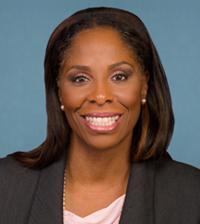 Rep. Stacey E. Plaskett (D-VI)
Submitted June 16, 2021
Text
Offered
This amendment's own text couldn't be picked out of its Congressional Record passage, so the passage is shown in full.
ESG DISCLOSURE SIMPLIFICATION ACT OF 2021
Ms. WATERS. Mr. Speaker, pursuant to House Resolution 473, I call up
the bill (H.R. 1187) to provide for disclosure of additional material
information about public companies and establish a Sustainable Finance
Advisory Committee, and for other purposes, and ask for its immediate
consideration in the House.
The Clerk read the title of the bill.
The SPEAKER pro tempore (Mr. Cuellar). Pursuant to House Resolution
473, in lieu of the amendment in the nature of a substitute recommended
by the Committee on Financial Services printed in the bill, an
amendment in the nature of a substitute consisting of the text of Rules
Committee Print 117-5 is adopted and the bill, as amended, is
considered read.
The text of the bill, as amended, is as follows:
Be it enacted by the Senate and House of Representatives of
the United States of America in Congress assembled,
SECTION 1. SHORT TITLE.
This Act may be cited as the ``Corporate Governance
Improvement and Investor Protection Act''.
TITLE I--ESG DISCLOSURE SIMPLIFICATION
SEC. 101. SHORT TITLE.
This title may be cited as the ``ESG Disclosure
Simplification Act of 2021''.
SEC. 102. FINDINGS.
Congress finds the following:
(1) The Securities and Exchange Commission has broad
authority to require the disclosure of information if such
information is in the interest of, or is material to
investors.
(2) The Commission does not require companies to disclose
information related to environmental, social, and governance
(``ESG'') matters, and does not require companies to adhere
to standards for disclosing such information.
(3) Investors have reported that voluntary disclosures of
ESG metrics are inadequate.
(4) A rule requiring reporting and standardization of ESG
disclosures is in the interest of investors.
(5) ESG matters are material to investors, and the
Commission must establish standards for disclosure of such
matters.
SEC. 103. ESG DISCLOSURES.
(a) In General.--Section 14 of the Securities Exchange Act
of 1934 (15 U.S.C. 78n) is amended by adding at the end the
following:
``(k) ESG Disclosures.--
``(1) In general.--Each issuer the securities of which are
registered under section 12 or that is required to file
annual reports under section 15(d) shall disclose in any
proxy or consent solicitation material for an annual meeting
of the shareholders--
``(A) a clear description of the views of the issuer about
the link between ESG metrics and the long-term business
strategy of the issuer; and
``(B) a description of any process the issuer uses to
determine the impact of ESG metrics on the long-term business
strategy of the issuer.
``(2) ESG metrics defined.--In this subsection, the term
`ESG metrics' has the meaning given the term in part 210 of
title 17, Code of Federal Regulations as amended pursuant to
section 3(b) of the ESG Disclosure Simplification Act of
2021.''.
(b) Rulemaking.--
(1) In general.--The Securities and Exchange Commission (in
this Act referred to as the ``Commission'') shall amend part
210 of title 17, Code of Federal Regulations (or any
successor thereto) to--
(A) require each issuer, in any filing of the issuer
described in such part that requires audited financial
statements, to disclose environmental, social, and governance
metrics (in this title referred to as ESG metrics); and
(B) define ESG metrics.
(2) Sustainable finance advisory committee.--The
Sustainable Finance Advisory Committee established pursuant
to section 4(k) of the Securities and Exchange Act of 1934
shall, not later than 180 days after the date of the first
meeting of such Committee, submit to the Commission
recommendations about what ESG metrics the Commission should
require issuers to disclose.
(3) Materiality.--It is the sense of Congress that ESG
metrics, as such term is defined by the Commission pursuant
to paragraph (1), are de facto material for the purposes of
disclosures under the Securities Exchange Act of 1934 and the
Securities Act of 1933.
(4) Incorporation of international standards.--When
amending part 210 of title 17, Code of Federal Regulations
(or any successor thereto) pursuant to paragraph (1), the
Commission may, as the Commission determines appropriate,
incorporate any internationally recognized, independent,
multi-stakeholder environmental, social, and governance
disclosure standards.
(5) Location of disclosure.--Any disclosure required by
paragraph (1) may be included in a notes section of the
filing.
(6) Delay for small issuers.--The Commission may use a
phased approach when applying any amendments made pursuant to
paragraph (1) to small issuers and may determine the criteria
by which an issuer qualifies as a small issuer for purposes
of such phased approach.
[[Page H2831]]
SEC. 104. SUSTAINABLE FINANCE ADVISORY COMMITTEE.
Section 4 of the Securities Exchange Act of 1934 (15 U.S.C.
78d) is amended by adding at the end the following:
``(k) Sustainable Finance Advisory Committee.--
``(1) Establishment.--The Commission shall establish a
permanent advisory committee to be called the `Sustainable
Finance Advisory Committee' (in this subsection referred to
as the `Committee').
``(2) Duties of committee.--The Committee shall--
``(A) submit a report to the Commission not later than 18
months after the date of the first meeting of the Committee
that--
``(i) identifies the challenges and opportunities for
investors associated with sustainable finance; and
``(ii) recommends policy changes to facilitate the flow of
capital towards sustainable investments, in particular
environmentally sustainable investments;
``(B) when solicited, advise the Commission on sustainable
finance; and
``(C) communicate with individuals and entities with an
interest in sustainable finance.
``(3) Membership.--
``(A) Members.--
``(i) In general.--The Committee shall consist of no more
than 20 members who shall each serve for one four-year term.
``(ii) Representation.--Each member shall represent
individuals and entities with an interest in sustainable
finance, such as--
``(I) experts on sustainable finance;
``(II) operators of financial infrastructure;
``(III) entities that provide analysis, data, or
methodologies that facilitate sustainable finance;
``(IV) insurance companies, pension funds, asset managers,
depository institutions, or credit unions; or
``(V) other financial institutions that intermediate
investments in sustainable finance or manage risks related to
sustainable development.
``(iii) Representation of interests.--A member may not
represent a single individual or entity and shall represent
types of individuals and entities with similar interests in
sustainable finance.
``(B) Selection.--
``(i) In general.--The Commission shall--
``(I) publish criteria for selection of members on the
website of the Commission and in the Federal Register; and
``(II) solicit applications for membership on the website
of the Commission and in the Federal Register.
``(ii) Equal share.--From the individuals who submit
applications for membership, each Commissioner of the
Commission shall select an equal number of the members of the
Committee.
``(C) Pay.--Members may not receive pay by reason of their
service on the Committee but may receive travel or
transportation expenses in accordance with applicable
provisions under subchapter I of chapter 57 of title 5,
United States Code.
``(D) Member transparency.--The name of each member and the
types of individuals and entities that such member represents
shall be published on the website of the Commission.
``(E) Staff.--The Committee shall be supported by staff
from the Office of the Investor Advocate of the Commission
that are dedicated to environmental, social and governance
(in this subsection referred to as `ESG') issues.
``(F) Authorization of appropriation.--There are authorized
to be appropriated such sums as are necessary to finance
costs associated with staff dedicated to ESG issues in the
Office of the Investor Advocate of the Commission.
``(4) Sustainable finance.--For the purposes of this
subsection, the term `sustainable finance' means the
provision of finance with respect to investments taking into
account environmental, social, and governance considerations.
``(5) SEC response.--The Commission shall, not later than 6
months after the date on which the Committee submits a report
to the Commission pursuant to paragraph (2)(A), publish a
response to such report.''.
TITLE II--SHAREHOLDER POLITICAL TRANSPARENCY
SEC. 201. SHORT TITLE.
This title may be cited as the ``Shareholder Political
Transparency Act of 2021''.
SEC. 202. FINDINGS.
Congress finds that--
(1) corporations make significant political contributions
and expenditures that directly or indirectly influence the
election of candidates and support or oppose political
causes;
(2) decisions to use corporate funds for political
contributions and expenditures are usually made by corporate
boards and executives, rather than shareholders;
(3) corporations, acting through boards and executives, are
obligated to conduct business for the best interests of their
owners, the shareholders;
(4) historically, shareholders have not had a way to know,
or to influence, the political activities of corporations
they own;
(5) shareholders and the public have a right to know how
corporate managers are spending company funds to make
political contributions and expenditures benefitting
candidates, political parties, and political causes; and
(6) corporations should be accountable to shareholders in
making political contributions or expenditures affecting
Federal governance and public policy.
SEC. 203. REPORTING REQUIREMENTS.
Section 13 of the Securities Exchange Act of 1934 (15
U.S.C. 78m) is amended by adding at the end the following:
``(s) Reporting Requirements Relating to Certain Political
Expenditures.--
``(1) Definitions.--In this subsection:
``(A) Expenditure for political activities.--The term
`expenditure for political activities'--
``(i) means--
``(I) an independent expenditure (as defined in section
301(17) of the Federal Election Campaign Act of 1971 (52
U.S.C. 30101(17)));
``(II) an electioneering communication (as defined in
section 304(f)(3) of that Act (52 U.S.C. 30104(f)(3))) and
any other public communication (as defined in section 301(22)
of that Act (52 U.S.C. 30101(22))) that would be an
electioneering communication if it were a broadcast, cable,
or satellite communication; or
``(III) dues or other payments to trade associations or
organizations described in section 501(c) of the Internal
Revenue Code of 1986 and exempt from tax under section 501(a)
of that Code that are, or could reasonably be anticipated to
be, used or transferred to another association or
organization for the purposes described in subclause (I) or
(II); and
``(ii) does not include--
``(I) direct lobbying efforts through registered lobbyists
employed or hired by the issuer;
``(II) communications by an issuer to its shareholders and
executive or administrative personnel and their families; or
``(III) the establishment and administration of
contributions to a separate segregated fund to be utilized
for political purposes by a corporation.
``(B) Issuer.--The term `issuer' does not include an
investment company registered under section 8 of the
Investment Company Act of 1940 (15 U.S.C. 80a-8).
``(2) Quarterly reports.--
``(A) Reports required.--Not later than 180 days after the
date of enactment of this subsection, the Commission shall
amend the reporting rules under this section to require each
issuer with a class of equity securities registered under
section 12 of this title to submit to the Commission and the
shareholders of the issuer a quarterly report containing--
``(i) a description of any expenditure for political
activities made during the preceding quarter;
``(ii) the date of each expenditure for political
activities;
``(iii) the amount of each expenditure for political
activities;
``(iv) if the expenditure for political activities was made
in support of or in opposition to a candidate, the name of
the candidate and the office sought by, and the political
party affiliation of, the candidate; and
``(v) the name or identity of trade associations or
organizations described in section 501(c) of the Internal
Revenue Code of 1986 and exempt from tax under section 501(a)
of such Code which receive dues or other payments as
described in paragraph (1)(A)(i)(III).
``(B) Public availability.--The Commission shall ensure
that the quarterly reports required under this paragraph are
publicly available through the Internet website of the
Commission and through the EDGAR system in a manner that is
searchable, sortable, and downloadable, consistent with the
requirements under section 24.
``(3) Annual reports.--Not later than 180 days after the
date of enactment of this subsection, the Commission shall,
by rule, require each issuer to include in the annual report
of the issuer to shareholders--
``(A) a summary of each expenditure for political
activities made during the preceding year in excess of
$10,000, and each expenditure for political activities for a
particular election if the total amount of such expenditures
for that election is in excess of $10,000;
``(B) a description of the specific nature of any
expenditure for political activities the issuer intends to
make for the forthcoming fiscal year, to the extent the
specific nature is known to the issuer; and
``(C) the total amount of expenditures for political
activities intended to be made by the issuer for the
forthcoming fiscal year.''.
SEC. 204. REPORTS.
(a) Securities and Exchange Commission.--The Securities and
Exchange Commission shall--
(1) conduct an annual assessment of the compliance of
issuers with section 13(s) of the Securities Exchange Act of
1934, as added by section 203; and
(2) submit to Congress an annual report containing the
results of the assessment under paragraph (1).
(b) Government Accountability Office.--The Comptroller
General of the United States shall periodically evaluate and
report to Congress on the effectiveness of the oversight by
the Securities and Exchange Commission of the reporting and
disclosure requirements under section 13(s) of the Securities
Exchange Act of 1934, as added by section 203.
TITLE III--GREATER ACCOUNTABILITY IN PAY
SEC. 301. SHORT TITLE.
This title may be cited as the ``Greater Accountability in
Pay Act of 2021''.
SEC. 302. PAY RAISE DISCLOSURES.
Section 13 of the Securities Exchange Act of 1934 (15
U.S.C. 78m), as amended by section 203, is further amended by
adding at the end the following:
``(t) Pay Raise Disclosures.--An issuer required to file an
annual report under this section or section 15(d), that is
not an emerging growth company, shall include in such
report--
``(1) the percentage increase in the median of the annual
total compensation of all executive officers (as such term is
defined in section 240.3b-7 of title 17, Code of Federal
Regulations) of the issuer over the last completed fiscal
year;
[[Page H2832]]
``(2) the percentage increase in the median of the annual
total compensation of all employees of the issuer, excluding
executive officers, over the last completed fiscal year;
``(3) the ratio of the percentage described in paragraph
(1) to the percentage described in paragraph (2);
``(4) a comparison of the percentage described in paragraph
(1) to the percentage change over the same period in the
Consumer Price Index for All Urban Consumers published by the
Bureau of Labor Statistics of the Department of Labor; and
``(5) a comparison of the percentage described in paragraph
(2) to the percentage change over the same period in the
Consumer Price Index for All Urban Consumers published by the
Bureau of Labor Statistics of the Department of Labor.''.
TITLE IV--CLIMATE RISK DISCLOSURE
SEC. 401. SHORT TITLE.
This title may be cited as the ``Climate Risk Disclosure
Act of 2021''.
SEC. 402. SENSE OF CONGRESS.
It is the sense of Congress that--
(1) climate change poses a significant and increasing
threat to the growth and stability of the economy of the
United States;
(2) many sectors of the economy of the United States and
many American businesses are exposed to climate-related risk,
which may include exposure to--
(A) the physical impacts of climate change, including the
rise of the average global temperature, accelerating sea-
level rise, desertification, ocean acidification,
intensification of storms, increase in heavy precipitation,
more frequent and intense temperature extremes, more severe
droughts, and longer wildfire seasons;
(B) the economic disruptions and security threats that
result from the physical impacts described in subparagraph
(A) including conflicts over scarce resources, conditions
conducive to violent extremism, the spread of infectious
diseases, and forced migration;
(C) the transition impacts that result as the global
economy transitions to a clean and renewable energy, low-
emissions economy, including financial impacts as climate
change fossil fuel assets becoming stranded and it becomes
uneconomic for companies to develop fossil fuel assets as
policymakers act to limit the worst impacts of climate change
by keeping the rise in average global temperature to 1.5
degrees Celsius above pre-industrial levels; and
(D) actions by Federal, State, Tribal, territorial, and
local governments to limit the worst effects of climate
change by enacting policies that keep the global average
surface temperature rise to 1.5 degrees Celsius above pre-
industrial levels;
(3) assessing the potential impact of climate-related risks
on national and international financial systems is an urgent
concern;
(4) companies have a duty to disclose financial risks that
climate change presents to their investors, lenders, and
insurers;
(5) the Securities and Exchange Commission has a duty to
promote a risk-informed securities market that is worthy of
the trust of the public as families invest for their futures;
(6) investors, lenders, and insurers are increasingly
demanding climate risk information that is consistent,
comparable, reliable, and clear;
(7) including standardized, material climate change risk
and opportunity disclosure that is useful for decision makers
in annual reports to the Commission will increase
transparency with respect to risk accumulation and exposure
in financial markets;
(8) requiring companies to disclose climate-related risk
exposure and risk management strategies will encourage a
smoother transition to a clean and renewable energy, low-
emissions economy and guide capital allocation to mitigate,
and adapt to, the effects of climate change and limit damages
associated with climate-related events and disasters; and
(9) a critical component in fighting climate change is a
transparent accounting of the risks that climate change
presents and the implications of continued inaction with
respect to climate change.
SEC. 403. DISCLOSURES RELATING TO CLIMATE CHANGE.
Section 13 of the Securities Exchange Act of 1934 (15
U.S.C. 78m), as amended by section 302, is further amended by
adding at the end the following:
``(u) Disclosures Relating to Climate Change.--
``(1) Definitions.--In this subsection:
``(A) 1.5 degree scenario.--The term `1.5 degree scenario'
means a scenario that aligns with greenhouse gas emissions
pathways that aim to limit global warming to 1.5 degrees
Celsius above pre-industrial levels.
``(B) Appropriate climate principals.--The term
`appropriate climate principals' means--
``(i) the Administrator of the Environmental Protection
Agency;
``(ii) the Administrator of the National Oceanic and
Atmospheric Administration;
``(iii) the Director of the Office of Management and
Budget;
``(iv) the Secretary of the Interior;
``(v) the Secretary of Energy; and
``(vi) the head of any other Federal agency, as determined
appropriate by the Commission.
``(C) Baseline scenario.--The term `baseline scenario'
means a widely-recognized analysis scenario in which levels
of greenhouse gas emissions, as of the date on which the
analysis is performed, continue to grow, resulting in an
increase in the global average temperature of 1.5 degrees
Celsius or more above pre-industrial levels.
``(D) Carbon dioxide equivalent.--The term `carbon dioxide
equivalent' means the number of metric tons of carbon dioxide
emissions with the same global warming potential as one
metric ton of another greenhouse gas, as determined under
table A-1 of subpart A of part 98 of title 40, Code of
Federal Regulations, as in effect on the date of enactment of
this subsection.
``(E) Climate change.--The term `climate change' means a
change of climate that is--
``(i) attributed directly or indirectly to human activity
that alters the composition of the global atmosphere; and
``(ii) in addition to natural climate variability observed
over comparable time periods.
``(F) Commercial development of fossil fuels.--The term
`commercial development of fossil fuels' includes--
``(i) exploration, extraction, processing, exporting,
transporting, refining, and any other significant action with
respect to oil, natural gas, coal, or any byproduct thereof
or any other solid or liquid hydrocarbons that are
commercially produced; and
``(ii) acquiring a license for any activity described in
clause (i).
``(G) Covered issuer.--The term `covered issuer' means an
issuer that is required to file an annual report under
subsection (a) or section 15(d).
``(H) Direct and indirect greenhouse gas emissions.--The
term `direct and indirect greenhouse gas emissions' includes,
with respect to a covered issuer--
``(i) all direct greenhouse gas emissions released by the
covered issuer;
``(ii) all indirect greenhouse gas emissions with respect
to electricity, heat, or steam purchased by the covered
issuer;
``(iii) significant indirect emissions, other than the
emissions described in clause (ii), emitted in the value
chain of the covered issuer; and
``(iv) all indirect greenhouse gas emissions that are
attributable to assets owned or managed, including assets
that are partially owned or managed, by the covered issuer.
``(I) Fossil fuel reserves.--The term `fossil fuel
reserves' has the meaning given the term `reserves' under the
final rule of the Commission titled `Modernization of Oil and
Gas Reporting' (74 Fed. Reg. 2158; published January 14,
2009).
``(J) Greenhouse gas.--The term `greenhouse gas'--
``(i) means carbon dioxide, hydrofluorocarbons, methane,
nitrous oxide, perfluorocarbons, sulfur hexafluoride,
nitrogen triflouride, and chlorofluorocarbons;
``(ii) includes any other anthropogenically-emitted gas
that the Administrator of the Environmental Protection Agency
determines, after notice and comment, to contribute to
climate change; and
``(iii) includes any other anthropogenically-emitted gas
that the Intergovernmental Panel on Climate Change determines
to contribute to climate change.
``(K) Greenhouse gas emissions.--The term `greenhouse gas
emissions' means the emissions of greenhouse gas, expressed
in terms of metric tons of carbon dioxide equivalent.
``(L) Physical risks.--The term `physical risks' means
financial risks to long-lived fixed assets, locations,
operations, or value chains that result from exposure to
physical climate-related effects, including--
``(i) increased average global temperatures and increased
frequency of temperature extremes;
``(ii) increased severity and frequency of extreme weather
events;
``(iii) increased flooding;
``(iv) sea level rise;
``(v) ocean acidification;
``(vi) increased frequency of wildfires;
``(vii) decreased arability of farmland;
``(viii) decreased availability of fresh water; and
``(ix) any other financial risks to long-lived fixed
assets, locations, operations, or value chains determined
appropriate by the Commission, in consultation with
appropriate climate principals.
``(M) Social cost of carbon.--The term `social cost of
carbon' means the social cost of carbon, as described in the
technical support document entitled `Technical Support
Document: Technical Update of the Social Cost of Carbon for
Regulatory Impact Analysis Under Executive Order 12866',
published by the Interagency Working Group on Social Cost of
Greenhouse Gases, United States Government, in August 2016 or
any successor or substantially related estimate of the
monetized damages associated with an incremental increase in
carbon dioxide emissions in a given year.
``(N) Transition risks.--The term `transition risks' means
financial risks that are attributable to climate change
mitigation and adaptation, including efforts to reduce
greenhouse gas emissions and strengthen resilience to the
impacts of climate change, including--
``(i) costs relating to--
``(I) international treaties and agreements;
``(II) Federal, State, and local policy;
``(III) new technologies;
``(IV) changing markets;
``(V) reputational impacts relevant to changing consumer
behavior; and
``(VI) litigation; and
``(ii) assets that may lose value or become stranded due to
any of the costs described in subclauses (I) through (VI) of
clause (i).
``(O) Value chain.--The term `value chain'--
``(i) means the total lifecycle of a product or service,
both before and after production of the product or service,
as applicable; and
``(ii) may include the sourcing of materials, production,
transportation, and disposal with respect to the product or
service described in clause (i).
``(2) Findings.--Congress finds that--
``(A) short-, medium-, and long-term financial and economic
risks and opportunities relating to climate change, and the
national and global reduction of greenhouse gas emissions,
constitute information that issuers--
[[Page H2833]]
``(i) may reasonably expect to affect shareholder decision
making; and
``(ii) should regularly identify, evaluate, and disclose;
and
``(B) the disclosure of information described in
subparagraph (A) should--
``(i) identify, and evaluate--
``(I) material physical and transition risks posed by
climate change; and
``(II) the potential financial impact of such risks;
``(ii) detail any implications such risks have on corporate
strategy;
``(iii) detail any board-level oversight of material
climate related risks and opportunities;
``(iv) allow for intra- and cross-industry comparison, to
the extent practicable, of climate-related risk exposure
through the inclusion of standardized industry-specific and
sector-specific disclosure metrics, as identified by the
Commission, in consultation with the appropriate climate
principals;
``(v) allow for tracking of performance over time with
respect to mitigating climate risk exposure; and
``(vi) incorporate a price on greenhouse gas emissions in
financial analyses that reflects, at minimum, the social cost
of carbon that is attributable to issuers.
``(3) Disclosure.--Each covered issuer, in any annual
report filed by the covered issuer under subsection (a) or
section 15(d), shall, in accordance with any rules issued by
the Commission pursuant to this subsection, include in each
such report information regarding--
``(A) the identification of, the evaluation of potential
financial impacts of, and any risk-management strategies
relating to--
``(i) physical risks posed to the covered issuer by climate
change; and
``(ii) transition risks posed to the covered issuer by
climate change;
``(B) a description of any established corporate governance
processes and structures to identify, assess, and manage
climate-related risks;
``(C) a description of specific actions that the covered
issuer is taking to mitigate identified risks;
``(D) a description of the resilience of any strategy the
covered issuer has for addressing climate risks when
differing climate scenarios are taken into consideration; and
``(E) a description of how climate risk is incorporated
into the overall risk management strategy of the covered
issuer.
``(4) Rule of construction.--Nothing in paragraph (3) may
be construed as precluding a covered issuer from including,
in an annual report submitted under subsection (a) or section
15(d), any information not explicitly referenced in such
paragraph.
``(5) Rulemaking.--The Commission, in consultation with the
appropriate climate principals, shall, not later than 2 years
after the date of the enactment of this subsection, issue
rules with respect to the information that a covered issuer
is required to disclose pursuant to this subsection and such
rules shall--
``(A) establish climate-related risk disclosure rules,
which shall--
``(i) be, to the extent practicable, specialized for
industries within specific sectors of the economy, which
shall include--
``(I) the sectors of finance, insurance, transportation,
electric power, mining, and non-renewable energy; and
``(II) any other sector determined appropriate by the
Commission, in consultation with the appropriate climate
principals;
``(ii) include reporting standards for estimating and
disclosing direct and indirect greenhouse gas emissions by a
covered issuer, and any affiliates of the covered issuer,
which shall--
``(I) disaggregate, to the extent practicable, total
emissions of each specified greenhouse gas by the covered
issuer; and
``(II) include greenhouse gas emissions by the covered
issuer during the period covered by the disclosure;
``(iii) include reporting standards for disclosing, with
respect to a covered issuer--
``(I) the total amount of fossil fuel-related assets owned
or managed by the covered issuer; and
``(II) the percentage of fossil fuel-related assets as a
percentage of total assets owned or managed by the covered
issuer;
``(iv) specify requirements for, and the disclosure of,
input parameters, assumptions, and analytical choices to be
used in climate scenario analyses required under subparagraph
(B)(i), including--
``(I) present value discount rates; and
``(II) time frames to consider, including 5, 10, and 20
year time frames; and
``(v) include reporting standards and guidance with respect
to the information required under subparagraph (B)(iii);
``(B) require that a covered issuer, with respect to a
disclosure required under this subsection--
``(i) incorporate into such disclosure--
``(I) quantitative analysis to support any qualitative
statement made by the covered issuer;
``(II) the rules established under subparagraph (A);
``(III) industry-specific metrics that comply with the
requirements under subparagraph (A)(i);
``(IV) specific risk management actions that the covered
issuer is taking to address identified risks;
``(V) a discussion of the short-, medium-, and long-term
resilience of any risk management strategy, and the evolution
of applicable risk metrics, of the covered issuer under each
scenario described in clause (ii); and
``(VI) the total cost attributable to the direct and
indirect greenhouse gas emissions of the covered issuer,
using, at minimum, the social cost of carbon;
``(ii) consider, when preparing any qualitative or
quantitative risk analysis statement contained in the
disclosure--
``(I) a baseline scenario that includes physical impacts of
climate change;
``(II) a 1.5 degrees scenario; and
``(III) any additional climate analysis scenario considered
appropriate by the Commission, in consultation with the
appropriate climate principals;
``(iii) if the covered issuer engages in the commercial
development of fossil fuels, include in the disclosure--
``(I) an estimate of the total and a disaggregated amount
of direct and indirect greenhouse gas emissions of the
covered issuer that are attributable to--
``(aa) combustion;
``(bb) flared hydrocarbons;
``(cc) process emissions;
``(dd) directly vented emissions;
``(ee) fugitive emissions or leaks; and
``(ff) land use changes;
``(II) a description of--
``(aa) the sensitivity of fossil fuel reserve levels to
future price projection scenarios that incorporate the social
cost of carbon;
``(bb) the percentage of the reserves of the covered issuer
that will be developed under the scenarios established in
clause (ii), as well as a forecast for the development
prospects of each reserve under the scenarios established in
clause (ii);
``(cc) the potential amount of direct and indirect
greenhouse gas emissions that are embedded in proved and
probable reserves, with each such calculation presented as a
total and in subdivided categories by the type of reserve;
``(dd) the methodology of the covered issuer for detecting
and mitigating fugitive methane emissions, which shall
include the frequency with which applicable assets of the
covered issuer are observed for methane leaks, the processes
and technology that the covered issuer uses to detect methane
leaks, the percentage of assets of the covered issuer that
the covered issuer inspects under that methodology, and
quantitative and time-bound reduction goals of the issuer
with respect to methane leaks;
``(ee) the amount of water that the covered issuer
withdraws from freshwater sources for use and consumption in
operations of the covered issuer; and
``(ff) the percentage of the water described in item (ee)
that comes from regions of water stress or that face
wastewater management challenges; and
``(III) any other information that the Commission
determines is--
``(aa) necessary;
``(bb) appropriate to safeguard the public interest; or
``(cc) directed at ensuring that investors are informed in
accordance with the findings described in paragraph (2);
``(C) with respect to a disclosure required under section
13(s) of the Securities Exchange Act of 1934, require that a
covered issuer include in such disclosure any other
information, or use any climate-related or greenhouse gas
emissions metric, that the Commission, in consultation with
the appropriate climate principals, determines is--
``(i) necessary;
``(ii) appropriate to safeguard the public interest; or
``(iii) directed at ensuring that investors are informed in
accordance with the findings described in paragraph (2); and
``(D) with respect to a disclosure required under section
13(s) of the Securities Exchange Act of 1934, establish how
and where the required disclosures shall be addressed in the
covered issuer's annual financial filing.
``(6) Formatting.--The Commission shall require issuers to
disclose information in an interactive data format and shall
develop standards for such format, which shall include
electronic tags for information that the Commission
determines is--
``(A) necessary;
``(B) appropriate to safeguard the public interest; or
``(C) directed at ensuring that investors are informed in
accordance with the findings described in paragraph (2).
``(7) Periodic update of rules.--The Commission shall
periodically update the rules issued under this subsection.
``(8) Compilation of information disclosed.--The Commission
shall, to the maximum extent practicable make a compilation
of the information disclosed by issuers under this subsection
publicly available on the website of the Commission and
update such compilation at least once each year.
``(9) Reports.--
``(A) Report to congress.--The Commission shall--
``(i) conduct an annual assessment regarding the compliance
of covered issuers with the requirements of this subsection;
``(ii) submit to the appropriate congressional committees a
report that contains the results of each assessment conducted
under clause (i); and
``(iii) make each report submitted under clause (ii)
accessible to the public.
``(B) GAO report.--The Comptroller General of the United
States shall periodically evaluate, and report to the
appropriate congressional committees on, the effectiveness of
the Commission in carrying out and enforcing this
subsection.''.
SEC. 404. BACKSTOP.
If, 2 years after the date of the enactment of this Act,
the Securities and Exchange Commission has not issued the
rules required under section 13(u) of the Securities Exchange
Act of 1934, and until such rules are issued, a covered
[[Page H2834]]
issuer (as defined in such section 13(u)) shall be deemed in
compliance with such section 13(u) if disclosures set forth
in the annual report of such issuer satisfy the
recommendations of the Task Force on Climate-related
Financial Disclosures of the Financial Stability Board as
reported in June, 2017, or any successor report, and as
supplemented or adjusted by such rules, guidance, or other
comments from the Commission.
SEC. 405. AUTHORIZATION OF APPROPRIATIONS.
There are authorized to be appropriated to the Securities
and Exchange Commission such sums as may be necessary to
carry out this title and the amendments made by this title.
TITLE V--DISCLOSURE OF TAX HAVENS AND OFFSHORING
SEC. 501. SHORT TITLE.
This title may be cited as the ``Disclosure of Tax Havens
and Offshoring Act''.
SEC. 502. COUNTRY-BY-COUNTRY REPORTING.
(a) Country-by-Country Reporting.--Section 13 of the
Securities Exchange Act of 1934 (15 U.S.C. 78m), as amended
by section 403, is further amended by adding at the end the
following new subsection:
``(v) Disclosure of Financial Performance on a Country-by-
Country Basis.--
``(1) Definitions.--In this subsection--
``(A) the term `constituent entity' means, with respect to
a covered issuer, any separate business entity of the covered
issuer;
``(B) the term `covered issuer' means an issuer who--
``(i) is a member of a multinational enterprise group; and
``(ii) the multinational enterprise group of which the
issuer is a member has annual revenue for the preceding
calendar year of not less than an amount determined by the
Commission to conform to United States or international
standards for country-by-country reporting; and
``(C) the term `tax jurisdiction'--
``(i) means a country or a jurisdiction that is not a
country but that has fiscal autonomy; and
``(ii) includes a territory or possession of the United
States that has fiscal autonomy.
``(2) Disclosure.--
``(A) In general.--Each covered issuer shall file a report
with the Commission that includes information described in
subparagraph (B), and any other information required by the
Commission, with respect to the reporting period described in
subparagraph (C).
``(B) Information required.--The information described in
this subparagraph is as follows:
``(i) Constituent entity information.--Information on the
constituent entity, including the following:
``(I) The complete legal name of the constituent entity.
``(II) The tax jurisdiction, if any, in which the
constituent entity is resident for tax purposes.
``(III) The tax jurisdiction in which the constituent
entity is organized or incorporated (if different from the
tax jurisdiction of residence).
``(IV) The tax identification number, if any, used for the
constituent entity by the tax administration of the
constituent entity's tax jurisdiction of residence.
``(V) The main business activity or activities of the
constituent entity.
``(ii) Tax jurisdiction.--Information on each tax
jurisdiction in which one or more constituent entities is
resident, presented as an aggregated or consolidated form of
the information for the constituent entities resident in each
tax jurisdiction, including the following:
``(I) Revenues generated from transactions with other
constituent entities.
``(II) Revenues not generated from transactions with other
constituent entities.
``(III) Profit or loss before income tax.
``(IV) Total income tax paid on a cash basis to all tax
jurisdictions.
``(V) Total accrued tax expense recorded on taxable profits
or losses.
``(VI) Stated capital.
``(VII) Total accumulated earnings.
``(VIII) Total number of employees on a full-time
equivalent basis.
``(IX) Net book value of tangible assets, which, for
purposes of this section, does not include cash or cash
equivalents, intangibles, or financial assets.
``(iii) Special rules.--The information listed in clause
(ii) shall be provided, in aggregated or consolidated form,
for any constituent entity or entities that have no tax
jurisdiction of residence. In addition, if a constituent
entity is an owner of a constituent entity that does not have
a jurisdiction of tax residence, then the owner's share of
such entity's revenues and profits will be aggregated or
consolidated with the information for the owner's tax
jurisdiction of residence.
``(C) Reporting period.--The reporting period covered by
this paragraph is the period of the covered entity's
applicable financial statement prepared for the 12-month
period that ends with or within the taxable year of the
covered issuer. If the covered issuer does not prepare an
annual applicable financial statement, then the reporting
period covered by this paragraph is the 12-month period that
ends on the last day of the taxable year of the covered
issuer.
``(D) Filing deadline.--Each covered issuer shall submit to
the Commission a report required under this section on or
before the due date (including extensions) for filing that
covered issuer's tax return in the tax jurisdiction in which
the covered issuer's multinational enterprise group is
resident.
``(E) Regulation.--The Commission shall, in consultation
with the Commissioner of the Internal Revenue Service and
Secretary of the Treasury--
``(i) promulgate regulations carrying out this subsection
that conform to United States or international standards for
country-by-country reporting, including regulations
promulgated by the Internal Revenue Service; and
``(ii) require disclosure of the accounting methods used in
calculating the information contained in each report filed
pursuant to this subsection.''.
(b) Rulemaking.--
(1) Deadlines.--The Securities and Exchange Commission (in
this section referred to as the ``Commission'') shall--
(A) not later than 1 year after the date of enactment of
this Act, issue a proposed rule to carry out this section and
the amendment made by this section; and
(B) not later than 18 months after the date of enactment of
this Act, issue a final rule to carry out this section and
the amendment made by this section.
(2) Data format.--The information required to be provided
by this section shall be provided by the issuer in a report
in a machine readable format prescribed by the Commission,
and such report shall be made available to the public online,
in such machine readable format as the Commission shall
prescribe.
(3) Effective date.--Subsection (v) of section 13 of the
Securities Exchange Act of 1934, as added by this section,
shall become effective 1 year after the date on which the
Commission issues a final rule under this section.
The SPEAKER pro tempore. The bill, as amended, is debatable for 1
hour equally divided and controlled by the chair and ranking minority
member of the Committee on Financial Services.
The gentlewoman from California (Ms. Waters) and the gentleman from
Michigan (Mr. Huizenga) each will control 30 minutes.
The Chair recognizes the gentlewoman from California.
General Leave
Ms. WATERS. Mr. Speaker, I ask unanimous consent that all Member may
have 5 legislative days within which to revise and extend their remarks
on H.R. 1187 and to insert extraneous material thereon.
The SPEAKER pro tempore. Is there objection to the request of the
gentlewoman from California?
There was no objection.
Ms. WATERS. Mr. Speaker, I yield myself such time as I may consume.
Mr. Speaker, I rise in support of H.R. 1187, the Corporate Governance
Improvement and Investor Protection Act.
H.R. 1187 is a package of bills designed to strengthen investor
protections and require companies to provide environmental, social, and
governance disclosures, known as ESG. I thank my colleague,
Representative Juan Vargas, for his leadership on this package.
This bill provides investors with critical information on ESG matters
by requiring public companies to disclose key information to
shareholders regarding corporate political spending, worker pay, CEO
compensation, climate risk, and country-by-country tax reporting; and
provides issuers with clear, consistent standards to disclose this
information.
This is key information that investors have been demanding in order
to make the best decisions on the short- and long-term viability of the
companies they are investing in.
It is surprising that, to this day, there are no explicit ESG
requirements and investors are left to piece together the story of a
company's material risk with insufficient information. This is
unacceptable.
So I am pleased that this package of bills will improve investor
protections by holding public companies accountable and providing
greater transparency.
This package includes a number of bills authored by several
hardworking members of the Financial Services Committee, specifically:
Representative Juan Vargas, Representative Bill Foster, Representative
Nydia Velazquez, Representative Sean Casten, and Representative Cindy
Axne.
Specifically, Mr. Vargas' bill, the ESG Disclosure Simplification
Act, requires public companies to disclose certain ESG information to
shareholders, as well as the impact of the ESG policies on their
strategies.
Mr. Foster's bill, the Shareholder Political Transparency Act,
requires public companies to submit quarterly reports to the SEC on any
and all political expenditures, including dark money.
Ms. Velazquez's bill, the Greater Accountability in Pay Act, sheds
light on pay disparities, helping to close the gender and racial pay
gap.
Ms. Axne's bill, the Disclosure of Tax Havens and Offshoring Act,
requires disclosures that discourage companies'
[[Page H2835]]
use of tax havens and encourages repatriation of taxes to the United
States.
Mr. Casten's bill, the Climate Risk Disclosure Act, requires
disclosures that encourages companies to plan for the impact of climate
change on their company.
Each of these bills passed the Financial Services Committee with
unanimous Democratic support. I thank all these Members for their work
on these bills, their contributions to the legislative package, and
their leadership on these important reforms to protect investors and
hold corporations accountable.
This package is the right thing to do for investors and our markets.
It is past time that Congress make ESG requirements explicit. For these
reasons, I urge my colleagues to support the bill.
Mr. Speaker, I reserve the balance of my time.
Mr. HUIZENGA. Mr. Speaker, I yield myself such time as I may consume.
I am opposed to this bill, and I rise in opposition to H.R. 1187.
Mr. Speaker, today, my Democrat colleagues, once again, are seeking
to hijack our securities laws to push leftwing political and social
agendas, despite dressing it up as investor protection.
Make no mistake, this bill will increase costs on publicly owned
companies, discourage private companies from going public; and,
frankly, could encourage not only private companies to stay private,
but even have and entice public companies to go back to being private
companies.
This is going to result in fewer investment opportunities for
everyday American investors, also known as our constituents, who are
saving for retirement, a college education or simply looking to just
build a better life.
In short, this bill will increase the number of government-directed,
mandatory disclosure requirements on publicly traded companies, which
will increase compliance costs on companies and divert company
resources that could have been used to create more jobs.
Now, to be fair, this is a job-creation bill. However, the only jobs
created by this bill will be for a special tranche of attorneys,
corporate compliance coordinators, and the occasional scientist; not
exactly what an economist would call productive-types of jobs.
Under this bill, public companies would be required to disclose:
Environmental, social, and governance issues, as well as climate
risk. These metrics would be set by the Securities and Exchange
Commission, not Congress;
Descriptions of any expenditure for political activities and
donations to political candidates or trade organizations by executives,
these are duplicative of existing requirements, for example;
The ratio between the pay raise percentage of the company's
executives and the pay raise percentage of the company's median
employee. This is, in some ways, duplicative of the mandatory CEO pay
ratio disclosure that Democrats put into the Dodd-Frank Act, which
itself is an especially useless metric; country-by-country tax and
financial reports from multinational enterprises. This will upend the
current country-by-country tax reporting rules overseen by the IRS.
Mr. Speaker, let's be clear. My friends across the aisle are using
the Federal securities laws to implement their partisan wish list of
social policy priorities. They are doing it through mandatory
disclosure regimes that are, at best, tangentially related to actual
investment decisions.
To be clear, if information presents a material investment risk to a
publicly traded company, the company is--wait for this--already
required to disclose it. That information is out there for those
companies that have material risk.
Materiality has been, and continues to be, the touchstone of our
public company disclosure regime for more than eight decades and has
actually even been affirmed by the U.S. Supreme Court. It has held the
test of time, and we simply cannot just discard it to appeal to the
Democrats' progressive agenda.
Our capital markets are the best in the world in no small part
because materiality is the basis of our disclosure regime here in the
United States, yet my Democrat friends, apparently, want to throw it
all away for the sake of appealing to leftwing stakeholders.
Additionally, H.R. 1187 will greatly expand the SEC's jurisdiction by
requiring the SEC to promulgate disclosures on environmental, climate
change, political spending, tax reporting, and foreign policy issues,
among others.
This is not the sweet spot for the SEC. It does not have the
experience in any of these issues, and is not the appropriate entity
for determining these metrics or industry standards, nor is the
Securities and Exchange Commission the appropriate entity to review and
enforce such disclosures.
The SEC knows how to regulate materiality. That is their expertise.
They are not climatologists or climate scientists. They are not
election law experts. And they most certainly do not know international
tax law. That is the purview of the EPA, NOAA, the FEC, and the IRS.
Furthermore, smaller public companies will bear the burden of
additional compliance costs. This bill fails to account for the impact
it will have on smaller businesses and companies, especially those who
are looking to go public. Or maybe I should say, were looking to go
public. They certainly do not have the infrastructure or resources to
spend on fixed costs of compliance like this.
H.R. 1187 will result in fewer investment opportunities for American
investors. It will discourage private companies from going public and
encourage public companies to go private to avoid these burdensome new
nonmaterial and useless disclosure requirements.
Sadly, this will hurt the everyday investors, our constituents, that
the Democrats claim they want to help. In other words, this bill stands
to harm everyone saving for retirement, a college education, or just
looking to build a better life.
This is just a bad bill, and I urge a ``no'' vote on H.R. 1187.
Mr. Speaker, I reserve the balance of my time.
{time} 1245
Ms. WATERS. Mr. Speaker, I yield 3 minutes to the gentleman from
California (Mr. Vargas), our leader and the real sponsor on this
legislation.
Mr. VARGAS. Mr. Speaker, I rise today to support the Corporate
Governance Improvement and Investor Protection Act. I particularly
thank Chairwoman Waters for her support of the environmental, social,
and governance metrics. Her efforts have been heroic, and I appreciate
it very, very much.
Mr. Speaker, when we talk about investors, we are not only talking
about large, wealthy institutions. We are talking about teachers. We
are talking about people who are working hard for their money. We are
also talking about nonprofessional investors who have found in the
stock market a way to build their savings toward, for example,
homeownership, college tuition, and retirement. When we are talking
about investors, we are also talking about pension funds that hold many
hardworking Americans' retirement savings.
When a company engages in practices that put its business at risk, it
also risks the funds these investors have entrusted with it.
That is why the SEC requires public companies to disclose material
information, meaning information that a reasonable investor needs in
order to make a voting decision or decide whether to continue investing
in that company. Mandated and standard disclosures of environmental,
social, and governance, or ESG, metrics would provide improved insight
into long-term business performance and areas of potential future
risks.
These metrics are material to investors and central to their
protection. Together, I and my colleagues have worked to write
legislation that would ensure such protection. My bill--the first in
the package--requires the SEC to mandate standard ESG disclosures.
My colleagues' bills require reporting on specific ESG metrics that
investors have been advocating for over many years. I applaud
Representatives Foster, Velazquez, Casten, and Axne for their
legislation.
Additionally, I thank Chair Gensler for his advocacy that investors'
voices are central to materiality.
[[Page H2836]]
I have to say, climate change is real, and we have to take it
seriously. It is not a Member of this House or the other House taking a
snowball, throwing it, and saying: See, there is no climate change.
Climate change is real. Look at what happened in Texas this summer.
They were begging for energy because they were not prepared because of
climate change. They were melting snow in their bathtubs so they could
flush their toilets.
If you take a look at what is happening out in the West today:
drought, the unfortunate reality that we face the risk of catastrophic
fires.
All of this is climate change, and it is about time that we take this
very, very seriously as a country.
Some companies already do this. They already disclose the ESG
metrics. That is why it is important to have an equal playing field
where all companies disclose.
Again, I thank Chairwoman Waters for her heroic efforts here. I also
thank my colleagues.
I urge my colleagues on the other side: Take climate change for real.
Accept that it is happening. It is real, and it is catastrophic. And we
must take it seriously.
Mr. HUIZENGA. Mr. Speaker, I yield 4 minutes to the gentleman from
Arkansas (Mr. Hill), a leader on this issue.
Mr. HILL. Mr. Speaker, I thank Ranking Member Huizenga for the time
on the floor today.
Mr. Speaker, I would say to my friends on the other side of the
aisle: We are not debating climate change here. We are debating the
proper way to financially disclose risks on financial statements of
companies that may or may not experience impact from climate change.
No one is over here denying about climate. We are here talking about
what the right way is to do this. And H.R. 1187 is not the right way to
do climate disclosure on behalf of taxpayers, shareholders, and
employees of public companies.
I have spent the better part of four decades in leadership in both
public and private companies, and I have been engaged throughout those
years in calling for quality corporate governance practices. I can say
with absolute authority that mandating these disclosures as outlined in
H.R. 1187 is not only not necessary but would be expensive and lead to
increased litigation costs.
As my colleagues have already said, the information is already to be
disclosed if it meets the materiality standard. The idea of materiality
has been refined over many decades, and it is what makes our capital
markets the envy of the world.
As Justice Marshall stated in the Supreme Court opinion from 1976:
``Some information is of such dubious significance that insistence on
its disclosure may accomplish more harm than good. . . . If the
standard of materiality is unnecessarily low . . . management's fear of
exposing itself to substantial liability may cause it simply to bury
the shareholders in an avalanche of trivial information, a result that
is hardly conducive to informed decisionmaking.''
We articulated this in a letter to the SEC that my colleagues and I
sent regarding their plans for financial disclosure. In that letter,
signed by 22 of my Republican colleagues in the House, we outline our
concerns about the SEC going far afield of its statutory mission to
protect investors; maintain fair, orderly, and efficient markets; and
facilitate capital formation.
We also warn that the nature and scope of climate change disclosure
rightfully depends on a particular company's business line and their
carbon footprint. One-size-fits-all, uniform mandates would be deeply
misguided for an issue as complex as the impact of the climate over
many, many years on individual businesses.
This rings more true here in Congress. Congress does not know what is
best for a public company. These decisions are best left up to the
board that already has a fiduciary obligation to its shareholders to
manage this kind of issue.
Our publicly traded companies are responsive to shareholder
engagement. Over the last two decades, they have dramatically improved
their governance practices by increasing diverse, independent directors
and increasing their boards' attention to the business judgment rule
and fiduciary duty of care.
Look at Procter & Gamble as just one U.S. iconic company. In 2000,
their annual proxy statement was 56 pages. Today, it is 111 pages.
Like the vast majority of public companies in the S&P 500, P&G has
significant disclosures of ESG initiatives, their political
contributions, and their sales around the world.
Let's not make it more difficult for public companies. As
policymakers, we should be promoting policies that bolster investment
options for Americans, not limit them. This bill limits that.
Mr. Speaker, I encourage my colleagues to vote against the
legislation.
Ms. WATERS. Mr. Speaker, I yield 2 minutes to the gentleman from
Illinois (Mr. Casten).
Mr. CASTEN. Mr. Speaker, I rise in support of my legislation, the
Climate Risk Disclosure Act, H.R. 1187.
I would like us all to imagine for a moment that you had all of your
wealth tied up in a single company, and you knew that that company was
on track to lose nearly 20 percent of its value thanks to a known and
avoidable threat. You call the CEO, and the CEO responded by saying: We
have it taken care of, but I am not going to explain how.
That is the reality that the climate crisis is creating for our
global economy.
Swiss Re recently found that global GDP will decrease by 4 percent if
we meet the Paris climate accords, and if we stay with business as
usual, 18 percent.
Domestically, the CFTC has come to roughly the same conclusion,
estimating that for every 1 degree Celsius rise in temperature, we can
expect a 1.2 percent reduction in annual GDP growth.
Mr. Speaker, I say to my friends that that is material. It is a big
deal.
Those economic losses are due to the wildfires, droughts, blackouts,
and superstorms that have already caused $500 billion of damages in the
past 4 years, and investors understand this.
The fossil fuel industry has spent 10 years slashing prices. And do
you know what? They are still losing market share to lower-cost
renewables and efficiency.
ExxonMobil didn't write down $20 billion because they are woke. They
wrote down $20 billion because the free market is beating them.
Investors want to know how to reallocate their capital in response to
that risk. They want to know how to allocate it to more productive
uses. That is why there were over 140 climate-related shareholder
proposals at U.S. companies during the 2020 proxy season. But we, in
this body, have not done our job to protect those investors.
Let us be very clear. When we talk about investor protection, every
company in the world would like to have asymmetry of information. Our
job is to make sure that if you love free markets as much as I do, as
much as those of us on this side of the aisle do, then you have to make
sure that they have full transparency of information. Right now, public
companies have no obligation to disclose their exposure to climate-
related risks, nor is there a consistent format for those disclosures.
This bill would fix that.
It directs the SEC to issue a rule requiring every public company to
disclose its direct and indirect greenhouse gas emissions, the total
amount of fossil fuel-related assets that it owns or manages, how its
valuation would be affected if climate change continues at its current
pace or if policymakers successfully restrict greenhouse gas emissions
to meet the Paris goals, and its risk management strategies related to
the physical and transitional risks of the climate crisis.
The SPEAKER pro tempore. The time of the gentleman has expired.
Ms. WATERS. Mr. Speaker, I yield an additional 30 seconds to the
gentleman from Illinois.
Mr. CASTEN. Mr. Speaker, I want to reassure my friend from Arkansas
that the bill does direct the SEC to tailor those disclosure
requirements to different industries to make sure that the burden is
borne most heavily by those companies with the greatest contribution to
that risk.
When it comes to making this transition, markets are some of the most
[[Page H2837]]
powerful tools we have, but efficient markets depend on transparent
information. It is on us to provide that efficiency, to unleash the
power of our entrepreneurs and our capitalists to create jobs and
economic growth, and to leave a better planet than the one we
inherited--but only if we act.
This is a win for capitalism, a win for consumers, and a win for the
planet that we will pass on to our grandchildren.
Mr. Speaker, I urge my colleagues to vote in support of this
legislation.
Mr. HUIZENGA. Mr. Speaker, I yield 4 minutes to the gentleman from
Kentucky (Mr. Barr), who has been an outstanding voice on these
particular issues.
Mr. BARR. Mr. Speaker, I thank my friend from Michigan.
Mr. Speaker, I rise today in opposition to H.R. 1187, with all due
respect to my good friends from California and Illinois. We have
enjoyed a robust discussion and debate on this, which I would argue is
a very important topic.
Mr. Speaker, the statutory mission of the Securities and Exchange
Commission is to protect investors; maintain fair, orderly, and
efficient markets; and facilitate capital formation. Its mission,
though, is not to reduce carbon emissions. Its mission is not to solve
climate change.
Now, those may be laudable public policy objectives, but they are
best handled by the Congress or other Federal agencies. This is simply
not the job of the SEC.
This bill is, unfortunately, the next episode in the Democrats' saga
to weaponize financial regulation to achieve partisan social and
environmental goals. Congressional Democrats and the Biden
administration know that they cannot pass the Green New Deal and other
extreme far-left policy priorities through a Democrat-majority
Congress, so they are corrupting an independent Federal financial
regulator to do their bidding.
The majority claims that this bill is an effort to improve corporate
governance when, in reality, it is a thinly veiled attempt to open a
back door to achieve their socialist wish list and cut off financing to
legal but politically unfashionable industries that they despise.
The result will be higher energy costs for the American people, a
regressive energy tax on the people in this country who can the least
afford it.
As always, the Democrats think that the government knows best and is
better equipped than the private market to meet demand. They give no
consideration to the impacts of significant cost increases, the bill's
effect on retail investors, or the actual utility of the information
they are requesting and its materiality for informing investment
decisions.
My friend from Arkansas (Mr. Hill) made this point. But the seminal
Supreme Court case that defines the materiality standard was TSC
Industries v. Northway. In that majority opinion, Justice Thurgood
Marshall wrote, and it bears repeating: ``If the standard of
materiality is unnecessarily low, not only may the corporation and its
management be subjected to liability for insignificant omissions or
misstatements, but also management's fear of exposing itself to
substantial liability may cause it simply to bury the shareholders in
an avalanche of trivial information, a result that is hardly conducive
to informed decisionmaking.''
So, this is not about investor protection. This is about weaponizing
Federal securities law to discriminate against law-abiding American
energy companies. This is an effort to pick winners and losers in the
marketplace by the government. It is an effort for central planning of
our economy. It is not about markets. This is about market distortion
by the Federal Government.
In committee, I tried to make a commonsense change to ensure the bill
covers only material information so that investors aren't buried by
that avalanche. The majority rejected my amendment. This shows they are
more interested in naming and shaming companies than providing useful
information to investors.
{time} 1300
Mr. Speaker, my last point is this: the job of the SEC is to protect
investors, but this bill would compromise investor returns by elevating
nonpecuniary factors above and ahead of financial performance.
How do we know this? Because fees of ESG funds are 43 percent higher
than non-ESG funds. And many low-ranked ESG stocks not only
outperformed top-ranked ESG stocks, they outperformed the market
overall.
We must not harm American investors. We must not harm American
retirement savers by subordinating investor returns to promote
nonpecuniary policy objectives like social justice, diversity quotas,
and lower carbon emissions.
Financial regulations should not be a tool for social change.
Ms. WATERS. Mr. Speaker, I yield 2 minutes to the gentlewoman from
Iowa (Mrs. Axne).
Mrs. AXNE. Mr. Speaker, I thank Chairwoman Waters for putting
together such an important set of corporate governance reforms, one
that absolutely supports investors in this country, like our teachers
who are involved in institutional investment for their safety and a
dignified retirement.
Mr. Speaker, this package will absolutely give everyone more
information about how companies are investing for the long term, and
that includes my bill, the Disclosure of Tax Havens and Offshoring Act.
Last year, 55 profitable U.S. corporations paid no Federal corporate
income taxes. Let me repeat that. Last year, 55 profitable U.S.
corporations paid no corporate income taxes--I can tell you, that is
not what happened on Main Street back in my district in Iowa. They paid
their taxes--and many more paid far below the statutory rate of 21
percent.
It is not hard to see why this happens. In 2018, U.S. multinationals
booked hundreds of billions of dollars of tax havens where they
basically paid no taxes, including $100 billion alone in Bermuda.
This costs the U.S. more than $50 billion per year in taxes. And
beyond the damage that that does, which is extensive, it hurts all of
the businesses who are doing the right thing, those that are on Main
Street in all of our communities, including many small businesses
across this country who don't have a subsidiary in Barbados just to
avoid taxes.
That is why last weekend, seven of the world's largest economies
agreed to end the race to the bottom and require a global minimum tax
rate of 15 percent for our corporations. That is going to have a big
impact on the corporations who have been using tax havens, but the
investors and the public don't know which corporations are using these
loopholes and where they are booking their profits.
My bill will fix that, by requiring disclosure of very basic
information about a company's operations on a country-by-country basis,
including revenue, profit, taxes paid, and number of employees they
have. This would take information large multinational corporations
already have and give us much-needed transparency into the
international tax avoidance strategies companies use if they are
shipping jobs overseas. It gives us the information that we need, and I
urge a ``yes'' vote.
Mr. HUIZENGA. Mr. Speaker, I include in the Record the following
letters, a June 14 letter from the National Association of
Manufacturers, a June 15 letter from the U.S. Chamber of Commerce, and
a June 16 letter from the American Securities Association, all in
opposition to this bill.
National Association of
Manufacturers,
June 14, 2021
House of Representatives,
Washington, DC.
Dear Representative: On behalf of the National Association
of Manufacturers, I write to express opposition to H.R. 1187,
the Corporate Governance Improvement and Investor Protection
Act.
Manufacturers are taking the lead in innovating solutions
to climate change, ensuring clean air and water, and
enhancing diversity and inclusion--and, importantly, in
providing information about this critical work to their
investors. Public company reporting related to climate change
and other environmental, social, and governance topics should
allow for principles-based disclosure of financially material
information relevant to these efforts. The NAM is concerned
that the ESG Disclosure Simplification Act, the Shareholder
Political Transparency Act, the Greater Accountability in Pay
Act, and the Climate Risk Disclosure Act would impose
disclosure mandates that focus on costly one-size-fits-all
metrics rather than material, decision-useful information for
investors.
[[Page H2838]]
Similarly, the Disclosure of Tax Havens and Offshoring Act
would impose a significant compliance burden--while also
risking exposure of valuable and proprietary data--by
requiring public reporting of country-by-country tax
information by U.S. companies. The United States' support for
Action 13 of the OECD/G20's BEPS country-by-country reporting
initiative was based on the requirement that these reports,
which are exchanged between the IRS and other tax
authorities, would remain confidential.
The NAM is engaging with the Securities and Exchange
Commission as it considers ways to enhance the comparability
of climate and ESG information disclosed by publicly traded
companies. Manufacturers are hopeful that any new climate or
ESG reporting framework will be flexible, principles-based,
and materiality-driven while providing clarity to publicly
traded companies and supporting their efforts to furnish
material information to investors in a comparable manner. We
encourage Congress to provide appropriate oversight of the
SEC's ongoing work without mandating a one-size-fits-all
approach.
Sincerely,
Chris Netram,
Vice President, Tax and
Domestic Economic Policy.
____
U.S. Chamber of Commerce,
Washington, DC, June 15, 2021.
To the Members of the U.S. House of Representatives: The
U.S. Chamber of Commerce strongly opposes H.R. 1187, the
``Corporate Governance Improvement and Investor Protection
Act.'' While some of the underlying goals of H.R. 1187 are
laudable, the bill would likely result in significant costs
for Main Street investors and it would fail to achieve its
stated objectives. The Chamber will consider including votes
on this legislation in our ``How They Voted'' scorecard.
Over the last several years, the Chamber has worked closely
with stakeholders to promote a corporate disclosure framework
for environmental, social, and governance (ESG) factors. This
framework acknowledges the inherently complex nature of these
issues and allows companies to disclose industry specific
information. We believe this approach would help ensure
investors receive material, decision-useful information while
eliminating the cost of burdensome and impractical mandates.
By contrast, H.R. 1187 would result in an unworkable, one-
size-fits-all disclosure regime for public companies on ESG
issues including climate change, executive compensation, and
pay practices. This misguided approach would impose enormous
compliance costs on public companies. It would be especially
harmful to small issuers and emerging growth companies (EGCs)
without the same compliance resources as large companies.
H.R. 1187 would create yet another barrier to going public in
the United States, thus removing opportunities for retail
investors to build wealth and contribute to the economy.
Pursuant to the Supreme Court's landmark decision on
materiality in 1976 (TSC Industries, Inc. v. Northway, Inc.),
companies today are already required to disclose material
information related to climate change and ESG. H.R. 1187
could veer away from this traditional standard for disclosure
that has served as a centerpiece of America's well-
functioning capital markets for decades. In that decision,
the Court rejected the idea that a fact is material if it
``might'' be important to an investor, and explained that in
formulating a materiality standard, it sought to avoid a
scenario in which investors would be overwhelmed ``in an
avalanche of trivial information--a result that is hardly
conducive to informed decision making.'' This legislation is
incompatible with Justice Marshall's opinion on materiality--
a standard that is recognized by SEC Chair Gary Gensler.
In addition, the Chamber has supported previous versions of
legislation introduced by Representative Gregory Meeks on
disclosure of corporate board diversity, which have garnered
bipartisan support. The Chamber believes this legislation
should be considered separately. It is regrettable that
Representative Meek's thoughtful legislation has been
included in this flawed H.R. 1187.
The Chamber opposes H.R. 1187, the ``Corporate Governance
Improvement and Investor Protection Act,'' and urges you to
vote against this legislation.
Sincerely,
Jack Howard.
____
American Securities Association,
Washington, DC, June 16, 2021.
Re H.R. 1187, the Corporate Governance Improvement and
Investor Protection Act of 2021.
Hon. Nancy Pelosi,
Speaker, House of Representatives,
Washington, DC.
Hon. Kevin McCarthy,
Minority Leader, House of Representatives,
Washington, DC.
Dear Speaker Pelosi, Leader McCarthy, and members of the
House of Representatives: The American Securities Association
(ASA) provides this letter regarding H.R. 1187, the
``Corporate Governance Improvement and Investor Protection
Act of 2021,'' which is scheduled to be considered by the
House of Representatives this week. For multiple reasons set
forth below, ASA must oppose H.R. 1187 and we urge members to
vote against the bill.
Political Spending
H.R. 1187 includes a section that would force corporations
to disclose their political activities. Moving forward with a
policy intended to stifle protected speech suggests this bill
is less about providing investors with useful information,
and more about silencing political opponents. Enacting
policies to erect barriers for companies to engage in the
political process on policy issues that are fundamental to
their business violates the First Amendment.
The ASA strongly opposes this legislation.
Given that companies are already required to disclose their
political contributions and lobbying activity, we fail to see
what value duplicative regulation in this instance would add.
We also question how the information required by this bill
could possibly meet the test of ``materiality'' when
comparing the actual dollar amounts associated with a public
company's political activities to the total revenue of the
company.
We note that a study found the market's perception of a
company's value based on its stock prices is not related to a
corporation's decision to either engage in or refrain from
corporate political speech. Shareholders of public companies
also seem to understand this as large majorities have
consistently rejected activist shareholder proposals in this
area. In short, the owners of the company do not believe
management's political spending impacts a company's value or
its financial performance. While these facts may be
inconvenient, they should not be dismissed lightly.
As important, this section of the bill seems to run afoul
of the First Amendment because some provisions could have a
chilling effect on free speech. Certain politicians have
already made it clear that this disclosure will be used to
target companies who engage in the political process or
choose to support certain organizations. This would allow the
securities laws to be used as a public relations tool to
silence political opposition. Congress should respect the
First Amendment rights of all Americans and vote this bill
down.
Improving Corporate Governance Through Diversity Amendment
The ASA appreciates that Congress will be considering, as
an amendment to H.R. 1187, this bipartisan legislation to
inform investors about the diversity of public company
directors. ASA members have long recognized the benefits of
workforce inclusion and have taken actionable steps to hire
and train individuals of all backgrounds. The boards and
workforce of ASA members reflect this view. We believe the
best way to build a sustainable economy is though inclusion.
While ASA supports the Improving Corporate Governance
Through Diversity Act, in April we recommended a number of
changes to strengthen the bill prior to its markup by the
Financial Services Committee. We continue to believe the
diversity criteria should be expanded to include individuals
of diverse viewpoints and diverse professional/educational
backgrounds. The inclusion of individuals of different
genders, races, ethnicities, viewpoints, and experiences is
necessary to achieve the policy goals Congress rightly seeks
to achieve.
Congress should refrain from adopting policies that would
promote boards composed of a club of individuals whose
experience tracks a certain managerial/educational path or
requires adherence to a particular point of view. Today, more
than ever, public companies need the benefit of hearing from
individuals with different experiences who will question and
engage with executives about the appropriate direction and
decision-making of public companies. Unfortunately, changes
to reflect this important priority have not been made to the
underlying legislation.
Rep. Hill Amendment--SEC Study
The ASA supports the approach taken by Representative
Hill's amendment, which would require the SEC to study the
inconsistencies and differences between ESG reporting
frameworks prior to mandating new disclosures for public
companies.
To date, the SEC has failed to conduct such a study. As a
result, the Commission has no way to know how current ESG
disclosure practices already inform investors, or what
specific areas could be improved upon to ensure companies
only disclose material information. This study would lead to
a more targeted approach that would mitigate unnecessary
compliance costs and protect investors from unworkable
mandates.
Mandatory ESG Disclosures
The ASA letter to the Financial Services Committee in April
outlined a number of recommendations and concerns we had with
a series of ESG-related bills that were marked up by the
Committee. Unfortunately, none of those concerns or questions
have been answered.
In that letter, we noted the following:
ESG disclosure mandates would create an unequal and unfair
playing field for American businesses vis-a-vis Chinese
companies;
Businesses would spend an enormous amount of time and
resources reorienting their compliance systems to comply with
ESG mandates at a time when policymakers should want
companies to be focused on hiring to help the American
economy recover;
Company management should be permitted to determine what is
`material' to its business using its own business judgment--
just as management is now permitted to do for other risks
that companies face;
[[Page H2839]]
Judgements about material disclosure can be challenged by
investors or the SEC in court, which provides an important
check that incentivizes companies to provide accurate and
full disclosure. This process is not broken, and we see no
reason to change it in this instance;
The costs of one-size-fits-all disclosure cannot be
justified;
The beneficiaries of a prescriptive one-size-fits-all ESG
disclosure regime would be an entrenched professional class
on Wall Street of well-heeled corporate attorneys, auditors,
mega-asset managers, proxy advisors, index providers,
standard setters and investment banks. This begs the
question: why is Congress using climate change as a reason to
adopt policies that will transfer money from the public
companies owned by America's mom-and-pop investors directly
to the Wall Street-industrial-complex? Retirees, working
families, and those investing for a better future should have
an answer to that question before the bill moves forward;
The bill imposes a significant cost burden on small
companies and undermines capital formation, which is one part
of the SEC's three-part mission. Imposing these costs on
small, emerging growth, and mid-sized companies will only
serve to further entrench the large and mega-cap companies in
our markets who can easily absorb them. We question why
Congress would adopt a policy that tips the scales in favor
of the same companies that many in this body believe are
using their market power to harm consumers and distort our
political economy; and
An unintended loophole will exempt Chinese companies in
indexes from this disclosure. This will unfairly disadvantage
American companies and deprive mom-and-pop investors of
disclosure about Communist China's emission of greenhouse
gases, or whether any CCP-controlled Chinese company is
involved in commission of crimes against humanity and
genocide that Congress.
Conclusion
While ASA opposes this bill, we will continue to engage
with members and the SEC to preserve our current disclosure
system which ensures investors are provided with material
information, including information that falls into the bucket
of ESG. H.R. 1187 frustrates this goal, and therefore, we
urge members to oppose it.
Sincerely,
Christopher A. Iacovella,
Chief Executive Officer,
American Securities Association.
Mr. HUIZENGA. Mr. Speaker, I yield 2 minutes to the gentleman from
Florida (Mr. Donalds), who is a new Member to this House Chamber and an
outstanding Member.
Mr. DONALDS. Mr. Speaker, full disclosure, I actually do not sit on
the Financial Services Committee, but my career has actually been in
financial services. I spent the last 17 years of my life working in
banking, insurance, and financial services.
I understand the importance of protecting investors and ensuring
fairness in the market, which is part of the mission of the SEC. In
fact, it was so important to me that during my time in the Florida
legislature, I introduced legislation that was designed to protect
vulnerable investors, and that legislation has actually become law in
the State of Florida.
H.R. 1187 is inconsistent with the mission of the SEC. It does not
protect investors; it is not fair or efficient. It is the exact
opposite. It is nothing more than a government-run litmus test that
politicizes the SEC and contradicts the very important mission of the
SEC.
Mandating public companies to disclose details that are not
financially relevant or material is an abuse of power. Not to mention,
we see companies who are willing to disclose this information on their
own, and they are taking steps to address some of the issues that my
friends on the other side of the aisle might want to mandate. Just the
other day, Ralph Lauren came out and they said they were going to
publicly disclose this information. It is good for them to do, if they
choose to do so, but this puts companies in a position to compete for
capital based off of virtue signaling rather than the metrics that are
relevant in capital markets.
I ask my friends on the other side of the aisle: How does this move
the needle for everyday Americans? Does disclosing diversity quotas and
carbon emissions impacts, does that promote efficiency in the market? I
know it does not. And it also doesn't promote capital formation in
these markets.
This mandate only promotes what we have seen from this Congress and
the administration, an out-of-touch and misguided political agenda.
This is nothing more than liberal fascism, yet another way to push a
social agenda in our capital markets. This bill will essentially create
good companies and bad companies, and have their future be based off
the opinions of the mob and not their business success.
Just last year, we saw a company like Goya Foods come under fire for
its president's affiliation with the Republican Party.
The SPEAKER pro tempore. The time of the gentleman has expired.
Mr. HUIZENGA. Mr. Speaker, I yield an additional 30 seconds to the
gentleman from Florida (Mr. Donalds).
Mr. DONALDS. Mr. Speaker, the attempt to cancel Goya Foods failed,
but it exposed the underbelly of the left's attempt to coerce companies
into bending the knee to the extremists in the court of public opinion.
In short, Mr. Speaker, this is a bad bill. It does not promote
efficient markets, it destroys them. And it sends our financial markets
into a place where we should not go in the United States of America.
Ms. WATERS. Mr. Speaker, I yield 1 minute to the gentleman from
Connecticut (Mr. Himes).
Mr. HIMES. Mr. Speaker, I thank my colleagues, Mr. Vargas and
Chairwoman Waters, for leading on these important issues.
Mr. Speaker, I rise in support of this bill and my amendment that we
will be considering later today.
My colleague from Florida just accused us of being out of touch. I
wonder if he remembers that 2 weeks ago the Nation was out of gas. We
were out of gas because of a successful cyberattack on Colonial
Pipeline. And it is a daily thing, JBS Foods, ferry services,
metropolitan transit authority, and the list goes on and on and on and
on. So we were out of gas, not out of touch.
And my amendment is simple, it just requires a straightforward,
relatively moderate, disclosure of corporations. Do you have a board
member that understands cybersecurity? And if you don't, tell us how
you are thinking about it. Tell us what your plan is.
I am hearing a lot about pecuniary interest. Let's ask Colonial
Pipeline whether there was a pecuniary interest in not having what
happened to them happen. If you care about addressing this problem, we
are giving companies a choice, either tell us where your expertise lies
or how you are going to deal with it.
Mr. Speaker, if you care about it, vote in favor of this amendment
and vote in favor of this legislation.
Mr. HUIZENGA. Mr. Speaker, I include in the Record an article from
The Wall Street Journal dated from 2018, ``California Public Employees
Vote Against Pension-Fund Activism.''
[From the Wall Street Journal, Oct. 18, 2018]
California Public Employees Vote Against Pension-Fund Activism
(By Paul S. Atkins)
Playing politics with other people's savings is never
popular.
The California Public Employees' Retirement System this
month said no thank you to pension-fund activism. Government
workers unseated Priya Mathur, the sitting Calpers president.
She was defeated by Jason Perez, a police-union official who
criticized Ms. Mathur's focus on environmental, social and
governance investing, or ESG. Mr. Perez emphasizes the
agency's fiduciary duty to maximize investor returns.
Calpers represents almost two million California public
employees, retirees and families. Yet it mostly makes
headlines for its activism, such as divestiture from the
tobacco industry. ``It's been used more as a political-action
committee than a retirement fund,'' said Mr. Perez. ``I think
the public agency [employees] are just sick of the
shenanigans.''
Americans have always invested to achieve personal goals,
such as saving for a house or their kids' college tuition.
Some find that an ESG or issue-specific approach to investing
accords with their personal philosophies. There is nothing
wrong with people investing their own money however they
like. But Calpers has a fiduciary duty to California public
employees, who rely on it for retirement security.
Hester Peirce, a commissioner of the Securities and
Exchange Commission, recently observed, ``When a pension-fund
manager is making the decision to pursue her moral goals at
the risk of financial return, the manager is putting other
people's retirements at risk.'' The danger for Calpers is
real: In 2016 a consultant found that the fund's
beneficiaries missed up to $3 billion in investment gains
from 2001-14. The reason? A divestiture from tobacco holdings
for political purposes.
All this happens as Calpers remain underfunded. Worse, its
beneficiaries are stuck. They are locked into the system and
cannot vote with their feet.
While Calpers beneficiaries are demanding a renewed focus
on returns, activists continue to work other channels to
impose
[[Page H2840]]
agenda-driven requirements on public companies. Sen.
Elizabeth Warren last month unveiled a bill that would direct
the SEC to mandate that all public companies disclose fossil-
fuel use and greenhouse-gas emissions. This month a petition
signed by 17 law professors and institutional investors,
including Calpers, asked the SEC to develop mandatory rules
for public companies to disclose ESG information.
The petition argues that since there are already so many
requests to the SEC for issue-specific disclosures human-
capital management, climate, tax, human rights, pay ratios by
sex, and political spending--the agency should impose a
broader ESG disclosure framework. The laundry list of
possible disclosures underscores the problem. Requiring
companies to account for an ever-changing list of hard-to-
quantify social issues distracts from disclosure's real,
statutory purpose: giving the reasonable investor material
information he needs to make investing decisions.
These proposals always tout purported benefits to
investors, but mandatory disclosure of additional immaterial
information would be harmful. In a 2013 speech, former SEC
Chairman Mary Jo White decried the ``information overload''
in already bloated annual reports that obscures pertinent
disclosures for investors amid a sea of extraneous
information. She summarized: ``What some investors might want
may not be what reasonable investors need.'' Translation:
More information is not necessarily better information.
Mandating politicized corporate disclosures doesn't align
with the SEC's mission to protect investors and facilitate
capital formation. Instead, it would divert resources away
from business operations and growth. It is simply an attempt
to shame public companies into compliance with activists'
demands.
As Mr. Perez put it, criticizing a proposal to divest from
some gun retailers earlier this year: ``This is nothing more
than a political ploy.'' His push to prioritize performance
over politics clearly resonated with California public
employees; lawmakers and pension-fund managers should take
note.
Mr. HUIZENGA. Mr. Speaker, I yield 3 minutes to the gentleman from
Tennessee (Mr. Rose), and I thank him for his work on the Financial
Services Committee.
Mr. ROSE. Mr. Speaker, I rise in opposition to H.R. 1187. This
legislation is just the latest attempt by my colleagues on the other
side of the aisle to implement a far-left social agenda, this time
through our securities laws.
Contrary to the principles-based disclosure standard that is typical
of most material risk disclosures, President Biden and the Democrat-led
Securities and Exchange Commission have advocated for a separate
standardized set of disclosure requirements related to climate risk and
environmental, social, and governance or ESG, concerns. This
legislation would impose disclosure mandates that focus on costly one-
size-fits-all metrics rather than material, decision-useful information
for investors.
During the markup process, several of my colleagues submitted
commonsense amendments that would have added an important materiality
standard. These amendments would have required disclosure of ESG,
climate change, or compensation metrics where there is a substantial
likelihood that a reasonable shareholder would consider such a
disclosure important with respect to making an investment decision.
However, my colleagues on the other side of the aisle refuse to support
them, including this simple standard.
By adding these additional disclosure requirements to the already
substantial list of mandatory disclosures for public companies, H.R.
1187 would also increase the cost of compliance for public companies,
thereby discouraging private companies from going public.
Further, I think it is important to point out that this legislation
misses an opportunity to address China and its daily human rights
atrocities. If we were serious about disclosure, not just a political
agenda, we would be looking at security and democracy threats like
those that the Chinese Communist Party and their state-owned
enterprises pose.
Bottom line, this legislation would add even more costly and
confusing disclosure requirements, hurting everyday investors, and
discouraging initial public offerings, all while failing to include
important national security protections.
Mr. Speaker, I urge a ``no'' vote on the legislation.
Ms. WATERS. Mr. Speaker, I yield 1 minute to the gentlewoman from
Illinois (Ms. Underwood).
Ms. UNDERWOOD. Mr. Speaker, I rise in support of this legislation and
my amendment with Representatives Frankel, Nadler, Speier, and Blunt
Rochester, which would require public companies to report on workplace
harassment settlements in their SEC filings.
The amendment is pulled from the EMPOWER Act, a bipartisan bill I am
proud to co-lead alongside Congresswoman Frankel and my Republican and
Democratic colleagues.
For too long, many employers have tolerated, and even encouraged, a
culture of secrecy surrounding workplace harassment, writing
settlements off as a cost of doing business.
This amendment would shine a light on major employers that fail to
protect their employees, improve transparency for shareholders, and
encourage companies to ensure a safe, healthy, and productive
workplace.
This is an important bipartisan policy, and I urge my colleagues to
vote ``yes'' on the amendment and the underlying bill.
Mr. HUIZENGA. Mr. Speaker, could I inquire as to the remaining time
on each side?
The SPEAKER pro tempore. The gentleman from Michigan has 11\1/2\
minutes remaining. The gentlewoman from California has 16\1/2\ minutes
remaining.
Mr. HUIZENGA. Mr. Speaker, I yield 1 minute to the gentleman from
Wisconsin (Mr. Fitzgerald).
Mr. FITZGERALD. Mr. Speaker, I rise today in opposition to H.R. 1187.
This legislation would impose unnecessary and expensive compliance
costs on publicly traded companies.
Publicly traded companies are already subject to extensive
disclosures regarding various risk factors under Federal law. These
existing disclosures must already reflect material climate change
information, such as compliance with greenhouse gas emissions and
carbon offsets.
I am concerned this bill would do little to provide information on
how climate change would affect a particular investment, but would
instead be used by activist shareholders with no real duty to a company
or its shareholders to impose progressive political views on that
company.
The burden of these costs would fall largely on smaller public
companies with fewer resources. The burden of these costs would, again,
I think, put this entire issue off in a different direction than where
it should be.
Mr. Speaker, I urge a ``no'' vote on the bill. It would only benefit
large incumbent corporations while others may avoid going public
altogether, limiting their growth.
{time} 1315
Ms. WATERS. Mr. Speaker, I include in the Record letters from
California Public Employees' Retirement System, Public Citizen, the
North American Securities Administrators Association, and Principles
for Responsible Investment.
California Public Employees' Retirement System, Executive
Office,
June 14, 2021.
Subject: H.R. 1187, The Corporate Governance Improvement and
Investor Protection Act.
Hon. Nancy Pelosi
Speaker, House of Representatives,
Washington, DC.
Hon. Kevin McCarthy,
Minority Leader, House of Representatives,
Washington, DC
Dear Speaker Pelosi and Minority Leader McCarthy: On behalf
of the California Public Employees' Retirement System, I
write to express support for the overall direction of H.R.
1187, the ``Corporate Governance Improvement and Investor
Protection Act,'' which would require public companies to
disclose material information on the link between
environmental, social, and governance (ESG) metrics and their
long-term business strategy, as well as political
expenditures, compensation practices, climate-related risk
and tax expenditures, among other issues. This bill will
improve and enhance corporate disclosures essential to
maintaining the competitiveness of U.S. financial markets.
As the largest public defined benefit pension fund in the
United States, we manage approximately $465 billion in global
assets on behalf of more than two million members. Our
fiduciary duty requires that we take a long-term view in
assessing whether the companies that we hold in our portfolio
are effectively managed and able to provide the sustainable,
risk-adjusted returns that allow us to meet our commitments
to pay benefits earned by these dedicated active and retired
public servants for decades to come.
We fundamentally depend on the integrity and efficiency of
financial markets to meet these commitments and rely upon
financial reporting to provide transparent and relevant
information about the economic performance, conditions, and
operations of the
[[Page H2841]]
companies in which we invest. We believe corporate disclosure
of material financial information is a precondition to
maintaining effective and consistent corporate accountability
and sustainable economic growth. As the Securities and
Exchange Commission (``SEC'') has said in the past:
``Only through the steady flow of timely, comprehensive,
and accurate information can people make sound investment
decisions. The result of this information flow is a far more
active, efficient, and transparent capital market that
facilitates the capital formation so important to our
nation's economy.''
Critically, CalPERS and other pension funds are inhibited
from adequately exercising their fiduciary duty without such
disclosures. Disclosure of material financial information is
necessary to close the information gap that occurs when
management of a company is aware or should be aware of
certain risks, yet such information is not available to
shareowners. We believe H.R. 1187 will address critical areas
in which more high-quality, consistent, and comparable
disclosures by public issuers are necessary, and build a more
robust reporting regime that enhances shareowner value over
the long-term. We are pleased that the following measures,
which CalPERS has been on the record in supporting, are
included in the Corporate Governance Improvement and Investor
Protection Act:
H.R. 1187, the ESG Disclosure Simplification Act, which
would, among other things, require issuers to disclose
certain ESG metrics to shareholders, the connection between
those metrics and the issuer's long-term business strategy,
and the method by which the issuer determines how ESG metrics
impact its long-term strategy. We believe the current quality
and quantity of relevant ESG reporting does not meet
investors' needs and support the SEC playing a prominent role
in standardizing and assuring the accuracy of ESG data
reporting, and that it is reflected in company financials.
H.R. 1087, the Shareholder Political Transparency Act,
which would require public companies to disclose detailed
information about their political spending to the SEC and
shareholders in specified quarterly and annual reports. The
CalPERS Governance & Sustainability Principles call for
responsible board oversight, including disclosures of
corporate charitable and political activity to ensure
alignment with business strategy and to protect assets on
behalf of shareowners. As fiduciaries, we need to know how
our capital is being used, including if and when political
expenditures are made. SEC rulemaking would bring clarity and
consistency in the format and scope of disclosures and
provide a cost-effective alternative to private ordering.
Furthermore, political expenditure disclosure is consistent
with the SEC's requirement for public companies to disclose
meaningful financial information and would encourage prudent
use of corporate shareowner resources for political
activities.
H.R. 2570, the Climate Risk Disclosure Act, which would
require public companies to report financial risks posed to
them by climate change, the processes they use to identify
those risks, and the actions they take to mitigate those
risks. Our investment strategy is to make sure our portfolio
is resilient to short-term and long-term risks, both of which
include some dimension of climate change. We seek to find the
investment opportunities that the energy transition brings,
and to bring down emissions that contribute to global
warming. We believe it is vital that companies identify,
manage, and disclose material environmental risks and
opportunities relevant to their short-term and long-term
success. We support the establishment of a uniform reporting
regime for climate change risk disclosures that would address
key issues that impact shareowner value, including minimizing
risk, maximizing returns, and ensuring accountability from
all those involved.
H.R. 3007, the Disclosure of Tax Havens and Offshoring Act,
which would require public companies to annually disclose
information on their subsidiaries and specified country-by-
country financial information including total pre-tax
profits, total amounts paid in State, Federal, and foreign
taxes, employees, and tangible assets. As an investor in many
of the largest public companies in the world, we are acutely
aware of the complexities of international taxes, and the
increasingly important role that taxes play in corporate
profitability. However, current tax disclosures in the United
States do not provide investors with sufficient tax-related
information to adequately assess companies' valuations and
risks. We believe increasing transparency and requiring the
disclosure of overly aggressive international tax planning
arrangements helps to reduce systemic risk that threatens
global markets and ensure stronger long-term outcomes.
In addition, we are supportive of including additional
provisions in the Corporate Governance Improvement and
Investor Protection Act, such as the following disclosures
related to human capital management, board diversity, and
cybersecurity:
H.R. 3471, the Workforce Investment Disclosure Act, which
would require public companies to disclose information about
their Human Capital Management (HCM) policies, practices, and
performance in their annual reports. CalPERS expects fair,
accurate, and timely reporting on how companies identify and
manage risks related to the three forms of capital:
financial, physical, and human. The fact that there are few
standards for measuring and reporting on human capital topics
makes it difficult for investors to truly understand related
risks and opportunities when assessing individual companies.
We believe that rules-based disclosures with numeric metrics
provide crucial information to long-term investors, like
CalPERS, who are concerned about sustainability over time. We
have made recommendations in our comment letter on the SEC's
proposed rulemaking under Regulation S-K for metrics that
should be disclosed by all registrants, including the number
of full-time, part-time, and contingent workers; employee
turnover rates; health and safety, employee engagement and
diversity statistics.
H.R. 1277, the Improving Corporate Governance Through
Diversity Act, which would require public companies to
annually disclose the voluntary, self-identified racial,
ethnic, gender, and veteran status of their board of
directors, nominees, and senior executives, and establishes
an advisory group to recommend strategies to increase
diversity in these leadership positions. We support
initiatives that promote talent diversity--including a broad
range of education, experience, thoughts, perspectives, and
competencies--to help enable effective board leadership. We
view board diversity in terms of skill sets, sex, age,
nationality, race, sexual orientation, gender identity,
disability, and historically underrepresented groups, and
believe requiring public companies to annually disclose the
self-identified racial, ethnic, gender, and veteran status of
their board of directors, nominees, and senior executives is
an important step toward challenging ``group think'' in
corporate boardrooms and C-suites, which can severely limit
companies' ability to innovate and effectively engage with
shareowners and other stakeholders.
H.R. __, the Cybersecurity Disclosure Act, which would
require companies to disclose in their annual reports to the
SEC, or in their annual proxy statements, whether any member
of their board of directors, or similar governing body, has
expertise or experience in cybersecurity and the nature of
such expertise or experience. If there are no members of a
company's governing body that have experience or expertise in
cybersecurity, it would require the company to describe what
other cybersecurity aspects were taken into account by
persons responsible for identifying and evaluating nominees
for the company's governing body. We believe requiring the
disclosure of cybersecurity expertise--or lack thereof--on
corporate boards will increase transparency for investors and
help to ensure that public companies are appropriately
prioritizing cybersecurity and data privacy matters. It
represents a reasonable and timely response to the increasing
prominence of cybersecurity threats in our financial markets
and the broader economy.
In sum, CalPERS believes that clear, consistent, and
substantive disclosures of climate risk, charitable and
political expenditures, human capital management, and board
diversity are critical to the long-term success of capital
markets and, more critically, of investors. Disclosures of
such information will help investors allocate capital and
exercise stewardship at companies to ensure long term
sustainable value creation. Such disclosures will also
encourage corporations to be more mindful of these risks that
could impact their financial success over the long term, and
will provide for greater transparency regarding cash flow,
corporate expenditures, and public policy engagement.
Thank you for considering our views. We look forward to
working with Congress to advance initiatives that will
improve corporate disclosures in both the public and private
markets. Please do not hesitate to contact me directly, or
your staff can contact Danny Brown, Chief of our Legislative
Affairs Division, if we can be of any assistance as this
measure proceeds.
Sincerely,
Marcie Frost,
Chief Executive Officer.
____
Public Citizen,
Washington, D.C., June 14, 2021.
Re Public Citizen urges a YES vote on H.R.s 1187, 1087, 1188,
2570, 3007 and amendments.
House of Representatives,
Washington, DC.
Dear Honorable Representatives, On behalf of more than
500,000 members and supporters of Public Citizen across the
country, we ask you to vote yes on a suite of bills designed
to improve corporate disclosures regarding climate,
compensation, political spending, taxes, human capital and
other important issues. These bills were approved by the
House Financial Services Committee and arc expected to come
before the full House shortly.
H.R. 1087, the Shareholder Political Transparency Act (Foster)
This bill requires firms that are traded on public
exchanges to disclose in quarterly public reports filed with
the Securities and Exchange Commission (SEC) the amount,
date, and nature of the company's expenditures for political
activities. Importantly, this includes indirect political
spending, or money given to trade associations or non-profits
that play in politics.
In Citizens United v. the Federal Elections Commission in
2010, the U.S. Supreme Court found that political spending is
protected speech and therefore corporations, unions,
[[Page H2842]]
and other groups are permitted to make unlimited political
expenditures, as long as they are not directly given to
candidates or parties. The Court assumed, however, that this
spending would be disclosed to investors so they could have
input. Not addressed by the Court, however, was the fact that
shareholders might not be aware of this spending or specific
details of where the money might be going. In response, a
bipartisan group of securities law experts filed a petition
with the SEC to require corporations to disclose their
political spending activities, and drew more than 1.2 million
comments, the most in SEC history. The SEC has not yet
addressed this decade-old petition, and passage of this
legislation would jumpstart the rulemaking.
Public Citizen has long championed this important
disclosure requirement. Political spending exposes a company
to reputational risk when it involves itself controversial
issues. Many corporations recognize this problem. For
example, a number of companies ceased campaign contributions
to certain lawmakers associated with the January 6; 2021
insurrection at the Capitol and in connection to the voter
suppression bills moving through statehouses.
While some corporate political spending is already
voluntarily disclosed, a considerable amount is funneled
through trade associations such as the U.S. Chamber of
Commerce, which deploys large numbers of agents to meet with
members of Congress. Often, the Chamber advances or promotes
policies that an individual company may find uncomfortable
were they associated with it openly, such as opposition to
climate reform or worker safety measures. If companies'
spending on backward issues became known to the public, it
could lead to material, reputational harm and ultimately
subtract from shareholder value.
Public Citizen heartily endorses this measure.
H.R. 1188, the Greater Accountability in Pay Act (Velazquez)
This bill would require public companies, excluding
emerging growth companies, to disclose certain employee pay
raise information, comparing the CEO with the median-paid
employee at the firm. This measure builds on a reform in the
Dodd-Frank Wall Street Reform and Consumer Protection Act
that first required identification of the median-paid worker
at a firm. This requirement meant that firms were required to
add one more item regarding employees to the sole requirement
existing, namely, the number of employees.
For a half-century, the fruits of productivity gains have
clotted in the C-suite, with average workers receiving little
or no increase in real compensation. This has led to income
and wealth inequality. During the pandemic, this played out
in the need for trillions of dollars in emergency relief, as
average people lacked the savings to survive a temporary loss
of employment. Disclosures of these pay gaps can help
lawmakers devise more ambitious reforms to address the
widening gap between those workers who truly drive the
economy and elites.
Public Citizen urges you to support this bill.
H.R. 2570, the Climate Risk Disclosure Act (Casten) and H.R. 1187, the
ESG Disclosure Simplification Act (Vargas)
Both of these bills deal with the increasing demand from
investors and the public for information related to
environmental, social and governance (ESG) issues. H.R. 2570
would require public companies to disclose in their annual
reports information relating to the financial and business
risks associated with climate change. The bill also requires
the SEC to establish, in consultation with other relevant
financial agencies, climate-related risk disclosure metrics
and guidance, which will be industry-specific, and will
require companies to make both quantitative and qualitative
disclosures. H.R. 1187 requires the SEC to define what ESG
metrics means and requires firms to disclose those metrics
along with how ESG metrics accord with a firm 's long-term
strategy. It also requires the SEC to establish a committee
that would provide advice to the commission on sustainable
finance issues.
Given the physical and transition risks inherent to the
ongoing climate crisis and the shift away from fossil fuels
and carbon-intensive industry, investors need more
information about companies' growing climate financial risk,
their contribution to climate change, and their plans for
remaining viable in a low-carbon future economy. Requiring
the SEC to establish climate-related risk disclosure metrics
falls squarely within the agency's mission to protect
investors; ensure fair, orderly, and efficient markets; and
facilitate capital formation. Indeed, the agency has
expressed its intention to explore a climate disclosure rule.
Adopting this legislation would explicitly clarify the
SEC's authority to adopt such a rule in the face of
potential legal challenges from issuers and ideological
opponents alike.
At the same time, it is important to remember that climate
change is not just an environmental crisis, but one of social
justice, wealth distribution, equity and human rights. It is
vitally important that disclosures from issuers include
elements of environmental and climate justice, as well as
other ESG issues like political spending; tax; lobbying;
diversity, equity, and inclusion; and human capital
management practices to allow investors to make a holistic
assessment of an issuer's overall sustainability and make
more informed investment decisions.
Despite many firms reporting some ESG data, the available
information has not satisfied the needs of investors because
it essentially allows firms to self-determine and report
which climate risks are material. Many firms provide only
vague, boilerplate disclosures or do not address climate risk
at all. Management is often overly optimistic about a firm's
climate resilience, may not fully understand what investors
actually believe is material or want to know, and may have an
interest in obscuring parts of the picture, leading to
drastic under-reporting of risks. The provisions in this bill
represent a major step forward in terms of the quality of
information that would be available to investors.
We strongly encourage you to support these bills.
H.R. 3007, the Disclosure of Tax Havens and Offshoring Act (Axne)
This bill would require public companies to disclose their
total pre-tax profits, and total amounts paid in state,
federal, and foreign taxes on a country-by-country basis. The
bill would also require companies to disclose a number of
specific tax-related items for each of its subsidiaries, as
well as on a consolidated basis, such as total accrued tax
expenses, stated capital, and total accumulated earnings.
This legislation would ensure investors and the public at
large are provided with enough information to discern if the
companies they are invested in are participating in risky
behavior like corporate tax avoidance. Many U.S.
multinational companies use accounting maneuvers to book
their profits in low- or no-tax jurisdictions, or ``tax
havens.'' This legislation to mandate public country-by-
country reporting would indeed aim to discourage and curb the
trend of corporations' profit shifting to tax havens as these
public reports would shed light on corporations that
aggressively use avoidance practices to shirk their tax
responsibilities, which creates both reputational and
financial risk.
We urge you to approve this bill.
We also ask your support for amendments expected to be
offered to this suite of bills, including:
H.R. 3471, the Workforce Investment Disclosure Act (Axne):
this bill would require the SEC to implement petitioned
rulemaking that would require public companies to disclose
human capital management policies, practices, and
performance. While corporations often claim that employees
are their most valuable asset, shareholders know too little
about investments in these assets.
H.R. 1277, the Improving Corporate Governance Through
Diversity Act (Meeks): This bill would require public
companies to annually disclose the voluntarily, self-
identified gender, race, ethnicity and veteran status of
their board directors. This measure helps corporations better
identify how they are promoting diversity in the highest
ranks.
H.R. __, the Cybersecurity Disclosure Act (Himes): This
bill would require the SEC to issue rules to require
companies in their annual reports to the SEC or in their
annual proxy statements to disclose whether any member of
their board of directors, or similar governing body, has
expertise or experience in cybersecurity and the nature of
such expertise or experience. If there are no members of a
company's governing body that have experience or expertise in
cybersecurity, the bill would require the company to describe
what other cybersecurity aspects were taken into account by
persons responsible for identifying and evaluating nominees
for the company's governing body.
With high-level hacks recently grinding important companies
to a halt and cybersecurity affecting all walks of life,
investors should be aware of how well corporations are
prepared to defend themselves against attack.
Public Citizen strongly urges you to vote yes on these
important pieces of legislation and amendments to provide
greater information to investors, watchdog organizations, and
the public at large.
For questions, please contact Bartlett Naylor.
Sincerely,
Public Citizen.
____
North American Securities
Administrators Association, Inc.,
Washington, DC, June 15, 2021.
Re H.R. 1187, the Corporate Governance and Investor
Protection Act of 2021.
Hon. Nancy Pelosi,
Speaker, House of Representatives,
Washington, DC.
Hon. Kevin McCarthy,
Minority Leader, House of Representatives,
Washington, DC.
Dear Speaker Pelosi and Leader McCarthy: On behalf of the
North American Securities Administrators Association, Inc.
(``NASAA''), I am writing to express NASAA's support for
several provisions of H.R. 1187, the Corporate Governance and
Investor Protection Act, which the House is scheduled to
consider this week, as amended and favorably reported by the
House Committee on Rules on June 14, 2020. As further
detailed below, NASAA also strongly supports two amendments
to H.R. 1187 that were made in order by the Committee on
Rules. The first such amendment addresses disclosure of
information related to the diversity on the boards of
directors of U.S. public companies, while the second
amendment addresses disclosure of cybersecurity expertise at
the leadership level of such companies. I sincerely
appreciate your attention to NASAA's views.
[[Page H2843]]
(1) The ESG Disclosure Simplification Act (Title I)
Increasingly, investors view a company's environmental,
social, and governance, or ``ESG'' practices, as a material
metric for determining whether to invest. To date, however,
there are no uniform standards for the reporting of
environmental and certain other ESG factors in the United
States. In the absence of such standards, public companies
lack clarity when making disclosures relating to ESG
considerations. In some cases, they may have incentives to
make selective or potentially misleading disclosures about
the benefits of their practices, products, or services. Title
I of H.R. 1187, the Corporate Governance and Investor Protect
Act, seeks to remedy that problem.
The ESG Disclosure Simplification Act, as embodied in Title
I, would require public companies to disclose in filings with
the U.S. Securities and Exchange Commission (``SEC'') and any
proxy or solicitation materials that describe the ``views of
the issuer regarding links between ESG metrics and the long-
term strategy of the issuer'' and any process the issuer uses
to determine the long-term business strategy of the issuer.
Further, the bill would express the nonbinding ``Sense of
Congress'' that ``environmental, social, and governance [ESG]
metrics'' are ``de-facto material'' for the purposes of
disclosure under the Securities Exchange Act of 1934. The
bill would also create a new permanent ``Sustainable Finance
Advisory Committee'' within the SEC, that would, within 18
months of its first meeting, be required to submit
``recommendations about what ESG metrics'' the SEC should
require to be disclosed.
The time has come to provide investors seeking to
understand factors relating to a company's ESG profile with
the ability to accurately understand and weigh ESG risks in
their investment decisions, and Congress can play an
important role in this regard. NASAA has previously called
for Congress to enact legislation that would direct the SEC
to develop a uniform standard for ESG reporting by public
companies so that investors can understand companies' real
practices and impact, and ``make `head-to-head' comparisons
between competing investments.'' NASAA has also urged that
Congress consider legislation that would direct the SEC to
establish a task force to consolidate, to the extent
possible, themes from existing reporting frameworks and
standards in order to catalyze faster progress toward
standardization.'' Title I of H.R. 1187 marks an opportunity
to ``move the ball forward'' on both of these
recommendations; therefore, NASAA is pleased to support its
passage.
(2) The Cybersecurity Disclosure Act (Amendment #1)
The Cybersecurity Disclosure Act, as filed as an amendment
to H.R. 1187, is identical to stand-alone legislation
recently introduced in the Senate as S. 808. NASAA was
pleased to support this important legislation at the time of
its introduction, and we are pleased to support its inclusion
in H.R. 1187.
The Cybersecurity Disclosure Act would require publicly
traded companies to include in their annual disclosure
filings with the SEC information detailing whether any member
of their governing body, such as their board of directors or
general partner, possesses expertise or experience in
cybersecurity. If no member has such expertise or experience,
companies would be required to detail what, if any, other
cybersecurity considerations were considered by the persons
responsible for identifying and evaluating nominees for the
governing body.
For nearly a decade, the list of public companies and
financial institutions targeted by organized cyber-attacks
has continued to grow with ever-increasing frequency. Over
the past year, moreover, this threat has accelerated further
due in part to the COVID-19 pandemic. Because many millions
of Americans are conducting much or most of their lives
online--and because an unprecedented number of U.S. employees
arc working remotely--cybercriminals and scammers have an
abundance of opportunities to infiltrate business security
networks to install malware, steal personally identifiable
information (``PII'') of customers and clients, and create
other problems.
Incentivizing publicly traded companies to consider whether
they have appropriate cybersecurity expertise on their
governing body is a common-sense way to promote greater
attention to cybersecurity risk by public corporations.
Investors and customers are well-served by policies that
encourage companies to consider such risks proactively, as
opposed to after a data breach has already occurred when
investors and customers have already been harmed.
Importantly, the Cybersecurity Disclosure Act does not
require companies to do anything beyond disclosing
information; the bill encourages companies to act in their
own best interests by creating an incentive for them to
prioritize cybcrsecurity expertise at the senior levels of
leadership.
NASAA shares Congress's interest in addressing the threat
cybersecurity risk has on public companies and investors. We
are pleased to support Amendment #1, and we urge its passage.
(3) The Improving Corporate Governance Through Diversity Act (Amendment
#11)
The Improving Corporate Governance Through Diversity Act,
as filed as an amendment to H.R. 1187, is identical to stand-
alone legislation entitled H.R. 1277, the Improving Corporate
Governance Through Diversity Act. NASAA was pleased to
support H.R. 1277 was it was considered and approved by the
House Financial Services Committee in April 2020 and is
pleased to again support the bill as an amendment to H.R.
1187.
The Improving Corporate Governance Through Diversity Act
would require public companies to disclose annual information
on the voluntary self-identified racial, ethnic, gender, and
veteran composition of their boards of directors and
executive officers. The bill would also require that such
companies disclose whether their boards of directors have
adopted any ``policy, plan or strategy'' to promote diversity
among these bodies, and would instruct the SEC's Office of
Minority and Women Inclusion to develop and publish ``best
practices,'' in order to help public companies comply with
the new diversity reporting requirements. In addition, the
Act would establish a new ``Diversity Advisory Group'' within
the SEC, which would be exempt from the Federal Advisory
Committee Act, and be comprised of representatives from the
Federal government, state and local governments, academia,
and the private sector. Under the Act, the Advisory Group
would be tasked with identifying strategies to ``increase
gender, racial and ethnic diversity among members of the
board of directors of the issuer,'' and be required to report
periodically to Congress and the public.
NASAA has repeatedly called for Congress to examine the
current state of corporate board composition with an eye
toward encouraging greater diversity. In doing so, NASAA has
noted that leading research indicates that greater board
diversity correlates with sound corporate governance and
enhances the performance of public companies. We have also
noted evidence that shows that investors themselves
increasingly regard corporate board diversity to be an
indication of good governance, which improves both corporate
performance and investor relations. Most recently, in NASAA's
Legislative Agenda for the 117th Congress, state securities
regulators called for Congress to pass legislation ``to
require public companies to disclose information that
demonstrates the diversity on their boards, or the lack
thereof, as well as information regarding the diversity of
their corporate operations.''
NASAA congratulates the House for its decision to consider
including the Improving Corporate Governance Through
Diversity Act as an amendment to H.R. 1187, and we urge its
passage.
Thank you for your consideration of NASAA's views. If we
may be of further assistance, please do not hesitate to
contact me or Michael Canning, NASAA's Director of Policy and
Government Affairs.
Sincerely,
Lisa Hopkins,
NASAA President, General Counsel and Senior Deputy
Commissioner of Securities, West Virginia.
Ms. WATERS. Mr. Speaker, I have no further speakers, and I am
prepared to close. I reserve the balance of my time until the gentleman
from Michigan yields back.
Mr. HUIZENGA. Mr. Speaker, just a point of information for the chair
from California: We have one more speaker, and I will be prepared to
close.
Mr. Speaker, I yield 5 minutes to the gentleman from Kentucky (Mr.
Barr).
Mr. BARR. Mr. Speaker, I thank the gentleman for yielding.
Mr. Speaker, once again, the bill we have been considering today is
puzzling for Republicans, as it probably is for a large number of my
Democratic friends as well.
On the one hand, the far left seeks to blame so much of what is bad
in the world on large public companies. But then they turn around and
claim that these same companies will see the light and embrace extreme
leftwing policies if only they disclose more of their activities in
obscure SEC reports. Mind you, these are perfectly legal activities,
too.
But no serious Member of the House can believe the world works like
this. The far left wants to claim they are heroes using the Securities
and Exchange Commission to fight the scourges of our time, from foreign
dictatorships to environmental degradation. But in reality, they are
weaponizing financial regulation, and their support for this bill comes
in the form of empty political rhetoric masquerading as sound corporate
governance. Make no mistake, Mr. Speaker, this bill is about
politicizing securities regulation.
Far from this fantasy land live the majority of House Members who
understand that there are actual urgent problems we can solve only if
we work together to address them.
Perhaps the gravest of these problems is represented by the goals of
the Chinese Communist Party, which is perpetrating the great crime of
our age against the Uighurs and other minorities in China. Beijing is
also working to stamp out the vibrant democratic
[[Page H2844]]
culture in Hong Kong, hoping all the while that Congress will look the
other way.
If we are truly concerned by public companies that may be working
with bad actors--particularly bad actors responsible for China's worst
human rights abuses--then burying their names on the SEC's website will
achieve absolutely nothing. We need to ensure that they are referred to
the Treasury Department so that we can impose sanctions, and that is
what my motion to recommit will do.
Under this MTR, instead of reporting on malign Chinese companies to
the SEC--an agency that has long acknowledged its lack of expertise
and, frankly, its lack of capability and interest in pursuing foreign
policy goals--we will instead make sure that entities in corporate
supply chains are flagged for the Treasury when public companies have
reason to believe they are involved in atrocities in Xinjiang, from
mass surveillance to forced labor and other violations of basic human
rights.
Companies will also be able to sound the alarm on entities complicit
in China's assault on Hong Kong's freedoms, allowing OFAC at the
Treasury to determine whether it can impose new sanctions.
We must cut off offenders from the global economy until China changes
course. We must rely on appeals to their bottom line and not their
conscience. That is the power of U.S. sanctions.
Mr. Speaker, if we adopt the motion to recommit, we will instruct the
Committee on Financial Services to consider my amendment to H.R. 1178.
My amendment doesn't pretend we can fight genocide, authoritarianism,
mass detentions, mass surveillance, and other human rights violations
with meaningless rhetoric on corporate transparency, none of which
keeps China's leaders up at night.
There are over 1 million Uighurs detained in China and over 100
facilities covering millions of square feet suspected as sites of
forced labor. It is an insult to Beijing's victims to claim that
disclosure tweaks from the SEC will stop this. Securities regulation
will not stop this.
Mr. Speaker, we can either pass half measures that we know won't work
and then wring our hands later when the problem remains unresolved, or
we can articulate what we want to target and take real action. The
former is beneath the dignity of this House.
Measly disclosures in securities filings, transforming 10-Ks from 100
pages to thousands of pages, that is not going to solve the problem.
The former is beneath the dignity of the House. The latter is embodied
in my amendment: sanctions, OFAC using the power of the U.S. Department
of the Treasury.
Mr. Speaker, I ask unanimous consent to insert the text of my
amendment in the Record immediately prior to the vote on the motion to
recommit.
The SPEAKER pro tempore. Is there objection to the request of the
gentleman from Kentucky?
There was no objection.
Mr. HUIZENGA. Mr. Speaker, I yield myself the balance of my time. I
want to make sure we are clear not only with my colleagues but to those
who may be listening and watching today.
Our side of the aisle has a couple of problems with this legislation
today. First and foremost is the structure; next is the content; and
then third, we have to question motivation.
What is the problem with the structure?
My friend from Connecticut talked about an issue that we have a lot
of agreement on, and I say to him: Amen, hallelujah, let's talk about
cybersecurity. Let's talk about how corporations are going to be held
responsible for that.
However, my colleague from Iowa is talking about corporate tax law
and country-by-country tax reporting. Now, that might be a good issue,
but it is the wrong committee. I wondered to myself if Chairman
Dingell, who chaired the Ways and Means Committee for a few decades,
and my colleague from Michigan, would have allowed this committee
mission creep. Actually, I don't wonder. I know exactly what he would
have said: Hell, no. This is in my committee.
This issue is in the wrong committee, and Financial Services is not
the right and proper place to be doing that.
Let's look at the content of these bills. We are not debating
climate, and we are not debating these social issues that need to be
addressed. We are debating who is responsible for enforcing these. We
are not debating the failures and flaws of humans. We are questioning
who should be the enforcer of these regulations and if they are
equipped to do so.
Now, not that long ago, before defunding the police was a popular
item to discuss, the SEC was commonly called on all sides the cop on
the beat. They were the cops on the beat who were the enforcers. They
were the ones who were coming along and saying: We are going to make
sure that there is no fraud as we protect investors; we are going to
make sure that we have efficient markets; and we are going to make sure
that we are building capital.
Here is the problem: They are not prepared and equipped to do so.
Don't take my word for it. Let's look at President Obama's head of
the Securities and Exchange Commission, Mary Jo White, who said: ``When
disclosure gets to be too much or strays from its core purposes, it can
lead to `information overload,' a phenomenon in which ever-increasing
amounts of disclosure make it difficult for investors to focus on the
information that is material and most relevant to their decisionmaking
as investors in our financial markets. To safeguard the benefits of
this `signature mandate,' the SEC needs to maintain the ability to
exercise its own independent judgment and expertise when deciding
whether and how best to impose new disclosure requirements.''
She also said at one point that the Securities and Exchange
Commission was not prepared to do enforcement on areas that they had no
expertise. She was referring to conflict minerals. That was also part
of the Dodd-Frank Act.
So, we have a number of issues that are in this content. Earlier, my
colleague, the chair from California, submitted a letter from CalPERS
in support of this. Earlier, just prior to that, I had submitted an
article from The Wall Street Journal where CalPERS had actually had a
massive regime change--this was in 2018--regarding this pension fund
activism.
At the time, Mr. Perez, who was elected as the president of CalPERS,
said:
CalPERS has been used more as a political action committee
than a retirement fund. I think the public agency employees
are just sick of the shenanigans.
Hester Peirce, a Commissioner with the Securities and Exchange
Commission, recently observed: ``When a pension fund manager is making
the decision to pursue her moral goals at the risk of financial return,
the manager is putting other people's retirements at risk.''
She was referring to the person whom Mr. Perez had beaten in that
election.
The danger is real. In 2016, a consultant found that the CalPERS fund
beneficiaries missed up to $3 billion in investment gains from 2001 to
2014. The reason? A divestiture of tobacco holdings for political
purposes.
I wonder if this might be why some of the motivation for those on the
other side, that they want to cover themselves. They want to make sure
they are not open to the liability of retirees or others with a
fiduciary being held responsible for bad decisionmaking when they use
these amorphous, nondefined issues to make political statements rather
than investment choices.
Madam Speaker, at the end of the day, what we have here is a problem
not just of the issues but of the enforcement. I believe that if we are
asking the ``cop on the beat,'' the Securities and Exchange Commission,
to do a job that is up to the streets and maintenance department, then
no one could expect that they are prepared for that. How can we expect
that they are going to be able to do this?
With that, and including my opening statement where we looked at the
disincentive to make sure there are more investment opportunities for
everyday investors--our constituents--I must remain opposed to H.R.
1187.
Madam Speaker, I yield back the balance of my time.
Ms. WATERS. Madam Speaker, may I inquire as to how much time is
remaining.
[[Page H2845]]
The SPEAKER pro tempore (Mrs. McBath). The gentlewoman from
California has 16\1/2\ minutes remaining.
Ms. WATERS. Madam Speaker, I yield myself the balance of my time.
Madam Speaker, this bill provides urgently needed investor
protections by requiring the Securities and Exchange Commission to
adopt clear, consistent standards for ESG metrics. Without the
information requirements in this bill, investors are left with
inconsistent information across companies and are ultimately unable to
fully assess their investment decisions.
Investors deserve to know the risks they are exposed to with relation
to climate change, political expenditures, and other important factors.
We must make this right and take action to bring accountability to
public companies.
Some or all of the provisions of this package have been supported by
Public Citizen, AFL-CIO, SEIU, California Public Employees' Retirement
System, Americans for Financial Reform, Council of Institutional
Investors, United Nations Principles for Responsible Investment,
Americans for Tax Fairness, North American Securities Administrators
Association, FACT Coalition, Oxfam America, Ceres, and Sierra Club,
among others.
For years, investors and market participants have been demanding more
and better disclosures regarding ESG matters, which research shows can
have significant impacts on the short- and long-term values of
companies.
For example, a report issued by the BlackRock Investment Institute
found that companies that score high on ESG measures are better able to
adapt to environmental and societal changes, use resources more
efficiently, have more productive employees, and tend to face lower
risk of reputational damage and regulatory action.
Matters related to climate risk, the ways companies invest in their
workers and further diversity, spend their cash on political
expenditures, their global human rights records, their tax avoidance
strategies, and how they invest in crucial corporate infrastructure
such as cybersecurity are all significant and material factors in
companies' short- and long-term viability.
Investors, who are the true owners of our Nation's public companies,
recognize the importance of this information to their decisionmaking
and have been demanding this information for years.
For example, in 2018, a coalition of public pension funds asset
managers and others representing over $5 trillion in assets petitioned
the SEC for rulemaking on mandatory ESG disclosures. Over 2,300
investment managers, asset managers, and service providers representing
over $80 trillion in assets under management have become signatories to
the United Nations Principles for Responsible Investment, which commits
to incorporating ESG factors into their investment decisions.
A group of 35 institutional investors representing over $6.6 trillion
in assets form the Human Capital Management Coalition has petitioned
the SEC to adopt rules to require issuers to disclose information
related to their human capital management policies, practices, and
performance.
{time} 1330
When the SEC solicited comments on political spending disclosures in
2011, it received over one million comments; by far more comments than
any other SEC rulemaking petition, and the vast majority of which were
overwhelmingly favorable. Yet the SEC's efforts were stymied because
the Senate minority leader has personally insisted on statutorily
prohibiting the SEC from even studying the issue.
However, we are currently without clear, consistent standards for
this information to be disclosed. Investors will continue to be left in
the dark. It is time we give investors and markets the information they
have been demanding for so long.
And let me be absolutely clear about who we are fighting for. The
other side has taken up the issue, as it tends to want to protect these
big public corporations from disclosures.
It is for the American workers, the retirees, who worked their whole
lives to save for retirement, for the public pension funds investing on
behalf of our Nation's teachers and our firefighters, and other
frontliners. We are fighting to ensure they have been given the tools
they need to protect what they have worked so hard for, to achieve the
American Dream.
So I would urge all of my colleagues who are concerned about not only
the retail investors, but concerned about the institutional investors
who are responsible for these teachers and these firefighters and these
others that I have alluded to, and their ability to feel safe and
comfortable that decisions are being made that are in the best interest
of the people who are invested in them.
So I would ask for an ``aye'' vote on this very, very comprehensive
and serious legislation.
Madam Speaker, I yield back the balance of my time.
Ms. VELAZQUEZ. Madam Speaker, I rise in strong support of H.R. 1187.
Importantly, this package contains language from my legislation, the
Greater Accountability in Pay Act that requires public companies to
disclose the pay raise percentage of its executives and the pay raise
percentage of its median employees over the past year and compare each
to the rate of inflation. It also requires these companies to disclose
the ratio between the two pay raise percentages.
This legislation is the next logical step of the CEO pay ratio
disclosure requirement in the Dodd-Frank Act. The COVID-19 pandemic has
left millions of working-class Americans feeling vulnerable and
uncertain about their economic future--with many individuals and
families facing reduced hours, furloughs, or outright dismissals.
However, an article published by the New York Times in April
demonstrates the extraordinarily successful year it's been,
financially, for America's biggest CEOs--even at many of the companies
hit hardest by the events of the pandemic. The Times highlights how
companies like AT&T, Hilton, Boeing, and Norwegian Cruise Line all took
billions of dollars in losses in 2020 but still managed to pay each of
their CEOs more than $20 million.
Unfortunately, excessive compensation packages received by many of
America's CEOs is not a new or isolated event. The disparity between
executive compensation and the average worker pay has been growing for
decades. In August 2019, the Economic Policy Institute produce a report
which highlights that, even before the pandemic, CEOs were earning far
more than the typical worker, with CEO pay growing 940 percent between
1978 and 2018 while the wages for the typical worker grew by just 11.9
percent over that same period.
Additional transparency on pay ratios will also benefit investors, as
data is key to their decision-making process. A balanced pay ratio is
an indicator of a company's strong long-term performance and further
pay ratio disclosures would provide better insight on a company's
strategy, its values, and long-term outlook.
In order to get our economy back on track for everyone, we must
increase worker pay and ensure that CEO pay ratios are in line with a
corporation's fundamentals. I urge my colleagues to vote YES on bill.
The SPEAKER pro tempore. All time for debate has expired.
Each further amendment printed in House Report 117-59 not earlier
considered as part of amendments en bloc pursuant to section 4 of House
Resolution 473, shall be considered only in the order printed in the
report, may be offered only by a Member designated in the report, shall
be considered as read, shall be debatable for the time specified in the
report equally divided and controlled by the proponent and an opponent,
may be withdrawn by the proponent at any time before the question is
put thereon, shall not be subject to amendment, and shall not be
subject to a demand for division of the question.
It shall be in order at any time after debate for the chair of the
Committee on Financial Services or her designee to offer amendments en
bloc consisting of further amendments printed in House Report 117-59,
not earlier disposed of. Amendments en bloc shall be considered as
read, shall be debatable for 20 minutes equally divided and controlled
by the chair and ranking minority member of the Committee on Financial
Services or their respective designees, shall not be subject to
amendment, and shall not be subject to a demand for division of the
question.
Amendment No. 1 Offered by Mr. Burgess
The SPEAKER pro tempore. It is now in order to consider amendment No.
1 printed in House Report 117-59.
Mr. BURGESS. Madam Speaker, I have an amendment at the desk.
The SPEAKER pro tempore. The Clerk will designate the amendment.
The text of the amendment is as follows:
Page 45, after line 19, insert the following:
[[Page H2846]]
``(3) Inclusion of notice with respect to federal corporate
tax increases.--With respect to each disclosure made by a
covered issuer pursuant to paragraph (2), if the Federal
corporate tax rate in effect during the reporting period is
higher than the Federal corporate tax rate applicable on June
1, 2021, the disclosure shall contain the following
additional information:
``(A) With respect to any disclosure of taxes paid to the
Federal Government, the disclosure shall include a
calculation of what such payment would have been had the
Federal corporate tax rate remained the same as it was on
June 1, 2021.
``(B) The following notice: `As a result of a change in
U.S. Federal corporate tax law enacted during the _____
Administration(s), our company has ___ fewer dollars to pay
its workforce, invest in our business, or return capital to
its investors.'. (With the first blank filled in with the
name of each President since June 1, 2021, during whose term
legislation was enacted to raise the Federal corporate tax
rate, and with the second blank filled in with the difference
between the actual taxes paid by the covered issuer to the
Federal Government during the reporting period and what that
payment amount would have been had the Federal corporate tax
rate remained the same as it was on June 1, 2021.)''.
The SPEAKER pro tempore. Pursuant to House Resolution 473, the
gentleman from Texas (Mr. Burgess) and a Member opposed each will
control 5 minutes.
The Chair recognizes the gentleman from Texas.
Mr. BURGESS. Madam Speaker, I yield myself such time as I may
consume.
This amendment is designed to highlight the impact that increased
taxes have on companies and their workforce.
Like many Members of this body, I owned my own business prior to
being elected to Congress. I know firsthand what it takes to make a
payroll, expand your business, keep the lights on. Running a business
takes the owner's blood, sweat, and tears to succeed, but it also
requires capital. Heavier taxes can have significant impacts on a
company's operation, certainly a company's access to capital and their
overall fiscal health.
If we are to follow the premise of this bill, that investors need the
Federal Government to mandate the disclosure of immaterial information,
then the impact of tax hikes must be included. That is why I am
offering this amendment.
This amendment would require publicly traded companies that pay
Federal taxes to disclose the effects of any future U.S. corporate tax
increases. Specifically, the company must calculate and disclose the
difference between the amount in taxes it would have paid under laws in
effect on June 1, 2021, and the actual amount paid after the taxes were
increased.
Additionally, the company must acknowledge in writing which President
signed the higher taxes into law.
Finally, the company must specify the decreased amount of capital
that it now has to pay its workforce, reinvest in the company, or
return capital to shareholders.
So I do want to be clear. I am opposed to Congress forcing disclosure
of immaterial information, as H.R. 1187 would require. But if Congress
is going to require companies to disclose other immaterial information,
then it is only appropriate for Congress to require the disclosure of
the effects of higher taxes. Requiring disclosures of certain tax-
related information will not provide the whole picture without also
looking at the impact of tax hikes.
If we are forcing disclosure of all this tax-related information that
we have heard the Democrats propose, then why shouldn't investors know
exactly and plainly how a President's tax increase bill impacts the
bottom line of the companies, those same companies in which they have
invested their life savings?
As our economy continues to recover from the pandemic, the public
deserves to know how these policies, good and bad, would impact
economic growth and their livelihoods.
Since Congressional Democrats are insistent in using this legislation
to push their agenda on social changes and climate change, then I urge
my colleagues to support this amendment, as it will tell investors a
more complete story.
Madam Speaker, I reserve the balance of my time.
Ms. WATERS. Madam Speaker, I claim time in opposition to the
amendment.
The SPEAKER pro tempore. The gentlewoman from California is
recognized for 5 minutes.
Ms. WATERS. Madam Speaker, I strongly oppose Mr. Burgess' amendment.
This amendment is interesting to me because Republicans have, without
fail, consistently cited the materiality standard both here on the
House floor and in the Financial Services Committee as a basis to
oppose very important disclosures.
Republicans have argued over and over again that we do not need to
enact any new disclosures because companies are already required to
disclose any and all material information. But, with this amendment, it
seems their purported commitment to materiality has gone out the window
so that they can bring attention to their massive tax cuts for the
rich.
In 2018, when the United States Government should have been focused
on growing the real economy for American workers, the former President
pushed forward the largest tax giveaway to our country's largest
corporations and executives in history. This government handout
provided corporations and executives with $2 trillion in tax cuts and
giveaways, saddling the United States Government with debt.
Make no mistake, these tax cuts did not go primarily to workers, but,
instead, they went overwhelmingly to the top 1 percent. The year after
the Trump tax cuts were implemented, public companies spent nearly $1
trillion in stock buybacks, rather than investing in research and
development, increasing worker wages, or shoring up their bottom lines
to make sure they could weather times of crisis.
According to the Center on Budget and Policy Priorities, Trump's tax
plan gave the top 400 highest income taxpayers an additional $15
million per year. Compare this to the $2.8 million the average college
graduate will earn in their lifetime.
This amendment absolutely and completely ignores the harm done to
hardworking Americans and focuses on alleged harm to the large
corporations. This amendment suggests our Nation's largest companies
should not be paying their fair share, while American workers are
forced to pay for Republicans' corporate handouts.
Madam Speaker, I urge my colleagues to reject this amendment, and I
reserve the balance of my time.
Mr. BURGESS. Madam Speaker, I yield myself the balance of my time.
Look, I am not enthusiastic about Congress forcing disclosure of
immaterial information. But if we are going to do it, if we are going
to do it, then, at the very least, we should be honest. And to the
extent tax increases are going to harm the company's ability to invest
in its workers and invest in itself, we should disclose that as well.
Look, there was a time where corporate inversions were a big problem
in this country. You haven't heard of corporate inversions since
December of 2017, and the reason was because the Tax Cuts and Jobs Act
made it unnecessary for companies to take their dollars and their jobs
overseas. So now those dollars and those jobs stay for American
workers.
After the passage of the American Tax Cuts and Jobs Act, actual
revenues to the Treasury rose. And had it not been for the imposition
of the pandemic, those tax cuts would have been paid for because the
Congressional Budget Office assigned a very anemic rate of growth to
their projections when they cited the CBO score prior to that bill's
passage.
This is an important concept. If we are going to level immaterial
information into a company's disclosures, let's disclose what happens
when Congress applies additional tax rates to those companies as well.
It is the right thing to do.
I urge my colleagues to vote for this amendment. It is the only thing
that can make the underlying bill perhaps make a little more sense.
Madam Speaker, I yield back the balance of my time.
Ms. WATERS. Madam Speaker, I yield myself the balance of my time.
Mr. Burgess' amendment is a gimmick intended to distract from the
important goals of this package. It insinuates that corporations should
not be paying their fair share, while hardworking taxpayers foot the
bill. So I urge my colleagues to join me in rejecting Mr. Burgess'
amendment.
Madam Speaker, I yield back the balance of my time.
[[Page H2847]]
The SPEAKER pro tempore. Pursuant to House Resolution 473, the
previous question is ordered on the amendment offered by the gentleman
from Texas (Mr. Burgess).
The question is on the amendment.
The question was taken; and the Speaker pro tempore announced that
the noes appeared to have it.
Mr. BURGESS. Madam Speaker, on that I demand the yeas and nays.
The SPEAKER pro tempore. Pursuant to section 3(s) of House Resolution
8, the yeas and nays are ordered.
Pursuant to clause 8 of rule XX, further proceedings on this question
are postponed.
Amendments En Bloc Offered by Ms. Waters of California
Ms. WATERS. Madam Speaker, pursuant to section 4 of House Resolution
473, I offer amendments en bloc.
The SPEAKER pro tempore. The Clerk will designate the amendments en
bloc.
Amendments en bloc 1 consisting of amendment Nos. 2, 3, 5, 6, 7, and
9 printed in House Report 117-59, offered by Ms. Waters of California:
amendment no. 2 offered by mrs. axne of iowa
Add at the end the following:
TITLE VI--WORKFORCE INVESTMENT DISCLOSURE
SEC. 601. SHORT TITLE.
This title may be cited as the ``Workforce Investment
Disclosure Act of 2021''.
SEC. 602. FINDINGS.
Congress finds the following:
(1) One of the keys to the 20th century post-war economic
success of the United States was the ability to prepare
workers over the course of their lives for success through
multiple sectors across society. Unfortunately, during the
several decades preceding the date of enactment of this Act,
there has been a shift in business norms and in society.
While Congress recognizes that the technology and job skills
required for some jobs has changed dramatically, the private
and public partnership to hire workers at different education
levels and invest in them for the long-term is broken.
(2) Available data from the 10-year period preceding the
date of enactment of this Act suggests that businesses are
investing less in worker training during that time period,
not more.
(3) In the wake of the 2008 global financial crisis, there
was a well-documented decline in overall business investment.
That decline coincides with the wage polarization of workers
and an increase in spending on share buybacks and dividends,
leading several researchers to conclude that companies are
de-emphasizing investment at the expense of increasing
returns for shareholders. The onset of a global pandemic may
make that trend worse, especially with respect to investments
in workers.
(4) As part of the overall decline in investment described
in paragraph (3), publicly traded companies are being
provided with incentives to prioritize investments in
physical assets over investments in their workforces, meaning
that those companies are investing in robots instead of
individuals. In fact, there are already signs that automation
has increased during the COVID-19 pandemic.
(5) More than ever, the Federal Government, through company
disclosure practices, needs to understand exactly how
companies are investing in their workers. Over the several
months preceding the date of enactment of this Act, companies
across the United States have taken extreme actions to adapt
and respond to evolving workforce challenges presented by
COVID-19.
(6) JUST Capital has been tracking the responses of the
Standard and Poor's 100 largest public companies to their
workers and has found wide variation in the policies
implemented, as well as with respect to the disclosure of
those policies. Through different responses to their
workforces, from layoffs to workplace safety to paid leave,
the COVID-19 pandemic is exposing the myriad ways that
workforce management practices of companies pose operational
and reputational risks for short- and long-term financial
performance.
(7) Even before the COVID-19 pandemic, there was a growing
body of research establishing a relationship between
measurable workforce management, which is the way that
companies manage their employees, and firm performance. In a
study of 2,000 large companies, Harvard Law School's Labor
and Work Life Program found that forward-thinking workforce
policies that prioritize workers, such as how companies
train, retain, and pay their workers, are correlated with
long-term financial performance.
(8) Disclosure of workforce management policies should be
part of a Government-wide economic recovery strategy. Just as
a set of generally accepted accounting principles (commonly
known as ``GAAP'') was urgently adopted after the Great
Depression, standardized, comparable metrics of workforce
disclosure requirements in the context of the COVID-19
pandemic are critical for investors to accurately measure and
project company performance, both in the present and in the
future.
(9) Because many companies already track workforce metrics
internally, moving towards a transparent disclosure regime
would allow investors to better judge whether companies are
managing risks and making the investments in their workforces
that are needed for long-term growth.
(10) Businesses increasingly rely on workforce innovation
and intellectual capital for competitiveness. Workplace
benefits, particularly paid sick leave, medical leave, and
flexible work arrangements, critically support employee
mental and physical well-being.
(11) Race- and gender-based workplace discrimination have
been tied to negative health outcomes, as well as lower
productivity, trust, morale, and satisfaction and higher
rates of absenteeism and turnover. Organizational reporting
on practices to reduce discrimination can increase employee
job satisfaction, performance, and engagement.
(12) According to the Centers for Disease Control and
Prevention, work-related stress is the leading occupational
health risk and, per the American Institute of Stress, job
stress costs United States industry more than
$300,000,000,000 per year in accidents, absenteeism, employee
turnover, diminished productivity, and medical, legal, and
insurance costs.
(13) Employee health and well-being is a key asset to
delivering long-term value, with 80 percent of public
companies that took concrete actions on health and well-being
having seen larger improvements in financial performance.
(14) Organizational well-being interventions can create
cost savings of up to 10 dollars for every dollar invested.
Specifically, for every dollar that employers spend on
workplace disease prevention and well-being programs, there
is a $3.27 reduction in employee medical costs and a $2.73
reduction in absenteeism costs. Employers that implement
workplace health promotion programs have seen reductions in
sick leave, health plan costs, and workers' compensation and
disability insurance costs of approximately 25 percent.
(15) The Centers for Disease Control and Prevention has
found that preventable chronic conditions are a major
contributor to insurance premium and employee medical claim
costs, which are at an all-time high, and a Milken Institute
study shows that employers paid $2,600,000,000,000 in 2016
for the indirect costs of employee chronic disease due to
work absences, lost wages, and reduced economic productivity.
(16) The COVID-19 pandemic has severely impacted employee
physical, mental, and emotional well-being by increasing
stress, depression, burnout, and mortality rates of chronic
disease and by reducing work-life balance and financial
security, with these challenges likely to persist due to
uncertainty and instability even as employees return to work.
Before the COVID-19 pandemic, but especially in the face of
that pandemic, employers that advance policies and practices
that support workforce health, safety, and well-being are
likely to outperform competitors and benefit from lower
costs.
SEC. 603. DISCLOSURES RELATING TO WORKFORCE MANAGEMENT.
Section 13 of the Securities Exchange Act of 1934 (15
U.S.C. 78m), as amended by section 502, is further amended by
adding at the end the following:
``(w) Disclosures Relating to Workforce Management.--
``(1) Definition.--In this subsection, the term `contingent
worker' includes an individual performing work in the usual
course of business on a temporary basis (including through a
labor intermediary, including an individual or entity that
supplies an employer with workers to perform labor) or as an
independent contractor.
``(2) Regulations.--Not later than 2 years after the date
of enactment of this subsection, the Commission, in
consultation with the Secretary of Labor, the Secretary of
Commerce, the Secretary of Treasury, and the Attorney
General, shall promulgate regulations that require each
issuer required to file an annual report under subsection (a)
or section 15(d) to disclose in that report information
regarding workforce management policies, practices, and
performance with respect to the issuer.
``(3) Rules.--Consistent with the requirement under
paragraph (4), each annual report filed with the Commission
in accordance with the regulations promulgated under
paragraph (2) shall include disclosure of the following with
respect to the issuer filing the report for the year covered
by the report:
``(A) Workforce demographic information, including--
``(i) the number of full-time employees, the number of
part-time employees, and the number of contingent workers
(including temporary and contract workers) with respect to
the issuer, which shall include demographic information with
respect to those categories of individuals, including
information regarding race, ethnicity, and gender;
``(ii) any policies or practices of the issuer relating to
subcontracting, outsourcing, and insourcing individuals to
perform work for the issuer, which shall include demographic
information with respect to those individuals, including
information regarding race, ethnicity, and gender; and
``(iii) whether the percentage of contingent workers with
respect to the issuer has changed, including temporary and
contract
[[Page H2848]]
workers, as compared with the previous annual report filed by
the issuer under this subsection.
``(B) Workforce stability information, including
information about the voluntary turnover or retention rate,
the involuntary turnover rate, the internal hiring rate, and
the internal promotion rate, as well as information about
workers who transition between employee and contingent
workers, and the horizontal job change rate by quintile and
demographic information.
``(C) Workforce composition, including--
``(i) data on diversity (including racial, ethnic, self-
reported sexual orientation, and gender composition) for
senior executives and other individuals in the workforce; and
``(ii) any policies, audits, and programming expenditures
relating to diversity.
``(D) Workforce skills and capabilities, including--
``(i) information about training and cross-training of
employees and contingent workers by quintile and demographic
information, distinguishing between compliance training,
career development training, job performance or technical
training, and training tied to recognized postsecondary
credentials;
``(ii) average number of hours of training for each
employee and contingent worker;
``(iii) total spending on training for all employees and
contingent workers;
``(iv) average spending per employee or contingent worker;
``(v) training utilization rates; and
``(vi) whether completion of training opportunities
translates into value added benefit for workers, as
determined by wage increases or internal promotions.
``(E) Workforce health, safety, and well-being, including
information regarding--
``(i) the frequency, severity, and lost time due to
injuries, physical and mental illness, and fatalities;
``(ii) the scope, frequency, and total expenditure on
workplace health, safety, and well-being programs;
``(iii) the total dollar value of assessed fines under the
Occupational Safety and Health Act of 1970 (29 U.S.C. 651 et
seq.);
``(iv) the total number of actions brought under section 13
of the Occupational Safety and Health Act of 1970 (29 U.S.C.
662) to prevent imminent dangers;
``(v) the total number of actions brought against the
issuer under section 11(c) of the Occupational Safety and
Health Act of 1970 (29 U.S.C. 660(c));
``(vi) any findings of workplace harassment or workplace
discrimination during the 5 fiscal year period of the issuer
preceding the fiscal year in which the report is filed; and
``(vii) communication channels and grievance mechanisms in
place for employees and contingent workers.
``(F) Workforce compensation and incentives, including
information regarding--
``(i) total workforce costs, including salaries and wages,
health benefits, other ancillary benefit costs, and pension
costs;
``(ii) workforce benefits, including paid leave, health
care, child care, and retirement, including information
regarding benefits that are provided--
``(I) to full-time employees and not to part-time
employees; or
``(II) to employees and not to contingent workers;
``(iii) total contributions made to unemployment insurance
by the issuer, how many employees to whom those contributions
apply, and the total amount paid in unemployment compensation
to individuals who were laid off by the issuer;
``(iv) policies and practices regarding how performance,
productivity, equity, and sustainability are considered when
setting pay and making promotion decisions; and
``(v) policies and practices relating to any incentives and
bonuses provided to employees and any policies or practices
designed to counter any risks created by such incentives and
bonuses.
``(G) Workforce recruiting and needs, including--
``(i) the number of new jobs created, seeking to be filled,
and filled, disaggregated based on classification status;
``(ii) the share of new jobs that require a bachelor's
degree or higher;
``(iii) information regarding the quality of hire for jobs
described in clause (i); and
``(iv) the retention rate for individuals hired to fill the
jobs described in clause (i).
``(H) Workforce engagement and productivity, including
information regarding policies and practices of the issuer
relating to--
``(i) engagement, productivity, and mental well-being of
employees and contingent workers, as determined in
consultation with the Department of Labor; and
``(ii) freedom of association and work-life balance
initiatives, including flexibility and the ability of the
workforce to work remotely, as determined in consultation
with the Department of Labor.
``(4) Disaggregation of information.--To the maximum extent
feasible, the information described in paragraph (3) shall be
disaggregated by--
``(A) the workforce composition described in subparagraph
(C)(i) of that paragraph;
``(B) wage quintiles of the employees of the issuer for the
year covered by the applicable annual report; and
``(C) the employment status of individuals performing
services for the issuer, including whether those individuals
are full-time employees, part-time employees, or contingent
workers.
``(5) Treatment of emerging growth companies.--The
Commission may exempt emerging growth companies from any
disclosure required under subparagraph (D), (E), (F), (G), or
(H) of paragraph (3) if the Commission determines that such
an exemption is necessary or appropriate in the public
interest.
``(6) False or misleading statements.--
``(A) In general.--Except as provided in subparagraph (B),
it shall be unlawful for any person, in any report or
document filed under this subsection, to make or cause to be
made any untrue statement of a material fact or omit to state
a material fact required to be stated in the report or
document or necessary to make the statement made, in the
light of the circumstances under which it is made, not
misleading.
``(B) Exception.--A person shall not be liable under
subparagraph (A) if the person shows that the person had,
after reasonable investigation, reasonable ground to believe,
and did believe, at the time the applicable statement was
made, that the statement was true and that there was no
omission to state a material fact necessary to make the
statement made, in the light of the circumstances under which
it is made, not misleading.
``(C) No private right of action.--Nothing in this
paragraph may be construed as creating a private right of
action.
``(7) Exemption.--This subsection shall not apply to an
investment company registered under section 8 of the
Investment Company Act of 1940 (15 U.S.C. 80a-8).''.
SEC. 604. BACKSTOP.
(a) Definitions.--In this section--
(1) the term ``Commission'' means the Securities and
Exchange Commission;
(2) the term ``covered issuer'' means an issuer that is
required to file an annual report under section 13(a) or
section 15(d) of the Securities Exchange Act of 1934 (15
U.S.C. 78m(a), 78o(d)); and
(3) the term ``issuer'' has the meaning given the term in
section 3(a) of the Securities Exchange Act of 1934 (15
U.S.C. 78c(a)).
(b) Compliance.--If, as of the date that is 2 years after
the date of enactment of this Act, the Commission has not
promulgated the regulations required under subsection (w) of
section 13 of the Securities Exchange Act of 1934 (15 U.S.C.
78m), as added by section 603, a covered issuer, during the
period beginning on that date and ending on the date on which
the Commission promulgates those regulations, shall be deemed
to be in compliance with such subsection (w) if disclosures
set forth in the annual report of the covered issuer satisfy
the public disclosure standards of the International
Organization for Standardization's ISO 30414, or any
successor standards for external workforce reporting, as
supplemented or adjusted by rules, guidance, or other
comments from the Commission.
SEC. 605. SEC STUDY.
(a) Definitions.--In this section, the terms ``Commission''
and ``issuer'' have the meanings given those terms in section
604(a).
(b) Study.--The Commission shall conduct a study about the
value to investors of--
(1) information about the human rights commitments of
issuers required to file annual reports under section 13(a)
of the Securities Exchange Act of 1934 (15 U.S.C. 78m(a)),
including information about any principles used to evaluate
risk, constituency consultation processes, and supplier due
diligence; and
(2) with respect to issuers required to file annual reports
under section 13(a) of the Securities Exchange Act of 1934
(15 U.S.C. 78m(a)), information about--
(A) violations of the Fair Labor Standards Act of 1938 (29
U.S.C. 201 et seq.) by those issuers;
(B) violations of worker misclassification by those
issuers;
(C) surveys regarding employee satisfaction, well-being,
and engagement;
(D) the number and overall percentage of quality jobs, as
determined by compensation above median wage and
comprehensive employer-provided benefits; and
(E) information about workforce investment trends, as
determined by at least a 3-year time period.
(c) Report.--Not later than 1 year after the date of
enactment of this Act, the Commission shall submit to
Congress a report that contains the results of the study
required to be conducted under subsection (b), with
recommendations for additional disclosure regulations based
on the findings, and any actions the Commission plans to take
to enhance disclosures based on the findings.
Amendment No. 3 offered by ms. lois frankel of florida
Add at the end the following:
TITLE VI--PREVENTING AND RESPONDING TO WORKPLACE HARASSMENT
SEC. 601. SEC FILINGS AND MATERIAL DISCLOSURES AT PUBLIC
COMPANIES.
(a) Definitions.--In this section--
(1) the term ``Form 10-K'' means the form described in
section 249.310 of title 17, Code of Federal Regulations, or
any successor regulation; and
(2) the term ``issuer'' has the meaning given the term in
section 3(a) of the Securities Exchange Act of 1934 (15
U.S.C. 78c(a)).
(b) Findings.--Congress finds that--
(1) shareholders and the public should know whether
corporations--
(A) are expending company funds to resolve, settle, or
litigate claims of workplace harassment, including sexual
harassment; and
[[Page H2849]]
(B) along with the executives and managers of those
corporations--
(i) are complying with prohibitions against workplace
harassment, including sexual harassment; and
(ii) facilitate a culture of silence, disrespect,
intimidation, and abuse that negatively impacts the health
and safety of the workers of those corporations and the value
of those corporations; and
(2) the requirements of this section will--
(A) establish necessary transparency and accountability;
and
(B) provide an incentive for corporations to--
(i) promptly address workplace harassment, including sexual
harassment, as that misconduct occurs; and
(ii) foster a culture in which workplace harassment is not
protected and does not occur.
(c) Information Required.--Not later than 1 year after the
date of enactment of this Act, the Securities and Exchange
Commission shall promulgate a regulation that requires any
issuer that is required to submit an annual report using Form
10-K to include in any such submission--
(1) during the period covered by the submission--
(A) with respect to workplace harassment, including sexual
harassment, and retaliation for reporting, resisting,
opposing, or assisting in the investigation of workplace
harassment--
(i) the number of settlements reached by the issuer as a
signatory or when the issuer is a beneficiary of a release of
claims; and
(ii) whether any judgments or awards (including awards
through arbitration or administrative proceedings) were
entered against the issuer in part or in whole, or any
payments made in connection with a release of claims; and
(B) the total amount paid by the issuer or another party as
a result of--
(i) the settlements described in subparagraph (A)(i); and
(ii) the judgments described in subparagraph (A)(ii); and
(2) information regarding whether, in the aggregate,
including the period covered by the submission, there have
been three or more settlements reached by, or judgments
against, the issuer with respect to workplace harassment,
including sexual harassment, or retaliation for reporting,
resisting, opposing, or assisting in the investigation of
workplace harassment that relate to a particular individual
employed by the issuer, without identifying that individual
by name.
amendment no. 5 offered by mr. himes of connecticut
Add at the end the following:
TITLE VI--CYBERSECURITY DISCLOSURE
SEC. 601. SHORT TITLE.
This title may be cited as the ``Cybersecurity Disclosure
Act of 2021''.
SEC. 602. CYBERSECURITY TRANSPARENCY.
The Securities Exchange Act of 1934 (15 U.S.C. 78a et seq.)
is amended by inserting after section 14B (15 U.S.C. 78n-2)
the following:
``SEC. 14C. CYBERSECURITY TRANSPARENCY.
``(a) Definitions.--In this section--
``(1) the term `cybersecurity' means any action, step, or
measure to detect, prevent, deter, mitigate, or address any
cybersecurity threat or any potential cybersecurity threat;
``(2) the term `cybersecurity threat'--
``(A) means an action, not protected by the First Amendment
to the Constitution of the United States, on or through an
information system that may result in an unauthorized effort
to adversely impact the security, availability,
confidentiality, or integrity of an information system or
information that is stored on, processed by, or transiting an
information system; and
``(B) does not include any action that solely involves a
violation of a consumer term of service or a consumer
licensing agreement;
``(3) the term `information system'--
``(A) has the meaning given the term in section 3502 of
title 44, United States Code; and
``(B) includes industrial control systems, such as
supervisory control and data acquisition systems, distributed
control systems, and programmable logic controllers;
``(4) the term `NIST' means the National Institute of
Standards and Technology; and
``(5) the term `reporting company' means any company that
is an issuer--
``(A) the securities of which are registered under section
12; or
``(B) that is required to file reports under section 15(d).
``(b) Requirement To Issue Rules.--Not later than 360 days
after the date of enactment of this section, the Commission
shall issue final rules to require each reporting company, in
the annual report of the reporting company submitted under
section 13 or section 15(d) or in the annual proxy statement
of the reporting company submitted under section 14(a)--
``(1) to disclose whether any member of the governing body,
such as the board of directors or general partner, of the
reporting company has expertise or experience in
cybersecurity and in such detail as necessary to fully
describe the nature of the expertise or experience; and
``(2) if no member of the governing body of the reporting
company has expertise or experience in cybersecurity, to
describe what other aspects of the reporting company's
cybersecurity were taken into account by any person, such as
an official serving on a nominating committee, that is
responsible for identifying and evaluating nominees for
membership to the governing body.
``(c) Cybersecurity Expertise or Experience.--For purposes
of subsection (b), the Commission, in consultation with NIST,
shall define what constitutes expertise or experience in
cybersecurity using commonly defined roles, specialties,
knowledge, skills, and abilities, such as those provided in
NIST Special Publication 800-181, entitled `National
Initiative for Cybersecurity Education (NICE) Cybersecurity
Workforce Framework', or any successor thereto.''.
amendment no. 6 offered by mr. meeks of new york
Add at the end the following:
TITLE VI--DATA RELATING TO DIVERSITY DISCLOSURE
SEC. 601. SHORT TITLE.
This title may be cited as the ``Improving Corporate
Governance Through Diversity Act of 2021''.
SEC. 602. SUBMISSION OF DATA RELATING TO DIVERSITY BY
ISSUERS.
Section 13 of the Securities Exchange Act of 1934 (15
U.S.C. 78m), as amended by section 502, is further amended by
adding at the end the following:
``(w) Submission of Data Relating to Diversity.--
``(1) Definitions.--In this subsection--
``(A) the term `executive officer' has the meaning given
the term in section 230.501(f) of title 17, Code of Federal
Regulations, as in effect on the date of enactment of this
subsection; and
``(B) the term `veteran' has the meaning given the term in
section 101 of title 38, United States Code.
``(2) Submission of disclosure.--Each issuer required to
file an annual report under subsection (a) shall disclose in
any proxy statement and any information statement relating to
the election of directors filed with the Commission the
following:
``(A) Demographic data, based on voluntary self-
identification, on the racial, ethnic, gender identity, and
sexual orientation composition of--
``(i) the board of directors of the issuer;
``(ii) nominees for the board of directors of the issuer;
and
``(iii) the executive officers of the issuer.
``(B) The status of any member of the board of directors of
the issuer, any nominee for the board of directors of the
issuer, or any executive officer of the issuer, based on
voluntary self-identification, as a veteran.
``(C) Whether the board of directors of the issuer, or any
committee of that board of directors, has, as of the date on
which the issuer makes a disclosure under this paragraph,
adopted any policy, plan, or strategy to promote racial,
ethnic, and gender diversity among--
``(i) the board of directors of the issuer;
``(ii) nominees for the board of directors of the issuer;
or
``(iii) the executive officers of the issuer.
``(3) Alternative submission.--In any 1-year period in
which an issuer required to file an annual report under
subsection (a) does not file with the Commission a proxy
statement or an information statement relating to the
election of directors, the issuer shall disclose the
information required under paragraph (2) in the first annual
report of issuer that the issuer submits to the Commission
after the end of that 1-year period.
``(4) Annual report.--Not later than 18 months after the
date of enactment of this subsection, and annually
thereafter, the Commission shall submit to the Committee on
Banking, Housing, and Urban Affairs of the Senate and the
Committee on Financial Services of the House of
Representatives, and publish on the website of the
Commission, a report that analyzes the information disclosed
under paragraphs (2) and (3) and identifies any trends with
respect to such information.
``(5) Best practices.--
``(A) In general.--The Director of the Office of Minority
and Women Inclusion of the Commission shall, not later than 3
years after the date of enactment of this subsection, and
every 3 years thereafter, publish best practices for
compliance with this subsection.
``(B) Comments.--The Director of the Office of Minority and
Women Inclusion of the Commission may, pursuant to subchapter
II of chapter 5 of title 5, United States Code, solicit
public comments related to the best practices published under
subparagraph (A).''.
SEC. 603. DIVERSITY ADVISORY GROUP.
(a) Definitions.--For the purposes of this section:
(1) Advisory group.--The term ``Advisory Group'' means the
Diversity Advisory Group established under subsection (b).
(2) Commission.--The term ``Commission'' means the
Securities and Exchange Commission.
(3) Issuer.--The term ``issuer'' has the meaning given the
term in section 3(a) of the Securities Exchange Act of 1934
(15 U.S.C. 78c(a)).
(b) Establishment.--The Commission shall establish a
Diversity Advisory Group, which shall be composed of
representatives from--
(1) the Federal Government and State and local governments;
(2) academia; and
(3) the private sector.
(c) Study and Recommendations.--The Advisory Group shall--
[[Page H2850]]
(1) carry out a study that identifies strategies that can
be used to increase gender identity, racial, ethnic, and
sexual orientation diversity among members of boards of
directors of issuers; and
(2) not later than 270 days after the date on which the
Advisory Group is established, submit to the Commission, the
Committee on Banking, Housing, and Urban Affairs of the
Senate, and the Committee on Financial Services of the House
of Representatives a report that--
(A) describes any findings from the study conducted under
paragraph (1); and
(B) makes recommendations regarding strategies that issuers
could use to increase gender identity, racial, ethnic, and
sexual orientation diversity among board members.
(d) Annual Report.--Not later than 1 year after the date on
which the Advisory Group submits the report required under
subsection (c)(2), and annually thereafter, the Commission
shall submit to the Committee on Banking, Housing, and Urban
Affairs of the Senate and the Committee on Financial Services
of the House of Representatives a report that describes the
status of gender identity, racial, ethnic, and sexual
orientation diversity among members of the boards of
directors of issuers.
(e) Public Availability of Reports.--The Commission shall
make all reports of the Advisory Group available to issuers
and the public, including on the website of the Commission.
(f) Inapplicability of Federal Advisory Committee Act.--The
Federal Advisory Committee Act (5 U.S.C. App.) shall not
apply with respect to the Advisory Group or the activities of
the Advisory Group.
Amendment No. 7 offered by Mr. Phillips of Minnesota
Page 9, after line 10, insert the following:
SEC. 105. STUDY ON SHAREHOLDER COLLECTIVE ACTION.
Not later than 1 year after the date of the enactment of
this Act, the Securities and Exchange Commission shall--
(1) conduct a study on--
(A) the emergence, viability, and significance of
coalitions of shareholders who wish to preserve and promote
critical employment and ESG standards;
(B) whether and to what extent shareholder collective
action--
(i) occurs; and
(ii) has implications with respect to filing requirements
under the Securities Exchange Act of 1934 (15 U.S.C. 78a et
seq.); and
(C) any possible anticompetitive activities associated with
shareholder collective action; and
(2) submit to Congress a report that includes--
(A) the findings of the study conducted under paragraph
(1);
(B) guidance, which may include an approved list, of
shareholder engagement activities that are not considered to
involve questions of corporate control; and
(C) recommendations on regulatory safe harbors for
engagement with respect to sustainability guardrails and
similar restrictions on portfolio company conduct with a goal
of--
(i) preserving economic justice, environmental systems, and
social institutions; and
(ii) otherwise protecting the common interests of corporate
shareholders and stakeholders.
Amendment No. 9 offered by Ms. Wexton of Virginia
Add at the end the following:
TITLE VI--UYGHUR FORCED LABOR DISCLOSURE
SEC. 601. SHORT TITLE.
This division may be cited as the ``Uyghur Forced Labor
Disclosure Act''.
SEC. 602. DISCLOSURE OF CERTAIN ACTIVITIES RELATING TO THE
XINJIANG UYGHUR AUTONOMOUS REGION.
(a) In General.--Section 13 of the Securities Exchange Act
of 1934 (15 U.S.C. 78m), as amended by section 502, is
further amended by adding at the end the following:
``(w) Disclosure of Certain Activities Relating to the
Xinjiang Uyghur Autonomous Region.--
``(1) In general.--Not later than the end of the 180-day
period beginning on the date of enactment of this subsection,
the Commission shall issue rules to require each issuer
required to file an annual report under this section or
section 15(d) or a proxy statement under section 14 to
disclose in each such report or proxy statement whether,
during the period covered by the report or proxy statement--
``(A) the issuer or any affiliate of the issuer, directly
or indirectly, engaged with an entity or the affiliate of an
entity to import--
``(i) manufactured goods, including electronics, food
products, textiles, shoes, auto parts, polysilicon, and teas,
that are sourced from or through the XUAR;
``(ii) manufactured goods containing materials that are
sourced from or through the XUAR; or
``(iii) goods manufactured by an entity engaged in labor
transfers from the XUAR;
``(B) with respect to any goods or materials described
under subparagraph (A), whether the goods or material
originated in forced labor camps; and
``(C) with respect to each manufactured good or material
described under subparagraph (A)--
``(i) the nature and extent of the commercial activity
related to such good or material;
``(ii) the gross revenue and net profits, if any,
attributable to the good or material; and
``(iii) whether the issuer or the affiliate of the issuer
intends to continue with such importation.
``(2) Availability of information.--The Commission shall
make all information disclosed pursuant to this subsection
available to the public on the website of the Commission.
``(3) Reports.--
``(A) Annual report to congress.--The Commission shall--
``(i) conduct an annual assessment of the compliance of
issuers with the requirements of this subsection; and
``(ii) issue a report to Congress containing the results of
the assessment required under clause (i).
``(B) GAO report.--The Comptroller General of the United
States shall periodically evaluate and report to Congress on
the effectiveness of the oversight by the Commission of the
disclosure requirements under this subsection.
``(4) Definitions.--In this subsection:
``(A) Forced labor camp.--The term `forced labor camp'
means--
``(i) any entity engaged in the `mutual pairing assistance'
program which subsidizes the establishment of manufacturing
facilities in XUAR;
``(ii) any entity using convict labor, forced labor, or
indentured labor described under section 307 of the Tariff
Act of 1930 (19 U.S.C. 1307); and
``(iii) any other entity that the Commission determines is
appropriate.
``(B) XUAR.--The term `XUAR' means the Xinjiang Uyghur
Autonomous Region.''.
(b) Repeal.--The amendment made by this section shall be
repealed on the earlier of--
(1) the date that is 8 years after the date of the
enactment of this section; or
(2) the date on which the President submits to Congress
(including the Office of the Law Revision Council) a
determination that the Government of the People's Republic of
China has ended mass internment, forced labor, and any other
gross violations of human rights experienced by Uyghurs,
Kazakhs, Kyrgyz, and members of other persecuted groups in
the Xinjiang Uyghur Autonomous Region.
The SPEAKER pro tempore. Pursuant to House Resolution 473, the
gentlewoman from California (Ms. Waters) and the gentleman from
Michigan (Mr. Huizenga) each will control 10 minutes.
The Chair recognizes the gentlewoman from California.
{time} 1345
Ms. WATERS. Madam Speaker, I rise in support of the amendments en
bloc, and I yield myself such time as I may consume.
Madam Speaker, I rise in strong support of this en bloc package of
Democratic amendments to H.R. 1187, the Corporate Governance
Improvement and Investor Protection Act.
These amendments include critical provisions offered by my
colleagues, Representative Himes, Representative Axne, Representative
Phillips, Representative Wexton, Representative Frankel, and
Representative Meeks.
These provisions strengthen H.R. 1187 by requiring public companies
to disclose key information related to cybersecurity, corporate board
diversity, human rights abuses, human capital management, and the ways
companies are investing in and protecting their workforce.
Investors, the true owners of public companies, need this information
because of the significant effects they can have on the bottom lines
and operations of the companies they are investing their hard-earned
money in. Investors need this information to hold companies
accountable.
Madam Speaker, I urge my colleagues to support these important
measures, and I reserve the balance of my time.
Mr. HUIZENGA. Madam Speaker, I rise in opposition to the amendments
en bloc, and I yield myself such time as I may consume.
Madam Speaker, let's be honest. If the original bill wasn't bad
enough, Democrats' en bloc amendments complete the picture. With this
amendment, Democrats are packaging even more non-investment-relevant
social priorities that only serve to feed protesters and dissidents
with information to be used in naming and shaming companies.
I had mentioned earlier that in some of the bills in this package, we
have some potential impossibility of working with each other. There are
others that don't belong in our committee.
[[Page H2851]]
Then there are other bills that don't make sense if we really, truly
are trying to protect investors from fraud and trying to build capital
in our country, which is the directive of the Securities and Exchange
Commission.
Let's look at some of the specific information companies would be
required to disclose under these amendments and how it benefits
everyday investors.
Take the workforce and human capital management disclosure amendment,
for example. How exactly is a company supposed to measure and disclose,
in a comprehensible and comparable manner, ``employee engagement'' and
``alignment with business strategy''?
Additionally, how does disclosing the company's policies relating to
``freedom of association and work-life balance initiatives'' help
everyday investors evaluate the risks of investing in that company?
My friends on the other side have been pretty adamantly opposed to
Robinhood, but those who are looking to use Robinhood might actually
like that work-life balance. That is kind of millennial type of
language that is being used in here.
This amendment might as well require companies to disclose their
policy on dogs in the office and whether their canine coworkers are
purebreds or mixed breed types of rescue dogs. This doesn't have
relevance and materiality to investors.
It is also worth highlighting an amendment that requires American
companies to disclose whether the company or an affiliate of the
company directly or indirectly engaged with an entity or the affiliate
of an entity regarding the importation of not only goods from the
Xinjiang Uighur Autonomous Region but also goods that have materials
originally sourced from the XUAR.
Well, this is a redo from last Congress, and now that Democrats have
one-party control, their motives are clear. The bill requires companies
to show if their affiliates are indirectly engaged with affiliates of
certain companies.
To put it simply, American companies would be required to disclose
unknowable information and face securities fraud charges for any
misstatements or omissions.
Now, let's not have any doubt: This side of the aisle has been
highlighting the Uighur situation for a very long time through bills,
through amendments, through sanctions, advocating those and holding
China and the CCP responsible.
But, again, under this legislation, they will violate the law for
trying to disclose unknowable information.
Why would a company want to go public under that regime? And how does
disclosing such indecipherable information help everyday investors make
more informed investment decisions?
Now, just to make sure my Democrat friends don't twist my words, like
I said, I very much care about the Chinese Communist Party's human
rights abuses. We need to be focused on that. I think many of the
underlying concerns that motivate this legislation and amendment are
important. But the public company disclosure regime is simply the wrong
vehicle for addressing those concerns.
The SEC's mission is to: one, protect investors from fraud; two,
maintain fair, orderly, and efficient markets; and, three, facilitate
capital formation. These packages of bills do not do that, and nothing
in the SEC's mission looks remotely like enforcing foreign policy goals
or labor law.
Mary Jo White had pointed that out regarding the conflict minerals
portion of the Dodd-Frank law. Once again, Democrats are more than
comfortable with shoving the SEC into subject matter areas where they
have zero expertise rather than getting the policy right.
There are real downsides to this approach my colleagues are taking.
Mandatory disclosure increases compliance costs. The more complicated
and technical the information required to be reported in disclosures,
the more specialized the attorneys and compliance experts a company
needs to adhere to a law.
If I need to spell that out for you, that is money that companies
cannot spend on its workforce and investing in their business, in
equipment, and in their wages, or returning money to everyday investors
who have invested in those companies.
Moreover, just to be clear, because my Democrat friends keep talking
about how badly investors want this information, under the disclosure
requirements in these amendments, everyday investors aren't the ones
who benefit. Social activists, as well as compliance professionals--
that is, lawyers and accountants--are the ones who will reap the
biggest reward under these amendments.
We are helping the elite workforce with the bill and these
amendments. Instead of helping investors participate in our capital
markets and helping American workers, these amendments will leave
everyday investors buried in disclosures that are, at most,
tangentially related to investment.
Meanwhile, smaller public companies with shoestring compliance
budgets will have to delay raising wages for workers in order to
reallocate that capital to hiring more lawyers.
At its core, this amendment just heightens the key problem with the
original bill. The additional disclosures will disincentivize private
companies from going public, which will inhibit everyday investors, our
constituents, from participating in our capital markets and will limit
their choices of public companies to invest in.
Let's not eliminate access and opportunities to everyday investors,
especially when rich investors will still have access to investing in
companies that have gone private or stayed private in response to these
amendments.
I think that is one of the things, Madam Speaker, that is getting
lost in this. Those that have will continue to have those options.
Those that are trying to build a future are going to get frozen out
once again.
For that reason, I oppose this amendment, and I reserve the balance
of my time.
Ms. WATERS. Madam Speaker, I yield 1 minute to the gentlewoman from
Iowa (Mrs. Axne).
Mrs. AXNE. Madam Speaker, in the last century, businesses have become
much less reliant on physical assets and more reliant on their workers.
In fact, virtually every business that I talk to says that the people
are their most important asset. Yet, we have minimal information about
the employees and what we are doing to invest in our workers.
My amendment would address that by giving us more information from
public companies about workforce training, pay, benefits, health and
safety, and turnover and promotion rates. By the way, these are sets of
data that are already being collected by most public companies.
The pandemic, though, has only driven home how important it is for
companies to make sure that their workers stay safe and healthy for
their company's success. It is obvious that companies with workers who
are more engaged and invested will do better, which is why investors
want this information.
My amendment would encourage better corporate practices by giving
investors and the public the information they want about which
companies are truly investing in their workers.
Madam Speaker, I urge a ``yes'' vote.
Mr. HUIZENGA. Madam Speaker, I am prepared to close, and I reserve
the balance of my time.
Ms. WATERS. Madam Speaker, I yield 1 minute to the gentleman from New
York (Mr. Meeks).
Mr. MEEKS. Madam Speaker, I thank Chairwoman Waters for her
leadership on the Financial Services Committee.
Today, I urge bipartisan support for H.R. 1187, including the passage
of my amendment, the Improving Corporate Governance Through Diversity
Act.
As we continue these conversations about equity and closing the
racial wealth gap, this amendment is a key component because it will
empower investors with better data to drive diversity efforts in
corporate America. This is precisely because investors recognize that
profit, performance, and inclusive governance are logically
intertwined.
That is why my amendment, which I want to thank Representative
Maloney and Representative Torres for working with me on, seeks to
enhance the SEC's current diversity disclosure regime by requiring
public companies to disclose race, ethnicity, gender identity, sexual
orientation, and veteran
[[Page H2852]]
status on the boards and in the C-suites.
The SPEAKER pro tempore. The time of the gentleman has expired.
Ms. WATERS. Madam Speaker, I yield an additional 30 seconds to the
gentleman from New York.
Mr. MEEKS. Madam Speaker, the American economy cannot reach its full
potential without fully redressing persistent barriers that have kept
whole communities from being able to build wealth and share in
opportunities of prosperity.
Mr. HUIZENGA. Madam Speaker, I reserve the balance of my time.
Ms. WATERS. Madam Speaker, I yield 1 minute to the gentlewoman from
Florida (Ms. Lois Frankel).
Ms. LOIS FRANKEL of Florida. Madam Speaker, I thank Representative
Waters for her leadership on this issue.
Madam Speaker, I want to highlight some language in this en bloc
amendment that is very important to the working women of this country.
The provision requires publicly traded companies to disclose the number
and monetary amounts of settlements and judgments in connection with
workplace harassment claims.
This will not only improve transparency and accountability for public
companies, but it will provide incentives for them to foster
respectful, safe workplaces free from harassment and to make sure that
there are consequences when workplace abuses occur.
Here is the thing. Up to 80 percent of women have experienced some
form of workplace harassment, and there are serious implications that
often result: physical and mental health problems, career
interruptions, and lower earnings. Enduring this kind of harassment at
work can even discourage women from advancing their careers, which only
makes the gender wage gap worse.
All persons must have safe workplaces to reach their full potential,
and investors should know more about the workplaces they are putting
their money behind. Transparency should add motivation to employers to
keep their employees safe, and that is good for everyone.
{time} 1400
Mr. HUIZENGA. Madam Speaker, I yield myself such time as I may
consume to close.
Madam Speaker, this was claimed earlier by one of the authors that
investors wanted this information, I believe was the quote.
Well, I ask the question: If investors want this information, as
claimed, then they can bring a vote to the shareholders to require
these disclosures. Evidence, Madam Speaker, would dictate and show that
precious few of these types of issues have actually been brought to
shareholder meetings, where they are voted on. In the rare times that
they have, even fewer have actually been approved.
So, no, investors don't look at this information. They don't want
this information, and they don't view it as material to the investment
decisions that they are making.
So you have to ask the question, then: Who is requiring or requesting
this information? I suspect it is more about appeasing social
activists. It is not about the workers and it is certainly not about
the investors. This is about making sure that the virtue signaling that
is required in today's corporate world--may I add, for large
corporations, because there are plenty of small and medium-sized, even
publicly traded companies that are bucking this.
But for these large corporations who have massive, massive compliance
departments that are chock-full of attorneys, chock-full of CPAs and
others that are going to work through this, and they are going to hire
their friends in the consulting world to make sure that they are
dotting the I's and crossing the T's, that is who it is really about.
Sadly, unfortunately, who ultimately ends up losing in that equation
is the worker and the investor, our constituents.
Madam Speaker, with that, I yield back the balance of my time.
Ms. WATERS. Madam Speaker, I yield myself the balance of my time to
close.
I urge my colleagues to join me in standing up for our Nation's
investors and workers to vote ``yes'' for these Democratic amendments.
I do believe that Mr. Huizenga correctly described who they are
working for. He just talked about how big these corporations are and
how much they have to manage.
Of course, prior to him, Mr. Burgess talked about, yes, the tax
breaks that they receive, and they should receive more tax breaks.
However, they are worried about these corporations and their ability to
comply, despite the fact they have all of the accountants they need,
they have all of the personnel they need, they have all of the
management they need. They have everything that they need to be in
compliance.
We are simply saying it is time for them to disclose information that
the investors have been asking and begging for.
And, of course, they often refer to the retail investors. But the
institutional investors must be included in this decision because they
are the ones that are in control of the teachers and the firefighters
and the workers on the front lines and all of that money that they are
investing for them, and they have got to protect them. The way that you
protect them is making sure that the investors understand how to make
good decisions based on information.
If the big corporations, with all that they have to be able to
operate, do not give them this information, do not have this
information, do not share this information, they are at a great
disadvantage.
And so I would simply ask my colleagues to understand whose side we
are on. We are on the side of the retail investors and the
institutional investors who are handling all of the money of our
frontline workers who are investing for their retirement.
I would ask for a ``yea'' vote on these en bloc amendments.
Madam Speaker, I yield back the balance of my time.
The SPEAKER pro tempore. Pursuant to House Resolution 473, the
previous question is ordered on the amendments en bloc offered by the
gentlewoman from California (Ms. Waters).
The question is on the amendments en bloc.
The question was taken; and the Speaker pro tempore announced that
the noes appeared to have it.
Ms. WATERS. Madam Speaker, on that I demand the yeas and nays.
The SPEAKER pro tempore. Pursuant to section 3(s) of House Resolution
8, the yeas and nays are ordered.
Pursuant to clause 8 of rule XX, further proceedings on this question
are postponed.
Amendment No. 4 Offered by Mr. Hill
The SPEAKER pro tempore (Mr. Blumenauer). It is now in order to
consider amendment No. 4 printed in House Report 117-59.
Mr. HILL. Mr. Speaker, I have an amendment at the desk.
The SPEAKER pro tempore. The Clerk will designate the amendment.
The text of the amendment is as follows:
Strike titles I through V and insert the following:
SEC. 2. SEC STUDY ON ESG AND CLIMATE-RELATED DISCLOSURES.
(a) Study.--
(1) In general.--The Securities and Exchange Commission
shall carry out a study of all disclosure frameworks
described in paragraph (2) that any U.S.-listed public
company may use when making disclosures to investors, whether
voluntarily or pursuant to law.
(2) Disclosure frameworks.--The disclosure frameworks
described in this paragraph are as follows:
(A) Disclosure frameworks related to environmental, social,
and governance (``ESG'') metrics.
(B) Disclosure frameworks related to the climate.
(b) Report.--The Commission shall issue a report to the
Congress containing--
(1) all findings and determinations made in carrying out
the study required under subsection (a)(1); and
(2) a description of all inconsistencies between the
frameworks described under subsection (a)(2).
(c) ESG and Climate Disclosure Rulemaking Contingent on
Study.--Issuers are not required to make any disclosures
related to ESG or the climate that were not required on the
date of enactment of this Act unless--
(1) such disclosures are required by a rule of the
Commission; and
(2) such rule is issued taking into account the finding and
determinations of the study required under subsection (a)(1).
The SPEAKER pro tempore. Pursuant to House Resolution 473, the
gentleman from Arkansas (Mr. Hill) and a
[[Page H2853]]
Member opposed each will control 5 minutes.
The Chair recognizes the gentleman from Arkansas.
Mr. HILL. Mr. Speaker, as I noted in our debate earlier today, I
stand in opposition to the legislation en bloc offered by the majority,
and that is why I am offering an amendment that replaces the entire
underlying bill with a study to be conducted by the Securities and
Exchange Commission.
The amendment would require the SEC to summarize and describe any
inconsistencies in the methodologies related to environmental, social,
and governance metrics before--repeat, before--they mandate any type of
disclosure from public companies.
My amendment will provide us with much-needed information on the
differences between the five or six standard setters, among many
others, currently in the market. They all have different approaches and
ways to measure climate and other ESG risks. This causes confusion, Mr.
Speaker, and turmoil, both for the public companies trying to determine
these metrics and issue their financials and for investors trying to
understand what has been disclosed.
As we have discussed during the general debate, H.R. 1187 is a
compilation of five different bills. During this amendment debate, I
want to focus particularly on the bills offered by the gentleman from
California (Mr. Vargas) and the gentleman from Illinois (Mr. Casten).
When we marked these bills up in the Financial Services Committee, I
pointed out that even though Democrats believe these bills are in
alignment, as they both address the need for climate-related
disclosure, they are in tension with one another.
For example, Congressman Vargas' bill suggests that a disclosure
system is sufficient by providing an annual report describing the long-
term ESG strategy and ESG-related metrics, which presumably would
include climate risk.
On the other hand, Congressman Casten says that a disclosure should
report the same metrics, but additionally needs to disclose the social
and human impact of a company's actions, analyze how the company's
reputation might be affected by climate, detail the board's oversight,
and has a long list of statutory additions.
The Democrats often say that we need to mandate measuring climate
risk because this is science. But Deloitte & Touche reported that
science has not agreed on the methodology for measuring climate risks,
and even when companies try to measure these risks, the information
isn't measured consistently, timely, and in a relevant way, increasing
uncertainty.
Mr. Speaker, I reserve the balance of my time.
Ms. WATERS. Mr. Speaker, I claim time in opposition.
The SPEAKER pro tempore. The gentlewoman from California is
recognized for 5 minutes.
Ms. WATERS. Mr. Speaker, I strongly oppose the amendment offered by
Mr. Hill. This amendment would gut the entirety of H.R. 1187.
Bizarrely, this amendment offered by my colleague has an odd focus on
climate change, suggesting that we need more study about the financial
risk of climate change. Let me be very clear: climate change is real.
We cannot alter the Earth's orbit or the Moon's orbit or click our
heels three times and wish for climate change to magically disappear.
In fact, the impacts of climate change are already apparent and are
affecting global financial markets. Unfortunately, studies show that
market prices currently fail to factor in the risks of climate change
to the tune of trillions of dollars.
Mr. Hill's amendment would also allow companies to continue to engage
in legally risky tax-avoidance schemes to funnel limitless amounts of
corporate dark money into politics and to enrich CEOs while worker
wages remain stagnant. This is precisely the information that investors
want to know about the companies that they own.
I urge my colleagues to reject this amendment. I reserve the balance
of my time.
Mr. HILL. Mr. Speaker, we are not in Kansas anymore, since we are
using ``Wizard of Oz'' analogies. To put a finer point on it, we are
not debating climate. We are debating the right way to disclose
financial risk for climate, from climate.
To put a finer point on it, a report released by the Governance &
Accountability Institute features a breakdown of all the Standard &
Poor's 500 publicly traded companies that are currently disclosing
climate risk and which standard setter they are using.
The outcome shows that 51 percent use one company, 14 percent use
another, and 5 percent use another. Vastly different outcomes. And, in
fact, the bill proposed by the majority dictates which one of those
should be used, and it happens to be the one that only 5 percent of
companies are currently using.
So there are five or six of these different standard setters out
there, and it is important for the commission to figure out which one
of these makes the most sense before we mandate in a rulemaking.
Bogging down these companies with additional, unclear, unwieldy
disclosures just to prove a political point is not just unfair, it is
expensive. It leads to increased litigation risk and hurts long-term
capital formation. This is not how we should be operating as
policymakers and precisely why I am offering this amendment to get the
work done right up front before it turns into another government
mandate.
My amendment is simply good governance. It will replace the bill with
a study of all disclosure frameworks related to the environment, social
and governance metrics, as well as those particularly related to
climate that any public company may use when making disclosures to our
investors, whether voluntarily or pursuant to a statute. And it would
analyze the differences and conflicting factors between the reporting
frameworks. This information is what we need in Congress, and we should
be able to review it before drafting, let alone voting on legislation
that will lead to a mandated new disclosure framework.
Mr. Speaker, my amendment is simply good governance that will replace
the bill with a study, and I believe that is the right way to go. I
urge my colleagues to support this.
Mr. Speaker, I yield back the balance of my time.
Ms. WATERS. Mr. Speaker, I yield myself the balance of my time to
close.
Mr. Hill's amendment would completely gut H.R. 1187 and would prevent
investors from accessing critical environmental, social, and governance
information that they need to make the best investment decisions
possible and hold the companies they own accountable.
I urge my colleagues to vote ``no'' on Mr. Hill's amendment, and I
yield back the balance of my time.
The SPEAKER pro tempore. Pursuant to House Resolution 473, the
previous question is ordered on the amendment offered by the gentleman
from Arkansas (Mr. Hill).
The question is on the amendment.
The question was taken; and the Speaker pro tempore announced that
the noes appeared to have it.
Mr. HILL. Mr. Speaker, on that I demand the yeas and nays.
The SPEAKER pro tempore. Pursuant to section 3(s) of House Resolution
8, the yeas and nays are ordered.
Pursuant to clause 8 of rule XX, further proceedings on this question
are postponed.
{time} 1415
Amendment No. 8 Offered by Ms. Schrier
The SPEAKER pro tempore. It is now in order to consider amendment No.
8 printed in House Report 117-59.
Ms. SCHRIER. Mr. Speaker, I have an amendment at the desk made in
order by the rule.
The SPEAKER pro tempore. The Clerk will designate the amendment.
The text of the amendment is as follows:
Add at the end the following:
TITLE VI--OTHER MATTERS
SEC. 601. STUDY AND REPORT ON SMALL BUSINESSES AND ESG
DISCLOSURES.
(a) In General.--Not later than 1 year after the date of
the enactment of this Act, the Securities and Exchange
Commission, in coordination with the Director of the Office
of the Advocate for Small Business Capital Formation and the
Investor Advocate of the Office of the Investor Advocate,
shall--
(1) conduct a study on the issues small businesses face
with respect to complying with disclosure requirements
related to environmental, social, and governance metrics; and
(2) submit a report to Congress that includes--
(A) the results of the study required under paragraph (1);
and
[[Page H2854]]
(B) recommendations with respect to small business
compliance with such disclosure requirements.
(b) Definition of Small Business.--In this section, the
term ``small business'' has the meaning given the term
``small business concern'' under section 3 of the Small
Business Act (15 U.S.C. 632).
The SPEAKER pro tempore. Pursuant to House Resolution 473, the
gentlewoman from Washington (Ms. Schrier) and a Member opposed each
will control 5 minutes.
The Chair recognizes the gentlewoman from Washington.
Ms. SCHRIER. Mr. Speaker, I yield myself such time as I may consume.
Mr. Speaker, my amendment to this bill is very simple. It would
ensure that this important legislation does not place undue burden on
small businesses.
In so many areas throughout my district, our Main Street businesses
are just now finally getting back on their feet. They have faced
unprecedented challenges during this past pandemic year. In fact, one
small business owner in Auburn almost didn't apply for any Federal
financial assistance because she was so overwhelmed by the potential
paperwork.
Even before the pandemic, small businesses were bogged down with
paperwork and administrative burdens, things that can be easily handled
by a large corporation but that really are too much of a burden and can
put a Main Street shop out of business.
When we implement this legislation, we should also understand what
effect it will have on small businesses and make it as easy as possible
for them to disclose this important information.
That is why my amendment requires the Sustainable Finance Advisory
Commission to study issues small businesses may face when complying
with requirements of this bill and order recommendations to ease
regulatory burdens for these businesses.
As we move forward in creating transparency for large corporations,
it is important that we do so without creating burdens that could
really hamper the recovery of small businesses.
This is a commonsense amendment, and I urge my colleagues to support
its adoption.
Mr. Speaker, I reserve the balance of my time.
Mr. HUIZENGA. Mr. Speaker, I claim the time in opposition to this
amendment, although I am not opposed to it.
The SPEAKER pro tempore. Without objection, the gentleman from
Michigan is recognized for 5 minutes.
There was no objection.
Mr. HUIZENGA. Mr. Speaker, I appreciate the goals of this amendment,
and I applaud my colleague from Washington. We should be concerned
about the effects of this bill and ESG reporting on small businesses,
and I would say that this is a step in the right direction.
However, I don't believe this amendment actually goes far enough. The
ranking member of the full committee submitted an amendment to the
Rules Committee that would have exempted small businesses from the
onerous and unnecessary requirements of this bill, and, sadly, that
amendment was not made in order. I think that may have achieved the
same goal in a certainly much more clear manner for the author.
This bill will be particularly burdensome on small businesses that
don't have the resources to pay all the expenses associated with
complying with these disclosures, such as lawyers, accountants, and
other ESG consultants.
I know the chairwoman had mentioned that somehow my statements
earlier and the statements of my colleagues were supportive of large
business and their support of this. It is actually the exact opposite.
I could really care less what the Fortune 50 think about this.
I am concerned about that bottom 50. I am worried about those up-and-
coming companies that are going to have those precious resources sucked
into more compliance that, again, does not have relevance or
materiality to investors, nor is it actually requested by investors.
But this bill is a prime example of Wall Street versus Main Street,
and I commend my colleague for fighting for Main Street with this
amendment.
I am prepared to accept this amendment because I hope it will help
small businesses.
Ms. SCHRIER. Mr. Speaker, I thank my colleague for his commendation
on the amendment.
Mr. Speaker, I yield 2 minutes to the gentlewoman from California
(Ms. Waters), the chairwoman of the House Committee on Financial
Services.
Ms. WATERS. Mr. Speaker, this amendment offered by Representative
Schrier requires the SEC to work with the Office of the Advocate for
Small Business Capital Formation and the Office of the Investor
Advocate to study the issues smaller public companies may face in
reporting ESG disclosures, and to make recommendations for the SEC to
consider.
Disclosures of ESG-related matters are critical to investors in
markets, and it is imperative that public companies provide investors,
the true owners of these companies, with this important information.
However, it is just as important for us to ensure that public companies
of all sizes are able to comply with these disclosure requirements.
To address this, my colleague, Representative Schrier, has introduced
an amendment that requires the SEC to work with the Office of the
Advocate for Small Business Capital Formation and the Office of the
Investor Advocate to study the issues that smaller public companies
face in disclosing ESG matters, and to make recommendations for the SEC
to tailor these disclosure requirements to assist smaller public
companies.
Ms. Schrier's amendment, along with Mr. Vargas' provision in H.R.
1187, will help smaller public companies by ensuring that the SEC is
factoring in the unique issues that smaller public companies face while
also creating clear, consistent regulatory standards that reduce
regulatory uncertainty, all while providing investors and markets with
this critical information.
Mr. HUIZENGA. Mr. Speaker, I continue to support this amendment, and
I am happy to accept it.
Mr. Speaker, I yield back the balance of my time.
Ms. SCHRIER. Mr. Speaker, I urge my colleagues to support this
amendment that is a commonsense amendment to support our local small
businesses.
Mr. Speaker, I yield back the balance of my time.
The SPEAKER pro tempore. Pursuant to House Resolution 473, the
previous question is ordered on the amendment offered by the
gentlewoman from Washington (Ms. Schrier).
The question is on the amendment.
The question was taken; and the Speaker pro tempore announced that
the ayes appear to have it.
Ms. WATERS. Mr. Speaker, on that I demand the yeas and nays. The
SPEAKER pro tempore. Pursuant to section 3(s) of House Resolution 8,
the yeas and nays are ordered.
Pursuant to clause 8 of rule XX, further proceedings on this question
are postponed.
Amendment No. 10 Offered by Ms. Plaskett.
The SPEAKER pro tempore. It is now in order to consider amendment No.
10 printed in House Report 117-59.
Ms. PLASKETT. Mr. Speaker, I have an amendment at the desk.
The SPEAKER pro tempore. The Clerk will designate the amendment.
The text of the amendment is as follows:
Page 41, line 8, insert ``means'' after `` `tax
jurisdiction' ''.
Page 41, line 9, strike ``means''.
Page 41, beginning line 9, strike ``or a jurisdiction that
is not a country but that has fiscal autonomy; and'' and
insert ``; or''.
Page 41, strike lines 12 through 14.
Page 41, after line 11, insert the following:
``(ii) a jurisdiction that is not a country but that has
fiscal autonomy.''.
The SPEAKER pro tempore. Pursuant to House Resolution 473, the
gentlewoman from the Virgin Islands (Ms. Plaskett) and a Member opposed
each will control 5 minutes.
The Chair recognizes the gentlewoman from the Virgin Islands.
Ms. PLASKETT. Mr. Speaker, I yield myself such time as I may consume.
I rise in support of this amendment. This amendment proposes a
technical change in title 5 of this bill, the Disclosure of Tax Havens
and Offshoring Act, to simply clarify that a ``tax jurisdiction''
includes either a country or a jurisdiction that is not a country but
has fiscal autonomy.
My concern, as the bill presently states, is that certain words used
in that part of the bill will be highly
[[Page H2855]]
problematic to U.S. territories, including my district, and our efforts
to address very important tax policy issues that have arisen in the
last few years.
My amendment seeks to correct the bill's definition of a tax
jurisdiction by removing its words explicitly analyzing U.S.
territories without the United States. While these specific words
separating the territories from the rest of the United States would be
removed, the rest of the language would be left as it currently exists
in the bill: A ``tax jurisdiction'' would mean either a country or a
jurisdiction that is not a country but that has fiscal autonomy.
My concern is with the language to explicitly distinguish U.S.
territories from the sovereign United States in such a way.
First, it would be inconsistent with the current structure of the
Securities Exchange Act of 1934, which this bill seeks to amend. Under
that law, each of the U.S. territories are defined and treated as
States.
Secondly, it would be contrary to the position that the United States
has taken in its deliberations with the European Union and the OECD in
response to blacklisting of U.S. territories in 2017 and 2018.
A letter from the Secretary of Treasury to the Council of the
European Union addressing this issue reads: ``The United States
disagrees with the Council's decision to consider U.S. territories
separately from the United States.''
It would be more difficult for the United States to make this
argument if legislation is adopted by Congress lending credence to the
argument that U.S. territories should be treated as tax jurisdictions
without the United States as a whole.
Importantly, treating the U.S. territories as separate tax
jurisdictions distinct from the sovereign United States would also be
inconsistent with efforts that U.S. territories have been making for
relief from tax increases intended for foreign tax jurisdictions that
were unfairly imposed on U.S. territories by the Tax Cuts and Jobs Act.
Lastly, I have concerns about the language at issue categorizing U.S.
territories as fiscally autonomous. They are, in fact, legally
possessions of the United States under the tax code to this day. One of
the U.S. territories is currently in a state of bankruptcy. The U.S.
Virgin Islands has no control over its income taxes and cannot sever
itself from the mirror code tax system of the United States, and has
extensive and longstanding written agreements in place with the IRS
requiring exchange of tax information.
Thus, all I have requested with this technical amendment is that the
bill language be slightly adjusted to remove words explicitly
referencing U.S. territories as tax jurisdictions distinct from the
sovereign United States. I believe this would be more fair to the
sponsors of this measure because it would in no way impede the effect
of its policy; the meaning of tax jurisdiction would remain as either a
country or ``a jurisdiction that is not a country but has fiscal
autonomy.''
Mr. Speaker, at this time I yield 1 minute to the gentlewoman from
California (Ms. Waters), the chairwoman of the Financial Services
Committee.
Ms. WATERS. Mr. Speaker, I understand that my friend and colleague,
Ms. Plaskett, has raised some concerns about the treatment of
territories in this bill, and I want to assure her that the staff has
done everything possible in the bill text to ensure that territories
are included in this bill and not treated disparately.
The language in this bill is consistent with regulations promulgated
under the Obama administration regarding country-by-country tax
reporting, which were carefully written to ensure territories were not
excluded.
I want to make clear that nothing in this bill should be intended to
suggest that territories are tax havens. In fact, I have worked with my
colleague, Mr. San Nicolas, on this bill text. We believe that the
enhanced disclosures in this bill, which will include territories,
should help encourage investment in the territories and hold
corporations accountable for lack of investment in territories.
I want to ensure Ms. Plaskett that I take her concerns seriously, and
I intend to work with her to make sure that what she is identifying as
perhaps incorrectly being defined as tax havens is an issue that I will
deal with.
{time} 1430
Ms. PLASKETT. Mr. Speaker, since I have assurances from both the
chairwoman and the committee that they will continue to work with us to
ensure that U.S. territories are not treated as tax havens but that we
are, in fact, individuals who intend and continue to intend, through
our governments, to pay our taxes to the Internal Revenue Service and
continue to be treated equitably as part of the United States, at this
time, I yield back the balance of my time and I withdraw my amendment.
The SPEAKER pro tempore. The amendment is withdrawn.
Pursuant to clause 1(c) of rule XIX, further consideration of H.R.
1187 is postponed.
____________________Legislative Activity
Stay on top of the latest movement without scrolling through every action
Not Used
Latest Action
House amendment offered/reported by: Amendment (A006) offered by Ms. Plaskett.
June 16, 2021 • 2:23 PM
View full timeline
Not Used
House amendment offered/reported by: Amendment (A006) offered by Ms. Plaskett.
June 16, 2021 • 2:23 PM
Floor
House amendment offered
June 16, 2021
Floor
Amendment (A006) offered by Ms. Plaskett. (consideration: CR H2854-2855; text: CR H2854)
June 16, 2021 • 2:23 PM
Floor
By unanimous consent, the Plaskett amendment was withdrawn.
June 16, 2021 • 2:30 PM