S.Amdt. 1387Senate117th Congress (2021-2023)2nd degree
S.Amdt. 1387
Sponsored by 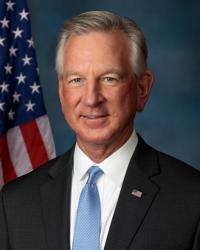 Sen. Tommy Tuberville (R-AL)
Sen. Tommy Tuberville (R-AL)Submitted March 6, 2021
Legislative Activity
Stay on top of the latest movement without scrolling through every action
Floor
Latest Action
Senate amendment submitted
March 6, 2021
Text
Submitted
SA 1387. Mr. TUBERVILLE submitted an amendment intended to be
proposed to amendment SA 891 proposed by Mr. Schumer (for himself, Mr.
Wyden, Mrs. Murray, Mr. Brown, Mr. Peters, Mr. Cardin, Ms. Cantwell,
Ms. Stabenow, Mr. Tester, Mr. Menendez, Mr. Schatz, Mr. Carper, Mr.
Leahy, and Mr. Sanders) to the bill H.R. 1319, to provide for
reconciliation pursuant to title II of S. Con. Res. 5; which was
ordered to lie on the table; as follows:

Beginning on page 34, strike line 16, and all that follows
through page 40, line 18, and insert the following:
(e) Uses of Funds.--A local educational agency that
receives funds under this section--
(1) shall reserve not less than 25 percent of such funds
to, directly or through grants or contracts to community-
based organizations, nonprofit organizations, and other
entities, address learning loss through the implementation of
evidence-based interventions, such as summer learning,
extended day, comprehensive afterschool programs, or extended
school year programs, and ensure that such interventions
respond to students' academic, social, and emotional needs
and address the disproportionate impact of the coronavirus on
the student subgroups described in section
1111(b)(2)(B)(xi)of the Elementary and Secondary Education
Act of 1965 (20 U.S.C. 6311(b)(2)(B)(xi)), students
experiencing homelessness, and children and youth in foster
care; and
(2) shall use the remaining funds for any of the following:
(A) Any activity authorized by the Elementary and Secondary
Education Act of 1965.
(B) Any activity authorized by the Individuals with
Disabilities Education Act.
(C) Any activity authorized by the Adult Education and
Family Literacy Act.
(D) Any activity authorized by the Carl D. Perkins Career
and Technical Education Act of 2006.
(E) Coordination of preparedness and response efforts of
local educational agencies with State, local, Tribal, and
territorial public health departments, and other relevant
agencies, to improve coordinated responses among such
entities to prevent, prepare for, and respond to coronavirus.
(F) Providing principals and others school leaders with the
resources necessary to address the needs of their individual
schools.
(G) Activities to address the unique needs of low-income
children or students, children with disabilities, English
learners, racial and ethnic minorities, students experiencing
homelessness, and foster care youth, including how outreach
and service delivery will meet the needs of each population.
(H) Developing and implementing procedures and systems to
improve the preparedness and response efforts of local
educational agencies.
(I) Training and professional development for staff of the
local educational agency on sanitation and minimizing the
spread of infectious diseases.
(J) Purchasing supplies to sanitize and clean the
facilities of a local educational agency, including buildings
operated by such agency.
(K) Planning for, coordinating, and implementing activities
during long-term closures, including providing meals to
eligible students, providing technology for online learning
to all students, providing guidance for carrying out
requirements under the IDEA and ensuring other educational
services can continue to be provided consistent with all
Federal, State, and local requirements.
(L) Purchasing educational technology (including hardware,
software, and connectivity) for students who are served by
the local educational agency that aids in regular and
substantive educational interaction between students and
their classroom instructors, including low-income students
and children with disabilities, which may include assistive
technology or adaptive equipment.
(M) Providing mental health services and supports.
(N) Planning and implementing activities related to summer
learning and supplemental afterschool programs, including
providing classroom instruction or online learning during the
summer months and addressing the needs of low-income
students, children with disabilities, English learners,
migrant students, students experiencing homelessness, and
children in foster care.
(O) Addressing learning loss among students, including low-
income students, children with disabilities, English
learners, racial and ethnic minorities, students experiencing
homelessness, and children and youth in foster care, of the
local educational agency, including by--
(i) administering and using high-quality assessments that
are valid and reliable, to accurately assess students'
academic progress and assist educators in meeting students'
academic needs, including through differentiating
instruction;
(ii) implementing evidence-based activities to meet the
comprehensive needs of students;
(iii) providing information and assistance to parents and
families on how they can effectively support students,
including in a distance learning environment; and
(iv) tracking student attendance and improving student
engagement in distance education.
(P) School facility repairs and improvements to enable
operation of schools to reduce risk of virus transmission and
exposure to environmental health hazards, and to support
student health needs.
(Q) Inspection, testing, maintenance, repair, replacement,
and upgrade projects to improve the indoor air quality in
school facilities, including mechanical and non-mechanical
heating, ventilation, and air conditioning systems,
filtering, purification and other air cleaning, fans, control
systems, and window and door repair and replacement.
(R) Developing strategies and implementing public health
protocols including, to the greatest extent practicable,
policies in line with guidance from the Centers for Disease
Control and Prevention for the reopening and operation of
school facilities to effectively maintain the health and
safety of students, educators, and other staff.
(S) Other activities that are necessary to maintain the
operation of and continuity of services in local educational
agencies and continuing to employ existing staff of the local
educational agency.
(f) State Funding.--With funds not otherwise allocated
under subsection (d), a State--
(1) shall reserve not less than 5 percent of the total
amount of grant funds awarded to the State under this section
to carry out, directly or through grants or contracts to
community-based organizations, nonprofit organizations, and
other entities, activities to address learning loss by
supporting the implementation of evidence-based
interventions, such as summer learning, extended day,
comprehensive afterschool programs, or extended school year
programs, and ensure that such interventions respond to
students' academic, social, and emotional needs and address
the disproportionate impact of the coronavirus on the student
subgroups described in section 1111(b)(2)(B)(xi) of the
Elementary and Secondary Education Act of 1965 (20 U.S.C.
6311(b)(2)(B)(xi)), students experiencing homelessness, and
children and youth in foster care, including by providing
additional support to local educational agencies to fully
address such impacts; and
______