S.Amdt. 2208Senate117th Congress (2021-2023)2nd degree
S.Amdt. 2208
Sponsored by 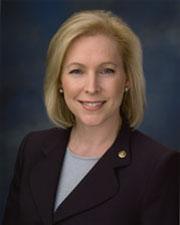 Sen. Kirsten E. Gillibrand (D-NY)
Sen. Kirsten E. Gillibrand (D-NY)Submitted August 2, 2021
Legislative Activity
Stay on top of the latest movement without scrolling through every action
Floor
Latest Action
Senate amendment submitted
August 2, 2021
Text
Submitted
SA 2208. Mrs. GILLIBRAND submitted an amendment intended to be
proposed to amendment SA 2137 proposed by Mr. Schumer (for Ms. Sinema
(for herself, Mr. Portman, Mr. Manchin, Mr. Cassidy, Mrs. Shaheen, Ms.
Collins, Mr. Tester, Ms. Murkowski, Mr. Warner, and Mr. Romney)) to the
bill H.R. 3684, to authorize funds for Federal-aid highways, highway
safety programs, and transit programs, and for other purposes; which
was ordered to lie on the table; as follows:

At the end of division G, add the following:

TITLE XII--PEAKER PLANTS

SEC. 71201. SHORT TITLE.

This title may be cited as the ``Promoting Energy
Alternatives is Key to Emission Reductions Act of 2021'' or
the ``PEAKER Act of 2021''.

[[Page S5613]]

SEC. 71202. DEFINITIONS.

In this title:
(1) Appropriate committees of congress.--The term
``appropriate committees of Congress'' means--
(A) the Committee on Finance of the Senate;
(B) the Committee on Energy and Natural Resources of the
Senate;
(C) the Committee on Environment and Public Works of the
Senate;
(D) the Committee on Ways and Means of the House of
Representatives; and
(E) the Committee on Energy and Commerce of the House of
Representatives.
(2) Disadvantaged community.--The term ``disadvantaged
community'' means a community that--
(A) is located in an area with a high concentration of
individuals who--
(i) are members of low- and moderate-income households (as
defined in section 570.3 of title 24, Code of Federal
Regulations (or a successor regulation));
(ii) experience high levels of unemployment;
(iii) face a high rent burden;
(iv) face a high energy burden;
(v) have low levels of home ownership;
(vi) have low levels of educational attainment; or
(vii) are members of groups that have historically
experienced discrimination on the basis of race or ethnicity;
(B) is burdened by high cumulative environmental pollution
or other hazards that can lead to negative public health
effects; or
(C) is determined to be a disadvantaged community, an
environmental justice community, a climate-burdened
community, or an otherwise similarly vulnerable community
pursuant to any Federal or State-level initiative, including
any relevant mapping initiative.
(3) High energy burden.--The term ``high energy burden''
means, with respect to a household, expenditure of the
household on residential energy costs that equals 6 percent
or more of the household income.
(4) Peaker plant.--The term ``peaker plant'' means a fossil
fuel-fired power plant or unit of a power plant that is run
primarily to meet peak electricity demand, as determined by
the Secretary, in coordination with the Administrator of the
Environmental Protection Agency and the applicable local
electrical grid operator.
(5) Secretary.--The term ``Secretary'' means the Secretary
of Energy.

SEC. 71203. ANNUAL REPORT ON PEAKER PLANTS IN THE UNITED
STATES.

(a) In General.--Not later than 180 days after the date of
enactment of this Act, and annually thereafter, the
Secretary, in coordination with the Administrator of the
Environmental Protection Agency, the White House
Environmental Justice Advisory Council, the White House
Environmental Justice Interagency Council, the Council on
Environmental Quality, and any other relevant Federal entity
that the Secretary determines to be appropriate, shall submit
to the appropriate committees of Congress a report that--
(1) identifies each peaker plant in the United States; and
(2) for each peaker plant identified under paragraph (1)--
(A) describes the location of the peaker plant and related
socioeconomic and demographic data for that location,
including whether the peaker plant is located in or adjacent
to a disadvantaged community;
(B) evaluates the quantity of carbon dioxide, nitric
oxides, sulfur oxides, fine particulate matter
(PM<inf>2.5</inf>), and methane emitted per unit of
electricity generated by the peaker plant;
(C) identifies--
(i) the total number of hours that the peaker plant
generates electricity during the year covered by the report;
(ii) the capacity factor of the plant;
(iii) the average number of hours that the peaker plant
generates electricity each time that the peaker plant
generates electricity; and
(iv) the percentage of the total number of instances in
which the peaker plant is started that result in the peaker
plant generating electricity for--

(I) not less than 4 hours;
(II) not less than 8 hours; and
(III) not less than 12 hours; and

(D) identifies, for each day on which the 3 air monitors
closest to the peaker plant indicate that Federal ozone or
particulate matter standards have been exceeded, the
percentage of peak demand met by the peaker plant for the
electrical grid load zone served by the peaker plant.
(b) Community Engagement.--In preparing a report under
subsection (a), the Secretary shall initiate and carry out
public engagement with residents and stakeholders from
disadvantaged communities containing a peaker plant.

SEC. 71204. CREDIT FOR GENERATION AND STORAGE OF ENERGY FROM
RENEWABLE SOURCES.

(a) In General.--Subpart E of part IV of subchapter A of
chapter 1 of the Internal Revenue Code of 1986 is amended by
inserting after section 48C the following new section:

``SEC. 48D. RENEWABLE ENERGY GENERATION AND STORAGE CREDIT.

``(a) In General.--For purposes of section 46, the
renewable energy generation and storage credit for any
taxable year is an amount equal to 10 percent of the
qualified investment for such taxable year with respect to
any qualified renewable energy facility.
``(b) Qualified Investment With Respect to Qualified
Renewable Energy Facilities.--
``(1) In general.--For purposes of subsection (a), the
qualified investment with respect to a qualified renewable
energy facility for any taxable year is the basis of any
qualified property placed in service by the taxpayer during
such taxable year which is part of a qualified renewable
energy facility.
``(2) Qualified property.--For purposes of this subsection,
the term `qualified property' means property--
``(A) which is--
``(i) tangible personal property, or
``(ii) other tangible property (not including a building or
its structural components), but only if such property is used
as an integral part of the qualified renewable energy
facility,
``(B) with respect to which depreciation (or amortization
in lieu of depreciation) is allowable,
``(C) which is constructed, reconstructed, erected,
installed, or acquired by the taxpayer, and
``(D) the original use of which commences with the
taxpayer.
``(3) Qualified renewable energy facility.--
``(A) In general.--Subject to subparagraph (B), the term
`qualified renewable energy facility' means a facility
which--
``(i) uses solar, wind, low-impact hydroelectric (as
certified by the Low Impact Hydropower Institute),
geothermal, tidal, or wave energy to generate electricity
which will be received and stored by property described in
clause (ii),
``(ii) contains property which receives, stores, and
delivers electricity described in clause (i), provided that
such electricity is--

``(I)(aa) sold by the taxpayer to an unrelated person, or
``(bb) in the case of a facility which is equipped with a
metering device which is owned and operated by an unrelated
person, sold or consumed by the taxpayer, and
``(II) at a minimum, discharged at such times as a peaker
plant within the same electrical grid load zone would operate
to meet peak electricity demand (as determined by the grid
operator for such electrical grid), and

``(iii) which is placed in service--

``(I) in a disadvantaged community which is located
within--

``(aa) the same census tract as a peaker plant, or
``(bb) a census tract that is adjacent to a census tract in
which a peaker plant is located, and

``(II) after December 31, 2021.

``(B) Special rule.--For purposes of this paragraph, a
facility shall not be deemed to be a qualified renewable
energy facility unless the taxpayer demonstrates, to the
satisfaction of the Secretary, that--
``(i) the property described in clause (i) of subparagraph
(A) is co-located with property described in clause (ii) of
such subparagraph,
``(ii) such taxpayer has, with respect to the property
described in clause (ii) of such subparagraph, entered into a
contract which ensures that such property operates primarily
to receive, store, and deliver electricity from any property
described in clause (i) of such subparagraph, or
``(iii) the property described in clause (ii) of such
subparagraph receives electricity during periods of typically
high production of electricity, as a percentage of the grid
generation mix, from sources described in clause (i) of such
subparagraph, as determined by the grid operator for the
electrical grid.
``(c) Certain Progress Expenditure Rules Made Applicable.--
Rules similar to the rules of subsections (c)(4) and (d) of
section 46 (as in effect on the day before the date of the
enactment of the Revenue Reconciliation Act of 1990) shall
apply for purposes of subsection (a).
``(d) Definitions.--The terms `disadvantaged community' and
`peaker plant' have the same meanings given such term under
section 71202 of the PEAKER Act of 2021.''.
(b) Conforming Amendments.--
(1) Section 46 of the Internal Revenue Code of 1986 is
amended--
(A) by striking ``and'' at the end of paragraph (5);
(B) by striking the period at the end of paragraph (6) and
inserting ``, and''; and
(C) by adding at the end the following new paragraph:
``(7) the renewable energy generation and storage
credit.''.
(2) Section 49(a)(1)(C) of such Code is amended--
(A) by striking ``and'' at the end of clause (iv);
(B) by striking the period at the end of clause (v) and
inserting ``, and''; and
(C) by adding at the end the following new clause:
``(vi) the basis of any qualified property which is part of
a qualified renewable energy facility under section 48D.''.
(3) Section 50(a)(2)(E) of such Code is amended by striking
``or 48C(b)(2)'' and inserting ``48C(b)(2), or 48D(c)''.
(4) The table of sections for subpart E of part IV of
subchapter A of chapter 1 of such Code is amended by
inserting after the item relating to section 48C the
following new item:

``48D. Renewable energy generation and storage credit.''.

[[Page S5614]]

(c) Effective Date.--The amendments made by this subsection
shall apply to property placed in service after December 31,
2020, under rules similar to the rules of section 48(m) of
the Internal Revenue Code of 1986 (as in effect on the day
before the date of the enactment of the Revenue
Reconciliation Act of 1990).

SEC. 71205. RENEWABLE ENERGY GRANT PROGRAM.

(a) Definitions.--In this section:
(1) Eligible entity.--The term ``eligible entity'' means
each of the following:
(A) A unit of State or local government.
(B) A tax-exempt nonprofit organization.
(C) A community-owned energy generation facility or energy
storage facility located in a disadvantaged community.
(D) A community-based energy cooperative or a similar group
of individuals within a community who are pursuing an
eligible project described in subsection (d).
(E) A partnership between--
(i) 1 or more of the entities described in subparagraphs
(A) through (D); and
(ii)(I) an electric utility; or
(II) a private entity.
(2) Energy storage facility.--The term ``energy storage
facility'' means a facility that receives, stores, and
delivers electricity.
(3) Program.--The term ``program'' means the grant program
established under subsection (b).
(4) Qualifying community energy proposal.--The term
``qualifying community energy proposal'' means a proposal to
deploy and implement renewable energy generation, energy
storage technology, energy efficiency upgrades, energy demand
management strategies, or distributed renewable energy
resources that a qualifying community energy study determines
can reduce the runtime of an existing or planned peaker plant
or otherwise reduce or replace the need for an existing or
planned peaker plant.
(5) Qualifying community energy study.--The term
``qualifying community energy study'' means a study or
assessment that--
(A) seeks to identify clean energy strategies to reduce the
runtime of an existing or planned peaker plant or otherwise
reduce or replace the need for an existing or planned peaker
plant, including strategies that involve--
(i) renewable energy generation;
(ii) energy storage technology;
(iii) energy efficiency upgrades;
(iv) energy demand management strategies; or
(v) distributed renewable energy deployment; and
(B) is led by or performed in partnership with the
communities directly impacted by pollution from a peaker
plant that is located within the same or an adjacent census
tract.
(6) Qualifying energy storage facility.--The term
``qualifying energy storage facility'' means an energy
storage facility that--
(A) is colocated with a qualifying renewable energy
facility and operates primarily to receive, store, and
deliver renewable energy generated by that qualifying
renewable energy facility;
(B) has entered into a contract with 1 or more qualifying
renewable energy facilities such that the energy storage
system operates primarily to receive, store, and deliver
renewable energy generated by those qualifying renewable
energy facilities; or
(C) receives electricity during periods of typically high
production of renewable energy (as a percentage of the grid
generation mix), as determined by the operator of the
applicable electrical grid.
(7) Qualifying renewable energy facility.--The term
``qualifying renewable energy facility'' means a facility
that--
(A) generates renewable energy; and
(B)(i) is colocated with a qualifying energy storage
facility; or
(ii) has entered into a contract described in paragraph
(6)(B) with 1 or more qualifying energy storage facilities.
(8) Renewable energy.--The term ``renewable energy'' means
electricity that is generated by or derived from, as
applicable--
(A) a low-impact hydroelectric facility certified by the
Low Impact Hydropower Institute;
(B) solar energy;
(C) wind energy;
(D) geothermal energy;
(E) tidal energy; or
(F) wave energy.
(b) Establishment.--Not later than 1 year after the date of
enactment of this Act, the Secretary shall establish a grant
program to assist eligible entities in--
(1) carrying out projects for the construction,
reconstruction, erection, installation, or acquisition of
qualifying renewable energy facilities and qualifying energy
storage facilities;
(2) carrying out projects for the implementation of
qualifying community energy proposals; and
(3) developing and carrying out qualifying community energy
studies.
(c) Applications.--To be eligible to receive a grant under
the program, an eligible entity shall submit to the Secretary
an application at such time, in such manner, and containing
such information as the Secretary may require.
(d) Eligible Projects and Qualifying Community Energy
Studies.--The Secretary may provide a grant under the program
for--
(1) a project described in subsection (b)(1) only if each
qualifying renewable energy facility and qualifying energy
storage facility to be constructed, reconstructed, erected,
installed, or acquired pursuant to the project will--
(A) be located in, or provide a direct and significant
benefit to, a disadvantaged community that is located
within--
(i) the same census tract as an existing or planned peaker
plant; or
(ii) a census tract that is adjacent to a census tract in
which an existing or planned peaker plant is or will be
located; and
(B) at a minimum, discharge electricity at such times as a
peaker plant within the same electrical grid load zone would
operate to meet peak electricity demand, as determined by the
operator of the applicable electrical grid;
(2) a project described in subsection (b)(2) only if the
qualifying community energy proposal to be implemented
pursuant to the project will be implemented in, or provide a
direct and significant benefit to, a disadvantaged community
that is located within a census tract described in clause (i)
or (ii) of paragraph (1)(A); and
(3) the development and carrying out of a qualifying
community energy study only if the qualifying community
energy study will provide for engagement with, and
incorporate feedback from, each disadvantaged community that
is located within a census tract described in clause (i) or
(ii) of paragraph (1)(A).
(e) Technical Assistance Grants.--The Secretary may use
amounts appropriated under subsection (i) to provide grants
to eligible entities for the cost of acquiring technical
assistance for the preparation and submission of an
application under subsection (c).
(f) Priority for Certain Eligible Entities.--In evaluating
applications submitted by eligible entities described in
subsection (a)(1)(B), the Secretary shall give priority to
applications submitted by local, community-based
organizations or energy cooperatives.
(g) Cost Sharing.--
(1) In general.--Except as provided in paragraph (2), with
respect to each project described in paragraph (1) or (2) of
subsection (b) for which a grant is provided under the
program, the maximum amount provided for the project under
the program shall not exceed 60 percent of the total cost
incurred by the applicable eligible entity for, as
applicable--
(A) the construction, reconstruction, erection,
installation, or acquisition of the applicable qualifying
renewable energy facility or qualifying energy storage
facility; or
(B) the implementation of the applicable qualifying
community energy proposal.
(2) Local, community-based organizations and energy
cooperatives.--With respect to a project described in
paragraph (1) that is carried out by, or for which an
application is submitted by, a local, community-based
organization or an energy cooperative, the maximum amount
provided for the project under the program shall not exceed
80 percent of the total cost incurred by the local,
community-based organization or energy cooperative for the
activities described in subparagraph (A) or (B) of that
paragraph, as applicable.
(h) Community Engagement.--In carrying out this section,
the Secretary shall initiate and carry out public engagement,
particularly with residents and stakeholders from
disadvantaged communities and communities in or adjacent to
areas with existing peaker plants identified in a report
under section 71203(a), to ensure that--
(1)(A) the public has input into the formulation of the
program; and
(B) based on that input, the program best addresses the
needs and circumstances of disadvantaged communities; and
(2) the public has information relating to the program,
including--
(A) the benefits of, and opportunities for, eligible
projects under the program; and
(B) the ways in which disadvantaged communities can best
use the program to address the clean energy goals of those
disadvantaged communities.
(i) Authorization of Appropriations.--There is authorized
to be appropriated to the Secretary to carry out the program
not more than $1,000,000,000 for each of fiscal years 2022
through 2032.
______