S.Amdt. 2459Senate117th Congress (2021-2023)2nd degree
S.Amdt. 2459
Sponsored by 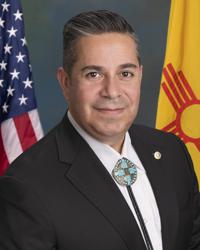 Sen. Ben Ray Luján (D-NM)
Sen. Ben Ray Luján (D-NM)Submitted August 3, 2021
Legislative Activity
Stay on top of the latest movement without scrolling through every action
Floor
Latest Action
Senate amendment submitted
August 3, 2021
Text
Submitted
SA 2459. Mr. LUJAN (for himself and Mr. Heinrich) submitted an
amendment intended to be proposed to amendment SA 2137 proposed by Mr.
Schumer (for Ms. Sinema (for herself, Mr. Portman, Mr. Manchin, Mr.
Cassidy, Mrs. Shaheen, Ms. Collins, Mr. Tester, Ms. Murkowski, Mr.
Warner, and Mr. Romney)) to the bill H.R. 3684, to authorize funds for
Federal-aid highways, highway safety programs, and transit programs,
and for other purposes; which was ordered to lie on the table; as
follows:

At the appropriate place in title XII of division D,
insert the following:

SEC. 412__. NATIONAL LABORATORY BIOTECHNOLOGY PROGRAM.

(a) Definitions.--In this section:
(1) EERE.--The term ``EERE'' means the Office of Energy
Efficiency and Renewable Energy of the Department.
(2) NNSA.--The term ``NNSA'' means the National Nuclear
Security Administration.
(3) Office of intelligence and counterintelligence.--The
term ``Office of Intelligence and Counterintelligence'' means
the Office of Intelligence and Counterintelligence of the
Department.
(4) Office of science.--The term ``Office of Science''
means the Office of Science of the Department.
(5) Program.--The term ``Program'' means the National
Laboratory Biotechnology Program established under subsection
(b)(1).
(6) Working group.--The term ``working group'' means the
working group established under subsection (b)(2).
(b) National Laboratory Biotechnology Program.--
(1) In general.--The Secretary shall establish a National
Laboratory Biotechnology Program to integrate the resources
of the Department, including the Office of Science, the
Office of Intelligence and Counterintelligence, the EERE, and
the NNSA, to provide research, development, test and
evaluation, and response capabilities to respond to--
(A) biological disasters and emergencies;
(B) long-term biotechnology threats and hazards impacting
national security;
(C) emerging and re-emerging diseases; and
(D) any remaining threats posed by COVID-19.
(2) Working group.--To carry out the Program, the Secretary
shall establish a working group, which shall comprise
appropriate leadership from the Office of Science, the NNSA,
and the National Laboratories.
(3) Functions.--The working group shall--
(A) oversee the development and operation of major research
activities of the Program;
(B) identify Department programs and elements that will
participate in the research and development activities of the
Program;
(C) establish a formal process to engage the capabilities
of the National Laboratories, including identifying a
National Laboratory to be a coordinator for each research
project carried out under the Program;
(D) collaborate with the directors of research directorates
of the Department, directors of National Laboratories, and
other senior Department officials, as appropriate, to gain
greater access to top researchers and new and potentially
transformative ideas;
(E) periodically review and recommend updates as necessary
to Program policies and guidelines for the development and
operation of major research activities, including by taking
into consideration how those updates fit into the broader
Federal response framework;
(F)(i) disperse funds to entities participating in
activities under the Program; and
(ii) conduct periodic reviews to adjust funding allocations
in response to changing biological disasters and emergencies,
biotechnology threats, biodefense needs, or emerging and re-
emerging diseases;
(G) enable access to broad scientific and technical
expertise and resources that will lead to the deployment of
innovative products, including through--
(i) research and development, including proof of concept,
technical development, and compliance testing activities; and
(ii) early-stage product development, including through--

(I) computational modeling and simulation;
(II) molecular structural determination;
(III) genomic sciences;
(IV) epidemiological and logistics support;
(V) knowledge discovery infrastructure and scalable
protected data;
(VI) advanced manufacturing to address supply chain
bottlenecks;
(VII) new capabilities for testing of clinical and
nonclinical samples;
(VIII) understanding environmental fate and transport of
viruses; and
(IX) discovery of potential therapeutics through
computation and molecular structure determination;

(H) support unclassified and classified research that
harnesses the capabilities of the National Laboratories to
address advanced biological threats of national security
significance through assessments and research and development
programs that--
(i) support the near- and long-term biodefense needs of the
United States;
(ii) support the national security community in reducing
uncertainty and risk;
(iii) enable greater access to top researchers and new and
potentially transformative ideas for biodefense of human,
animal, plant, environment, and infrastructure assets
(including physical, cyber, and economic infrastructure); and
(iv) enable access to broad scientific and technical
expertise and resources that will

[[Page S5785]]

lead to the development and deployment of innovative
biodefense assessments and solutions, including through--

(I) the accessing, monitoring, and evaluation of biological
threats to reduce risk, including through analysis and
prioritization of gaps and vulnerabilities across open-source
and classified data;
(II) development of scientific and technical roadmaps--

(aa) to address gaps and vulnerabilities;
(bb) to inform analyses of technologies; and
(cc) to accelerate the application of unclassified research
to classified applications; and

(III) demonstration activities to enable deployment,
including--

(aa) threat signature development and validation;
(bb) automated anomaly detection using artificial
intelligence and machine learning;
(cc) fate and transport dynamics for priority scenarios;
(dd) data curation, access, storage, and security at scale;
and
(ee) risk assessment tools;
(I) provide access to scientific user facilities and
collaboration facilities with advanced or unique equipment,
services, materials, and other resources to perform research
and testing;
(J) establish a short-term exchange program under the
Program for National Laboratory staff and management to build
connections and awareness across the National Laboratory
system;
(K) support technology transfer and related activities; and
(L) promote access and development across the Federal
Government and to United States industry, including startup
companies, of early applications of the technologies,
innovations, and expertise beneficial to the public that are
derived from Program activities.
(4) Strengthening institutional research and private
partnerships.--
(A) In general.--The working group shall, to the maximum
extent practicable, promote cooperative research and
development activities under the Program, including
collaboration between appropriate industry and academic
institutions to promote innovation and knowledge creation.
(B) Accessibility of information.--The working group shall
develop, maintain, and publicize information on scientific
user facilities and capabilities supported by laboratories of
the Department for combating biotechnology threats, which
shall be accessible for use by individuals from academic
institutions and industry.
(C) Academic participation.--The working group shall, to
the maximum extent practicable--
(i) conduct outreach about internship opportunities
relating to activities under the Program primarily to
institutions of higher education and minority-serving
institutions of higher education;
(ii) encourage the development of research collaborations
between research-intensive universities and the institutions
described in clause (i); and
(iii) provide traineeships at the institutions described in
clause (i) to graduate students who pursue a masters or
doctoral degree in an academic field relevant to research
advanced under the Program.
(5) Evaluation and plan.--
(A) In general.--Not less frequently than biennially, the
Secretary shall--
(i) evaluate the activities carried out under the Program;
and
(ii) develop a strategic research plan under the Program,
which shall be made publicly available and submitted to the
Committee on Energy and Natural Resources of the Senate and
the Committee on Energy and Commerce of the House of
Representatives.
(B) Classified information.--If the strategic research plan
developed under subparagraph (A)(ii) contains classified
information, the plan--
(i) shall be made publicly available and submitted to the
committees of Congress described in subparagraph (A)(ii) in
an unclassified format; and
(ii) may, as part of the submission to those committees of
Congress only, include a classified annex containing any
sensitive or classified information, as necessary.
(6) Interagency collaboration.--The working group may
collaborate with the Secretary of Homeland Security, the
Secretary of Health and Human Services, the Secretary of
Defense, the Secretary of Agriculture, the Director, and the
heads of other appropriate Federal departments and agencies
to advance biotechnology research and development under the
Program.
(7) Authorization of appropriations.--There are authorized
to be appropriated to the Secretary to carry out this
section, to remain available until expended--
(A) $30,000,000 for fiscal year 2022;
(B) $40,000,000 for fiscal year 2023;
(C) $45,000,000 for fiscal year 2024; and
(D) $50,000,000 for each of fiscal years 2025 and 2026.
______