S.Amdt. 2547Senate117th Congress (2021-2023)2nd degree
S.Amdt. 2547
Sponsored by 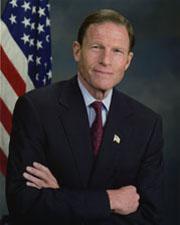 Sen. Richard Blumenthal (D-CT)
Sen. Richard Blumenthal (D-CT)Submitted August 4, 2021
Legislative Activity
Stay on top of the latest movement without scrolling through every action
Floor
Latest Action
Senate amendment submitted
August 4, 2021
Text
Submitted
SA 2547. Mr. BLUMENTHAL (for himself, Mr. Warner, Mr. Kaine, and Mrs.
Blackburn) submitted an amendment intended to be proposed to amendment
SA 2137 proposed by Mr. Schumer (for Ms. Sinema (for herself, Mr.
Portman, Mr. Manchin, Mr. Cassidy, Mrs. Shaheen, Ms. Collins, Mr.
Tester, Ms. Murkowski, Mr. Warner, and Mr. Romney)) to the bill H.R.
3684, to authorize funds for Federal-aid highways, highway safety
programs, and transit programs, and for other purposes; which was
ordered to lie on the table; as follows:

At the appropriate place in division I, insert the
following:

SEC. 90___. GRANTS FOR CERTAIN MINOR LEAGUE BASEBALL CLUBS.

(a) In General.--The Administrator shall, subject to the
availability of appropriations, make covered grants to
eligible entities in accordance with this section.
(b) Authority.--The Associate Administrator for the Office
of Disaster Assistance of the Small Business Administration
shall coordinate and formulate policies relating to the
administration of covered grants.
(c) Certification of Need.--An eligible entity applying for
a covered grant shall submit a good faith certification that
the uncertainty of current economic conditions makes
necessary the grant to support the ongoing operations of the
eligible entity.
(d) Multiple Business Entities.--The Administrator shall
treat each eligible entity as an independent, non-affiliated
entity for the purposes of this section.
(e) Grant Terms.--
(1) Number of grants.--
(A) In general.--Except as provided in subparagraph (B), an
eligible entity may receive only 1 covered grant.
(B) Supplemental grant.--The Administrator may make a
second covered grant to an eligible entity if, as of June 30,
2021, the gross revenues of such eligible entity for calendar
year 2021 as of such date are not more than 30 percent of the
gross revenues of such eligible entity for the corresponding
period of 2019, or, if the gross revenues of the eligible
entity were negatively impacted by a natural disaster or
weather disruption in 2019, not more than 30 percent of the
average gross revenues of the eligible entity during the
first 6 months of 2016, 2017, and 2018, due to the COVID-19
pandemic.
(2) Amount.--
(A) In general.--Except as provided in subparagraph (B), a
covered grant shall be in an amount equal to the lesser of--
(i) the amount equal to 45 percent of the gross revenues of
the eligible entity for 2019, or, if the gross revenues of
the eligible entity were negatively impacted by a natural
disaster or weather disruption in 2019, equal to 45 percent
of the average annual gross revenues of the eligible entity
over the 3-year period from 2016 through 2018, which shall
include the gross revenues of all subsidiaries and other
related entities that are consolidated with the gross
revenues of the eligible entity in a financial statement
prepared in accordance with generally accepted accounting
principles for such eligible entity for such year; or
(ii) $10,000,000.
(B) Supplement grant amount.--A covered grant made pursuant
to paragraph (1)(B) shall be in an amount equal to 50 percent
of the first covered grant received by the eligible entity.
(3) Grant aggregate maximum.--The total amount of covered
grants received by an eligible entity may not exceed
$10,000,000.
(4) Use of funds.--
(A) Timing.--
(i) Expenses incurred.--

(I) In general.--Except as provided in subclause (II),
amounts received under a covered grant may only be used for
expenses incurred during the period beginning on March 1,
2020 and ending on December 31, 2021.
(II) Extension for supplemental grants.--If an eligible
entity receives a grant under paragraph (1)(B), amounts
received under a covered grant may be used for costs incurred
during the period beginning on March 1, 2020 and ending
September 30, 2022.

(ii) Expenditure.--

(I) In general.--Except as provided in subclause (II), an
eligible entity shall return to the Administrator any amounts
received under a covered grant that are not expended on or
before the date that is 1 year after the date of disbursement
of the covered grant.
(II) Extension for supplemental grants.--If an eligible
entity receives a grant under paragraph (1)(B), the eligible
entity shall return to the Administrator any amounts received
under any covered grant that are not expended on or before
the date that is 18 months after the date of disbursement of
the first covered grant received by the eligible entity.

(B) Allowable expenses.--An eligible entity may use amounts
received under a covered grant for--
(i) payroll costs;
(ii) payments on any covered rent obligation or other
obligation to a public entity from whom the primary venue of
the eligible entity is leased or licensed;

[[Page S5872]]

(iii) any covered utility payment;
(iv) payments of interest or principal due on any covered
mortgage obligation;
(v) payments of interest or principal due on any
indebtedness or debt instrument incurred in the ordinary
course of business that is a liability of the eligible entity
and was in place or incurred prior to February 15, 2020;
(vi) covered worker protection expenditures;
(vii) payments made to independent contractors, as reported
on Form-1099 MISC, not to exceed a total of $100,000 in
annual compensation for any individual employee of an
independent contractor; and
(viii) other ordinary and necessary business expenses,
including--

(I) maintenance expenses;
(II) administrative costs, including fees and licensing
costs;
(III) State and local taxes and fees;
(IV) operating leases in effect as of February 15, 2020;
(V) payments required for insurance on any insurance
policy;
(VI) settling existing debts with vendors; and
(VII) advertising, production, transportation, and capital
expenditures relating to the primary venue of the eligible
entity or events held at such venue, except that a grant
under this section may not be used primarily for such
expenditures.

(C) Prohibited expenses.--An eligible entity may not use
amounts received under a grant under this section--
(i) to purchase real estate;
(ii) for payments of interest or principal for loans
originated after February 15, 2020;
(iii) to invest or re-lend funds;
(iv) for contributions or expenditures to, or on behalf of,
any political party, party committee or candidate for
elective office; or
(v) for any other use as may be reasonably prohibited by
the Administrator.
(f) Increased Oversight.--The Administrator shall increase
oversight of eligible entities receiving covered grants,
which may include the following:
(1) Documentation.--Additional documentation requirements
that are consistent with the eligibility and other
requirements under this section, including requiring an
eligible entity that receives a grant under this section to
retain records that document compliance with the requirements
for grants under this section--
(A) with respect to employment records, for the 4-year
period following receipt of the grant; and
(B) with respect to other records, for the 3-year period
following receipt of the grant.
(2) Reviews of use.--Reviews of the use of the grant
proceeds by an eligible entity to ensure the compliance with
requirements established under this section and by the
Administrator, including that the Administrator may--
(A) review and audit grants under this section; and
(B) in the case of fraud of other material noncompliance
with respect to a grant under this section--
(i) require repayment of misspent funds; or
(ii) pursue legal action to collect funds.
(g) Oversight and Audit Plan.--
(1) In general.--Not later than 45 days after the date of
enactment of this Act, the Administrator shall submit to the
Committee on Small Business and Entrepreneurship of the
Senate and the Committee on Small Business of the House of
Representatives an audit plan that details--
(A) the policies and procedures of the Administrator for
conducting oversight and audits of covered grants; and
(B) the metrics that the Administrator shall use to
determine which covered grants will be audited pursuant to
subsection (f).
(2) Report.--Not later than 60 days after the date of
enactment of this Act, and each month thereafter until the
date that is 1 year after the date on which all amounts
appropriated to make covered grants have been expended, the
Administrator shall submit to the Committee on Small Business
and Entrepreneurship of the Senate and the Committee on Small
Business of the House of Representatives a report on the
oversight and audit activities of the Administrator under
this subsection, which shall include--
(A) the total number of covered grants approved and
disbursed;
(B) the total amount of covered grants received by each
eligible entity;
(C) the number of active investigations and audits of
covered grants;
(D) the number of completed reviews and audits of covered
grants, including a description of any findings of fraud or
other material non-compliance; and
(E) any substantial changes made to the oversight and audit
plan submitted under paragraph (1).
(h) Tax Treatment of Covered Loans.--
(1) In general.--For the purposes of the Internal Revenue
Code of 1986--
(A) no covered grant shall be included in the gross income
of the eligible entity that receives such covered grant;
(B) no deduction shall be denied, no tax attribute shall be
reduced, and no basis increase shall be denied, by reason of
the exclusion from gross income provided by subparagraph (A);
and
(C) in the case of a partnership or S corporation that
receives such a covered grant--
(i) any amount excluded from income by reason of
subparagraph (A) shall be treated as tax exempt income for
purposes of sections 705 and 1366 of the Internal Revenue
Code of 1986; and
(ii) the Secretary of the Treasury (or the Secretary's
delegate) shall prescribe rules for determining a partner's
distributive share of any amount described in clause (i) for
purposes of section 705 of the Internal Revenue Code of 1986.
(2) Applicability.--Paragraph (1) shall apply to taxable
years ending after the date of enactment of this Act.
(i) Funding.--Notwithstanding any provision of covered law,
from any funds appropriated under such a law that have not
been obligated as of the date of enactment of this Act and
are no longer being used to carry out the activities under
such a law, the remaining funds or $550,000,000, whichever is
greater, but in any case not more than $550,000,000, shall be
allocated to the Administrator to carry out this section, of
which not more than $50,000,000 shall be allocated to
Independent Professional Baseball Clubs.
(j) Definitions.--In this section:
(1) Administrator.--The term ``Administrator'' means the
Administrator of the Small Business Administration.
(2) Covered grants.--The term ``covered grant'' means a
grant made under this section to an eligible entity.
(3) Covered law.--The term ``covered law'' means--
(A) the Coronavirus Preparedness and Response Supplemental
Appropriations Act, 2020 (Public Law 116-123);
(B) the Families First Coronavirus Response Act (Public Law
116-127);
(C) the CARES Act (Public Law 116-136);
(D) the Paycheck Protection Program and Health Care
Enhancement Act (Public Law 116-139; 134 Stat. 620);
(E) division M or N of the Consolidated Appropriations Act,
2021 (Public Law 116-260); or
(F) the American Rescue Plan Act of 2021 (Public Law 117-
2).
(4) Covered mortgage obligation; covered rent obligation;
covered utility payment; covered worker protection
expenditure.--The terms ``covered mortgage obligation'',
``covered rent obligation'', ``covered utility payment'', and
``covered worker protection expenditure'' have the meanings
given those terms in section 7A(a) of the Small Business Act
(15 U.S.C. 636m(a)).
(5) Eligible entity.--The term ``eligible entity'' means
any Minor League Baseball Club or Independent Professional
Baseball Club that meets the following requirements:
(A) The Minor League Baseball Club or Independent
Professional Baseball Club was operating in the ordinary
course of business on February 29, 2020.
(B) The gross revenues of the Minor League Baseball Club or
Independent Professional Baseball Club in calendar year 2020
were not more than 25 percent of the gross revenues of the
Minor League Baseball Club or Independent Professional
Baseball Club in calendar year 2019, or, if the gross
revenues of the Minor League Baseball Club or Independent
Professional Baseball Club were negatively impacted by a
natural disaster or weather disruption in 2019, not more than
25 percent of the average annual gross revenues of the Minor
League Baseball Club or Independent Professional Baseball
Club over the 3-year period from 2016 through 2018, as
determined by the Administrator using the accrual method of
accounting and excluding any amounts received any amounts
received under the CARES Act (15 U.S.C. 9001 et seq.), an
amendment to such Act, the Consolidated Appropriations Act,
2021 (Public Law 116-260), or any subsequent COVID Relief
package.
(C) At the time the Minor League Baseball Club or
Independent Professional Baseball Club submits the
certification required under subsection (c), the Minor League
Baseball Club or Independent Professional Baseball Club is
open, or intends to reopen, for the primary purpose of
conducting baseball games.
(D) The Minor League Baseball Club or Independent
Professional Baseball Club is not majority owned, directly or
indirectly, by Major League Baseball, a Major League Baseball
Club, or one or more persons who have a greater than 10
percent ownership interest in a Major League Baseball Club.
(6) Independent professional baseball club.--The term
``Independent Professional Baseball Club'' means a
professional baseball team, including a professional baseball
team that is a corporation, limited liability company, or a
partnership or operated as a sole proprietorship, that--
(A) operates for profit or as a nonprofit organization;
(B) is located in the United States; and
(C) as of February 29, 2020, was a member of--
(i) the American Association of Professional Baseball;
(ii) the Atlantic League of Professional Baseball;
(iii) the Canadian American Association of Professional
Baseball;
(iv) the Empire Professional Baseball League;
(v) the Frontier League;
(vi) the Pacific Association of Professional Baseball
Clubs;
(vii) the Pecos League of Professional Baseball Clubs;
(viii) the United Shore Professional Baseball League; or
(ix) the Western League.
(7) Minor league baseball club.--The term ``Minor League
Baseball Club'' means a

[[Page S5873]]

professional baseball team, including a professional baseball
team that is a corporation, limited liability company, or a
partnership or operated as a sole proprietorship, that--
(A) operates for profit or as a nonprofit organization;
(B) is located in the United States; and
(C)(i) as of February 29, 2020, was a member of a league
that was a member of the National Association of Professional
Baseball Leagues, Inc.; or
(ii) has been offered and is operating or has agreed to
operate under--
(I) a Player Development License granted by MLB
Professional Development Leagues, LLC; or
(II) a license granted by Appalachian League, Inc.
(8) Payroll costs.--The term ``payroll costs'' has the
meaning given the term in section 7(a)(36)(A) of the Small
Business Act (15 U.S.C. 636(a)(36)(A)).
______