S.Amdt. 3265Senate117th Congress (2021-2023)
S.Amdt. 3265
Sponsored by 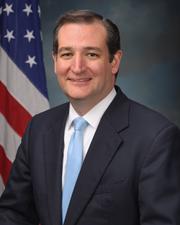 Sen. Ted Cruz (R-TX)
Sen. Ted Cruz (R-TX)Submitted August 10, 2021
Legislative Activity
Stay on top of the latest movement without scrolling through every action
Floor
Latest Action
Senate amendment submitted
August 10, 2021
Text
Submitted
SA 3265. Mr. CRUZ submitted an amendment intended to be proposed by
him to the concurrent resolution S. Con. Res. 14, setting forth the
congressional budget for the United States Government for fiscal year
2022 and setting forth the appropriate budgetary levels for fiscal
years 2023 through 2031; which was ordered to lie on the table; as
follows:

At the appropriate place, insert the following:

SEC. 4___. POINT OF ORDER AGAINST LEGISLATION THAT RAISES
TAXES ON MIDDLE-INCOME TAXPAYERS.

(a) In General.--After a concurrent resolution on the
budget is agreed to, it shall not be in order in the Senate
to consider any bill, resolution, amendment between Houses,
motion, or conference report that--
(1) would cause revenues to be more than the level of
revenues set forth for that first fiscal year or for the
total of that fiscal year and the ensuing fiscal years in the
applicable resolution for which allocations are provided
under section 302(a) of the Congressional Budget Act of 1974,
and
(2) includes a Federal tax increase which would have
widespread applicability on middle-income taxpayers.
(b) Definitions.--In this subsection:
(1) Middle-income taxpayers.--The term ``middle-income
taxpayers'' means single individuals with $200,000 or less in
adjusted gross income (as defined in section 62 of the
Internal Revenue Code of 1986) and married couples filing
jointly with $400,000 or less in adjusted gross income (as so
defined).
(2) Widespread applicability.--The term ``widespread
applicability'' includes the definition with respect to
individual income taxpayers in section 4022(b)(1) of the
Internal Revenue Service Restructuring and Reform Act of
1998.
(3) Federal tax increase.--The term ``Federal tax
increase'' means--
(A) any amendment to the Internal Revenue Code of 1986
that, directly or indirectly, increases the amount of Federal
tax; or
(B) any legislation that the Congressional Budget Office
would score as an increase in Federal revenues.
(c) Supermajority Waiver and Appeal.--
(1) Waiver.--This section may be waived or suspended in the
Senate only by an affirmative vote of three-fifths of the
Members, duly chosen and sworn.
(2) Appeal.--An affirmative vote of three-fifths of the
Members, duly chosen and sworn, shall be required in the
Senate to sustain an appeal of the ruling of the Chair on a
point of order raised under this section.
______