S.Amdt. 3903Senate117th Congress (2021-2023)2nd degree
S.Amdt. 3903
Sponsored by 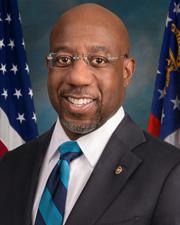 Sen. Raphael G. Warnock (D-GA)
Sen. Raphael G. Warnock (D-GA)Submitted October 26, 2021
Legislative Activity
Stay on top of the latest movement without scrolling through every action
Floor
Latest Action
Senate amendment submitted
October 26, 2021
Text
Submitted
SA 3903. Mr. WARNOCK submitted an amendment intended to be proposed
to amendment SA 3867 submitted by Mr. Reed and intended to be proposed
to the bill H.R. 4350, to authorize appropriations for fiscal year 2022
for military activities of the Department of Defense, for military
construction, and for defense activities of the Department of Energy,
to prescribe military personnel strengths for such fiscal year, and for
other purposes; which was ordered to lie on the table; as follows:

In division A, strike section 1601 and insert the
following:

SEC. 1601. MATTERS CONCERNING CYBER PERSONNEL REQUIREMENTS.

(a) In General.--The Secretary of Defense shall--
(1) determine the overall workforce requirement of the
Department of Defense for cyber operation, information
operation, and software engineering military personnel
(across the active and reserve components of the Armed Forces
(other than the Coast Guard)) and civilian personnel, and in
doing so shall--
(A) consider personnel in positions securing the Department
of Defense Information Network and associated enterprise
information technology, defense agencies and field
activities, and combatant commands, including current billets
primarily associated with the information environment and
cyberspace domain and projected future billets;
(B) consider the mix between military and civilian
personnel, active and reserve components, and the use of the
National Guard;
(C) develop a workforce development plan that covers
accessions, training, and education; and
(D) consider such other elements as the Secretary
determines appropriate;
(2) assess current and future general information warfare,
software, and cyber education curriculum and requirements for
military and civilian personnel, including--
(A) acquisition personnel;
(B) accessions and recruits to the military services;
(C) cadets and midshipmen at the military service academies
and enrolled in the Senior Reserve Officers' Training Corps;
(D) information environment, software engineering, and
cyberspace military and civilian personnel; and
(E) non-information environment and cyberspace military and
civilian personnel;
(3) identify appropriate locations for information warfare,
software engineering, and cyber education for military and
civilian personnel, including--
(A) the military service academies;
(B) the educational institutions described in section
2151(b) of title 10, United States Code;
(C) the Air Force Institute of Technology;
(D) the National Defense University;
(E) the Joint Special Operations University;
(F) any other military educational institution of the
Department specified by the Secretary for purposes of this
section;
(G) the Cyber Centers of Academic Excellence certified
jointly by the National Security Agency and the Department of
Homeland Security;
(H) potential future educational institutions of the
Federal Government, including an assessment, in consultation
with the Secretary of Homeland Security and the National
Cyber Director, of the feasibility and advisability of a
National Cyber Academy or similar institute created for the
purpose of educating and training civilian and military
personnel for service in cyber, information, and related
fields throughout the Federal Government; and
(I) potential colleges, universities, and research
institutes located in proximity to key military installations
or with close ties to military installations who have
programs focused on information warfare, software
engineering, and cybersecurity;
(4) identify pathways to workforce growth, including--
(A) any current hiring practices or restrictions that
constrain workforce growth or retention;
(B) areas where partnership with State and local
educational agencies focused on elementary or secondary
education can boost workforce in an area, especially in rural
schools and schools that receive funds under part A of title
I of the Elementary and Secondary Education Act of 1965 (20
U.S.C. 6301 et seq.);Me
(C) incentive and policy options to bring qualified
individuals to the regions where the jobs are currently;
(D) authorities and programs at the Department of Labor
that could be used to educate, retrain, or incentivize
individuals to pursue these fields of study; and
(E) options for scholarships and internships to grow a
workforce pipeline; and
(5) determine--
(A) whether the cyberspace domain, software engineering,
and information warfare mission requires a graduate-level
professional military education college on par with and
distinct from the war colleges for the Army, Navy, and Air
Force in effect on the day before the date of the enactment
of this Act;
(B) whether such a college should be joint; and
(C) where it should be located.
(b) Report Required.--Not later than November 1, 2022, the
Secretary shall provide the Committee on Armed Services of
the Senate and the Committee on Armed Services of the House
of Representatives a briefing and, not later than Jan 1,
2023, the Secretary shall submit to such committees a report
on--
(1) the findings of the Secretary in carrying out
subsection (a);
(2) an implementation plan to achieve future information
warfare and cyber education requirements at appropriate
locations;
(3) such recommendations as the Secretary may have for
personnel needs in information warfare and the cyberspace
domain; and
(4) such legislative or administrative action as the
Secretary identifies as necessary to effectively meet cyber
personnel requirements.
(c) Education Defined.--The term ``education'' includes
formal education requirements, such as degrees and
certification in targeted subject areas, but also general
training, including--
(1) reskilling;
(2) knowledge, skills, and abilities; and
(3) nonacademic professional development.
______