S.Amdt. 4371Senate117th Congress (2021-2023)2nd degree
S.Amdt. 4371
Sponsored by 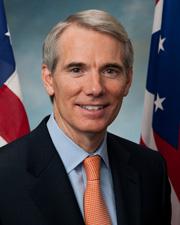 Sen. Rob Portman (R-OH)
Sen. Rob Portman (R-OH)Submitted November 4, 2021
Legislative Activity
Stay on top of the latest movement without scrolling through every action
Floor
Latest Action
Senate amendment submitted
November 4, 2021
Text
Submitted
SA 4371. Mr. PORTMAN submitted an amendment intended to be proposed
to amendment SA 3867 submitted by Mr. Reed and intended to be proposed
to the bill H.R. 4350, to authorize appropriations for fiscal year 2022
for military activities of the Department of Defense, for military
construction, and for defense activities of the Department of Energy,
to prescribe military personnel strengths for such fiscal year, and for
other purposes; which was ordered to lie on the table; as follows:

At the appropriate place, insert the following:

SEC. ___. NATIONAL DEEPFAKE AND DIGITAL PROVENANCE TASK
FORCE.

(a) Definitions.--In this section:
(1) Digital content forgery.--The term ``digital content
forgery'' means the use of emerging technologies, including
artificial intelligence and machine learning techniques, to
fabricate or manipulate audio, visual, or text content with
the intent to mislead.
(2) Digital content provenance.--The term ``digital content
provenance'' means the verifiable chronology of the origin
and history of a piece of digital content, such as an image,
video, audio recording, or electronic document.
(3) Eligible entity.--The term ``eligible entity'' means--
(A) a private sector or nonprofit organization; or
(B) an institution of higher education.
(4) Institution of higher education.--The term
``institution of higher education'' has the meaning given the
term in section 101 of the Higher Education Act of 1965 (20
U.S.C. 1001).
(5) Relevant congressional committees.--The term ``relevant
congressional committees'' means--
(A) the Committee on Homeland Security and Governmental
Affairs of the Senate; and
(B) the Committee on Homeland Security and the Committee on
Oversight and Reform of the House of Representatives.
(6) Secretary.--The term ``Secretary'' means the Secretary
of Homeland Security.
(7) Task force.--The term ``Task Force'' means the National
Deepfake and Provenance Task Force established under
subsection (b)(1).
(b) Establishment of Task Force.--
(1) Establishment.--The Secretary, in coordination with the
Director of the Office of Science and Technology Policy,
shall establish a task force, to be known as ``the National
Deepfake Provenance Task Force'', to--
(A) investigate the feasibility of, and obstacles to,
developing and deploying standards and technologies for
determining digital content provenance;
(B) propose policy changes to reduce the proliferation and
impact of digital content forgeries, such as the adoption of
digital content provenance and technology standards; and
(C) serve as a formal mechanism for public and private
sector coordination and information sharing to facilitate the
creation and implementation of a coordinated plan to address
the growing threats posed by digital content forgeries.
(2) Membership.--
(A) Co-chairpersons.--The following shall serve as co-
chairpersons of the Task Force:
(i) The Secretary or a designee of the Secretary.
(ii) The Director of the Office of Science and Technology
Policy or a designee of the Director.
(B) Composition.--The Task Force shall be composed of 12
members, of whom--
(i) 4 shall be representatives from the Federal Government,
including the co-chairpersons of the Task Force;
(ii) 4 shall be representatives from institutions of higher
education; and
(iii) 4 shall be representatives from private or nonprofit
organizations.
(C) Appointment.--Not later than 120 days after the date of
enactment of this Act, the co-chairpersons of the Task Force
shall appoint members to the Task Force in accordance with
subparagraph (A) from among technical and legal experts in--
(i) artificial intelligence;
(ii) media manipulation;
(iii) digital forensics;
(iv) secure digital content and delivery;
(v) cryptography;
(vi) privacy;
(vii) civil rights; or
(viii) related subjects.
(D) Term of appointment.--The term of a member of the Task
Force shall end on the date described in subsection (g)(1).
(E) Vacancy.--Any vacancy occurring in the membership of
the Task Force shall be filled in the same manner in which
the original appointment was made.
(F) Expenses for non-federal members.--Members of the Task
Force described in clauses (ii) and (iii) of subparagraph (B)
shall be allowed travel expenses, including per diem in lieu
of subsistence, at rates authorized for employees under
subchapter I of

[[Page S7894]]

chapter 57 of title 5, United States Code, while away from
their homes or regular places of business in the performance
of services for the Task Force.
(c) Coordinated Plan.--
(1) In general.--The Task Force shall develop a coordinated
plan to--
(A) reduce the proliferation and impact of digital content
forgeries, including by exploring how the adoption of a
digital content provenance standard could assist with
reducing the proliferation of digital content forgeries;
(B) develop mechanisms for content creators to--
(i) cryptographically certify the authenticity of original
media and non-deceptive manipulations; and
(ii) enable the public to validate the authenticity of
original media and non-deceptive manipulations to establish
digital content provenance; and
(C) increase the ability of internet companies,
journalists, watchdog organizations, other relevant entities,
and members of the public to--
(i) meaningfully scrutinize and identify potential digital
content forgeries; and
(ii) relay trust and information about digital content
provenance to content consumers.
(2) Contents.--The plan required under paragraph (1) shall
include the following:
(A) A Government-wide research and development agenda to--
(i) improve technologies and systems to detect digital
content forgeries; and
(ii) relay information about digital content provenance to
content consumers.
(B) An assessment of the feasibility of, and obstacles to,
the deployment of technologies and systems to capture,
preserve, and display digital content provenance.
(C) An assessment of the feasibility of, and challenges in,
distinguishing between--
(i) benign or helpful alterations to digital content; and
(ii) intentionally deceptive or obfuscating alterations to
digital content.
(D) A discussion of best practices, including any necessary
standards, for the adoption and effective use of technologies
and systems to determine digital content provenance and
detect digital content forgeries.
(E) Conceptual proposals for necessary research projects
and experiments to further develop successful technology to
ascertain digital content provenance.
(F) Proposed policy changes, including changes in law, to--
(i) incentivize the adoption of technologies, systems, open
standards, or other means to detect digital content forgeries
and determine digital content provenance; and
(ii) reduce the incidence, proliferation, and impact of
digital content forgeries.
(G) Recommendations for models for public-private
partnerships to fight disinformation and reduce digital
content forgeries, including partnerships that support and
collaborate on--
(i) industry practices and standards for determining
digital content provenance;
(ii) digital literacy education campaigns and user-friendly
detection tools for the public to reduce the proliferation
and impact of disinformation and digital content forgeries;
(iii) industry practices and standards for documenting
relevant research and progress in machine learning and
related areas; and
(iv) the means and methods for identifying and addressing
the technical and financial infrastructure that supports the
proliferation of digital content forgeries, such as
inauthentic social media accounts and bank accounts.
(H) An assessment of privacy and civil liberties
requirements associated with efforts to deploy technologies
and systems to determine digital content provenance or reduce
the proliferation of digital content forgeries, including
statutory or other proposed policy changes.
(I) A determination of metrics to define the success of--
(i) technologies or systems to detect digital content
forgeries;
(ii) technologies or systems to determine digital content
provenance; and
(iii) other efforts to reduce the incidence, proliferation,
and impact of digital content forgeries.
(d) Consultations.--In carrying out subsection (c), the
Task Force shall consult with the following:
(1) The Director of the National Science Foundation.
(2) The National Academies of Sciences, Engineering, and
Medicine.
(3) The Director of the National Institute of Standards and
Technology.
(4) The Director of the Defense Advanced Research Projects
Agency.
(5) The Director of the Intelligence Advanced Research
Projects Activity of the Office of the Director of National
Intelligence.
(6) The Secretary of Energy.
(7) The Secretary of Defense.
(8) The Attorney General.
(9) The Secretary of State.
(10) The Federal Trade Commission.
(11) The United States Trade Representative.
(12) Representatives from private industry and nonprofit
organizations.
(13) Representatives from institutions of higher education.
(14) Such other individuals as the Task Force considers
appropriate.
(e) Staff.--
(1) In general.--Staff of the Task Force shall be comprised
of detailees with expertise in artificial intelligence or
related fields from--
(A) the Department of Homeland Security;
(B) the National Institute of Standards and Technology; or
(C) any other Federal agency the co-chairpersons of the
Task Force consider appropriate with the consent of the head
of the Federal agency.
(2) Other assistance.--
(A) In general.--The co-chairpersons of the Task Force may
enter into an agreement with an eligible entity for the
temporary assignment of employees of the eligible entity to
the Task Force in accordance with this paragraph.
(B) Application of ethics rules.--An employee of an
eligible entity assigned to the Task Force under subparagraph
(A)--
(i) shall be considered a special Government employee for
the purpose of Federal law, including--

(I) chapter 11 of title 18, United States Code; and
(II) the Ethics in Government Act of 1978 (5 U.S.C. App.);
and

(ii) notwithstanding section 202(a) of title 18, United
States Code, may be assigned to the Task Force for a period
of not more than 2 years.
(C) Financial liability.--An agreement entered into with an
eligible entity under subparagraph (A) shall require the
eligible entity to be responsible for any costs associated
with the assignment of an employee to the Task Force.
(D) Termination.--The co-chairpersons of the Task Force may
terminate the assignment of an employee to the Task Force
under subparagraph (A) at any time and for any reason.
(f) Task Force Reports.--
(1) Interim report.--
(A) In general.--Not later than 1 year after the date on
which all of the appointments have been made under subsection
(b)(2)(C), the Task Force shall submit to the President and
the relevant congressional committees the coordinated plan
developed under subsection (c)(1) in the form of an interim
report containing the findings, conclusions, and
recommendations of the Task Force.
(B) Contents.--The report required under subparagraph (A)
shall include specific recommendations for ways to reduce the
proliferation and impact of digital content forgeries,
including the deployment of technologies and systems to
determine digital content provenance.
(2) Final report.--Not later than 180 days after the date
of the submission of the interim report under paragraph
(1)(A), the Task Force shall submit to the President and the
relevant congressional committees the coordinated plan
developed under subsection (c)(1) in the form of a final
report containing the findings, conclusions, and
recommendations of the Task Force.
(3) Requirements.--With respect to each report submitted
under this subsection--
(A) the Task Force shall make the report publicly
available; and
(B) the report--
(i) shall be produced in an unclassified form; and
(ii) may include a classified annex.
(g) Termination.--
(1) In general.--The Task Force shall terminate on the date
that is 90 days after the date on which the Task Force
submits the final report under subsection (f)(2).
(2) Records.--Upon the termination of the Task Force under
paragraph (1), each record of the Task Force shall become a
record of the National Archives and Records Administration.
______