S.Amdt. 4398Senate117th Congress (2021-2023)2nd degree
S.Amdt. 4398
Sponsored by 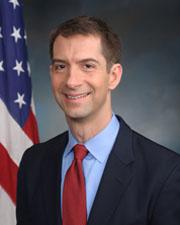 Sen. Tom Cotton (R-AR)
Sen. Tom Cotton (R-AR)Submitted November 4, 2021
Legislative Activity
Stay on top of the latest movement without scrolling through every action
Floor
Latest Action
Senate amendment submitted
November 4, 2021
Text
Submitted
SA 4398. Mr. COTTON submitted an amendment intended to be proposed to
amendment SA 3867 submitted by Mr. Reed and intended to be proposed to
the bill H.R. 4350, to authorize appropriations for fiscal year 2022
for military activities of the Department of Defense, for military
construction, and for defense activities of the Department of Energy,
to prescribe military personnel strengths for such fiscal year, and for
other purposes; which was ordered to lie on the table; as follows:

At the end of subtitle E of title XII, add the following:

SEC. 1253. AUSTRALIA-UNITED STATES LEGISLATIVE EXCHANGE
PROGRAM.

(a) Findings.--Congress finds the following:
(1) The People's Republic of China continues to assert its
regional ambitions in the Indo-Pacific region.
(2) The ideological aims driving the Chinese Communist
Party's foreign policy runs counter to aims of democracies
such as the United States and its allies.
(3) Australia has been one of the United State's staunchest
allies for well over 100 years. This ``Mateship'' began with
the visit of the American Great White Fleet to Sydney Harbor
in 1908. The budding relationship was soon sealed through
American and Australian troops fighting and dying together in
the World War I.
(4) Since the World War I, Australians and Americans--
(A) have supported each other in every major military
conflict in which the United States was involved; and
(B) have mutually supported each another in intelligence-
sharing.
(b) Sense of Congress.--It is the sense of Congress that--

[[Page S7916]]

(1) the United States must continue to build and maintain
strong relationships with allies and partners in the Indo-
Pacific region to successfully compete with the People's
Republic of China;
(2) the Australia-United States relationship will continue
to be vital throughout the 21st century and beyond to compete
with and deter China;
(3) as the Australia-United States alliance evolves, it is
vital to ensure that emerging leaders in both countries
develop a deep understanding of their ally's view of the
world; and
(4) exchange programs between key legislative national
security staff from Congress and Australian Parliament will
further bind our nations together.
(c) Establishment.--
(1) In general.--The Majority Leader of the Senate, the
Minority Leader of the Senate, the Speaker of the House of
Representatives, and the Minority Leader of the House of
Representatives, working through a designated nonprofit, such
as a think tank, a foundation, or another suitable
organization contracted by the Department of Defense
competitive award process, shall work with the leaders of the
Australian Parliament to establish the Australia-United
States Legislative Exchange Program (referred to in this
section as the ``Program'').
(2) Purpose.--The purpose of the Program shall be to
coordinate annual 1 to 2 week legislative exchanges between
United States congressional staff and the Australian
parliamentary staff that focus on national security, foreign
policy, and other issues of mutual interest between the 2
countries.
(3) Selection of staff.--
(A) Congressional staff.--In carrying out the Program, the
congressional leaders referred to in paragraph (1), in
consultation with the head of the nonprofit designated
pursuant to paragraph (1), shall jointly select a bipartisan,
bicameral group of congressional staff for each exchange
described in paragraph (2).
(B) Parliamentary staff.--It is the sense of Congress that
leaders in the Australian Parliament will select a
politically balanced group of Australian parliamentary staff
who will participate in each exchange described in paragraph
(2).
(4) Venues.--The exchanges described in paragraph (2) shall
take place primarily in Washington, D.C. and Canberra,
Australia, but may include opportunities for staff--
(A) to engage in cultural immersion activities; and
(B) to tour other key regions in each country in accordance
with the purposes of the Program.
(5) Program activities.--Program participants, while
visiting the partner country, shall--
(A) meet with senior executive and legislative branch
officials, think tank scholars, and nonprofit advocacy
groups; and
(B) participate in specially designed courses covering the
politics and foreign policy issues in such country with the
intent to foster a deeper understanding of the political
environment in which their counterparts operate.
(6) Consultation.--In managing the Program on behalf of the
congressional leaders referred to in paragraph (1), the head
of the nonprofit designated pursuant to paragraph (1) shall
consult with, and accepting guidance from, senior staff of
the Committee on Armed Services of the Senate, the Committee
on Foreign Relations of the Senate, the Committee on Armed
Services of the House of Representatives, and the Committee
on Foreign Affairs of the House of Representatives.
(7) Alumni network.--The head of the nonprofit designated
pursuant to paragraph (1) shall establish an alumni network
program, in cooperation with a representative of the
Australian Parliament, that brings together past alumni of
the program for special events or programs that provide for
further exchanges and lasting relationships between
policymakers and leaders in both countries.
______