S.Amdt. 4456Senate117th Congress (2021-2023)2nd degree
S.Amdt. 4456
Sponsored by 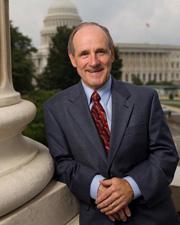 Sen. James E. Risch (R-ID)
Sen. James E. Risch (R-ID)Submitted November 4, 2021
Legislative Activity
Stay on top of the latest movement without scrolling through every action
Floor
Latest Action
Senate amendment submitted
November 4, 2021
Text
Submitted
SA 4456. Mr. RISCH (for himself and Mr. Murphy) submitted an
amendment intended to be proposed to amendment SA 3867 submitted by Mr.
Reed and intended to be proposed to the bill H.R. 4350, to authorize
appropriations for fiscal year 2022 for military activities of the
Department of Defense, for military construction, and for defense
activities of the Department of Energy, to prescribe military personnel
strengths for such fiscal year, and for other purposes; which was
ordered to lie on the table; as follows:

At the end of title XII, add the following:

Subtitle H--Diplomatic Support and Security

SEC. 1291. SHORT TITLE.

This subtitle may be cited as the ``Diplomatic Support and
Security Act of 2021''.

SEC. 1292. FINDINGS.

Congress makes the following findings:
(1) A robust overseas diplomatic presence is an effective
foreign policy, particularly in unstable environments where a
flexible and timely diplomatic response can be decisive in
preventing and addressing violent conflict.
(2) Diplomats routinely put themselves and their families
at great personal risk to serve their country overseas where
they increasingly face threats related to international
terrorism, violent conflict, and public health, among others.
(3) The Department of State has a remarkable record of
protecting personnel while enabling an enormous amount of
global diplomatic activity, often in unsecure and remote
places and facing a variety of evolving risks and threats.
With support from Congress, the Department of State has
revised policy, improved physical security through
retrofitting and replacing old facilities, deployed
additional security personnel and armored vehicles, and
greatly enhanced training requirements and facilities,
including the new Foreign Affairs Security Training Center in
Blackstone, Virginia.
(4) However, there is broad consensus that the pendulum has
swung too far toward eliminating risk, excessively inhibiting
diplomatic activity, too often resulting in embassy closures,
reducing footprints, and postponing or denying travel
requests.
(5) Diplomatic missions rely on robust staffing and
ambitious external engagement to advance United States
interests as diverse as competing with China's malign
influence around the world, fighting terrorism and
transnational organized crime, preventing and addressing
violent conflict and humanitarian disasters, promoting United
States businesses and trade, protecting the rights of
marginalized groups, addressing climate change, and
preventing pandemic disease.
(6) Despite the fact that Congress currently provides
annual appropriations in excess of $1,900,000,000 for embassy
security, construction, and maintenance, the Department of
State is unable to fully transform this considerable
investment into true overseas presence given excessive
movement and safety restrictions that inhibit the ability of
diplomats to--
(A) meet outside United States secured facilities with
foreign leaders to explain, defend, and advance United States
priorities;
(B) understand and report on foreign political, social, and
economic conditions through meeting and interacting with
community officials outside of United States facilities;
(C) provide United States citizen services that can be are
often a matter of life and death in unsecure places; and
(D) collaborate and, at times, compete with other
diplomatic missions, such as the People's Republic of China,
that do not have the same restrictions on meeting locations.
(7) Given these stakes, Congress has a responsibility to
empower, support, and hold the Department of State
accountable for implementing an aggressive presence strategy
that mitigates potential risks and adequately considers the
myriad direct and indirect consequences of a lack of
presence.

SEC. 1293. ENCOURAGING EXPEDITIONARY DIPLOMACY.

(a) Purpose.--Subsection (b) of section 102 of the
Diplomatic Security Act (22 U.S.C. 4801(b)) is amended--
(1) by amending paragraph (3) to read as follows:
``(3) to promote strengthened security measures,
institutionalize a culture of learning, and, in the case of
apparent gross negligence or breach of duty, recommend the
Director General of the Foreign Service investigate
accountability for United States Government personnel with
security-related responsibilities;'';
(2) by redesignating paragraphs (4) and (5) as paragraphs
(5) and (6), respectively; and
(3) by inserting after paragraph (3) the following new
paragraph:
``(4) to support a culture of risk management, instead of
risk avoidance, that enables the Department of State to
pursue its vital goals with full knowledge that it is not
desirable nor possible for the Department to avoid all
risks;''.
(b) Briefings on Embassy Security.--Section 105(a)(1) of
the Diplomatic Security Act (22 U.S.C. 4804(a)) is amended--
(1) by striking ``any plans to open or reopen a high risk,
high threat post'' and inserting ``progress towards opening
or reopening high risk, high threat posts, and the risk to
national security of the continued closure and remaining
barriers to doing so'';
(2) in subparagraph (A), by striking ``the type and level
of security threats such post could encounter'' and inserting
``the risk to national security of the post's continued
closure''; and
(3) in subparagraph (C), by inserting ``the type and level
of security threats such post could encounter, and'' before
``security `tripwires' ''.

SEC. 1294. INVESTIGATION OF SERIOUS SECURITY INCIDENTS.

(a) Section 301 of the Diplomatic Security Act of 1986 (22
U.S.C. 4831) is amended--
(1) in the section heading, by striking ``accountability
review boards'' and inserting ``security review committees'';
(2) in subsection (a)--
(A) by amending paragraph (1) to read as follows:
``(1) Convening the security review committee.--
``(A) In general.--In any case of a serious security
incident involving loss of life, serious injury, or
significant destruction of property at, or related to, a
United States Government (USG) diplomatic mission abroad, and
in any case of a serious breach of security involving
intelligence activities of a foreign government directed at a
USG mission abroad, a Security Review Committee (SRC) into
the event shall be convened by the Department of State and a
report produced for the Secretary providing a full account of
what occurred.
``(B) Exception.--A Serious Security Incident Investigation
need not be convened where the Secretary determines that a
case clearly involves only causes unrelated to security.'';
(B) by redesignating paragraphs (2) and (3) as paragraphs
(3) and (4), respectively;
(C) by inserting after paragraph (1) the following new
paragraph:
``(2) Committee composition.--The Secretary shall determine
the composition of the SRC and designate a Chairperson.
Members of the SRC shall, at a minimum, include the following
personnel:
``(A) A representative of the Under Secretary of State for
Management, who shall serve as chair of the SRC.
``(B) The Assistant Secretary responsible for the region
where the incident occurred.
``(C) The Assistant Secretary for Diplomatic Security.
``(D) The Assistant Secretary for the Bureau of
Intelligence and Research.
``(E) An Assistant Secretary-level representative from any
involved United States Government department or agency.
``(F) Other personnel as determined necessary or
appropriate.''; and
(D) by adding at the end the following new paragraph:
``(5) Regulations.--The Secretary of State shall promulgate
regulations defining the membership and operating procedures
for the SRC and provide to the Chairmen and ranking members
of the Committee on Foreign Relations of the Senate and the
Committee on Foreign Affairs of the House of Representatives,
in writing, a description of how the SRC will be structured
with respect to any other standing committees.'';
(3) in subsection (b)--
(A) in paragraph (1)--
(i) by striking ``Except as'' and all that follows through
``a Board'' and inserting ``The Secretary of State shall
convene a SRC''; and
(ii) by striking ``for the convening of the Board''; and
(B) in paragraph (2), by striking ``Board'' each place it
appears and inserting ``SRC''; and
(4) in subsection (c)--
(A) by striking ``convenes a Board'' and inserting
``convenes a SRC'';
(B) by adding ``and ranking member'' after ``chairman'';
and
(C) by striking ``Speaker'' and all that follows through
the period at the end of paragraph (3) and inserting
``chairman and ranking member of the Committee of Foreign
Affairs of the House of Representatives.''.
(b) Technical and Conforming Amendments.--Section 302 of
the Diplomatic Security Act (22 U.S.C. 4832) is amended--
(1) in the section heading, by striking ``accountability
review board'' and inserting ``security review committee'';
and
(2) by striking ``Board'' each place it appears and
inserting ``SRC''.

SEC. 1295. SERIOUS SECURITY INCIDENT INVESTIGATION PROCESS.

Section 303 of the Diplomatic Security Act of 1986 (22
U.S.C. 4833) is amended to read as follows:

``SEC. 303. SERIOUS SECURITY INCIDENT INVESTIGATION PROCESS.

``(a) Investigation Process.--
``(1) Initiation.--The Serious Security Incident review
process begins when a United States mission reports a serious
security incident at the mission, including an initial report
within three days of the event.
``(2) Investigation.--The Diplomatic Security Service shall
assemble an investigative

[[Page S7948]]

team to carry out the investigation of an incident reported
under paragraph (1). The investigation shall cover the
following matters:
``(A) An assessment of what occurred, who perpetrated or is
suspected of having perpetrated the attack, and whether
applicable security procedures were followed.
``(B) In the event the security incident was an attack on a
United States diplomatic compound, motorcade, residence, or
other facility, a determination whether adequate security
countermeasures were in effect based on known threat at the
time of the incident.
``(C) If the incident was an attack on an individual or
group of officers, employees, or family members under chief
of mission authority conducting approved operations or
movements outside the United States mission, a determination
whether proper security briefings and procedures were in
place and whether adequate consideration of threat and
weighing of risk of the operation or movement took place.
``(D) An assessment of whether the failure of any officials
or employees to follow procedures or perform their duties
contributed to the security incident.
``(b) Report of Investigation.--The investigative team
shall prepare a Report of Investigation at the conclusion of
the Serious Security Incident Investigation and submit the
report to the SRC. The report shall include the following
elements:
``(1) A detailed description of the matters set forth in
subparagraphs (A) through (D) of subsection (a)(2), including
all related findings.
``(2) An accurate account of the casualties, injured, and
damage resulting from the incident.
``(3) A review of security procedures and directives in
place at the time of the incident.
``(c) Confidentiality.--The investigative team shall adopt
such procedures with respect to confidentiality as determined
necessary, including procedures relating to the conduct of
closed proceedings or the submission and use of evidence in
camera, to ensure in particular the protection of classified
information relating to national defense, foreign policy, or
intelligence matters. The Director of National Intelligence
shall establish the level of protection required for
intelligence information and for information relating to
intelligence personnel included in the report under
subsection (b). The SRC shall determine the level of
classification of the final report prepared under section
304(b), but shall incorporate the same confidentiality
measures in such report to the maximum extent practicable.''.

SEC. 1296. FINDINGS AND RECOMMENDATIONS BY THE [SECURITY
REVIEW COMMITTEE].

Section 304 of the Diplomatic Security Act of 1986 (22
U.S.C. 4834) is amended to read as follows:

``SEC. 304. [SECURITY REVIEW COMMITTEE] FINDINGS AND REPORT.

``(a) Findings.--The Security Review Committee shall review
the Report of Investigation prepared under section 303(b),
all other evidence, reporting, and relevant information
relating to a serious security incident at a United States
mission abroad, including an examination of the facts and
circumstances surrounding any serious injuries, loss of life,
or significant destruction of property resulting from the
incident and shall make the following written findings:
``(1) Whether the incident abroad was security related and
constituted a serious security incident.
``(2) If the incident involved a diplomatic compound,
motorcade, residence, or other mission facility, whether the
security systems, security countermeasures, and security
procedures operated as intended, and whether such systems
worked to materially mitigate the attack or were found to be
inadequate to mitigate the threat and attack.
``(3) If the incident involved an individual or group of
officers conducting an approved operation outside the
mission, a determination whether a valid process was followed
in evaluating the requested operation and weighing the risk
of the operation. Such determination shall not seek to assign
accountability for the incident unless the SRC determines
that an official breached their duty.
``(4) An assessment of the impact of intelligence and
information availability, and whether the mission was aware
of the general operating threat environment or any more
specific threat intelligence or information and took that
into account in ongoing and specific operations.
``(5) Such other facts and circumstances that may be
relevant to the appropriate security management of United
States missions abroad.
``(b) SRC Report.--Not later than 30 days after receiving
the Report of Investigation prepared under section 303(b),
the SRC shall submit a report to the Secretary of State
including the findings under subsection (a) and any related
recommendations. Not later than 90 days after receiving the
report, the Secretary of State shall submit the report to the
Committee on Foreign Relations of the Senate and the
Committee on Foreign Affairs of the House of Representatives.
``(c) Personnel Recommendations.--If in the course of
conducting an investigation under section 303, the
investigative team finds reasonable cause to believe any
individual described in section 303(a)(2)(D) has breached the
duty of that individual or finds lesser failures on the part
of an individual in the performance of his or her duties
related to the incident, it shall be reported to the SRC. If
the SRC find reasonable cause to support the determination,
it shall be reported to the Director General of the Foreign
Service for appropriate action.''.

SEC. 1297. RELATION TO OTHER PROCEEDINGS.

Section 305 of the Diplomatic Security Act of 1986 (22
U.S.C. 4835) is amended--
(1) by inserting ``(a) No Effect on Existing Remedies or
Defenses.--'' before ``Nothing in this title''; and
(2) by adding at the end the following new subsection:
``(b) Future Inquiries.--Nothing in this title shall be
construed to preclude the Secretary of State from convening a
follow-up public board of inquiry to investigate any security
incident if the incident was of such magnitude or
significance that an internal process is deemed insufficient
to understand and investigate the incident. All materials
gathered during the procedures provided under this title
shall be provided to any related board of inquiry convened by
the Secretary.''.
______