S.Amdt. 4502Senate117th Congress (2021-2023)2nd degree
S.Amdt. 4502
Sponsored by 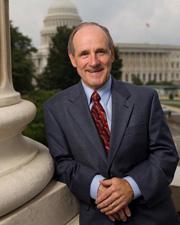 Sen. James E. Risch (R-ID)
Sen. James E. Risch (R-ID)Submitted November 4, 2021
Legislative Activity
Stay on top of the latest movement without scrolling through every action
Floor
Latest Action
Senate amendment submitted
November 4, 2021
Text
Submitted
SA 4502. Mr. RISCH submitted an amendment intended to be proposed to
amendment SA 3867 submitted by Mr. Reed and intended to be proposed to
the bill H.R. 4350, to authorize appropriations for fiscal year 2022
for military activities of the Department of Defense, for military
construction, and for defense activities of the Department of Energy,
to prescribe military personnel strengths for such fiscal year, and for
other purposes; which was ordered to lie on the table; as follows:

At the end of division A, add the following:

TITLE XVII--AFGHANISTAN COUNTERTERRORISM, OVERSIGHT, AND ACCOUNTABILITY
ACT OF 2021

SEC. 1701. SHORT TITLE.

This title may be cited as the ``Afghanistan
Counterterrorism, Oversight, and Accountability Act of
2021''.

SEC. 1702. FINDINGS.

Congress makes the following findings:
(1) On April 14, 2021, President Joseph R. Biden announced
the unconditional withdrawal of United States Armed Forces
from Afghanistan after 20 years of conflict.
(2) United States troop withdrawals led to the rapid
collapse of the democratically elected Government of
Afghanistan, effectively ended prospects for a negotiated
settlement, threaten to reverse the hard-earned rights of
Afghanistan's women and youth, and created dangerous
sanctuary space for potential terrorist attacks against the
United States and allies and partners of the United States.
(3) Under the terms of the peace agreement signed by the
United States and the Taliban in Doha, Qatar, on February 29,
2020, the withdrawal of the United States Armed Forces was
contingent upon the Taliban upholding its commitment to a
reduction in the levels of violence, engaging in substantive
talks with the Government of Afghanistan, and adhering to
certain counterterrorism guarantees. The Taliban failed to
meet its commitments.
(4) The Taliban's rise to power and inability to control
its borders may result in a safe haven for violent jihadist
groups, like al Qaeda and the Afghan affiliate of the Islamic
State group, ISIS-Khorasan (commonly referred to as ``ISIS-
K'').
(5) According to a May 2020 report of the United Nations,
``The senior leadership of Al-Qaida remains present in
Afghanistan, as well as hundreds of armed operatives, Al-
Qaida in the Indian Subcontinent, and groups of foreign
terrorist fighters aligned with the Taliban.''.
(6) According to the same United Nations report, ``The
Taliban regularly consulted with Al-Qaida during negotiations
with the United States and offered guarantees that it would
honor their historical ties.''.
(7) In November 2020, the Lead Inspector General for
Operation Freedom's Sentinel of the Department of Defense (in
this section referred to as the ``Lead Inspector General'')
echoed similar concerns, noting that ``members of al-Qaeda
were integrated into the Taliban's leadership and command
structure''.
(8) In May 2021, the Lead Inspector General reaffirmed
those concerns, noting that ``[a]ccording to the Defense
Intelligence Agency, the Taliban maintained close ties with
al-Qaeda and was very likely preparing for large-scale
offensives''.
(9) On September 14, 2021, the Deputy Director of the
Central Intelligence Agency stated, ``We are already
beginning to see some of the indications of some potential
movement of al Qaeda to Afghanistan.''.
(10) On August 14, 2021, the United States began an
operation at Hamid Karzai International Airport to evacuate
United States citizens and Afghans affiliated with the United
States, an action which forced the North Atlantic Treaty
Organization (commonly referred to as ``NATO'') and allied
countries to undertake similar operations.
(11) During the evacuation operation conducted in August
2021, United States allies, all of which had contributed
soldiers and resources to the fight against the Taliban and
terrorism in Afghanistan since 2001, assisted in the
exfiltration of thousands of United

[[Page S7994]]

States citizens, their own nationals, and Afghans affiliated
with NATO.
(12) In August 2021, at the height of the United States
evacuation operation, ISIS-K carried out a dual attack
striking Hamid Karzai International Airport and the Baron
Hotel, killing more than 170 civilians, including 13 members
of the United States Armed Forces.
(13) According to the reports of the Department of State,
as many as 10,000 to 15,000 United States citizens were in
Afghanistan before the evacuation efforts.
(14) As of August 31, 2021, the Department of State
evacuated just over 6,000 United States citizens, leaving
untold numbers of United States citizens stranded in
Afghanistan with little recourse for departure.
(15) As of August 31, 2021, the United States evacuated 705
out of 22,000 Afghans who applied for special immigrant
visas, leaving the vast majority of Afghans behind and
vulnerable to retribution by the Taliban.
(16) The Taliban continues to hamper the movement of United
States citizens and at-risk Afghans out of Afghanistan.
(17) On September 10, 2021, the Taliban appointed
Sirajjudin Haqqani, a wanted terrorist responsible for
attacks against United States citizens, as the Taliban
minister of interior, ostensibly responsible for the
continued evacuations of United States citizens and at-risk
Afghans out of Afghanistan.
(18) A Taliban-led government rooted in Sharia law would
undermine the vital gains made since 2001, particularly with
respect to the rule of law and the rights of women and girls,
and would lack credibility and international legitimacy on
the world stage.
(19) As noted by Human Rights Watch, ``Even before their
takeover of Kabul on August 15, Taliban forces were already
committing atrocities, including summary executions of
government officials and security force members in their
custody.''.
(20) Since the Taliban's takeover of Kabul, the Taliban has
raided the homes of journalists and activists, as well as
members of their families, and restricted girls' access to
education and women's ability to work.
(21) The Lead Inspector General reported in May 2021 that
the Taliban had carried out ``dozens of targeted killings of
Afghan civilians, including government officials, teachers,
journalists, medical workers, and religious scholars''.
(22) Despite reportedly providing written assurances to
donors and the United Nations, the Taliban also continues to
hinder humanitarian access to the most vulnerable areas and
individuals in Afghanistan, with an estimated 18,400,000
people, or roughly half of the population in Afghanistan,
currently in dire need of lifesaving assistance.
(23) Between 2001 and 2020, at least 569 humanitarian
workers were targeted for attack in Afghanistan, and in
August 2021 alone, at least 240 incidents affecting
humanitarian access were reported by relief agencies.
(24) The United States has invested more than
$56,000,000,000 since 2002 in efforts to address profound
humanitarian needs and help the people of Afghanistan,
including women, girls, and religious and ethnic minorities,
realize their democratic and development aspirations.
(25) Despite consistent challenges, United States
humanitarian and development assistance has helped expand
access to education for more than 3,000,000 girls since 2008,
reduce maternal and child deaths by more than half since
2000, provide first-time access to safe drinking water for
650,000 people and improved sanitation services for 1,200,000
people since 2016, and catalyze a 3,000 percent increase in
per capita gross domestic product between 2002 and 2018.
(26) Following the Taliban takeover in Afghanistan, those
notable achievements are at risk of reversal, the country
stands on the verge of economic collapse, and according to
the World Food Programme of the United Nations, an estimated
14,000,000 people are ``marching toward starvation''.

SEC. 1703. DEFINITIONS.

In this title:
(1) Special immigrant visa program.--The term ``special
immigrant visa program'' means--
(A) the special immigrant visa program under section 602 of
the Afghan Allies Protection Act of 2009 (Public Law 111-8; 8
U.S.C. 1101 note); and
(B) the special immigrant visa program under section 1059
of the National Defense Authorization Act for Fiscal Year
2006 (Public Law 109-163; 8 U.S.C. 1101 note) with respect to
nationals of Afghanistan.
(2) Taliban.--The term ``Taliban'' means the entity--
(A) known as the Taliban;
(B) operating in Afghanistan; and
(C) designated as a specially designated global terrorist
under part 594 of title 31, Code of Federal Regulations.
(3) Terrorist group.--The term ``terrorist group'' means--
(A) any entity designated as a specially designated global
terrorist under part 594 of title 31, Code of Federal
Regulations (other than the Taliban); or
(B) any foreign terrorist organization (as defined in
section 219 of the Immigration and Nationality Act (8 U.S.C.
1189)).
(4) United states lawful permanent resident.--The term
``United States lawful permanent resident'' means an alien
lawfully admitted for permanent residence to the United
States (as defined in section 101(a) of the Immigration and
Nationality Act (8 U.S.C. 1101(a))).

Subtitle A--State Department Afghanistan Task Force and Diplomatic
Engagement

SEC. 1711. TASK FORCE ON EVACUATIONS FROM AFGHANISTAN.

(a) In General.--The Secretary of State shall establish and
maintain a task force dedicated to--
(1) the implementation of a comprehensive strategy relating
to the evacuation of United States citizens, United States
lawful permanent residents, and applicants for the special
immigrant visa program, from Afghanistan; and
(2) identifying individuals in Afghanistan who have--
(A) applied to the United States Refugee Admissions
Program; or
(B) sought entry into the United States as humanitarian
parolees under section 212(d)(5) of the Immigration and
Nationality Act (8 U.S.C. 1182(d)(5)).
(b) Focus of Task Force.--The task force established under
subsection (a) shall prioritize efforts of the Department of
State--
(1) to account for all United States citizens still within
Afghanistan and ensure all United States citizens have the
opportunity to safely depart Afghanistan; and
(2) to account for United States lawful permanent residents
and applicants for the special immigrant visa program still
within Afghanistan and help ensure those individuals have an
opportunity to safely depart Afghanistan.
(c) Reporting Requirement.--Not later than one year after
the date of the enactment of this Act, the Secretary of State
shall submit to the appropriate congressional committees a
report detailing lessons learned from the task force
established under subsection (a), including such lessons
related to the evacuation of United States citizens, United
States lawful permanent residents, and applicants for the
special immigrant visa program, from Afghanistan.
(d) Briefing Requirement.--The task force established under
subsection (a) shall provide quarterly briefings to the
appropriate congressional committees on--
(1) the strategy described in subsection (a); and
(2) any additional authorities the Department of State
requires to better advance the strategy.
(e) Termination.--The task force established under
subsection (a) shall terminate on the date that is one year
after the date of the enactment of this Act.
(f) Appropriate Congressional Committees Defined.--In this
section, the term ``appropriate congressional committees''
means--
(1) the Committee on Foreign Relations of the Senate; and
(2) the Committee on Foreign Affairs of the House of
Representatives.

SEC. 1712. REPORT ON DIPLOMATIC ENGAGEMENT AND ECONOMIC
COOPERATION WITH THE TALIBAN.

(a) In General.--Not later than 120 days after the date of
the enactment of this Act, and not less frequently than
annually thereafter, the Secretary of State, in coordination
with the Administrator of the United States Agency for
International Development and the Secretary of the Treasury,
shall submit to the appropriate congressional committees a
report detailing the manner and extent to which foreign
governments and international organizations have pursued
diplomatic engagement or economic or security cooperation
with the Taliban or members of the Taliban.
(b) Elements.--The report required by subsection (a) shall
include a description of--
(1) steps taken by foreign governments and international
organizations toward formal diplomatic recognition of the
Taliban or a government of Afghanistan under the direction or
control of the Taliban or members of the Taliban;
(2) efforts to maintain or re-establish a diplomatic
presence in Kabul;
(3) the extent to which formal bilateral relationships
serve to bolster the Taliban's credibility on the world
stage;
(4) the scale and scope of economic cooperation with the
Taliban, or any agency or instrumentality of the Government
of Afghanistan under the direction or control of the Taliban
or a member of the Taliban, by foreign governments and
international organizations, particularly international
financial institutions;
(5) the extent of any assistance provided by foreign
governments and international organizations to or through the
Taliban or any agency or instrumentality described in
paragraph (4), including humanitarian, technical, and
security assistance; and
(6) major security cooperation activities or initiatives
undertaken by foreign governments with the Taliban or any
agency or instrumentality described in paragraph (4),
including the establishment by a foreign government of any
military presence within Afghanistan.
(c) Form of Report; Availability.--
(1) Form.--The report required by subsection (a) shall be
submitted in unclassified form, but may include a classified
annex.
(2) Availability.--The unclassified portion of the report
required by subsection (a) shall be made available on a
publicly accessible internet website of the Department of
State.
(d) Appropriate Congressional Committees Defined.--In this
section, the term ``appropriate congressional committees''
means--
(1) the Committee on Foreign Relations of the Senate; and

[[Page S7995]]

(2) the Committee on Foreign Affairs of the House of
Representatives.

SEC. 1713. OPPOSITION TO RECOGNITION OF TALIBAN
REPRESENTATIVE AS AMBASSADOR TO THE UNITED
STATES.

The President should not recognize as the Ambassador of
Afghanistan to the United States or accept diplomatic
credentials from any individual who is a member of the
Taliban.

SEC. 1714. OPPOSITION TO PARTICIPATION OF TALIBAN AT THE
UNITED NATIONS AND OTHER MEASURES.

The United States Ambassador to the United Nations should
use the voice, vote, and influence of the United States at
the United Nations--
(1) to object to the issuance of credentials to any member
of the delegation of Afghanistan to the United Nations
General Assembly who is a member of the Taliban, consistent
with Rules 27 and 28 of the Rules of Procedure of the General
Assembly;
(2) to ensure that no member of the Taliban may serve in a
leadership position in any United Nations body, fund,
program, or specialized agency;
(3) to support a resolution on human rights abuses
committed by the Taliban at the United Nations Human Rights
Council and calling for the immediate deployment of human
rights monitors to Afghanistan under the special procedures
of the Council;
(4) to demand immediate, unfettered humanitarian access to
the whole of Afghanistan, including to prevent famine and to
expand access to lifesaving vaccines and immunizations; and
(5) to prevent diversions of humanitarian assistance
delivered through United Nations bodies, funds, programs, and
specialized agencies to individuals and entities subject to
sanctions under United Nations Security Council Resolutions
1988 (2011) and 2255 (2015), including through the imposition
of duties, fees, or taxes on such humanitarian assistance or
the manipulation of beneficiary lists.

SEC. 1715. REVISED STRATEGY FOR SOUTH AND CENTRAL ASIA.

(a) In General.--Not later than 90 days after the date of
the enactment of this Act, the President shall submit to the
appropriate congressional committees a strategy for a path
forward for the relationship of the United States with South
and Central Asian countries after the United States
withdrawal from Afghanistan.
(b) Elements.--The strategy required by subsection (a)
shall include the following elements:
(1) A detailed description of the security and economic
challenges that the Russian Federation, the People's Republic
of China, and the Taliban pose to the countries of South and
Central Asia, including border disputes with South and
Central Asian countries that border the People's Republic of
China, investments by the Government of the People's Republic
of China in land and sea ports, military activities and
installations, transportation infrastructure, and energy
projects across the region.
(2) A detailed description of United States efforts to
provide alternatives to investment by the Government of the
People's Republic of China in infrastructure and other
sectors in South and Central Asia.
(3) An examination of the areas and sectors in which South
and Central Asian countries are subject to political,
military, information, and diplomatic pressure from the
Russian Federation and the People's Republic of China.
(4) An examination of the extent to which the C5+1 format
should or should not be changed to reflect the new conditions
in Afghanistan.
(5) An analysis of the possibilities for access to and
basing in Central Asian countries for the United States Armed
Forces, and overflight of those countries by United States
drones, and the diplomatic outreach needed to achieve those
outcomes.
(6) A detailed description of bilateral and regional
efforts to work with countries in South Asia on strategies to
build resilience against efforts of the Government of the
People's Republic of China and the Government of the Russian
Federation to interfere in their political systems and
economies.
(7) A detailed description of United States diplomatic
efforts to address the challenges posed by investment by the
Government of the People's Republic of China in the mining
and mineral sectors in Afghanistan.
(8) Identification of areas where the United States
Government can strengthen diplomatic, economic, and defense
cooperation with the Government of India, as appropriate, to
address economic and security challenges posed by the
People's Republic of China, the Russian Federation, and the
Taliban in the region, and an assessment of how the changes
to India's security environment resulting from the Taliban's
takeover of Afghanistan will affect United States engagement
with India.
(9) A description of the coordination mechanisms among key
regional and functional bureaus within the Department of
State and the Department of Defense tasked with engaging with
the countries of South and Central Asia on issues relating to
the People's Republic of China, the Russian Federation, and
the Taliban.
(10) A description of the efforts being made by Federal
agencies, including the Department of State, the United
States Agency for International Development, the Department
of Commerce, the Department of Energy, and the Office of the
United States Trade Representative, to help the countries of
South and Central Asia develop trade and commerce links that
will help those countries diversify their trade away from the
People's Republic of China and the Russian Federation.
(11) A detailed description of United States diplomatic
efforts with South and Central Asian countries, Turkey, and
any other countries with significant populations of Uyghurs
and other ethnic minorities fleeing persecution in the
People's Republic of China, to press those countries to
refrain from deporting ethnic minorities to the People's
Republic of China, protect ethnic minorities from
intimidation by authorities of the Government of the People's
Republic of China, and protect the right to the freedoms of
assembly and expression.
(12) An analysis of the effect ending the denial of
nondiscriminatory treatment to the products of the Republic
of Kazakhstan, the Republic of Tajikistan, and the Republic
of Uzbekistan under chapter 1 of title IV of the Trade Act of
1974 (commonly known as the ``Jackson-Vanik amendment'')
would have on improving trade and diplomatic relations with
the United States.
(c) Form of Report; Availability.--
(1) Form.--The strategy required by subsection (a) shall be
submitted in unclassified form, but may include a classified
annex.
(2) Availability.--The unclassified portion of the strategy
required by subsection (a) shall be made available on a
publicly accessible internet website of the Department of
State.
(d) Consultation.--Not later than 120 days after the date
of the enactment of this Act, and not less frequently than
annually thereafter for 5 years, the Secretary of State shall
consult with the appropriate congressional committees
regarding the development and implementation of the strategy
required by subsection (a).
(e) Definitions.--In this section:
(1) Appropriate congressional committees.--The term
``appropriate congressional committees'' means--
(A) the Committee on Foreign Relations and the Committee on
Armed Services of the Senate; and
(B) the Committee on Foreign Affairs and the Committee on
Armed Services of the House of Representatives.
(2) C5+1 format.--The term ``C5+1 format'' means meetings
of representatives of the governments of the United States,
the Republic of Kazakhstan, the Kyrgyz Republic, the Republic
of Tajikistan, Turkmenistan, and the Republic of Uzbekistan.

Subtitle B--Counterterrorism Strategies and Reports

SEC. 1721. COUNTERTERRORISM STRATEGY FOR AFGHANISTAN.

(a) In General.--Not later than 180 days after the date of
the enactment of this Act, and not less frequently than
annually thereafter, the Secretary of State, in consultation
with the Secretary of Defense and the Director of National
Intelligence, shall submit to the appropriate congressional
committees a report setting forth the United States
counterterrorism strategy for Afghanistan and addressing each
of the elements described in subsection (b).
(b) Elements.--The elements described in this subsection
are the following:
(1) An assessment of terrorist activity in Afghanistan and
threats posed to the United States by that activity.
(2) An assessment of whether the Taliban is taking
meaningful action to ensure that Afghanistan is not a safe
haven for terrorist groups, such as al Qaeda or ISIS-K,
pursuant to the peace agreement signed by the United States
and the Taliban in Doha, Qatar, on February 29, 2020, or
subsequent agreements or arrangements.
(3) A detailed description of all discussions,
transactions, deconfliction arrangements, or other agreements
or arrangements with the Taliban.
(4) An assessment of the status of access, basing, and
overflight agreements with countries neighboring Afghanistan
that facilitate ongoing United States counterterrorism
missions.
(5) An assessment of the status of--
(A) human intelligence and multi-source intelligence assets
dedicated to Afghanistan; and
(B) the ability of the United States to detect emerging
threats against the United States and allies and partners of
the United States.
(6) A description of the number and types of intelligence,
surveillance, and reconnaissance assets and strike assets
dedicated to Afghanistan counterterrorism missions and
associated flight times and times on station for such assets.
(7) An assessment of local or indigenous counterterrorism
partners.
(8) An assessment of risks to the mission and risks to
United States personnel involved in over-the-horizon
counterterrorism options.
(c) Form.--The report required by subsection (a) shall be
submitted in unclassified form, but may include a classified
annex.
(d) Appropriate Congressional Committees Defined.--In this
section, the term ``appropriate congressional committees''
means--
(1) the Committee on Foreign Relations, the Committee on
Armed Services, and the Select Committee on Intelligence of
the Senate; and

[[Page S7996]]

(2) the Committee on Foreign Affairs, the Committee on
Armed Services, and the Permanent Select Committee on
Intelligence of the House of Representatives.

SEC. 1722. REPORT ON ENTITIES PROVIDING SUPPORT FOR THE
TALIBAN.

(a) In General.--Not later than 180 days after the date of
the enactment of this Act, and not less frequently than
annually thereafter, the Secretary of State, in consultation
with the Secretary of Defense and the Director of National
Intelligence, shall submit to the appropriate congressional
committees a report on entities providing support to the
Taliban.
(b) Elements of First Report.--The first report required by
subsection (a) shall include--
(1) an assessment of support by state and non-state actors,
including the Government of Pakistan, for the Taliban between
2001 and 2020, including the provision of sanctuary space,
financial support, intelligence support, logistics and
medical support, training, equipping, and tactical,
operational, or strategic direction;
(2) an assessment of support by state and non-state actors,
including the Government of Pakistan, for the 2021 offensive
of the Taliban that toppled the Government of the Islamic
Republic of Afghanistan, including the provision of sanctuary
space, financial support, intelligence support, logistics and
medical support, training, equipping, and tactical,
operational, or strategic direction;
(3) an assessment of support by state and non-state actors,
including the Government of Pakistan, for the September 2021
offensive of the Taliban against the Panjshir Valley and the
Afghan resistance; and
(4) a detailed description of United States diplomatic and
military activities undertaken to curtail support for the
2021 offensive of the Taliban that toppled the Government of
the Islamic Republic of Afghanistan.
(c) Elements of Subsequent Reports.--Each report required
by subsection (a) after the first such report shall include--
(1) an assessment of support by state and non-state actors
for the Taliban, including the provision of sanctuary space,
financial support, intelligence support, logistics and
medical support, training, equipping, and tactical,
operational, or strategic direction;
(2) an assessment of support by state and non-state actors
for offensive actions of the Taliban against any elements of
the Afghan resistance; and
(3) a detailed description of United States diplomatic and
military activities undertaken to curtail support for the
Taliban.
(d) Form.--The report required by subsection (a) shall be
submitted in unclassified form, but may contain a classified
annex.
(e) Appropriate Congressional Committees Defined.--In this
section, the term ``appropriate congressional committees''
means--
(1) the Committee on Foreign Relations, the Committee on
Armed Services, and the Select Committee on Intelligence of
the Senate; and
(2) the Committee on Foreign Affairs, the Committee on
Armed Services, and the Permanent Select Committee on
Intelligence of the House of Representatives.

SEC. 1723. REPORT AND STRATEGY ON UNITED STATES-ORIGIN
DEFENSE ARTICLES AND SERVICES PROVIDED TO
AFGHANISTAN.

(a) Report Required.--
(1) In general.--Not later than 90 days after the date of
the enactment of this Act, the Secretary of State, the
Secretary of Defense, and the Director of National
Intelligence shall submit to the appropriate congressional
committees a report on United States-origin defense articles
and defense services provided to the Government of
Afghanistan on or before August 14, 2021.
(2) Elements.--The report required by paragraph (1) shall
include--
(A) an inventory of all United States-origin defense
articles and defense services provided to the Government of
Afghanistan;
(B) an assessment of the current location and disposition
of all such articles;
(C) an assessment of the risks that such articles pose to
United States citizens and interests, regional security, and
the people of Afghanistan;
(D) an assessment of the most sensitive training provided
by the United States to Afghan forces and the current
location and status of Afghans who received such training;
and
(E) an assessment of the counterintelligence risk if the
Taliban provides access to United States-origin defense
articles to the Russian Federation, Iran, or the People's
Republic of China.
(b) Strategy Required.--
(1) In general.--Not later than 120 days after the date of
the enactment of this Act, the Secretary of State, the
Secretary of Defense, and the Director of National
Intelligence shall submit to the appropriate congressional
committees a strategy on United States-origin defense
articles and defense services provided to the Government of
Afghanistan.
(2) Elements.--The strategy required under subsection (d)
shall include--
(A) a plan to recover, destroy, or de-militarize United
States-origin defense articles that pose a significant risk
to United States citizens and interests, regional security,
or the people of Afghanistan; and
(B) a plan--
(i) to identify Afghan personnel whose training could
present a significant risk to regional security or to the
people of Afghanistan; and
(ii) to ensure such personnel are not coerced to support
the Taliban or other hostile forces.
(c) Form.--The report required by subsection (a) and the
strategy required by subsection (b) shall be submitted in
unclassified form, but may include a classified annex.
(d) Definitions.--In this section:
(1) Appropriate congressional committees.--The term
``appropriate congressional committees'' means--
(A) the Committee on Foreign Relations, the Committee on
Armed Services, and the Select Committee on Intelligence of
the Senate; and
(B) the Committee on Foreign Affairs, the Committee on
Armed Services, and the Permanent Select Committee on
Intelligence of the House of Representatives.
(2) Defense article; defense service; training.--The terms
``defense article'', ``defense service'', and ``training''
have the meanings given those terms in section 47 of the Arms
Export Control Act (22 U.S.C. 2794).

Subtitle C--Matters Relating to Hostages, Special Immigrant Visa
Applicants, And Refugees

SEC. 1731. REPORT ON HOSTAGES TAKEN BY THE TALIBAN.

(a) In General.--Not later than 180 days after the date of
the enactment of this Act, and not less frequently than
annually thereafter, the Secretary of State shall submit to
the appropriate congressional committees a report detailing
the extent to which the Taliban has engaged in the
politically motivated taking or release of hostages or
otherwise is engaging in practices of unlawful or wrongful
detention.
(b) Elements.--The report required by subsection (a) shall
include, at a minimum--
(1) an assessment of whether there is credible information
that detained United States citizens or United States lawful
permanent residents are being held hostage or are being
detained unlawfully or wrongfully by the Taliban; and
(2) an assessment of whether there is credible information
that citizens of NATO allies are being held hostage or are
being detained unlawfully or wrongfully by the Taliban.
(c) Form.--The report required by subsection (a) shall be
submitted in unclassified form, but may include a classified
annex.
(d) Appropriate Congressional Committees Defined.--In this
section, the term ``appropriate congressional committees''
means--
(1) the Committee on Foreign Relations of the Senate; and
(2) the Committee on Foreign Affairs of the House of
Representatives.

SEC. 1732. BRIEFINGS ON STATUS OF SPECIAL IMMIGRANT VISA
APPLICANTS, REFUGEES, AND PAROLEES.

(a) In General.--Not later than 10 days after the date of
the enactment of this Act, and every 15 days thereafter until
September 30, 2022, the Secretary of State, in consultation
with the Secretary of Homeland Security, shall provide a
briefing to the Committee on Foreign Relations of the Senate
and the Committee on Foreign Affairs of the House of
Representatives on the status of--
(1) the processing of applications for the special
immigrant visa program; and
(2) refugee and parolee designations for nationals of
Afghanistan.
(b) Elements.--
(1) Initial briefing.--The initial briefing required by
subsection (a) shall include, for the period beginning on
August 1, 2021, and ending on the date of the briefing--
(A)(i) the number of nationals of Afghanistan who have--
(I) submitted applications for--

(aa) the special immigrant visa program; or
(bb) resettlement in the United States through the United
States Refugee Admissions Program; or

(II) sought entry to the United States as humanitarian
parolees under section 212(d)(5) of the Immigration and
Nationality Act (8 U.S.C. 1182(d)(5)); and
(ii) the status of such nationals of Afghanistan;
(B) the number of Department of State and Department of
Homeland Security employees assigned to processing
applications described in subparagraph (A)(i)(I) and
adjudicating the entry of nationals of Afghanistan as
humanitarian parolees;
(C) the location of each national of Afghanistan who has
submitted such an application or sought entry to the United
States as a humanitarian parolee;
(D) the status of any agreement between the United States
and any foreign government that is hosting such nationals of
Afghanistan;
(E) an assessment of any required revision to the levels
and forms of United States foreign assistance provided to
entities supporting such nationals of Afghanistan; and
(F) the status of any national of Afghanistan who--
(i) after July 1, 2021, submitted an application described
in subparagraph (A)(i)(I) or sought entry to the United
States as a humanitarian parolee; and
(ii) failed to meet United States vetting requirements.
(2) Subsequent briefings.--Each subsequent briefing
required by subsection (a) shall include the information
described in subparagraphs (A) through (F) of paragraph (1)
for the preceding 15-day period.
(c) Form.--A briefing required by subsection (a) may be
provided in classified form, as necessary.

[[Page S7997]]

(d) Written Materials.--The Secretary of State may submit
written materials in conjunction with a briefing under this
section.

Subtitle D--Restrictions on Foreign Assistance

SEC. 1741. STATEMENT OF POLICY ON UNITED STATES ASSISTANCE IN
AFGHANISTAN.

(a) In General.--It is the policy of the United States not
to provide foreign assistance, including development
assistance, economic support, or security assistance under
parts I and II of the Foreign Assistance Act of 1961 (22
U.S.C. 2151 et seq.), the Millennium Challenge Act of 2003
(22 U.S.C. 7701 et seq.), the Better Utilization of
Investments Leading to Development Act of 2018 (22 U.S.C.
9601 et seq.), the FREEDOM Support Act (22 U.S.C. 5801 et
seq.), or section 23 of the Arms Export Control Act (22
U.S.C. 2763), to or through the Taliban, or in a manner that
would directly benefit the Taliban in Afghanistan.
(b) Humanitarian Assistance.--It is the policy of the
United States to support the provision of humanitarian
assistance for displaced and conflict-affected persons in
Afghanistan consistent with chapter 9 of the Foreign
Assistance Act of 1961 (22 U.S.C. 2292 et seq.), provided
that such assistance is not provided to or through the
Taliban or entities controlled by the Taliban or persons with
respect to which sanctions have been imposed under section
1762 or 1763.
(c) Strategy.--Not later than 30 days after the date of the
enactment of this Act, the President shall brief the
appropriate congressional committees on the United States
strategy to ensure the safe and timely delivery of targeted
humanitarian assistance in Afghanistan, including by enabling
humanitarian organizations to access related financial
services, consistent with this section.

SEC. 1742. HUMANITARIAN ASSISTANCE TO COUNTRIES AND
ORGANIZATIONS SUPPORTING AFGHAN REFUGEES AND
AFGHAN ALLIES OF THE UNITED STATES.

Subject to section 1743, it is the policy of the United
States to support the provision of humanitarian assistance
for displaced and conflict-affected persons seeking refuge
from Afghanistan in third countries, as well as for hosting
communities with measurable need in such third countries.

SEC. 1743. REVIEW OF FOREIGN ASSISTANCE TO COUNTRIES AND
ORGANIZATIONS SUPPORTING THE TALIBAN.

(a) In General.--Not later than 180 days after the date of
the enactment of this Act, and not less than annually
thereafter, the Secretary of State, in consultation with the
appropriate congressional committees, shall conduct a
comprehensive review of all forms of United States foreign
assistance provided to or through the government of any
country or any organization providing any form of material
support to the Taliban, utilizing transparent metrics to
measure the forms, amounts, goals, objectives, benchmarks,
and outcomes of such assistance.
(b) Aid Suspension.--
(1) In general.--The Secretary of State shall suspend all
forms of United States foreign assistance not covered by an
exception under section 1766(b)(3) provided to or through a
government or organization described in subsection (a).
(2) Termination.--The suspension of United States foreign
assistance under paragraph (1) shall cease to be in effect on
the date on which the Secretary--
(A) has certified to the appropriate congressional
committees that the government or organization subject to
such suspension has ceased to provide material support to the
Taliban; or
(B) has submitted to the appropriate congressional
committees a certification described in section 1766(c).
(3) Waiver.--The Secretary may waive the suspension of
United States foreign assistance required under paragraph (1)
if, not later than 10 days before issuing such a waiver, the
Secretary certifies to the appropriate congressional
committees that--
(A) providing such assistance is in the national security
interest of the United States; and
(B) sufficient safeguards are in place to ensure that no
United States assistance is diverted to support the Taliban.

SEC. 1744. APPROPRIATE CONGRESSIONAL COMMITTEES DEFINED.

In this subtitle, the term ``appropriate congressional
committees'' means--
(1) the Committee on Foreign Relations of the Senate; and
(2) the Committee on Foreign Affairs of the House of
Representatives.

Subtitle E--Human Rights in Afghanistan

SEC. 1751. REPORT ON HUMAN RIGHTS ABUSES BY THE TALIBAN.

(a) In General.--Not later than 180 days after the date of
the enactment of this Act, and not less frequently than
annually thereafter, the Secretary of State shall submit to
the appropriate congressional committees a report detailing
the extent to which the Taliban, or any agency or
instrumentality of the Government of Afghanistan under the
direction or control of the Taliban or a member of the
Taliban, has carried out or facilitated serious human rights
abuse.
(b) Elements.--The report required by subsection (a) shall
include--
(1) an assessment of the Taliban's respect for the rule of
law, press freedom, and human rights, including the rights of
women, girls, and minorities, in Afghanistan;
(2) an assessment of the extent to which the Government of
Afghanistan has adhered to the basic human rights standards
set out in the United Nations International Covenant on Civil
and Political Rights, which was ratified by Afghanistan in
1983, and the Universal Declaration of Human Rights;
(3) a description of the scale and scope of any incidents
of arbitrary arrest or extrajudicial execution;
(4) an assessment of the degree to which Afghans who
formerly served as part of the internationally recognized
government of Afghanistan or who have ties to the United
States have been the target of Taliban-supported revenge
killings, enforced disappearances, or other forms of abuse,
including torture;
(5) a detailed description of how the rights of women,
girls, and minorities in Afghanistan have been impacted,
specifically with respect to access to education, freedom of
movement, and right to employment, since the Taliban's
seizure of power in August 2021;
(6) an evaluation of the ability of human rights defenders,
female activists, and journalists to freely operate in
Afghanistan without fear of reprisal;
(7) an assessment of whether any of the abuses carried out
by the Taliban, or any agency or instrumentality described in
subsection (a), constitute war crimes or crimes against
humanity; and
(8) a description of any steps taken to impede access by
independent human rights monitors and United Nations
investigators.
(c) Form.--The report required by subsection (a) shall be
provided in unclassified form, but may include a classified
annex.
(d) Appropriate Congressional Committees Defined.--In this
section, the term ``appropriate congressional committees''
means--
(1) the Committee on Foreign Relations of the Senate; and
(2) the Committee on Foreign Affairs of the House of
Representatives.

Subtitle F--Sanctions With Respect to the Taliban

SEC. 1761. DEFINITIONS.

In this subtitle:
(1) Admission; admitted; alien.-- The terms ``admission'',
``admitted'', and ``alien'' have the meanings given those
terms in section 101 of the Immigration and Nationality Act
(8 U.S.C. 1101).
(2) Agricultural commodity.--The term ``agricultural
commodity'' has the meaning given that term in section 102 of
the Agricultural Trade Act of 1978 (7 U.S.C. 5602).
(3) Appropriate congressional committees.--The term
``appropriate congressional committees'' means--
(A) the Committee on Foreign Relations and the Committee on
Banking, Housing, and Urban Affairs of the Senate; and
(B) the Committee on Foreign Affairs and the Committee on
Financial Services of the House of Representatives.
(4) Foreign person.--The term ``foreign person''--
(A) means a person that is not a United States person; and
(B) includes an agency or instrumentality of a foreign
government.
(5) Medical device.--The term ``medical device'' has the
meaning given the term ``device'' in section 201 of the
Federal Food, Drug, and Cosmetic Act (21 U.S.C. 321).
(6) Medicine.--The term ``medicine'' has the meaning given
the term ``drug'' in section 201 of the Federal Food, Drug,
and Cosmetic Act (21 U.S.C. 321).
(7) United states person.--The term ``United States
person'' means--
(A) a citizen of the United States or an alien lawfully
admitted for permanent residence to the United States; or
(B) an entity organized under the laws of the United States
or any jurisdiction within the United States, including a
foreign branch of such entity.

SEC. 1762. IMPOSITION OF SANCTIONS WITH RESPECT TO ACTIVITIES
OF THE TALIBAN AND OTHERS IN AFGHANISTAN.

(a)  Sanctions Relating to Support for Terrorism.--On and
after the date that is 90 days after the date of the
enactment of this Act, the President shall impose the
sanctions described in subsection (d) with respect to each
foreign person, including any member of the Taliban, that the
President determines provides financial, material, or
technological support for, or financial or other services to
or in support of, any terrorist group in Afghanistan.
(b) Sanctions Relating to Human Rights Abuses.--On and
after the date that is 90 days after the date of the
enactment of this Act, the President shall impose the
sanctions described in subsection (d) with respect to each
foreign person, including any member of the Taliban, that the
President determines is responsible for, complicit in, or has
directly or indirectly engaged in, serious human rights
abuses in Afghanistan.
(c) Sanctions Relating to Drug Trafficking.--On and after
the date that is 90 days after the date of the enactment of
this Act, the President shall impose the sanctions described
in subsection (d) with respect to each foreign person,
including any member of the Taliban, that the President
determines--
(1) plays a significant role in international narcotics
trafficking centered in Afghanistan; or
(2) provides significant financial, material, or
technological support for, or financial or other services to
or in support of, any person described in paragraph (1).

[[Page S7998]]

(d) Sanctions Described.--The sanctions described in this
subsection are the following:
(1) Property blocking.--The exercise of all of the powers
granted to the President under the International Emergency
Economic Powers Act (50 U.S.C. 1701 et seq.) to the extent
necessary to block and prohibit all transactions in property
and interests in property of a foreign person described in
subsection (a), (b), or (c) if such property and interests in
property are in the United States, come within the United
States, or come within the possession or control of a United
States person.
(2) Ineligibility for visas, admission, or parole.--
(A)  Visas, admission, or parole.--An alien described in
subsection (a), (b), or (c) shall be--
(i) inadmissible to the United States;
(ii) ineligible to receive a visa or other documentation to
enter the United States; and
(iii) otherwise ineligible to be admitted or paroled into
the United States or to receive any other benefit under the
Immigration and Nationality Act (8 U.S.C. 1101 et seq.).
(B) Current visas revoked.--
(i) In general.--The visa or other entry documentation of
any alien described in subsection (a), (b), or (c) is subject
to revocation regardless of the issue date of the visa or
other entry documentation.
(ii) Immediate effect.--A revocation under clause (i)
shall--

(I) take effect immediately; and
(II) cancel any other valid visa or entry documentation
that is in the possession of the alien.

SEC. 1763. IMPOSITION OF SANCTIONS WITH RESPECT TO SUPPORTERS
OF THE TALIBAN.

(a) In General.--On and after the date that is 180 days
after the date of the enactment of this Act, the President
may impose the sanctions described in subsection (c) with
respect to any foreign person that the President determines
provides support described in subsection (b) to or in support
of--
(1) the Taliban or any member of the Taliban; or
(2) any agency or instrumentality of the Government of
Afghanistan under the direction or control of--
(A) the Taliban or a member of the Taliban; or
(B) another terrorist group or a member of such a group.
(b) Support Described.--Support described in this
subsection is any of the following:
(1) Military or paramilitary training.
(2) Logistical or intelligence support.
(3) Safe haven.
(4) Financial, material, or technological support.
(5) Financial or other services.
(c) Sanctions Described.--The sanctions described in this
subsection are the following:
(1) Property blocking.--The exercise of all of the powers
granted to the President under the International Emergency
Economic Powers Act (50 U.S.C. 1701 et seq.) to the extent
necessary to block and prohibit all transactions in property
and interests in property of a foreign person described in
subsection if such property and interests in property are in
the United States, come within the United States, or come
within the possession or control of a United States person.
(2) Ineligibility for visas, admission, or parole.--
(A) Visas, admission, or parole.--An alien described in
subsection (a) may be--
(i) inadmissible to the United States;
(ii) ineligible to receive a visa or other documentation to
enter the United States; and
(iii) otherwise ineligible to be admitted or paroled into
the United States or to receive any other benefit under the
Immigration and Nationality Act (8 U.S.C. 1101 et seq.).
(B) Current visas revoked.--
(i) In general.--The visa or other entry documentation of
any alien described in subsection (a) is subject to
revocation regardless of the issue date of the visa or other
entry documentation.
(ii) Immediate effect.--A revocation under clause (i)
shall--

(I) take effect immediately; and
(II) cancel any other valid visa or entry documentation
that is in the possession of the alien.

SEC. 1764. SUPPORT FOR MULTILATERAL SANCTIONS WITH RESPECT TO
THE TALIBAN.

(a) Voice and Vote at United Nations.--The Secretary of
State shall use the voice and vote of the United States at
the United Nations to maintain the sanctions with respect to
the Taliban described in and imposed pursuant to United
Nations Security Council Resolution 1988 (2011) and United
Nations Security Council Resolution 2255 (2015).
(b) Engagement With Allies and Partners.--The Secretary of
State shall, acting through the Office of Sanctions
Coordination established under section 1(h) of the State
Department Basic Authorities Act of 1956 (22 U.S.C.
2651a(h)), engage with the governments of allies and partners
of the United States to promote their use of sanctions
against the Taliban, particularly for any support for
terrorism, serious human rights abuses, or international
narcotics trafficking.

SEC. 1765. IMPLEMENTATION; PENALTIES.

(a) Implementation.--The President may exercise all
authorities provided under sections 203 and 205 of the
International Emergency Economic Powers Act (50 U.S.C. 1702
and 1704) to carry out this subtitle.
(b) Penalties.--A person that violates, attempts to
violate, conspires to violate, or causes a violation of this
subtitle or any regulation, license, or order issued to carry
out this subtitle shall be subject to the penalties set forth
in subsections (b) and (c) of section 206 of the
International Emergency Economic Powers Act (50 U.S.C. 1705)
to the same extent as a person that commits an unlawful act
described in subsection (a) of that section.
(c) Report on Implementation of Sanctions.--
(1) In general.--Not later than 90 days after the date of
the enactment of this Act, and every 90 days thereafter, the
Secretary of State and the Secretary of the Treasury shall
jointly submit to the appropriate congressional committees a
report on the implementation of sanctions under this
subtitle.
(2) Elements.--Each report required by paragraph (1) shall
include the following:
(A) A description of the number and identity of foreign
persons with respect to which sanctions were imposed under
sections 1762 and 1763 during the 90-day period preceding
submission of the report.
(B) A description of the efforts of the United States
Government to maintain sanctions on the Taliban at the United
Nations pursuant to section 1764(a) during that period.
(C) A description of the impact of sanctions imposed under
sections 1762 and 1763 on the behavior of the Taliban, other
groups, and other foreign governments during that period.

SEC. 1766. WAIVERS; EXCEPTIONS; SUSPENSION.

(a) Waiver.--The President may waive the application of
sanctions under this subtitle with respect to a foreign
person if the President, not later than 10 days before the
waiver is to take effect, determines and certifies to the
appropriate congressional committees that such a waiver is in
the vital national security interest of the United States.
The President shall submit with the certification a detailed
justification explaining the reasons for the waiver.
(b) Exceptions.--
(1) Exception for intelligence activities.--Sanctions under
this subtitle shall not apply to any activity subject to the
reporting requirements under title V of the National Security
Act of 1947 (50 U.S.C. 3091 et seq.) or any authorized
intelligence activities of the United States.
(2) Exception to comply with international obligations and
for law enforcement activities.--Sanctions under section
1762(d)(2) or 1763(c)(2) shall not apply with respect to an
alien if admitting or paroling the alien into the United
States is necessary--
(A) to permit the United States to comply with the
Agreement regarding the Headquarters of the United Nations,
signed at Lake Success June 26, 1947, and entered into force
November 21, 1947, between the United Nations and the United
States, or other applicable international obligations; or
(B) to carry out or assist law enforcement activity in the
United States.
(3) Exceptions for humanitarian purposes.--
(A) In general.--Sanctions under this subtitle shall not
apply with respect to the following activities:
(i) Activities to support humanitarian projects to meet
basic human needs in Afghanistan, including--

(I) disaster relief;
(II) assistance to refugees, internally displaced persons,
and conflict victims;
(III) provision of health services; and
(IV) provision of agricultural commodities, food, medicine,
medical devices, or other articles to provide humanitarian
assistance to the people of Afghanistan.

(ii) Activities to support democracy building in
Afghanistan, including projects relating to the rule of law,
citizen participation, government accountability, and civil
society development.
(iii) Activities determined by the Secretary of State to be
appropriate for supporting education in Afghanistan and that
do not directly benefit the Taliban, including combating
illiteracy, increasing access to education, particularly for
girls, and assisting education reform projects.
(iv) Activities that do not directly benefit the Taliban to
prevent infectious disease and promote maternal and child
health, food security, and clean water assistance.
(v) Transactions necessary and incident to activities
described in clauses (i) through (v).
(vi) Transactions incident to travel into or out of
Afghanistan on a commercial or charter flight or through a
land border crossing.
(B) Personal communication.--Sanctions under this subtitle
shall not apply to any postal, telegraphic, telephonic, or
other personal communication that does not involve a transfer
of anything of value.
(C) Internet communications.--Sanctions under this subtitle
shall not apply to the provision of--
(i) services incident to the exchange of personal
communications over the internet or software necessary to
enable such services;
(ii) hardware necessary to enable such services; or
(iii) hardware, software, or technology necessary for
access to the internet.
(D) Goods, services, or technologies necessary to ensure
the safe operation of commercial aircraft.--Sanctions under
this subtitle shall not apply to the provision of

[[Page S7999]]

goods, services, or technologies necessary to ensure the safe
operation of commercial aircraft produced in the United
States or commercial aircraft into which aircraft components
produced in the United States are incorporated, if the
provision of such goods, services, or technologies is
approved by the Secretary of the Treasury, in consultation
with the Secretary of Commerce, pursuant to regulations
prescribed by the Secretary of the Treasury regarding the
provision of such goods, services, or technologies, if
appropriate.
(4) Exception relating to importation of goods.--
(A) In general.--The authorities and requirements to impose
sanctions authorized under this subtitle shall not include
the authority or a requirement to impose sanctions on the
importation of goods.
(B) Good defined.--In this paragraph, the term ``good''
means any article, natural or manmade substance, material,
supply, or manufactured product, including inspection and
test equipment, and excluding technical data.
(c) Suspension of Sanctions.--
(1) Suspension.--The Secretary of State, in consultation
with the Secretary of Defense, the Director of National
Intelligence, and the Secretary of the Treasury, may suspend
the imposition of sanctions under this subtitle if the
Secretary of State certifies in writing to the appropriate
congressional committees that the Taliban has--
(A) publicly and privately broken all ties with other
terrorist groups, including al Qaeda;
(B) verifiably prevented the use of Afghanistan as a
platform for terrorist attacks against the United States or
partners or allies of the United States, including by denying
sanctuary space, transit of Afghan territory, and use of
Afghanistan for terrorist training, planning, or equipping;
(C) provided humanitarian actors with full, unimpeded
access to vulnerable populations throughout Afghanistan
without interference or diversion;
(D) respected freedom of movement, including by
facilitating the departure of foreign nationals, applicants
for the special immigrant visa program, and other at-risk
Afghans by air or land routes, and the safe, voluntary, and
dignified return of displaced persons; and
(E) supported the establishment of an inclusive government
of Afghanistan that respects the rule of law, press freedom,
and human rights, including the rights of women and girls.
(2) Report required.--The Secretary of State shall submit
to the appropriate congressional committees with any
certification under paragraph (1) a report addressing in
detail each of the criteria for the suspension of sanctions
under paragraph (1). Such report shall be submitted in
unclassified form.

Subtitle G--General Provisions

SEC. 1771. TERMINATION.

This title shall terminate on the date that is 10 years
after the date of the enactment of this Act.
______