S.Amdt. 4546Senate117th Congress (2021-2023)2nd degree
S.Amdt. 4546
Sponsored by 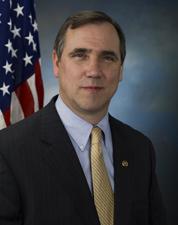 Sen. Jeff Merkley (D-OR)
Sen. Jeff Merkley (D-OR)Submitted November 4, 2021
Legislative Activity
Stay on top of the latest movement without scrolling through every action
Floor
Latest Action
Senate amendment submitted
November 4, 2021
Text
Submitted
SA 4546. Mr. MERKLEY (for himself and Mr. Young) submitted an
amendment intended to be proposed to amendment SA 3867 submitted by Mr.
Reed and intended to be proposed to the bill H.R. 4350, to authorize
appropriations for fiscal year 2022 for military activities of the
Department of Defense, for military construction, and for defense
activities of the Department of Energy, to prescribe military personnel
strengths for such fiscal year, and for other purposes; which was
ordered to lie on the table; as follows:

At the end of subtitle G of title XII, add the following:

SEC. 1283. CONTINGENCY PLAN RELATING TO FLOATING OIL STORAGE
AND OFFLOADING VESSEL  SAFER.

(a) Sense of Congress.--It is the sense of Congress that--
(1) the condition of the floating storage and offloading
vessel (FSO) Safer in the port of Hodeidah in Yemen poses a
significant threat to the economic, ecological, and
humanitarian environment of the countries bordering the Red
Sea;
(2) the Houthis have repeatedly obstructed efforts by the
international community, including the United Nations, to
inspect and repair the FSO Safer;
(3) a spill of the nearly 1,000,000 barrels of crude oil
contained in the FSO Safer, four times the amount spilled in
the Exxon Valdez disaster in 1989, would result in
devastating ecological damage to the unique environment of
the Red Sea, and would profoundly damage fishing industries
along both sides of the Red Sea Coast, especially in Yemen;
(4) a spill from the FSO Safer would--
(A) block a vital shipping lane through which 10 percent of
annual trade transits; and
(B) disrupt international trade during a time in which
countries around the world continue efforts to recover from
the COVID-19 pandemic;
(5) the people of Yemen continue to face dire
circumstances, and such circumstances would be exacerbated by
a spill from the FSO Safer because such a spill would close
of the port of Hodeidah, through which \2/3\ of Yemen's food
is transferred, and result in the potential for widespread
famine and malnutrition; and
(6) Congress should encourage the efforts of various
parties, including the United Nations and other regional
stakeholders, to resolve the dangerous situation posed by the
FSO Safer and find a lasting solution to the crisis,
including by contributing financially to efforts--
(A) to prevent an oil spill from the FSO Safer; and
(B) in the event of such a spill, to mitigate the effects
of the spill.
(b) Contingency Plan.--
(1) Interagency working group.--Not later than 30 days
after the date of the enactment of this Act, the Secretary of
State shall establish an interagency working group consisting
of representatives of relevant Federal agencies, including
the Department of Defense, the United States Mission to the
United Nations, the United States Agency for International
Development, and the Federal Emergency Management Agency, to
develop a contingency plan to be implemented in the event a
crude oil leak from, or an explosion on, the FSO Safer.
(2) Report.--
(A) In general.--Not later than 180 days after the date of
the enactment of this Act, the Secretary of State and
representatives of the interagency working group established
under paragraph (1) shall submit to the Committee on Foreign
Relations of the Senate and the Committee on Foreign Affairs
of the House of Representatives a report on the status of the
contingency plan developed under that paragraph that
describes--
(i) the options available to the United States Government
for mitigating the economic, ecological, and humanitarian
crises that would result from a disaster related to the FSO
Safer; and
(ii) the steps already taken by the United States
Government and international and regional stakeholders--

(I) to encourage a diplomatic solution to the situation;
and
(II) to prepare for the eventuality that a disaster may
occur before such a solution is reached.

______