S.Amdt. 4707
What it does: Adds SEC. ___. INCREASING THE CAPACITY OF STATES AND PARTNER COUNTRIES TO COUNTER CORRUPTION AND MONEY LAUNDERING SCHEMES RELATED TO DRUG TRAFFICKING wherever appropriate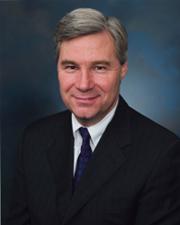 Sen. Sheldon Whitehouse (D-RI)
What it changes
1 change to H.R. 4350
Adds SEC. ___. INCREASING THE CAPACITY OF STATES AND PARTNER COUNTRIES TO COUNTER CORRUPTION AND MONEY LAUNDERING SCHEMES RELATED TO DRUG TRAFFICKING wherever appropriate
Adds a sectionInserted: SEC. ___. INCREASING THE CAPACITY OF STATES AND PARTNER COUNTRIES TO COUNTER CORRUPTION AND MONEY LAUNDERING SCHEMES RELATED TO DRUG TRAFFICKING.
Inserted: (a) Short Title.--This section may be cited as the "Not Allowing Revenue for Criminal Organizations Act" or "NARCO Act".
Inserted: (b) Findings.--Congress finds the following:
Inserted: (1) Drug trafficking organizations, transnational criminal organizations, and money laundering organizations prey upon individuals suffering from substance use disorders and exploit the financial systems of the United States to sustain their criminal enterprises.
Inserted: (2) The illicit drug trade in the United States is conservatively valued at $150,000,000,000 annually, making it worth more than the gross domestic product of approximately 150 countries.
Inserted: (3) More than 93,000 individuals in the United States died from drug overdoses in 2020.
Inserted: (4) Drug trafficking organizations, transnational criminal organizations, and money laundering organizations perpetuate crime, corruption, and kleptocracy, which undermines the rule of law and erodes democratic institutions in foreign countries while threatening the national security of the United States.
Inserted: (5) Understanding and attacking the financial networks, both in the United States and abroad, that enable drug trafficking organizations, transnational criminal organizations, and money laundering organizations is critical to disrupting and dismantling those organizations.
Inserted: (6) As such, the national drug control strategy of the United States should include an explicit focus, goals, and metrics related to mapping, tracking, attacking, and dismantling the financial networks of drug trafficking organizations, transnational criminal organizations, and money laundering organizations.
Inserted: (7) Uniform application of anti-money laundering laws and information sharing will enhance the ability of the Federal Government and State governments to dismantle drug trafficking organizations, transnational criminal organizations, and money laundering organizations.
Inserted: (8) The Financial Action Task Force establishes international standards that aim to prevent money laundering associated with the illicit drug trade and other illegal activities, and is supported by more than 200 implementing countries and jurisdictions, including the United States. In its 2016 Mutual Evaluation Report of the United States, the Task Force found that while Federal law enforcement agencies aggressively target money laundering cases, "State law enforcement authorities can complement Federal efforts, but more typically pursue State-level law enforcement priorities. Among the States, there is no uniform approach and little data is available. Where information was provided, it tended to suggest that [money laundering] is not prioritised by the State authorities.".
Inserted: (9) It is in the best national security interest of the United States to increase the capacity of States and partner countries to identify, investigate, and prosecute corruption and money laundering schemes that directly benefit drug trafficking organizations, transnational criminal organizations, and money laundering organizations.
Show 33 more inserted paragraphsShow less
Inserted: (c) GAO Report.--
Inserted: (1) In general.--Not later than 2 years after the date of enactment of this Act, and annually thereafter, the Comptroller General of the United States shall submit to the Committee on the Judiciary of the Senate, the Caucus on International Narcotics Control of the Senate, the Committee on the Judiciary of the House of Representatives, and the Director of National Drug Control Policy an assessment of--
Inserted: (A) the number and status of investigations and prosecutions across National Drug Control Program agencies (as defined in section 702 of the Office of National Drug Control Policy Reauthorization Act of 1998 (21 U.S.C. 1701)) with a drug trafficking and money laundering and illicit finance nexus, unless the disclosure of such information would reveal information protected by rule 6(e) of the Federal Rules of Criminal Procedure or a court order; and
Inserted: (B) the amount of money and other things of value in various forms, including tangible and digital assets, and property criminally seized by or forfeited to the Federal Government on an annual basis from individuals associated with drug trafficking, drug trafficking organizations, transnational criminal organizations, or money laundering organizations, which shall be--
Inserted: (i) adjusted to eliminate duplication in the case of seizures or forfeitures carried out and reported by multiple agencies; and
Inserted: (ii) disaggregated by agency.
Inserted: (2) Classified annex.--The Comptroller General may provide the assessment under paragraph (1), or a portion thereof, in a classified annex if necessary.
Inserted: (d) Technical Updates to Office of National Drug Control Policy Reauthorization Act of 1998.--
Inserted: (1) Definition of "supply reduction".--Section 702(17) of the Office of National Drug Control Policy Reauthorization Act of 1998 (21 U.S.C. 1701(17)) is amended--
Inserted: (A) by redesignating subparagraphs (G) and (H) as subparagraphs (H) and (I), respectively; and
Inserted: (B) by inserting after subparagraph (F) the following:
Inserted: "(G) activities to map, track, dismantle, and disrupt the financial networks of drug trafficking organizations, transnational criminal organizations, and money laundering organizations involved in the manufacture and trafficking of drugs in the United States and in foreign countries;".
Inserted: (2) Contents of national drug control strategy.--Section 706(c)(1)(L) of the Office of National Drug Control Policy Reauthorization Act of 1998 (21 U.S.C. 1705(c)(1)(L)) is amended by inserting before the period at the end the following: ", which statistical data shall include, to the greatest extent practicable, the information submitted to the Director by the Comptroller General of the United States in the 2 most recent annual reports under subsection (c) of the Not Allowing Revenue for Criminal Organizations Act".
Inserted: (e) Model Laws.--
Inserted: (1) In general.--The Attorney General shall enter into an agreement with a nongovernmental organization, which may include an institution of higher education, to--
Inserted: (A) advise States on establishing laws and policies to address money laundering practices related to the manufacture, sale, or trafficking of illicit drugs;
Inserted: (B) develop model State laws pertaining to money laundering practices related to the sale or trafficking of illicit drugs; and
Inserted: (C) revise the model State laws described in subparagraph (B) and draft supplementary model State laws that take into consideration changes in the trafficking of illicit drugs and related money laundering schemes in the State involved.
Inserted: (2) Authorization of appropriations.--There is authorized to be appropriated $300,000 for each of fiscal years 2022 through 2026 to carry out this subsection.
Inserted: (f) Countering International Illicit Finance Techniques Used by Criminal Organizations.--
Inserted: (1) In general.--The Attorney General, in consultation with the Director of the Financial Crimes Enforcement Network of the Department of the Treasury, shall provide training, technical assistance, and mentorship, through the International Criminal Investigative Training Assistance Program and the Office of Overseas Prosecutorial Development, Assistance, and Training, to foreign countries that have been designated as major money laundering countries under section 489 of the Foreign Assistance Act of 1961 (22 U.S.C. 2291h) in order to--
Inserted: (A) increase the institutional capacity of those countries to prevent corruption and swiftly address corruption when it occurs;
Inserted: (B) implement justice sector reform to ensure the successful prosecution of drug trafficking organizations, transnational criminal organizations, money laundering organizations, and other entities or individuals involved in the illicit drug trade;
Inserted: (C) better understand, map, target, and attack the financial networks of drug trafficking organizations, transnational criminal organizations, and other entities or individuals involved in the illicit drug trade;
Inserted: (D) develop and implement laws and regulations to establish or strengthen asset forfeiture programs; and
Inserted: (E) develop and implement laws and regulations to counter corruption, money laundering, and illicit finance techniques used by drug trafficking organizations, transnational criminal organizations, money laundering organizations, and other entities or individuals involved in the illicit drug trade.
Inserted: (2) Annual report.--Not later than 120 days after the end of each fiscal year, beginning with fiscal year 2023, the Attorney General shall submit a report to the Committee on the Judiciary of the Senate, the Caucus on International Narcotics Control of the Senate, and the Committee on the Judiciary of the House of Representatives that includes, with respect to each country that received training, technical assistance, and mentorship under paragraph (1) during that fiscal year--
Inserted: (A) the type and duration of training, technical assistance, and mentorship provided to the country;
Inserted: (B) the implementation status of new laws and regulations to counter corruption, money laundering, and illicit finance techniques used by drug trafficking organizations, transnational criminal organizations, money laundering organizations, and other entities or individuals involved in the illicit drug trade in the country;
Inserted: (C) the number of money laundering and illicit finance investigations, prosecutions, and convictions related to the narcotics trade that were undertaken in the country;
Inserted: (D) the amount of money and other things of value in various forms, including tangible and digital assets, and property criminally seized by or forfeited to the Federal Government from drug trafficking organizations, transnational criminal organizations, money laundering organizations, and other entities or individuals involved in the illicit drug trade, in the country; and
Inserted: (E) the number of joint investigations that United States undertook with the country and whether those investigations led to prosecutions or convictions.
Inserted: (3) Authorization of appropriations.--There is authorized to be appropriated $80,000,000 for each of fiscal years 2022 through 2026 to carry out this subsection.
The amendment doesn't say where this goes; the clerk decides.
Original wording
At the appropriate place, insert the following:
Read automatically from the Congressional Record. Check the original before relying on it.
As printed
SA 4707. Mr. WHITEHOUSE (for himself and Ms. Hassan) submitted an amendment intended to be proposed by him to the bill H.R. 4350, to authorize appropriations for fiscal year 2022 for military activities of the Department of Defense, for military construction, and for defense activities of the Department of Energy, to prescribe military personnel strengths for such fiscal year, and for other purposes; which was ordered to lie on the table; as follows:
At the appropriate place, insert the following:
SEC. ___. INCREASING THE CAPACITY OF STATES AND PARTNER COUNTRIES TO COUNTER CORRUPTION AND MONEY LAUNDERING SCHEMES RELATED TO DRUG TRAFFICKING.
(a) Short Title.--This section may be cited as the “Not Allowing Revenue for Criminal Organizations Act” or “NARCO Act”.
(b) Findings.--Congress finds the following:
(1) Drug trafficking organizations, transnational criminal organizations, and money laundering organizations prey upon individuals suffering from substance use disorders and exploit the financial systems of the United States to sustain their criminal enterprises.
(2) The illicit drug trade in the United States is conservatively valued at $150,000,000,000 annually, making it worth more than the gross domestic product of approximately 150 countries.
(3) More than 93,000 individuals in the United States died from drug overdoses in 2020.
(4) Drug trafficking organizations, transnational criminal organizations, and money laundering organizations perpetuate crime, corruption, and kleptocracy, which undermines the rule of law and erodes democratic institutions in foreign countries while threatening the national security of the United States.
(5) Understanding and attacking the financial networks, both in the United States and abroad, that enable drug trafficking organizations, transnational criminal organizations, and money laundering organizations is critical to disrupting and dismantling those organizations.
(6) As such, the national drug control strategy of the United States should include an explicit focus, goals, and metrics related to mapping, tracking, attacking, and dismantling the financial networks of drug trafficking organizations, transnational criminal organizations, and money laundering organizations.
(7) Uniform application of anti-money laundering laws and information sharing will enhance the ability of the Federal Government and State governments to dismantle drug trafficking organizations, transnational criminal organizations, and money laundering organizations.
(8) The Financial Action Task Force establishes international standards that aim to prevent money laundering associated with the illicit drug trade and other illegal activities, and is supported by more than 200 implementing countries and jurisdictions, including the United States. In its 2016 Mutual Evaluation Report of the United States, the Task Force found that while Federal law enforcement agencies aggressively target money laundering cases, “State law enforcement authorities can complement Federal efforts, but more typically pursue State-level law enforcement priorities. Among the States, there is no uniform approach and little data is available. Where information was provided, it tended to suggest that [money laundering] is not prioritised by the State authorities.”.
(9) It is in the best national security interest of the United States to increase the capacity of States and partner countries to identify, investigate, and prosecute corruption and money laundering schemes that directly benefit drug trafficking organizations, transnational criminal organizations, and money laundering organizations.
(c) GAO Report.--
(1) In general.--Not later than 2 years after the date of enactment of this Act, and annually thereafter, the Comptroller General of the United States shall submit to the Committee on the Judiciary of the Senate, the Caucus on International Narcotics Control of the Senate, the Committee on the Judiciary of the House of Representatives, and the Director of National Drug Control Policy an assessment of--
(A) the number and status of investigations and prosecutions across National Drug Control Program agencies (as defined in section 702 of the Office of National Drug Control Policy Reauthorization Act of 1998 (21 U.S.C. 1701)) with a drug trafficking and money laundering and illicit finance nexus, unless the disclosure of such information would reveal information protected by rule 6(e) of the Federal Rules of Criminal Procedure or a court order; and
(B) the amount of money and other things of value in various forms, including tangible and digital assets, and property criminally seized by or forfeited to the Federal Government on an annual basis from individuals associated with drug trafficking, drug trafficking organizations, transnational criminal organizations, or money laundering organizations, which shall be--
(i) adjusted to eliminate duplication in the case of seizures or forfeitures carried out and reported by multiple agencies; and
(ii) disaggregated by agency.
(2) Classified annex.--The Comptroller General may provide the assessment under paragraph (1), or a portion thereof, in a classified annex if necessary.
(d) Technical Updates to Office of National Drug Control Policy Reauthorization Act of 1998.--
(1) Definition of “supply reduction”.--Section 702(17) of the Office of National Drug Control Policy Reauthorization Act of 1998 (21 U.S.C. 1701(17)) is amended--
(A) by redesignating subparagraphs (G) and (H) as subparagraphs (H) and (I), respectively; and
(B) by inserting after subparagraph (F) the following:
“(G) activities to map, track, dismantle, and disrupt the financial networks of drug trafficking organizations, transnational criminal organizations, and money laundering organizations involved in the manufacture and trafficking of drugs in the United States and in foreign countries;”.
(2) Contents of national drug control strategy.--Section 706(c)(1)(L) of the Office of National Drug Control Policy Reauthorization Act of 1998 (21 U.S.C. 1705(c)(1)(L)) is amended by inserting before the period at the end the following: “, which statistical data shall include, to the greatest extent practicable, the information submitted to the Director by the Comptroller General of the United States in the 2 most recent annual reports under subsection (c) of the Not Allowing Revenue for Criminal Organizations Act”.
(e) Model Laws.--
(1) In general.--The Attorney General shall enter into an agreement with a nongovernmental organization, which may include an institution of higher education, to--
(A) advise States on establishing laws and policies to address money laundering practices related to the manufacture, sale, or trafficking of illicit drugs;
(B) develop model State laws pertaining to money laundering practices related to the sale or trafficking of illicit drugs; and
(C) revise the model State laws described in subparagraph (B) and draft supplementary model State laws that take into consideration changes in the trafficking of illicit drugs and related money laundering schemes in the State involved.
(2) Authorization of appropriations.--There is authorized to be appropriated $300,000 for each of fiscal years 2022 through 2026 to carry out this subsection.
(f) Countering International Illicit Finance Techniques Used by Criminal Organizations.--
(1) In general.--The Attorney General, in consultation with the Director of the Financial Crimes Enforcement Network of the Department of the Treasury, shall provide training, technical assistance, and mentorship, through the International Criminal Investigative Training Assistance Program and the Office of Overseas Prosecutorial Development, Assistance, and Training, to foreign countries that have been designated as major money laundering countries under section 489 of the Foreign Assistance Act of 1961 (22 U.S.C. 2291h) in order to--
(A) increase the institutional capacity of those countries to prevent corruption and swiftly address corruption when it occurs;
(B) implement justice sector reform to ensure the successful prosecution of drug trafficking organizations, transnational criminal organizations, money laundering organizations, and other entities or individuals involved in the illicit drug trade;
(C) better understand, map, target, and attack the financial networks of drug trafficking organizations, transnational criminal organizations, and other entities or individuals involved in the illicit drug trade;
(D) develop and implement laws and regulations to establish or strengthen asset forfeiture programs; and
(E) develop and implement laws and regulations to counter corruption, money laundering, and illicit finance techniques used by drug trafficking organizations, transnational criminal organizations, money laundering organizations, and other entities or individuals involved in the illicit drug trade.
(2) Annual report.--Not later than 120 days after the end of each fiscal year, beginning with fiscal year 2023, the Attorney General shall submit a report to the Committee on the Judiciary of the Senate, the Caucus on International Narcotics Control of the Senate, and the Committee on the Judiciary of the House of Representatives that includes, with respect to each country that received training, technical assistance, and mentorship under paragraph (1) during that fiscal year--
(A) the type and duration of training, technical assistance, and mentorship provided to the country;
(B) the implementation status of new laws and regulations to counter corruption, money laundering, and illicit finance techniques used by drug trafficking organizations, transnational criminal organizations, money laundering organizations, and other entities or individuals involved in the illicit drug trade in the country;
(C) the number of money laundering and illicit finance investigations, prosecutions, and convictions related to the narcotics trade that were undertaken in the country;
(D) the amount of money and other things of value in various forms, including tangible and digital assets, and property criminally seized by or forfeited to the Federal Government from drug trafficking organizations, transnational criminal organizations, money laundering organizations, and other entities or individuals involved in the illicit drug trade, in the country; and
(E) the number of joint investigations that United States undertook with the country and whether those investigations led to prosecutions or convictions.
(3) Authorization of appropriations.--There is authorized to be appropriated $80,000,000 for each of fiscal years 2022 through 2026 to carry out this subsection.
Legislative Activity
Stay on top of the latest movement without scrolling through every action
Senate amendment submitted
November 16, 2021